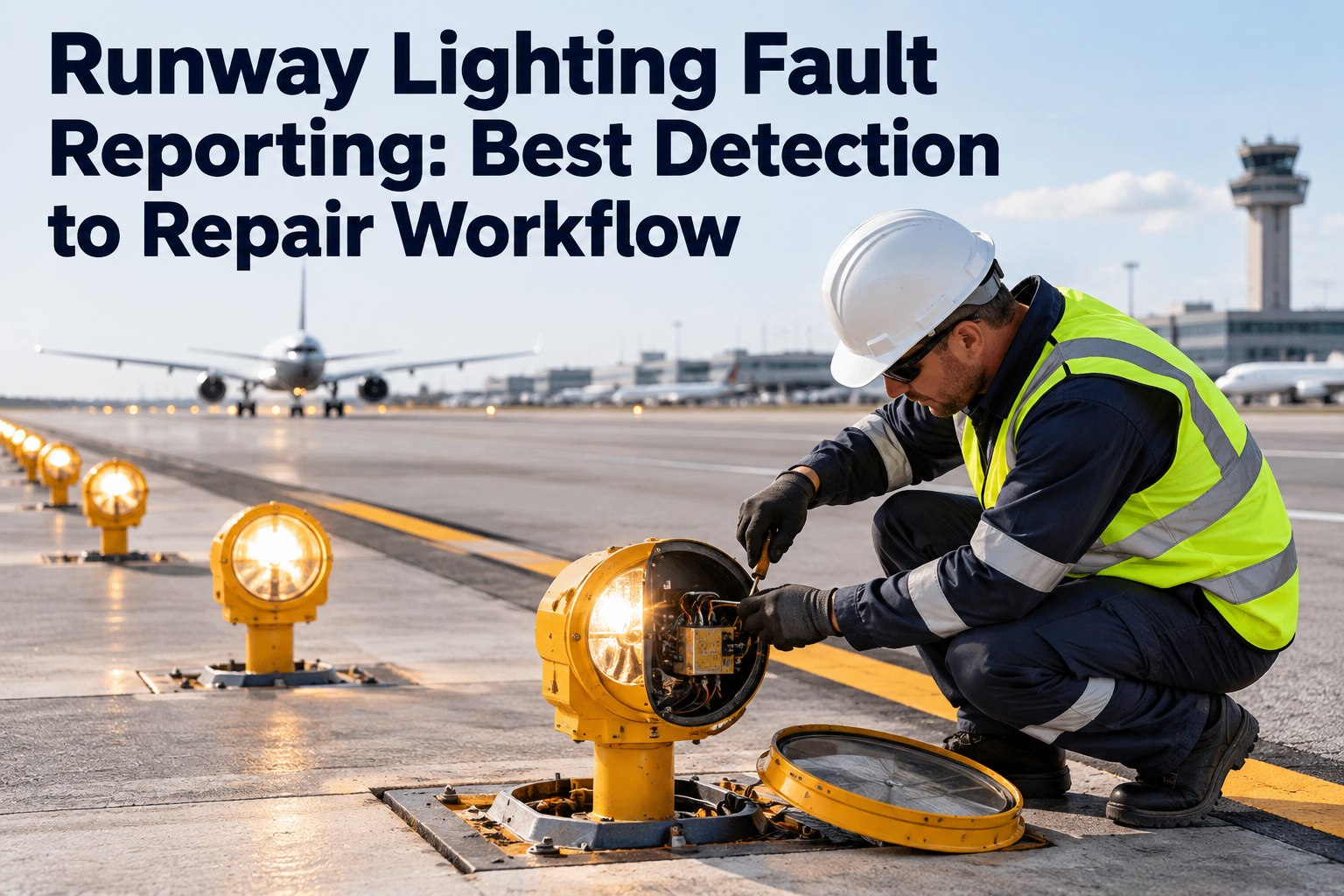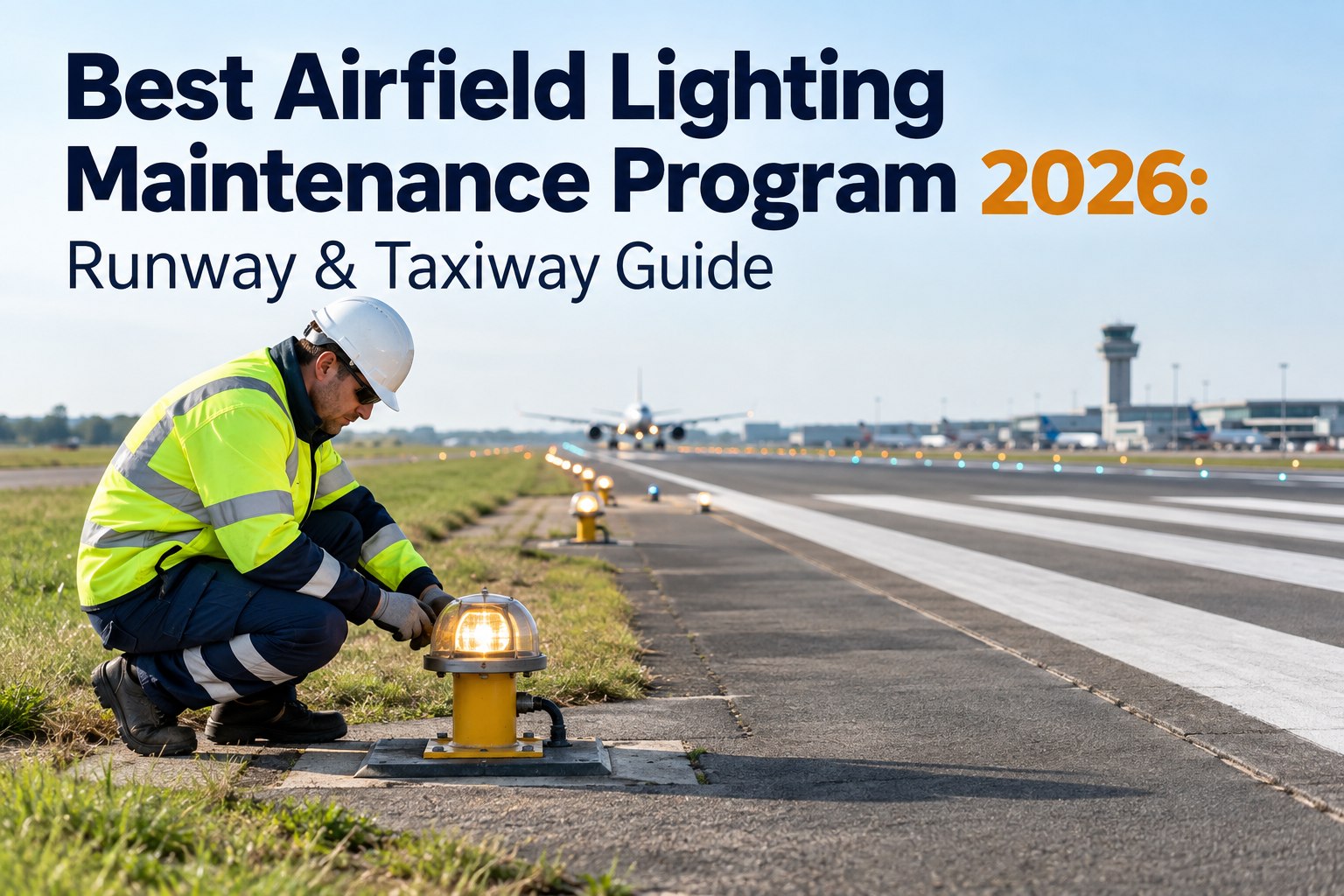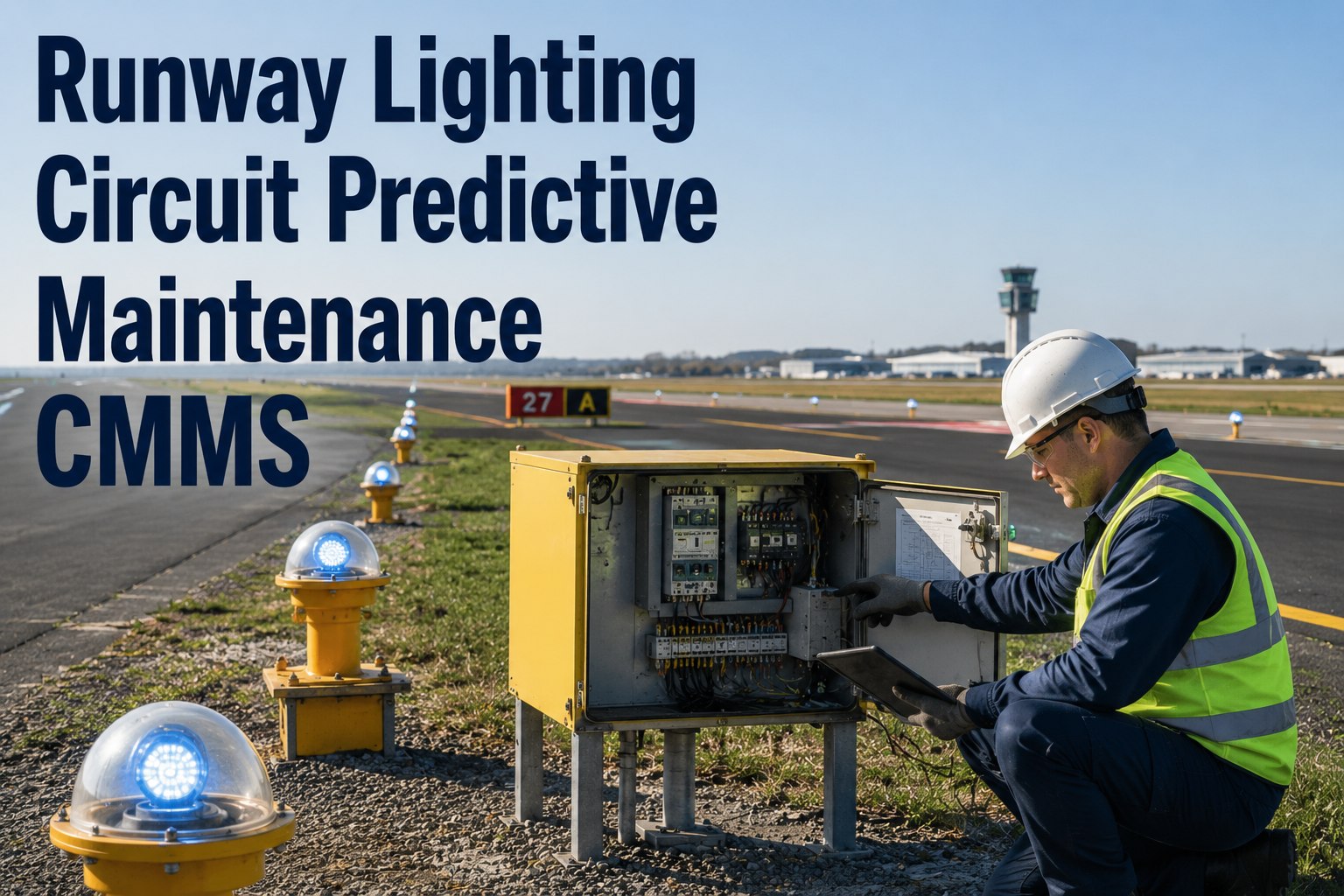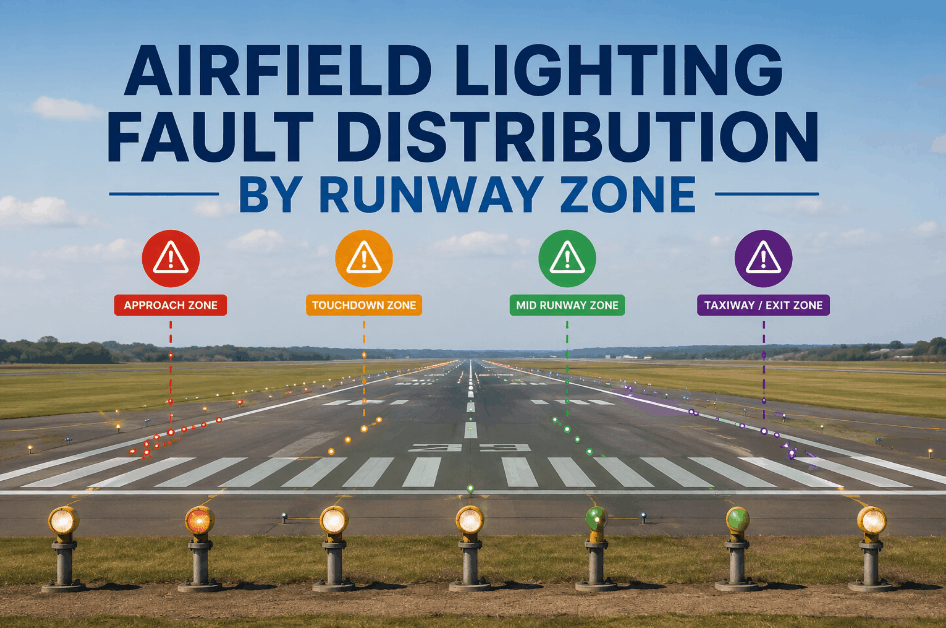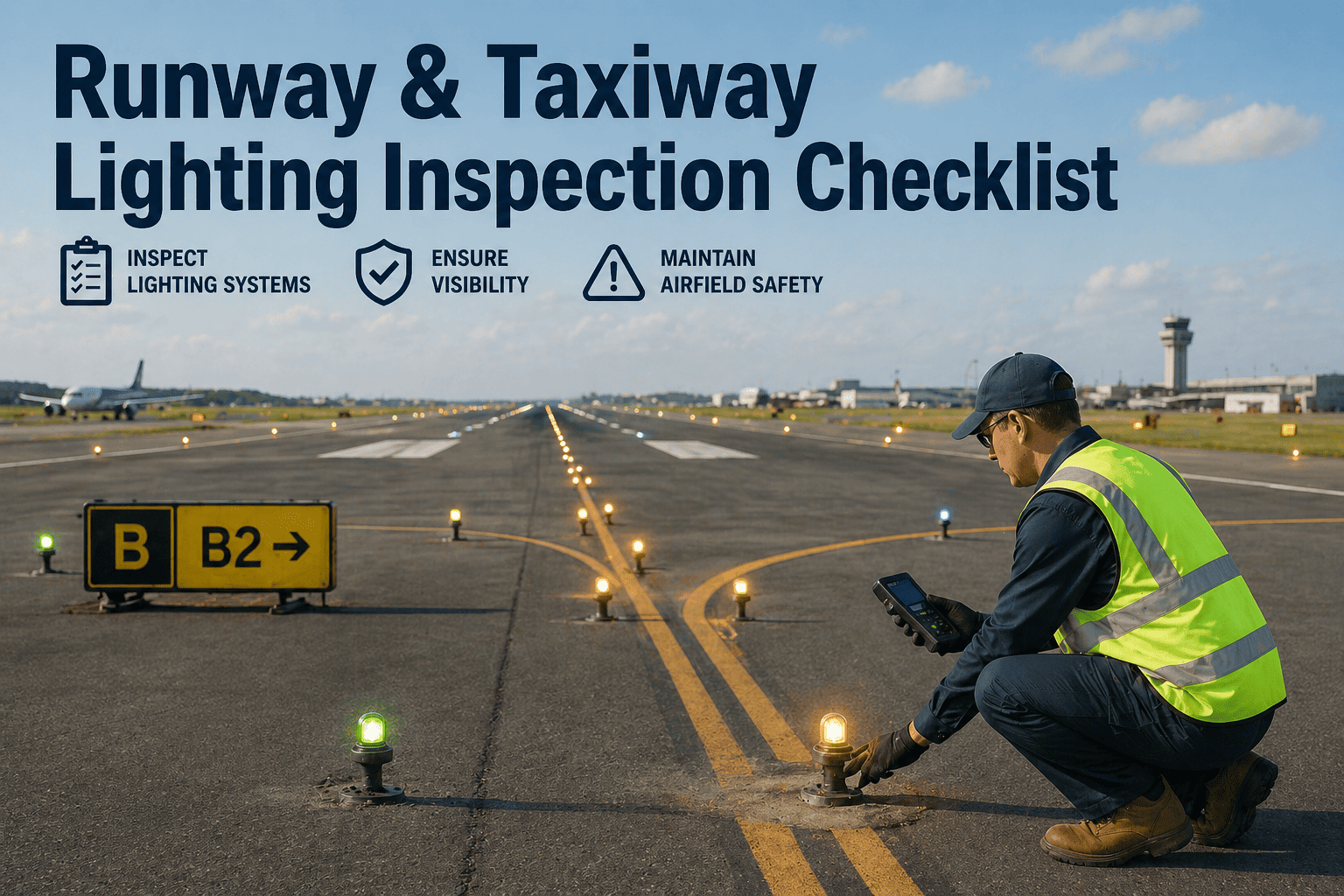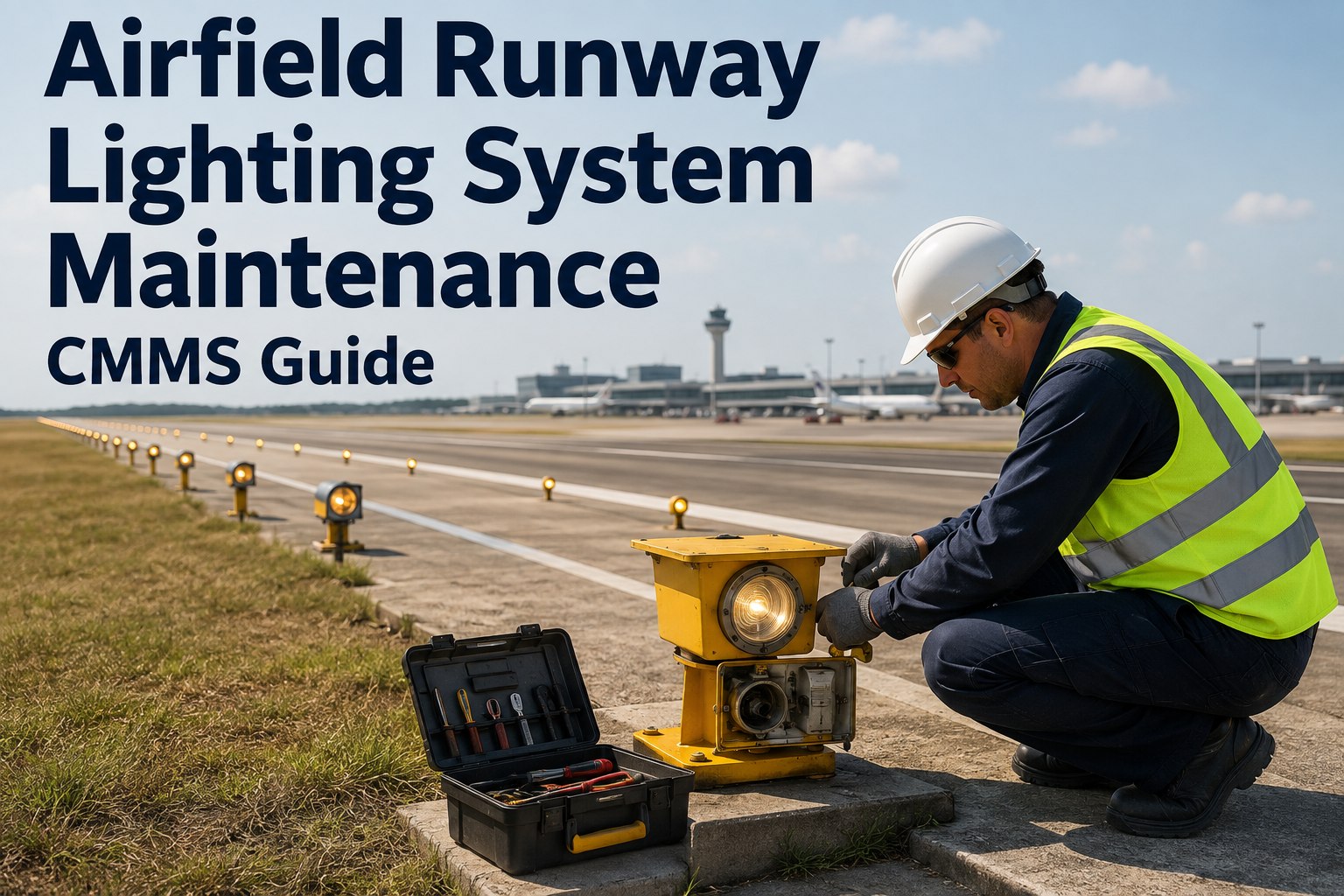
Airfield runway lighting system maintenance is the safety-critical backbone of low-visibility airport operations, where a single failed edge or approach light can trigger immediate arrival rate cuts and cascading flight delays. This CMMS runway lighting maintenance guide covers photometric testing, lamp replacement cycles, cable insulation trending, and regulator maintenance, structured to meet FAA AC 150/5340-26 and ICAO Annex 14 requirements. By migrating from reactive, paper-based inspections to an automated CMMS, maintenance and reliability teams can eliminate missed inspection windows and maintain continuous Category II/III operations. See how OxMaint streamlines airfield compliance and asset tracking when you Start Free Trial or book a personalized walkthrough.
Is your runway lighting maintenance costing you FAA compliance?
Failed edge lights and degraded MALSR systems force arrival rate cuts during critical low-visibility conditions. Manual inspection logs and reactive lamp replacements are no longer enough to maintain Category II/III operations and pass FAA Part 139 audits.
Why runway lighting CMMS is critical for Part 139 compliance
FAA AC 150/5340-26 mandates strict preventive maintenance for airfield lighting. When a MALSR system or runway edge light fails during low-visibility operations, arrival rates drop by 30-50% instantly, costing airlines and airport operators thousands per hour in delays.
Runway lighting maintenance checklist & PM intervals
A structured airfield runway lighting maintenance plan must cover photometric testing, lamp replacement cycles, cable insulation trending, and regulator maintenance. Here are the core PM tasks every airport CMMS should automate.
Daily Visual Inspection
- Drive-through runway edge and threshold light inspection
- Verify taxiway signage illumination and alignment
- Check approach lighting (MALSR/ALSF) for outages
- Document lamp failures in CMMS work orders instantly
Monthly System Tests
- Constant current regulator (CCR) output verification
- Photometric testing on 10% of runway edge lights
- Cable insulation resistance trending (Megger testing)
- Standby power transfer switch functionality
Quarterly Deep Maintenance
- Full photometric survey of approach lighting systems
- Optical component cleaning and gasket replacement
- Frangibility base mounting hardware torque check
- Inventory audit of spare lamps, isolators, and fixtures
How to structure lighting PM in your CMMS for 2026
Transitioning from reactive spreadsheets to a CMMS runway lighting maintenance system means building automated, condition-based schedules. Here is a 6-month rollout timeline for a mid-sized commercial airport.
Asset Registry Setup
Import all runway edge lights, approach lights, MALSR components, taxiway signs, CCRs, and vault equipment into the CMMS with GPS coordinates and FAA asset IDs.
PM Schedule Automation
Configure daily, monthly, and quarterly PM triggers based on FAA AC 150/5340-26 intervals. Assign technicians and auto-generate work orders with digital checklists.
Spare Parts Linking
Map critical spare parts (lamps, isolating transformers, fuses) to parent assets. Set min/max reorder points to eliminate stockouts during emergency lamp replacements.
Inspection Mobile Rollout
Deploy mobile CMMS apps for airfield electricians. Replace paper logs with tablet-based photometric data entry and instant failure photo uploads.
Condition Monitoring
Begin trending CCR output fluctuations and cable insulation degradation. Activate predictive alerts when values deviate beyond 5% of baseline.
Audit & Reporting
Generate one-click FAA Part 139.311 compliance reports. Verify 100% PM completion rates and historical outage logs for the annual airport certification inspection.
Runway lighting failures: cost impact on airport operations
A mid-sized airport managing 1,200 lighting fixtures without a dedicated CMMS faces significant operational and financial risks. Here is a realistic cost breakdown of maintaining the status quo versus deploying an automated maintenance platform.
| Cost Category | Reactive Maintenance | CMMS-Based PM | Annual Savings |
|---|---|---|---|
| Emergency Lamp Replacement (Labor) | $48,000 | $12,000 | $36,000 |
| Flight Delays from Outages (Penalties) | $85,000 | $8,000 | $77,000 |
| FAA Part 139 Audit Findings (Remediation) | $22,000 | $0 | $22,000 |
| Spare Parts Expedited Shipping | $15,000 | $3,500 | $11,500 |
| Overtime Labor for After-Hours Fixes | $30,000 | $5,000 | $25,000 |
| Total Annual Impact | $200,000 | $28,500 | $171,500 |
Calculation: Based on a 1,200-fixture airfield averaging 4 unplanned outages per month, 12 delayed flights annually, and 2 FAA audit findings requiring remediation labor.
How OxMaint CMMS solves airfield lighting maintenance
OxMaint brings AI-powered preventive maintenance, real-time asset tracking, and automated compliance reporting to airfield operations. Here is how our CMMS directly maps to your runway lighting challenges.
Automated FAA Part 139 Schedules
Auto-generate daily, monthly, and quarterly PM work orders based on AC 150/5340-26 intervals. Never miss a mandatory inspection window and achieve 100% audit readiness with one-click compliance reports.
Predictive Failure Alerts
AI algorithms trend CCR output fluctuations and cable insulation resistance values over time. Predict and replace degrading components before they cause an outage during low-visibility operations.
Mobile Airfield Inspections
Replace paper drive-through logs with a mobile CMMS app. Electricians log lamp outages, upload failure photos, and close work orders directly from the runway edge on tablets or phones.
Critical Spare Parts Tracking
Map lamps, isolating transformers, and frangible mounts to parent lighting assets. Monitor min/max stock levels with automatic reorder alerts to eliminate emergency parts expediting.
A mid-sized airport's transition to OxMaint
"Before OxMaint, we managed 1,400 runway edge and approach lights on spreadsheets. We missed a MALSR inspection that led to a Category II downgrade during peak winter travel. After deploying OxMaint, our PM completion hit 100% and we cut unplanned outages by 40% in the first six months. The automated FAA compliance logs alone saved my team two weeks of prep before our annual Part 139 inspection."
See OxMaint on your airfield lighting assets
Book a 30-minute demo to see how automated PM scheduling, mobile inspections, and predictive alerts keep your runway lights shining and your airport audit-ready.
Airfield runway lighting maintenance FAQs
What is the FAA requirement for runway lighting maintenance under Part 139?
FAA Part 139.311 requires airports to maintain runway and taxiway lighting systems in continuous airworthy condition, with documented preventive maintenance programs. This includes daily visual inspections, periodic photometric testing, and immediate NOTAM issuance for any outages affecting low-visibility operations. A CMMS like OxMaint automates this documentation and ensures no required inspection window is missed.
How often should MALSR and approach lighting systems be inspected?
MALSR (Medium Intensity Approach Lighting System with Runway Alignment Indicator Lights) requires daily visual checks for lamp outages, monthly CCR output verification, and quarterly photometric testing. OxMaint can pre-schedule these exact intervals and auto-generate mobile work orders, ensuring your approach lighting system maintenance is always audit-ready.
Can a CMMS track cable insulation trending for runway lights?
Yes. A modern CMMS allows you to log Megger test results directly into the asset history via mobile devices. OxMaint uses AI to trend this insulation resistance data over time, alerting maintenance teams when degradation patterns predict an imminent failure, long before a short circuit takes a circuit loop offline.
How does CMMS software improve FAA Part 139 audit readiness?
CMMS software centralizes all maintenance records, work order histories, and inspection logs in a searchable, cloud-based platform. Instead of digging through paper binders, airports can generate comprehensive compliance reports in seconds. To see how OxMaint streamlines this for your team, Book a Demo for a live walkthrough.
What are the standard lamp replacement cycles for runway edge lights?
Traditional halogen runway edge lights typically require replacement every 1,200 to 2,000 operational hours, depending on brightness and environment. LED fixtures extend this to 50,000+ hours but still require photometric verification. OxMaint tracks individual lamp hours and triggers automated replacement work orders before failure thresholds are reached.
Ready to modernize your runway lighting maintenance?
Join the airport reliability teams using OxMaint to eliminate paper work orders, predict lighting failures, and pass FAA audits with confidence.
Free 14-day trial · No credit card required