The SPCC threshold catches more airports than most facility managers expect any site with more than 1,320 gallons of aboveground oil storage, more than 660 gallons in a single container, or over 42,000 gallons underground falls under 40 CFR Part 112 and needs a Spill Prevention, Control and Countermeasure Plan certified by a licensed engineer. Layer in an air permit for fuel handling emissions, an NPDES stormwater permit, and hazardous waste manifests for spill cleanup materials, and most airports are running three separate environmental programs with three separate paper trails. A structured environmental record system doesn't replace any of those programs — it keeps the drills, permits, manifests and corrective actions behind them in one retrievable place instead of a binder, a filing cabinet and a shared drive. This guide covers what SPCC, air permit and waste programs typically require documented, and how OXMAINT AI organizes that record trail.
Airport Environmental Compliance · SPCC · Air Permits · Waste Manifests · 2026
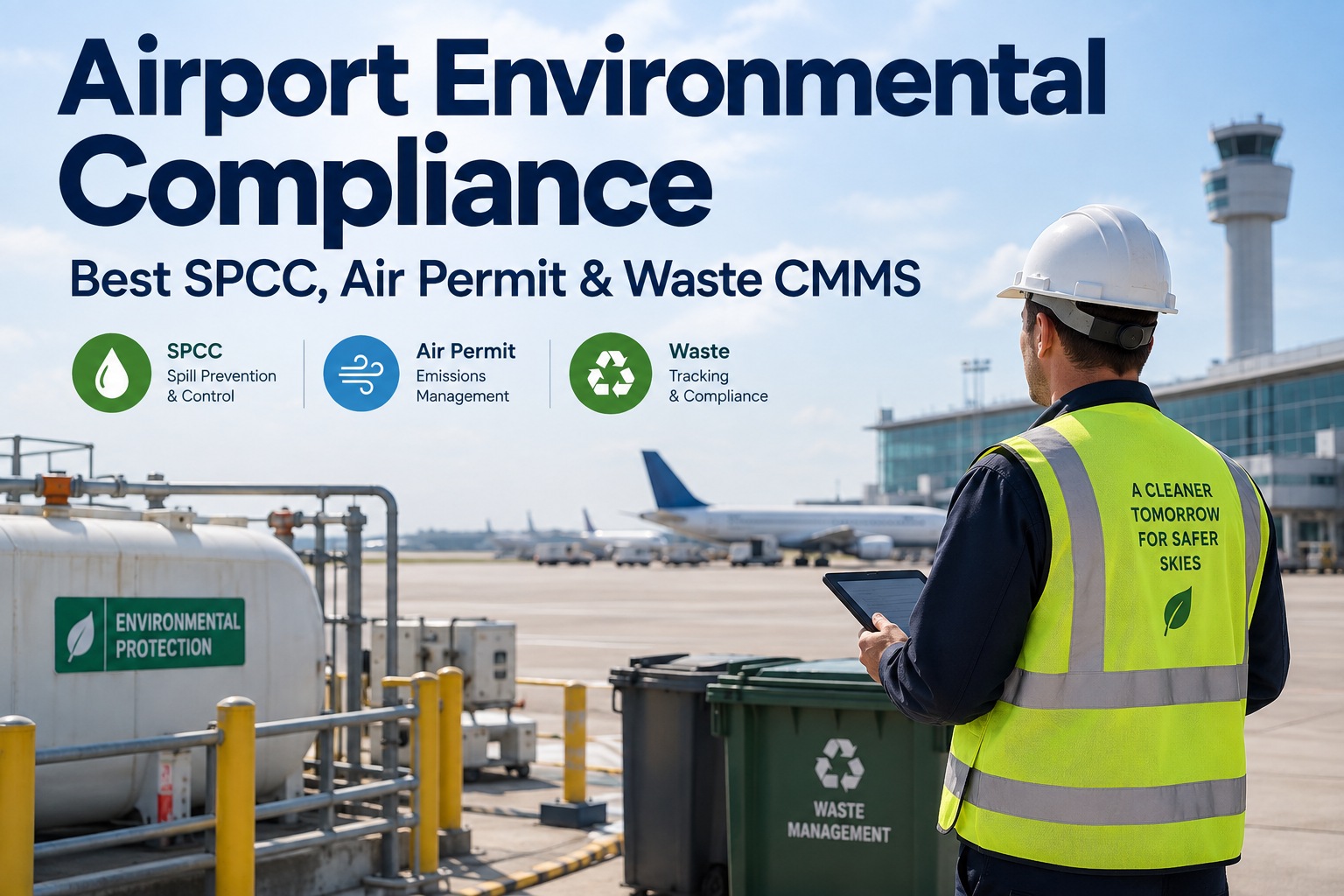
Airport Environmental Compliance: Best SPCC, Air Permit & Waste CMMS
A spill drill nobody can find the record of, an air permit deviation logged only in an inspector's email, a waste manifest reconciled by hand once a year — these are the gaps that turn a routine review into a scramble. OXMAINT AI connects the workflow behind your environmental programs: SPCC drills, air permit checks and waste manifests get logged against the specific tank, source or shipment, any deviation becomes a tracked corrective-action work order, and the full evidence trail stays retained and searchable in one system.
Drill, Permit Check or Manifest Logged
→
Deviation Flagged
→
Corrective Work Order
→
Evidence Retained
1,320 gal
aboveground oil storage threshold that triggers SPCC applicability under 40 CFR Part 112
Annual
spill prevention briefing and drill typically required to keep SPCC training current
3 Years
common minimum retention period cited for SPCC training and drill records
10,000 lbs
common EPCRA Tier II reporting threshold for stored hazardous substances, including fuel
Three Programs, Three Recordkeeping Burdens
Each program answers to a different requirement, on a different schedule, with a different kind of evidence expected. Sign up free and bring all three into one system.
SPCC Plan & Drills
Covers oil storage tanks, fuel trucks and secondary containment. Requires a PE-certified plan, annual spill briefings, and documented facility inspections tied to the plan's map and containment details.
Air Permit Compliance
Covers fuel handling emissions and other permitted sources. Requires deviation tracking, emissions monitoring records, and timely reporting when a permit condition isn't met.
Hazardous Waste Manifests
Covers spill cleanup materials, used oil and other regulated waste leaving the site. Requires manifest tracking from generation through confirmed disposal or treatment.
Where Environmental Records Actually Break Down
📓
Outdated SPCC Binder
The plan lives as a printed binder, amended by hand, while the tank inventory and facility layout have changed since the last revision.
🎯
Drills Undocumented
The annual spill drill happens, but the record of who attended and what was covered doesn't make it past a sign-in sheet somewhere.
💨
Air Permit Deviations Untracked
A permit condition gets missed during a busy fueling season, and there's no formal record of it, or of the corrective step taken afterward.
🗑
Manual Manifest Reconciliation
Waste manifests get filed as they come in, but nobody reconciles generated-versus-disposed volumes until it's time for an annual report.
From Drill or Deviation to Closed Record
Whether it's a spill drill, an air permit check or a waste pickup, the same chain applies. Book a demo to see a logged drill turn into a retained, searchable record.
1
Activity Performed
Spill drill, tank inspection, permit condition check or waste pickup happens on schedule.
→
2
Digitally Logged
Entry recorded against the specific tank, permitted source or manifest number, timestamped automatically.
→
3
Deviation Flagged
Any gap — a missed drill element, a permit exceedance, a manifest discrepancy — is recorded against that specific record.
→
4
Corrective Work Order
A work order is created from the deviation, assigned to a responsible party, with the original entry attached.
→
5
Evidence Retained
The full chain — activity, deviation, corrective action, closure — stays retained for the applicable record retention period.
A Spill Drill With No Attached Record Is a Meeting That Happened, Not Evidence It Happened.
OXMAINT AI keeps every SPCC drill, air permit check and waste manifest linked to its record and any resulting corrective action, in one searchable system.
Binder & File Cabinet vs. Digital Environmental Record System
Binders, Sign-In Sheets & Filing
SPCC plan amended by hand, drift from actual tank inventory
Drill records exist only as a paper sign-in sheet, if at all
Air permit deviations noted informally, no linked corrective step
Waste manifests reconciled once a year, by hand
Digital Record System in OXMAINT AI
Tank and facility inventory stays current, tied to the SPCC plan record
Every drill logged with attendance and content, retrievable by date
Every deviation becomes a tracked, closed corrective action
Manifests logged as they occur, reconciled continuously
What a Reviewer Typically Wants to Examine
✓
SPCC plan amendment history and facility inspection records tied to the current tank inventory
✓
Annual spill prevention briefing and drill records, with attendance and content covered
✓
Air permit deviation reports and the corrective action taken for each one
✓
Waste manifests reconciled from generation through confirmed disposal or treatment
✓
Corrective action closure evidence linked back to the original finding or deviation
What OXMAINT AI Gives Environmental & Facilities Teams
SPCC Drill & Inspection Logging
Spill drills, briefings and tank inspections logged digitally, tied to the specific tank or containment area they cover.
Air Permit Deviation Tracking
Permit condition checks and any deviations recorded against the specific permitted source, with corrective action linked automatically.
Waste Manifest Reconciliation
Manifests logged from generation through disposal confirmation, so volumes reconcile continuously instead of once a year.
Deviation-to-Work-Order Linking
Any flagged gap — a missed drill element, an exceedance, a manifest discrepancy — becomes a tracked corrective-action work order.
Configurable Record Retention
Records stay stored and searchable for the retention period each program requires, without a manual archiving process.
Exportable Records by Program
Pull SPCC, air permit or waste records for a given date range or tank/source in minutes when a review requires it.
"
Our SPCC binder was technically up to date, but proving it meant pulling the physical plan, cross-checking it against whatever tank changes had happened since the last revision, and hoping the drill sign-in sheets hadn't been misfiled. Now the drill records, the tank inventory and any corrective actions from a deviation all live against the same record in OXMAINT AI. When our environmental consultant asked for the last two years of spill drill documentation, it was a five-minute export instead of a week of digging.
Facilities & Environmental Manager · Regional Airport
Frequently Asked Questions
Does OXMAINT AI replace the need for a certified SPCC plan?
No. An SPCC plan must still be prepared and certified by a licensed professional engineer under 40 CFR Part 112. OXMAINT AI doesn't create or certify the plan — it helps you log the drills, inspections and amendments tied to that plan so the supporting records stay organized and retrievable.
What storage thresholds trigger SPCC applicability for an airport?
Under 40 CFR Part 112, SPCC generally applies to facilities with more than 1,320 gallons of aboveground oil storage capacity (or more than 660 gallons in a single container), or more than 42,000 gallons underground, where a discharge could reasonably reach navigable waters.
How does a flagged air permit deviation get tracked to resolution?
When a deviation is logged against a permitted source, OXMAINT AI creates a corrective-action work order linked to that specific entry. Once resolved, the closure record stays attached, so the deviation and its fix are retrievable together.
How long should SPCC and environmental training records be kept?
Retention requirements vary by program and jurisdiction, but a commonly cited minimum for SPCC training and drill records is around three years. OXMAINT AI lets you configure retention periods per record type to match what your program specifies.
Keep Every Drill, Deviation and Manifest in One Retrievable Record.
SPCC, air permits and waste manifests each answer to a different requirement — OXMAINT AI keeps the evidence behind all three organized in one system instead of a binder and a filing cabinet.