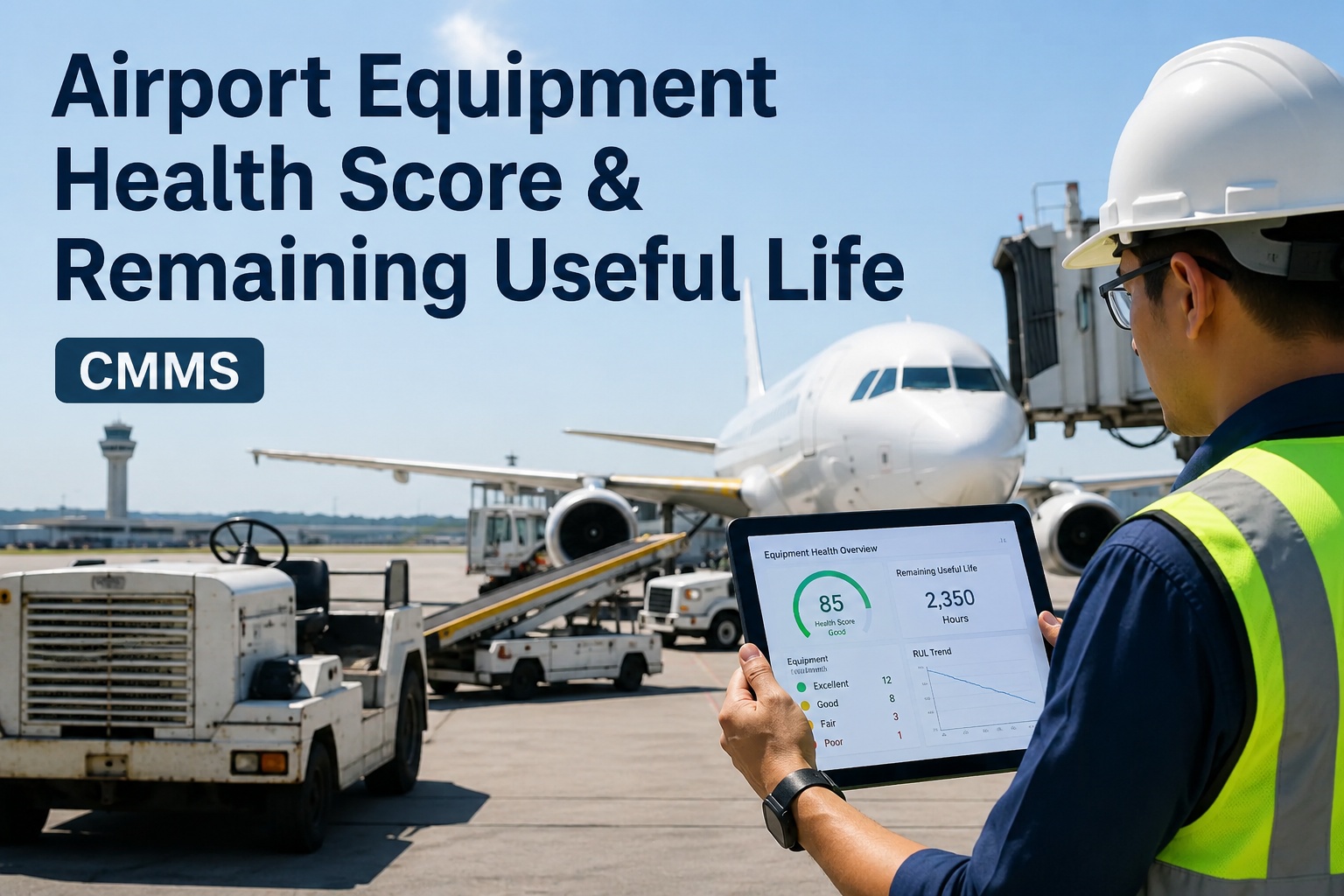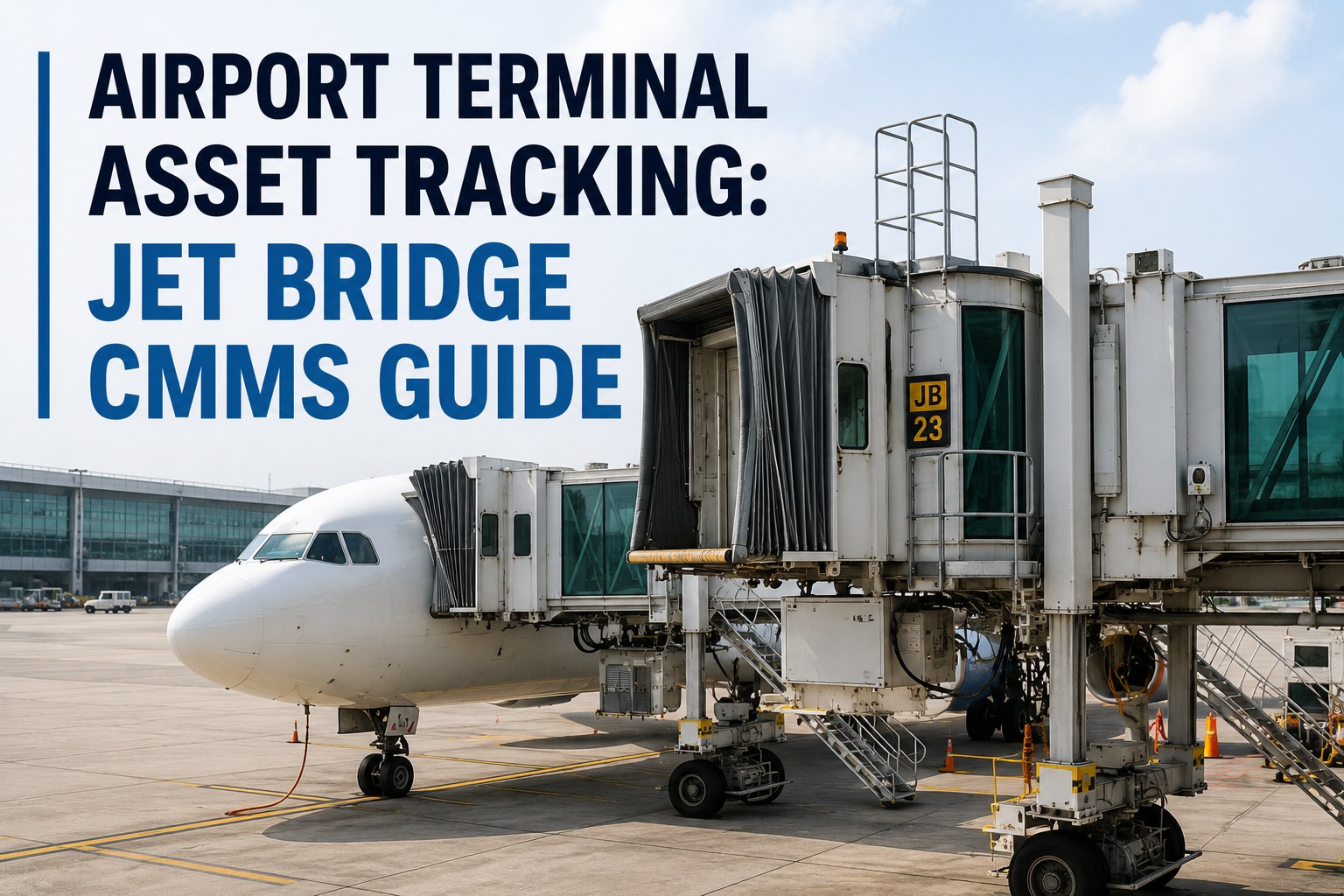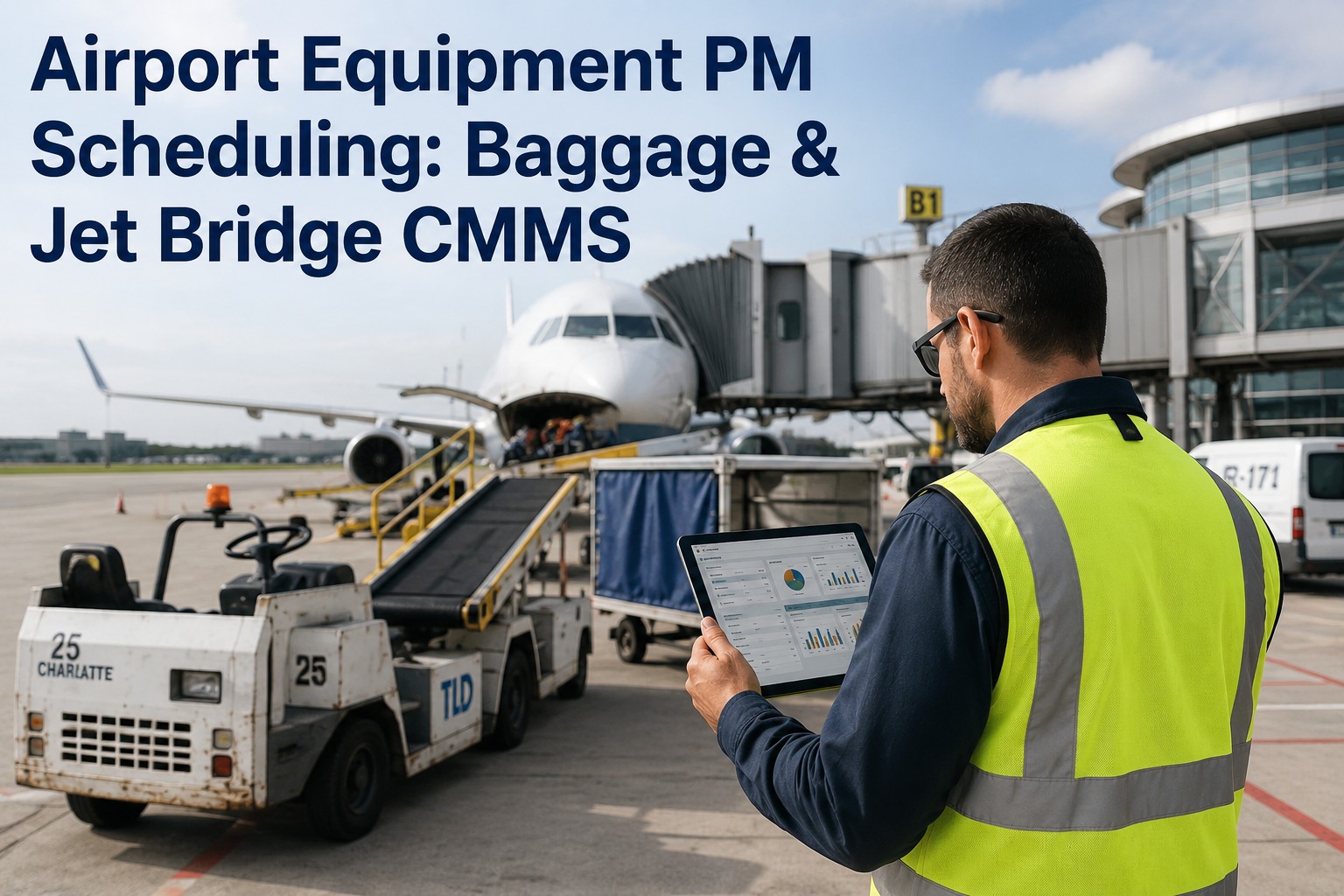
Airport equipment PM scheduling is the backbone of terminal uptime — coordinating preventive maintenance windows for baggage handling systems, jet bridges, elevators, escalators and HVAC so passenger flow is never disrupted. This 2026 guide covers how facilities and reliability teams use a CMMS to build PM templates by asset type, prioritise work by criticality, and lock in maintenance windows during low-traffic overnight slots. If you are still tracking PMs on spreadsheets, a single missed baggage-belt inspection can cascade into delayed flights and six-figure airline penalties — which is why teams switch to OxMaint to automate scheduling, trigger work orders, and prove compliance. Ready to eliminate reactive chaos? Start Free Trial or keep reading for the full scheduling framework.
Airport PM Scheduling Guide 2026
Can your terminal stay available when 40,000 passengers flow through daily?
Airport equipment PM scheduling shapes the daily passenger experience. From baggage belts to jet bridges, every asset needs preventive maintenance locked into tight overnight windows — without a CMMS, one missed PM spirals into unplanned downtime, flight delays, and damaged brand trust.
PM Templates by Asset Type
How to structure airport equipment PM templates in a CMMS
Every asset class in an airport has a different failure mode, inspection cadence, and regulatory requirement. The table below maps the six most critical airport equipment categories to their recommended PM cadence, typical downtime window, and the CMMS trigger type that keeps them compliant and available.
| Asset Type | PM Cadence | Maintenance Window | CMMS Trigger | Failure Cost / Hr |
|---|---|---|---|---|
| Baggage Handling System (BHS) | Weekly inspection, monthly belt alignment | 01:00 – 04:00 | Calendar + Meter (cycles) | $8,000 – $15,000 |
| Jet Bridge (PBB) | Bi-weekly drive test, quarterly load test | 23:00 – 05:00 | Calendar + Usage (flight turns) | $5,000 – $12,000 |
| Terminal HVAC (AHU / Chiller) | Monthly filter, quarterly refrigerant check | 00:00 – 06:00 | Calendar + Condition | $2,000 – $6,000 |
| Escalators & Moving Walkways | Weekly visual, monthly mechanical | 02:00 – 05:00 | Calendar | $1,500 – $4,000 |
| Runway & Taxiway Lighting | Monthly circuit test, annual cleaning | 03:00 – 06:00 (tower-coordinated) | Calendar + Meter (hours) | $10,000+ (closure risk) |
| Passenger Boarding Bridges Controls | Quarterly PLC & safety sensor check | Off-peak gate blocks | Calendar + Condition | $3,000 – $8,000 |
A mid-sized airport managing 1,200+ assets across three terminals typically runs 300–400 scheduled PM tasks per week. Coordinating these manually across shifts, gates, and airline schedules is where most spreadsheet-based systems collapse — and where a CMMS like OxMaint pays for itself in the first 90 days.
Criticality-Based Prioritisation
Prioritising airport PMs by criticality and passenger impact
Not every asset deserves the same attention. A failed coffee machine in the food court is an inconvenience; a failed baggage belt at Terminal A during a morning bank of 30 departures is an operational emergency. Criticality scoring lets maintenance teams allocate limited overnight labour hours to the assets that matter most.
Criticality Score Formula
Criticality = (Safety Risk × 3) + (Operational Impact × 2) + (Downtime Cost × 2) + (Redundancy Factor)
Score range: 1–100. Assets scoring 70+ are Tier 1 (mission-critical) and receive priority PM slots and redundant inspections. Assets scoring 30–69 are Tier 2 (important). Below 30 is Tier 3 (run-to-fault acceptable).
BHS conveyors, jet bridges, runway lighting, fire suppression. PM window is non-negotiable; missed PM triggers automatic escalation. Target availability: 99.5%.
Terminal HVAC, escalators, elevators, security doors. PM scheduling is flexible within a 48-hour window. Target availability: 97%.
FID monitors, retail lighting, seating area power. Run-to-fault is acceptable; PMs are batched quarterly. Target availability: 92%.
Maintenance Window Coordination
Coordinating overnight maintenance windows without disrupting operations
Most airports have a true low-traffic window of just 3–5 hours between 23:00 and 05:00. In that window, maintenance teams must complete PMs on baggage systems, jet bridges, escalators, and lighting — often across multiple terminals and concourses — while coordinating with airline operations, security, and ATC. Without a CMMS, this is managed on whiteboards and group chats. With OxMaint, it is a governed, auditable workflow.
PM Schedule Auto-Released
OxMaint releases the night's PM work orders to technician mobile devices, sequenced by gate proximity and asset criticality.
Gate Block Coordination
Technicians confirm jet bridge PMs against the airline gate schedule; no work begins until the gate is clear and tagged out.
BHS Belt Inspection & Alignment
Baggage system PMs execute during the lowest baggage volume window; photos and readings logged directly into OxMaint mobile.
Escalator & HVAC PMs
Tier 2 assets serviced; condition readings (vibration, temperature, amperage) feed back into OxMaint predictive models.
System Re-Commissioned
All PM work orders closed with digital sign-off; assets returned to operations; exceptions flagged for day-shift follow-up.
See OxMaint coordinate your overnight PM windows
Book a 30-minute demo and we will map your airport's asset register, criticality tiers, and maintenance windows into a live CMMS environment.
How OxMaint Helps
How OxMaint streamlines airport equipment PM scheduling
OxMaint is built for maintenance and reliability teams managing high-criticality, multi-asset environments. For airport facilities managers, it replaces spreadsheets, paper work orders, and siloed vendor portals with a single AI-powered CMMS that schedules, executes, and analyses every PM — from baggage belts to runway lights.
Automated PM Calendar by Asset Type
Pre-built PM templates for BHS, jet bridges, HVAC, and lighting — triggered by calendar, meter (cycles/hours), or condition. Never miss a compliance-driven inspection again.
Outcome: 100% PM compliance, zero missed audits
Criticality-Based Work Order Routing
Tier 1 assets automatically get priority routing, redundant inspections, and escalation rules. OxMaint ensures your best technicians and tightest windows go to your highest-impact assets.
Outcome: Cut unplanned downtime 30–50%
Predictive Maintenance via IoT Integration
Vibration, temperature, and amperage sensors on escalators and chillers feed real-time data into OxMaint AI — which predicts bearing failures and refrigerant leaks before they cause outages.
Outcome: 25% reduction in reactive work orders
Audit-Ready Compliance Reporting
Every PM, inspection, and repair is logged with timestamps, photos, and digital sign-off. Generate FAA, TSA, and ISO 55000 compliance reports in one click — no more scrambling before an audit.
Outcome: Cut audit prep from weeks to hours
Real-World Scenario
A regional airport with 1,400 assets across two terminals was spending $42,000 annually on reactive repairs and overtime labour, with an average BHS downtime of 14 hours per month. After implementing OxMaint PM scheduling with criticality tiers and overnight window coordination, unplanned baggage system downtime dropped to 3 hours per month, reactive repair spend fell to $18,000, and the airport achieved 99.7% Tier 1 asset availability within six months. Payback period: under 4 months.
Cost of Inaction
What spreadsheet-based PM scheduling is really costing your airport
Most airport facilities teams know they have a PM problem but underestimate the compounding cost. A single delayed flight caused by equipment failure costs an airline $10,000–$150,000 in passenger compensation, rebooking, and crew rescheduling — and airports bear the reputational and contractual cost. Here is what the numbers look like when you quantify the gap.
$1.2M
Average annual cost of unplanned airport equipment downtime per mid-sized terminal (delayed flights, passenger compensation, lost retail revenue)
14 hrs
Typical monthly BHS downtime at airports using spreadsheets vs. 3 hours with CMMS-driven PM scheduling
31%
Of airport maintenance labour hours are wasted on reactive work that could have been prevented with structured PM cadence
The gap between a Tier 1 airport that runs on a CMMS and one that runs on spreadsheets is not 10% better uptime — it is the difference between a terminal that passengers trust and one that makes the evening news for the wrong reasons.
Frequently Asked Questions
Airport equipment PM scheduling: what teams ask most
What is airport equipment PM scheduling and why does it matter?
Airport equipment PM scheduling is the process of planning and executing preventive maintenance on terminal assets — baggage belts, jet bridges, HVAC, escalators, and runway lighting — within coordinated downtime windows. It matters because a single missed PM on a baggage handling system can delay dozens of flights, cost airlines tens of thousands per hour, and damage the airport's reputation with passengers and carriers alike.
How does a CMMS improve baggage handling system maintenance?
A CMMS like OxMaint automates PM triggers based on calendar dates, belt cycles, or sensor condition readings — ensuring inspections happen during low-baggage-volume windows without manual tracking. It also captures every work order digitally, routes Tier 1 failures to senior technicians instantly, and provides audit-ready compliance records. To see this in action on your own BHS assets, Book a Demo and we will configure a live example.
How often should jet bridge PMs be scheduled?
Jet bridge (passenger boarding bridge) PMs should follow a bi-weekly drive-test cadence with quarterly load tests and annual full mechanical inspections. The exact schedule depends on gate utilisation volume; high-traffic gates may require weekly visual checks. OxMaint can trigger these PMs automatically based on flight turn counts, ensuring high-utilisation bridges get proportionally more attention.
What is the best maintenance window for airport equipment PMs?
The optimal maintenance window for most airport equipment is between 01:00 and 04:00, when passenger volume and flight activity are lowest. However, runway lighting PMs must be coordinated with ATC and tower operations, and jet bridge work depends on airline gate assignments. OxMaint handles this by cross-referencing the flight schedule and releasing PM work orders only when gates are confirmed clear.
How long does it take to implement a CMMS for airport maintenance?
A focused OxMaint implementation for an airport with 500–2,000 assets typically takes 4–8 weeks, including asset register import, PM template configuration, criticality scoring, and technician mobile training. Many airports see measurable downtime reduction within the first 60 days.
Stop firefighting. Start scheduling like a Tier 1 airport.
Join the maintenance and reliability teams using OxMaint to cut unplanned downtime, hit 99.5% asset availability, and pass every audit without panic.
Free 14-day trial · No credit card