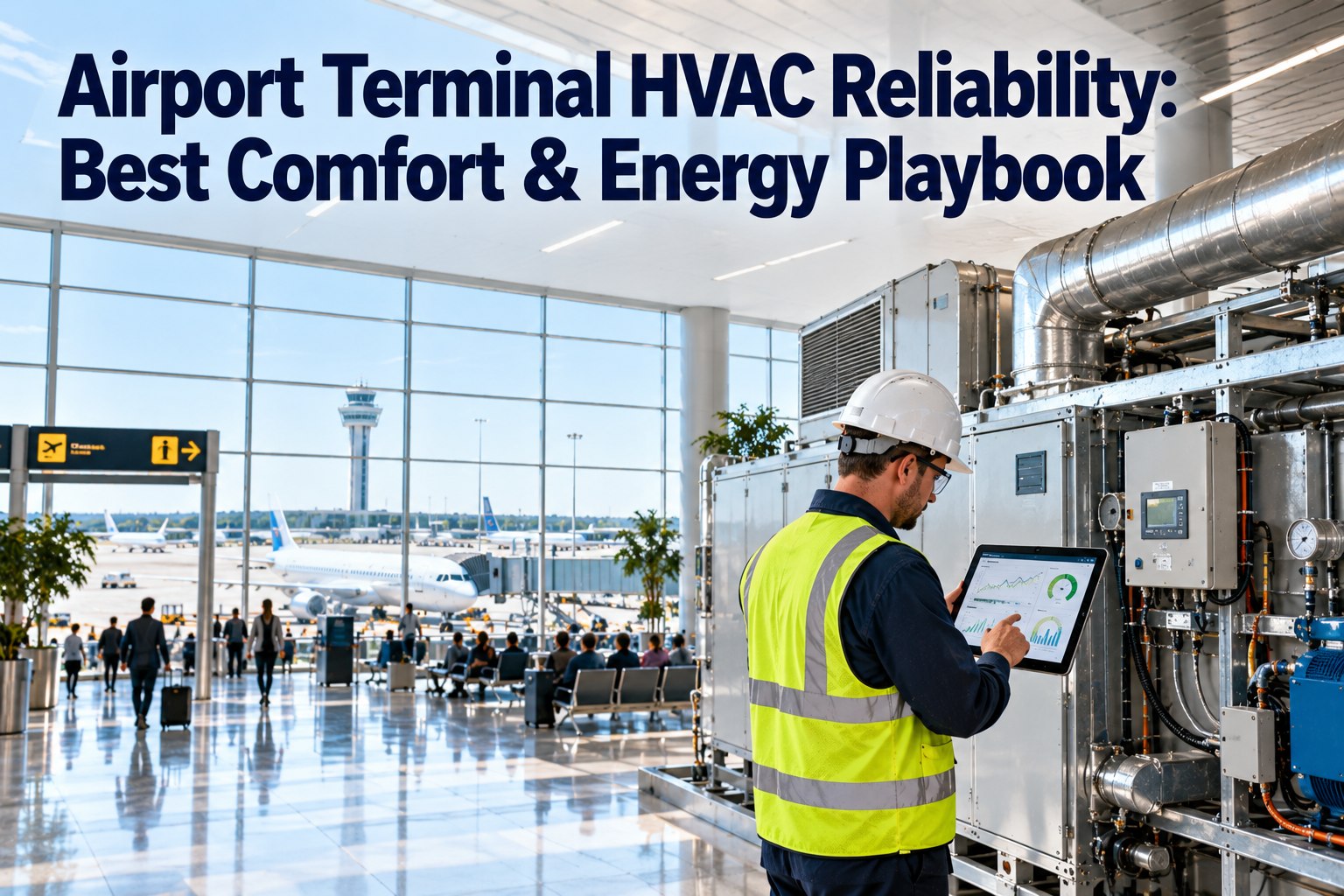
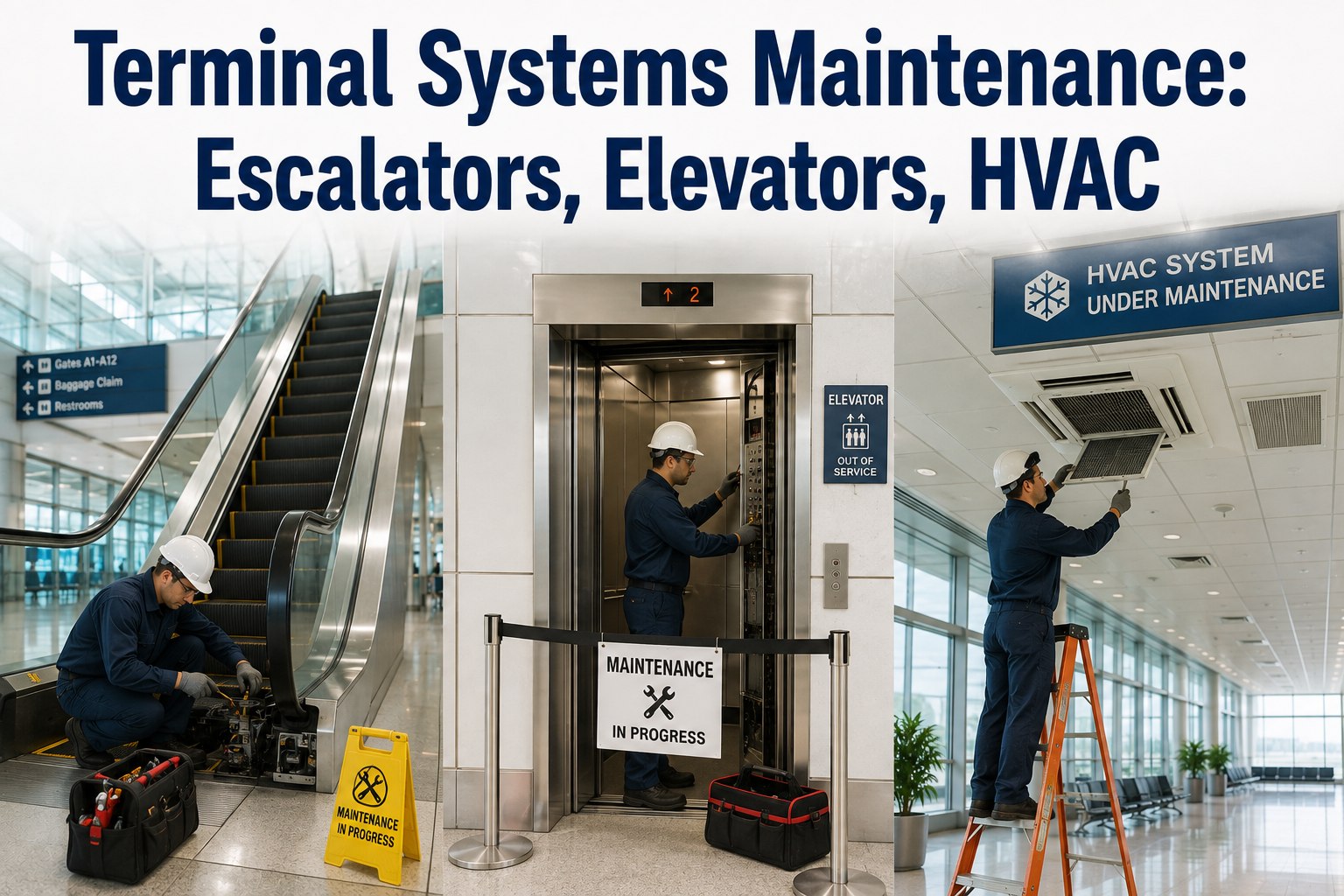
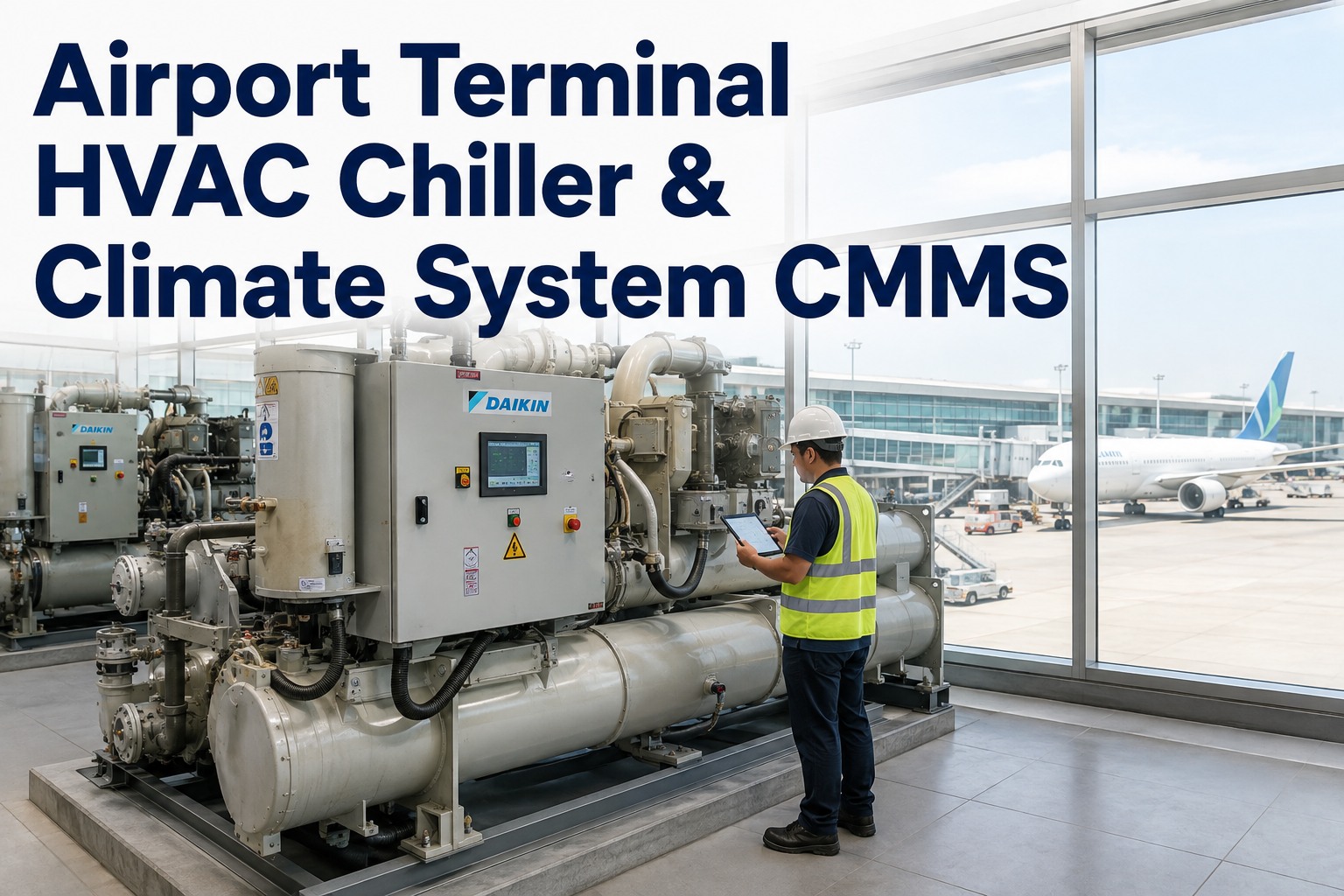
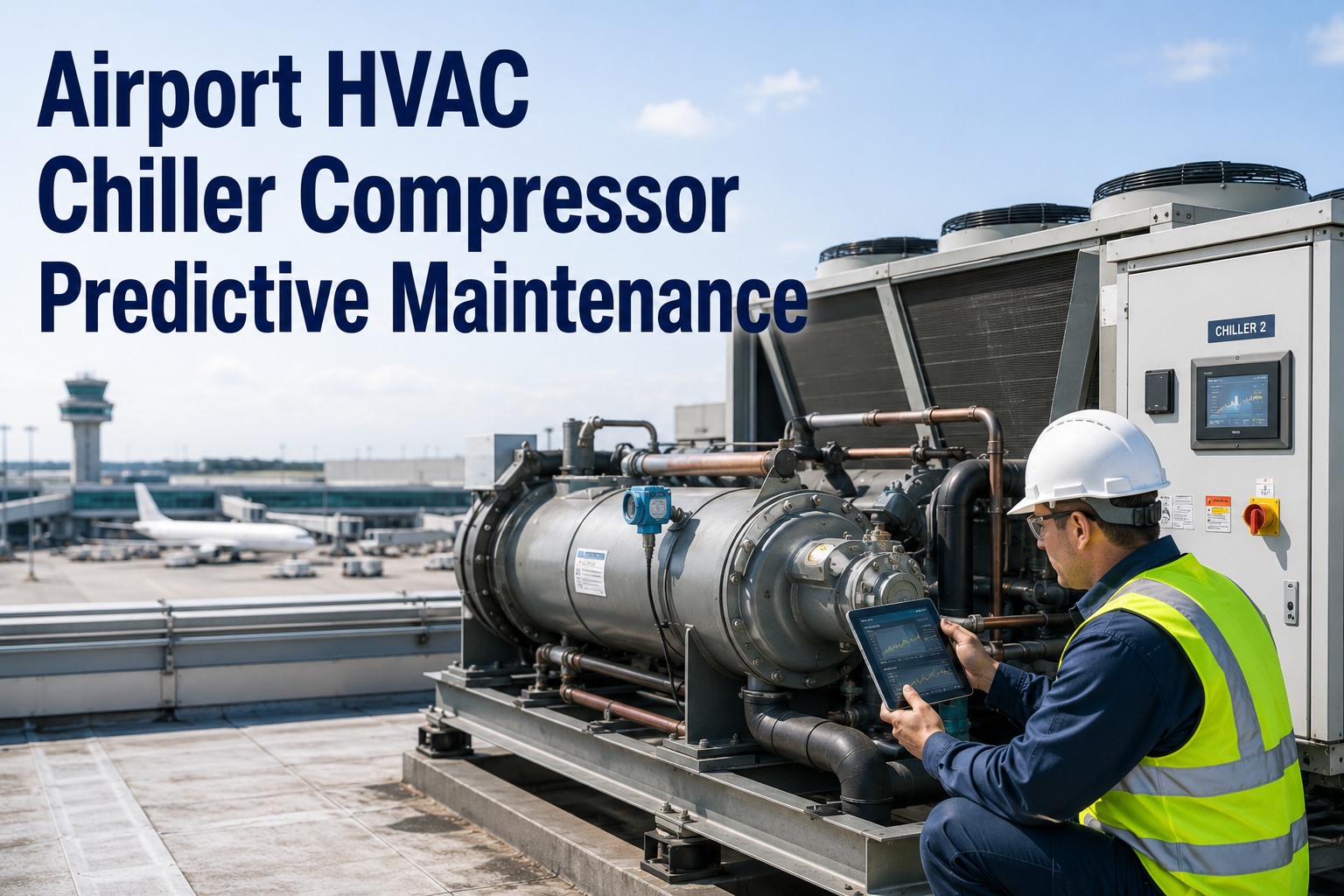
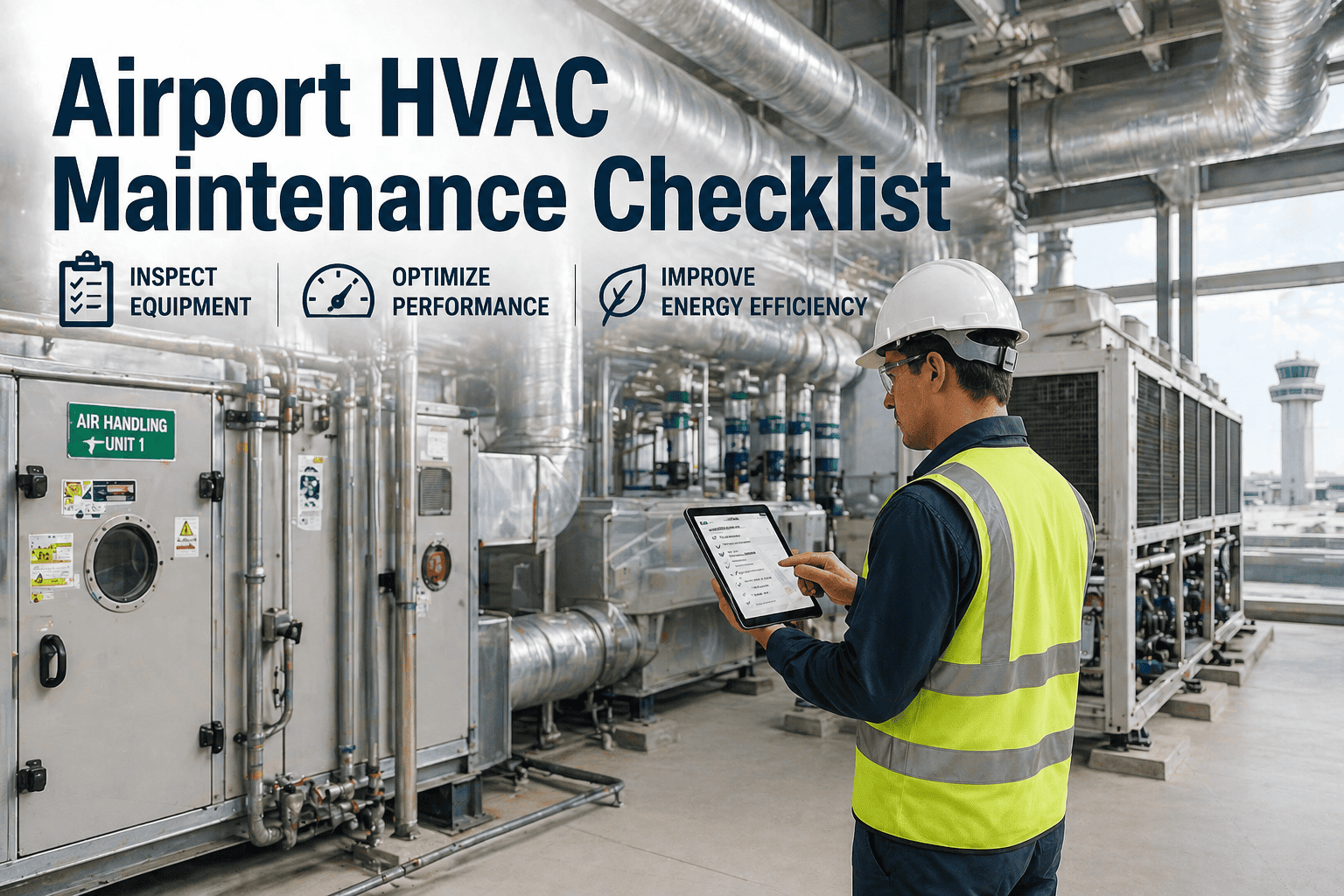
A single chiller trip during a July afternoon peak does not just raise the terminal temperature — it cascades. Gate areas hit 29°C within 40 minutes. Passenger complaints spike. Ground crews slow down. Flight turnarounds stretch. And the emergency repair costs 4.8x what a scheduled condenser service would have run. Every one of those failures traces back to a maintenance gap: a filter change deferred, a coil inspection skipped, a refrigerant charge never verified after last season's leak. Airports processing 30,000–90,000 passengers daily cannot afford reactive HVAC management — the operational and reputational cost is too high. Want to see how structured PM scheduling prevents these cascades? Start a free trial and get your terminal HVAC under control, or book a demo to see Oxmaint in action.
Airport Terminal HVAC Systems: Maintaining Comfort for Millions of Passengers
Preventive maintenance strategies for AHUs, chillers, cooling towers, and ventilation systems across terminal buildings — keeping energy costs down and passenger comfort up.
Get your terminal HVAC maintenance scheduled, tracked, and audit-ready
Oxmaint connects every AHU, chiller, cooling tower, and ventilation zone into a single PM calendar — with mobile inspections, trend tracking, and automated work orders so nothing slips through the cracks.
Why Airport HVAC Is Unlike Any Other Commercial Building System
Airport terminals are not office buildings. They are sealed, 24/7 facilities handling extreme occupancy swings — a gate area can jump from 20 people to 180 within 30 minutes as a flight boards. Terminal HVAC must manage jet exhaust infiltration through jetways, cooking emissions from food courts, massive solar heat gain through glass facades, and fresh air requirements for spaces that can never open a window due to security constraints. A large airport consumes energy comparable to a small city, with HVAC responsible for 40–50% of total consumption.
The consequence of poor HVAC maintenance at this scale is not just discomfort — it is operational disruption. Clogged filters force fans to work 10–18% harder. Fouled coils add 8–15% to chiller energy costs. A stuck outdoor air damper in summer can add thousands of dollars monthly. And when a system fails during peak operations, the recovery time directly impacts passenger experience, airline schedules, and the airport's reputation. Explore how Oxmaint prevents these failures — start a free trial or book a demo to see terminal-scale PM scheduling.
Terminal Concourses
High ceilings, glass facades, and massive occupancy swings. AHUs must handle 5–10% outdoor air intake while maintaining 68–80°F year-round across security, gates, and retail zones.
Security and Customs
Dense passenger queues in confined spaces. CO2 spikes rapidly during peak hours. Requires MERV 14–16 filtration and demand-controlled ventilation to maintain air quality.
Baggage and Ground Ops
Industrial environment with conveyor heat, diesel exhaust, and dust. Separate HVAC zoning with heavy-duty filtration. Equipment runs 18–24 hours daily with minimal downtime windows.
IT and Telecom Rooms
150+ DX cooling units maintaining precise temperatures for critical airport systems. Redundancy is mandatory — a cooling failure can ground flight information displays and comms.
The Core Equipment That Keeps an Airport Terminal Running
A mid-size airport terminal operates 30–80 air handling units, 4–12 chillers, multiple cooling towers, and hundreds of terminal units, VAV boxes, and exhaust fans. Each has different maintenance intervals, different failure modes, and different consequences when neglected. The challenge is not knowing what to maintain — it is ensuring every task actually happens on schedule across a 24/7 facility where maintenance windows are measured in hours.
Air Handling Units (AHUs)
Filters, coils, fans, dampers, and drain pans — each degrading at different rates. Monthly filter checks, quarterly coil cleaning, and seasonal damper testing are minimum requirements. A single neglected AHU wastes $3,200–$7,500 in excess energy annually.
PM Frequency: Monthly core, quarterly deep, annual comprehensiveChiller Plant
Centrifugal or screw chillers providing 2,000–10,000 tons of cooling capacity per terminal. Condenser tube fouling reduces efficiency 2–4% per month. Refrigerant charge verification, oil analysis, and vibration trending prevent catastrophic compressor failures.
PM Frequency: Monthly operational, quarterly tube cleaning, annual overhaulCooling Towers
Reject heat from the chiller plant. Scale buildup, biological growth (Legionella risk), fan motor degradation, and fill media deterioration all require structured PM. Water treatment chemistry must be monitored weekly.
PM Frequency: Weekly water chemistry, monthly mechanical, annual structuralVentilation and Exhaust Systems
Terminal exhaust fans, jet bridge ventilation, parking structure ventilation, and kitchen exhaust hoods. Airflow verification ensures ASHRAE 62.1 compliance. Failed exhaust fans create IAQ complaints within hours in high-density zones.
PM Frequency: Monthly belt/bearing, quarterly airflow, semi-annual balancingWhy Airport HVAC Maintenance Programs Fail
Most airport facilities teams know what needs to be maintained. The breakdown happens in execution — tracking hundreds of assets across multiple terminals, coordinating with airline schedules for maintenance windows, and proving compliance to regulators. Here are the four failure patterns that cost airports the most.
Invisible Filter and Coil Degradation
A coil losing 1% efficiency per week is invisible on any single day. After 12 months without cleaning, it operates at 70–85% capacity — forcing chillers to compensate. Without trended DP and temperature data, the degradation only surfaces as an energy bill spike or a comfort complaint.
Missed Inspections Across Sprawling Facilities
A facility with 50+ AHUs, rooftop units across multiple terminals, and underground mechanical rooms cannot rely on paper schedules. Units get skipped, technicians sign off incomplete rounds, and the CMMS records the PM as "done" while bearings run dry and filters load past capacity.
No Coordination With Flight Operations
HVAC maintenance windows must align with low-occupancy periods and airline schedules. Without integration between the maintenance calendar and terminal operations, planned work gets cancelled repeatedly — pushing deferred maintenance into emergency failure territory.
Compliance Documentation Gaps
ASHRAE 62.1, Legionella risk management, OSHA indoor air quality standards, and regional codes (CIBSE in UK, DEWA in UAE) all require documented proof of maintenance. Paper-based or spreadsheet-tracked PM programs fail audits because records are incomplete, undated, or missing technician verification.
Airport Terminal HVAC Maintenance Schedule: What, When, and Why
The table below maps the core maintenance activities, frequencies, and consequences of deferral for the primary HVAC equipment in a terminal facility. Every task should be tracked in a CMMS with documented completion, measurement readings, and photo evidence. Configure these schedules in Oxmaint — start a free trial or book a demo to see how automated scheduling works.
| Equipment | Task | Frequency | Key Measurement | Cost of Deferral |
|---|---|---|---|---|
| AHU Filters | Inspect DP, replace when loaded | Monthly | Filter DP vs. baseline | 10–18% fan energy increase |
| AHU Coils | Clean coil face, verify delta-T | Quarterly | Entering/leaving air temp | $8K–$15K excess energy/yr per unit |
| AHU Belts and Bearings | Tension check, vibration reading | Monthly | Belt deflection, vibration spectrum | 4–48 hr downtime on belt snap |
| AHU Dampers | Full stroke test, seal inspection | Quarterly | Open/close response, leakage rate | 20–35% heating cost increase |
| Chiller Condenser Tubes | Brush clean, inspect for pitting | Quarterly | Approach temperature | 2–4% efficiency loss per month |
| Chiller Oil and Refrigerant | Oil analysis, charge verification | Semi-annual | Oil acidity, refrigerant weight | Compressor failure — $50K–$200K |
| Cooling Tower | Water chemistry, fill inspection | Weekly / Quarterly | pH, conductivity, Legionella test | Legionella liability + efficiency loss |
| Exhaust Fans | Belt, bearing, airflow verification | Monthly / Quarterly | CFM reading vs. design | IAQ complaints, code violations |
Swipe to view all columns on mobile
Reactive HVAC Management vs. Oxmaint-Powered Preventive Maintenance
The difference between a reactive and a structured PM approach is not marginal — it is the difference between constant firefighting and predictable, budgetable operations.
How Oxmaint Serves Airport HVAC Maintenance Teams
Zone-Based PM Scheduling
Configure maintenance schedules by terminal zone — concourse, security, baggage, mechanical rooms. Each zone has its own inspection frequency, checklist, and compliance requirements. PM work orders generate automatically when due, with the correct checklist and parts list attached. Start a free trial to configure zone-based schedules.
Condition Trend Tracking
Log filter differential pressure, coil delta-T, vibration readings, and refrigerant charge at every inspection. Oxmaint trends these readings over time and flags when a value approaches the replacement threshold — so you replace based on condition, not calendar. Book a demo to see trend dashboards.
Mobile Inspection Checklists
Technicians complete inspections on mobile devices with structured checklists — mandatory fields, measurement inputs, photo capture for fouled coils or damaged belts, and pass/fail criteria. No more paper sign-offs that skip items. Every point is documented and time-stamped. Start a free trial to build your first checklist.
Compliance and Audit Reporting
Generate ASHRAE 62.1 ventilation maintenance reports, Legionella risk management documentation, and regulatory compliance summaries on demand. Every inspection, every reading, every corrective action is logged with technician ID and timestamp — ready for any audit without manual assembly. Book a demo to see compliance reporting.
The Financial Case for Structured Airport HVAC Maintenance
The numbers speak for themselves. Structured preventive maintenance is not an expense — it is the highest-return investment an airport facilities team can make.
Frequently Asked Questions
How often should airport AHU filters be inspected and replaced?
Monthly visual inspection and differential pressure measurement is the baseline. Replace when DP exceeds 1.5x the clean filter baseline — not on a fixed calendar. In high-particulate environments (construction nearby, desert climates like UAE, or high-pollen seasons), compress intervals to bi-weekly checks. CMMS-based variable scheduling adjusts frequency automatically based on loading trends. Start a free trial to set up condition-based filter scheduling in Oxmaint.
What is the biggest energy waste in airport HVAC systems?
Fouled cooling coils and failed economizer dampers. A cooling coil losing 1% efficiency per week can operate at 70% capacity after 12 months — forcing the chiller to work 30% harder. Meanwhile, a stuck-open outdoor air damper in winter increases heating costs 20–35%. Both are invisible without trended measurement data from structured inspections. Book a demo to see how Oxmaint tracks coil and damper performance trends.
How does Oxmaint handle HVAC compliance documentation for airport audits?
Every inspection completed in Oxmaint is logged with technician ID, timestamp, measurement readings, photos, and pass/fail results. Compliance reports for ASHRAE 62.1, Legionella risk management, and regional codes can be generated on demand — no manual spreadsheet assembly required. The system maintains a complete audit trail for every asset, every task, every result.
Can Oxmaint manage HVAC maintenance across multiple airport terminals and buildings?
Yes. Oxmaint's asset hierarchy — Portfolio, Property, System, Asset, Component — maps directly to airport structures: Airport, Terminal, HVAC System, Chiller/AHU, and individual components. Multi-site dashboards show PM compliance, asset health scores, and energy performance across all terminals from a single view. Start a free trial to configure your terminal structure in Oxmaint.
Stop reacting to HVAC failures — start preventing them with Oxmaint
Every AHU, chiller, cooling tower, and ventilation system in your terminal — scheduled, inspected, documented, and audit-ready in one platform. Join airports that have cut energy waste by 15–35% and eliminated emergency HVAC surprises.