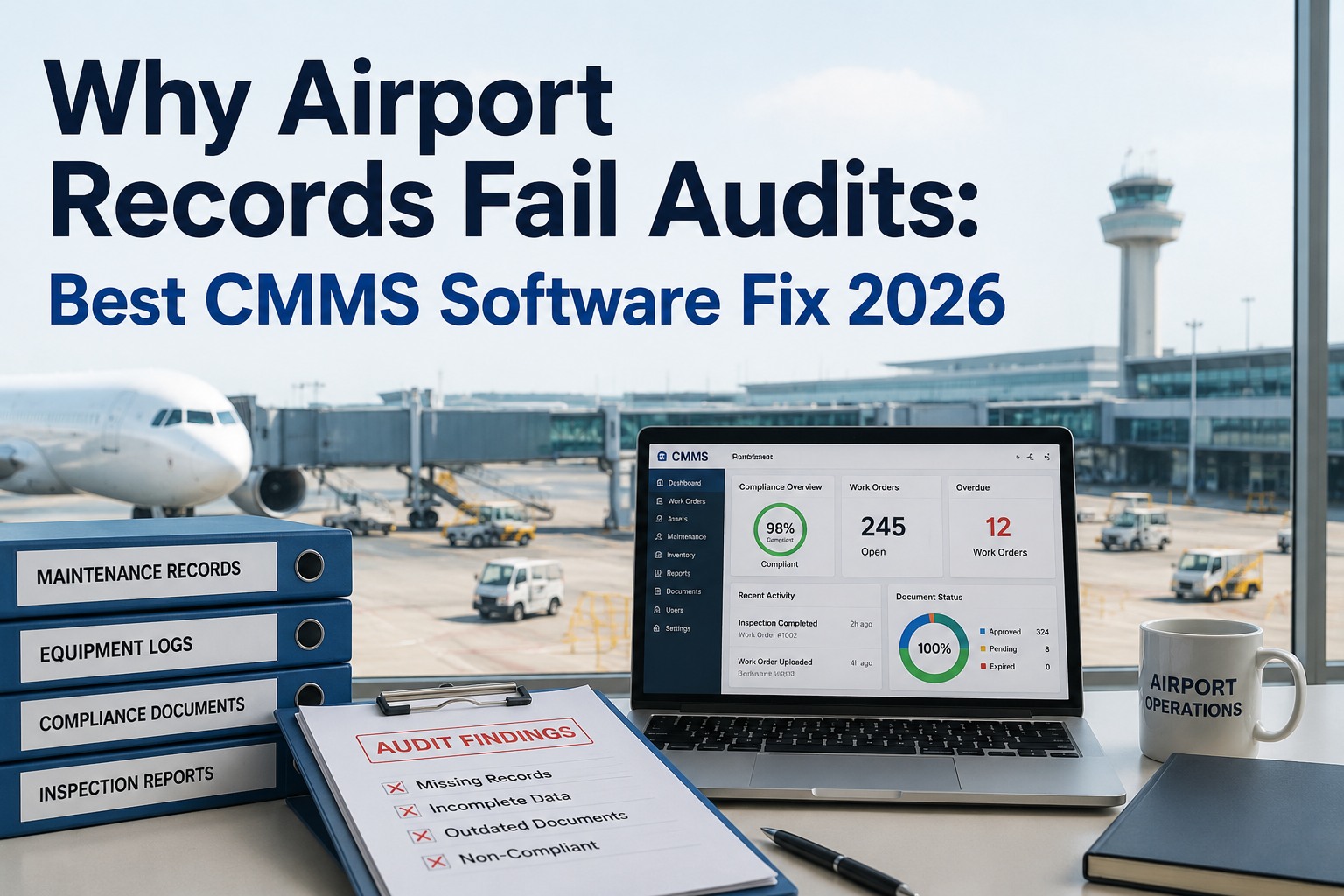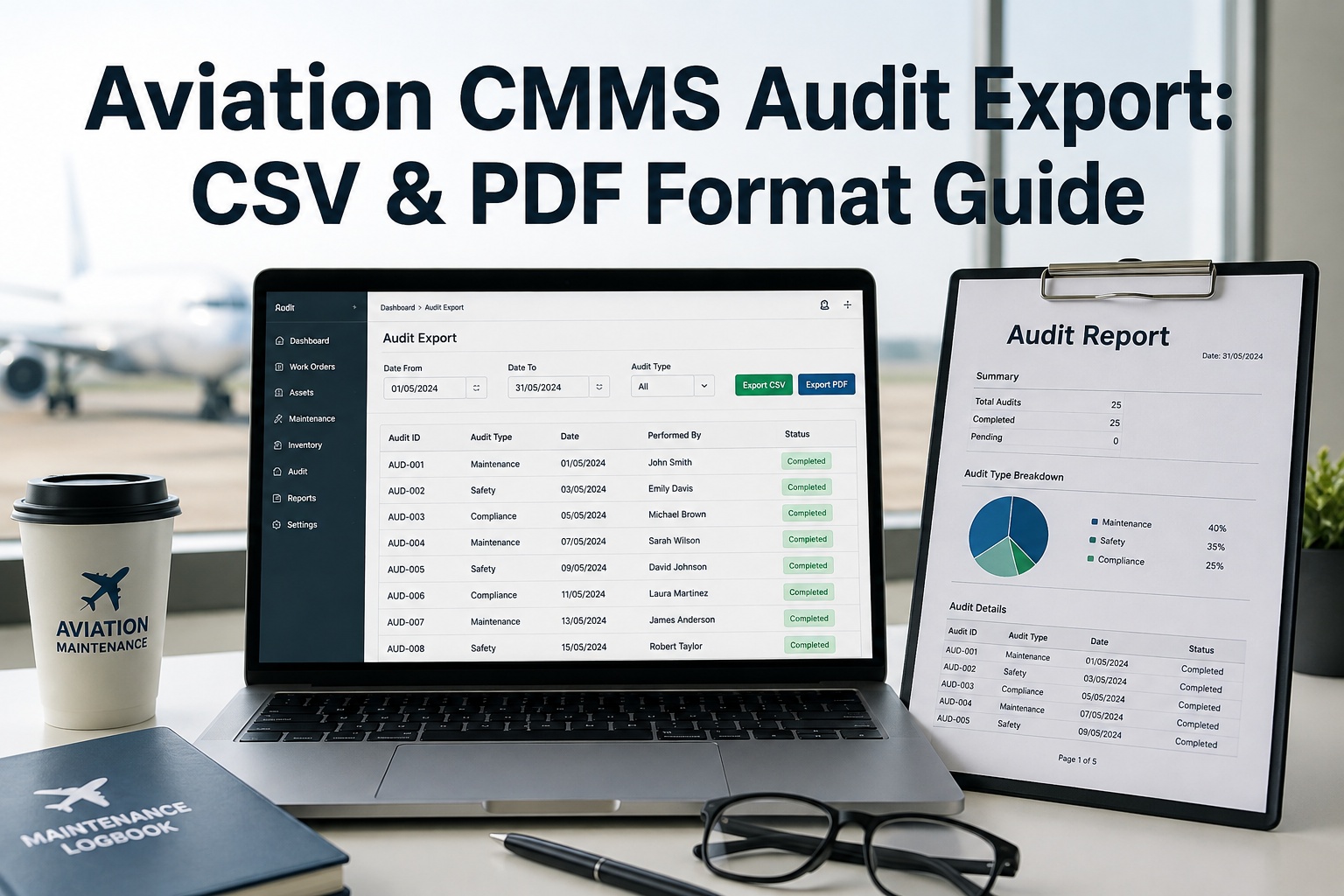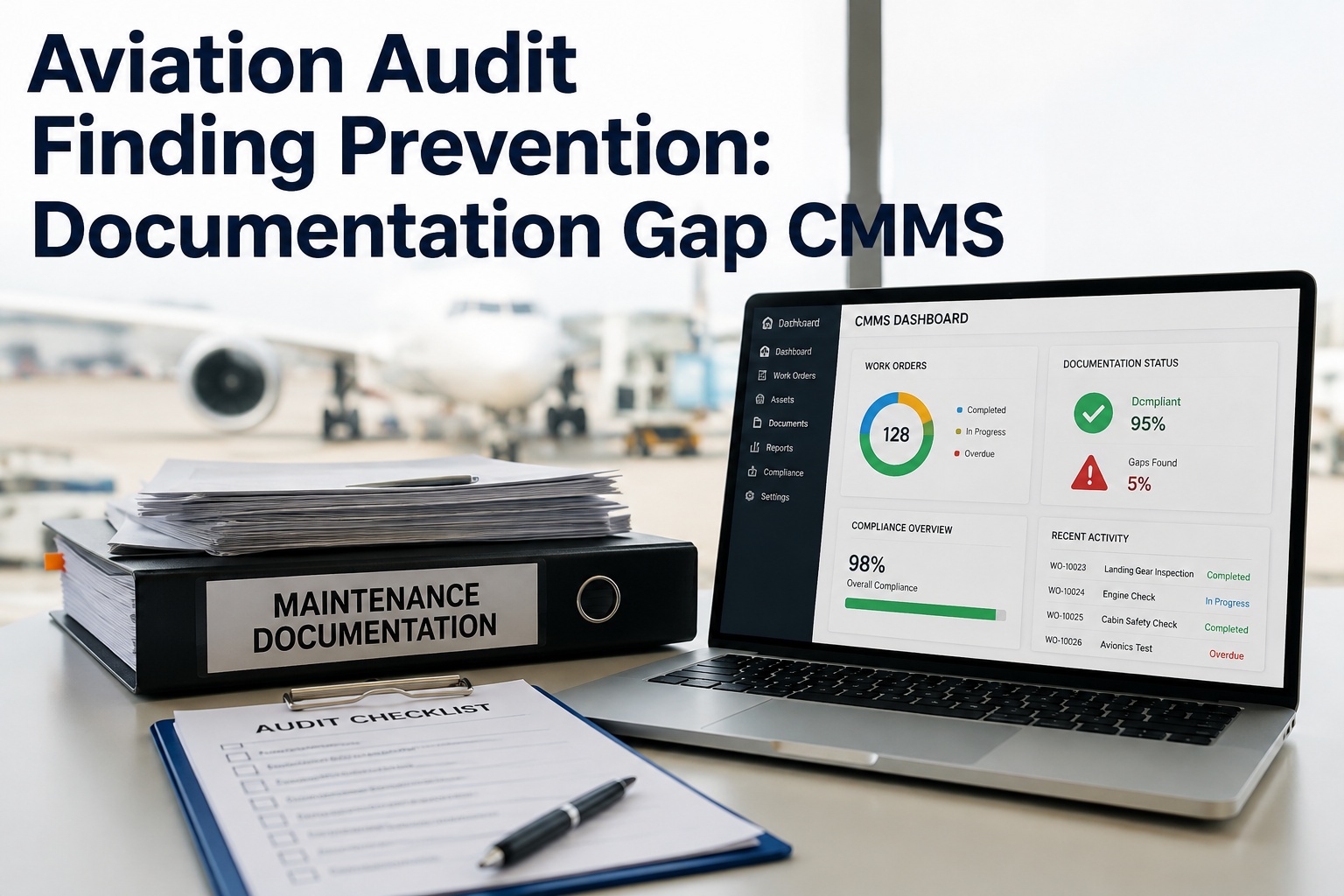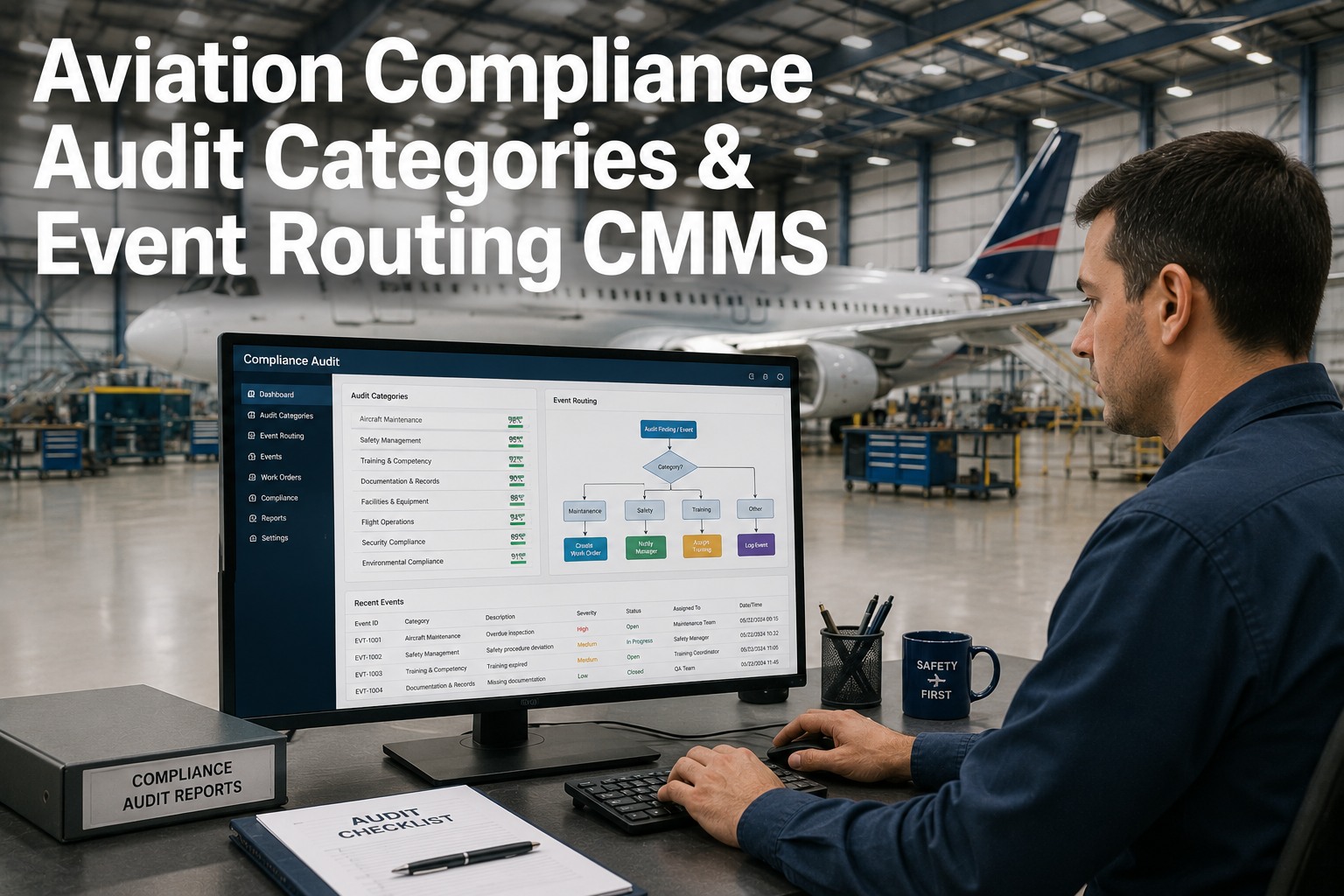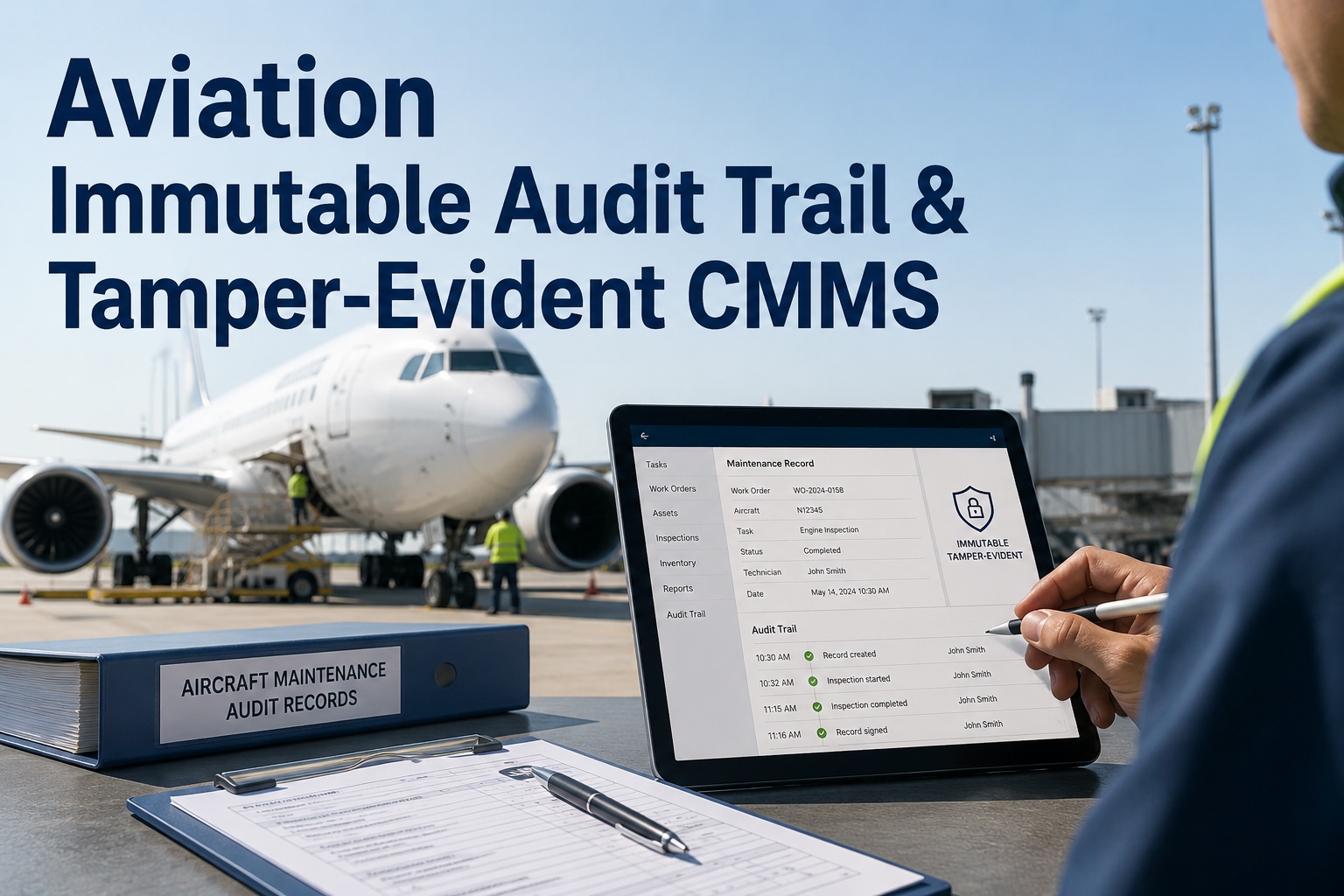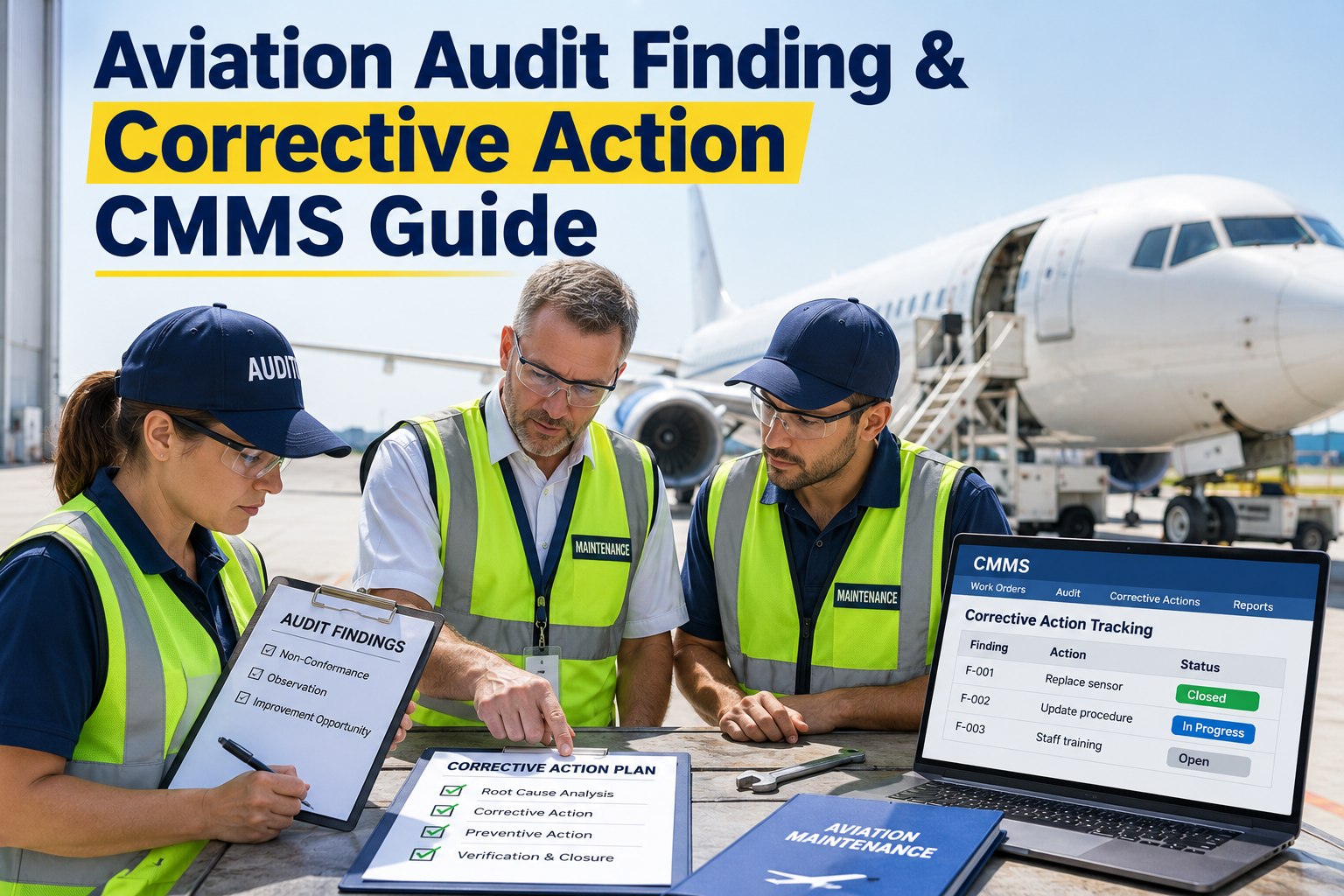
An aviation audit finding that is not properly closed becomes the opening item in the next regulatory audit. This guide to aviation audit finding and corrective action CMMS covers finding classification, root cause linkage, and preventive action tracking—showing maintenance and reliability teams how to close findings the way regulators expect, not just the way that clears the tracker. By linking every observation to a structured CMMS corrective action workflow, airlines and MROs can prevent finding escalation, eliminate repeat audit findings, and maintain continuous compliance. Ready to replace spreadsheet tracking with audit-ready software? Start Free Trial to see how OxMaint maps findings to work orders automatically.
CMMS CORRECTIVE ACTION GUIDE 2026
Are Repeat Audit Findings Signaling Systemic Problems to Your Regulators?
Over 60% of aviation maintenance audit findings reopen in the next cycle because root causes were never linked to verified corrective actions. OxMaint's CMMS finding closure workflow connects every observation to a tracked work order, evidence package, and effectiveness check—so findings close once and stay closed.
AUDIT FINDING CLASSIFICATION
How to classify aviation audit findings before corrective action
Regulators expect findings to be classified by severity and risk before a corrective action plan is submitted. A CMMS audit finding workflow starts by sorting observations into three tiers so teams apply the right level of root cause analysis and documentation.
Observation
A minor deviation or documentation gap with no immediate airworthiness impact. Requires a logged note and corrective action within 30–60 days.
Finding
A process failure or repeated deviation that impacts compliance. Triggers formal root cause analysis and a documented preventive action plan.
Major Finding
A systemic breakdown or airworthiness-adjacent risk requiring immediate containment, regulatory notification, and a 7-day corrective action plan.
Without tier classification built into the CMMS, teams treat every finding the same—which is why low-risk observations clutter trackers while major findings slip past their 7-day deadline.
ESCALATION PREVENTION
Preventing aviation finding escalation from observation to major finding
Aviation finding escalation follows a predictable path: an unaddressed observation becomes a finding, and an unverified corrective action becomes a repeat finding—the type regulators flag as systemic. The table below maps how a CMMS finding tracking workflow intervenes at each stage.
| Escalation Stage | Without CMMS Finding Tracking | With OxMaint CMMS Corrective Action | Regulatory Risk |
|---|---|---|---|
| 1. Observation logged | Noted in email or spreadsheet, often lost | Auto-created as CMMS finding record with photos and asset link | Low if closed; high if forgotten |
| 2. Repeat observation | No visibility into prior history; treated as new issue | Asset history flags repeat pattern; auto-upgrades to Finding | Moderate — regulator begins pattern tracking |
| 3. Formal finding | Manual root cause analysis in a separate document | RCA template attached to work order; preventive action auto-scheduled | High — CAPA plan required |
| 4. Repeat finding | No effectiveness verification; corrective action assumed complete | Effectiveness check work order auto-generated 30/60/90 days post-closure | Critical — signals systemic failure to regulator |
ROOT CAUSE LINKAGE
Linking root cause analysis to CMMS corrective action records
A corrective action without a documented root cause is just a repair. Regulators want to see that the underlying cause—not just the symptom—was addressed. OxMaint links a structured 5-Why or fishbone analysis directly to the work order that implements the fix.
Log finding with evidence
Photo, asset ID, location, and auditor notes attached to the CMMS finding record within 24 hours of discovery. No separate email threads or shared drives.
Complete root cause analysis
Structured 5-Why or fishbone template launched from the work order. Root cause category (procedural, training, equipment, supplier) tagged for trend analytics.
Implement corrective and preventive actions
Corrective work order fixes the immediate issue. Preventive action auto-schedules recurring task, PM update, or training assignment to stop recurrence.
Verify effectiveness and close
30/60/90-day effectiveness check auto-generated. If the finding recurs, it reopens with full history. If verified, the finding closes with a complete audit trail.
WORKED EXAMPLE
How a 180-asset MRO closed 42 open findings in one quarter
Consider a regional MRO with 180 tracked assets and 42 open audit findings spanning two years. Their legacy process—a shared spreadsheet updated manually—produced repeat findings on ground power units and baggage loaders because root causes were never linked to preventive actions.
After deploying OxMaint, the MRO linked each open finding to a corrective work order with a root cause tag. Within 90 days, 38 of 42 findings were closed with effectiveness verification. The remaining 4 were escalated to major findings with extended CAPA plans. In the following audit cycle, zero repeat findings were issued on those assets—and the regulator noted the improved traceability of the maintenance records.
HOW OXMAINT HELPS
How OxMaint closes aviation audit findings the way regulators want
OxMaint is an AI-powered CMMS and EAM platform that turns audit findings into tracked, verified, and documented corrective actions. Each capability below maps directly to a step regulators check during finding closure reviews.
Finding-to-work-order automation
Every audit finding auto-generates a work order linked to the asset, auditor, and evidence. No manual entry, no orphaned findings. Outcome: 100% of findings have a tracked corrective action within 24 hours.
Effectiveness verification scheduling
OxMaint auto-generates 30/60/90-day effectiveness check work orders after a finding is closed. If the issue recurs, the finding reopens with full history. Outcome: repeat findings reduced by 70–90%.
Complete audit trail and evidence vault
Every action—root cause, corrective fix, preventive task, sign-off—is time-stamped and attached to the finding record. Export a full evidence package in one click. Outcome: audit prep time cut from weeks to hours.
Finding trend analytics
AI-driven dashboards flag repeat findings by asset, root cause category, and technician group before they escalate. Outcome: systemic issues identified 2–3 audit cycles earlier than manual tracking allows.
See OxMaint close your open audit findings — book a 30-minute demo
Walk through a live aviation finding closure workflow: from observation to root cause to effectiveness verification. Bring your toughest open finding and we'll show you how it closes in OxMaint.
FINDING CLOSURE FAQ
Aviation audit finding and corrective action FAQ
What is an aviation audit finding versus an observation?
An observation is a minor deviation or documentation gap with no immediate airworthiness impact, typically requiring correction within 30–60 days. A finding is a formal compliance failure that triggers root cause analysis and a documented corrective action plan. Repeat observations on the same asset or process should be escalated to findings, which a CMMS like OxMaint can automate through asset history tracking.
How does a CMMS track corrective actions for audit findings?
A CMMS creates a finding record linked to the specific asset, generates a corrective work order, attaches root cause analysis documentation, schedules preventive actions, and auto-generates effectiveness verification checks at 30/60/90 days. This creates a complete audit trail from discovery to closure.
Why do aviation audit findings reopen in the next cycle?
Findings reopen when the corrective action addressed the symptom but not the root cause, or when no effectiveness verification was performed after closure. Regulators view repeat findings as evidence of systemic failure, which can trigger deeper audits or enforcement action. Linking root cause analysis and effectiveness checks to every finding in a CMMS reduces reopen rates by 70–90%.
What should be included in a CMMS finding closure record?
A regulator-ready closure record includes the original finding description, severity classification, root cause analysis, the corrective work order with completion date, any preventive actions scheduled, technician sign-off, and the results of the effectiveness verification check. OxMaint compiles all of these into a single exportable evidence package so audit prep takes hours instead of weeks.
How long should corrective action take for an aviation audit finding?
Major findings typically require a corrective action plan within 7 days and full closure within 30–90 days depending on the regulator. Standard findings generally close within 60 days, while observations may take up to 90 days. OxMaint enforces these deadlines with automated alerts and escalation rules so no finding misses its regulatory closure window.
Stop reopening the same audit findings every cycle
OxMaint's AI-powered CMMS links every aviation audit finding to root cause analysis, corrective action, and effectiveness verification—so findings close once and stay closed. Book a demo or start your free trial today.
Free 14-day trial · No credit card