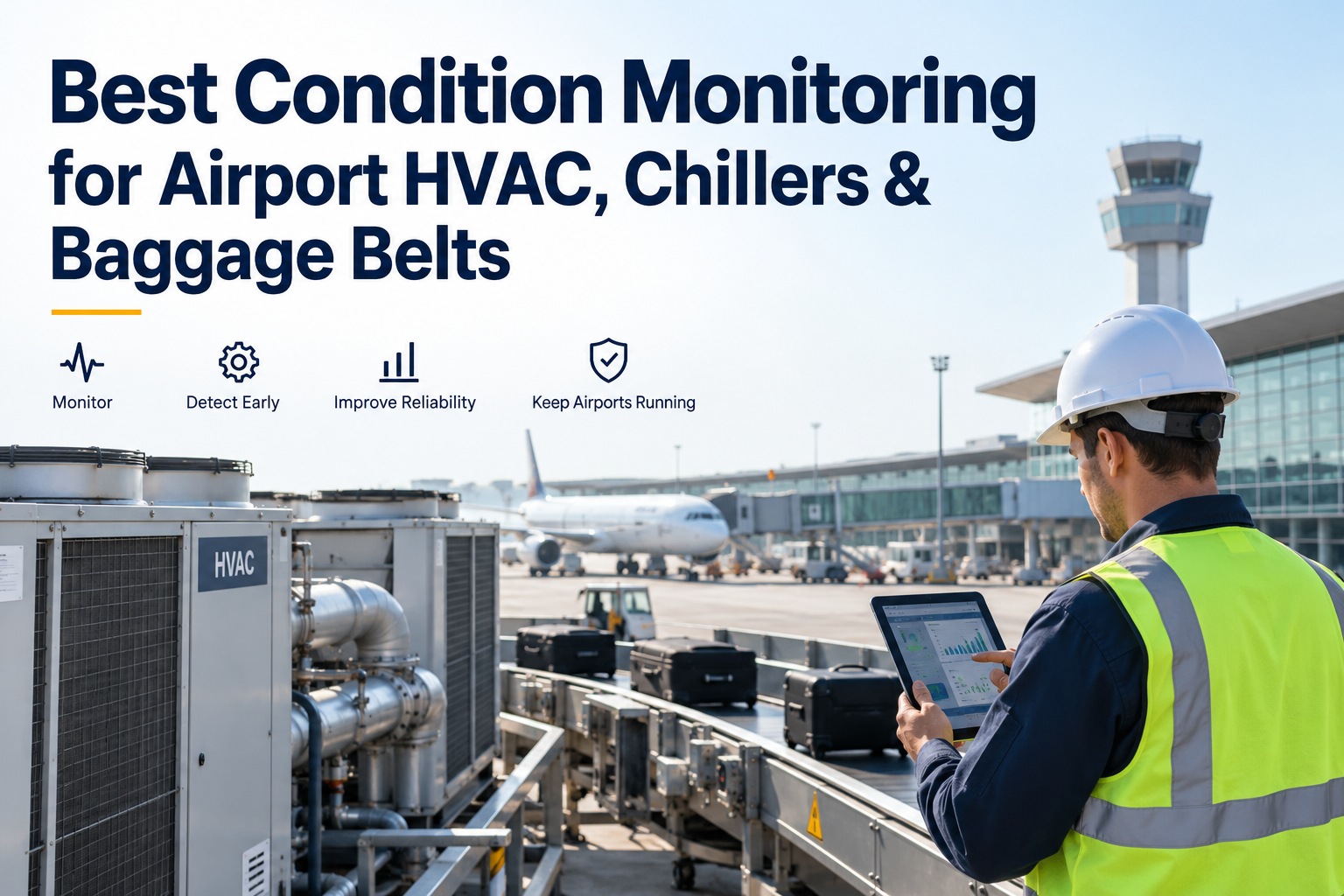
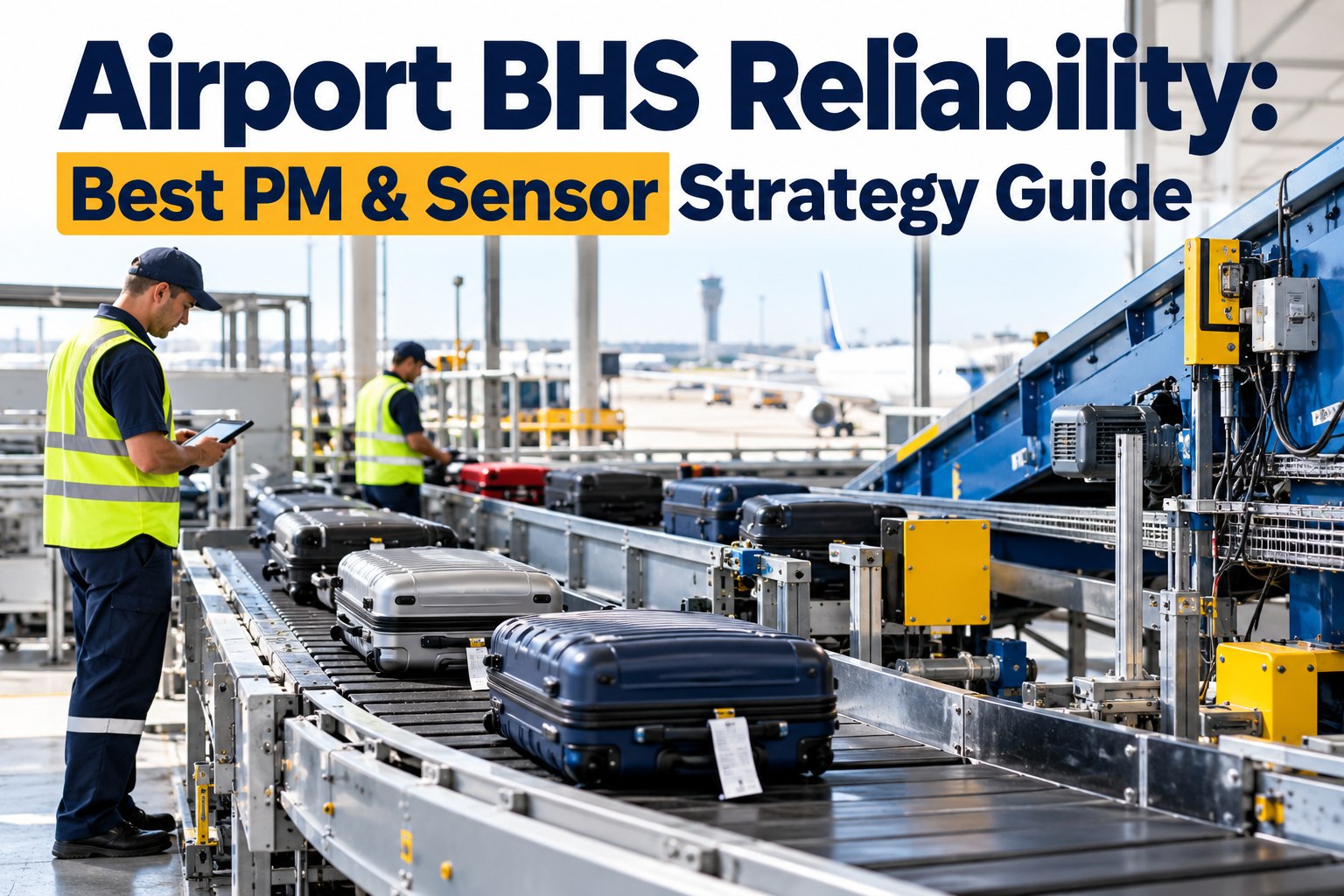
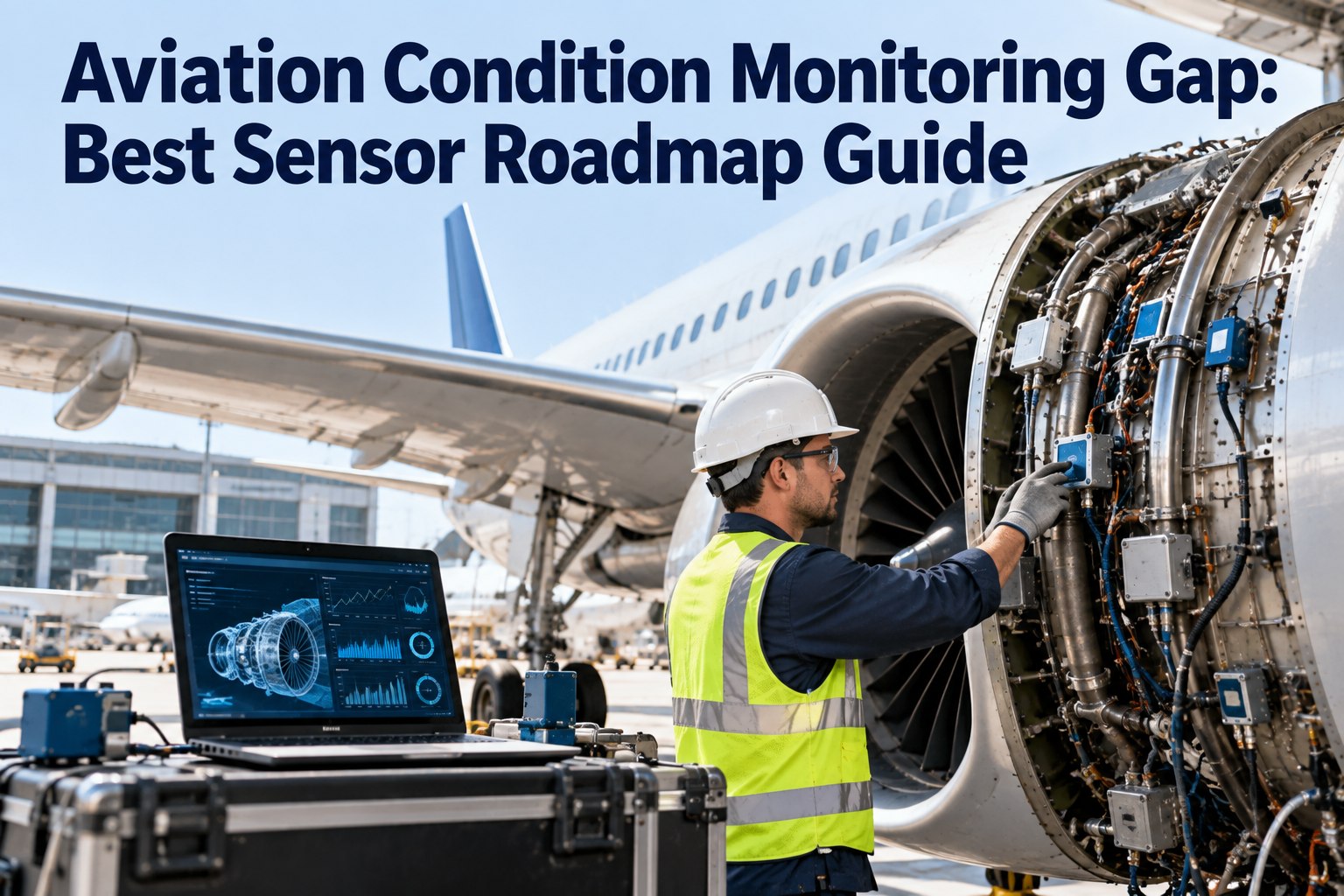
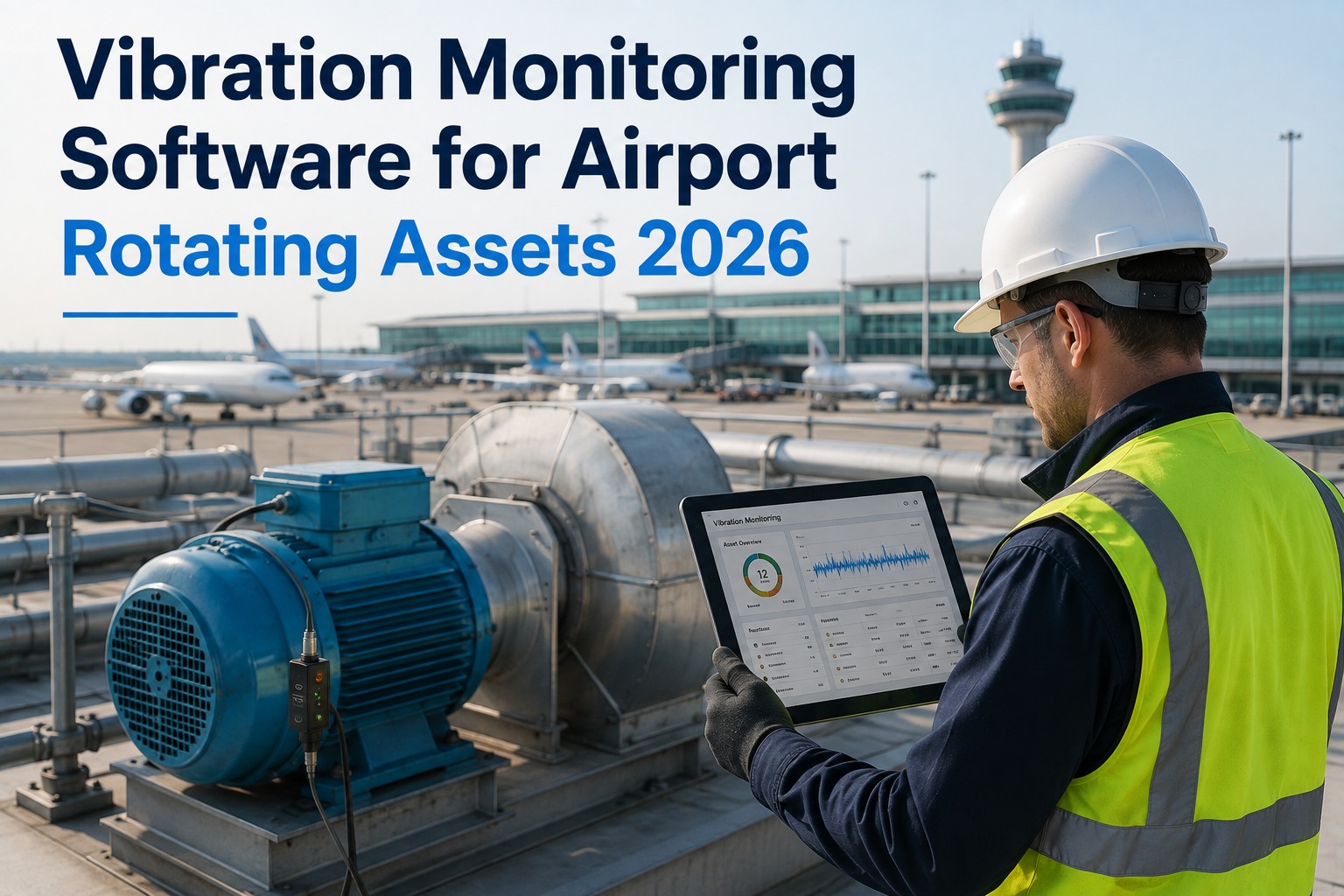
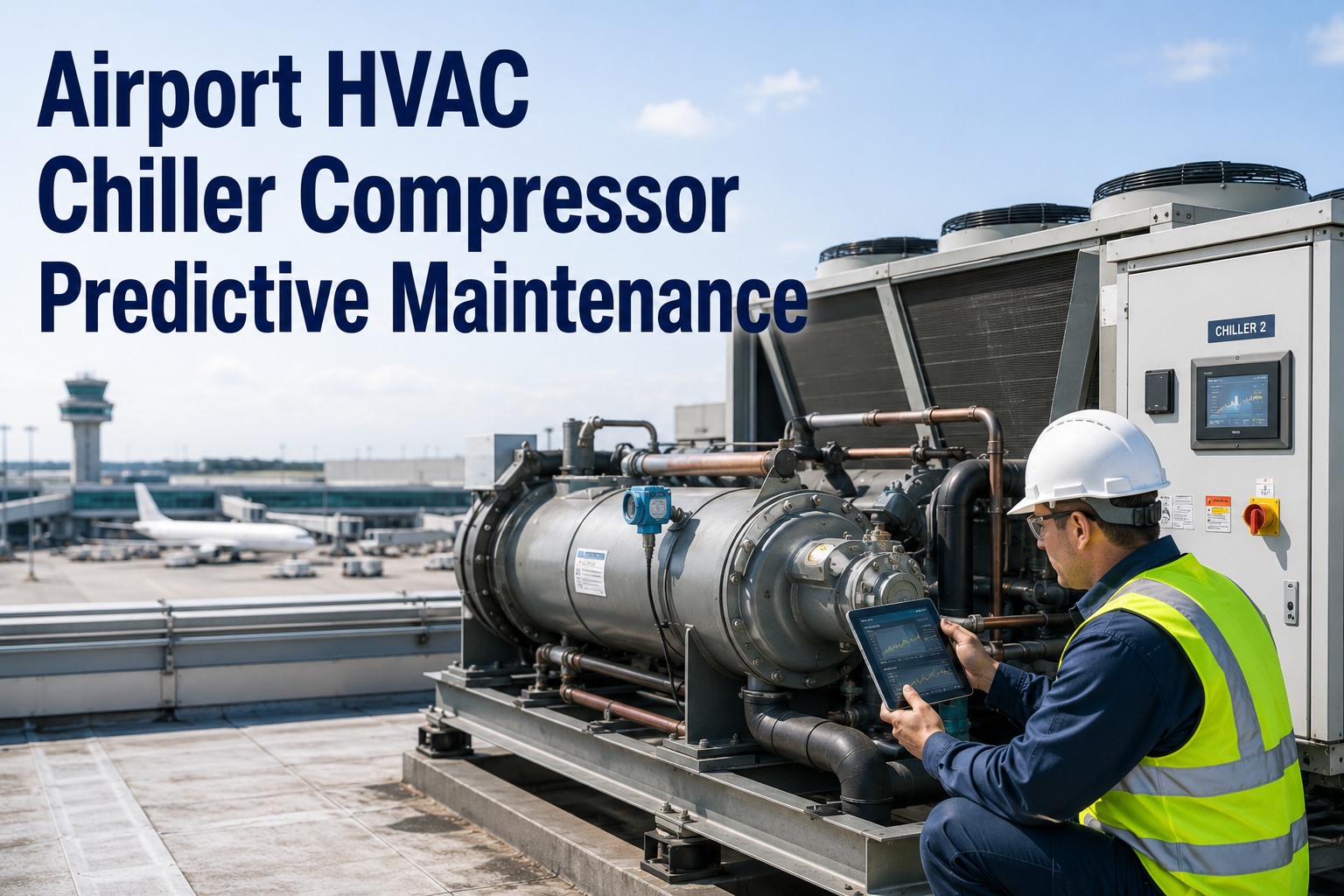
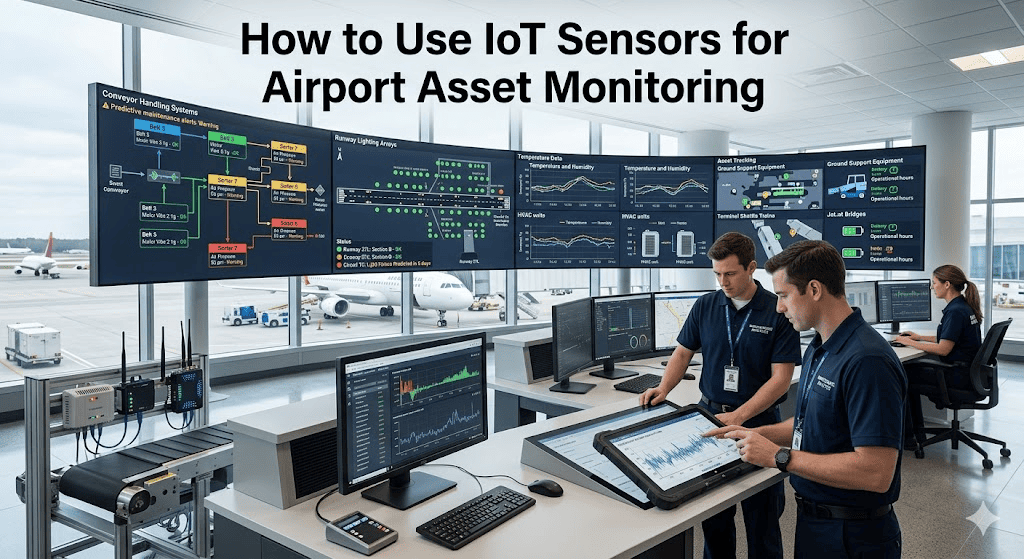
Most airport MEP and baggage-handling teams already know their fixed-interval PM calendar is a compromise — a chiller bearing might be fine for six more months or two weeks away from failure, and a walkdown every 30 or 90 days can't tell the difference. Condition monitoring exists to close that gap: sensors that read vibration, temperature and current continuously, and flag the exact moment an asset starts drifting out of its normal range. The part most deployments get wrong isn't the sensor — it's what happens after the reading. A threshold breach that just triggers an email is barely better than the calendar it replaced. This guide covers condition monitoring for the four asset classes that matter most airside and landside — HVAC, chillers, escalators and baggage belts — and how to wire the readings into work orders a technician actually acts on.
Airport MEP · Condition Monitoring · IoT-Triggered Maintenance · 2026
Stop Walking Every Asset on the Same Fixed Schedule
A chiller bearing wearing out, an escalator drive motor drawing more current than it should, a baggage belt tracking off-center — none of these wait for your next scheduled inspection. OXMAINT AI reads vibration, temperature and current signals from HVAC, chillers, escalators and baggage belts, and turns a threshold breach into an inspection or work order the moment it happens, routed to the right technician with the asset's full history attached.
3 signals
vibration, temperature & current — the core parameters across all four asset classes
4 zones
ISO 20816 vibration severity zones (A–D) used to set alert thresholds
10–1000 Hz
typical frequency range for RMS vibration velocity measurement per ISO 20816-1
4 asset classes
HVAC/chillers, escalators, baggage belts & the fans/motors that drive them
Four Assets, Four Different Failure Signatures
The same three signal types — vibration, temperature, current — apply across all four asset classes, but what they're actually looking for is different each time. Setting up monitoring without understanding the specific failure mode you're watching for is how alert fatigue starts. Start free and set up the signal that matches your asset's real failure mode.
HVAC / Air Handlers
Primary signal: Vibration + temperature
Fan bearing wear and belt misalignment show up as rising vibration at specific frequencies well before airflow or discharge temperature visibly suffers.
Chillers
Primary signal: Vibration + current draw
Compressor bearing wear, impeller imbalance and refrigerant-related mechanical stress each produce a distinct vibration pattern, often paired with a current draw shift.
Escalators
Primary signal: Current + vibration
Step-chain wear and drive-motor strain typically show up first as a gradual rise in motor current draw, with vibration confirming a mechanical cause.
Baggage Belts
Primary signal: Current + temperature
Motor overcurrent flags a jam or misalignment fast; sustained temperature rise at the drive or idler points to bearing or belt-tracking problems building up.
Reading the Signal: ISO 20816 Vibration Severity Zones
Rather than picking an arbitrary vibration threshold, ISO 20816 (which supersedes the older ISO 10816 series) defines four severity zones used across rotating machinery. Exact velocity limits vary by machine type and size, but the zone logic is consistent — and it's what a well-configured alert threshold should be built on. Book a demo to see zone-based thresholds set on your equipment.
Zone A
Newly commissioned equipment operating as expected.
Zone B
Acceptable for long-term, unrestricted operation.
Zone C
Unsatisfactory — suitable only for limited-time operation until repair.
Zone D
Vibration severity considered a risk of damage — action required.
Fixed-Interval PM vs. Condition-Triggered Response
The comparison isn't sensors vs. no sensors — most airports already have some monitoring in place. It's whether a threshold breach actually reaches a technician as a task, or just adds another dashboard nobody checks between rounds. Sign up free and connect your existing sensors to real work orders.
Fixed-Interval PM Only
Same Schedule, Regardless of Condition
Every asset inspected on the same calendar, healthy or not
A fault developing between rounds goes unnoticed
Healthy assets get unnecessary teardown inspections
No record of the trend leading up to a failure
Condition-Triggered + OXMAINT AI
Attention Where the Trend Says It's Needed
PM frequency matches actual condition, not a fixed date
Zone C/D breach opens an inspection the same day
Healthy assets left alone until data says otherwise
Full sensor trend attached to every resulting work order
From Sensor Reading to Assigned Technician — Automatically
OXMAINT AI ingests vibration, temperature and current data from your HVAC, chiller, escalator and baggage-belt sensors, checks each reading against that specific asset's threshold, and opens an inspection or work order the moment a zone is crossed — with the sensor trend attached, not just an alarm.
From Threshold Breach to Closed Work Order
This is the sequence that should run every time a sensor crosses into Zone C or D, regardless of which of the four asset classes it's on.
01
Signal Crosses Threshold
Vibration, temperature or current reading moves into an unsatisfactory or damage-risk zone for that specific asset.
02
Inspection or Defect Opens
A task is created automatically, tied to the asset record and the sensor reading that triggered it.
03
Technician Reviews Trend
Assigned tech sees the reading in context — how it's trended, not just the single alarm value.
04
Work Order Closes the Loop
Repair scheduled and logged, adding to that asset's history for the next threshold decision.
Before You Deploy Sensors, Check This
A sensor rollout that skips these steps usually ends in alert fatigue — everyone ignoring notifications because too many of them don't mean anything. Book a demo to walk through this against your asset list.
✓
Baseline each asset individually — thresholds should reflect that specific machine's normal range, not a generic default.
✓
Pick the signal that fits the failure mode — current draw for motor strain, vibration for bearing and mechanical faults.
✓
Set zone-based thresholds, not a single alarm point — a Zone C reading needs a different response than Zone D.
✓
Route the alert to a person, not just a dashboard — every threshold breach needs a default owner.
✓
Start with your highest-impact assets — chillers and baggage belts, before expanding to lower-criticality equipment.
✓
Review false positives monthly — a threshold that fires too often gets ignored, which defeats the purpose.
Frequently Asked Questions
What's the difference between condition monitoring and predictive maintenance?
Condition monitoring is the ongoing measurement of an asset's state — vibration, temperature, current. Predictive maintenance is what you do with that data: using the trend to schedule work before failure, rather than reacting to an alarm or following a fixed calendar.
Do escalators and baggage belts need vibration monitoring, or is current draw enough?
Current draw is usually the first and most sensitive signal for motor-driven equipment like escalators and belts, since strain shows up there early. Vibration monitoring adds confirmation of a mechanical cause (misalignment, bearing wear) once current draw has flagged something worth investigating.
Can OXMAINT AI work with sensors we've already installed?
Yes — OXMAINT AI is the maintenance management layer that ingests readings from existing vibration, temperature and current sensors (via standard IoT protocols) and turns threshold breaches into inspections and work orders. It doesn't require replacing sensor hardware already in place.
How do we avoid alert fatigue once sensors are live?
Set thresholds per asset rather than using one generic limit across a fleet, use zone-based severity (so a minor deviation doesn't page someone at 2am the same way a damage-risk reading would), and review false-positive rates regularly so thresholds get tuned rather than ignored.
Which asset should we start monitoring first?
Generally the asset class where unplanned failure has the biggest operational impact and the least redundancy — for most airports that's chillers (cooling plant impact) or baggage belts (direct passenger-facing disruption), before expanding to HVAC and escalators.
Let Condition, Not the Calendar, Decide What Gets Attention.
Connect vibration, temperature and current sensors on your HVAC, chillers, escalators and baggage belts to OXMAINT AI and turn every threshold breach into a work order someone actually sees.