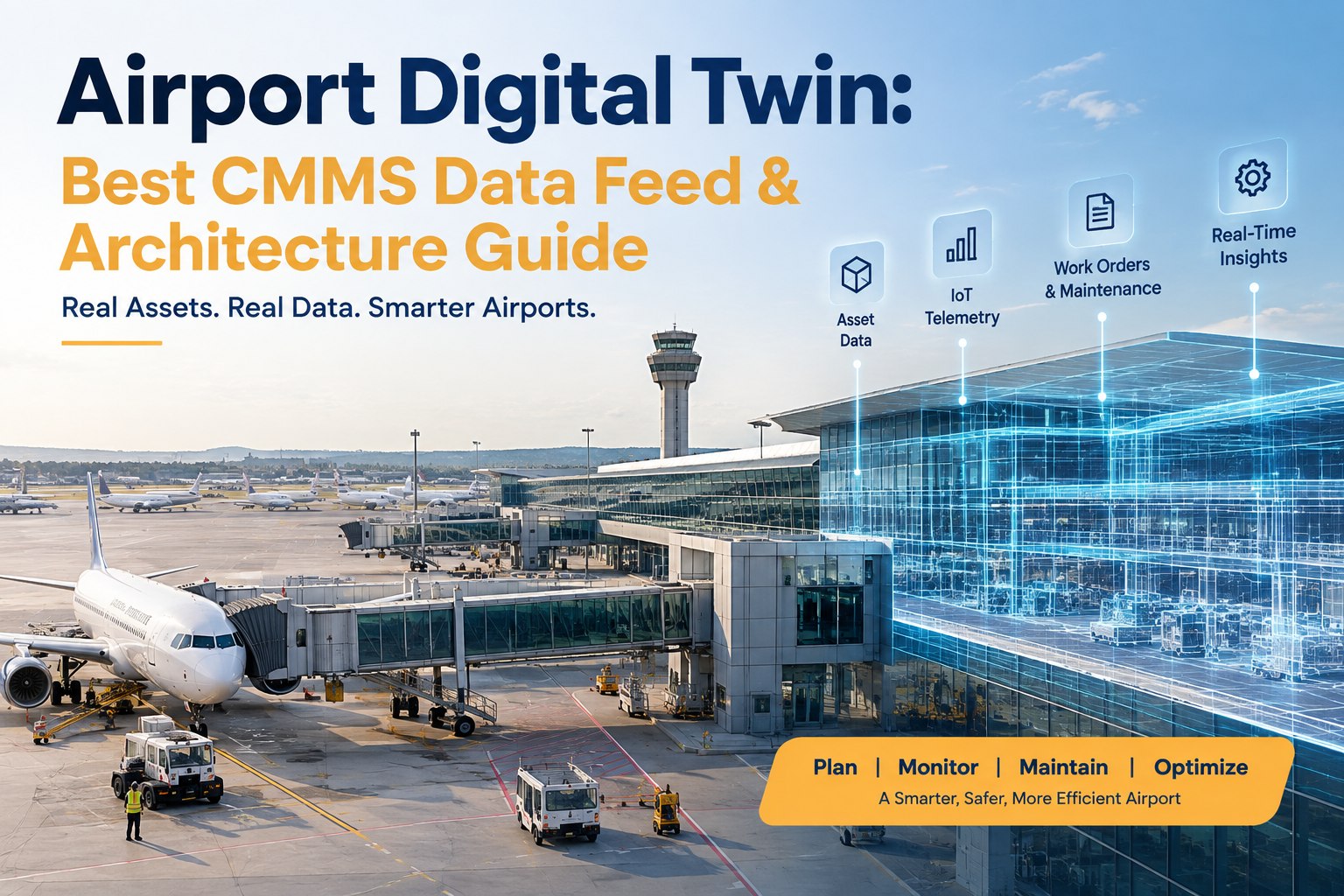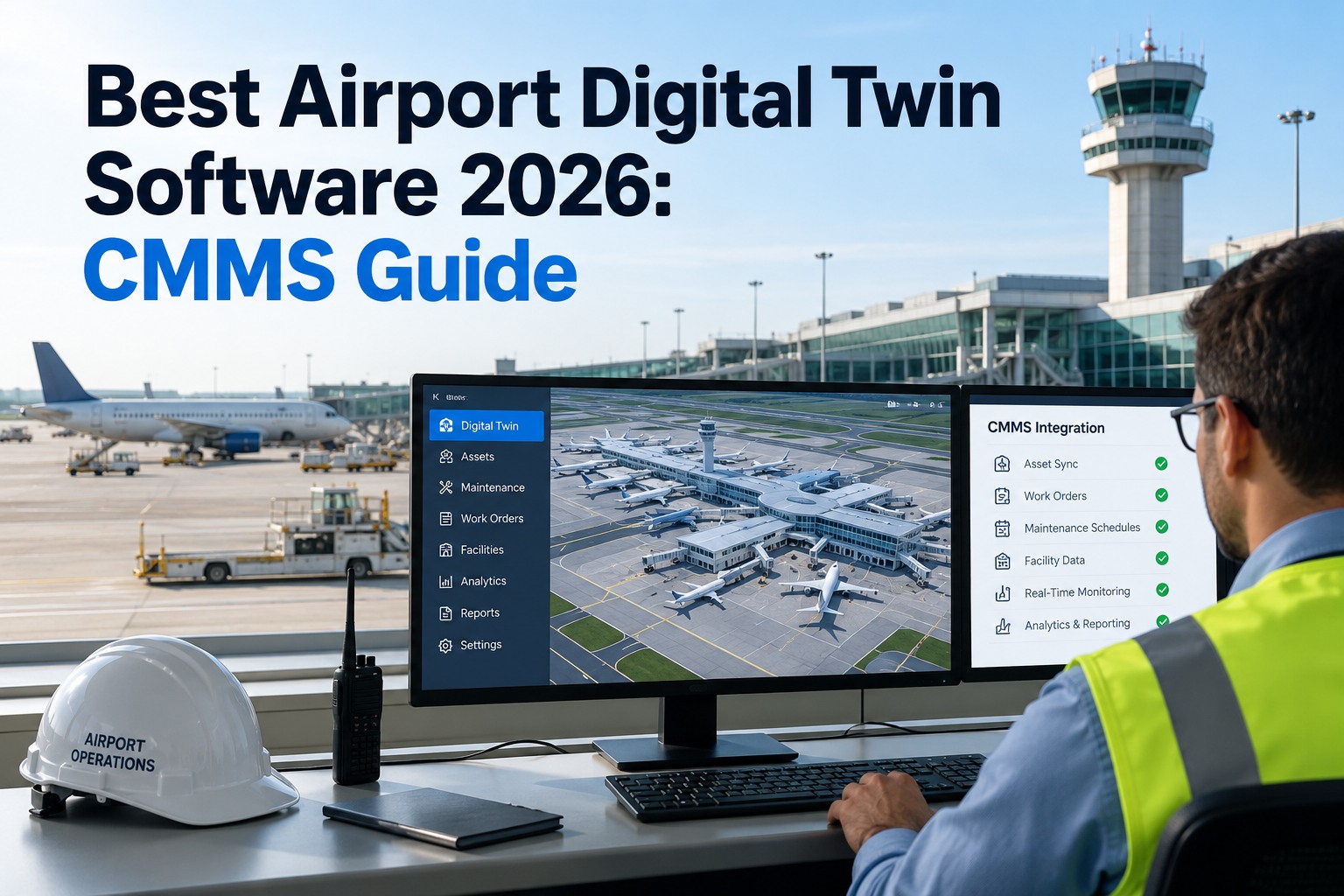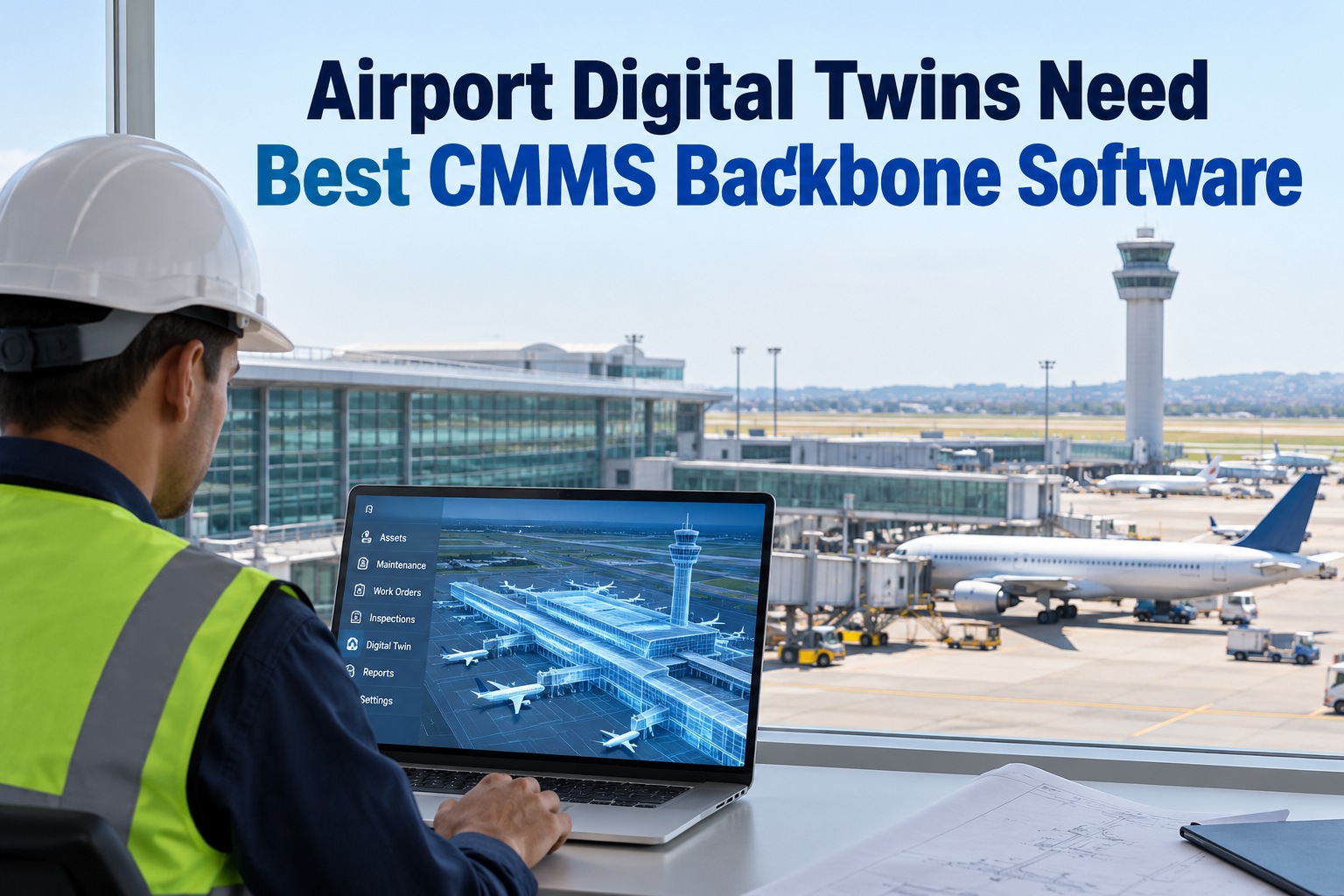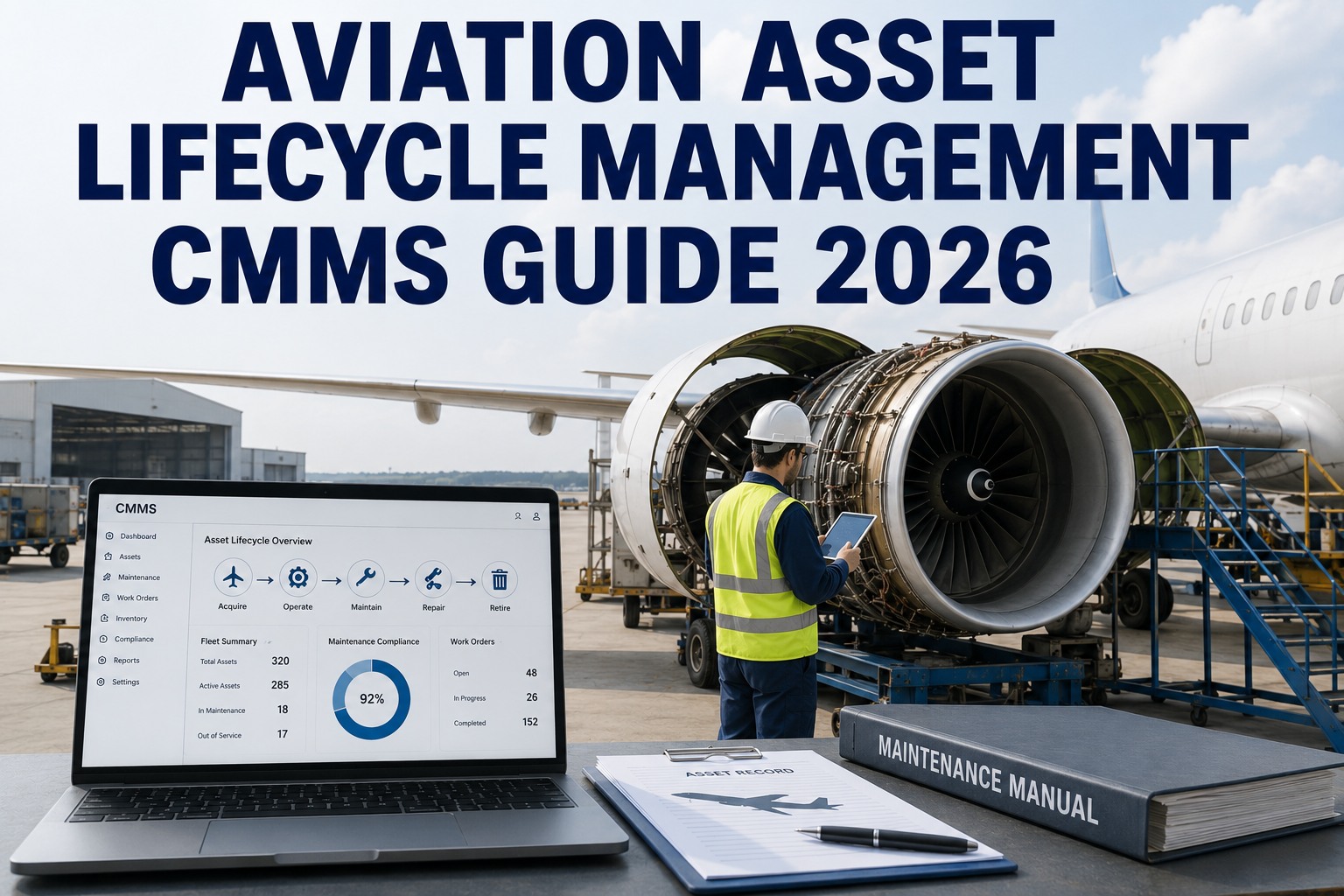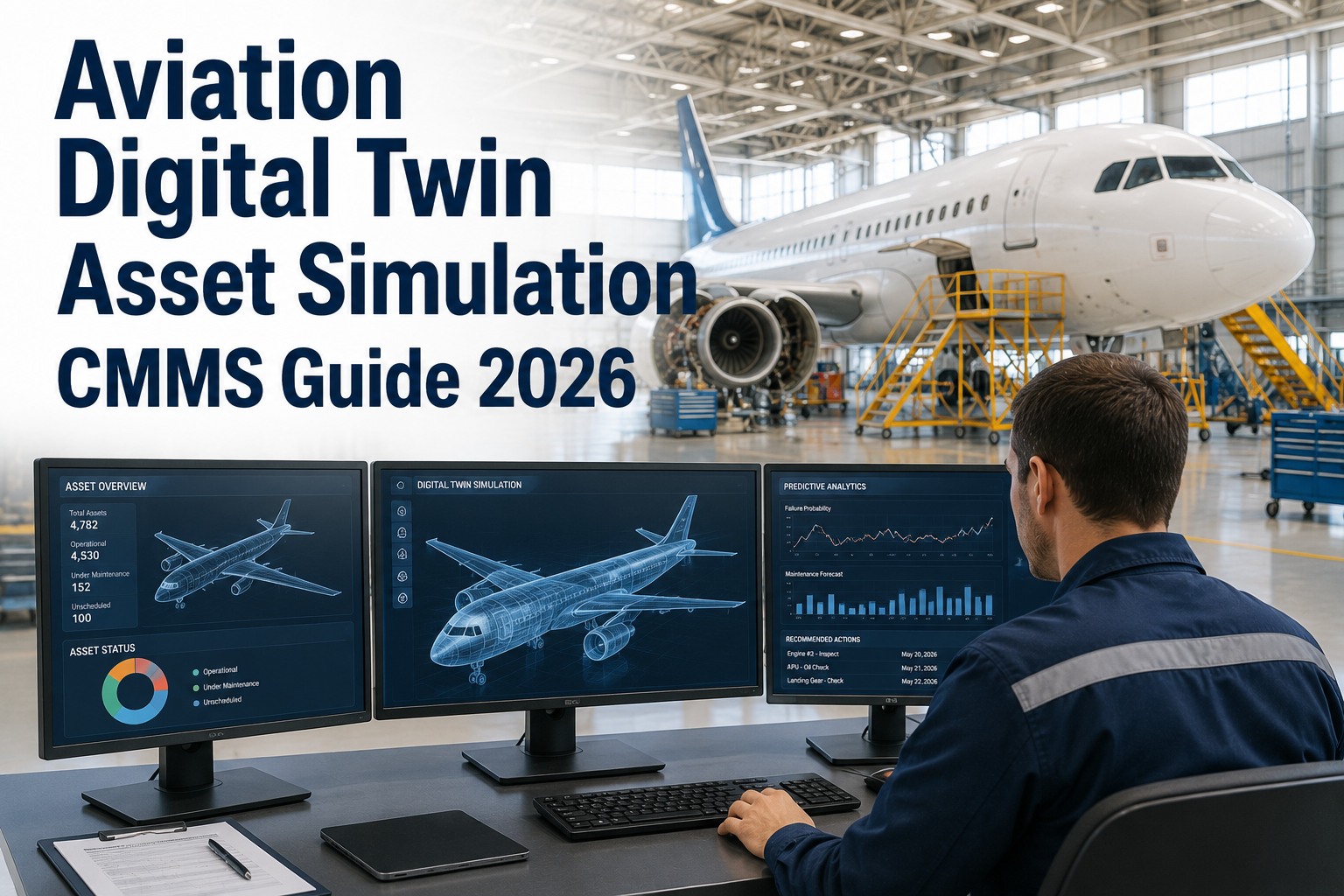
An aviation digital twin is a live, virtual replica of a physical asset — an engine, an airframe, a ground-support vehicle or an entire terminal system — that continuously ingests sensor and operational data so reliability teams can simulate failure scenarios, optimize maintenance intervals and trigger work orders before breakdowns occur. By 2026, digital twin asset CMMS integration has shifted from research lab novelty to operational standard at leading airlines, MROs and airports, with twin-fed predictive maintenance cutting unplanned AOG events by 20–30 percent. This guide maps the use cases that deliver real payback, the data foundation required, IIoT and CMMS integration architecture, and how aviation teams separate genuine digital twin value from vendor hype. Ready to connect your asset simulation to action? Start Free Trial and see OxMaint close the loop between twin prediction and work-order execution.
Can your maintenance team predict an engine failure before it grounds a $120M aircraft?
Aviation digital twins are no longer pilots — engine twins, airframe twins and GSE twins are in operational service at carriers worldwide. The teams seeing payback are the ones whose twin simulation is wired directly into a CMMS, turning a predicted failure into a scheduled work order within minutes, not days.
Aviation digital twin asset simulation explained for 2026
A digital twin is more than a 3D model. It is a physics-based or data-driven replica that stays synchronized with its physical counterpart through real-time IIoT telemetry, maintenance history and environmental data — enabling simulation, prediction and closed-loop corrective action.
Engine Performance Twin
Tracks EGT margin, fuel burn, vibration and cycle counts across hundreds of engine sensors. Simulates degradation curves to forecast shop-visit timing within ±50 flight hours — feeding OxMaint predictive work orders automatically.
Airframe Structural Twin
Models fatigue accumulation at critical joints, lap straps and door frames using strain-gauge and acoustic-emission data. Aligns with MPD tasks and AD/SB compliance tracking in the CMMS for audit-ready evidence.
GSE Fleet Twin
Covers tugs, belt loaders, pushbacks and GPU/ACU units. Simulates battery health, hydraulic cycle wear and brake life — cutting ramp-equipment downtime by 25–35 percent when integrated with work-order auto-generation.
Airport Infrastructure Twin
Models baggage systems, jet bridges, HVAC and runway lighting as interconnected assets. Simulates cascading-failure scenarios across terminals — prioritizing preventive tasks by operational risk, not just calendar intervals.
How digital twin asset simulation connects to your CMMS
A twin without an action layer is an expensive dashboard. The payback arrives when simulation output — a predicted remaining useful life, a detected anomaly, a simulated failure scenario — automatically creates, prioritizes and dispatches a work order inside your CMMS. Here is the end-to-end flow.
IIoT sensors stream live telemetry
Engine vibration, EGT, hydraulic pressure, tire pressure and cycle counters stream at 1–10 Hz from aircraft bus systems (ARINC, OMS) and GSE telematics into the twin model — alongside historical maintenance logs from the CMMS.
Twin recalculates asset health in real time
Physics-based and machine-learning models fuse sensor data with the asset's maintenance history. The twin continuously updates RUL estimates, degradation curves and anomaly scores — refreshing every flight cycle or ramp event.
Failure scenarios run against operating context
The twin simulates 50–500 failure scenarios per asset: what happens if EGT margin drops 15°C in the next 200 cycles? What if a hydraulic pump runs 10 percent above baseline? Results are scored by probability and operational impact.
OxMaint auto-generates prioritized work orders
When a simulation crosses a risk threshold, OxMaint creates a work order — tagged with the twin's prediction, RUL estimate, recommended task and required parts — assigned to the right technician and slotted into the hangar schedule before the asset reaches AOG.
Execution feedback refines the twin model
Technician notes, parts consumed and inspection findings flow back from the CMMS into the twin, improving model accuracy over time. This closed loop is what separates a real digital twin from a static condition-monitoring dashboard.
What aviation digital twin CMMS integration costs — and saves
The business case for a digital twin asset CMMS hinges on three variables: AOG cost avoidance, maintenance labor efficiency and parts inventory optimization. Below is a worked example for a mid-size regional airline operating 45 aircraft and 180 GSE units.
A fleet of 45 aircraft typically logs 18–24 unplanned AOG events annually. Twin-driven predictive dispatch prevents 6–8 of them. At an average $280K per narrowbody AOG event (lost revenue, rebooking, crew disruption), that is $1.7–2.2M in direct savings.
Targeted, twin-prioritized work orders eliminate 2–3 hours of diagnostic time per inspection event across 4,200 annual events. At a loaded rate of $78/hr, that is 8,200+ labor hours returned to productive maintenance — roughly $640K.
RUL-based parts ordering trims safety stock by 15–22 percent on rotable components. A $3.5M parts inventory reduced by 18 percent at a 12 percent carrying cost frees $420K annually — capital that goes back into operations.
| Metric | Before Twin CMMS | With OxMaint + Twin | Annual Impact |
|---|---|---|---|
| Unplanned AOG events | 22 per year | 14 per year | −36 percent |
| MTTR (mean time to repair) | 6.4 hours | 4.1 hours | −36 percent |
| Schedule compliance | 78 percent | 94 percent | +16 pts |
| Parts inventory carrying cost | $420K | $345K | −$75K |
| AD/SB audit preparation time | 5 days | 4 hours | −93 percent |
| Annual maintenance cost per aircraft | $1.42M | $1.18M | −$240K |
Digital twin vs. condition monitoring: what airlines should demand
Many vendors rebrand legacy condition-monitoring dashboards as "digital twins." A real aviation digital twin asset simulation must do three things a dashboard cannot: simulate future states, model failure propagation and close the loop to corrective action in the CMMS. Use this checklist to separate substance from marketing.
Condition Monitoring Dashboard
- Shows current sensor readings and threshold alerts
- Reactive — notifies after threshold breach, not before
- No failure-scenario simulation or RUL forecasting
- Manual handoff to CMMS — analyst emails maintenance
- No model improvement from execution feedback
True Digital Twin + CMMS
- Simulates future asset states across 50–500 scenarios
- Predictive — forecasts RUL and failure probability
- Models cascading failures across interconnected systems
- Auto-generates prioritized work orders in OxMaint CMMS
- Closed-loop learning from technician feedback and parts data
See how OxMaint turns digital twin predictions into dispatched work orders
Book a 30-minute demo on your own assets — we will walk through the twin-to-work-order loop, show live predictive triggers and map your payback in a personalized ROI model.
OxMaint capabilities that make aviation digital twin simulation actionable
OxMaint is the AI-powered CMMS and EAM layer that sits between your twin model and your maintenance crew. These four capabilities are what turn a simulation from an interesting prediction into a completed, documented, compliant work order.
Predictive Work-Order Auto-Generation
When the twin flags an asset crossing a risk threshold, OxMaint creates a work order pre-filled with the prediction context, recommended task, required parts list and skill-level assignment — no manual data entry, no email handoff.
Real-Time Asset Health Dashboard
Every aircraft, engine and GSE unit displays live health scores, RUL estimates and active AD/SB status in a single pane — giving reliability engineers and line maintenance the same operational picture.
Parts Reservation & Inventory Sync
Twin-triggered work orders automatically reserve rotable parts, check shelf-life and min/max levels, and create purchase requisitions when stock is below the simulation's projected need date — eliminating AOG-wait-for-parts.
Closed-Loop Compliance & Audit Trail
Every twin prediction, work order, technician sign-off, part serial and inspection finding is timestamped and stored against the asset record — producing FAA, EASA and ICAO audit-ready evidence in seconds, not days.
Aviation digital twin CMMS — frequently asked questions
What is an aviation digital twin in CMMS context?
An aviation digital twin is a live virtual model of a physical asset — engine, airframe, GSE or terminal system — that continuously ingests IIoT sensor data and maintenance history. In a CMMS context, the twin's simulations and predictions automatically trigger prioritized work orders, parts reservations and compliance tasks, closing the loop between prediction and corrective action without manual handoff.
How much does aviation digital twin CMMS integration cost?
For a mid-size carrier operating 45 aircraft, typical annual platform cost runs $180K–$350K including sensor integration, twin model licensing and CMMS seats. With $2.9M+ in combined AOG, labor and inventory savings, most implementations reach payback in 9–14 months. You can Book a Demo for a personalized ROI model based on your fleet size and current maintenance spend.
What data foundation is required for a digital twin in aviation?
You need three layers: IIoT telemetry (sensor streams at 1–10 Hz from engine bus, GSE telematics or building management systems), historical maintenance records (at least 18–24 months of work-order data in the CMMS for model training), and an asset hierarchy with serial-level tracking. OxMaint provides the asset hierarchy and maintenance-history layer out of the box, so the twin model can begin training on day one.
How is a digital twin different from condition monitoring?
Condition monitoring shows current sensor readings and alerts when a threshold is crossed — it is reactive. A digital twin simulates future asset states, forecasts remaining useful life, models cascading failures across interconnected systems and feeds predictions directly into the CMMS for auto-generated work orders. If the system cannot simulate future states or close the loop to action, it is a dashboard, not a twin.
Can OxMaint connect to our existing IIoT and twin model?
Yes. OxMaint exposes REST APIs and supports MQTT, OPC-UA and ARINC data feeds, so it can ingest predictions from any third-party twin model — GE Predix, Siemens MindSphere or a custom build. Once a prediction arrives, OxMaint handles work-order creation, parts reservation, technician dispatch, execution tracking and compliance documentation. Start a Start Free Trial to test the integration with your data.
Stop grounding aircraft that a twin predicted three weeks ago
OxMaint connects your aviation digital twin simulation to real work orders, real parts and real technicians — so every prediction becomes preventive action. Book a demo and see it on your fleet.
Free 14-day trial · No credit card