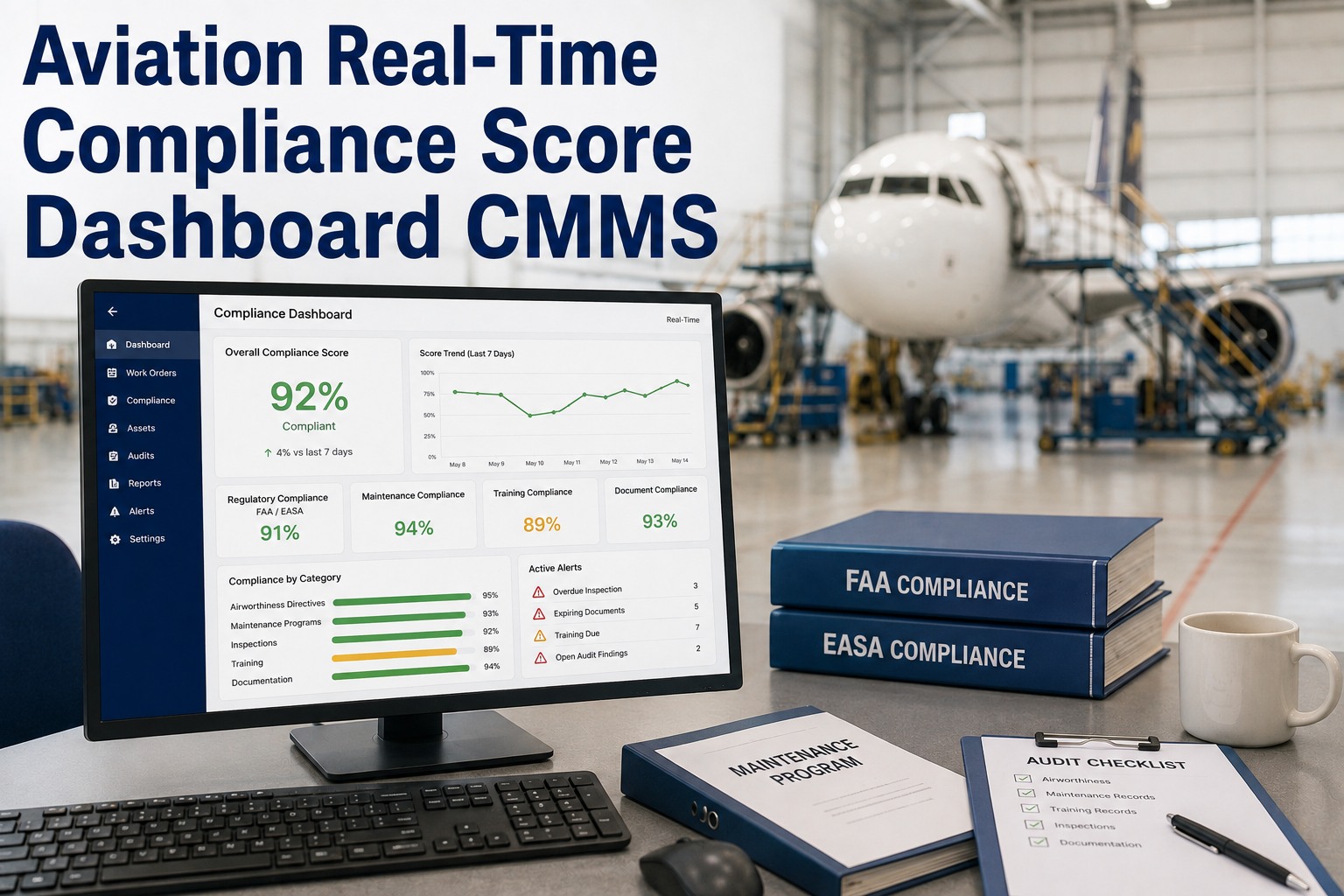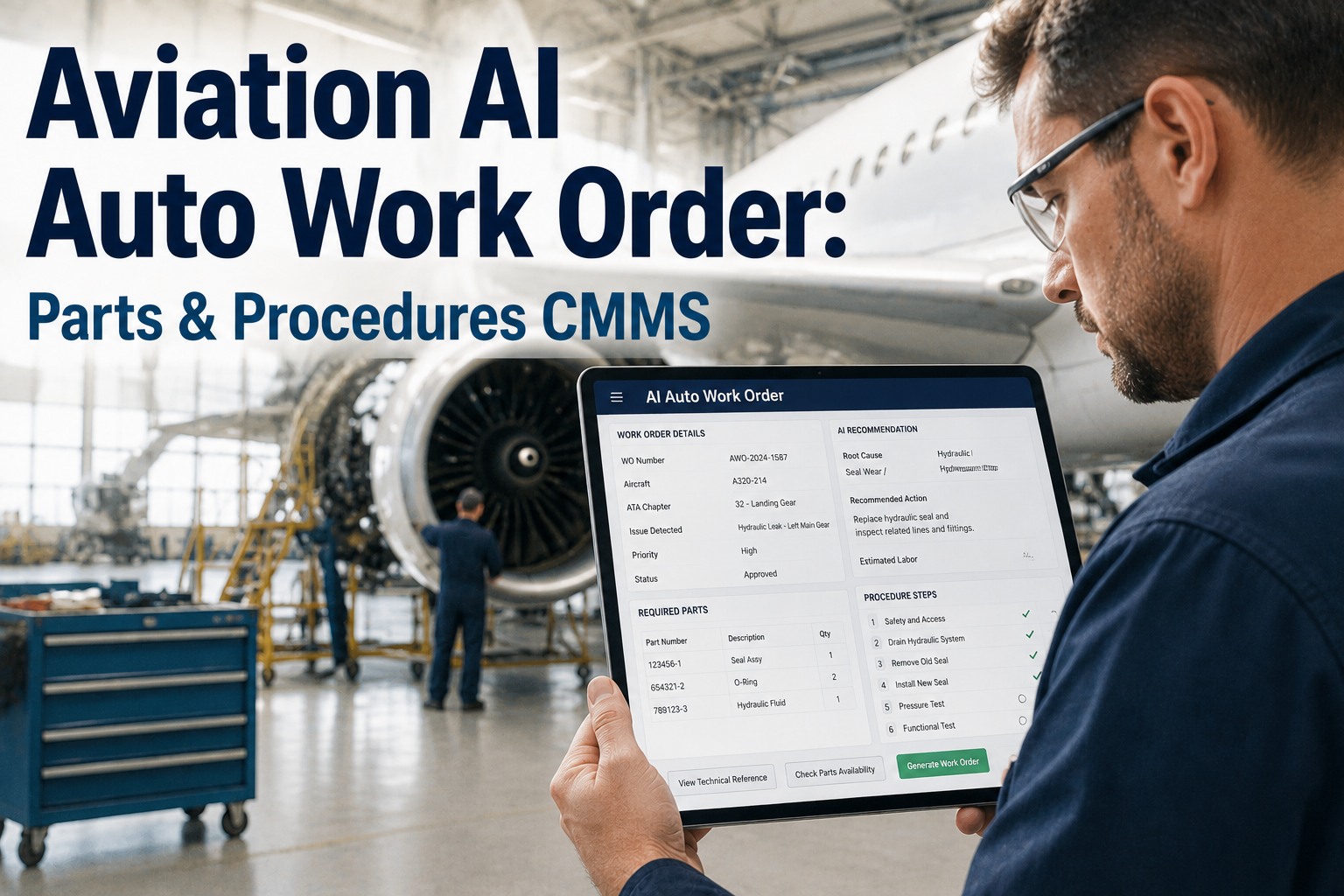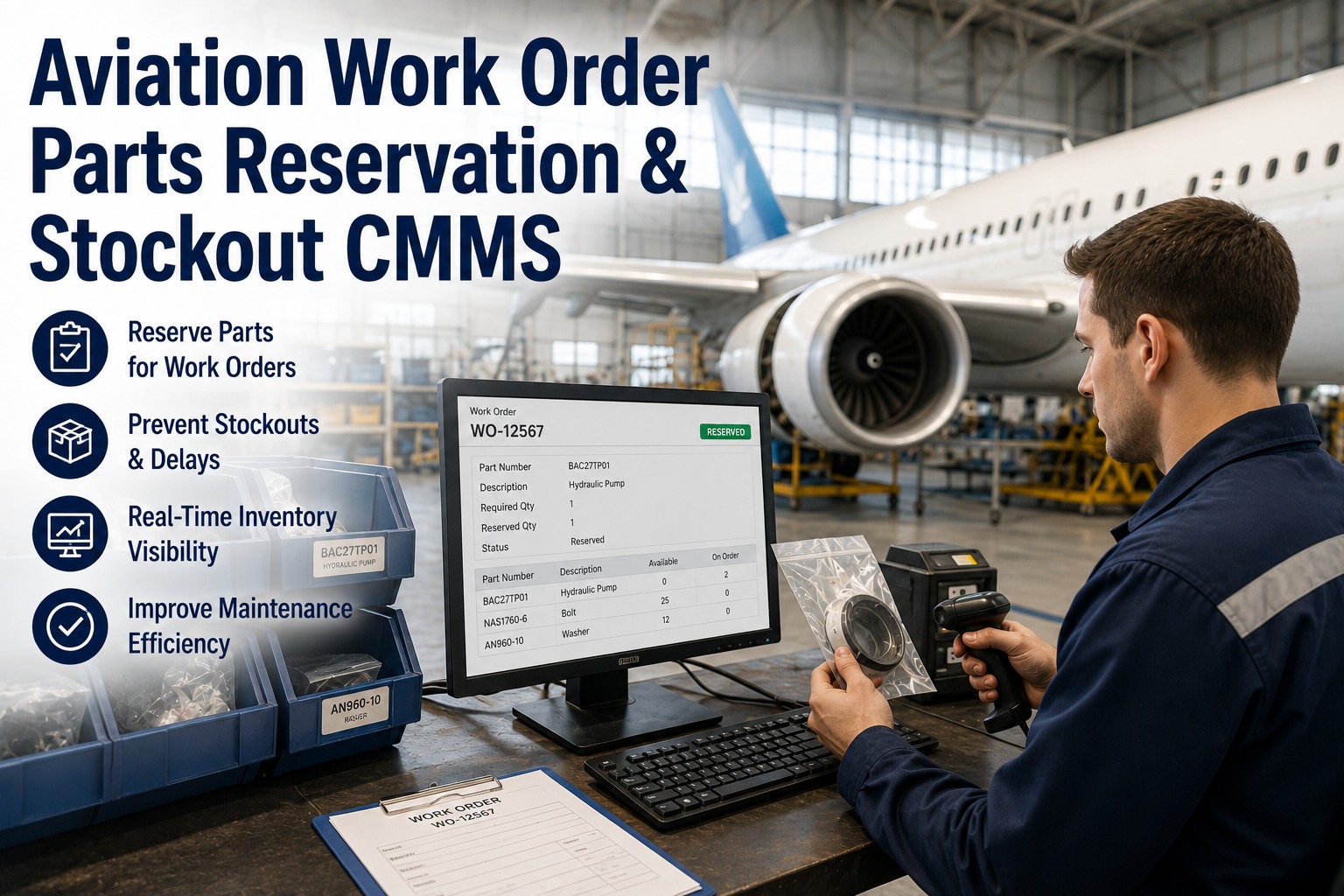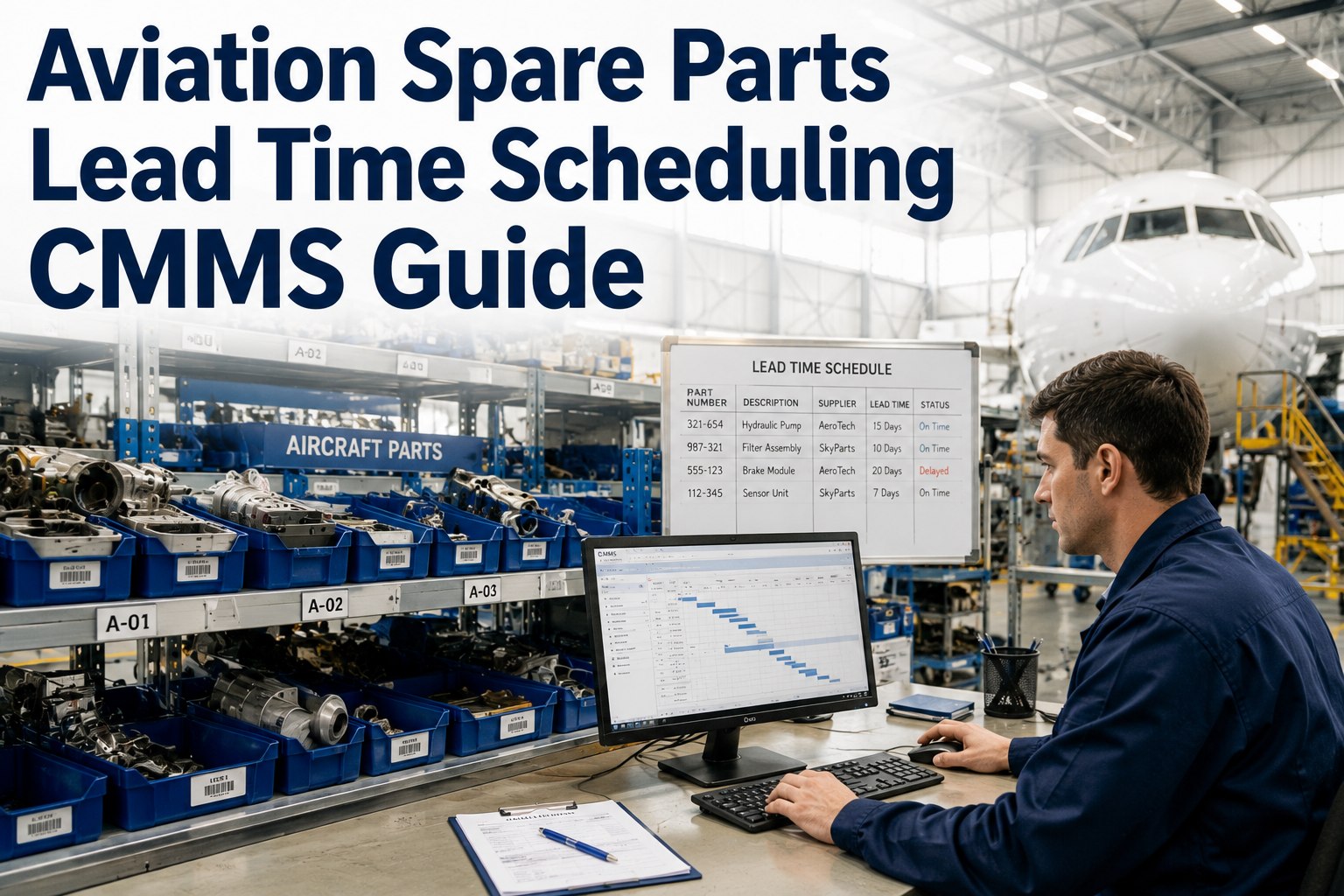
Aviation spare parts lead time scheduling determines whether a maintenance plan holds or slips — when a critical rotable or consumable is not on the shelf when the hangar door opens, the entire task, aircraft release and route schedule can cascade into delay. A parts-aware CMMS closes that gap by linking every work order to real-time inventory positions, supplier lead times and reorder points so tasks are only released when stock is confirmed available. Teams that adopt CMMS parts lead time discipline routinely cut AOG events and schedule slippage by 30–50% while freeing thousands of dollars in safety stock. This guide covers aviation parts timing, AOG parts procurement workflows and how to keep spare parts availability from being the reason a plan fails. Ready to align your maintenance tasks with real part availability? Start Free Trial and see it in action.
Aviation Spare Parts Lead Time Scheduling Guide 2026
Is your maintenance schedule ready when the parts are not?
Most hangar plan slippage is not a labour problem — it is a parts availability problem. When aviation spare parts lead time is not woven into CMMS scheduling, aircraft sit idle while rotables and consumables catch up. OxMaint aligns every work order to real-time inventory positions, supplier lead times and reorder triggers.
The Hidden Gate On Every Task
Why Aviation Spare Parts Lead Time Controls Your Entire Hangar Plan
In a 60-aircraft fleet operating under a standard 4-day C-check cycle, as few as 12 late part-line items can stall 3 simultaneous bay entries — costing roughly $185,000 per day in lost availability, crew standby and passenger re-accommodation. Lead time is not a procurement afterthought; it is the scheduling constraint.
Without a CMMS that treats spare parts lead time as a first-class scheduling input, planners default to manual spreadsheet tracking or reactive expediting. By the time a kit shortage is discovered during an airframe inspection, the expedited freight and AOG parts procurement costs have already erased the margin on the check. CMMS spare parts scheduling shifts that discovery upstream — tying the release of a work order to confirmed stock, open PO status and realistic supplier replenishment windows.
Core Capability
How CMMS Parts Lead Time Scheduling Works — Step by Step
Spare parts lead time scheduling in a CMMS follows a five-stage chain that connects each maintenance task to the physical reality of inventory. Here is how a parts-aware system like OxMaint sequences that flow.
Task-to-Part Linkage
Every PM task, inspection block and modification package is bound to a required-parts bill of materials. OxMaint checks this BOM against on-hand stock the moment the task enters the planning horizon — typically 30–90 days out for base maintenance.
Reorder Point Logic & Safety Stock
When projected demand drops available stock below the reorder point, OxMaint auto-generates a purchase request. Reorder points are calculated from historical usage, lead time variance and a configurable safety-stock multiplier so replenishment triggers fire with enough runway.
Lead-Time-Aware Work Order Release
A work order is only released to the hangar floor when every long-lead part is either on-hand or has a confirmed PO arrival date inside the task window. If a part is late, the system holds or resequences the task — preventing a crew from opening an aircraft it cannot close.
Exchange Pool & Loaner Integration
For rotables managed through exchange pools or loaner agreements, OxMaint tracks pool availability and turnaround time as an alternative supply path. If OEM lead time exceeds the check window, the system routes the demand to the exchange pool automatically.
Expedited Sourcing & AOG Workflow
When a part goes AOG, OxMaint flags the shortage, escalates it to the expedite desk and opens a time-stamped procurement workflow. Suppliers, brokers and pool partners are compared on price, lead time and certification status — compressing AOG resolution from days to hours.
The Cost Of Misalignment
What Untracked Parts Lead Time Really Costs an MRO Operation
Consider a regional operator with 45 aircraft running a 120-day heavy-check cycle. During a typical C-check, 8 to 14 part line items carry OEM lead times exceeding 21 days. If even 3 of those are discovered short during the check, the operation faces a compounding cost stack.
Parts-Driven Delay Cost Formula
Delay Cost = (Aircraft Revenue Loss / Day) × (Days Idle Waiting for Parts) + (Expedited Freight Premium) + (Crew Standby Hours × Rate)
For a narrow-body generating $18K/day in block-hour revenue, a 4-day parts delay with $12K in expedited freight and 32 crew standby hours costs roughly $100,400 per event.
Now multiply that across a year of checks. A fleet experiencing 12 such events annually — a conservative figure for shops still managing parts on spreadsheets — absorbs over $1.2M in avoidable delay cost. CMMS parts lead time scheduling is what surfaces those 21-day lead items before the aircraft enters the bay, not after.
A 180-asset MRO facility spending $4.2M annually on rotable inventory was losing 22 scheduled block-days per quarter to parts shortages. After implementing OxMaint CMMS spare parts scheduling with task-to-part linkage and 30-day forward demand projection, parts-related slippage dropped 47% in two quarters — recovering 41 block-days and avoiding an estimated $738K in delay and expedite costs.
Product Fit
How OxMaint CMMS Solves Aviation Parts Timing
OxMaint is an AI-powered CMMS and EAM platform built to make spare parts lead time a visible, actionable scheduling constraint — not a surprise. These four capabilities map directly to the parts-timing problems aviation maintenance teams face every day.
Parts-Aware Work Order Scheduling
OxMaint links every work order to its required BOM and holds task release until parts are confirmed available. Outcome: cut parts-related schedule slippage 30–50% by eliminating tasks that open without stock.
Dynamic Reorder Point Logic
Reorder points and safety stock recalibrate from usage history and lead time variance. Outcome: reduce safety-stock carrying cost 15–25% while keeping fill rates above 95% on critical part numbers.
AOG Parts Procurement Workflow
When a part goes AOG, OxMaint launches a time-stamped expedite workflow across suppliers, brokers and exchange pools. Outcome: compress AOG resolution time by 40–60% with side-by-side lead time and pricing comparison.
Exchange Pool & Loaner Tracking
OxMaint tracks exchange pool availability, loaner turnaround and core return status as alternative supply paths. Outcome: avoid 20–35% of OEM long-lead waits by auto-routing demand to the fastest certified source.
Comparison
Spreadsheet Parts Tracking vs. CMMS Parts-Aware Scheduling
Many aviation maintenance teams still rely on spreadsheets, shared calendars or legacy MRP modules for spare parts scheduling. Here is how that approach compares to a CMMS built for parts-aware maintenance.
| Capability | Spreadsheet / Manual | OxMaint CMMS |
|---|---|---|
| Task-to-part BOM linkage | Manual lookup; error-prone | Auto-linked on every work order |
| Lead time visibility | Static cells; rarely updated | Live supplier lead time on each part |
| Reorder point logic | Manual reordering; stockouts common | Auto-trigger based on demand + variance |
| Work order release gating | Released regardless of stock | Held until parts confirmed available |
| AOG procurement workflow | Phone calls; no audit trail | Time-stamped, multi-source escalation |
| Exchange pool integration | Tracked separately or not at all | Native pool, loaner and core tracking |
| Schedule slippage from parts | 40–60% of delays | Reduced 30–50% |
Quick Reference
Spare Parts Scheduling Checklist for Aviation Maintenance Teams
Use this checklist to benchmark your current parts lead time discipline. Each item is a capability your CMMS should support natively — not a manual workaround.
See It On Your Assets
Stop Letting Parts Lead Time Dictate Your Hangar Schedule
Book a 30-minute demo and see how OxMaint aligns every work order to real-time part availability, supplier lead times and reorder triggers — so your aircraft enter the bay only when the parts are ready.
FAQ
Aviation Spare Parts Lead Time & CMMS Scheduling — Frequently Asked Questions
What is aviation spare parts lead time scheduling in a CMMS?
It is the practice of linking every maintenance work order to the lead time and availability of its required parts inside the CMMS, so tasks are only released when stock is confirmed on-hand or arriving within the work window. This prevents crews from opening an aircraft they cannot close and reduces parts-driven schedule slippage by 30–50%.
How does a CMMS handle AOG parts procurement?
When a part goes aircraft-on-ground critical, the CMMS flags the shortage, escalates it to the expedite desk and opens a time-stamped workflow that compares suppliers, brokers and exchange pools on price, lead time and certification status. This compresses AOG resolution time by 40–60% compared to phone-based sourcing. You can see OxMaint's AOG workflow firsthand — Book a Demo.
What reorder point logic should aviation maintenance teams use for spare parts?
Reorder points should be calculated from historical part usage, supplier lead time and lead time variance, with a safety-stock multiplier tuned to the criticality of the part. A CMMS like OxMaint recalculates these dynamically, helping teams maintain 95%+ fill rates on critical rotables while cutting safety-stock carrying cost 15–25%.
How does CMMS parts-aware scheduling reduce hangar plan delays?
By gating work order release on confirmed part availability, the CMMS surfaces long-lead shortages 30–90 days before the task is due, giving procurement time to source normally instead of expediting. This forward visibility is what eliminates the 40–60% of maintenance delays typically attributed to parts availability gaps.
Can OxMaint integrate exchange pool and loaner tracking for aviation rotables?
Yes. OxMaint tracks exchange pool availability, loaner turnaround and core-return status as alternative supply paths inside the CMMS. When OEM lead time exceeds the maintenance window, the system can auto-route demand to the fastest certified source, avoiding 20–35% of long-lead OEM waits. Start Free Trial to configure your pool today.
Get Started With OxMaint
Align Your Maintenance Tasks With Real Part Availability
Join the aviation maintenance teams using OxMaint to cut parts-related slippage, compress AOG resolution and stop wasting budget on expedited freight. Start free or book a personalized demo today.
Free 14-day trial · No credit card