BHS Preventive Maintenance Checklist for Airport Baggage Systems
By Lewis Abbott on April 28, 2026
A 7,000-asset baggage handling system runs 18 hours a day at a Cat-1 international airport — and a single jammed photoelectric sensor on a transfer conveyor can stall an entire pier within 90 seconds. When that happens during a peak departure bank, missed connections cascade into rebooking costs, contract penalties from airline tenants, and a queue of frustrated passengers backing up to the curb. The numbers are brutal: most BHS disruptions trace back to dust on photocells, motor temperature drift, and worn belts — every one of which a structured PM program catches early. If your team is still running BHS PMs on a binder and a clipboard, start a free trial and see what an asset-aware BHS maintenance system looks like.
BHS MaintenanceIATA Standards7,000+ Assets
Baggage Handling System Preventive Maintenance Checklist for Airport Operations
Conveyors, sortation, motors, photocells, PLCs — the complete preventive maintenance framework that keeps a 7,000-asset BHS running through peak banks, holidays, and 24/7/365 operation.
Individual assets in a typical BHS at a major hub airport
90 sec
Average time from a single sensor failure to a full pier stall during peak operations
18+ hr
Daily operating window with limited maintenance access between night-shift PM windows
$11K/hr
Average operational cost of unplanned BHS downtime including rebooking and labor
Stop Tracking 7,000 Assets in Spreadsheets
Conveyor belts, motors, sensors, PLCs, scanners — every BHS component needs a defined PM frequency, the right technician skill, and a spare ready in MRO inventory. OxMaint links all three into one mobile-first system. See it built around your sortation map.
A baggage handling system is far more than the conveyor a passenger drops a bag onto. From check-in induction to make-up carousel, modern BHS designs link 8 distinct subsystems — each with its own failure modes, PM cadence, and spare-parts strategy. Map them, tag them, schedule them — or chase failures.
01
Check-In & Induction
Curb-side and counter belts, weight scales, automatic tag printers, conveyor merges feeding the BHS backbone. High-touch zone — heavy debris, tag jams, drive belt wear.
02
In-Line Screening (EDS)
CT-based explosive detection units integrated with conveyor flow. Throughput-rated 1,200 bags/hour. Alarm bag diverters and clear-bag sortation lanes.
03
Sortation & Merges
High-speed sorters, pusher arms, vertical sorters, line-shafted conveyors connecting check-in to make-up. Heaviest mechanical wear in the entire BHS.
04
Make-Up Carousels
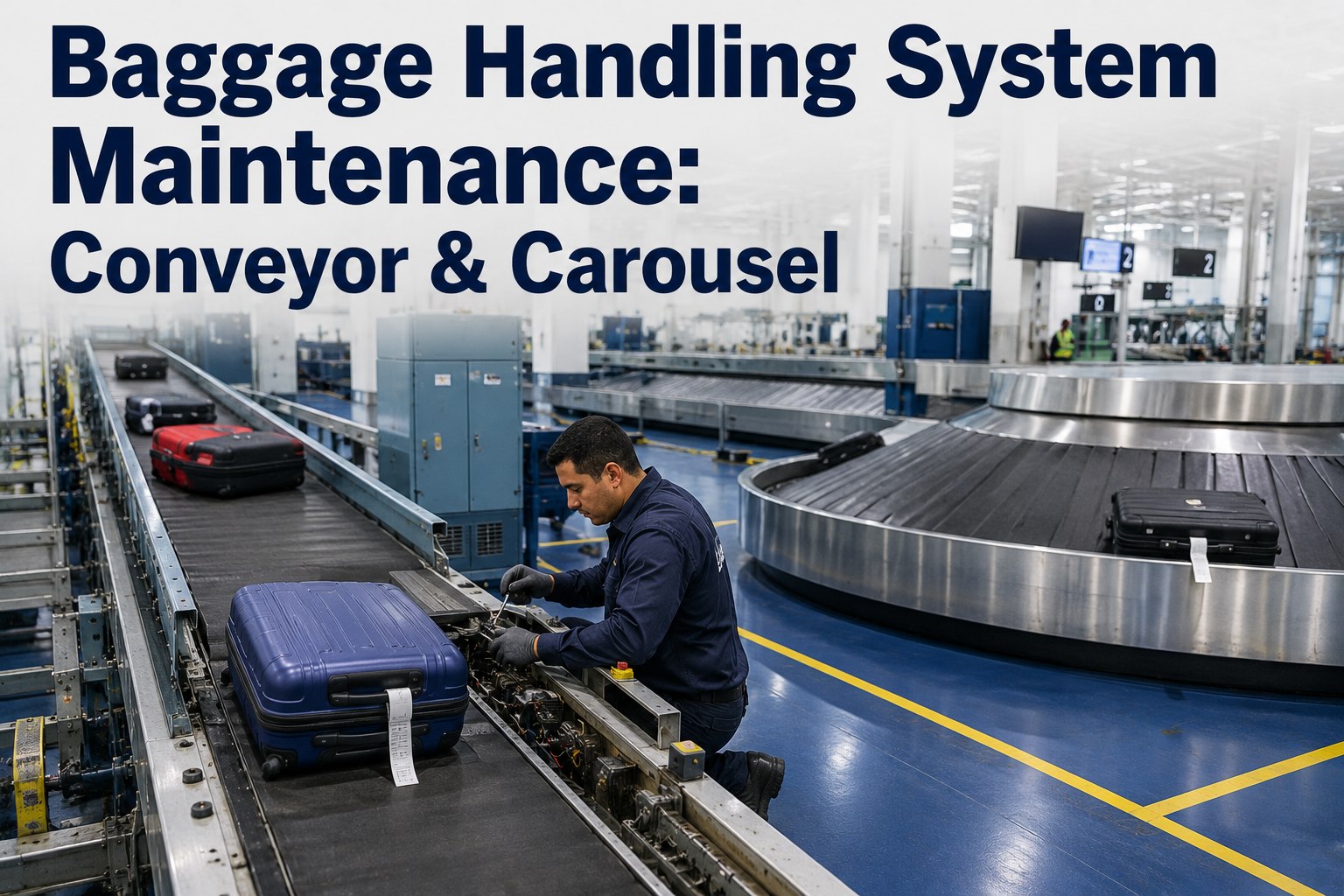
Sloped flat-plate or carousel units feeding ULDs. Drive motors, slip-ring rotation, photocell triggers, manual baggage handler interfaces.
05
Reclaim Carousels
Arrivals-side flat-plate or sloped carousels with crash-protection sensors, drive motors, and emergency stop circuits visible to the public.
06
Drives, Motors & VFDs
Hundreds of induction motors with variable frequency drives. Bearing wear, temperature drift, and VFD fault codes are the leading downtime triggers.
07
Sensors & Scanners
Photoelectric cells, laser scanners, barcode readers, RFID antennas, encoder wheels. Photocell dust accumulation is the #1 disruptor of sortation accuracy.
08
PLC & SCADA Controls
Allen-Bradley or Siemens PLCs running sortation logic, integrated with airport SCADA. Battery backup, network switches, HMI workstations all need cyclical PM.
PM Schedule
PM Tasks by Frequency — Daily, Weekly, Monthly, Quarterly
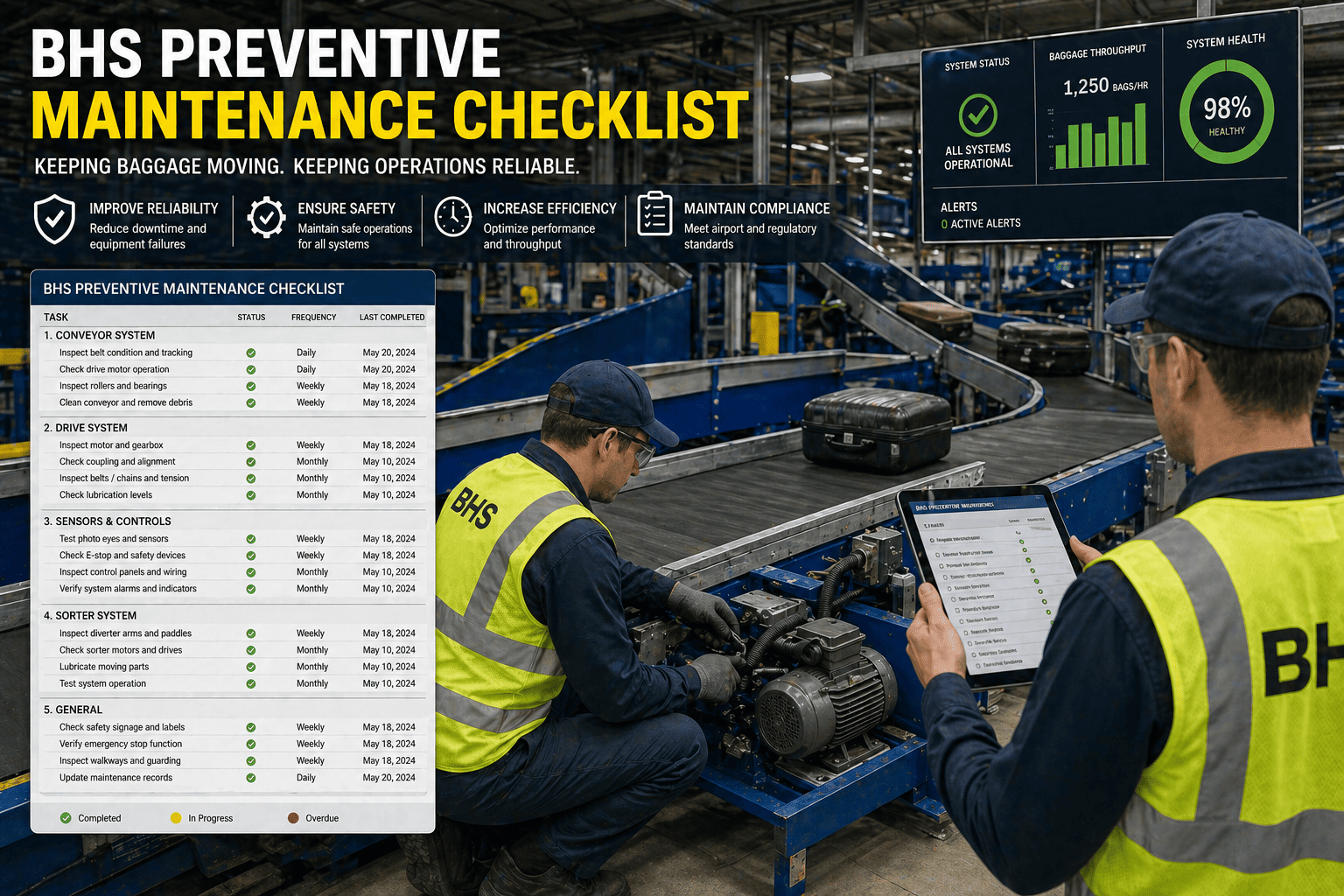
A BHS PM program lives or dies by frequency discipline. Daily walk-arounds catch sensor and tag jams. Weekly tasks address belt tension and lubrication. Monthly cycles cover motor diagnostics. Quarterly is when the deeper electrical and structural inspections happen. Want auto-scheduled PM that never lapses? Book a demo.
Daily
Operational Walkdowns
Photocell lens cleaning across all sortation triggers
Visual belt tracking on inductions and merges
Alarm log review on PLC HMI from previous shift
Tag printer ribbon and label stock check-in agent zones
Emergency stop pull-cord function test on reclaim units
Debris and FOD clearance under flat-plate carousels
Weekly
Mechanical & Wear Items
Belt tension verification with tension meter, all critical conveyors
Drive chain lubrication on sorters and pushers per OEM spec
Motor bearing temperature spot-check with IR thermometer
Encoder wheel debris removal and tension check
Pusher arm pneumatic pressure verification, 80–100 psi
Roller spin test on idler beds, replace seized rollers
Monthly
Electrical & Diagnostic
VFD fault history download and analysis on all critical drives
Motor amperage draw vs. nameplate, all sortation motors
PLC battery voltage check and replacement if <3.0V
Network switch port utilization and error log review
Barcode read-rate audit across induction lines, 99% target
UPS and battery backup load test on PLC and HMI cabinets
Quarterly
Structural & Deep Inspect
Conveyor frame torque check on bolted connections
Drive shaft alignment verification with laser tool
Motor megger insulation resistance test, >1 MΩ standard
Slip-ring inspection on rotating make-up carousels
Sortation accuracy audit with barcode test bag set
EDS conveyor speed calibration with TSA-approved test
Failure Modes
The 6 Failure Modes That Cause 80% of BHS Downtime
Decades of airport BHS data point to the same recurring failure modes. Each one has a defined PM intervention. Each one is preventable when the maintenance program is structured around component-level history, not just calendar dates.
01
Photocell Dust Accumulation
Dust on emitter or receiver lens scatters the beam — sortation reads "no bag" and dumps to manual encode. Daily lens-wipe PM eliminates this in <90 seconds per cell.
02
Motor Bearing Temperature Drift
Bearings run hotter as grease degrades. IR temperature trending catches the rise 30–60 days before a failure. Replace before the motor seizes mid-bank.
03
Belt Tracking & Edge Wear
Belt drift wears edges against the frame, eventually shredding. Weekly visual + monthly tracker adjustment prevents the $40K replacement and 6-hour shutdown.
04
Encoder Wheel Slippage
Sortation accuracy collapses when the encoder wheel slips on a worn belt. Bags route to the wrong make-up — missed flights cascade. Detected via barcode audit.
05
Pusher-Arm Pneumatic Failure
Air leaks at fittings or cylinder seal failure. Pusher misses or arrives late, and the bag overshoots the diverter. Pressure log trending catches drift early.
06
PLC Battery Failure
Old PLC backup batteries lose program memory on a power blip — and the entire sortation logic is gone. Replace PLC batteries every 5 years on schedule.
Reactive vs Predictive
Reactive BHS Maintenance vs. Asset-Driven PM
Operational Outcome
Reactive Maintenance
Asset-Driven PM with OxMaint
BHS uptime during peak banks
92–94% (with frequent stalls)
99.4–99.7% sustained
Mean time between failures (MTBF)
180–210 hours
720–960 hours
Sortation accuracy
96.5% (manual encode burden)
99.2% with barcode audits
Annual unplanned downtime cost
$1.4M–$2.2M
$280K–$420K
PM compliance rate
52–68%
97–100%
Spare parts stock-outs per quarter
14–22 incidents
0–2 incidents
Tech overtime hours per month
340 hrs
120 hrs
Airline tenant complaints (90 days)
22–35
1–4
Results
Measured Impact at Airport BHS Operations
99.5%
Sustained BHS uptime through peak banks and holiday operations
68%
Reduction in unplanned BHS downtime hours year-over-year
99.2%
Sortation accuracy with quarterly barcode audit programs
$1.8M
Annual savings from reactive-to-planned maintenance shift
Your BHS has 7,000 assets. Your spreadsheet has 7,000 problems.OxMaint maps every conveyor, motor, sensor, and PLC into a single asset hierarchy with PM cadence, spare parts, and technician routing built in. Want to see it modeled around your terminal? Start a free trial today, or book a demo for a guided walkthrough.
Build a complete asset tree from terminal level down to individual photocell or motor. Assign PM, spares, and history to every component.
Auto-Scheduled PM
Daily, weekly, monthly, and quarterly PMs auto-generate work orders to the right technician with mobile checklists pre-loaded for each component type.
Condition Monitoring
IoT and SCADA integration brings motor temperature, VFD fault codes, and sensor read rates into trended dashboards with deviation alerts.
Mobile-First Technicians
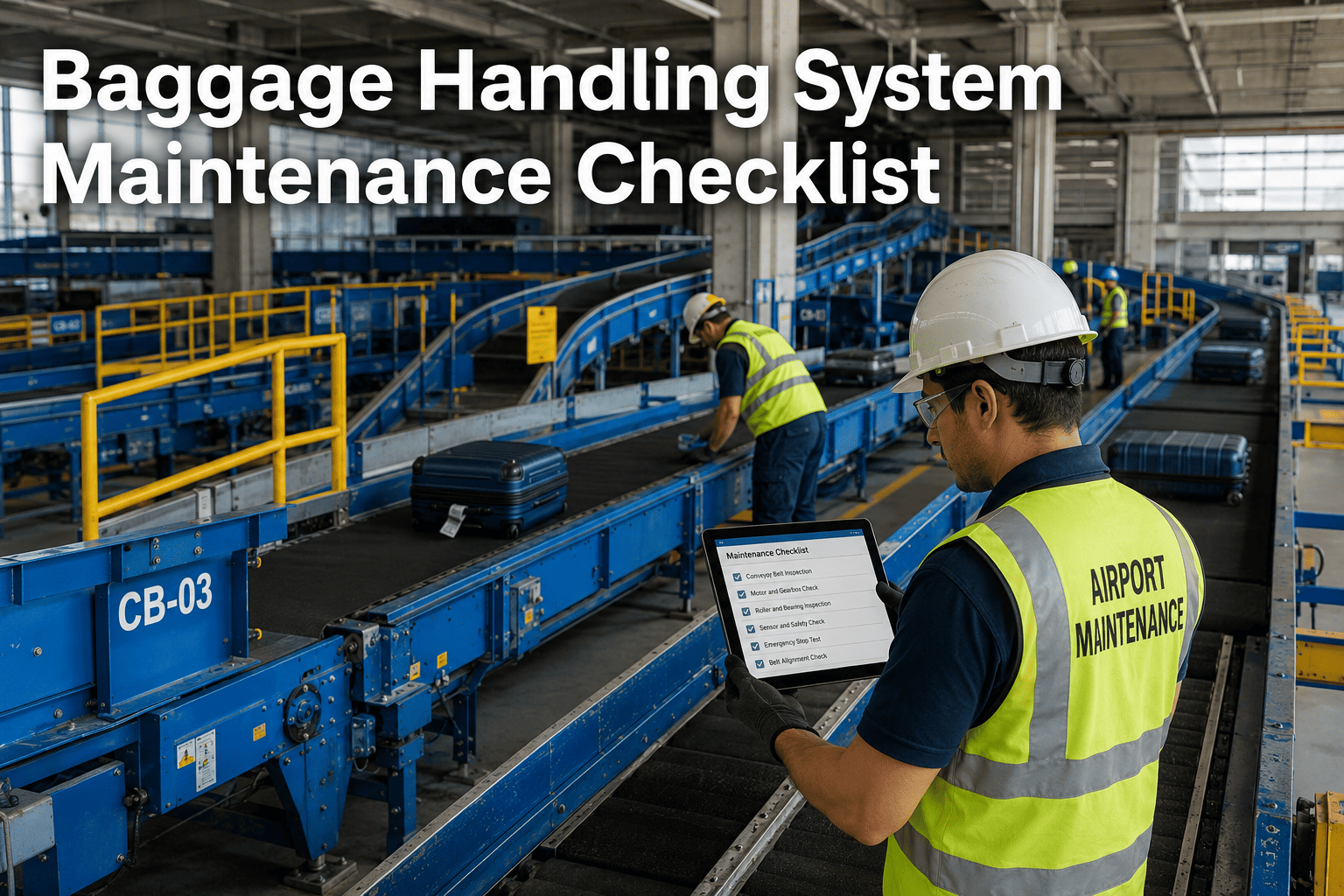
Tablets and phones replace clipboards. QR-tag any conveyor or motor and pull complete history, manuals, and spare-parts list in seconds.
MRO & Spare Parts
Photocells, drive belts, motor bearings, PLC batteries — every spare linked to its parent asset with min/max levels and auto-reorder triggers.
Uptime & KPI Dashboards
Live MTBF, MTTR, PM compliance, and downtime cost dashboards visible to operations directors and ownership groups in real time.
FAQs
Frequently Asked Questions
How long does it take to build the BHS asset hierarchy in OxMaint?
Most airport BHS implementations complete the full asset tree in 4–6 weeks. OxMaint provides import templates pre-mapped for common BHS configurations from major OEMs. Once the hierarchy is live, technicians QR-tag assets in the field and PM schedules activate by component type.
Can OxMaint integrate with our existing SCADA and PLC systems?
Yes. OxMaint integrates with Allen-Bradley, Siemens, and other industrial PLC platforms via OPC UA or REST APIs. Motor amperage, VFD fault codes, photocell read rates, and barcode accuracy feeds populate condition-based PM triggers — moving the program from calendar-based to truly predictive. Book a demo to see live integration.
What is the typical ROI window for an airport BHS PM program rebuild?
Airports with reactive-heavy maintenance typically see payback within 6–9 months once OxMaint is live. The bulk of the savings come from a 60–70% reduction in unplanned downtime costs, lower technician overtime, and reduced spare-parts emergency procurement. Larger hubs report $1.5M–$2.5M annual savings post-implementation.
How does OxMaint handle multi-stakeholder access — airline tenants, BHS OEM, airport operations?
Role-based access lets airport ops teams see the full BHS asset tree, while airline tenants see only their make-up carousels and reclaim units. BHS OEM service technicians get scoped access to assets under warranty contracts. All actions are logged for audit. Start a free trial to see role permissions configured.
Trusted by Airport Operations Teams
Run Your BHS Like a 99.5% Uptime Asset — Not a Spreadsheet
Asset hierarchy. Auto-scheduled PMs. SCADA integration. Live in 4–6 weeks, no implementation fees.