Airport Fire Protection System Checklist: Safety & Compliance Guide

By Jack Edwards on April 29, 2026

airport-fire-protection-system-inspection-checklist

Airport fire incidents are rare — but when they happen without a functioning protection system in place, the consequences are catastrophic. What separates a contained incident from a runway closure, federal investigation, or mass casualty event is rarely the fire itself. It is whether the suppression, detection, and alarm systems were maintained, tested, and documented before the event. Start a free trial for 30 days and see how Oxmaint digitizes your entire airport fire protection inspection program — or book a demo to walk through it with our team.

Airport Safety & Compliance · Fire Protection Systems · NFPA Standards

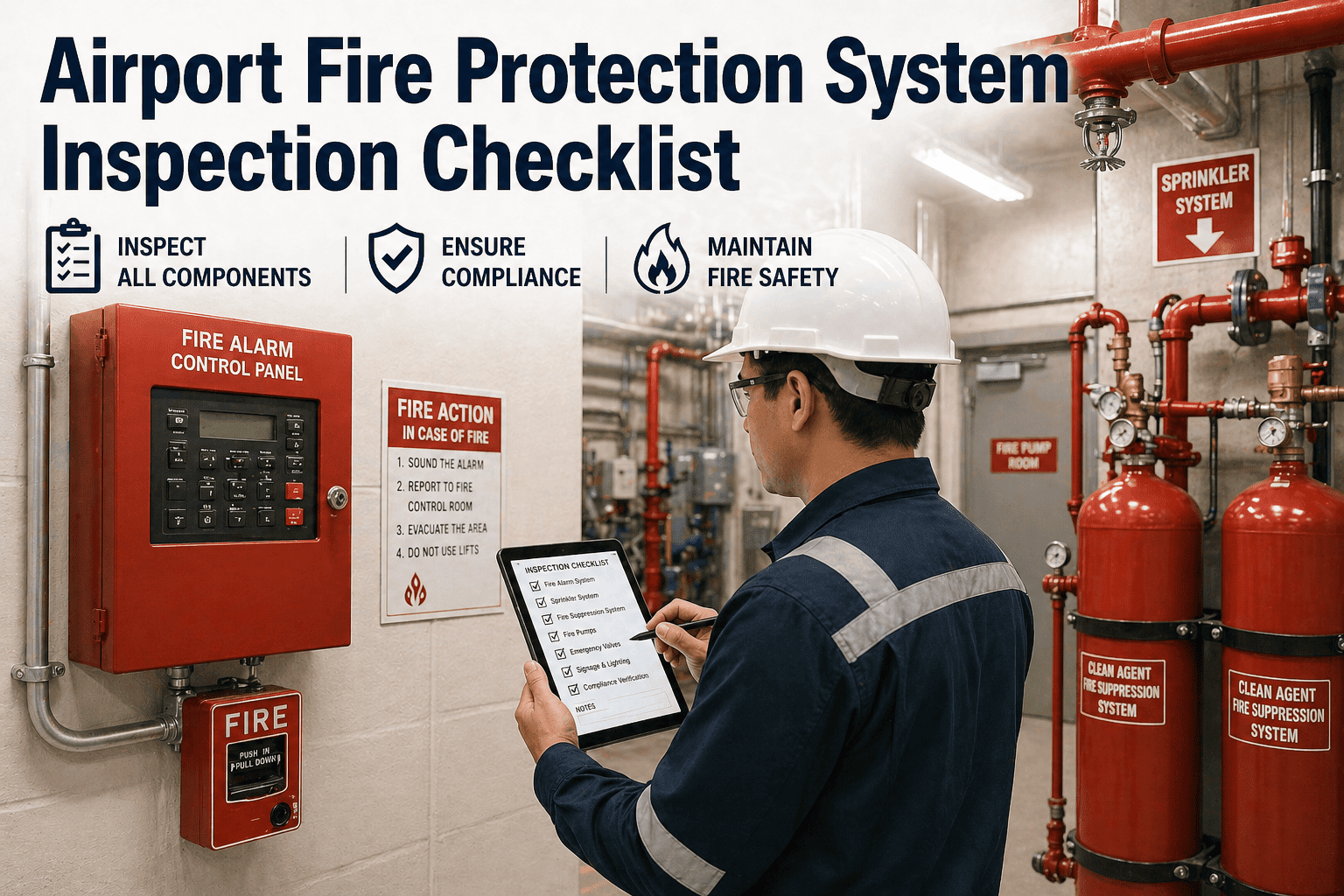
Airport Fire Protection System Inspection Checklist: Safety & Compliance Guide

Terminals, hangars, fuel farms, and ground support areas — every zone carries distinct fire risk. This checklist covers the systems, intervals, and compliance benchmarks airport maintenance teams need to stay audit-ready and operationally safe.

Airport Fire Risk Zones
Fuel Farm Critical
Aircraft Hangar Critical
Terminal Building High
Ground Support Area High
Cargo Facilities Moderate
Admin & Offices Moderate
$2.4B
Annual airport fire damage globally
ICAO 2023 safety report
68%
Of airport fire incidents involve suppression system failure
Due to missed inspections
4x
Higher remediation cost after a compliance failure
vs. scheduled maintenance
NFPA 409
Primary standard governing hangar fire protection
Also: NFPA 13, 72, 25, 11
Foundation

What Is an Airport Fire Protection System Inspection?

An airport fire protection system inspection is a structured, documented assessment of every active and passive fire safety component across an airport's operational footprint — terminals, hangars, fuel storage, cargo buildings, and apron areas.

Unlike a general building inspection, airport fire protection checks span aviation-specific suppression systems such as high-expansion foam, AFFF (aqueous film-forming foam), and co2 flooding — systems that exist nowhere else and require specialist testing intervals under NFPA 409, FAA AC 150/5210-6, and ICAO Annex 14.

The inspection covers detection, suppression, alarm communication, emergency response coordination, and documentation completeness. Every failed test or overdue inspection is a compliance exposure — and a potential liability event. Start a free trial to see how Oxmaint automates compliance scheduling across every zone, or book a demo with our aviation safety specialists.

Key Governing Standards
NFPA 409Aircraft Hangar Protection
NFPA 13Sprinkler System Installation
NFPA 25Water-Based System Inspection
NFPA 72Fire Alarm & Signaling
NFPA 11Low-Expansion Foam Systems
FAA AC 150Airport Operations Safety
Zone-by-Zone Checklist

Airport Fire Protection Inspection — By Zone

Each operational zone carries a distinct risk profile and requires a tailored inspection scope. Here is what a complete inspection covers across the four primary airport fire risk zones.

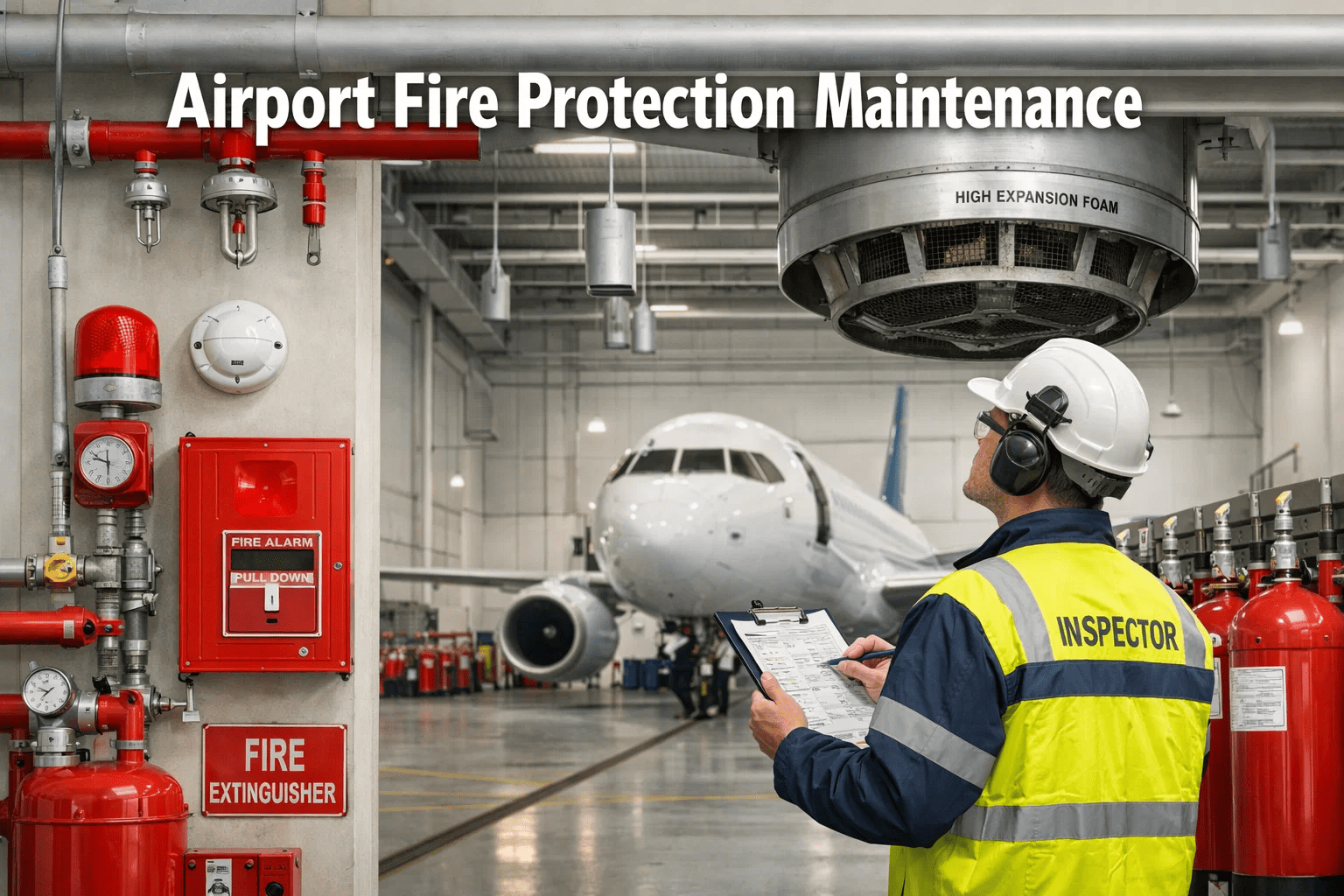
Aircraft Hangars
NFPA 409 · Group I–IV
High-expansion foam system pressure test
Foam concentrate quality & quantity check
Deluge valve actuation test
Detector sensitivity calibration
Drain and flush of distribution piping
Manual release station inspection
Clearance and drainage slope verification
Signage and exit path check
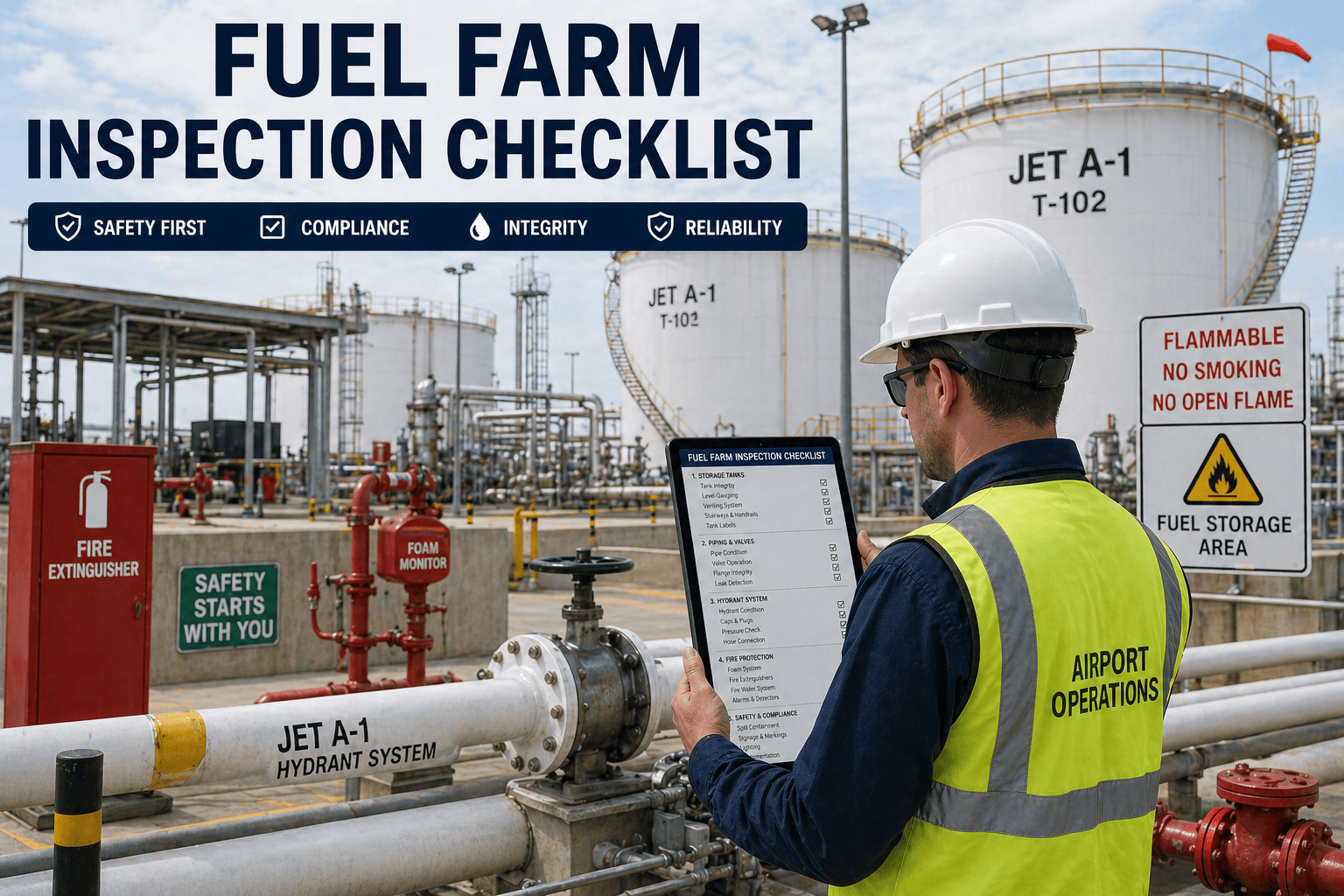
Fuel Farms & Hydrant Systems
NFPA 30 · API 650
AFFF foam system activation test
Spill containment bund inspection
Heat & flame detector response time
Emergency shutoff valve operation
Grounding & bonding continuity test
Foam pump flow rate verification
Dry chemical system check (if fitted)
Emergency comms system test
Passenger Terminals
NFPA 13 · NFPA 72
Sprinkler head condition & coverage check
Smoke detector sensitivity test
Pull station operability verification
PA system fire announcement test
Fire door release and closure test
Riser and control valve inspection
Pressurization stairwell test
Extinguisher hydrostatic & date check
Cargo & Ground Support
NFPA 13 · NFPA 11
Rack storage sprinkler alignment
CO detector calibration (GSE charging)
High-piled storage suppression check
Foam system proportioner test
Fire pump performance curve test
Hose reel pressure & condition check
Waste collection area extinguisher
Emergency isolation valve inspection
Inspection Intervals

Required Inspection Frequencies — NFPA & FAA Standards

Missed inspections are the leading cause of compliance notices at US and UK airports. The table below maps the minimum required test intervals for each major system type under applicable standards.

System / Component Weekly Monthly Quarterly Annual Standard
Sprinkler control valves


NFPA 25
Smoke & heat detectors


NFPA 72
Fire alarm panel


NFPA 72
Foam concentrate quality


NFPA 11
Fire pump full-flow test


NFPA 25
Deluge / foam system full test


NFPA 409
Portable extinguishers


NFPA 10
Emergency lighting / exit signs


NFPA 101
Standpipe & hose systems


NFPA 25
Emergency communication system


FAA AC 150
Where Airports Fall Short

The Four Inspection Problems That Create Compliance Exposure

01
Paper-Based Records That Disappear
Over 54% of mid-size airports still rely on paper or spreadsheet logs for fire system inspections. During FAA audits, missing or incomplete records — even for completed checks — are treated the same as non-compliance. A completed inspection with no verifiable record is worthless.
02
No Cross-Zone Visibility
Hangars, terminals, fuel farms, and cargo buildings are often maintained by different contractors or departments. Without a unified system, overdue inspections in one zone stay invisible to facility leadership until an audit or incident exposes the gap.
03
Missed Intervals Under Seasonal Load
Quarterly foam concentrate checks and annual deluge tests are frequently deferred during peak travel seasons. A single missed annual test on a hangar deluge system represents a NFPA 409 violation — and potential grounding of aircraft if the airport authority requests documentation.
04
Fire Pump Failures Caught Too Late
Fire pump systems that fail performance curve tests are often discovered during annual testing — after months of compromised suppression capacity. At airports with 500K+ sq ft of terminal floor space, a degraded pump means inadequate suppression coverage across entire concourses during any fire event.
Digitize Your Airport Fire Inspection Program

Stop Managing Fire Compliance on Clipboards and Spreadsheets

Oxmaint gives airport facility teams a complete digital inspection platform — automated scheduling, mobile checklists, technician sign-off, and audit-ready documentation across every zone and system type. Most airport teams are inspection-ready within 2 weeks of setup.

How Oxmaint Solves It

From Clipboards to Compliance — What Oxmaint Does for Airport Fire Teams

Asset Registry
Complete Fire System Asset Inventory
Every sprinkler head, foam nozzle, detector, pump, panel, and extinguisher is registered with location, install date, last test date, and next due date. Nothing gets missed because everything exists in one searchable record.
Scheduling
Automated Inspection Interval Tracking
Weekly valve checks, monthly alarm tests, quarterly foam inspections, and annual pump tests are all auto-scheduled against NFPA and FAA intervals. Overdue alerts escalate automatically — no manual tracking required.
Mobile Inspections
Digital Checklists for Every Zone
Technicians complete inspections on mobile devices with zone-specific checklists, photo capture, pass/fail results, and digital signatures. Every check is timestamped and tied to the asset record — creating an unbroken audit trail.
Compliance Reporting
Audit-Ready Documentation in Seconds
When an FAA, ARFF, or authority audit arrives, Oxmaint generates a complete inspection history for any system, zone, or date range — with technician signatures and test results — in under 60 seconds. No searching through binders.
Multi-Zone Visibility
Portfolio-Level Dashboard Across All Zones
Facility directors see the compliance status of every fire protection system across terminals, hangars, fuel farms, and cargo zones on a single dashboard. Red flags surface before they become violations — not after.
Work Orders
Defect-to-Work-Order in One Step
When an inspection identifies a deficiency — a corroded sprinkler, low foam concentrate, degraded pump flow — a corrective work order is created instantly, assigned, tracked, and closed with full documentation attached.
Before vs. After Oxmaint

Reactive Fire Compliance vs. Managed Fire Compliance

Without Oxmaint
Inspection records stored in paper binders by zone
Intervals tracked manually in spreadsheets — prone to gaps
No cross-zone visibility for facility leadership
Audit prep takes 2–5 days of document retrieval
Deficiencies logged separately from asset records
Missed intervals discovered during audits, not before
No technician accountability on mobile
Emergency repairs 4x more expensive when systems fail
With Oxmaint
All records digital, searchable, and geo-tagged by asset
NFPA/FAA intervals auto-scheduled — zero manual tracking
Single dashboard across all zones and buildings
Audit-ready report generated in under 60 seconds
Deficiencies link directly to corrective work orders
Overdue alerts escalate 14 days before a violation window
Mobile sign-off with timestamp, photo, and digital signature
Preventive maintenance reduces emergency spend by up to 62%
ROI & Results

What Structured Fire System Compliance Delivers

62%
Reduction in emergency fire system repairs
Oxmaint customers, 12-month avg.
94%
Inspection completion rate on schedule
vs. 61% industry average without CMMS
<60s
Time to generate full audit documentation
vs. 2–5 days of manual retrieval
Zero
Compliance notices in first year for Oxmaint airport clients
Post-implementation track record
Frequently Asked Questions

Airport Fire Protection Compliance — Common Questions

What NFPA standards govern airport fire protection system inspections?
The primary standards are NFPA 409 for aircraft hangars, NFPA 13 for sprinkler installation, NFPA 25 for water-based system inspection and testing, NFPA 72 for fire alarm systems, and NFPA 11 for foam systems. FAA Advisory Circular AC 150/5210-6 also governs aircraft rescue and firefighting at certificated airports. Each standard specifies its own inspection intervals — weekly through annual — and documentation requirements. Book a session with an Oxmaint aviation compliance specialist to map your airport's full standard landscape.
How often must aircraft hangar foam suppression systems be tested?
Under NFPA 409, hangar foam suppression systems require quarterly inspection of foam concentrate quality and quantity, and a full annual operational test including discharge testing of the foam delivery system. Detector sensitivity must also be calibrated at least annually. Many airports in the US and UK go beyond minimum NFPA requirements based on their authority having jurisdiction (AHJ) requirements. Start a free trial and see how Oxmaint auto-schedules every test interval against NFPA 409.
What documentation is required to pass an FAA airport fire safety audit?
FAA audits under Part 139 and AC 150 requirements typically request inspection logs for all life safety systems covering at minimum the previous 12 months — including test dates, technician identity, pass/fail results, and any corrective actions taken. Systems without continuous documented inspection history are treated as non-compliant regardless of actual physical condition. Digital systems with timestamped records and technician sign-off are the audit standard now expected by most AHJs.
Can Oxmaint manage fire protection inspection across multiple airport terminals and buildings?
Yes. Oxmaint is built for multi-site and multi-building operations. Airports can configure the platform with a full asset hierarchy — Terminal A, Terminal B, Hangar 1, Fuel Farm, Cargo Building — with each zone having its own inspection schedules, asset registers, and compliance dashboards. Facility leadership sees aggregated compliance status across all zones from a single view, while zone managers see their own areas in detail. Start a free trial to configure your airport's structure today.
Airport Fire Protection · NFPA Compliance · Free to Start

Your Next FAA Audit Starts With the Records You Keep Today

Oxmaint gives airport maintenance teams a complete digital fire protection inspection platform — automated scheduling, mobile checklists, zone-level dashboards, and audit-ready documentation — so compliance is a continuous state, not a scramble before an audit.
Share This Story, Choose Your Platform!