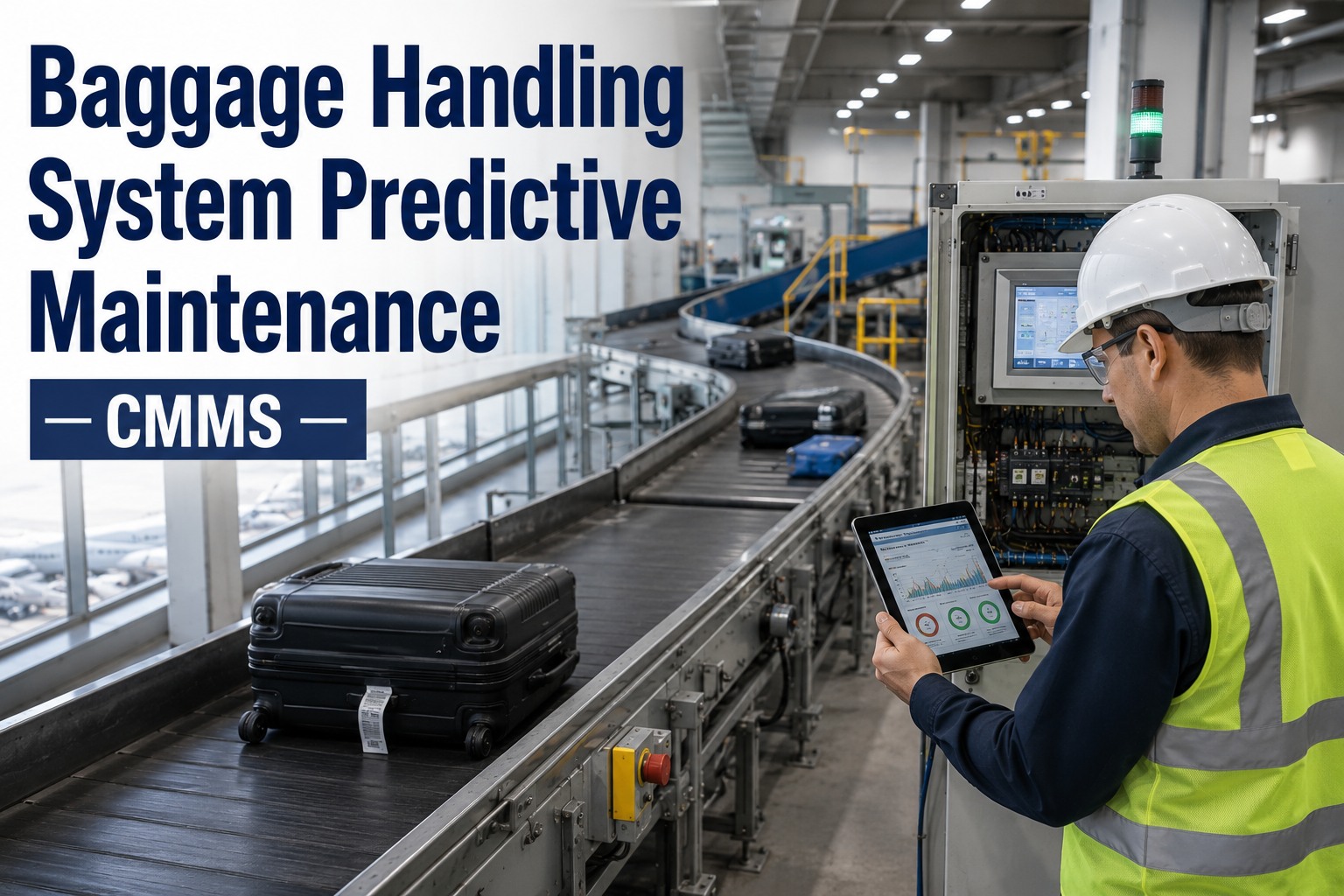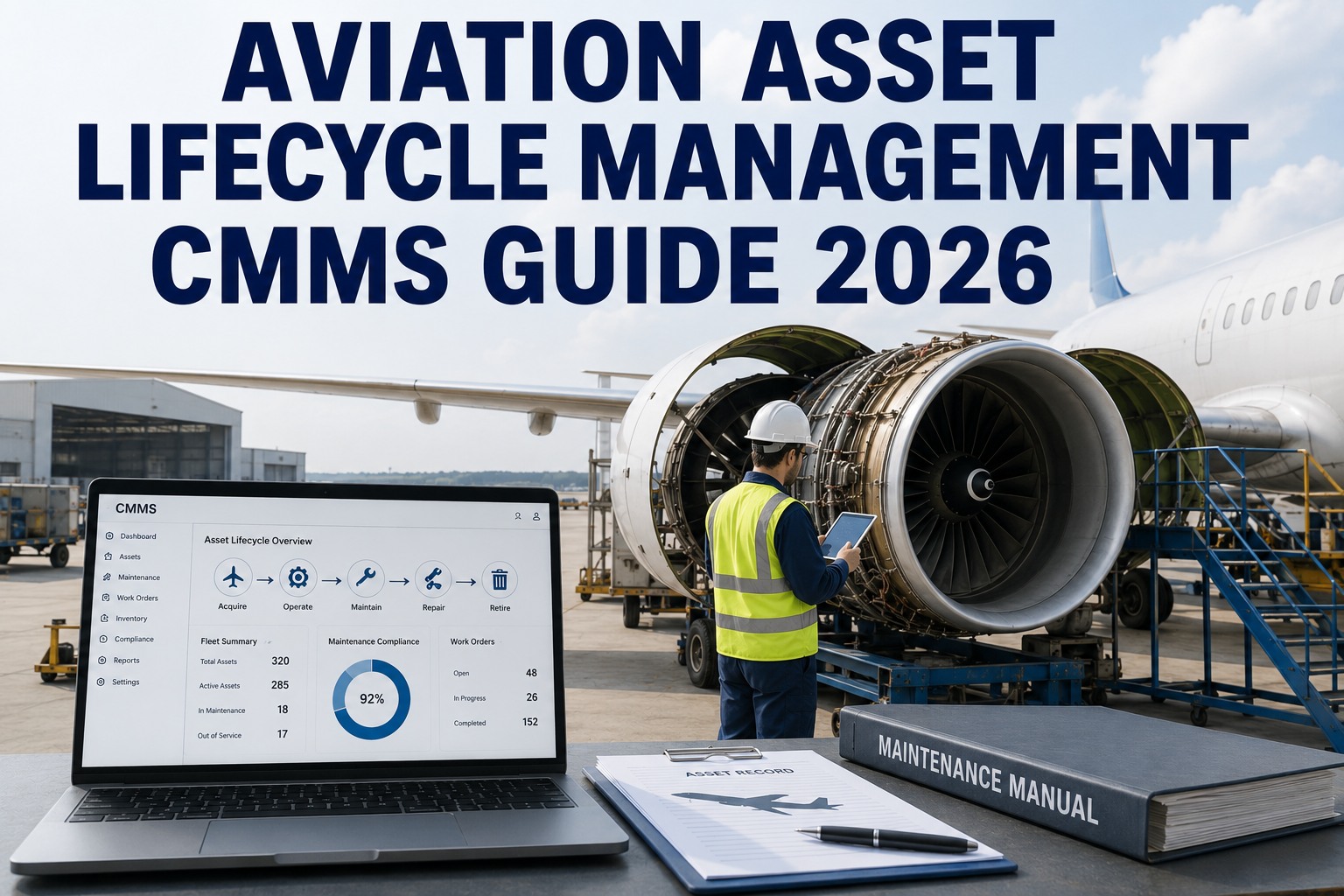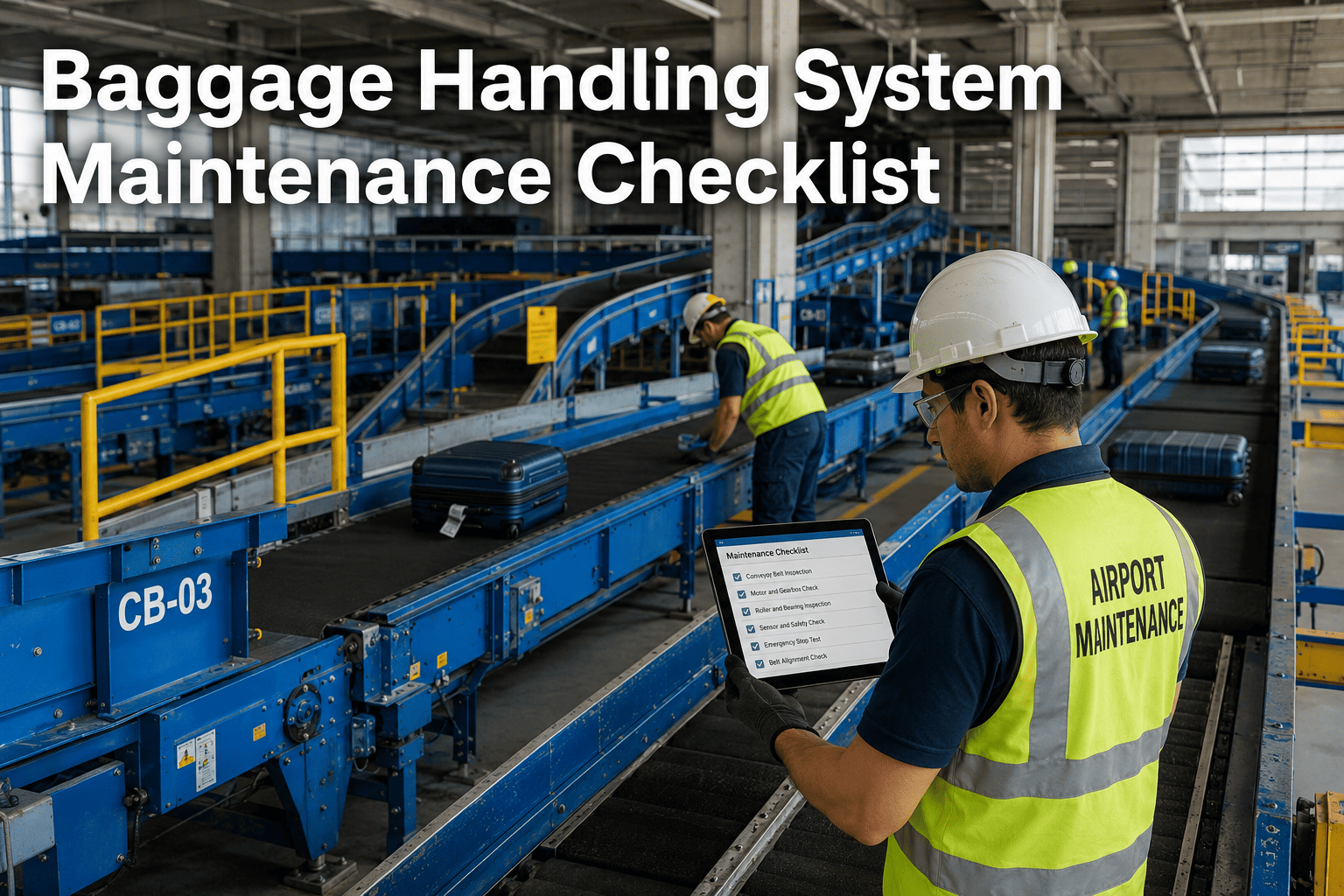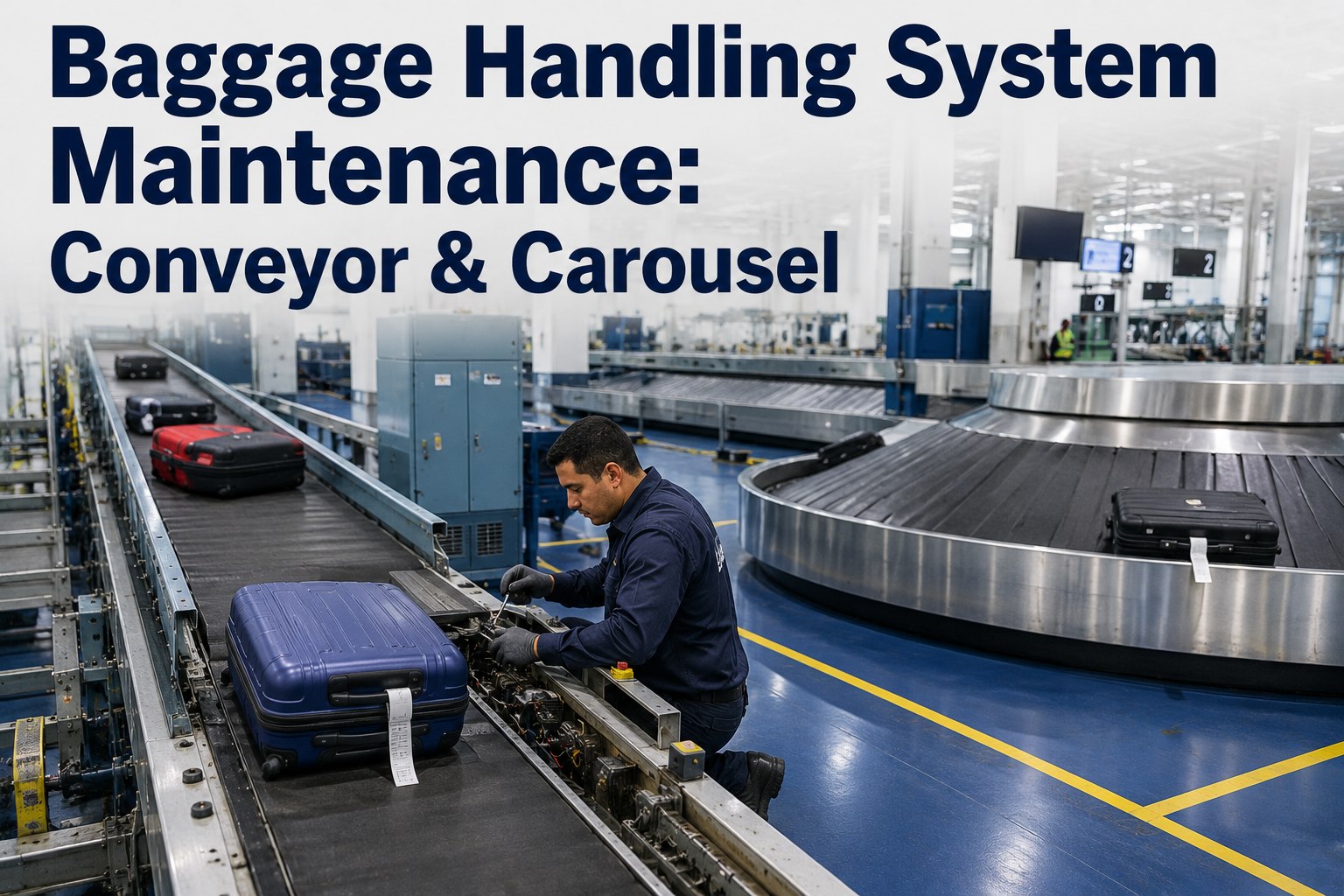
Baggage handling system maintenance is the discipline of keeping conveyors, sortation diverters, and carousels running at or above 99% availability — because even a 10-minute BHS stoppage can cascade into delayed flights, missed connections, and thousands of dollars in passenger compensation. For maintenance and reliability teams at airports, this means moving beyond reactive jam-clearing toward structured preventive maintenance, PLC-integrated condition monitoring, and CMMS-driven work-order execution. This guide covers the PM tasks, inspection intervals, and digital tools that define modern BHS maintenance, and shows how OxMaint turns conveyor and carousel upkeep into a predictable, audit-ready process. Ready to eliminate paper work orders and unplanned downtime? Start Free Trial.
Can your baggage handling system survive the next peak travel surge without unplanned downtime?
A single conveyor motor failure can halt a terminal pier for 45 minutes, delaying 600 bags and triggering cascading flight disruptions. Structured BHS maintenance — driven by CMMS software — is how leading airports keep availability above 99% without ballooning overtime labor.
The real cost of baggage conveyor failure
Every minute a baggage handling system is offline costs a mid-sized airport roughly $3,500 in delayed operations, passenger rebooking, and manual baggage handling — and that figure doubles during peak departure banks.
A regional hub operating 12 carousels and 8 km of conveyor track was spending $340K annually on emergency callouts and overtime. After implementing a CMMS-based preventive maintenance schedule for conveyor motors, drive chains, and carousel bearings, unplanned BHS downtime dropped by 62% in year one — saving roughly $211K in reactive labor and flight-delay penalties alone.
Baggage conveyor and carousel PM checklist
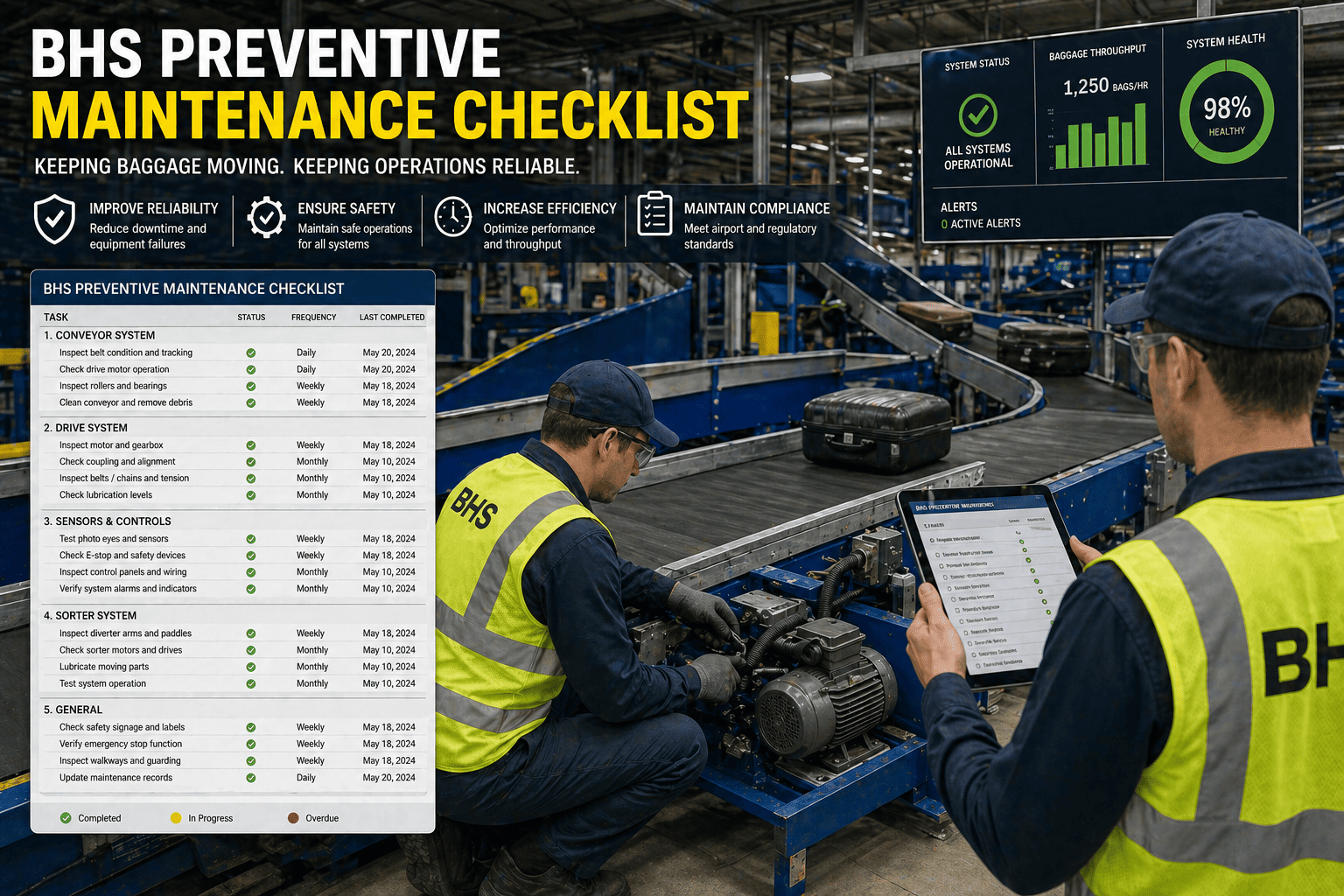
Consistent PM execution is the single highest-leverage activity for maintaining BHS availability above 99%. Below is a tiered checklist covering the four most failure-prone subsystems in a typical airport baggage handling system.
Conveyor Motor & Drive PM
- Inspect motor bearings every 90 days; re-grease per OEM spec
- Check gearbox oil level and condition monthly
- Measure motor amperage draw; flag deviations >10%
- Torque-check coupling and drive-chain tension quarterly
- Thermally scan motors under load for hot spots semi-annually
Belt Tracking & Conveyor Surface
- Inspect belt tracking alignment weekly; correct drift >5 mm
- Check belt tension and splice integrity every 30 days
- Clean slider bed and belt underside to prevent slippage
- Replace worn belt sections before cord exposure occurs
- Verify photo-eye and proximity sensor alignment after each cleaning cycle
Sortation Diverter Maintenance
- Test pneumatic diverter actuation speed every shift change
- Lubricate diverter pivot arms and guide rails per OEM cycle
- Inspect air pressure regulators; maintain 6.2 bar operating range
- Verify diverter bar position sensors weekly
- Log cycle counts; schedule diverter rebuild at 500K cycles
Carousel Drive Motor Service
- Inspect carousel drive chain tension and alignment monthly
- Check drive motor mounting bolts for loosening quarterly
- Listen for bearing noise during low-speed rotation tests
- Verify slip-ring and brush condition for powered carousel segments
- Schedule annual drive-motor teardown and bearing replacement
How to transition BHS maintenance from spreadsheets to CMMS
Most airport maintenance teams still manage BHS work orders on paper logs or fragmented spreadsheets — a process that loses 20-30% of task data to illegibility, missed follow-ups, and zero audit traceability. Here is a proven 6-month roadmap for migrating to a CMMS-driven BHS maintenance program.
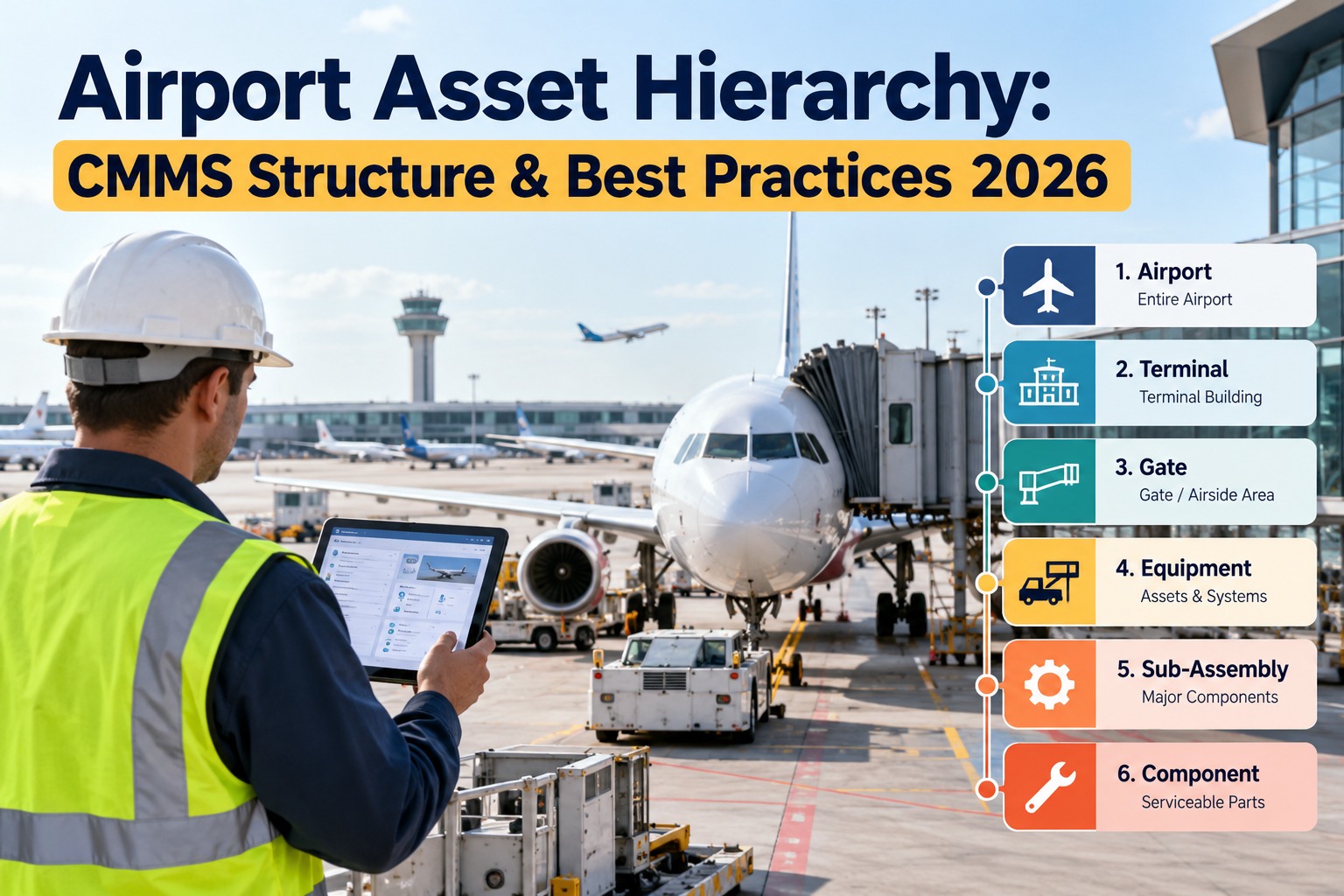
Asset Hierarchy & Data Import
Map every conveyor segment, motor, diverter, and carousel as a discrete asset in the CMMS. Import OEM manuals, warranty data, and historical work-order logs. Tag each asset with criticality rating and location code.
PM Schedule Build-Out
Configure preventive maintenance triggers based on runtime hours, cycle counts, and calendar intervals. Assign conveyor motor PMs to 90-day cycles, diverter lubrication to shift cycles, and carousel drive inspections to monthly cadences.
PLC & Sensor Integration
Connect the CMMS to PLC fault codes and SCADA alarms so that a conveyor jam or motor overcurrent automatically generates a work order. This closes the gap between detection and dispatch — cutting response time by up to 70%.
Spare-Parts Inventory Linking
Link each BHS asset to its critical spares — belts, bearings, diverters, photo-eyes — in the CMMS inventory module. Set min/max reorder levels so a worn conveyor belt never waits on a procurement cycle.
Mobile Work-Order Rollout
Deploy mobile CMMS access to technicians on the tarmac and in the baggage hall. Eliminate paper work orders, capture digital signatures, and attach photos of worn components directly to the asset record.
Analytics & KPI Review
Begin tracking MTBF, MTTR, PM compliance rate, and OEE for the BHS fleet. Use CMMS dashboards to identify the 5% of assets consuming 40% of reactive labor — and convert them to predictive monitoring.
BHS maintenance ROI: what a CMMS actually delivers
The financial case for CMMS-based baggage handling system maintenance is built on three levers: reduced unplanned downtime, lower overtime labor, and extended asset life. The formula below models the annual savings for a representative airport.
| BHS Maintenance Metric | Spreadsheet / Reactive | OxMaint CMMS | Improvement |
|---|---|---|---|
| Unplanned downtime hours / year | 420 hrs | 145 hrs | −65% |
| PM compliance rate | 58% | 94% | +36 pts |
| Mean time to repair (MTTR) | 52 min | 24 min | −54% |
| Overtime labor hours / year | 3,400 hrs | 1,800 hrs | −47% |
| Spare-parts stockout incidents | 22 / year | 3 / year | −86% |
| Audit preparation time | 5 days | 2 hours | −95% |
How OxMaint powers BHS maintenance for modern airports
OxMaint is an AI-powered CMMS and EAM platform built for maintenance and reliability teams that cannot afford unplanned downtime. Here is how its core capabilities map directly to baggage handling system maintenance outcomes.
AI-Driven Predictive Maintenance
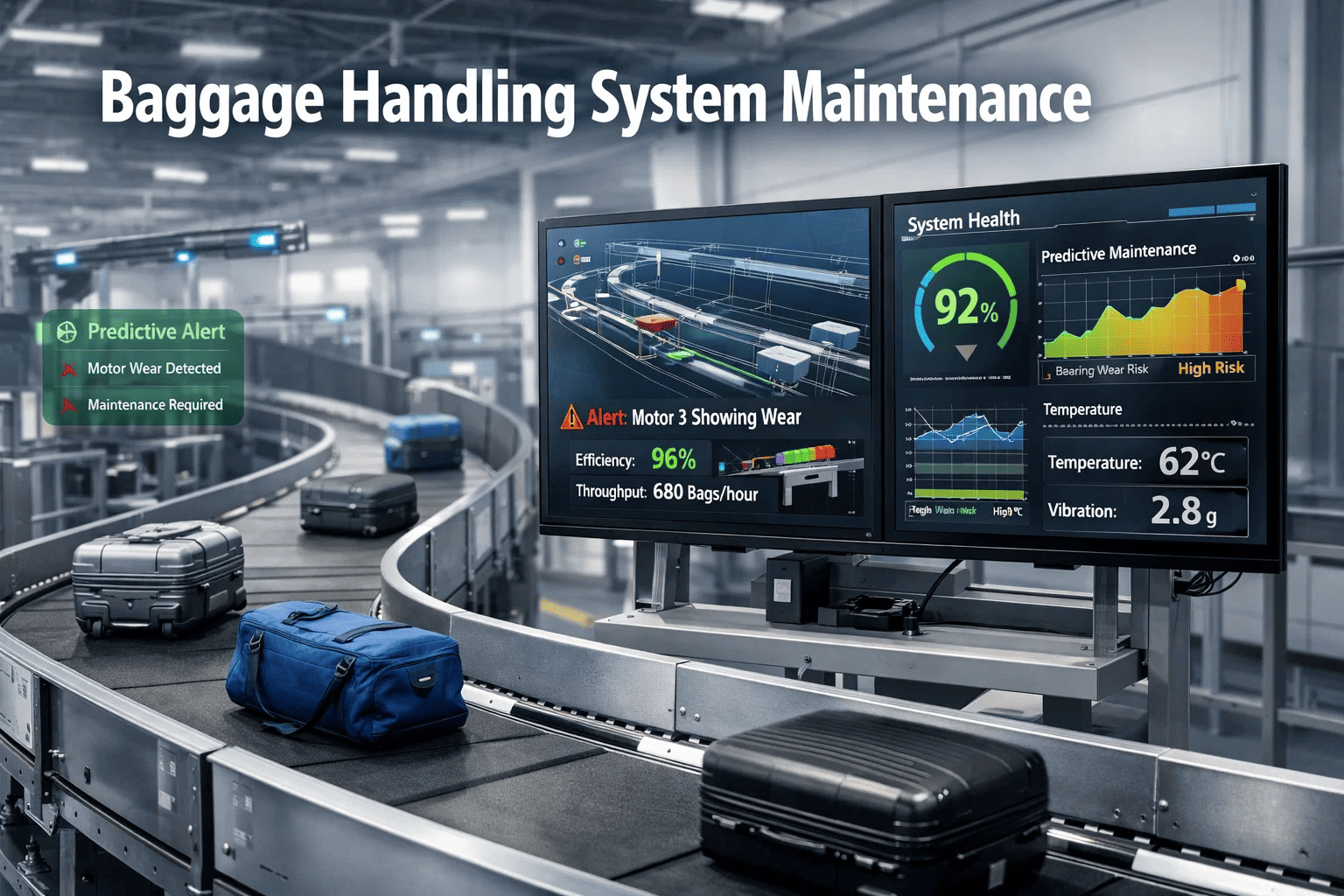
OxMaint's AI engine analyzes motor amperage trends, vibration data, and thermal patterns to predict conveyor motor and carousel drive failures 7–21 days before they occur — enabling planned interventions during overnight windows.
Automated Work-Order Generation
PLC fault codes and SCADA alarms trigger instant work orders with asset ID, fault type, and technician dispatch — eliminating manual logging and cutting response time from minutes to seconds.
Spare-Parts Inventory Automation
Each BHS asset is linked to its bill of materials with min/max reorder triggers. When a technician closes a work order consuming a conveyor belt or diverter actuator, OxMaint automatically adjusts stock and flags reorder needs.
Mobile-First Technician Access
Technicians receive and complete work orders on mobile devices directly in the baggage hall — capturing photos of worn components, logging labor hours, and closing tasks with digital signatures. No paper, no re-entry, no lost data.
"After switching to OxMaint, our BHS availability moved from 96.8% to 99.4% in eight months. The PLC-integrated work orders alone cut our average jam-recovery time nearly in half — our technicians arrive with the fault code and repair history already in hand."
See OxMaint on your baggage handling assets
Book a 30-minute demo and we will walk you through a live BHS maintenance workflow — from PLC-triggered work orders to predictive motor failure alerts.
Baggage handling system maintenance FAQs
What is baggage handling system maintenance?
Baggage handling system maintenance is the structured preventive and corrective upkeep of conveyors, sortation diverters, carousels, and associated PLC controls in an airport terminal. It includes motor lubrication, belt tracking inspection, diverter actuation testing, and drive-chain tension checks — typically managed through a CMMS to ensure PM compliance above 90% and system availability above 99%.
How does a CMMS improve BHS maintenance?
A CMMS like OxMaint centralizes asset records, automates PM scheduling based on runtime hours and cycle counts, and integrates with PLC fault codes to auto-generate work orders. This reduces MTTR by up to 54%, eliminates paper work orders, and provides full audit traceability for compliance. You can Start Free Trial to see the workflow on your own assets.
How often should baggage conveyor motors be serviced?
Conveyor motor bearings should be inspected and re-greased every 90 days, gearbox oil checked monthly, and a full thermal scan conducted semi-annually. High-criticality motors in 24/7 baggage halls may require 30-day inspection cycles. The CMMS auto-schedules these based on OEM specs and actual runtime data.
What BHS availability target should airports maintain?
Tier-1 airports typically target 99.5% BHS availability during operational hours. Achieving this requires PM compliance above 90%, MTTR under 30 minutes for common faults, and predictive monitoring on critical conveyor motors. A CMMS provides the real-time dashboards needed to track and sustain these KPIs.
Can OxMaint integrate with existing airport PLC and SCADA systems?
Yes. OxMaint can receive fault codes and alarm triggers from PLC and SCADA systems, automatically generating prioritized work orders with asset ID, fault type, and technician dispatch. To explore integration with your specific BHS control architecture, Book a Demo with our team.
Stop reacting to BHS failures. Start preventing them.
Join the airports using OxMaint to keep baggage conveyors and carousels running above 99% availability — with less overtime, fewer stockouts, and full audit readiness.
Free 14-day trial · No credit card