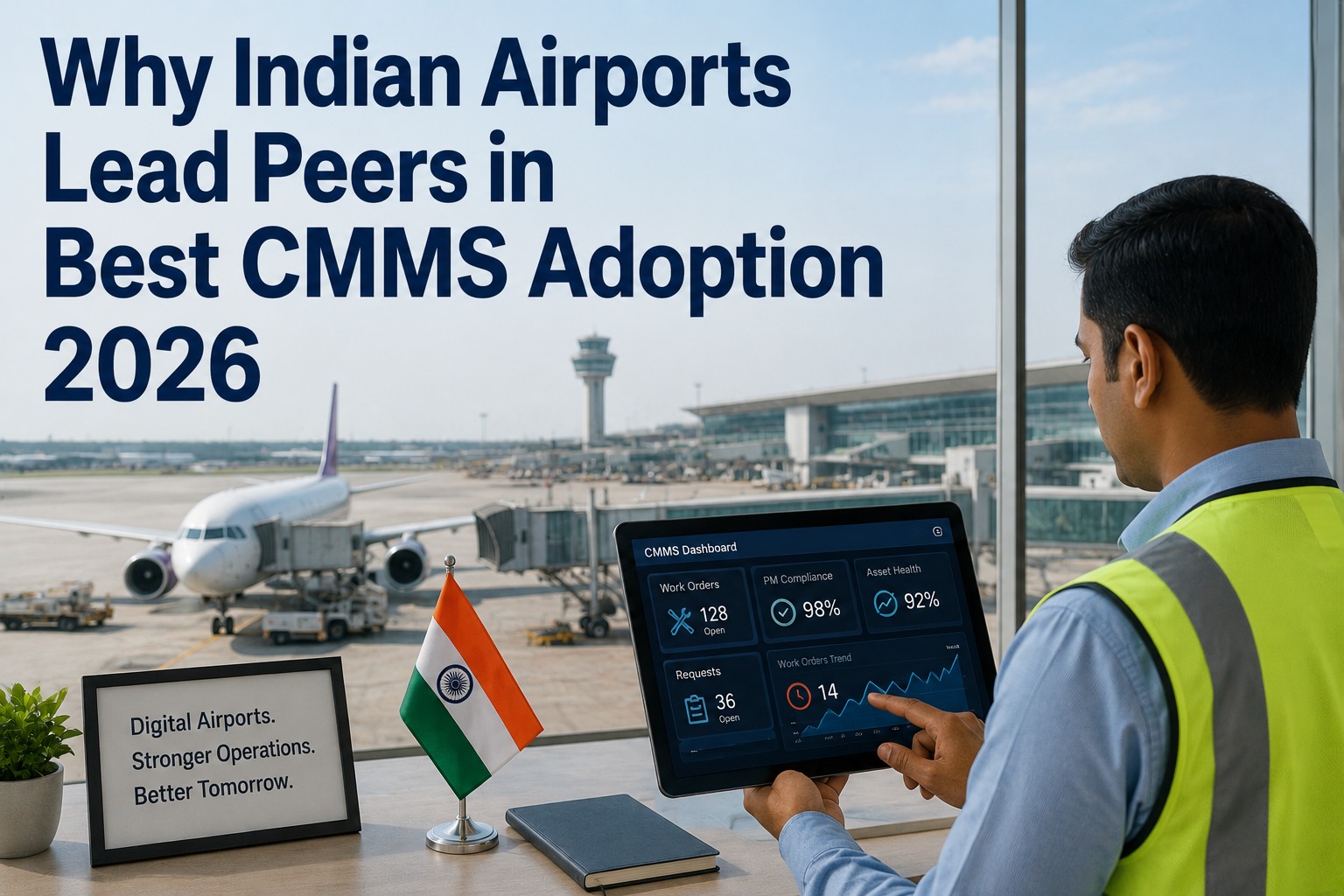
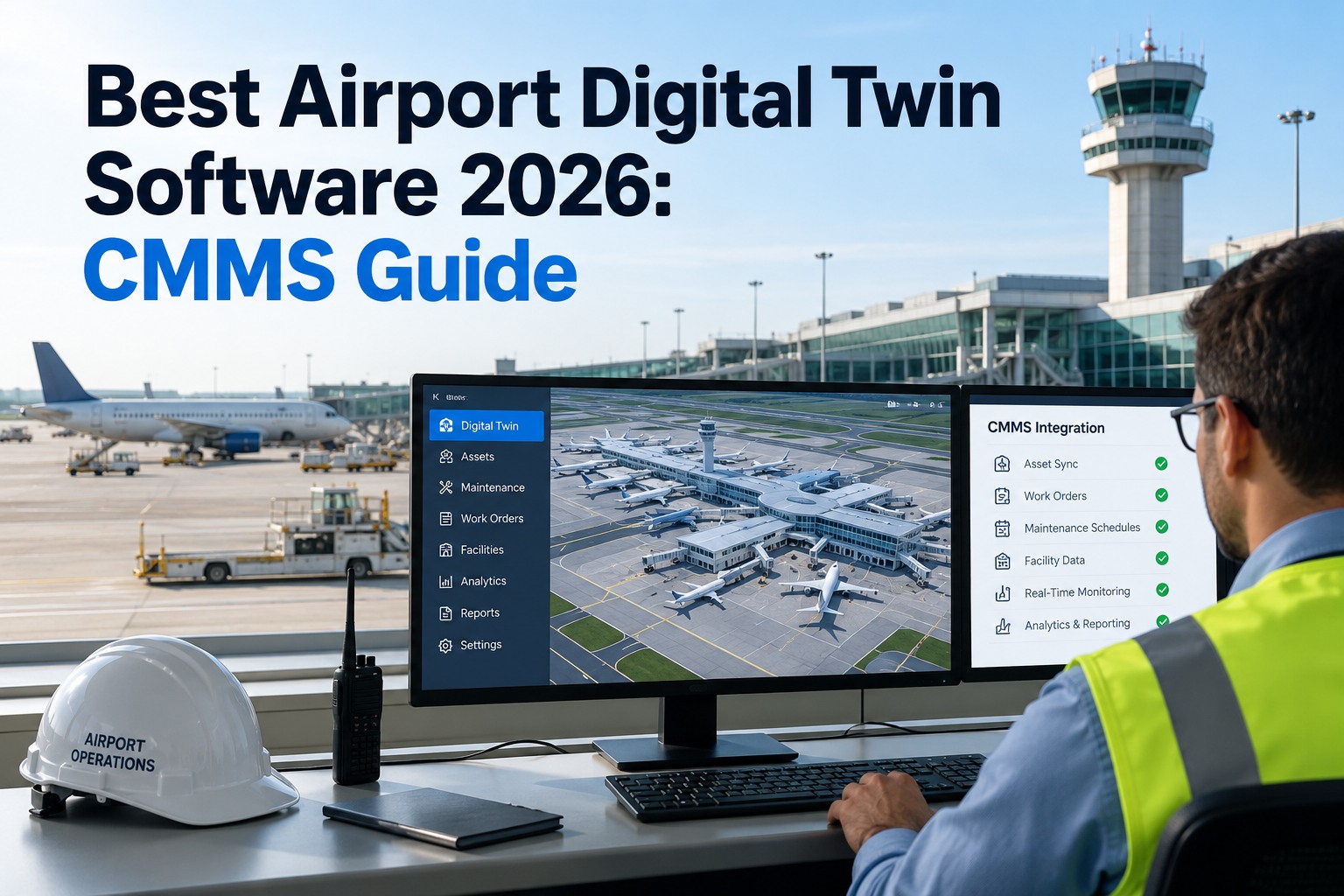
India is building airports faster than almost anywhere on earth — moving from roughly 220 operational airports toward a target near 300 by 2040, with greenfield mega-hubs like Noida (Jewar), Navi Mumbai, Dholera, and Bhogapuram coming online. And it's doing it digital-first: Digi Yatra crossed 10 crore users across 38 airports, more than 90 airports already run on 100% solar, and passenger processing is biometric by default. That combination — explosive new capacity, a digital-native operating culture, and DGCA oversight aligned to ICAO standards — is exactly the environment where modern maintenance software leapfrogs the legacy path. A brand-new airport has no decades-old paper system to unwind; a regional field has no budget for a two-year enterprise-CMMS rollout. Both are perfect fits for a mobile-first, fast-deploy, cost-appropriate platform. This guide breaks down why Indian airports are positioned to lead on CMMS adoption in 2026 — the growth drivers, the regulatory push, and what regional CMMS requirements actually demand. Book a free CMMS-readiness session for your airport.
A Digital-First Aviation Boom Meets a Blank Slate
New airports and regional fields skip the legacy paper era — and adopt modern maintenance from day one.
~300
Airports India is targeting by 2040, up from ~220 operational today
10 cr
Digi Yatra users across 38 airports — a digital-native passenger culture
90+
Indian airports already operating on 100% solar energy
2028–33
Window when major metro airports hit capacity saturation — efficiency pressure is now
Four Drivers Behind India's CMMS Momentum
Adoption doesn't accelerate by accident. Four structural forces are converging to make Indian airports unusually well-positioned to leapfrog straight to modern maintenance software — without the legacy baggage that slows incumbents elsewhere.
Greenfield Scale
A wave of brand-new airports — Noida, Navi Mumbai, Dholera, Bhogapuram and dozens of regional fields — start with no legacy paper system to unwind. They can standardize on digital maintenance from opening day.
Mobile-First Culture
India's aviation ecosystem is already digital-native — Digi Yatra biometrics at scale prove the workforce and passengers expect mobile. Field maintenance teams operating without desk time fit a phone-first CMMS naturally.
Regulatory Alignment
DGCA oversight is aligned to ICAO standards, recognized with an ICAO Council President Certificate. A recognized safety-oversight framework rewards documented, auditable maintenance — exactly what a CMMS provides.
Cost & Capacity Pressure
Major metro airports hit capacity saturation between 2028 and 2033, and "Make in India" pushes to cut cost and lead times. Squeezing more from existing assets makes efficient, affordable maintenance software a priority, not a luxury.
Why Regional CMMS Requirements Are Different
Airport CMMS needs shift meaningfully by region — and forcing global-hub enterprise complexity onto every Indian airport is exactly how adoption stalls. Three requirements define what works here.
REQUIREMENT 01
Weeks to Deploy, Not Years
Enterprise CMMS rollouts can take one to two years. A regional airport opening this year can't wait — it needs a platform live in weeks, configured to its own operation, not a multi-year implementation project.
REQUIREMENT 02
Priced for Every Airport Size
A regional field and a mega-hub can't carry the same license cost. Pricing has to scale down to smaller airports, not just up to global hubs — or modern maintenance stays out of reach for most of the network.
REQUIREMENT 03
Configurable to Local Frameworks
The platform has to bend to DGCA and local regulatory expectations, not force a foreign compliance template onto an Indian operation. Configurability to the local framework is what makes the audit trail actually useful.
See a Region-Fit CMMS in 30 Minutes
Working session with our aviation team — bring your airport's operation and regulatory context. We'll show how OxMaint deploys in weeks, runs mobile-first for field teams, configures to DGCA expectations, and scales in price from regional field to mega-hub.
Legacy Enterprise CMMS vs Region-Fit CMMS
The reason Indian airports can leapfrog is that the software finally fits the reality. A legacy enterprise platform was built for a global hub with a big IT team and a two-year budget. A region-fit platform is built for the airport that has neither — and that's most of the network.
Legacy Enterprise CMMS
One-to-two-year implementation timeline
Desktop-centric, assumes office-based staff
Priced for global hubs only
Rigid, foreign compliance templates
Heavy IT and consultant dependency
Region-Fit CMMS
Live in weeks, configured to the operation
Mobile-first for field teams without desk time
Priced from regional field to mega-hub
Configurable to DGCA and local frameworks
Runs on existing staff, no big rollout
What Modern Maintenance Discipline Delivers
Beneath the growth story is a simple operational truth: an airport that manages maintenance as a structured program runs more reliably than one that reacts to breakdowns. Here's what a CMMS puts in place across any airport, regional or hub.
Structured assets. Every runway light, HVAC unit, baggage system, and jet bridge in one register with full history
PM automation. Preventive and inspection work orders fire on the right interval — no reliance on memory
Mobile execution. Field teams complete work with mandatory fields and photo capture on a phone
Less downtime. Catching drift early cuts unplanned failures that strand aircraft and passengers
Audit-ready records. A defensible trail for DGCA oversight and internal safety reviews
More from existing assets. Higher reliability squeezes capacity out of infrastructure ahead of saturation
How OxMaint Fits the Indian Airport Reality
OxMaint is built for exactly this — deployable in weeks in any region, mobile-first for field teams operating without desk time, configurable to local regulatory frameworks, and priced for airports of every size from regional fields to mega-hubs.
Deploy
Live in Weeks
Configured to the airport's operation without a multi-year enterprise rollout — modern maintenance from opening day.
Mobile
Built for Field Teams
Mobile-first execution with mandatory fields and photo capture — for teams that live on the apron, not at a desk.
Configure
Local Framework Fit
Configurable to DGCA and local regulatory expectations, so the audit trail matches how the airport is actually overseen.
Scale
Regional to Mega-Hub
Priced and structured to fit a small regional field or a greenfield mega-hub — the whole network, not just the metros.
Automate
PM & IoT Programs
Preventive and inspection work orders on cadence, with IoT integration turning sensor data into prioritized action.
Report
Decision-Ready Data
Reporting that turns maintenance data into decisions leadership can act on — reliability made visible and manageable.
Bring Modern Maintenance to Your Airport — In Your Region
Skip the enterprise-CMMS timeline and cost that kept modern maintenance out of reach. See how OxMaint deploys in weeks, runs mobile-first, and fits airports of every size. Free forever plan available.
Frequently Asked Questions
Why are Indian airports well-positioned for CMMS adoption?
Three things line up. First, scale: India is building toward roughly 300 airports by 2040, and a wave of greenfield airports opens with no legacy paper system to unwind — they can standardize on digital maintenance from day one. Second, a digital-native culture: with Digi Yatra past 10 crore users across 38 airports and 90-plus airports on 100% solar, the ecosystem already expects mobile-first, tech-forward operations. Third, DGCA oversight aligned to ICAO standards rewards documented, auditable maintenance. Together these let Indian airports leapfrog straight to modern software instead of unwinding decades of legacy process.
Book a readiness session.
How do regional CMMS requirements differ from global hubs?
Meaningfully. A global mega-hub can absorb a one-to-two-year enterprise implementation and a large license cost; a regional airport opening this year cannot. Regional requirements center on three things: fast deployment measured in weeks rather than years, pricing that scales down to smaller airports and not just up to hubs, and configurability to the local regulatory framework — DGCA in India — rather than a rigid foreign compliance template. Forcing global-hub complexity onto every airport is precisely how adoption stalls, so the platform has to fit the airport, not the other way around.
What role does DGCA play in maintenance software adoption?
The DGCA is India's civil aviation regulator, and its oversight system is aligned to ICAO Standards and Recommended Practices — recognized internationally, including an ICAO Council President Certificate for India's aviation oversight. A recognized safety-oversight framework places real weight on documented, auditable maintenance and inspection. That's exactly what a CMMS delivers: structured records, timestamped inspections, and a defensible audit trail. So rather than being a barrier, the regulatory environment is a driver — it rewards airports that can demonstrate their maintenance discipline with data instead of paperwork.
Can a small regional airport afford modern CMMS?
Yes — and that's the shift. Historically, capable maintenance software meant an enterprise platform priced for global hubs, with a rollout timeline and consultant dependency that put it out of reach for smaller airports. Modern cloud, mobile-first platforms changed the economics: they deploy in weeks on existing staff, price to scale down to regional fields, and don't require a large IT function to run. For India's distributed growth strategy — where much of the new capacity is regional and greenfield rather than metro mega-hubs — affordable, fast-deploy software is what makes network-wide adoption realistic.
Sign up free to see the fit.
Does OxMaint fit Indian airports of different sizes?
Yes. OxMaint is built to deploy in weeks in any region, runs mobile-first for field teams operating without desk time, configures to local regulatory frameworks including DGCA expectations, and is priced for airports of every size — from a small regional field to a greenfield mega-hub. It brings structured asset management, PM and inspection automation, IoT integration, and decision-ready reporting without the enterprise-CMMS deployment timeline or cost that historically kept modern maintenance out of reach. A free forever plan is available to trial the full workflow across your operation.