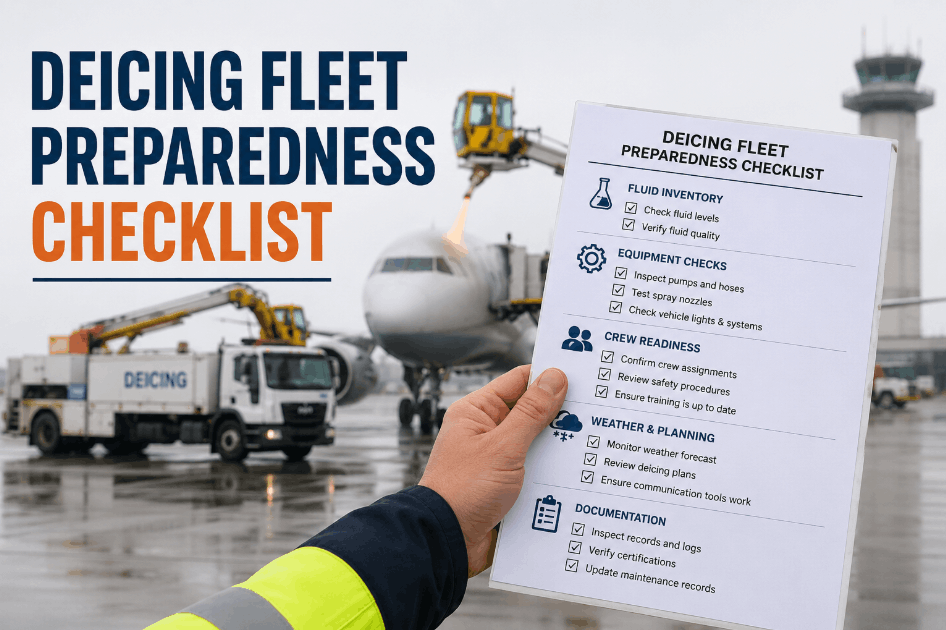
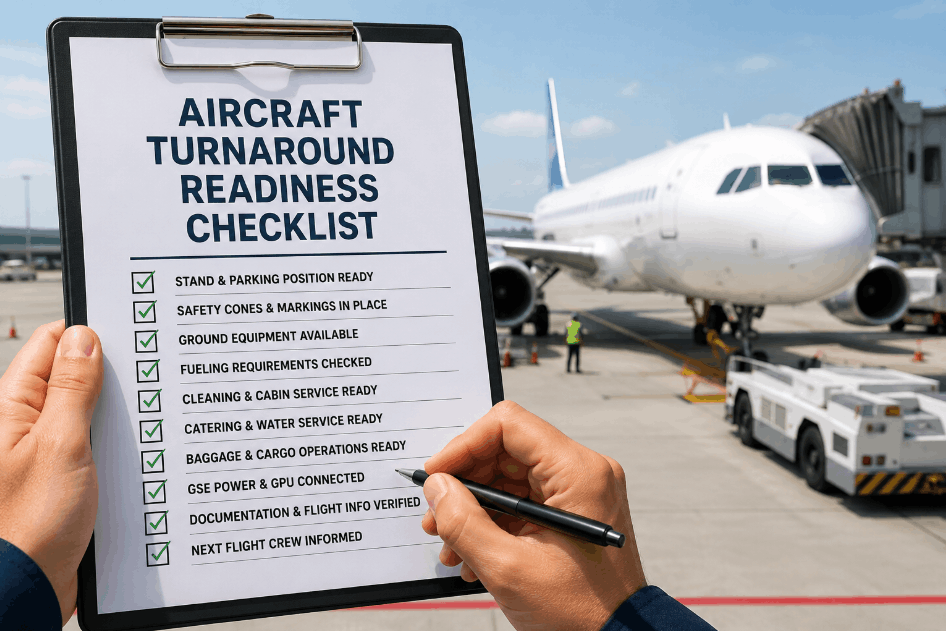
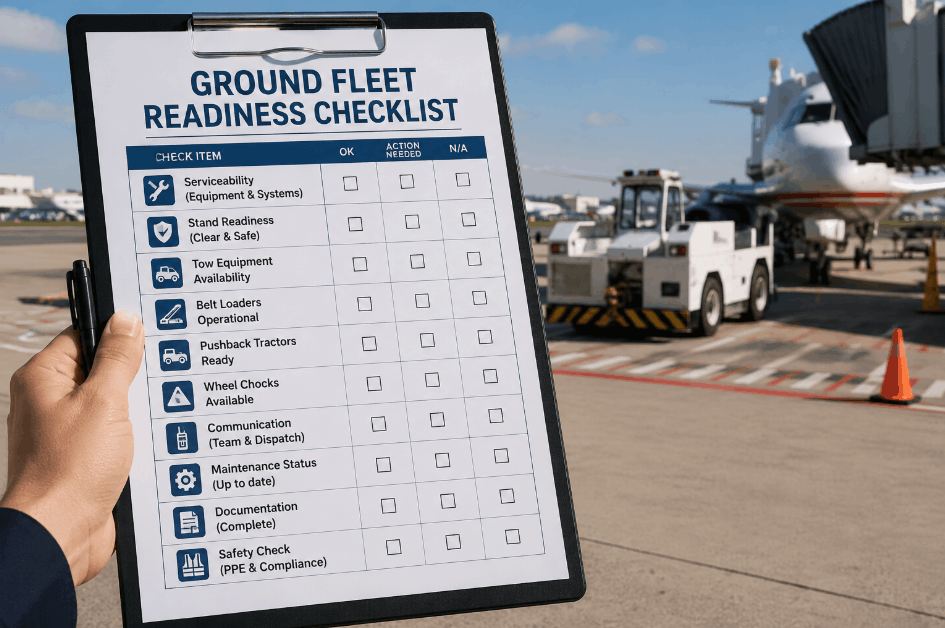
A deicing fleet preparedness checklist confirms that every truck, fluid tank, pump, and spray nozzle in the winter fleet is ready before the first freezing rain or snow event grounds operations. Hub airports can run thousands of deicing cycles across a single winter season, burning through hundreds of thousands of gallons of glycol-based fluid, which means fluid inventory, pump calibration, and crew dispatch all have to hold up under sustained demand. Sign Up Free on Oxmaint to track fluid stock, pump test results, and truck calibration records against every vehicle in the winter fleet. Book a Demo to see how Oxmaint turns pre-season deicing readiness into a documented, trackable program instead of a binder nobody opens until the snow falls.
Stop Scrambling for Deicing Readiness
Track fluid inventory, pump checks, and crew assignments against every truck before the first storm of the season.
1. Fluid Inventory & Storage Readiness
Fluid shortages mid-storm stall ground operations — verify stock and storage condition before demand spikes.
2. Pump, Hose & Spray System Function Checks
A full tank means nothing if the delivery system can't get fluid onto the aircraft at the right rate.
3. Truck Mechanical & Calibration Readiness
The chassis and boom mechanics have to hold up through a full season of repeated gate cycles.
4. Crew Assignment & Dispatch Coordination
Equipment readiness only pays off when the right crew is assigned to the right truck at the right time.
5. Seasonal Documentation & Compliance Tracking
Readiness has to be provable, not assumed — close the season with a documented record.
Build an Audit-Ready Deicing Program
Oxmaint tracks fluid inventory, pump calibration, and crew assignments, then routes every finding straight to a work order.
Frequently Asked Questions — Deicing Fleet Preparedness Checklist
1. What does a deicing fleet preparedness checklist cover?
It covers fluid inventory and storage, pump and spray system function, truck mechanical readiness, crew assignment, and the documentation needed for compliance review.
2. When should deicing fleet preparation begin?
Planning typically starts months before the first storm, covering equipment inspection, crew certification, and fluid procurement well ahead of cold weather.
3. Why does pump calibration matter for deicing trucks?
Calibration confirms fluid is applied at the correct rate and temperature, which directly affects holdover time and how long an aircraft stays protected before departure.
4. What triggers a deicing operation pause?
Conditions like frozen mixed precipitation or extended sub-freezing temperatures can push holdover time below safe limits, pausing deicing until conditions or fluid type change.
5. How does Oxmaint support deicing fleet readiness?
Oxmaint tracks fluid stock, pump and calibration checks, and crew assignments against every truck, then converts pre-season findings into assigned work orders.
Ready to Document Deicing Fleet Readiness?
Oxmaint connects fluid inventory, pump checks, and work orders into one audit-ready record for your winter fleet.