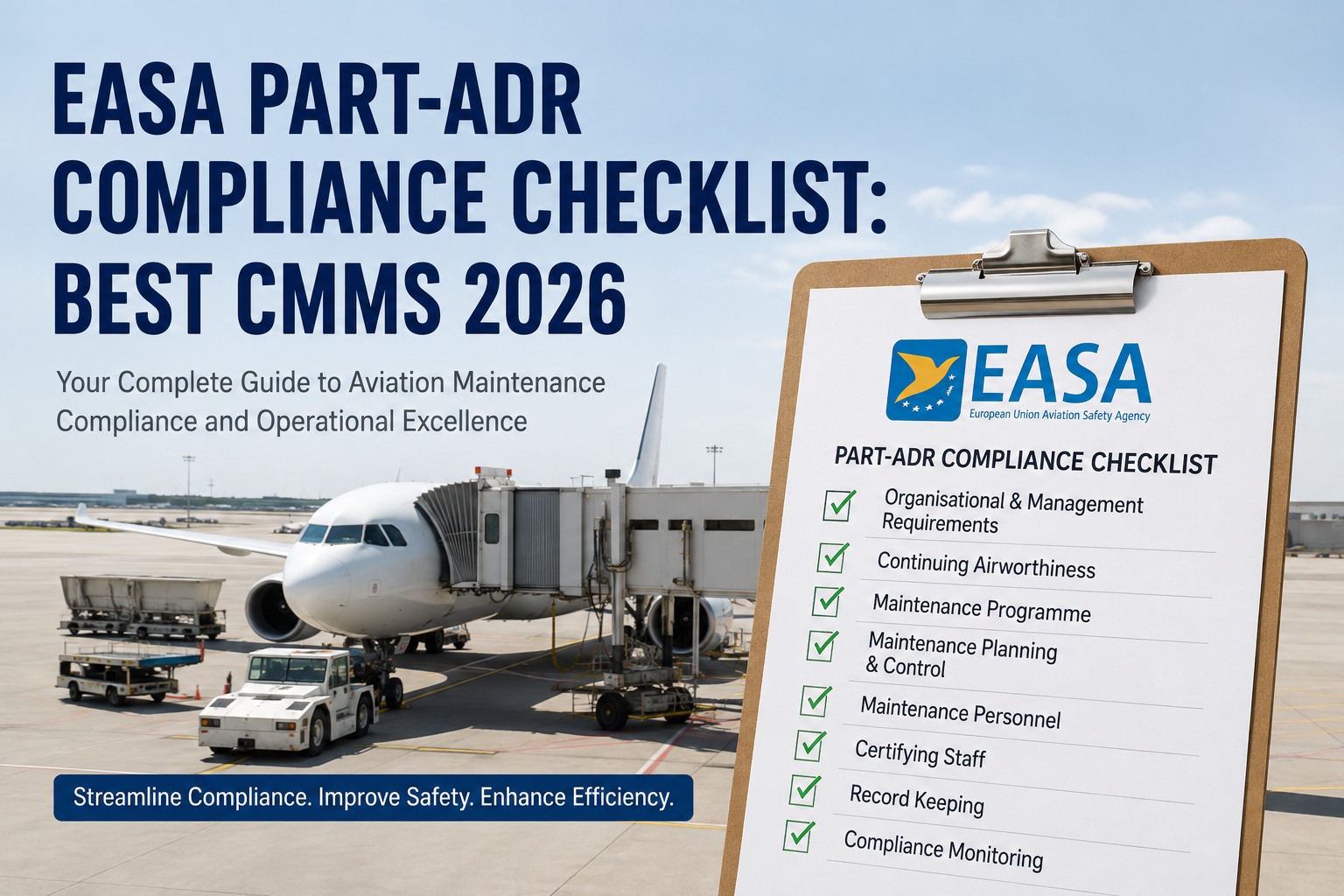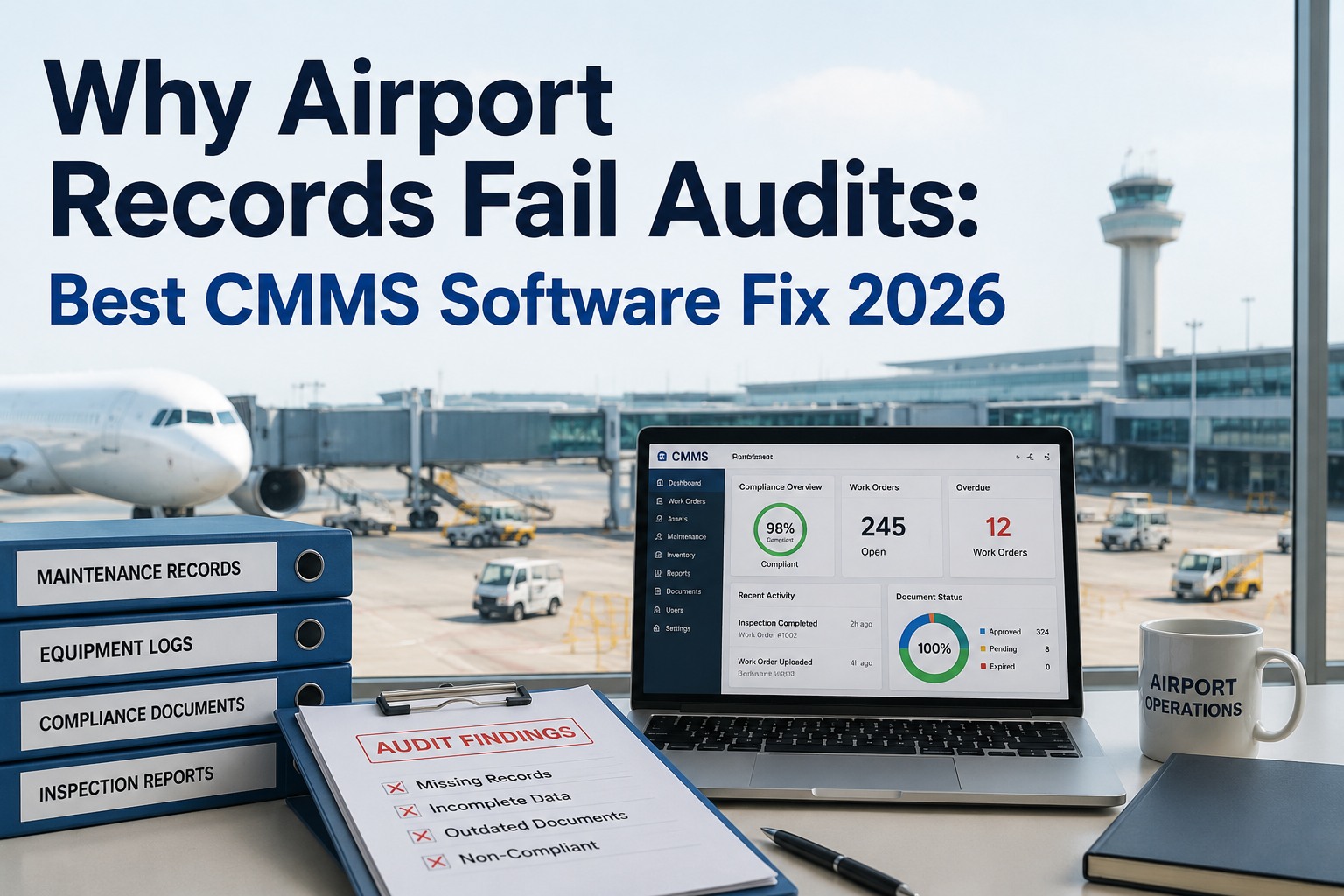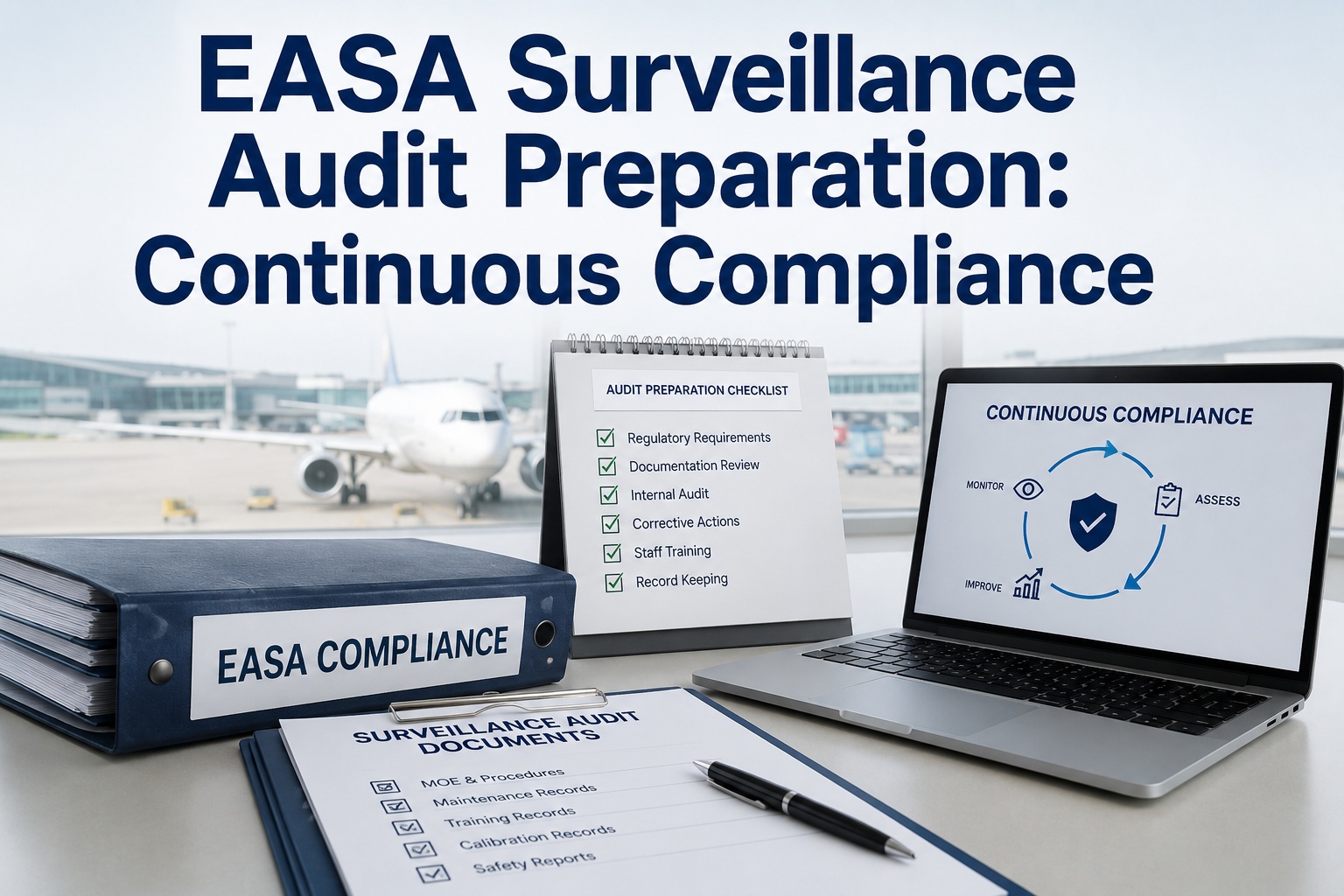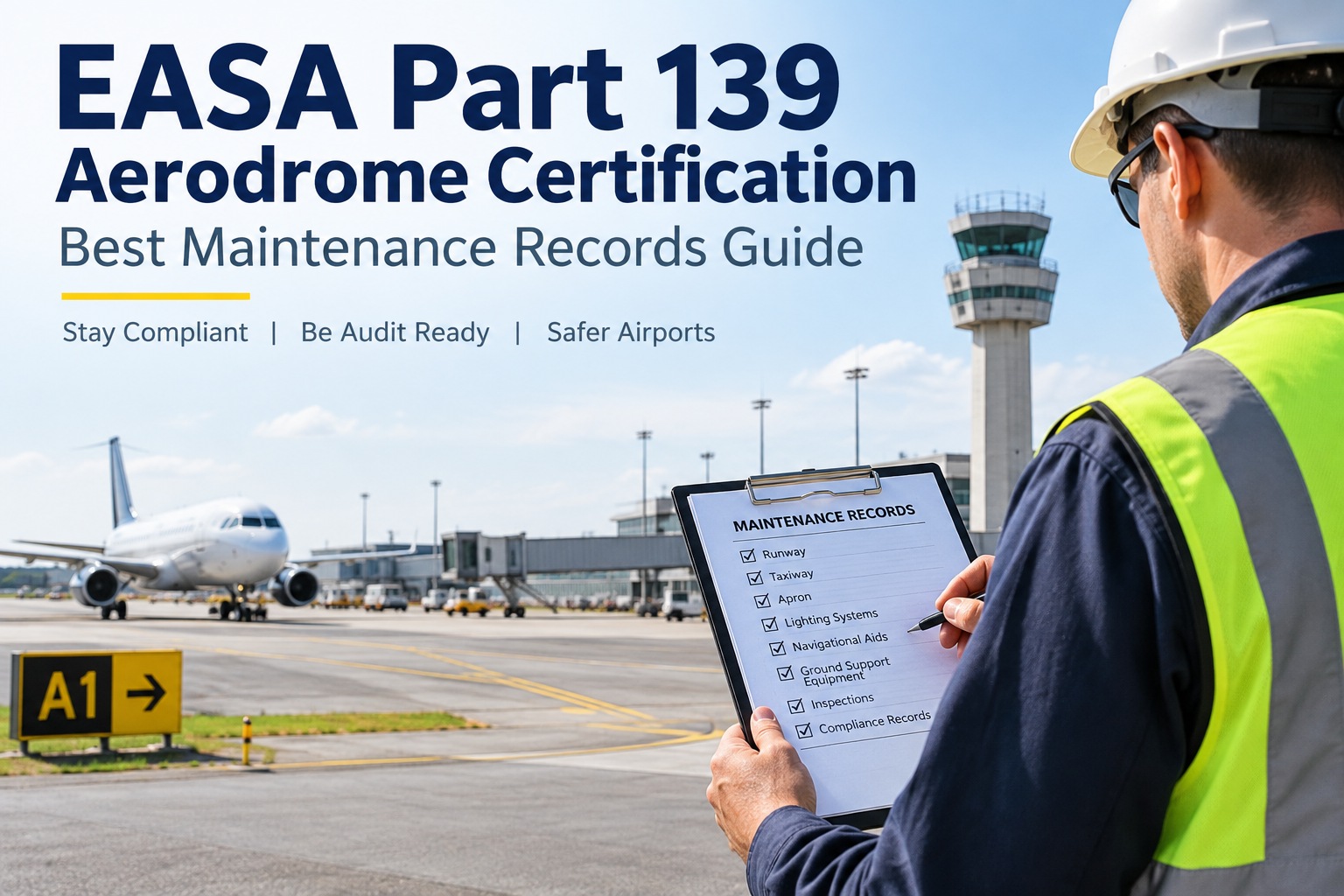
A surveillance visit doesn't fail because the work wasn't done — it fails because the evidence that it was done couldn't be produced fast enough, in the right form, tied to the right subpart. Commission Regulation (EU) No 139/2014 — the regulation aerodromes commonly shorthand as "Part 139" or Part-ADR — spreads maintenance and operational evidence across three annexes and a design specification, and most aerodromes still keep that evidence in whatever system each department happened to adopt. This guide walks through how to structure aerodrome maintenance records so a surveillance visit is a query against organized evidence, not a scramble across departments, using OXMAINT AI, the AI-powered CMMS that keeps every inspection, work order and maintenance record tied to the asset and the aerodrome function it supports.
EASA Part 139 Aerodrome Certification: A Maintenance Records Guide
A record that cannot be found quickly during a surveillance visit creates the same pressure as a missing record. OXMAINT AI links inspections and maintenance requests to specific assets, turning findings into tracked defects and work orders. Each completed work order becomes a timestamped, searchable asset history with details of what was found and done.
Where Evidence Actually Gets Lost Between Now and a Surveillance Visit
Every aerodrome under Part-ADR is doing the maintenance and the inspections. What varies enormously is whether that work leaves behind a record someone can retrieve in minutes rather than days — and whether that record is tied clearly to the asset, subpart, or requirement it's meant to demonstrate. Start free and start organizing your own evidence in OXMAINT AI.
- Maintenance logs, inspection reports and work orders live in separate systems
- A record exists but isn't clearly tied to the asset or subpart it evidences
- Different departments keep records in different formats and folders
- A recurring finding across assets isn't visible without manually cross-checking files
- Evidence gets assembled and reorganized specifically for each visit
- Inspections, findings and work orders logged against the specific asset, in one system
- Every record timestamped and tied to the asset or function it belongs to
- One consistent record format across every department and site
- A recurring finding across assets is visible as a pattern, not four disconnected reports
- Evidence is already organized — a visit is a query, not an assembly project
Mapping Your Evidence to the Part-ADR Structure
Part-ADR splits into annexes by audience — what the competent authority does, what your organization does, and how the aerodrome operates day to day — plus CS-ADR-DSN as the design reference. OXMAINT AI's role is keeping the maintenance-side evidence for each of these organized and asset-linked; your safety and quality team owns the actual compliance interpretation. Book a demo to see how your own evidence maps to this structure.
What Kind of Evidence Lives Where
Different parts of your operation naturally produce different kinds of evidence. This is a general orientation — your aerodrome manual and your competent authority's specific expectations are the authoritative source for what evidence is required. Sign up free and organize your own evidence types in OXMAINT AI.
| Evidence type | Typical source | Where it should live |
|---|---|---|
| Asset maintenance history | Work orders, PM records, repairs | Attached to the specific asset's own record |
| Inspection findings | Runway, lighting, equipment inspections | Logged against the asset or area inspected, with any resulting defect |
| Corrective action records | Work orders closing out a flagged finding | Linked back to the original inspection or defect that triggered them |
| Aerodrome manual & procedures | Documentation maintained under Part-ADR.OR.E | Referenced alongside, but distinct from, day-to-day maintenance records |
A Record That Takes Three Days to Locate Might As Well Not Exist During a Visit.
Surveillance timelines don't wait for records to be reassembled from scattered files. OXMAINT AI keeps every asset's evidence in one place, ready before the visit is even scheduled.
One Finding, Start to Evidence
Here's how a single inspection finding actually moves through OXMAINT AI and becomes part of the asset's permanent record. Book a demo to see this on your own aerodrome.
Scattered Files vs. Organized Asset Records
| What matters | Records scattered by department | Organized in OXMAINT AI |
|---|---|---|
| Where a record lives | Wherever that department keeps its files | Attached to the specific asset |
| Time to retrieve one asset's full history | Can take hours or days across systems | Immediate, on the asset record |
| Finding a pattern across assets | Requires manual cross-checking | Visible directly on connected records |
| Record format consistency | Varies by department and person | Consistent across the whole aerodrome |
| Preparation before a visit | Dedicated assembly effort each time | Records already organized, year-round |
Frequently Asked Questions
Make Your Next Surveillance Visit a Query, Not a Scramble.
Keep every inspection, defect and work order tied to the specific asset it belongs to — organized, timestamped, and ready whenever a review calls for it.