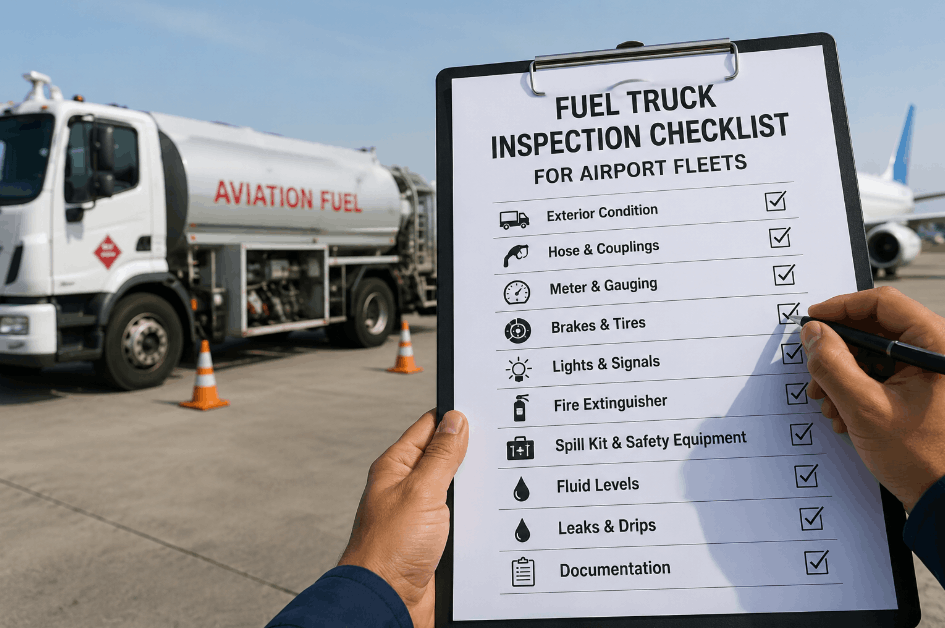
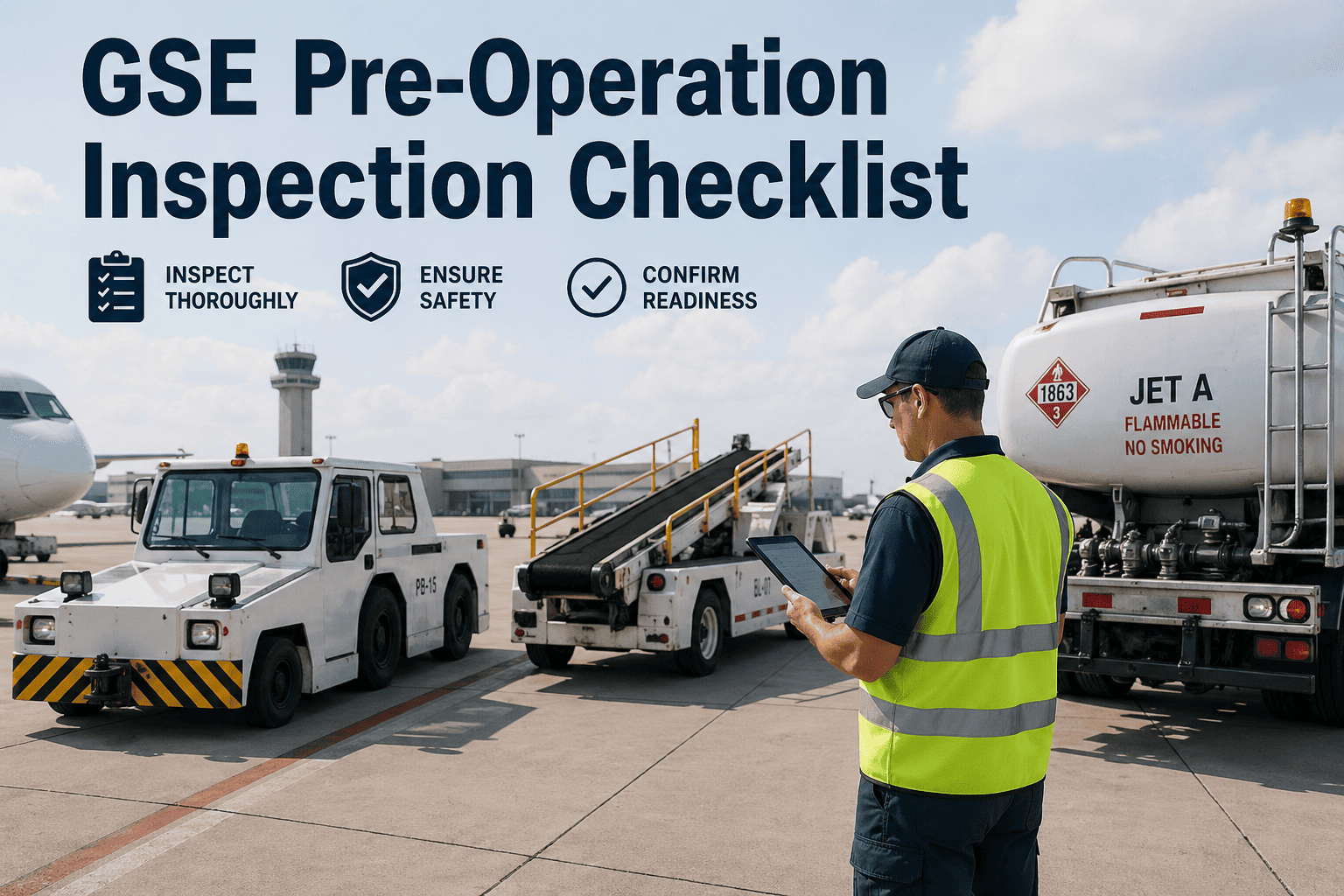
A fuel truck inspection checklist for airport fleets confirms hose condition, meter accuracy, brake function, and bonding equipment integrity before a fueling vehicle enters ramp service — because a defect caught in the yard costs far less than one that surfaces during an aircraft fueling cycle. Airport fuel fleets operate under concurrent pressure from tight turnarounds, regulatory compliance, and high consequence failure modes, making pre-service inspection non-negotiable. Sign Up Free on Oxmaint to log fuel truck inspection records against each vehicle asset before it enters daily ramp rotation. Book a Demo to see how Oxmaint tracks fuel truck condition history, schedules preventive service intervals, and routes inspection failures to assigned work orders across your full airport fuel fleet.
Keep Every Fuel Truck Inspection on Record Before Ramp Entry
Log fuel truck checks against each vehicle asset before daily ramp rotation and route defects to assigned work orders.
1. Hose, Nozzle & Coupling Condition
Check every fuel delivery point for wear, damage, and sealing integrity before the truck leaves the yard.
2. Fuel Meter & Filter Vessel Checks
Confirm metering accuracy and filter condition before delivery begins — both affect fuel quality and quantity integrity.
3. Brake, Steering & Vehicle Safety Checks
Confirm the vehicle itself is safe to drive on an active ramp before any fuel service assignment is made.
4. Bonding, Grounding & Static Discharge Equipment
Static control equipment must be functional and present — it is the last line of defence against ignition during fuel transfer.
5. Fire Suppression & Emergency Equipment Checks
Confirm all onboard fire and emergency equipment is present, charged, and accessible before the truck departs the yard.
Run Compliant Fuel Truck Inspections Across Every Airport Fleet Asset
Oxmaint logs pre-service checks, tracks filter and hose intervals, and routes defects to work orders before ramp clearance.
Frequently Asked Questions — Fuel Truck Inspection for Airport Fleets
1. What does a fuel truck inspection checklist cover?
It covers hose and nozzle condition, meter accuracy, filter vessel differential pressure, brake and tyre checks, bonding and static equipment, and fire suppression readiness before each ramp service shift.
2. Why is pre-service fuel truck inspection critical at airports?
A fuel truck defect discovered during aircraft fueling creates a safety exposure, a service delay, and a regulatory event simultaneously — pre-service inspection catches these in the yard where the cost of correction is manageable.
3. How frequently should airport fuel trucks be inspected?
A pre-service check before each ramp shift is standard, with a deeper scheduled inspection at defined intervals based on operating hours, fuel throughput, and manufacturer maintenance requirements.
4. How does Oxmaint support fuel truck fleet maintenance?
Oxmaint logs pre-service inspection records against each vehicle asset, tracks filter change and hose replacement intervals, and routes any defect found during inspection to an assigned work order with a compliance timestamp.
5. Can fuel truck inspection records be tracked across a multi-vehicle fleet?
Yes — Oxmaint tracks inspection status, service history, and upcoming maintenance intervals across every vehicle in the airport fuel fleet, giving fleet supervisors a single view of compliance status across all assets.
Ready to Track Fuel Truck Condition Across Your Entire Airport Fleet?
Oxmaint connects vehicle inspection records, filter intervals, and work orders into one view for your full fuel fleet operation.