Aviation maintenance has never operated inside a single regulatory border. An aircraft serviced in Singapore flies into Frankfurt, is inspected in Dubai, and has its engines overhauled in Johannesburg. That cross-border reality is precisely why ICAO's work on AI standards harmonization matters more than any single national regulation. When AI systems make or influence maintenance decisions — fault detection, component life prediction, inspection routing, work order prioritization — those decisions travel with the aircraft. Without global interoperability in AI governance frameworks, MROs face a fragmented compliance landscape that adds cost, slows deployment, and creates accountability gaps that no single CAA can close. Oxmaint's Global Compliance Dashboard is built for organizations operating across jurisdictions — start a free trial to see how multi-jurisdiction compliance is managed from a single platform, or book a demo and let us map your current cross-border exposure.
193
ICAO member states whose aviation regulations must harmonize on AI
2030
Target year for ICAO's first binding AI standards in Annex 6 maintenance provisions
68%
of multinational MROs report conflicting AI compliance requirements across their operating jurisdictions
4.8x
cost of reactive vs. planned maintenance — AI-driven prevention requires cross-border data trust
Operating across borders? Your AI compliance framework needs to keep up.
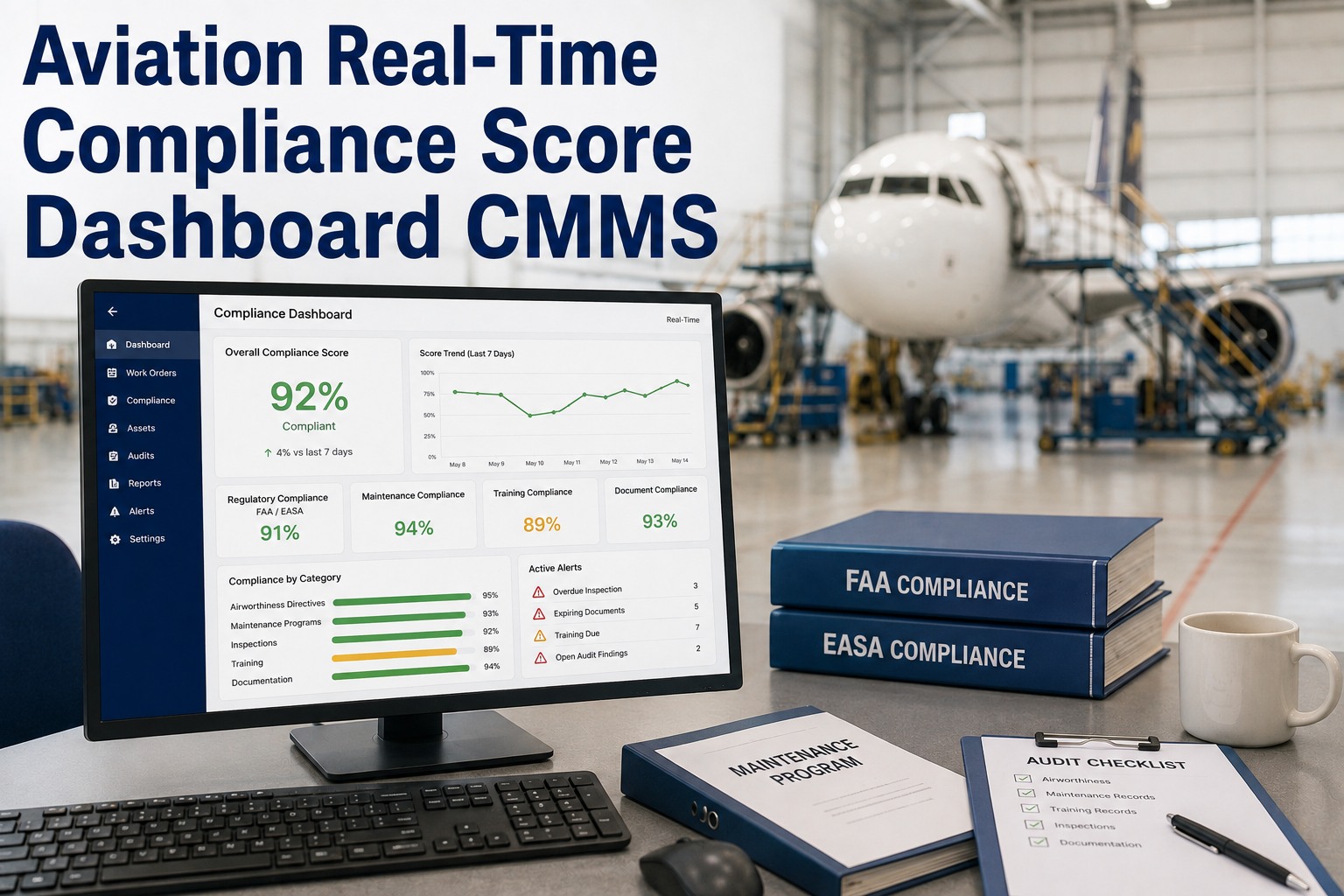
Oxmaint's Global Compliance Dashboard tracks your maintenance operation's AI governance posture across FAA, EASA, CAAC, GCAA, and CASA frameworks simultaneously — with audit-ready exports for each jurisdiction.
What Is ICAO's Role in AI Standards for Aviation?
ICAO — the International Civil Aviation Organization — sets the global baseline for aviation safety standards through its Annexes to the Chicago Convention. These Annexes cover everything from airworthiness (Annex 8) to aircraft operations (Annex 6) and personnel licensing (Annex 1). Member states are obligated to align their national regulations with ICAO Standards and Recommended Practices (SARPs). When AI enters aviation maintenance, ICAO becomes the mechanism through which conflicting national approaches are eventually resolved into a common floor. ICAO is currently active in three workstreams relevant to AI in maintenance: the AI Roadmap published through its Innovation and Digitalization group, working papers submitted through the Air Navigation Commission (ANC), and the CORSIA digital MRV framework which models how machine-generated compliance data can be internationally trusted. For multinational MROs, understanding where ICAO's work currently sits — and where the gaps remain — is the difference between a proactive compliance posture and a reactive scramble. Start a free trial with Oxmaint and explore the Global Compliance Dashboard built for exactly this complexity, or book a demo to discuss your specific jurisdictional mix.
ICAO
Chicago Convention + Annexes (SARPs)
Global baseline. 193 member states obligated to meet or exceed. AI-specific SARPs currently in development through ANC working groups.
FAA
14 CFR Part 145
USA national implementation. AI tools must meet AC 120-92B SMS framework. Advisory Circulars on AI in maintenance under development.
EASA
Part 145 + EU AI Act
EU implementation. Most advanced AI-specific framework globally. 7 trustworthiness dimensions. Aug 2026 enforcement deadline.
CAAC
CCAR-145 + AI Governance Guidelines
China national implementation. Separate AI governance layer under MIIT. Data localization requirements add complexity for multinational MROs.
GCAA / CASA
UAE / Australia
GCAA aligns closely with EASA; CASA tracks FAA. Both have issued AI in aviation position statements. Binding rules expected 2027.
MRO
Your Maintenance Operation
Must demonstrate compliance with every applicable national framework simultaneously. No single ICAO standard yet — but ICAO's harmonization work will progressively reduce the divergence MROs must manage.
Where ICAO's AI Harmonization Work Currently Stands
ICAO has been explicit that AI is a strategic priority. Its AI Roadmap, published in phases since 2021, identifies aviation maintenance as one of four primary application domains where AI governance gaps are highest. The current state of ICAO's work is active but pre-binding — meaning the frameworks being developed will eventually become SARPs, but are not yet obligatory. For MROs, this creates a specific risk: the organizations that wait for ICAO to finalize binding standards will find themselves building compliance infrastructure under time pressure, while those that align now with the emerging ICAO principles will have a significant head start when the standards land.
Published
ICAO AI Roadmap — Phase 1 & 2
Identifies AI use cases in aviation, defines key risk domains, and proposes a principles-based governance approach. Maintenance decision support is specifically called out as a high-impact, high-risk domain.
2021 — 2023
Active
ANC Working Group on AI Safety
Air Navigation Commission working group drafting recommended practices for AI explainability, human oversight, and data quality in safety-critical aviation applications. MRO systems are in scope.
2024 — 2026
Active
CORSIA Digital MRV Framework
Adjacency
Models how machine-generated compliance data from airlines and MROs can be internationally validated. Establishes data trust principles that AI maintenance governance frameworks will build on.
2023 — ongoing
Planned
Annex 6 AI Maintenance Provisions
Target amendments to Annex 6 (Operation of Aircraft) maintenance section to include AI-specific SARPs. Expected draft for consultation 2027, adoption 2029 — 2030. This will be binding for all 193 member states.
2027 — 2030
The Harmonization Gap — Why Divergence Costs MROs Money
Until ICAO's Annex amendments land, MROs operating across multiple jurisdictions must navigate genuinely divergent national AI frameworks. The divergences are not minor formatting differences — they reflect fundamentally different approaches to AI accountability, data sovereignty, and human oversight. Each gap creates a compliance overhead that falls entirely on the MRO. The six most operationally significant divergences are mapped below.
01
AI System Classification
EASA / EU
Formal risk-tier classification required. Written register of all AI systems. High-risk designation triggers full compliance obligations.
FAA
No formal classification framework yet. SMS-based risk assessment applies. Advisory Circular expected 2026.
CAAC
Separate AI classification under MIIT rules. Aviation-specific overlay still being finalized. Classification criteria differ from EU approach.
MRO Impact: Three different AI registers required. Classification decisions made under EU rules may not satisfy FAA SMS documentation expectations.
02
Data Sovereignty & Localization
EASA / EU
GDPR governs maintenance data used in AI training. Cross-border transfer permitted under Standard Contractual Clauses or adequacy decisions.
CAAC
Strict data localization. Maintenance data generated in China must remain on China-domiciled servers. Cross-border AI model queries restricted.
UAE (GCAA)
UAE Cloud First policy encourages local hosting. AI-generated maintenance data subject to NESA cybersecurity framework.
MRO Impact: A single AI platform cannot legally serve all jurisdictions from one data instance. Architecture must support regional data isolation.
03
Human Override Documentation
EASA / EU
Mandatory. Override decisions must be logged with timestamp, rationale, and digital signature. Auditors verify override records exist.
FAA
Required within SMS framework as a safety data record. Format not prescribed. Part 145 repair stations must demonstrate human accountability.
CASA (Australia)
Required under CASR Part 145. AI override records treated as safety occurrence data. Retention period 7 years minimum.
MRO Impact: Override logging is universal — but format, retention period, and attribution requirements differ. One log format will not satisfy all jurisdictions.
04
AI Explainability Requirements
EASA / EU
Mandatory. AI outputs must be traceable to specific inputs. Black-box systems that cannot explain their maintenance recommendations are non-compliant.
FAA
Not yet formally required. Industry guidance recommends explainability for safety-critical AI. Formal requirement expected in next AC revision.
ICAO Roadmap
Identifies explainability as a core principle for all aviation AI. Will become a SARP requirement when Annex amendments are adopted.
MRO Impact: Deploying explainable AI now satisfies the strictest current requirement (EASA) and positions the organization ahead of pending ICAO standardization.
ICAO's Six Core Principles for AI in Aviation — What MROs Must Know
ICAO's AI Roadmap articulates six foundational principles that are expected to underpin the eventual SARPs for AI in aviation maintenance. These are not yet binding, but they represent the direction ICAO's 193 member states are collectively moving. MROs that structure their AI governance around these principles now will face minimal friction when the formal standards arrive. Oxmaint's Global Compliance Dashboard is designed around all six.
A
Accountability
Every AI-influenced maintenance decision must have a documented human accountable for it. The chain from AI alert to technician action to AME sign-off must be unbroken and retrievable.
Oxmaint: Full attribution chain per work order, with digital signature at each handoff
S
Safety-First Design
AI systems must be designed to fail safe. When sensor data is unavailable or model confidence is below threshold, the system must default to requiring human review — not generate a low-confidence recommendation.
Oxmaint: Confidence scoring on all AI alerts. Low-confidence flags trigger mandatory human review before work order generation
T
Transparency
AI maintenance recommendations must be traceable to their inputs. MROs and regulators must be able to understand why a specific fault was flagged, what data drove the classification, and what the system's historical accuracy has been.
Oxmaint: Explainability layer shows sensor inputs, thresholds crossed, and historical patterns that triggered each alert
I
Interoperability
AI systems across different MRO platforms and different jurisdictions must be able to exchange maintenance data in standardized formats. Proprietary data silos undermine cross-border airworthiness continuity.
Oxmaint: Open API architecture with SPEC 2000 and S1000D data exchange support for cross-MRO data portability
E
Equity & Non-Discrimination
AI maintenance models must not systematically under-perform on specific aircraft types, fleet ages, or operator sizes due to unrepresentative training data. Bias in maintenance AI has direct safety implications.
Oxmaint: Model performance monitoring by aircraft type, operator size, and fleet age with bias detection alerts
D
Data Governance
Training data for aviation AI must meet quality, provenance, and retention standards. MROs must be able to demonstrate where their AI's training data came from, how it was validated, and how long it is retained.
Oxmaint: Data lineage tracking from sensor source to AI model input, with jurisdiction-specific retention policy management
Before vs. After Global AI Harmonization — The MRO Compliance Picture
The difference between managing compliance in a fragmented national framework landscape versus an ICAO-harmonized environment is significant. It affects staffing, tooling, audit costs, and the speed at which AI tools can be deployed across a multinational maintenance operation. The comparison below reflects today's fragmented reality against the post-harmonization state ICAO is working toward — and shows how Oxmaint bridges the gap now.
How Oxmaint Supports Global Compliance — Right Now
ICAO's harmonization work will eventually reduce the divergence MROs manage. But that timeline is 2029 — 2030 at the earliest. In the meantime, Oxmaint's Global Compliance Dashboard gives multinational maintenance operations the infrastructure to manage cross-jurisdictional AI compliance today — without waiting for the standards to converge. Start a free trial and configure your first jurisdiction framework within the first session, or book a demo for a live walkthrough of the multi-jurisdiction compliance view.
Global Dashboard
Multi-Jurisdiction Compliance View
A single dashboard shows your compliance posture across every applicable CAA framework simultaneously. Red-amber-green status per dimension per jurisdiction. No manual cross-referencing.
Data Architecture
Regional Data Isolation
Maintenance data is stored in jurisdiction-compliant regional instances. CAAC-regulated data stays in-country. GDPR-governed data stays in-region. AI model queries respect data residency rules automatically.
Audit Readiness
Per-CAA Audit Pack Generation
Oxmaint generates jurisdiction-specific audit documentation packages — formatted to FAA, EASA, GCAA, CAAC, or CASA requirements — from the same underlying compliance data. No duplicate record-keeping.
Accountability Chain
Universal Attribution Logging
Every AI-influenced decision is logged with the attribution depth required by the strictest applicable jurisdiction. Technician digital signatures, override rationales, and AME sign-offs captured once — formatted for multiple frameworks.
Standards Tracking
Regulatory Update Monitoring
Oxmaint's compliance engine is updated as ICAO working papers advance, national frameworks publish new Advisory Circulars, and CAA guidance evolves. Your compliance posture is measured against current requirements, not last year's.
Interoperability
Cross-Border Data Exchange
Maintenance records follow the aircraft. Oxmaint supports SPEC 2000 and S1000D data formats for cross-MRO handoffs, with compliance metadata preserved across the exchange so receiving parties can trust the records.
Portfolio View
Multi-Site, Multi-Country Reporting
Portfolio-level compliance reporting for investor and ownership groups operating MRO facilities across multiple countries. One report, all jurisdictions, all sites. Designed for the VP of Operations who owns global risk.
AI Governance
Explainability Across Frameworks
Oxmaint's explainability layer produces the reasoning documentation required by EASA today, aligned with ICAO's emerging transparency principle, and formatted to satisfy FAA SMS documentation expectations simultaneously.
ROI of Building to the ICAO Standard Now
The organizations that build their AI governance infrastructure to ICAO's emerging principles — rather than the minimum current national requirement — consistently outperform on compliance cost, audit outcomes, and speed of expansion into new markets. These figures reflect industry outcomes from MROs that have deployed centralized, multi-jurisdiction AI compliance frameworks.
55%
Reduction in compliance overhead
MROs managing 3+ jurisdictions from a centralized compliance platform vs. per-jurisdiction manual management
6x
Faster new-market AI deployment
Activating a pre-built jurisdiction framework vs. building compliance infrastructure from scratch for each new CAA
40%
Fewer audit findings
Structured AI governance frameworks built to the highest applicable standard consistently outperform minimum-compliance approaches across all CAA audits
2029
ICAO Annex 6 AI provisions expected
Organizations aligned with ICAO principles now will face zero remediation cost when binding standards arrive. Those starting in 2029 will face significant catch-up spend
Frequently Asked Questions
What specific ICAO documents cover AI in aviation maintenance?
ICAO's primary AI governance document is the AI in Aviation — Ethical Framework and Governance Concepts report, supplemented by working papers submitted through the Air Navigation Commission. The ICAO AI Roadmap, developed in phases from 2021 onward, specifically identifies maintenance decision support as a high-priority application domain. Additionally, ICAO's Manual on AI Safety Oversight (Doc 10199) provides guidance that national CAAs are expected to use when developing their own AI frameworks. These documents do not yet constitute binding SARPs, but they represent the authoritative signal for where Annex 6 amendments will land. MROs building governance frameworks aligned with these documents are building to the future standard — not speculating about it.
How do ICAO's AI principles differ from EASA's 7 Trustworthiness Dimensions?
EASA's framework and ICAO's principles are substantially aligned — EASA's work was developed in close coordination with ICAO's AI governance group. The primary differences are scope and enforceability. EASA's dimensions are already backed by the legally enforceable EU AI Act, with audit checkpoints and defined penalties. ICAO's principles are currently guidance-only, applicable to all 193 member states but not yet formalized as SARPs. EASA is also more prescriptive on documentation format and process — ICAO's current guidance is more outcomes-focused, allowing member states flexibility in implementation. The practical implication for MROs: EASA compliance satisfies ICAO principles, and ICAO-aligned governance will satisfy EASA requirements. Building to the higher bar addresses both simultaneously.
Does ICAO's work affect MROs that only operate in a single country?
Yes, indirectly. ICAO's SARPs flow down to every member state's national regulations. When ICAO finalizes AI-specific amendments to Annex 6, every national CAA — the FAA, CASA, GCAA, Transport Canada, and all others — is obligated to align their national regulations accordingly. Single-country MROs will see their national framework update to reflect ICAO standards. The difference is timing: MROs operating under EASA are already subject to the most advanced current framework. Those under other CAAs have more runway, but the ICAO harmonization process is progressively closing that gap. Building to ICAO-aligned principles now means no remediation cost when your national CAA updates its framework to align.
What is the most important thing a multinational MRO can do today to prepare for ICAO AI standards?
Three actions deliver the most preparation value. First, build a formal AI system inventory across all your operations — every tool that influences a maintenance decision, classified by risk level. This is required by EASA now and will be required universally under ICAO SARPs. Second, implement AI decision logging and human override documentation in your maintenance platform. These are universal across all current and emerging frameworks, regardless of jurisdiction. Third, ensure your AI tools can produce explainable outputs — recommendations that cite the sensor data and historical patterns behind each alert. This satisfies EASA's current mandate, ICAO's emerging transparency principle, and the FAA's expected Advisory Circular requirements simultaneously. Oxmaint covers all three from the first day of deployment.
Manage AI Compliance Across Every Jurisdiction You Operate In
Oxmaint's Global Compliance Dashboard gives multinational maintenance operations a single platform for cross-border AI governance — tracking compliance posture across FAA, EASA, CAAC, GCAA, and CASA frameworks, generating jurisdiction-specific audit packs on demand, and keeping your documentation aligned with evolving ICAO standards as they develop.