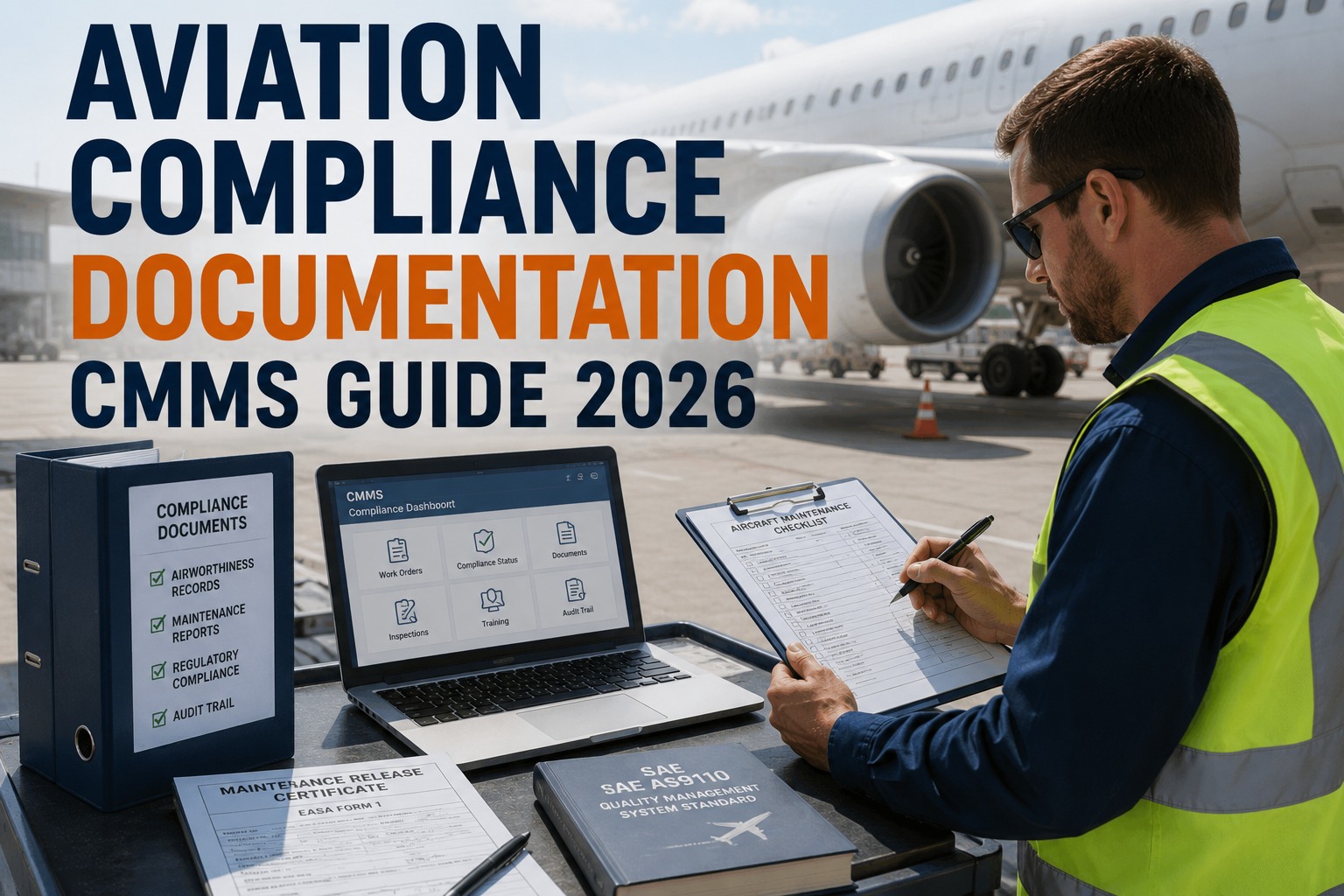
Aviation maintenance compliance is evolving faster than most organizations can adapt. In 2026, digital signatures are no longer a technology experiment — they are the clear regulatory preference across FAA, EASA, CASA, and GCAA jurisdictions. Organizations still running paper-based sign-off workflows are not just inefficient — they are accumulating audit risk with every binder that leaves the hangar. This guide covers what digital signature compliance actually demands in 2026, where paper workflows consistently break down under scrutiny, and how Oxmaint gives Part 145 MROs, airline technical operations teams, and CAMO organizations the tools to replace paper with audit-ready digital records that satisfy regulators on demand.
$2.4M
Average cost of an FAA enforcement action tied to documentation failures
68%
Of aviation audit findings trace back to incomplete or illegible sign-off records
83%
Reduction in audit preparation time when digital signatures replace paper workflows
14 min
Average time to locate a paper sign-off vs under 30 seconds with a digital system
Compliance-Grade Digital Sign-Offs Built for Aviation Teams
Maintenance teams at Part 145 MROs, airline technical operations, and airport authorities across the USA, UK, UAE, Australia, and Germany are replacing paper sign-off workflows with digital signatures that satisfy regulators and cut audit preparation time by over 80%. Oxmaint's e-signature module is built specifically for aviation documentation requirements — every sign-off time-stamped, identity-verified, and instantly retrievable. Want to replace binders with an audit-ready digital trail? Start a free trial for 30 days and see how it works across your entire fleet, or book a demo with our compliance team today.
Regulatory Foundation
What Digital Signature Compliance Actually Means in Aviation
A digital signature in aviation maintenance is not a scanned image of a handwritten name. It is a cryptographically verified, identity-bound electronic attestation that a specific licensed individual — with confirmed credentials and current authorizations — performed or certified a specific maintenance action at a specific time. Regulators distinguish sharply between electronic signatures (simple digital attestations) and cryptographic digital signatures (PKI-secured with tamper-evident audit integrity). That distinction determines your audit exposure.
Understanding the compliance architecture behind modern e-signatures is the first step to replacing paper binders with a system auditors trust on demand — start a free trial for 30 days and explore Oxmaint's full e-signature compliance module, or book a demo with our aviation compliance team for a live walkthrough.
ELECTRONIC SIGNATURE
Electronic Signature
Any electronic symbol or process logically associated with a record and executed with intent to sign. Includes typed names, PIN codes, biometric captures, and checkbox confirmations. Accepted by FAA under 14 CFR Part 11 and EASA under Part-145 AMC 145.A.55 for many maintenance documentation contexts.
PIN / Password
Typed attestation
Biometric capture
Simpler setup
DIGITAL SIGNATURE
Cryptographic Digital Signature
A mathematically generated signature using public-key cryptography (PKI). Provides tamper-evident proof that a record has not been altered after signing. Required for highest-assurance aviation records, defense MRO contracts, and jurisdictions with strict data integrity mandates.
PKI-based
Tamper-evident
Certificate-bound
Highest assurance
AUDIT TRAIL INTEGRITY
Immutable Chain of Custody
Every sign-off must be permanently linked to the identity of the signer, the specific record signed, and the exact time of signing. Any subsequent modification must generate a new versioned entry — the original signed record can never be overwritten or silently altered.
Immutable timestamps
Versioned edits
Permanent records
Change detection
NON-REPUDIATION
Legally Defensible Identity Binding
The signer cannot deny having signed the record. The system must uniquely identify each signatory, prevent unauthorized use of another person's credentials, and preserve evidence that the signing act was intentional, authenticated, and linked to a verified certificate holder.
Identity-bound
Legally defensible
Credential-verified
Access-controlled
Regulatory Landscape
What Each Regulator Actually Requires for Electronic Sign-Offs
FAA, EASA, CASA, and GCAA each have distinct frameworks for accepting digital signatures in maintenance records. The requirements overlap significantly — but the details determine compliance when your records face live regulatory scrutiny. Here is what maintenance leaders need to know across the four major aviation jurisdictions in 2026.
Oxmaint's documentation module is architected to satisfy each of these frameworks simultaneously — start a free trial for 30 days to explore the compliance configuration for your jurisdiction, or book a demo and our compliance team will walk through your specific regulatory requirements.
USA
FAA — 14 CFR Parts 43, 65, 145
FAA AC 120-78B allows electronic signatures for maintenance records provided the system uniquely identifies the signatory, prevents unauthorized use, and creates an audit trail linking the signature to the specific record. Must capture certificate number, rating, and date of sign-off. Post-signing alterations must generate a visible, versioned change record.
EU / UK
EASA Part-145 / UK CAA
EASA Part-145 AMC 145.A.55 explicitly permits electronic signatures for maintenance release documentation. The system must ensure the signatory cannot repudiate the signature, provide access controls preventing unauthorized signing, and generate records that cannot be altered without detection. Post-Brexit, UK CAA maintains equivalent acceptance under UK Part-145.
AUSTRALIA
CASA — Part 66 / CAO 100.5
CASA accepts electronic signatures under the Electronic Transactions Act 1999. The system must create a permanent, unalterable record linking the signature to the maintenance action, the certifying technician's authorization number, and the date. Australia's high labor cost environment makes the ROI case for digital signatures particularly strong for Part 145 organizations.
UAE
GCAA — UAE ANO Part VI
GCAA acceptance of electronic signatures aligns with EASA standards under bilateral agreements. UAE Federal Law No. 1 of 2006 on Electronic Commerce and Transactions provides the legal foundation. For Vision 2030 smart airport and infrastructure projects, digital documentation is increasingly mandated — not merely permitted.
Pain Points
Where Paper Sign-Off Workflows Break Down
Maintenance leaders running paper-based sign-off workflows are managing a compliance liability they may not fully see until an audit exposes it. These four failure modes surface consistently in MRO organizations transitioning to digital systems — each one a potential enforcement action that paper workflows cannot prevent.
If any of these failure modes sounds familiar, the path to fixing it is simpler than you think — start a free trial for 30 days and see how Oxmaint eliminates each one, or book a demo to walk through your specific workflow with our compliance team.
AUDIT RISK
Records Unavailable During Live Inspections
FAA and EASA auditors expect to see a maintenance record within minutes of request. Paper binder systems routinely fail this test — files misrouted, stored at different sites, or physically inaccessible. A single missing sign-off can trigger a finding that grounds an aircraft or suspends a Part 145 approval entirely.
IDENTITY GAP
Illegible or Unverifiable Technician Signatures
Handwritten signatures do not link to certificate numbers, ratings, or authorization scope in a machine-verifiable way. Auditors frequently flag sign-offs where technician identity cannot be confirmed — a documentation deficiency that looks indistinguishable from actual unauthorized maintenance.
BACKDATE RISK
No Immutable Timestamp on Sign-Off Actions
Paper records can be pre-signed, backdated, or amended without generating a detectable change record. This creates genuine safety risk alongside compliance exposure. Regulators have increased timestamp scrutiny following enforcement cases where maintenance records predated actual work completion.
MULTI-SITE GAP
No Portfolio Visibility Across Bases
MRO organizations operating across multiple bases cannot consolidate paper records into a coherent compliance posture. Headquarters cannot see what has been signed off at a remote line station until binders physically arrive — a fundamental problem for CAMO organizations managing airworthiness across a fleet.
Oxmaint Solution
How Oxmaint's E-Signature Module Eliminates Every Compliance Gap
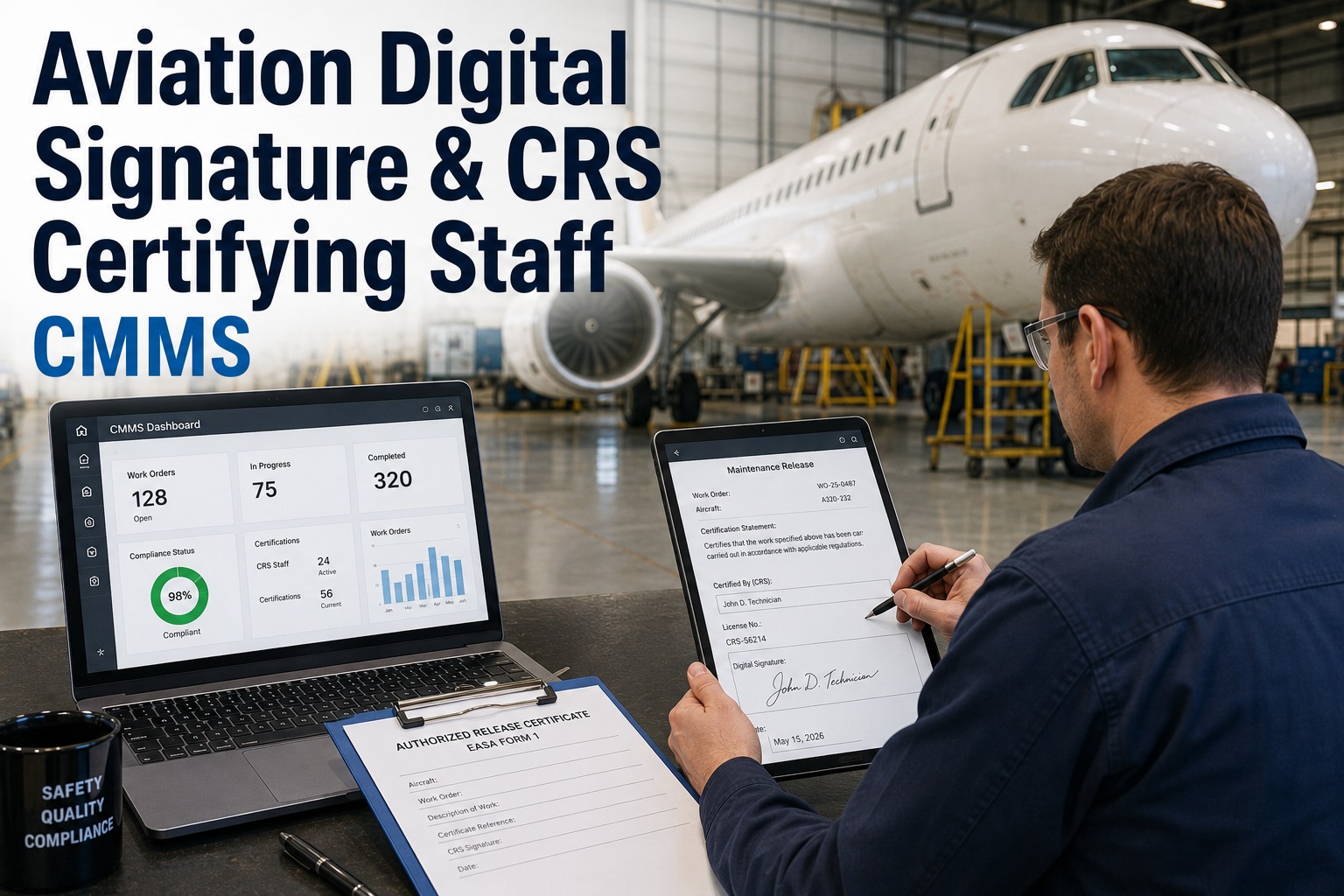
Oxmaint's e-signature module is not a bolted-on feature. It is embedded in the work order and inspection workflow so that compliance documentation happens at the point of work — not as a separate administrative step. Every signature automatically captures the full context regulators need. Aviation maintenance directors transitioning to Oxmaint consistently report that compliance documentation workload drops within the first 30 days of deployment.
See the full e-signature workflow configured for your operation — start a free trial for 30 days and explore every compliance feature, or book a demo with our team for a live walkthrough of the complete sign-off workflow.
IDENTITY
Credential-Linked Signer Profiles
Each technician profile stores license type, certificate number, ratings, and authorization scope. Sign-off initiation auto-populates verified credentials — eliminating manual entry errors and ensuring every record carries machine-verifiable identity, not just a name.
CONTROL
Authorization Scope Enforcement
The system checks the technician's authorization scope against the task category before allowing sign-off. A structure technician cannot inadvertently sign off an avionics task. The gate is automatic — no supervisor cross-checking of paper authorization lists required.
INTEGRITY
Immutable Timestamp and Audit Chain
Every sign-off generates a server-side UTC timestamp at submission. Records are immediately locked — any subsequent edit creates a new versioned entry with editor identity, timestamp, and reason for change. The original signed record is preserved permanently.
MOBILE
Ramp and Hangar Sign-Off on Any Device
Technicians sign off work orders, inspection checklists, and release certificates from iOS or Android. Offline capability ensures sign-offs are captured without network connectivity, syncing automatically when connection is restored.
MULTI-PARTY
Inspector and Certifier Dual Sign-Off
Tasks requiring dual authorization are supported natively. The system enforces sign-off sequence, prevents the same individual signing both roles, and holds the work order open until both authorizations are captured — matching Part 145 dual-release requirements exactly.
REPORTING
One-Click Audit Export with Chain of Custody
FAA, EASA, CAAC, and CASA audit packages generated in minutes. Exports include: who performed the work, who inspected it, who certified release, all timestamps, and a complete change history. What previously took days now takes under five minutes.
PORTFOLIO
Real-Time Compliance Dashboard Across All Bases
Maintenance directors see unsigned work orders, overdue inspections, and certification gaps across all bases simultaneously. Remote line station sign-offs appear at headquarters in real time — giving CAMO organizations the portfolio visibility paper makes impossible.
OFFLINE
Auto-Sync for Remote Line Stations
For environments where connectivity is unreliable, sign-offs are queued locally with device-generated timestamps and synced to the cloud when connectivity is restored. The system records both offline and server-sync timestamps — giving auditors full visibility into any gap.
Before vs After
Paper Sign-Off vs Digital E-Signature: The Real Operational Difference
What Aviation Teams Achieve With Digital Signature Compliance
83%
Faster Audit Preparation
Digital export replaces days of manual document retrieval with a five-minute workflow
0
Unauthorized Sign-Offs
Authorization scope enforcement blocks out-of-rating certifications before they happen
100%
Record Retrievability
Every sign-off searchable and retrievable within 30 seconds from any location worldwide
30 days
Average Deployment Time
Configured, trained, and live in one month — not one year
FAQ
Frequently Asked Questions
Are digital signatures legally valid for FAA Part 43 and Part 145 maintenance records?
Yes. FAA Advisory Circular 120-78B specifically addresses the use of electronic signatures for aircraft maintenance records. The AC establishes that electronic signature systems are acceptable when they uniquely identify the person signing, prevent unauthorized use of a signature, capture the date and time of signing, and prevent alteration of signed records without generating a detectable change entry. The Electronic Signatures in Global and National Commerce Act provides the federal legal framework. Oxmaint's module is architected to satisfy each AC 120-78B requirement. Ready to verify compliance for your operation?
Start a free trial for 30 days and request our full compliance documentation package, or
book a demo with our team.
What happens to existing paper maintenance records when we switch to digital?
Existing paper records remain valid and must be retained for the regulatory retention period — generally 2 years for completed work orders under 14 CFR Part 43, longer for life-limited component records. The practical approach is a cutover date: all records created on or after cutover are digital; records before remain in original paper form. Oxmaint supports document upload and tagging so that scanned historical records are searchable alongside new digital sign-offs in the same interface. Note that scanned copies do not carry the same legal standing as original digital records created natively in the system.
How does the system handle sign-offs in low-connectivity environments like remote line stations?
Oxmaint's mobile application supports full offline operation for environments where connectivity is unreliable or intermittent. Technicians can access work orders, record maintenance actions, and complete sign-off workflows without an internet connection. The sign-off queues locally with a device-generated timestamp and syncs to the cloud server when connectivity is restored. The system records both the offline and server sync timestamps — giving auditors complete visibility into any gap between work completion and record upload. This approach satisfies FAA and EASA requirements for offline operational environments.
How long does a full transition from paper to compliant digital sign-offs take?
Aviation maintenance organizations using Oxmaint complete the transition in four structured stages — typically 30 to 45 days from kickoff. Stage 01 loads technician profiles with license and authorization data (3 to 5 days). Stage 02 maps task categories to authorization scope (2 to 3 days). Stage 03 runs digital sign-offs in parallel with paper for 2 to 4 weeks to validate equivalency. Stage 04 is regulator notification and paper cutover. Under FAA AC 120-78B and EASA Part-145 AMC, organizations do not require prior regulatory approval to transition — notifying your Principal Maintenance Inspector with system validation evidence is considered best practice.
Replace Binders With Certainty
Aviation Maintenance Sign-Offs That Satisfy Regulators on Demand
Oxmaint's e-signature module gives Part 145 MROs, airline technical operations, and CAMO organizations credential-verified, timestamp-immutable, authorization-enforced digital sign-offs — with one-click audit exports that reduce compliance preparation from days to minutes. Trusted by aviation maintenance teams across the USA, UK, UAE, Australia, and Germany. Whether you manage 10 aircraft or 1,000, the compliance infrastructure you need is ready to deploy in 30 days.