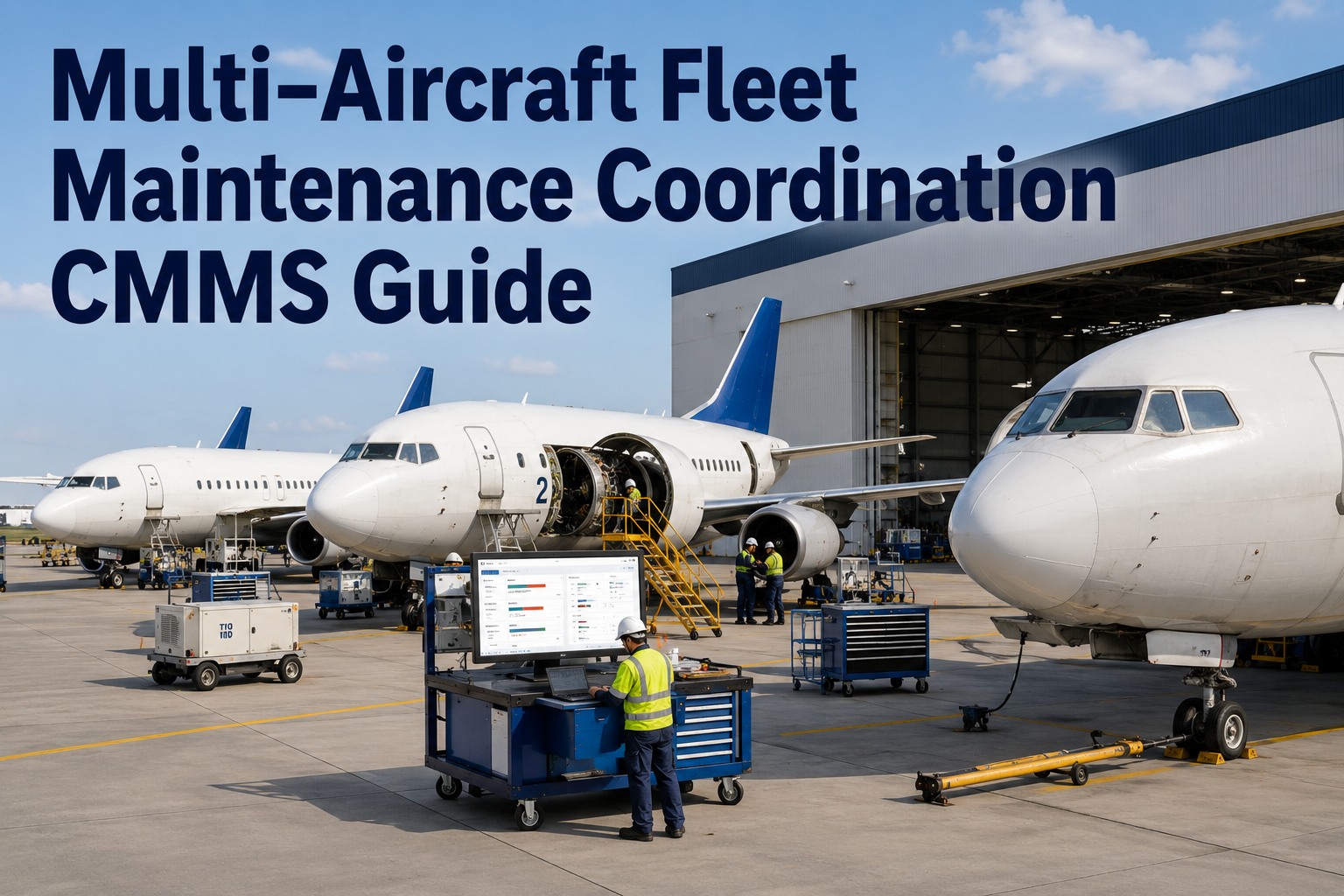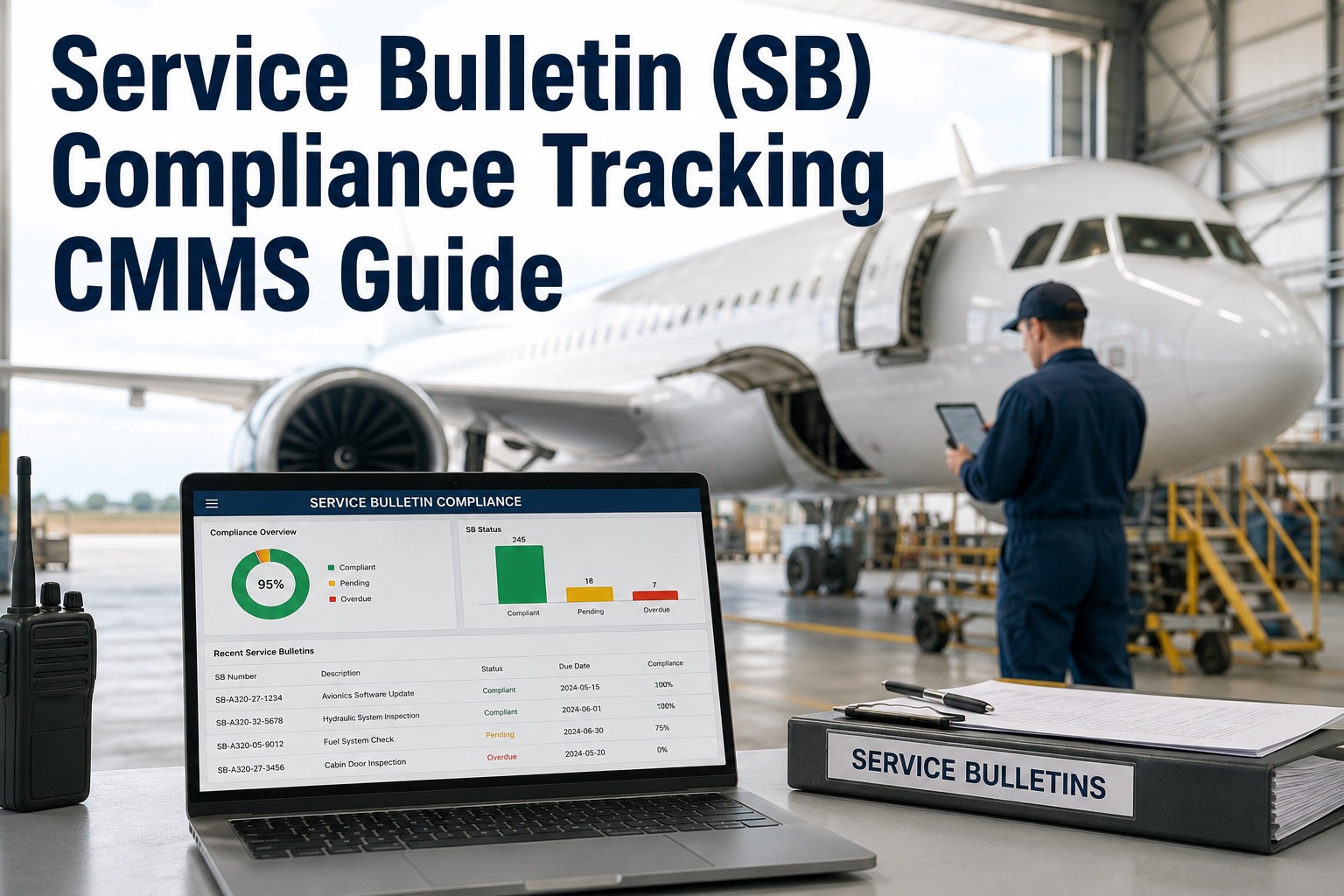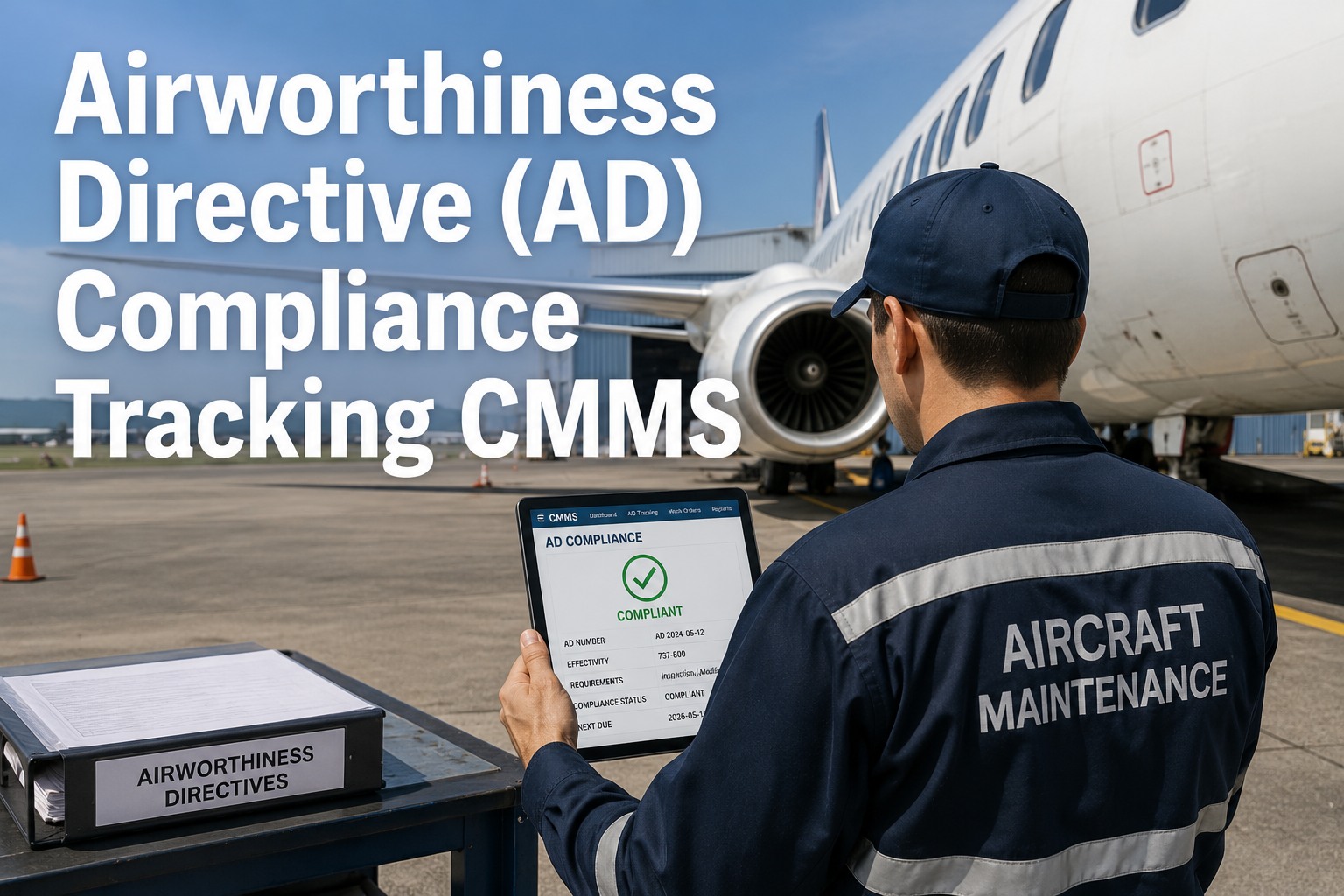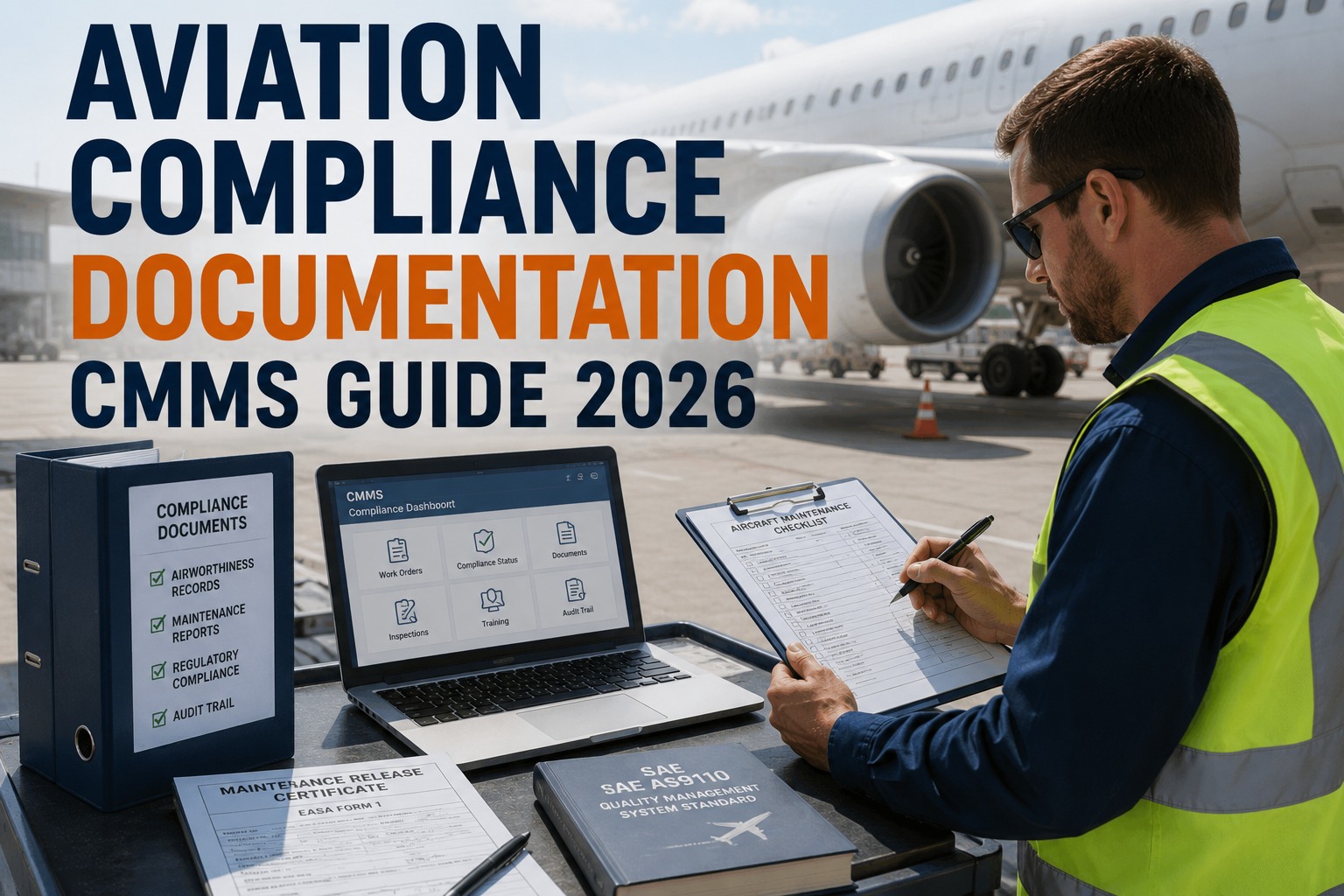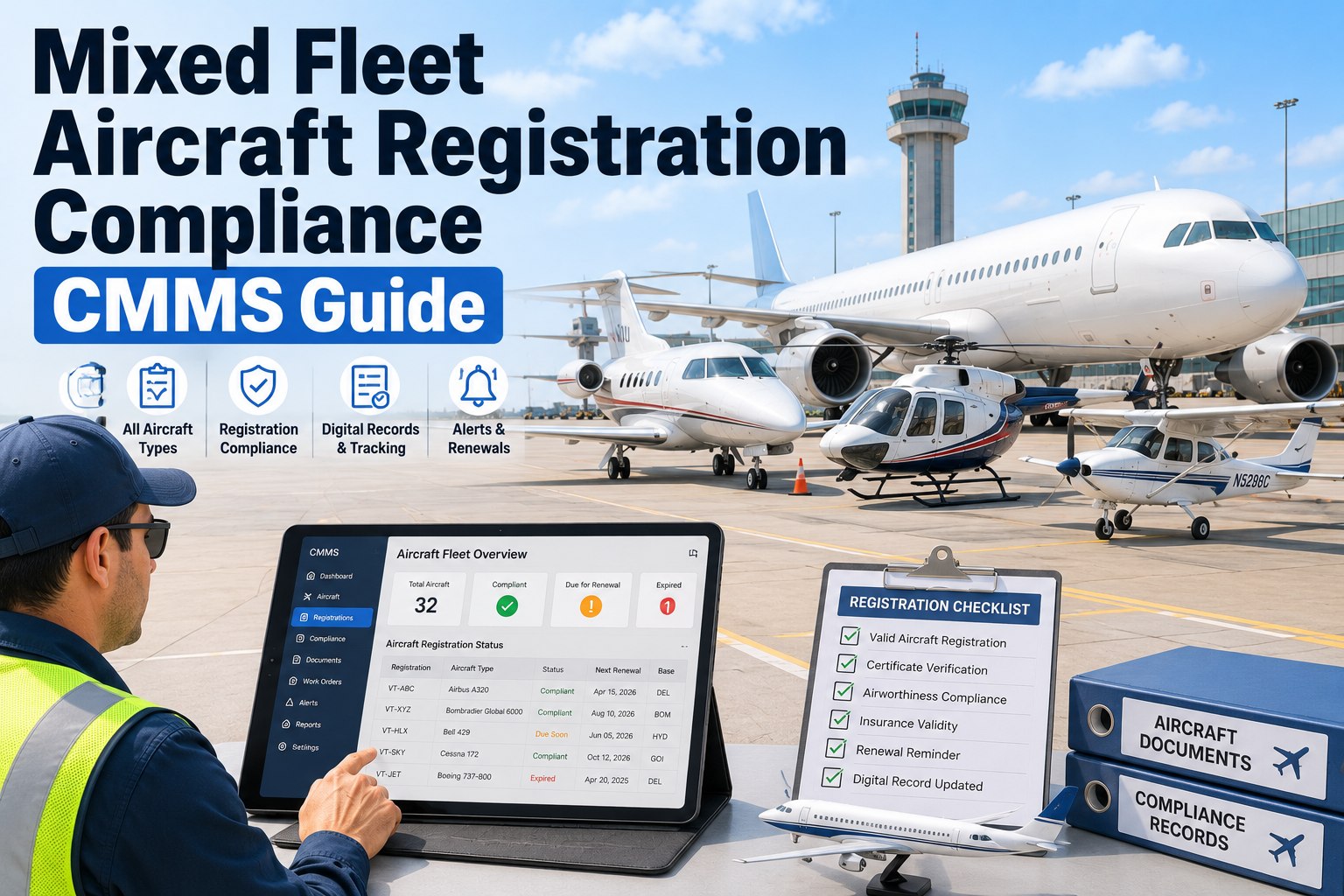
Operating a mixed fleet — where FAA-registered A320s, EASA-registered Q400s and CASA-registered PC-12s share the same hangar floor — means one maintenance system must apply the right airworthiness directive to the right tail every time, or an aircraft sits grounded. Industry data puts the average AOG event at roughly $150,000 per day for a narrow-body, and a single misapplied AD or MEL reference is enough to trigger it. A purpose-built CMMS that resolves compliance per tail number — rather than per fleet type — is the difference between a clean ramp audit and a months-long corrective action plan. Start a Start Free Trial to see how per-tail rule resolution works in practice, or read on for the configuration framework.
One misapplied AD can ground a $90M aircraft for 11 days. Is your CMMS resolving rules per tail?
Mixed-fleet operators juggle FAA, EASA and CASA regimes simultaneously — each with its own AD pipeline, MEL policy and maintenance programme. This guide shows how to configure a single CMMS so the correct airworthiness rule fires on the correct aircraft, every cycle, with a full audit trail.
Three authorities, one hangar — where mixed fleets break down
A 22-aircraft regional operator running FAA N-registered ATR 72s alongside EASA-registered Q400s and a single CASA-registered PC-12NG faces three AD pipelines, three MEL frameworks and three maintenance programme templates. When the CMMS keys tasks by fleet type rather than by tail registration, an EASA AD slips onto an FAA airframe — and the next ramp check becomes a finding.
A 180-asset mixed operator we audited was applying 14 EASA ADs to FAA-registered sister ships because the CMMS key was aircraft model, not tail. The corrective action plan took 9 months and grounded 3 airframes for a combined 41 days.
The 6-step CMMS configuration sequence for multi-registration fleets
Configuring a CMMS for a mixed fleet is not a software problem — it is a data-hierarchy problem. Each step below must be locked before the next fires, or ADs begin cascading across registrations. Operators who follow this sequence report 70–85% reductions in misapplied-task findings within two audit cycles.
Assign authority by tail number, not fleet type
Every aircraft record gets a registration-authority tag (FAA / EASA / CASA / Transport Canada / ANAC) keyed to the tail, permanent for the life of that registration. A re-registration event triggers a workflow that re-evaluates every open and scheduled task against the new authority before the airframe returns to service.
Load per-authority AD and SB pipelines
Subscribe the CMMS to each authority's AD feed — Federal Register for FAA, EASA Bi-Weekly for EASA, CASA AD Register for VH-tails. Each incoming directive carries an authority tag, an applicability expression, and a compliance window expressed in flight hours, cycles and calendar days.
Build tail-level applicability filters
Each AD's applicability clause — typically a serial-number range, mod-level cut or effectivity — is encoded as a structured rule. The engine evaluates the rule against every tail's configuration record and surfaces only the directives that apply. An FAA AD for MSN 4500–4600 should never appear on a tail at MSN 5200, regardless of model match.
Map MEL references to the governing authority
A deferred item on an N-registered A320 follows 14 CFR §91.213 logic; the same defect on a G-registered sister ship follows the operator's EASA MMEL. The CMMS must resolve the correct MEL document at defect-entry time, not at audit time, and stamp the reference into the deferred-defect record.
Bind each tail to its approved maintenance programme
An FAA Part 135 operator running an MSG-3 programme on the same ATR airframe an EASA Part-CAMO manages under a different MP revision cannot share a task block. The CMMS stores one programme binding per tail, with revision history, so an auditor can trace every scheduled task back to the approved document set for that registration.
Generate per-tail compliance snapshots on demand
A ramp inspector asks: "Show me every AD applicable to N123AB and the compliance status of each." The CMMS must answer in under 30 seconds with a date-stamped, signable PDF — applicability logic, task card references, sign-offs and residual flight-hour margins, all filtered to that single tail.
FAA vs EASA vs CASA — where the rule conflicts actually bite
Most multi-registration misapplications are not dramatic — they are quiet, structural differences in how each authority frames the same maintenance action. The table below isolates the six areas where a tail-blind CMMS most commonly produces findings.
| Compliance domain | FAA (N-registered) | EASA (G/D/F-registered) | CASA (VH-registered) |
|---|---|---|---|
| AD compliance window | Calendar + FH + cycles, per AD | Calendar + FC + FH, EASA-defined | Calendar + FH, CASR Part 39 |
| MEL deferral logic | 14 CFR §91.213 / §135.179 | Part-CAT.IDE / MMEL | CAO 20.17 + operator MMEL |
| Maintenance programme approval | FAA-accepted, Part 135 / 121 | CAMO-approved, Part-M.A.302 | CASA-approved, Part 42 |
| Repeat inspection reporting | Per AD, no central roll-up | Mandatory to competent authority | CASA Form 4 reporting |
| Service bulletin treatment | Voluntary unless AD- mandated | CAMO evaluation required | CASA evaluation, mandatory log |
| Airworthiness release | Part 43, Form 8130-3 / logbook | EASA Form 1, Part-145 | CASA maintenance release |
"If we apply the strictest authority's rules across the whole fleet, we satisfy everyone."
Over-complying can invalidate an FAA-accepted maintenance programme and trigger a Part 135 finding. Each tail must be managed under its own authority — the CMMS is the only practical way to enforce that split at scale.
A 22-aircraft operator, three registrations, one CMMS
Consider a regional carrier with 14 FAA-registered ATR 72-600s, 6 EASA-registered Q400s and 2 CASA-registered PC-12NGs. Before per-tail configuration, the maintenance team spent approximately 18 hours per week reconciling AD applicability across three spreadsheets — and still absorbed 4 audit findings in a 12-month period.
After implementing per-tail authority tags, applicability filters and automated MEL resolution, reconciliation time dropped to under 3 hours per week — mostly review of edge cases the system flagged for human judgement. The carrier passed its next two FAA ATOS and EASA continuing-airworthiness audits with zero findings related to AD applicability.
"The first audit after we switched to per-tail rule resolution, the inspector asked for N789AB's AD status. The CMMS produced a signed PDF in 22 seconds. That used to take my team half a day of spreadsheet digging."
Stop reconciling ADs in spreadsheets.
Configure your mixed-fleet CMMS for per-tail rule resolution and pass your next multi-authority audit with zero findings.
Mixed-fleet registration compliance — five questions that matter
Can one CMMS genuinely manage FAA, EASA and CASA rules without manual cross-checking?
Yes — provided the system tags every aircraft record with its registration authority and resolves AD applicability per tail, not per fleet type. The rule library ingests each authority's AD feed, the applicability engine evaluates each directive against the tail's configuration, and the CMMS surfaces only the tasks that apply to that specific aircraft. Manual cross-checking shrinks to edge-case review, typically under 3 hours per week for a 20-aircraft mixed fleet. Book a Demo to see the multi-authority engine in action.
How does the system handle an aircraft that changes registration mid-life?
A re-registration event triggers a workflow that suspends the old authority's open tasks, re-evaluates every applicable AD and SB against the new authority's rule set, and generates a delta report showing what changed. No task is auto-closed — the maintenance controller reviews the delta and signs off the transition. The full re-registration audit trail is preserved for the life of the airframe.
What happens if an FAA AD and an EASA AD cover the same defect with different compliance windows?
The CMMS treats them as two separate rule objects, each bound to the tails it governs. N-registered tails follow the FAA window; G-registered sister ships follow the EASA window. The system flags any tail where both ADs apply (rare but possible on dual-registered aircraft) and forces the controller to choose the more restrictive compliance deadline, documenting the decision.
How long does it take to configure a mixed-fleet CMMS from scratch?
For a 20-aircraft operator with three authorities, the configuration sequence — tail tagging, rule library load, applicability filters, MEL mapping, programme binding — runs in roughly six weeks. The bulk of the time is data cleansing: confirming every tail's configuration record, serial-number range and mod level before the applicability engine goes live. A clean dataset is the difference between a 6-week rollout and a 6-month one.
Does per-tail rule resolution work for charter operators flying under multiple AOCs?
Yes. A single airframe can carry multiple operational tags — registration authority, AOC holder, operating regime (Part 91 / 135 / 121) — and the CMMS resolves the intersection at task-creation time. A VH-registered PC-12 flying charter under an Australian AOC one week and private Part 91 the next gets the correct MEL and programme references for each operating context. You can Start Free Trial and load your AOC structure to test this directly.
Configure once. Fly every tail under the right rule.
Join the mixed-fleet operators who cut AD reconciliation time by 80% and passed their next audit with zero findings.
Free 14-day trial · No credit card