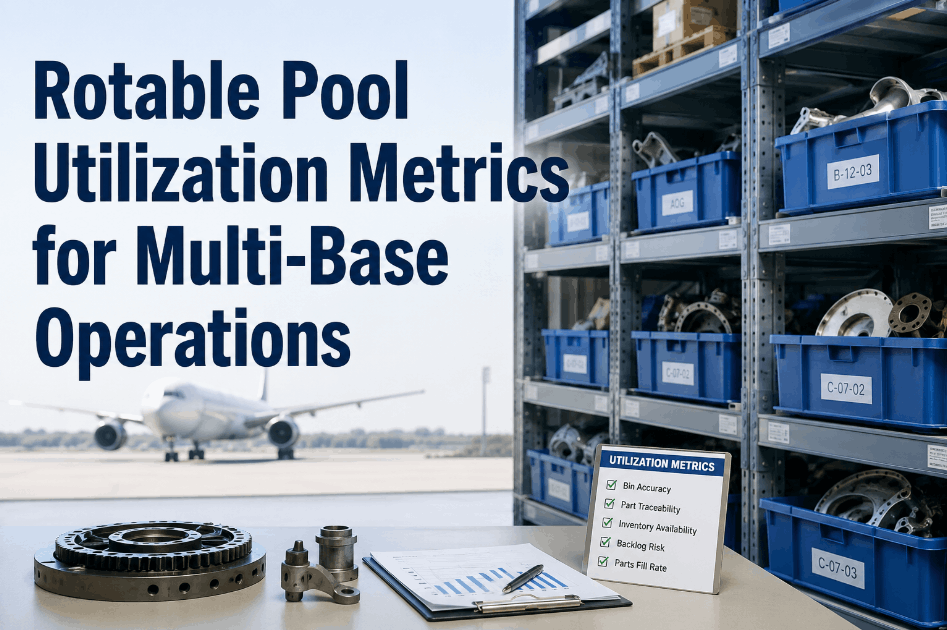
Rotable pool utilization is where multi-base aviation operations either hold service continuity or lose it. When repairable spares circulate across distributed bases without structured tracking, pool depth problems go invisible until the wrong item is unavailable at the wrong location during a time-critical repair. Managing utilization across multiple bases requires more than asset location records — it demands bin accuracy discipline, part traceability through the repair cycle, and pool depth sizing against actual demand curves at each site. OxMaint gives aviation maintenance teams the CMMS infrastructure to Sign Up Free and build rotable pool visibility into daily inventory control — from utilization rate tracking to repair TAT monitoring. If your multi-base operation is still managing pool allocation through manual coordination, Book a Demo to see how OxMaint delivers the asset visibility your stock rotation program needs.
OxMaint's asset visibility and parts tracking tools give your team the pool utilization data, bin accuracy records, and repair traceability to manage rotable inventory with confidence across multi-base operations.
Why Rotable Pool Metrics Break Down Across Multiple Bases
Multi-base operations amplify every rotable pool gap. Parts that are tracked by location but not utilization rate create inventory blind spots that compound across sites — turning manageable pool depth issues into AOG exposure at the worst possible moment. Four structural failures explain most rotable pool breakdowns.
Rotable spares tracked at base level only leave multi-site planners unable to identify surplus at one location that could prevent a shortage at another — forcing redundant procurement instead of pool rebalancing.
Physical stock counts that don't match system records undermine pool depth calculations — so planners make allocation decisions based on inventory positions that don't reflect what's actually on the shelf.
Repair turnaround times go untracked per item — making it impossible to size pool depth against the time each unit spends out of circulation, which is the core variable in rotable pool planning.
Part movement between bases, repair facilities, and staging locations loses traceability in unintegrated systems — creating compliance risk and making it impossible to reconstruct the utilization history regulators require.
Rotable Pool Utilization Measurement Techniques for Multi-Base Teams
Effective pool control combines utilization rate analysis with repair cycle tracking and cross-base inventory visibility. Sign Up Free to build these utilization inputs into OxMaint's asset tracking and work order system.
Measure how frequently each repairable spare rotates through the pool at each base — comparing turn rate against pool depth to identify which items are undersized for their actual demand pattern before a shortage surfaces.
Record actual vs. expected repair turnaround times for each rotable item. Build TAT swing ranges into pool depth calculations so the number of units in circulation absorbs repair cycle variability before service continuity is affected.
Compare utilization rates across all bases to identify demand imbalances. Book a Demo to see how OxMaint structures cross-base pool visibility that enables rebalancing before shortages require emergency transfers.
Schedule systematic bin accuracy audits against critical rotable items at each base — ensuring physical stock positions match system records so pool depth decisions are grounded in real inventory, not assumed availability.
Rotable Pool Control Matrix by Part Category
How OxMaint Supports Rotable Pool Management Across Multi-Base Operations
Rotable pool control only converts to service continuity when utilization tracking, repair traceability, and bin accuracy are connected in a single system across all bases. Book a Demo to see how OxMaint gives multi-base aviation teams the inventory control their rotable program needs.
OxMaint tracks rotable spare location and utilization rate across all bases in a single asset register — enabling pool rebalancing decisions before demand imbalances create AOG exposure. Sign Up Free to start today.
Track actual vs. expected repair turnaround times for each rotable item in OxMaint — giving your team the TAT swing data to size pool depth against real repair cycle variability, not optimistic nominal estimates.
Schedule bin accuracy audit tasks in OxMaint for each critical rotable item at each base — ensuring physical stock positions match system records so pool depth decisions are grounded in verified inventory data.
Log every part movement — base transfers, repair dispatches, and return receipts — against the serial number in OxMaint's asset register, maintaining full traceability for compliance and utilization analysis.
OxMaint reporting surfaces pool utilization rate, repair TAT variance, and backlog risk by base — giving maintenance planners the insight to adjust pool depth and allocation strategy before gaps create service continuity risk.
Set pool depth thresholds in OxMaint that trigger alerts when utilization rates approach shortage risk — automatically flagging procurement or rebalancing actions before the gap reaches the shop floor.
OxMaint connects rotable pool tracking, repair TAT records, bin accuracy audits, and cross-base visibility in a single CMMS — giving your multi-base aviation MRO team the inventory control foundation to prevent shortages before they ground aircraft. Sign Up Free or Book a Demo to build your rotable pool management program.
Frequently Asked Questions
OxMaint gives aviation maintenance teams the asset visibility, utilization tracking, and procurement automation to run rotable pool management as a continuous operational discipline — not a periodic manual count.