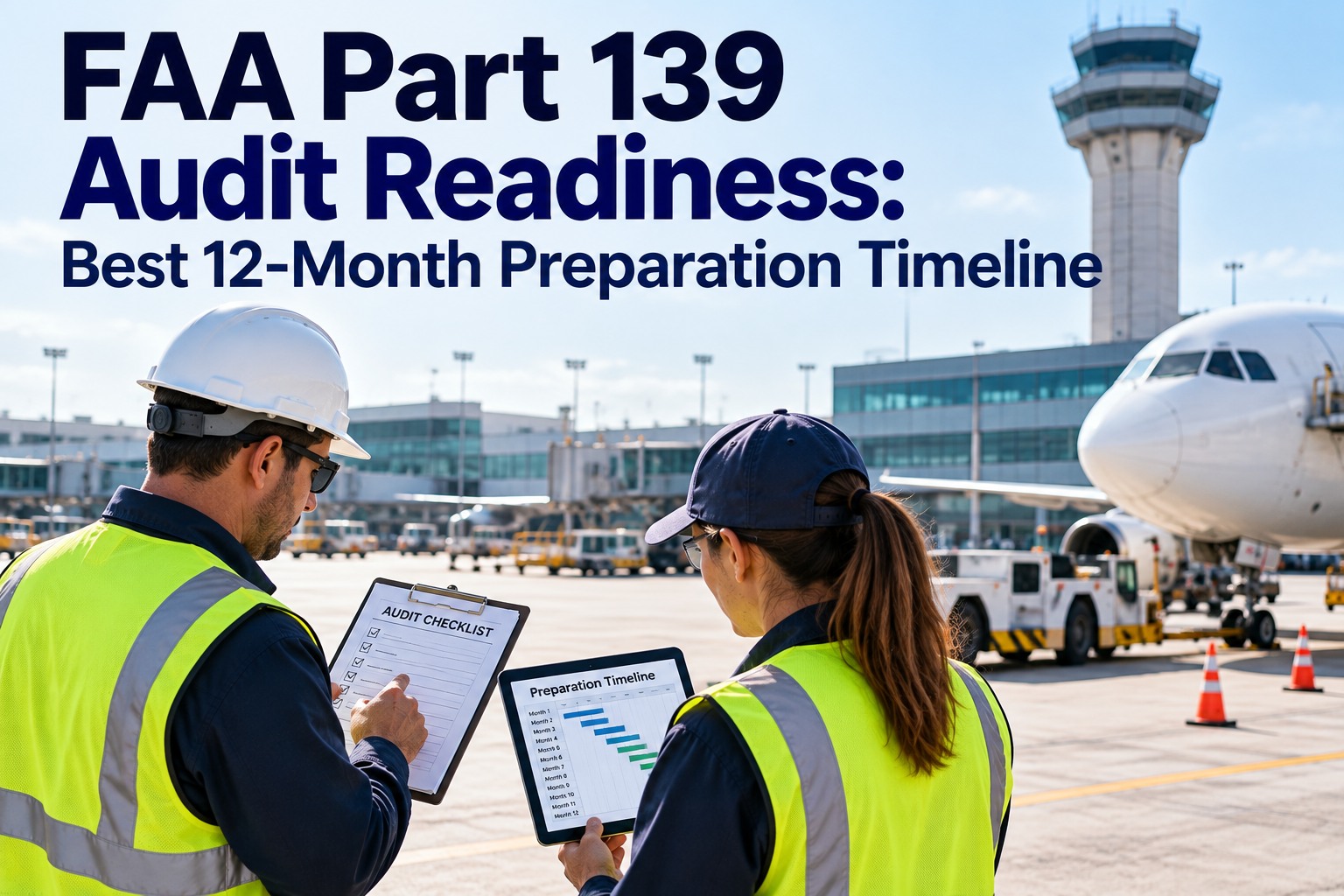
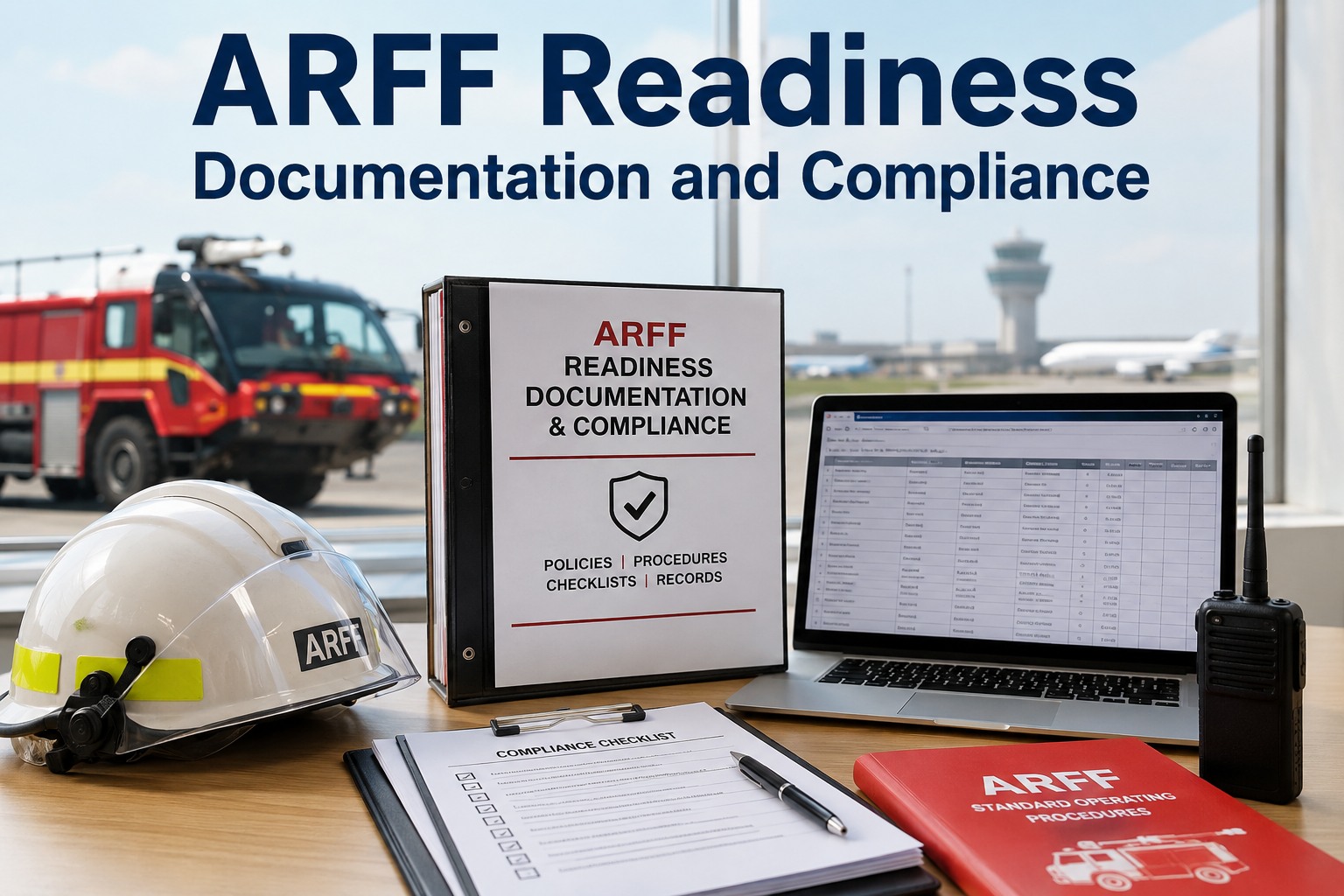
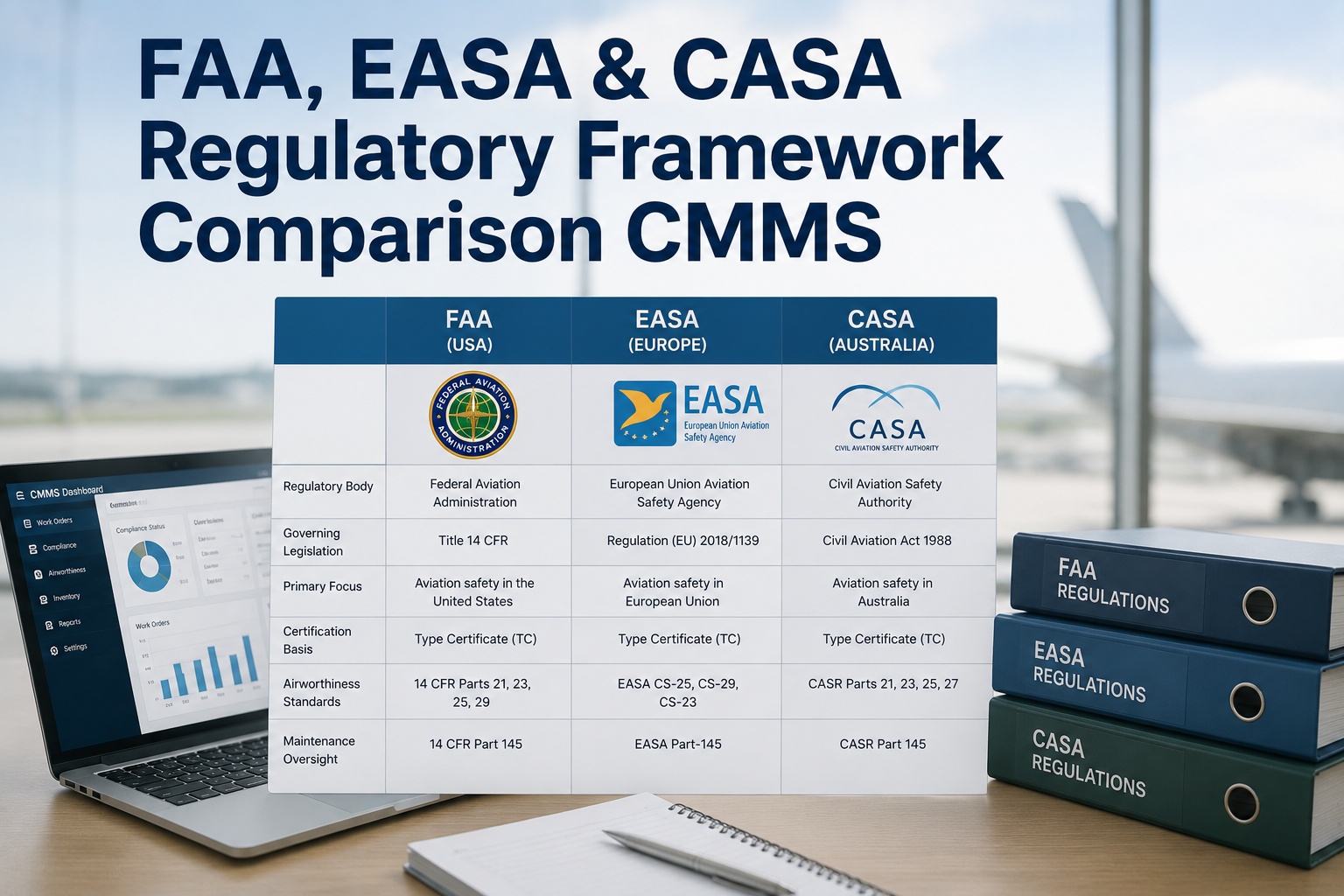
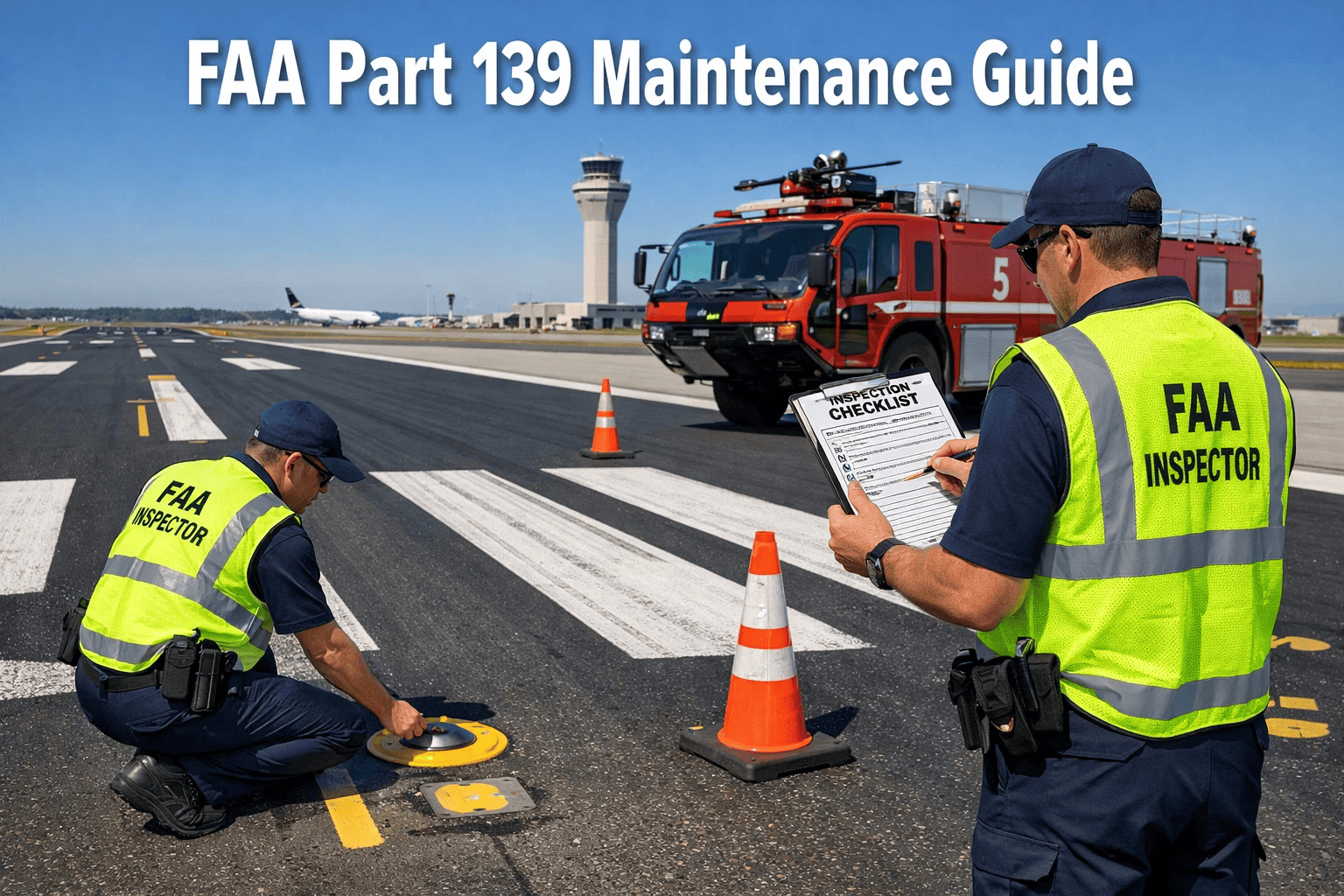
An FAA Part 139 inspection isn't a test you cram for the week before — it's a verdict on twelve months of records you either kept or didn't. When the inspector arrives, they ask for self-inspection logs, ARFF training files, wildlife assessments, and NOTAM histories, and the certificate rides on whether those records exist, are complete, and are dated. The airports that pass cleanly aren't lucky; they run readiness as a rolling calendar. This is that calendar — month by month, mapped to the sections of OxMaint AI's CMMS that keep each record building itself all year, not scrambled together the night before.
Aviation · FAA Part 139 · Audit Readiness · 2026
FAA Part 139 Audit Readiness, Built Over 12 Months — Not 12 Days
Certification inspections are won in the records, and records are won in the routine. When self-inspections, ARFF training, wildlife logs, and condition reports accrue on schedule inside one platform, the inspection becomes a printout — not a fire drill. OxMaint AI turns each Part 139 obligation into a recurring task with a dated, signed trail, so the twelve-month record is already complete when the inspector asks.
1Inspect & log daily
→
2Flag the discrepancy
→
3Work order & NOTAM
→
4Signed record on file
12 months
self-inspection records must be retained (§139.327)
24 months
personnel & ARFF training records retained (§139.303/.319)
Every 12
months: ARFF recurrent training & live-fire drill (§139.319)
Every 36
months: full-scale emergency exercise, Class I (§139.325)
Why Readiness Is a Year, Not a Week
The inspector doesn't grade the airfield on the day — they grade the paper trail behind it. Miss a record and no last-minute effort recreates it. Start free and make every Part 139 record self-building in OxMaint AI.
Records Have Memory
A self-inspection log missing three weeks in March can't be backfilled in November. The gap is the finding.
Frequencies Are Fixed
Annual training, triennial exercises, recurring inspections — each has a clock the regulation started, not you.
Discrepancies Need a Trail
Finding a defect isn't compliance. The corrective action, the work order, and the sign-off are what prove it.
One Missing File Cascades
A single undocumented area invites a deeper look at everything else. Clean records keep the inspection short.
The 12-Month Part 139 Readiness Timeline
Count backward from your certification anniversary. Each block below is a quarter of the year with the tasks that keep the record whole — run continuously, not in a pre-audit sprint. Book a demo to see this calendar live in OxMaint AI.
Months 12–10FOUNDATION
§139.327 Confirm daily self-inspections are logging without gaps — the baseline the whole audit rests on.
§139.303 Review personnel training currency; schedule anyone approaching their 12-month recurrent window.
§139.325 Review the Airport Emergency Plan with all coordinated parties (required every 12 months).
Months 9–7SYSTEMS
§139.317/.319 Verify ARFF equipment, agents, and response times; book the annual live-fire drill and recurrent training.
§139.337 Update the Wildlife Hazard Assessment and Management Plan; confirm log entries are current.
§139.311 Audit marking, signs, and lighting; open work orders for any fixtures out of standard.
Months 6–4FIELD & SEASON
§139.309 Inspect safety areas (RSA/OFA) for grade, objects, and condition; document every correction.
§139.313 Finalize the snow & ice control plan and pre-season equipment checks before winter operations.
§139.305/.307 Review paved and unpaved area condition; log pavement and shoulder discrepancies.
Months 3–1VERIFY & ASSEMBLE
§139.301 Pull the full records package: 12 months of self-inspections, 24 months of training, all corrective actions.
§139.339 Confirm airport condition reporting (NOTAM) history is complete and reconciled with the fault log.
ACM Walk the Airport Certification Manual against actual practice; close any gap before the inspector finds it.
The Finding Is Rarely the Airfield. It's the Missing Record.
Most Part 139 discrepancies aren't unsafe conditions — they're conditions found without a documented correction, or a training file that lapsed unnoticed. OxMaint AI raises every recurring obligation as a task and holds the signed proof, so the gap never opens in the first place.
The Records an Inspector Will Ask For
Subpart D turns into a document request the day of the inspection. These are the files that must exist, be current, and be retrievable in minutes. Start free and keep every one of these audit-ready in OxMaint AI.
| Record | Section | Retention / frequency |
|---|
| Self-inspection records | §139.327 | Kept 12 consecutive calendar months |
| Personnel training records | §139.303 | Kept 24 months after training |
| ARFF training & live-fire | §139.319 | Recurrent every 12 months · records 24 months |
| Airport Emergency Plan review | §139.325 | Reviewed every 12 months |
| Full-scale emergency exercise | §139.325 | Every 36 months (Class I) |
| Wildlife hazard management | §139.337 | Plan current · log maintained |
| Airport condition reporting | §139.339 | NOTAM history complete & current |
How OxMaint AI Keeps You Inspection-Ready
The regulation sets the cadence; the failures come from missed tasks and lost paper. OxMaint AI closes that gap — every obligation becomes a recurring task with a signed, dated record. Start free and turn Part 139 into a running system.
Recurring Compliance Tasks
Daily self-inspections, annual training, triennial exercises — each raised on its own clock, so no frequency slips.
Discrepancy-to-Work-Order
A logged finding becomes a corrective work order automatically — the documented action Part 139 requires.
Timestamped Sign-Off
Every inspection and correction carries the person and the time — the traceability an inspector expects.
Retention Handled
Self-inspection and training records held for their full 12- and 24-month windows, retrievable on demand.
NOTAM & Condition Trail
Condition reports link to the fault log, so the airfield's reported state and its record always reconcile.
Audit-Ready Export
The full Subpart D records package produced in minutes when the inspection date lands.
Frequently Asked Questions
How long must Part 139 self-inspection records be kept?
How often is ARFF recurrent training required?
When should audit preparation start?
What causes most Part 139 findings?
Documentation gaps more than field conditions — a discrepancy found without a recorded correction, or a lapsed training or plan-review date.
Start free and close the gaps.
How does a CMMS help with Part 139 compliance?
OxMaint AI raises every recurring obligation as a task, converts findings to corrective work orders, and stores dated, signed records for their full retention window — ready to export on the inspection date.
Book a demo to see it.
Pass the Inspection You've Already Documented.
A Part 139 certification is a year of records answered in an afternoon. When self-inspections, training, wildlife logs, and condition reports build themselves on schedule inside one platform, the inspection stops being an event to survive and becomes a report to print. OxMaint AI runs the compliance calendar and holds the proof, so readiness is a state you're always in — not a sprint you hope to finish.