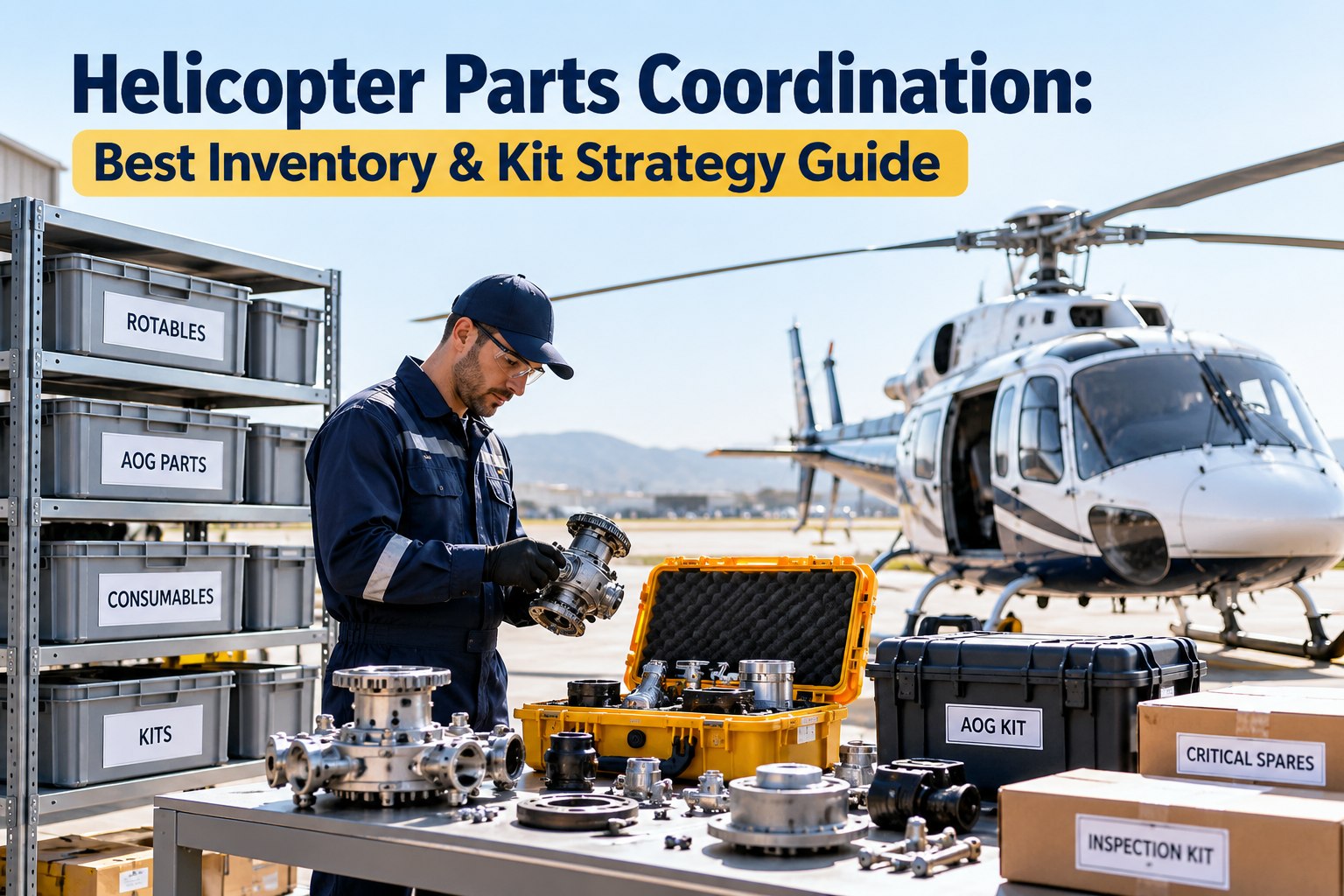
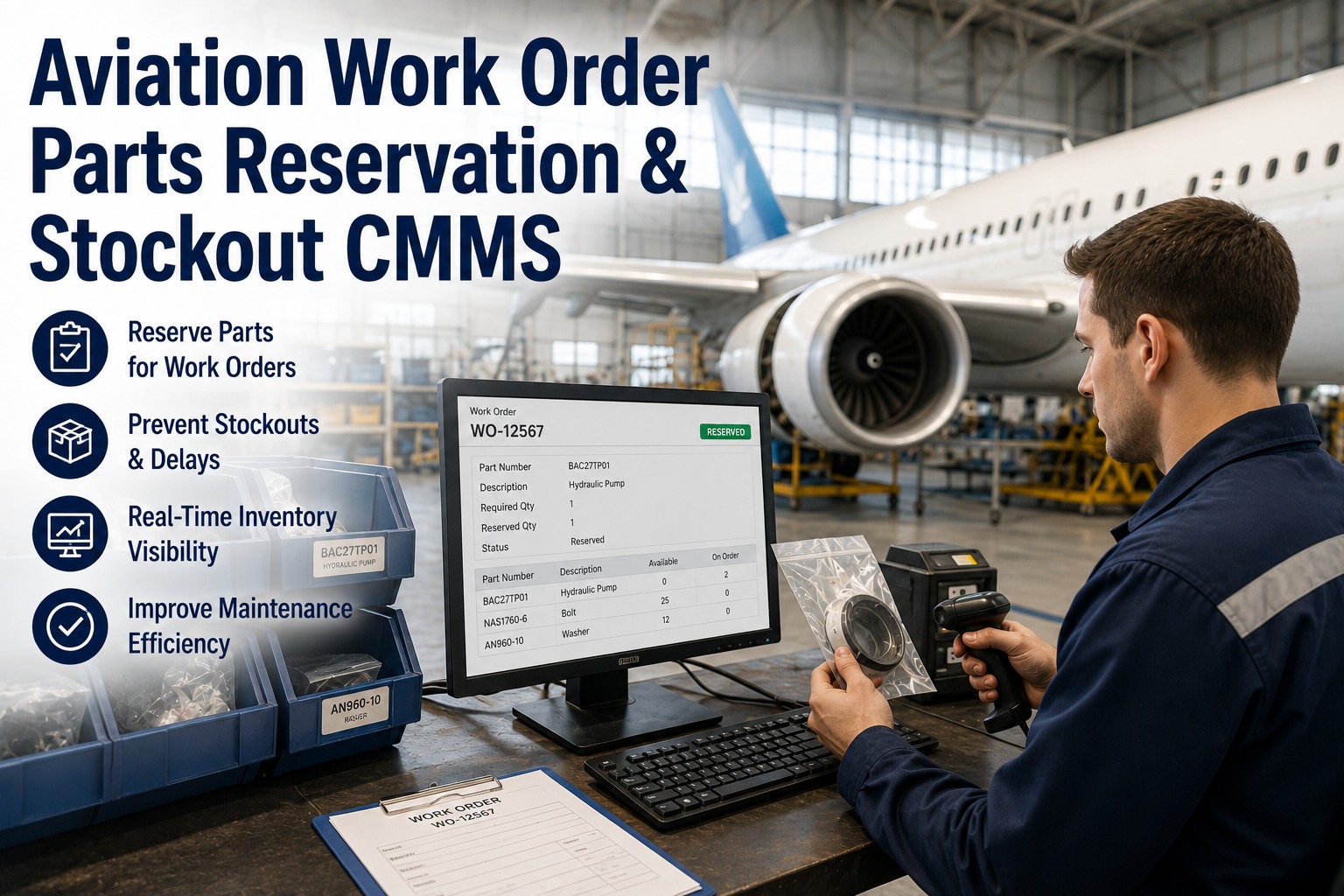
A helicopter can be fully airworthy except for one missing seal kit, one rotable still waiting on a core return, or one part whose paperwork can't be found. For rotorcraft operators, parts coordination is where schedule, safety and cost meet — and where a small gap on the shelf becomes an aircraft on the ground. The strongest operations don't simply stock more; they decide how each type of part is held, kitted, exchanged and reserved. This guide lays out a practical inventory and kit strategy, and shows how OXMAINT AI, the AI-powered CMMS, reserves kits automatically from work orders.
AI-Powered CMMS · Rotorcraft Maintenance · Parts, Kits & Rotables
Helicopter Parts Coordination: Best Inventory & Kit Strategy Guide
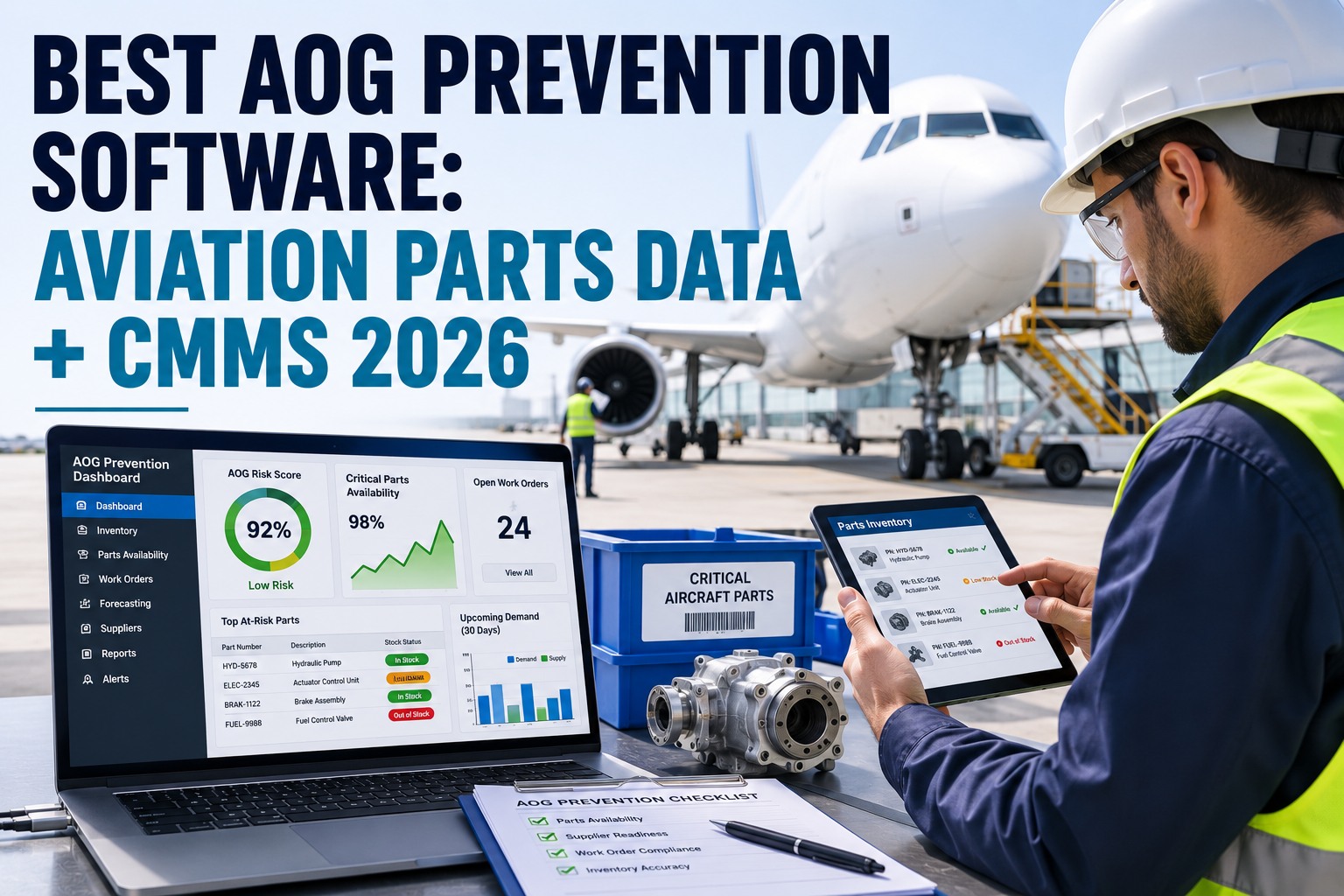
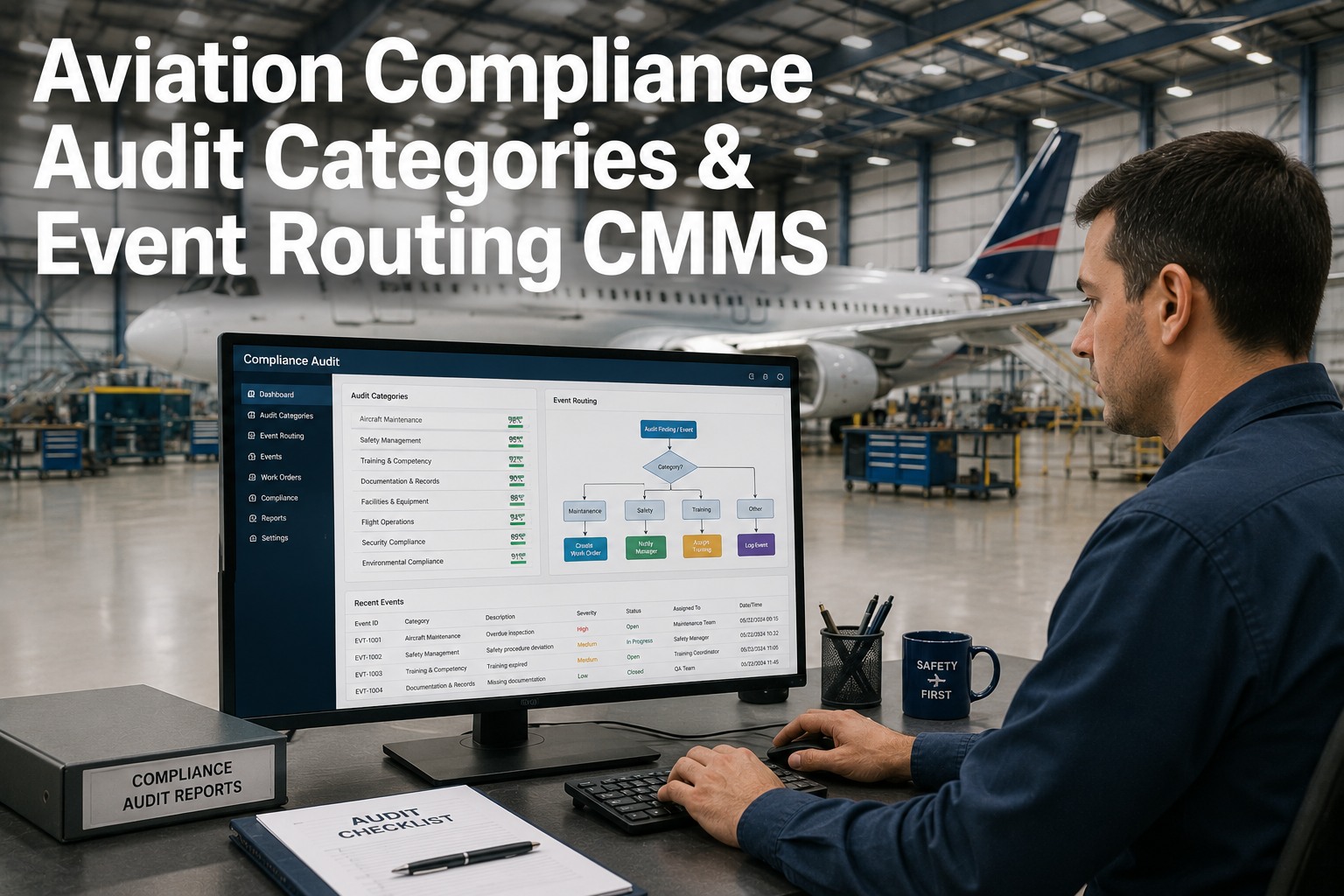
Inspections planned in one place, parts tracked in another, and stock counts that only get checked when something is missing — that is how work stalls and AOG calls begin. OXMAINT AI connects the workflow in one maintenance platform: inspections and defects raise work orders, work orders reserve the right kit, shortages trigger reorders, and PM schedules keep the next visit supplied.
Parts Coordination Flow
1
Defect or scheduled taskInspection or PM raises the work order
2
Kit auto-reservedParts allocated to the aircraft job
3
Shortage flaggedReorder or AOG sourcing starts early
4
Install & recordUsage, traceability and history updated
One Size Doesn't Fit: Four Lanes of Rotorcraft Inventory
The best strategy treats each category differently. Mixing them in one min/max rule is where gaps appear. Book a demo to set up all four lanes in OXMAINT AI.
●
Consumables & hardware
Min/max with reorder points
Seals, fasteners, filters, lubricants. Fast-moving, cheap to hold, expensive to run out of.
●
Inspection kits
Pre-built, pre-reserved
Everything for a recurring inspection bundled once, so no one hunts parts on the day.
●
Rotable pool
Exchange and core tracking
Repairable high-value components swapped from a serviceable pool, with cores returned for repair.
●
AOG reserve
Fast lane for emergencies
A defined stock and sourcing path for the parts that ground an aircraft when missing.
Anatomy of a Good Helicopter Kit
A kit is more than a box of parts. It is a promise that a given job can start and finish without a stock run. Priority kits for your most frequent or most critical jobs are often called VIP kits. Start free and build your first kit template.
Layer 1
Core parts
Components the task replaces or requires, with correct part numbers.
Layer 2
Consumables & hardware
Seals, O-rings, fasteners, lockwire, sealants and anything used up.
Layer 3
Documents & tags
Release paperwork, batch or serial data and task cards ready to attach.
Layer 4
Tools & specials
Required tooling and calibration status flagged on the same work order.
A Shortage Found on the Hangar Floor Is Already Too Late.
When a scheduled inspection reserves its kit weeks ahead, missing items surface while there is still time to order, borrow or re-plan. That is the difference between a scheduled visit and an unplanned delay.
The Rotable Loop: Keep Cores Moving
A rotable pool only works if the loop stays closed. A core stuck in transit is a serviceable unit you don't have. Book a demo to see rotable tracking in OXMAINT AI.
1
Install serviceable unit
Record serial, date and hours.
2
Remove & tag the core
Capture condition and reason for removal.
3
Ship to repair
Track vendor, dates and follow-ups.
4
Receive & restock
Verify paperwork, return to the pool.
The AOG Lane: A Clear Path, Not a Scramble
Trigger
Defect found, work order flagged AOG
Locate
Check own stock, pool and kits
Source
Use approved vendors and exchange options
Ship & receive
Track delivery and incoming paperwork
Install & close
Record usage and review cause
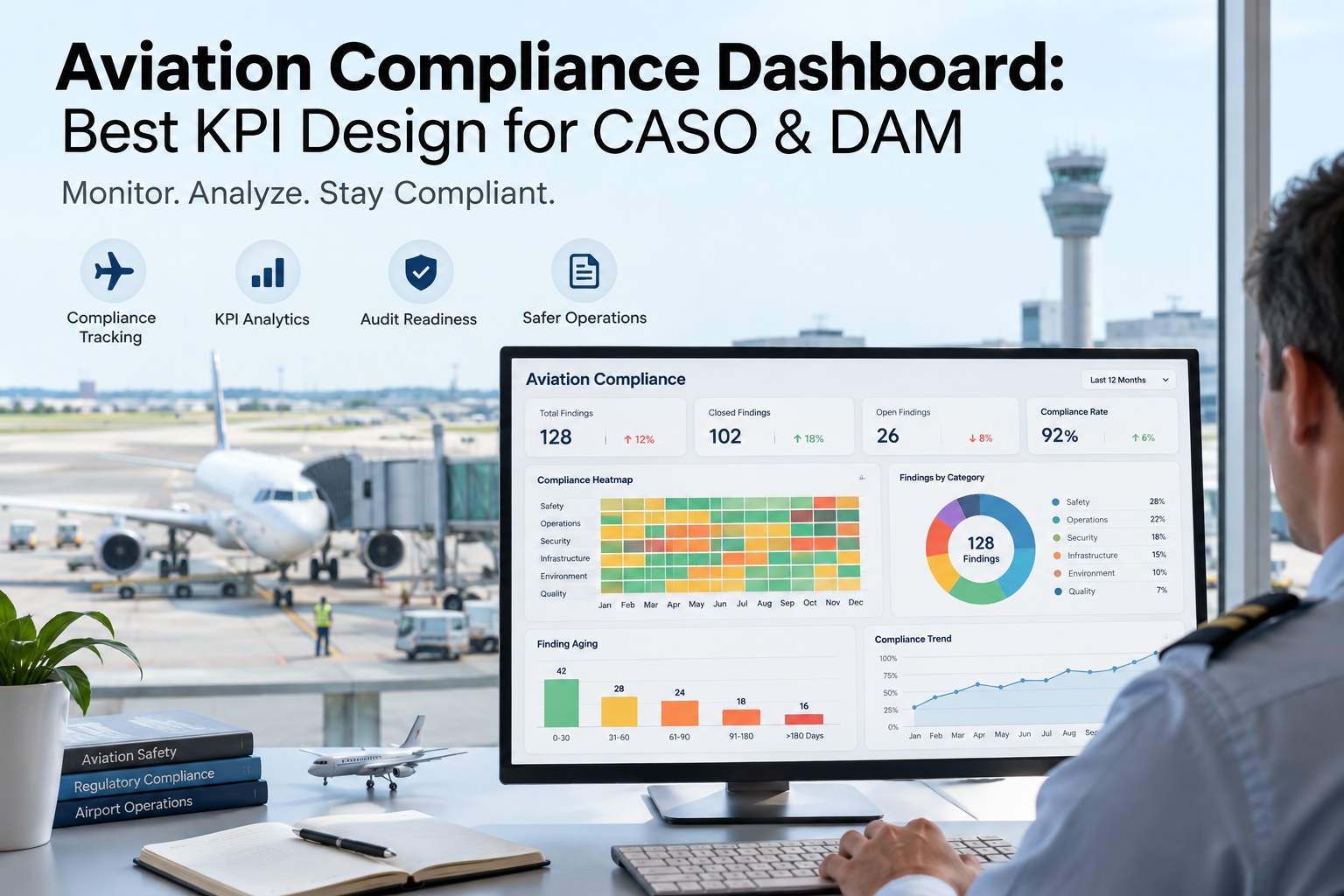
Six Parts KPIs Worth Tracking
Kit completeness
Kits ready before the job
Fill rate
Requests met from stock
AOG response
Time from flag to part on site
Core return time
How long cores stay out
Stock accuracy
Cycle count vs. system record
Traceability gaps
Parts missing documentation
Frequently Asked Questions
What is a rotable pool in helicopter maintenance?
It is a stock of repairable, high-value components that can be exchanged for installed units. The removed core goes for repair or overhaul and returns to the pool as a serviceable unit, which shortens downtime compared with waiting for the original part.
How does a CMMS help with kit management?
How do we reduce AOG delays?
Identify the parts that most often ground aircraft, hold or pre-arrange access to them, define a sourcing path and review each AOG event for cause. Early reservation from planned work removes many avoidable ones.
Does this handle traceability and documentation?
A CMMS can keep part, serial or batch data and attach release paperwork to each installation record. Your approved maintenance organization procedures and regulator requirements define what must be held.
Book a demo to review your requirements.
How often should stock be audited?
Many operators use regular cycle counts, with critical and high-value items counted more often. The right rhythm depends on your fleet, volume and procedures.
Keep Every Helicopter Supplied, Not Waiting.
Link inspections, work orders, kits, rotables and reorders in one platform with OXMAINT AI. Start free, or book a demo and see kit auto-reservation on your own maintenance tasks.