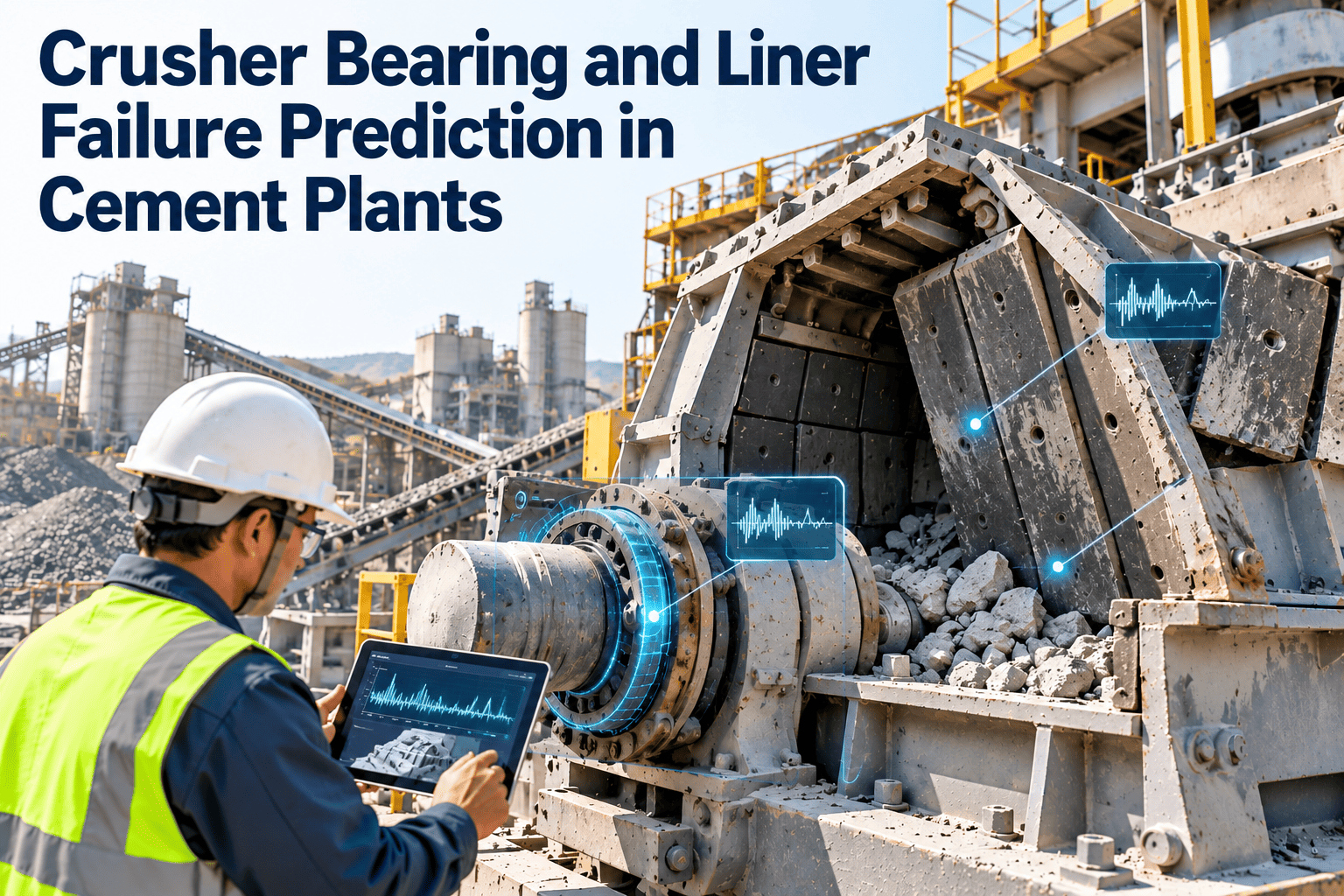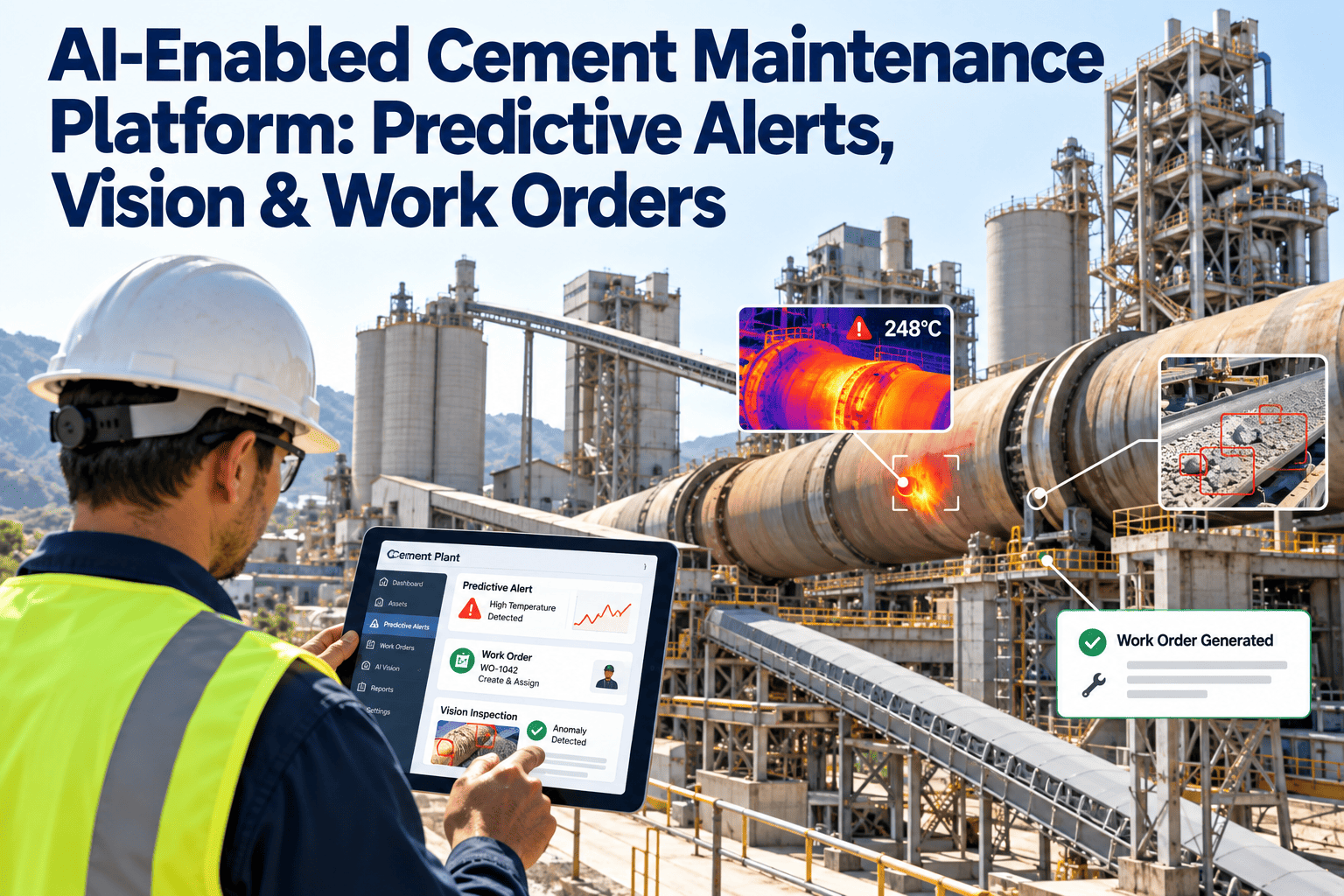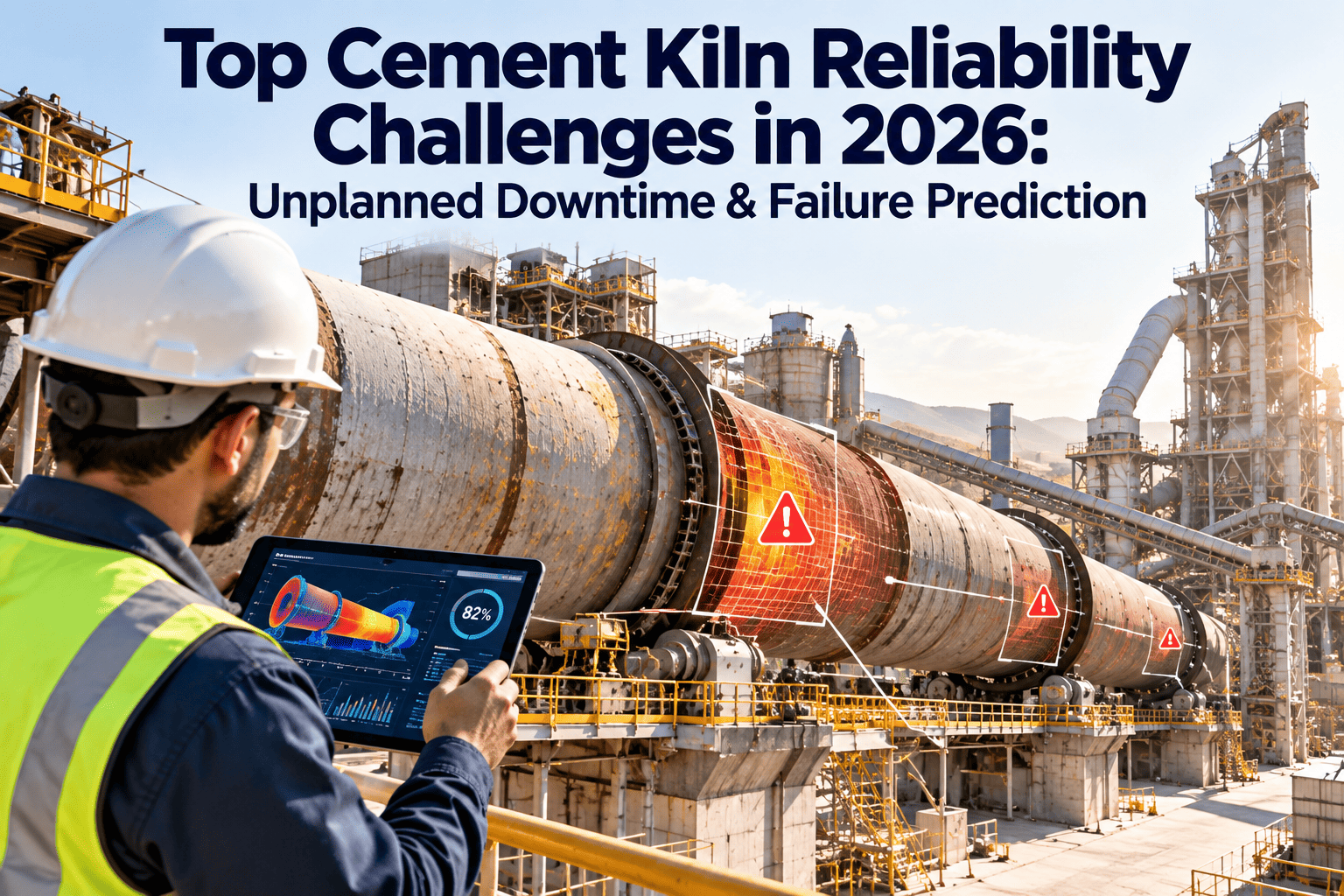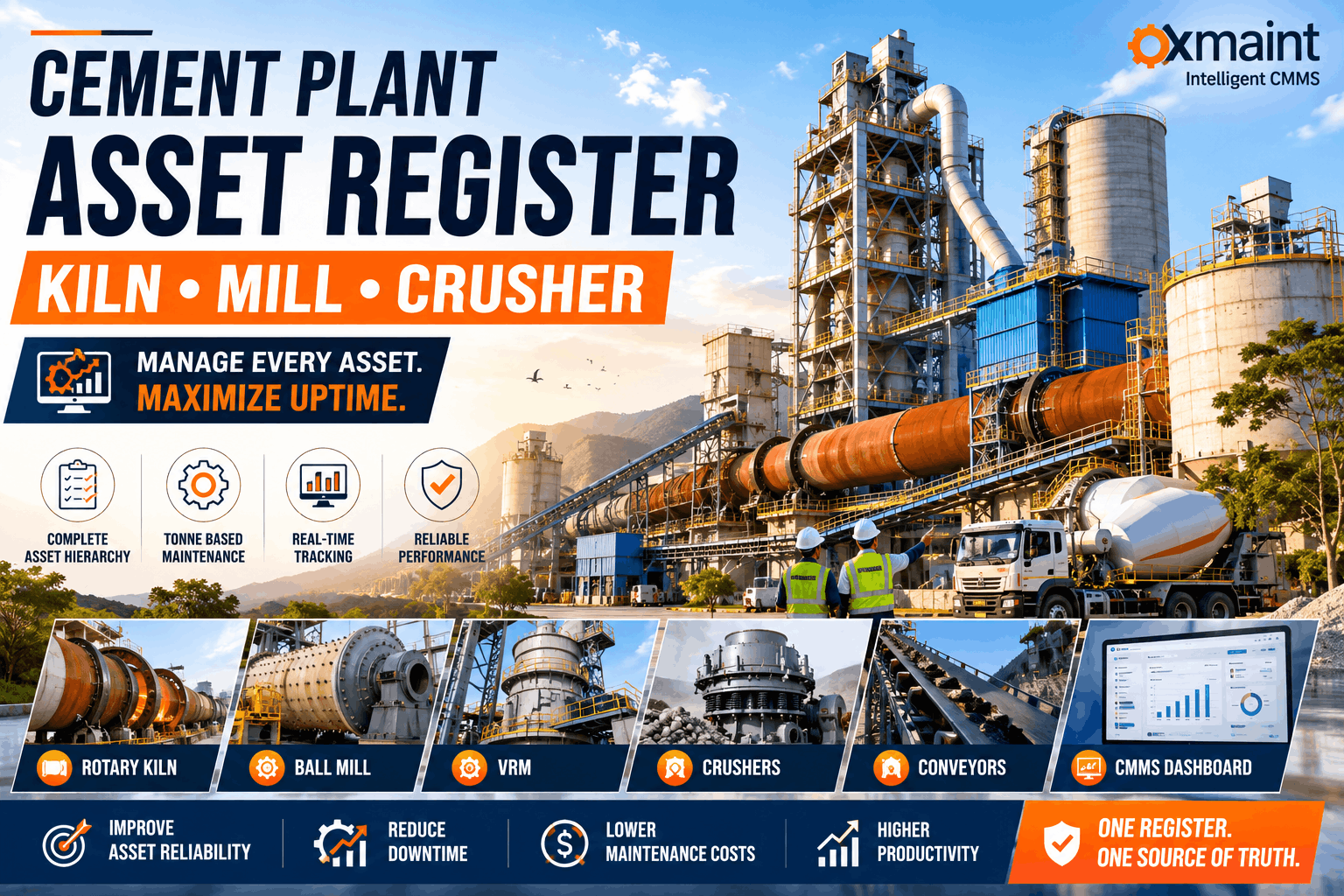
Most plants only really monitor whichever asset broke last time — the kiln gets vibration sensors after a bearing failure, the conveyor gets attention after it jams the line. Sign up for Oxmaint to run one AI detection layer across kiln, mill, crusher, fan, and conveyor assets at once, or book a demo to see your own equipment scored against its baseline live.
One Alert Feed for Every Kiln, Mill, Crusher, Fan, and Conveyor
Oxmaint's AI scores every reading against your plant's own baseline — not an industry average — and only escalates an alert when it's confident enough to be worth a technician's time.
Vibration-current correlation drifting for 5 days
Temperature trend starting to diverge from baseline
Wear pattern matches replacement threshold — work order dispatched
Belt tension reading outside normal range for current load
The Same AI Watches Every Major Asset Class
Each asset class gets its own failure signature library, but the same detection layer and the same alert discipline apply across all of them.
Girth gear vibration, shell temperature, drive torque
Bearing vibration, separator temperature, motor power
Toggle plate wear, jaw vibration, drive current
Bearing vibration, current draw, damper position
Belt tension, idler vibration, motor load
Watch, Warning, Action — Not One Loud Alarm
An alert that fires on every minor fluctuation gets ignored within a week. Oxmaint escalates in three stages, and only the last one reaches a technician's work order queue.
A reading starts drifting from baseline. Logged, not alerted.
The drift shows up across at least two correlated signals.
Pattern matches a known failure signature. Work order dispatched.
Accurate Enough That Technicians Stop Ignoring Them
Detection only matters if the people on the floor still believe the alert by the tenth one. These are the numbers that keep that trust intact.
Score Your Own Asset Fleet Against Its Baseline
Bring readings from any of your kiln, mill, crusher, fan, or conveyor assets — we'll show you the alert stage it would sit at right now.
What Each Asset Class Watches For
The specific signal combination behind each asset class, and the failure pattern it's built to catch.
| Asset Class | Key Signals Fused | What It Catches |
|---|---|---|
| Kiln | Girth gear vibration, shell temperature, drive motor current, kiln torque | Refractory hot spots and lubrication breakdown weeks before a shell scan would show damage |
| Mill | Mill body vibration, trunnion bearing temperature, separator bearing temperature, motor power | Liner wear and trunnion bearing degradation 3–6 weeks ahead of a single-parameter alarm |
| Crusher | Jaw and toggle plate vibration, drive current, throughput load | Toggle plate and jaw wear patterns before they affect crushing capacity |
| Fan | Bearing vibration, outlet air temperature, motor current, damper position | Grate plate wear and blade erosion via pressure-temperature correlation shift |
| Conveyor | Belt tension, idler vibration, motor load | Mistracking, edge wear, and idler seizure before a jam stops the line |
An anomaly system that fires fifty alerts a week trains your technicians to ignore all fifty, including the one that mattered. The systems that actually change behavior on the floor are disciplined enough to stay quiet until they're confident — that's a harder engineering problem than detecting the anomaly in the first place.
Priya Nataraj — Reliability Engineering Consultant, 13 years in heavy industrial asset managementAI Anomaly Detection — Common Questions
Every alert needs confirmation across at least two correlated sensor signals before it escalates past the watch stage, and detection accuracy on well-instrumented assets runs 87–94% with a false positive rate under 8%. Book a demo to see the alert thresholds configured for your assets.
It covers all five asset classes — kiln, mill, crusher, fan, and conveyor — using the same detection layer with a different failure signature library tuned to each one. Sign up to see your own asset register mapped across all five.
Once the threshold and multi-signal confirmation are met, a work order is auto-generated with asset details, the anomaly description, and a recommended action, then routed straight to the maintenance team's mobile app with no manual handoff.
Existing vibration, temperature, and current instrumentation gets used first. New sensors only get added to fill genuine coverage gaps, not to replace equipment that's already reporting useful data.
Roughly 14 to 21 days, stratified by operating state — a mill running at high load on one material gets a different baseline than the same mill at lower load on another, so normal variation doesn't get mistaken for an anomaly.
Watch the Equipment That Usually Gets Ignored
Your kiln already gets attention after every incident. The conveyor, the fan, and the crusher rarely do — until they're the reason the kiln is sitting idle.