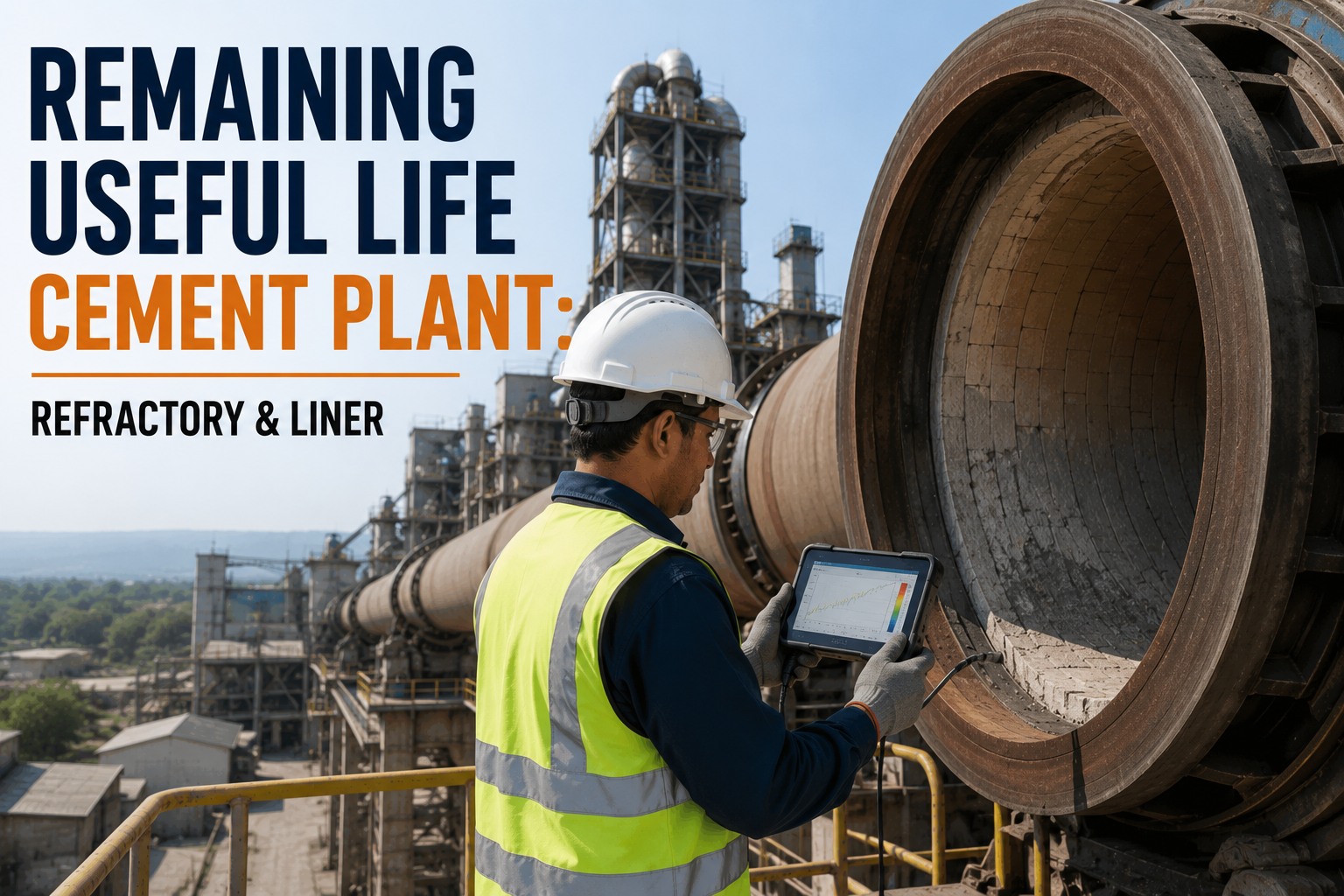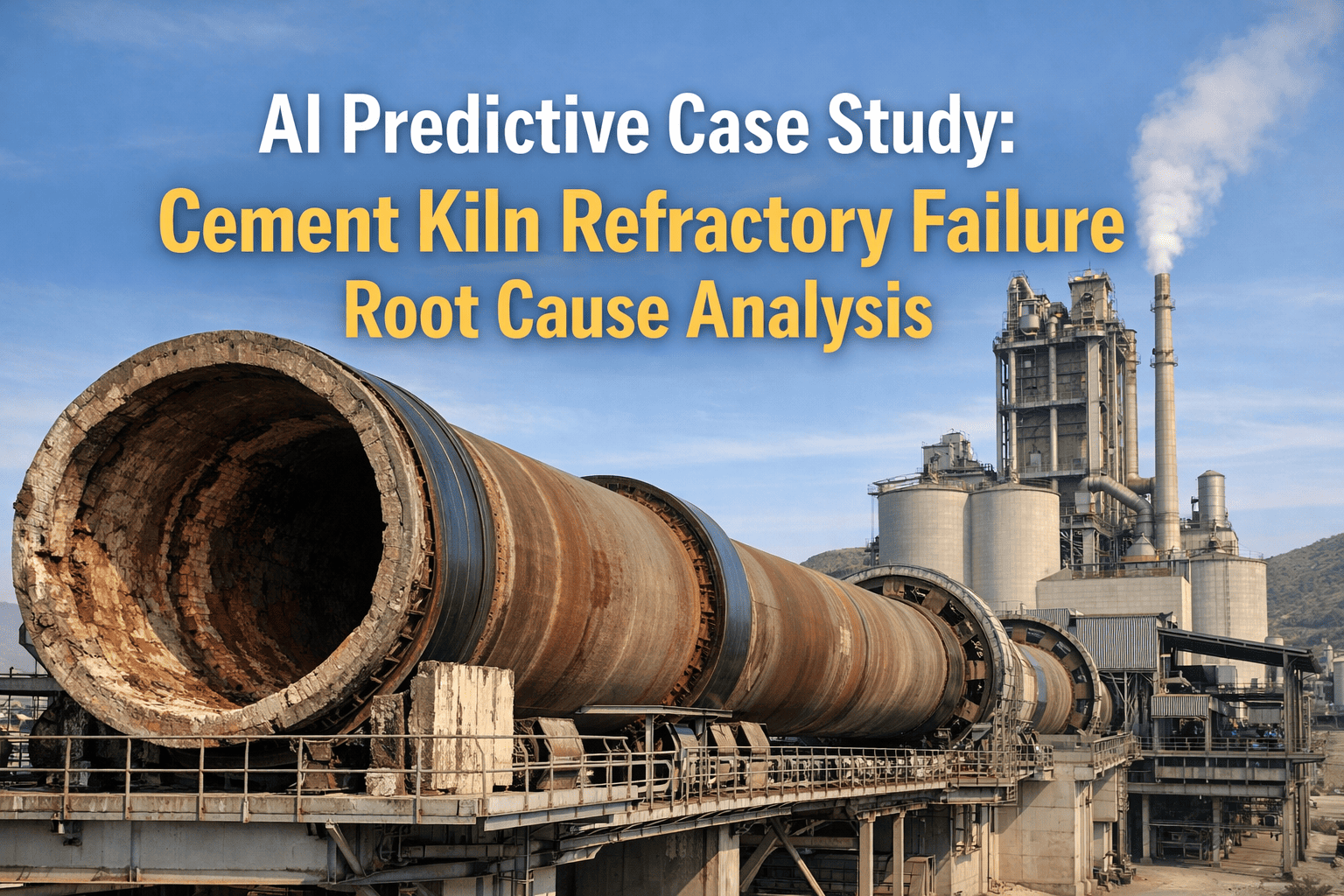
A single refractory failure in a cement kiln can cause 5–10 days of unplanned downtime and up to $2M in lost production plus $500k in emergency relining. Traditional schedules replace lining too early (wasting millions) or too late (catastrophic failure). Oxmaint’s AI refractory prediction model combines shell temperature, kiln revolutions, and load history to forecast remaining lining life zone-by-zone with 92% accuracy. This case study shows how a 3.5Mta cement plant extended relining intervals by 8 months and eliminated unplanned kiln stops.
AI predicts kiln refractory life zone-by-zone: 8 months extended lining life, zero unplanned stops
How a 3.5 million ton per annum cement plant used Oxmaint’s AI model to move from calendar-based relining to condition-based, saving $1.2M in the first campaign.
Blind scheduling: replacing lining too early or too late
Kiln operators traditionally rely on fixed campaigns (every 12-18 months) or infrared spot checks. This ignores zone-specific degradation — the burning zone wears faster than the transition zone. The result: either premature relining (wasted refractory cost) or sudden breakouts (catastrophic downtime).
Oxmaint AI refractory model: data fusion + zone RUL prediction
The model ingests daily shell temperature profiles (80+ thermocouples), kiln rotation speed, production load, and historical wear rates. Machine learning outputs remaining useful life (weeks) for each 2m zone, triggering alerts when predicted life falls below safety margin.
Actual refractory thickness prediction vs. actual wear
How the AI model predicts refractory RUL
- Input features: 80+ shell thermocouples (daily min/max/avg), kiln rpm, production tonnage, ambient temp, fuel rate
- Model type: Ensemble of Gradient Boosting + LSTM for temporal patterns
- Output: Remaining useful life (weeks) per 2m zone + confidence interval
- Training data: 3+ years of historical data + known relining events
- Update frequency: Daily retraining with new sensor data
The model correctly identified the burning zone would reach critical wear at 14.2 months (actual: 14.5 months). Traditional method predicted 12 months (off by 20%).
| Refractory zone | Calendar schedule (months) | AI-predicted life (months) | Actual life achieved (months) | Savings per zone |
|---|---|---|---|---|
| Burning zone | 12 | 14.2 | 14.5 | $340k |
| Transition zone | 12 | 19.8 | 20.1 | $620k |
| Cooling zone | 12 | 25.3 | 24.9 | $240k (deferred) |
Traditional calendar-based
- Relining every 12 months regardless of wear
- Average annual refractory cost: $1.5M
- Unplanned failure risk: 34% per campaign
- Emergency downtime cost: $1.8M per event
Oxmaint AI condition-based
- Relining only when zones reach threshold
- Annual refractory cost: $0.9M (40% reduction)
- Unplanned failure risk: <2%
- Zero emergency events in 18 months
Connect thermocouples & SCADA
3-year historical wear patterns
Live predictions per 2m section
Auto-create relining plan
Month 1-2: Foundation
Connect existing shell thermocouples, kiln rpm, production data. Oxmaint team trains initial model on 12+ months of data.
Month 3: Validation
Compare AI predictions against infrared scans and operator knowledge. Fine-tune zone thresholds.
Month 4-6: Active monitoring
Daily RUL updates, automated alerts when zones reach 70% wear. First preventive actions scheduled.
Month 7+: Full autonomy
AI-driven relining decisions integrated with CMMS. Board-ready ROI reports generated monthly.
$1.2M direct savings + avoided catastrophic failure
The plant avoided one full relining cycle (saving $850k in refractory material and labor) plus prevented a potential breakout that would have cost $1.8M in lost production. ROI on Oxmaint implementation was achieved in 3 months.
Zero unplanned stops, predictable relining planning
- Relining scheduled during planned annual shutdown
- Maintenance team received 6-week advance notice
- No emergency refractory procurement (premium avoided)
- Zone-specific repairs instead of full lining replacement
- Refractory inventory reduced by 35%
Join leading cement producers using Oxmaint to predict zone-level refractory wear, extend relining intervals, and eliminate unplanned kiln stops. Start your free trial today.
✅ Extend relining intervals
AI identifies which zones still have usable life, avoiding premature replacement by 20-40%.
✅ Eliminate catastrophic breakouts
Early warnings of accelerated wear trigger proactive repair plans 4-6 weeks ahead.
✅ Optimize refractory inventory
Order zone-specific bricks only when needed, reduce stock by 30-40%.
✅ Data-driven relining schedules
Align with planned outages, avoid emergency shutdowns, improve OEE by 5-8%.
Answers about AI refractory prediction for kilns
Thousands of cement producers trust Oxmaint for predictive analytics. Start your free trial — no credit card, live in under 60 minutes.