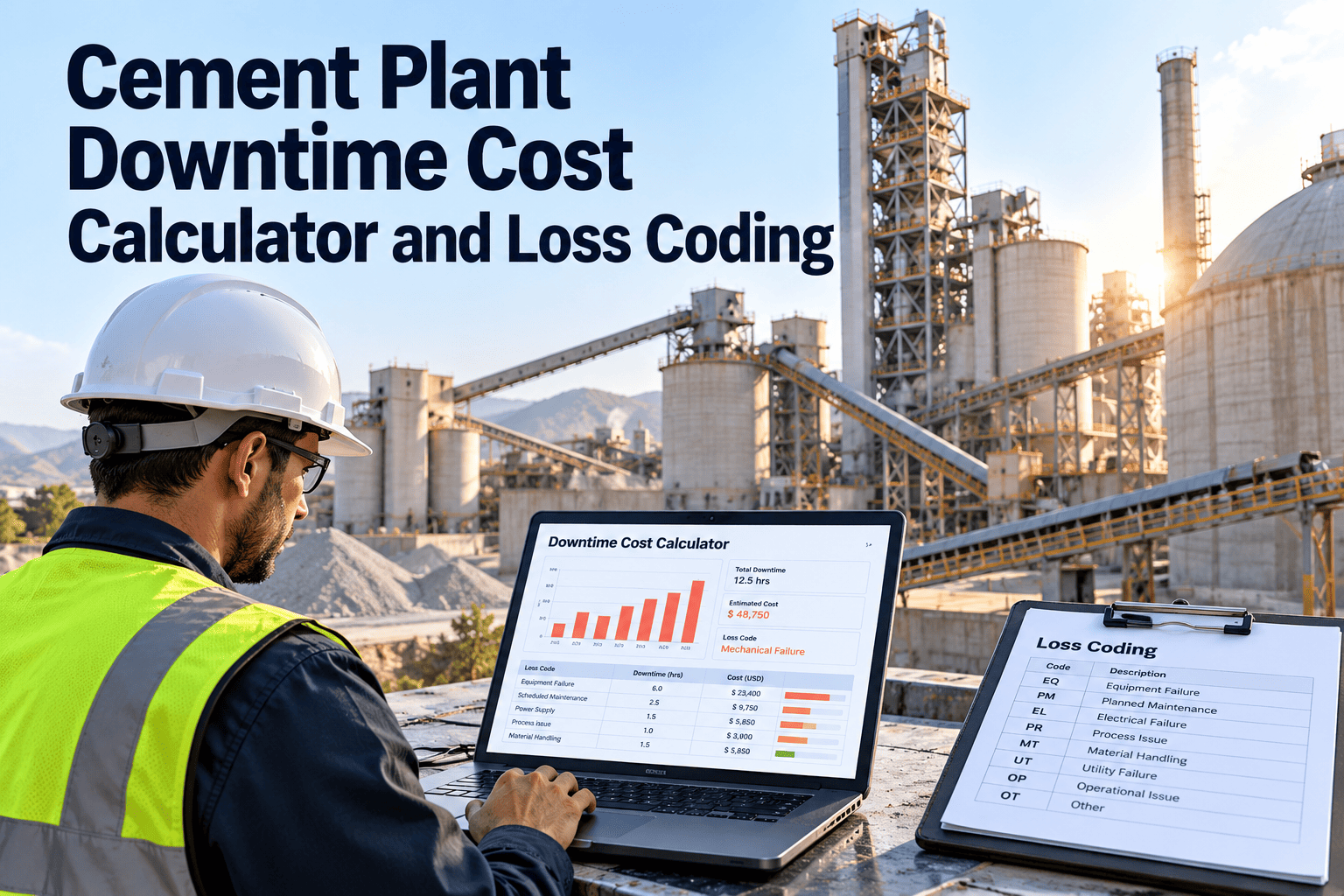
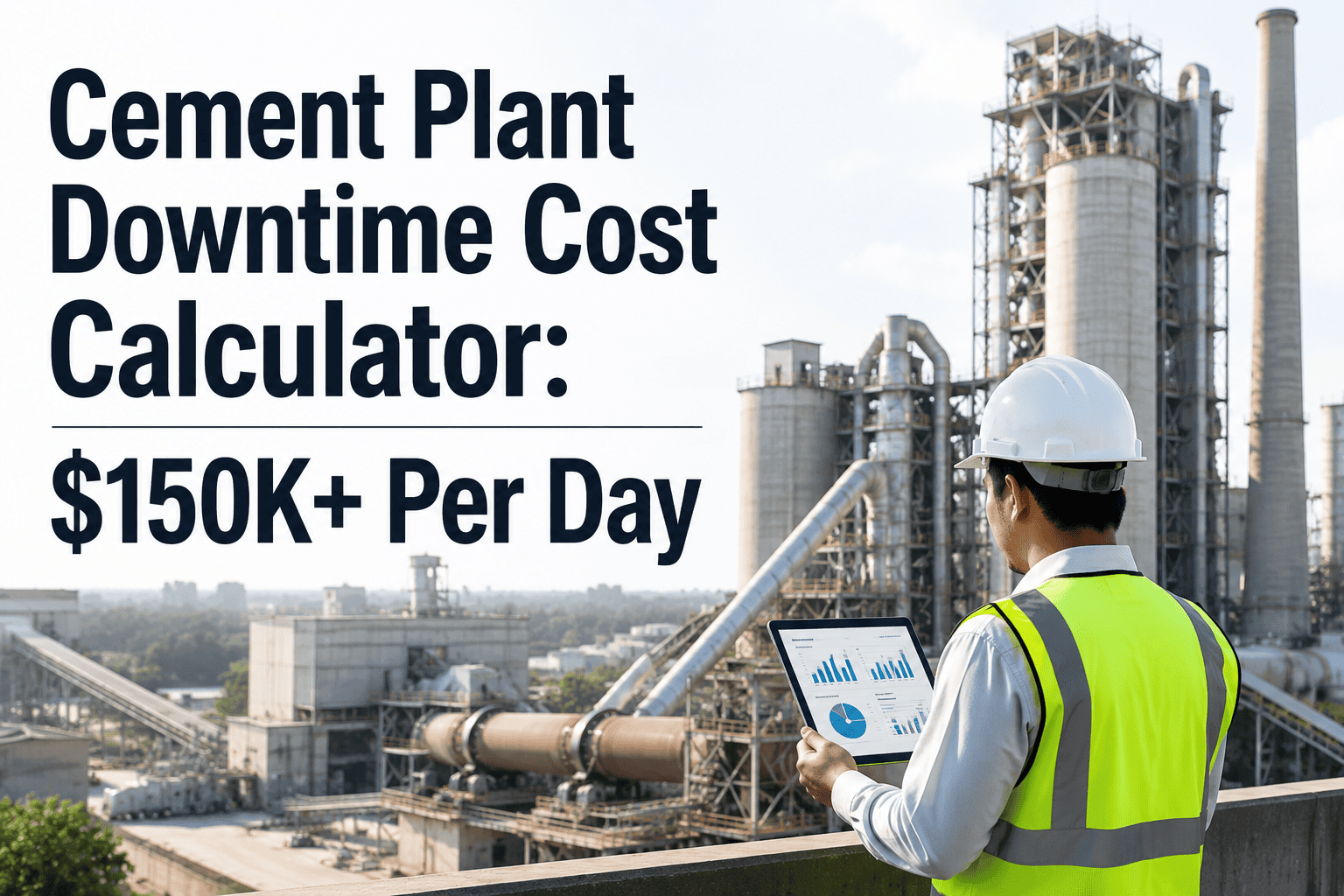
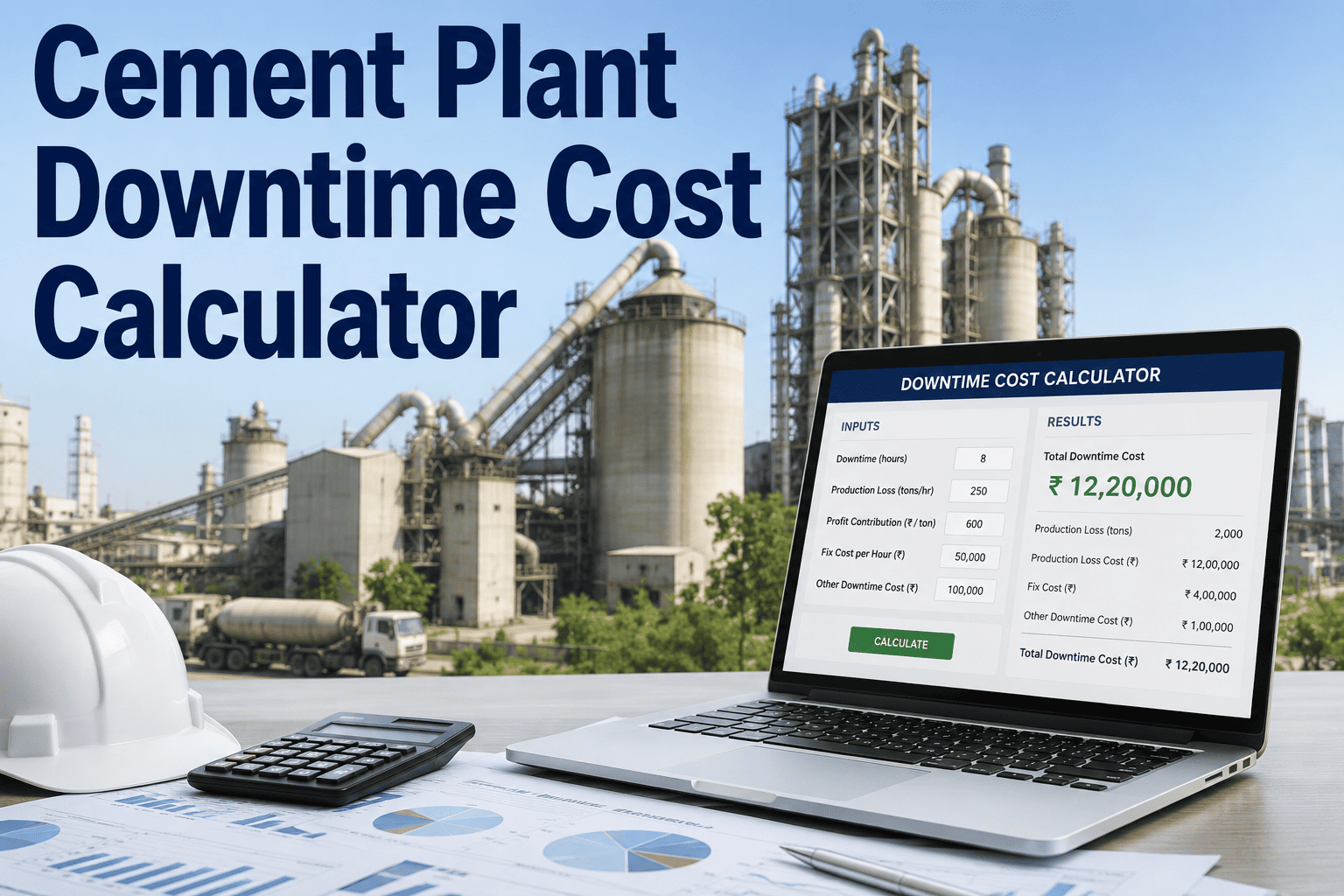
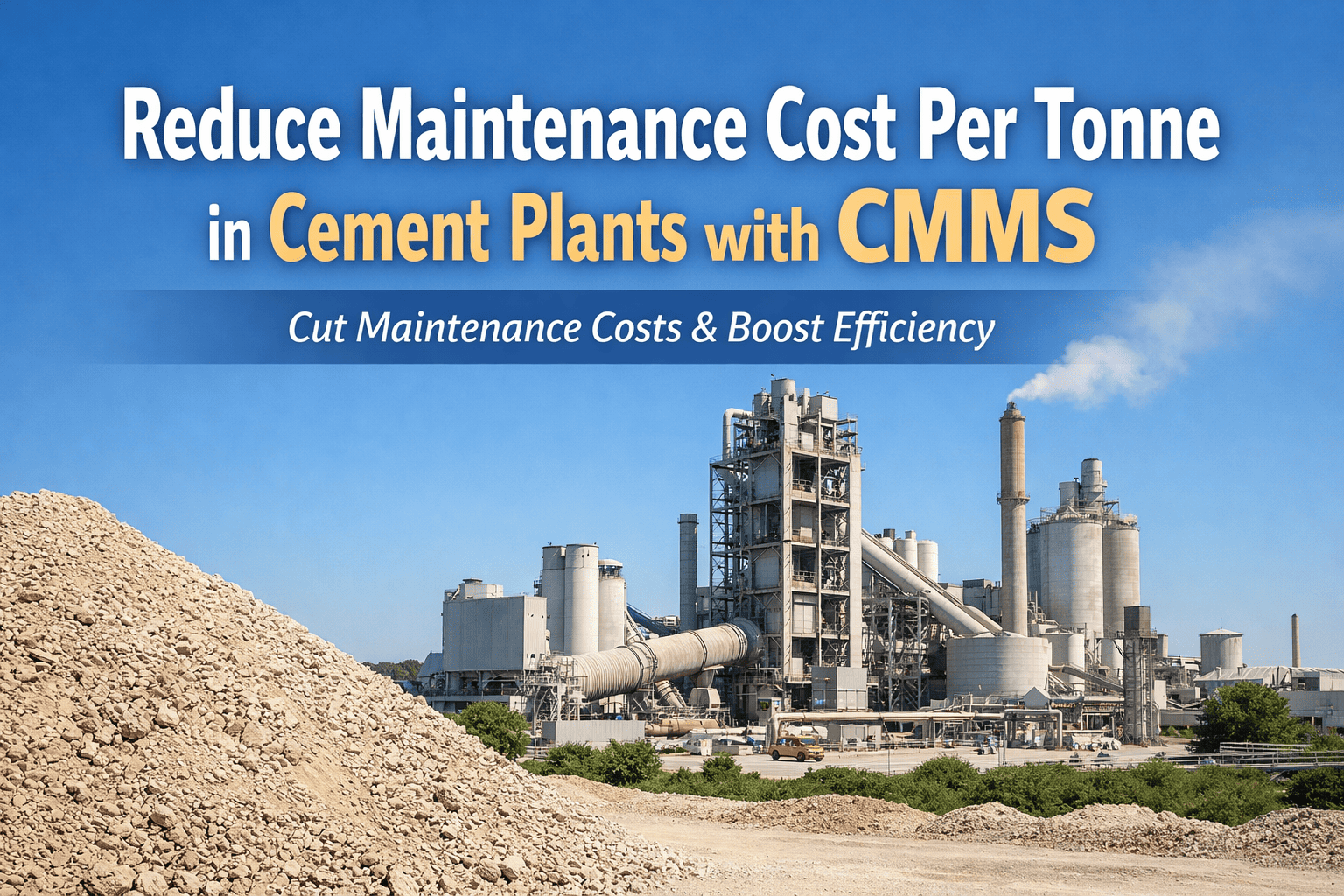
A cement plant running a 3,500 TPD kiln was absorbing ₹14 crore in annual maintenance costs — 60% of it unplanned, reactive, and avoidable. When their maintenance manager loaded 24 months of failure records into OxMaint, the analysis revealed that just 8 assets were responsible for 78% of all unplanned downtime cost. Within four months of deploying OxMaint's predictive maintenance platform, two catastrophic failures were prevented. The system paid for itself before the first quarter ended. Sign in to OxMaint to start building your cement plant's predictive maintenance ROI model with real asset data. Book a demo to see how OxMaint calculates your plant's specific savings potential before you commit a rupee.
300–500%
ROI within 12–18 months — documented across cement plants deploying predictive maintenance
3–6 mo
Typical payback period — one prevented kiln failure commonly covers the full platform cost
₹8–12 Cr
Annual savings at a 3,000 TPD plant — downtime prevention, maintenance reduction, asset life extension
40%
Reduction in total maintenance costs achievable vs reactive maintenance baseline — US DOE benchmark
The cost of a single unplanned rotary kiln stoppage. Emergency contractor overtime, air-freighted spare parts, destroyed refractory brickwork from thermal shock, and lost clinker production — all compounding every hour the kiln is cold. For most cement plants, one prevented kiln failure pays for a full year of predictive maintenance platform costs. The ROI case does not require optimistic assumptions. It requires honest accounting of what failures actually cost.
OxMaint Predictive Maintenance · Cement Plant ROI Calculator
What is your plant's current annual cost of unplanned downtime? OxMaint calculates your exact ROI before you spend a rupee on implementation.
Asset-by-Asset Downtime Cost — Where Your ROI Comes From
Not all assets contribute equally. In a typical cement plant, 8 assets account for over 75% of all unplanned downtime cost. Prioritise these for your first-phase predictive maintenance deployment.
| Asset |
Downtime Cost / Hour |
Avg. Failure Duration |
Annual Risk Exposure |
ROI Priority |
| Rotary Kiln |
₹5L – ₹10L |
48 – 120 hrs |
₹6 – 18 Cr |
Critical |
| Vertical Roller Mill |
₹2L – ₹4L |
24 – 72 hrs |
₹2 – 6 Cr |
Critical |
| Finish Ball Mill |
₹1L – ₹2.5L |
18 – 48 hrs |
₹1 – 3 Cr |
High |
| Kiln ID Fan |
₹3L – ₹6L |
12 – 36 hrs |
₹1.5 – 4 Cr |
High |
| Raw Mill Separator |
₹80K – ₹1.5L |
12 – 24 hrs |
₹40L – ₹1.5 Cr |
Medium |
| Crusher Main Drive |
₹60K – ₹1L |
8 – 16 hrs |
₹25L – ₹80L |
Medium |
| Compressor / Air Blower |
₹40K – ₹80K |
6 – 12 hrs |
₹15L – ₹50L |
Standard |
| Belt Conveyors (critical) |
₹30K – ₹60K |
4 – 8 hrs |
₹10L – ₹30L |
Standard |
Scroll right to view all columns on smaller screens
Three-Phase ROI Realisation: From First Alert to Full-Plant Savings
Most cement plants reach full ROI payback within 6 months — not 18. The phased approach reduces risk and lets the first wave of savings fund the next phase of expansion.
Phase 1 · Months 1–3
Pilot: 5–10 Critical Assets
Investment: ₹30L – ₹80L
Monitor kiln, main mill, ID fans first
AI establishes equipment baselines in 30 days
First anomaly alerts within 45–60 days
One prevented failure typically pays for Phase 1
Expected ROI: 400–900% on pilot investment
→
Phase 2 · Months 3–9
Scale: 30–50 Assets
Investment: ₹1 Cr – ₹2.5 Cr
Expand to all high and medium priority assets
Predictive work orders replace reactive tickets
PM compliance rises above 85%
Maintenance overtime drops by 60–70%
Expected ROI: 300–500% cumulative
→
Phase 3 · Month 9+
Full Plant: All Assets + Analytics
Total Investment: ₹3 Cr – ₹5 Cr
Complete asset coverage with AI learning continuously
Inventory optimised — 15–30% reduction in dead stock
Equipment life extended 20–40% across fleet
Savings compound annually with zero additional CAPEX
Sustained ROI: 300–450% annually
Documented Performance Benchmarks After OxMaint Deployment
These are verified outcomes from cement plants — not projections. Each metric is tracked in OxMaint's dashboard against the pre-deployment baseline.
45%
Reduction in total unplanned downtime hours across all monitored assets
62%
Reduction in emergency spare parts spend — planned procurement replaces air-freight orders
83%
Reduction in maintenance overtime cost — planned interventions replace emergency call-outs
78%
Improvement in planned vs unplanned maintenance ratio — from 40/60 to 88/12
30–90
Days advance warning for critical failures — bearing degradation, kiln tyre migration, gearbox tooth spalling
98.5%
Preventive maintenance compliance rate — up from under 60% at plants transitioning from paper-based systems
Building the Business Case: What Your CFO Needs to Approve This Investment
Finance teams approve predictive maintenance investments when the case is built around three numbers they already understand. Here is the exact framing that gets approvals.
01
Current Annual Downtime Cost
Pull your last 24 months of failure records. Multiply total unplanned downtime hours by your verified cost-per-hour — include lost production, emergency parts, contractor overtime, and secondary damage. Most plants discover this number is 2–3x what they assumed. This becomes your savings opportunity denominator.
How to calculate: Failures × Average Hours × ₹ per hour (production margin + emergency costs)
02
Maintenance Spend as % of Asset Replacement Value
Industry benchmark: well-managed plants spend 2–3% of asset replacement value annually on maintenance. Reactive plants routinely spend 4–6%. If your plant is above 3.5%, the excess spend is your second ROI number. For a plant with ₹200 Cr in assets, 1% reduction in maintenance spend = ₹2 Cr annual saving.
Target: reduce from current % to 2–2.5% through condition-based maintenance scheduling
03
Payback Period of the Pilot
Frame the approval around Phase 1 only — 5 to 10 critical assets, ₹30L–₹80L investment. One prevented kiln failure (₹1.5 Cr–₹5 Cr typical) covers the entire pilot cost. Boards approve pilots. Pilots prove ROI. Proven ROI funds full-plant rollout — without needing to justify the full ₹3–5 Cr upfront.
Conservative assumption: 85% failure prevention rate. One kiln stoppage prevented = pilot paid back
The Hidden Costs Most ROI Models Miss — But OxMaint Tracks
Standard ROI calculations capture downtime and parts cost. These four cost categories are frequently missed — and they add 15–25% to your actual savings figure.
Refractory Damage from Thermal Shock
A hard, unplanned kiln stop causes rapid cooling that shatters silica refractory lining. A ₹5,000 bearing failure becomes a ₹15–25 lakh brick relining operation. Early AI warnings allow controlled slow cool-downs — preventing the cascade entirely.
₹15L – ₹25L per avoided thermal shock event
Emergency Freight Premium
Predicting a gearbox failure 8 weeks in advance allows normal ocean freight and standard vendor pricing. Reacting to a snapped shaft requires emergency air freight and premium machining rates. The freight differential alone typically runs 3–5x the standard parts cost.
40–60% reduction in parts procurement cost
Overtime and Weekend Call-Out Cost
Unplanned failures do not occur during business hours. The same repair that costs ₹2L on a weekday costs ₹4–5L on a Saturday night. Shifting maintenance from reactive to predictive reallocates 70–80% of emergency repairs into planned weekday shifts.
83% reduction in maintenance overtime at documented plants
Inventory Dead Stock Carrying Cost
Reactive maintenance forces high spare parts inventory — because you cannot predict what will fail next. Predictive maintenance with 30–90 day advance warning allows just-in-time procurement. Plants typically reduce spare parts inventory value by 15–30% without increasing stockout risk.
15–30% reduction in spare parts inventory value
OxMaint · Cement Plant Predictive Maintenance
Your plant's failure history already contains the data to build a compelling ROI case. OxMaint extracts it, structures it, and turns it into a board-ready investment approval document.
How OxMaint Calculates and Tracks Your Predictive Maintenance ROI
ROI is not a one-time calculation — it is a running total that OxMaint updates automatically every time a predicted failure is prevented, a planned work order is completed, or a parts order is optimised.
Asset Baseline and Cost Input
Enter each critical asset with its downtime cost per hour, historical failure frequency, and average repair cost. OxMaint uses these inputs to calculate your pre-deployment annual risk exposure — the number that anchors every future ROI calculation.
Sign in to OxMaint to configure your cement plant asset registry and cost inputs.
Continuous Sensor Monitoring and AI Prediction
Vibration, temperature, and current sensors feed data every 30 seconds into OxMaint's AI engine. The system compares each reading against the asset's established normal range and against patterns from thousands of similar machines. When a degradation pattern matches a historical failure signature, an alert is generated with remaining useful life estimate and recommended action.
Avoided Cost Logging
When a sensor alert turns into a work order and the repair is completed before failure, OxMaint logs the avoided downtime against your cost-per-hour inputs. Emergency freight avoided, overtime eliminated, and secondary damage prevented are tracked separately. The cumulative avoided cost total is visible in real time in your maintenance dashboard.
Automated ROI Report for Management Review
OxMaint generates monthly ROI reports showing total avoided cost, maintenance spend reduction, PM compliance rate, and payback period progress — without manual compilation. These reports are formatted for management review and can be exported for board presentations or capital expenditure justification.
Book a demo to see an OxMaint ROI report for a cement plant with real data.
Frequently Asked Questions — Predictive Maintenance ROI for Cement Plants
OxMaint · Cement Plant CMMS · Predictive Maintenance ROI Calculator
The data to calculate your plant's predictive maintenance ROI is already sitting in your failure records. OxMaint extracts the numbers, runs the model, and shows you the payback date before you approve a single rupee of spend.
Asset downtime cost modelling. Phase-by-phase ROI calculation. Avoided cost tracking. Board-ready investment documentation. All built into OxMaint's predictive maintenance platform for cement plants.