Conveyor belt misalignment is silent, progressive, and expensive. By the time an operator notices the belt has been riding the edge for the past two hours, the damage to the belt edge, the idler frames, and sometimes the structural steelwork is already done. Traditional inspection relies on someone physically walking the conveyor — which happens once or twice a shift at best, and never at 2 AM during a weekend run. AI Vision changes the equation entirely. OxMaint's AI Vision module uses cameras mounted along your conveyor network to continuously monitor belt position, detect misalignment in real time, flag material spillage, and identify unsafe conditions like personnel proximity or structural obstruction — all without requiring a person to be present. When the system detects an issue, it automatically creates a work order in OxMaint, timestamps the event, and notifies the relevant team. The result: misalignment is caught in minutes, not hours, and the production and belt damage that accumulates during that window is eliminated. Start a free OxMaint trial or book a demo to see AI Vision detecting live conveyor events.
Cement Plant CMMS · AI Vision
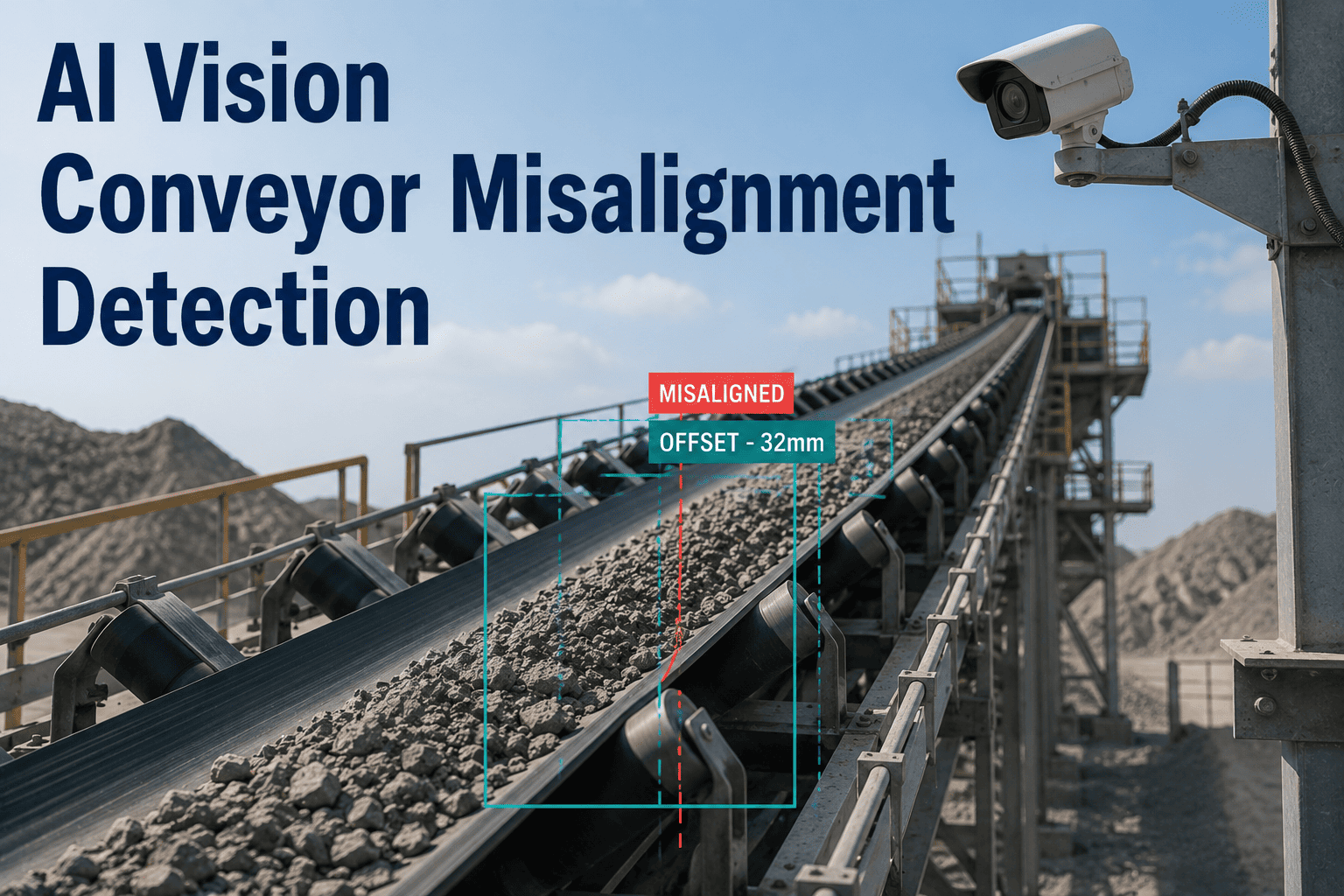
AI Vision Conveyor Misalignment Detection
Continuous visual monitoring for every conveyor in your cement plant. OxMaint AI Vision detects misalignment, spillage, and unsafe conditions the moment they occur — and turns them into work orders before your team even gets the phone call.
24/7
continuous monitoring — no shift gaps, no walk-around delays
< 90s
from misalignment detection to work order creation
85%+
reduction in misalignment-related belt edge damage
What AI Vision Detects on Your Conveyors
Detection Type 01
Belt Misalignment
AI Vision tracks belt edge position against defined centre-line tolerances. Any lateral deviation beyond the configured threshold triggers an instant alert — catching misalignment within the first few centimetres of drift, before edge contact with the frame occurs.
Prevents: edge tearing, frame abrasion, structural damage, unplanned belt replacement
Detection Type 02
Material Spillage
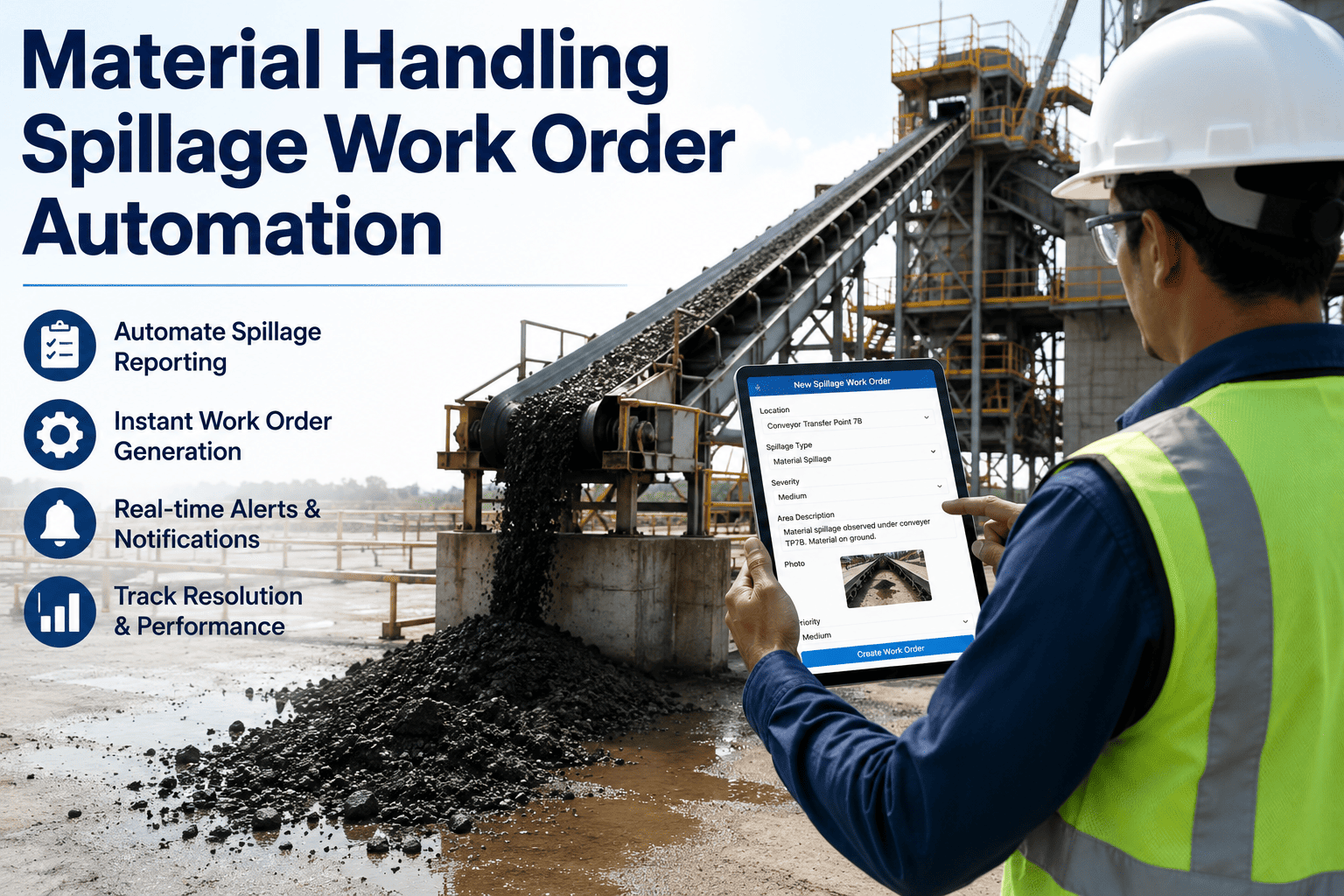
Spillage at transfer points, chute lips, and discharge zones is detected by analysing material accumulation patterns in the camera frame. The system distinguishes between normal carry-back and active spillage requiring intervention.
Prevents: housekeeping hazards, belt abrasion from trapped material, conveyor structure damage
Detection Type 03
Unsafe Conditions
Personnel proximity detection flags when a person enters a defined exclusion zone around operating conveyors. Object obstruction detection identifies debris, tools, or foreign material that could cause jam or belt damage.
Prevents: contact injuries, trapped object damage, regulatory non-compliance
Detection Type 04
Belt Surface Anomalies
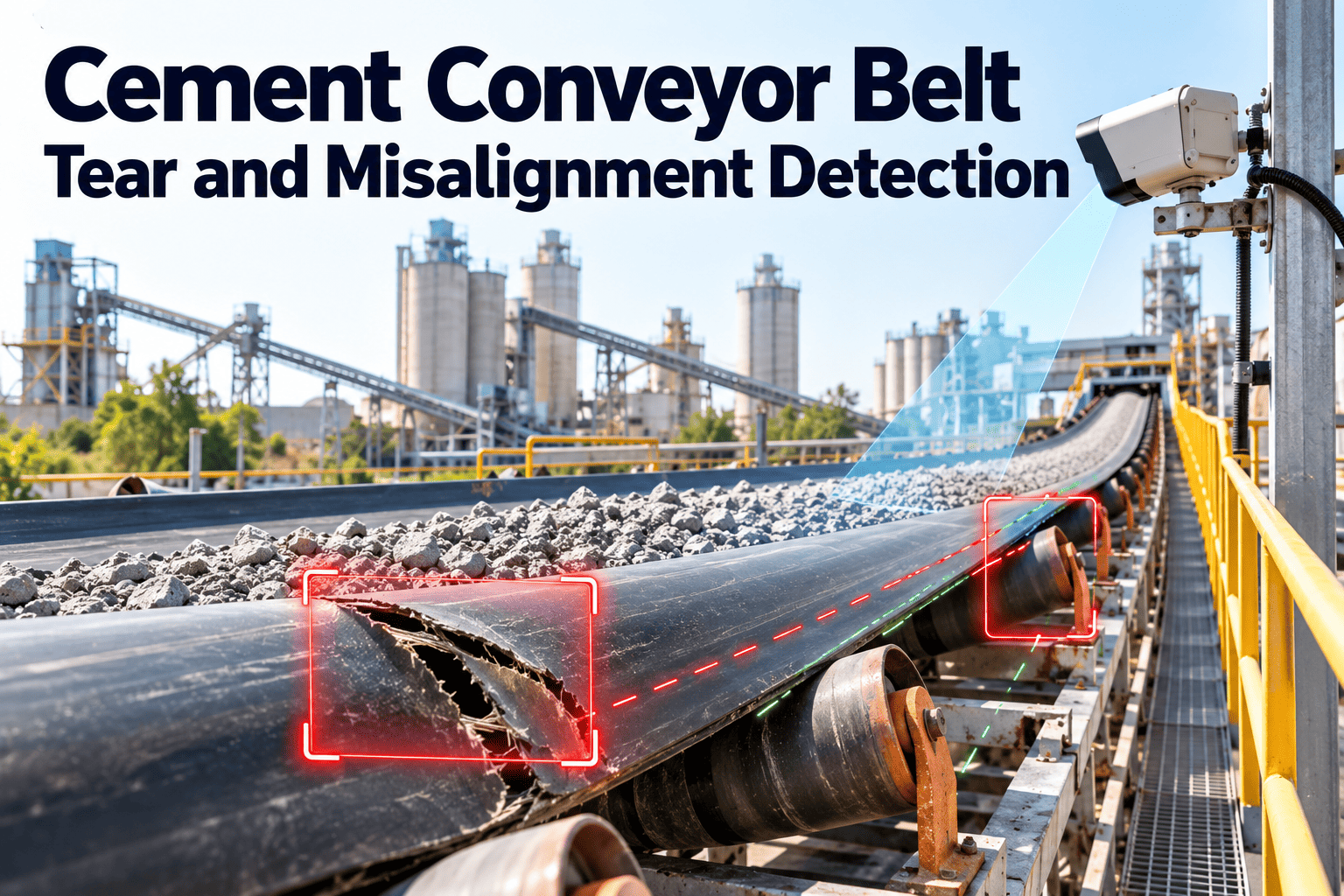
Longitudinal rips, exposed carcass, edge fraying, and cover damage are identified through continuous surface analysis. Unlike periodic walk-arounds, AI Vision catches the moment damage appears — not hours later.
Prevents: rip propagation, catastrophic belt failure, extended emergency repair downtime
How AI Vision Integrates with OxMaint Work Orders
1
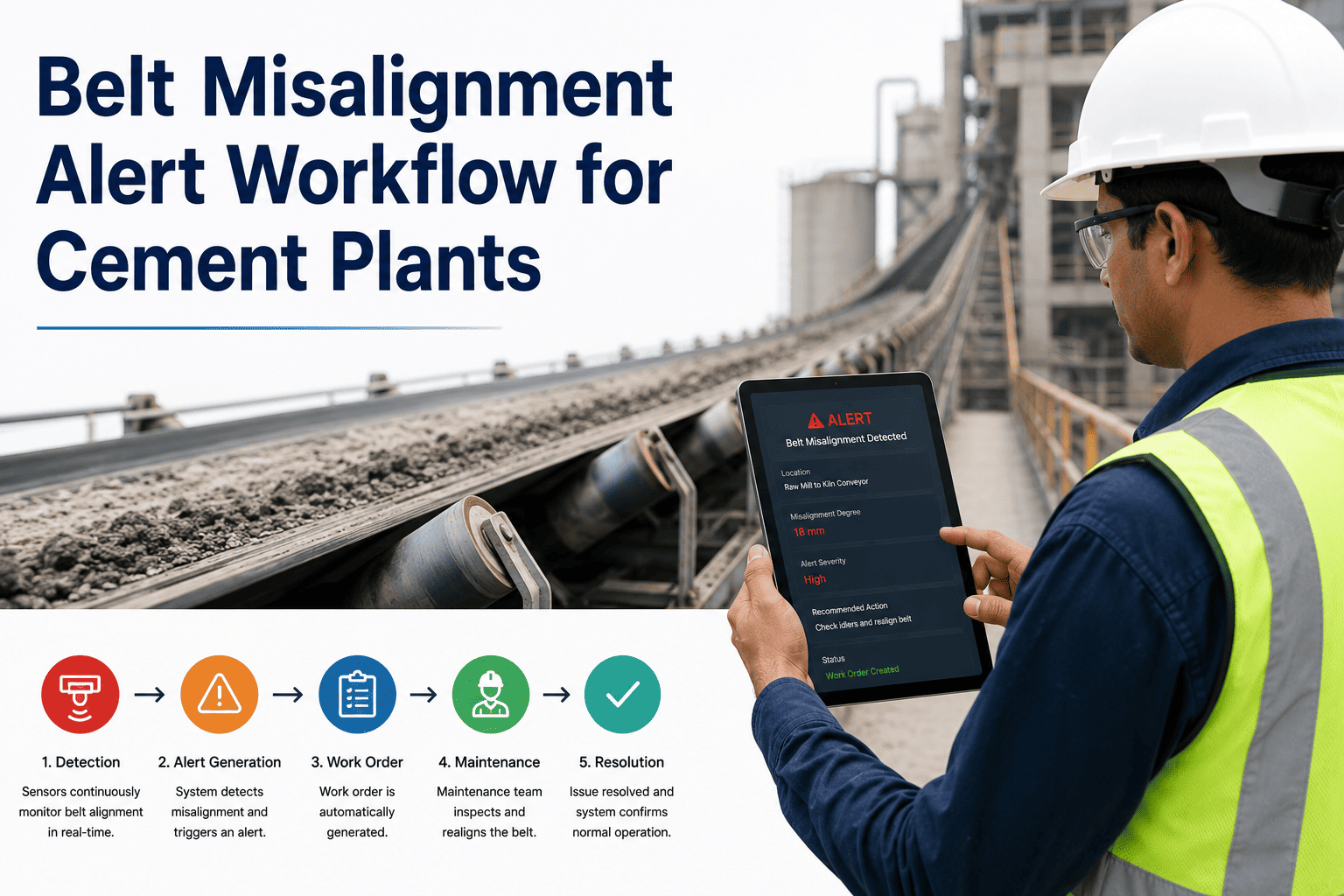
Camera Detects Event
AI Vision camera mounted at conveyor section identifies misalignment, spillage, or anomaly in real time. Confidence threshold must exceed your configured minimum to avoid false positives.
2
Snapshot and Event Record Created
OxMaint captures the detection image, timestamps the event, records the conveyor asset, detection type, and severity level — all automatically, with no operator action required.
3
Work Order Auto-Generated
A condition-based work order is created in OxMaint within seconds, with the detection image, event record, and conveyor asset linked. Priority level is set based on detection severity.
4
Crew Notified Instantly
The assigned maintenance or operations team receives a push notification with the work order, event image, and conveyor location — on mobile, so the right person is walking toward the conveyor before the next walk-around would have started.
5
Event Trend Analysis
All AI Vision events are stored and analysed over time. Conveyors with recurring misalignment in the same zone point to structural issues — idler misalignment, frame distortion, or loading imbalance — that a single correction will not fix.
Your conveyors are running right now. AI Vision is either watching — or they are not being watched.
OxMaint AI Vision closes the inspection gap on every conveyor, every shift, around the clock. See a live detection demonstration and learn how quickly you can deploy it on your plant.
AI Vision vs. Manual Walk-Around: The Detection Gap
Manual Walk-Around
07:00 — Shift starts, walk-around begins
07:45 — Conveyor 4 inspected, belt position normal
09:30 — Misalignment begins (undetected)
11:00 — Edge contact starts, belt damage begins
13:00 — Next walk-around: misalignment found
3.5 hours of damage — 60cm edge fraying, splice at risk
OxMaint AI Vision
07:00 — Continuous monitoring active
09:30 — Misalignment begins
09:31 — AI Vision detects 3cm lateral deviation
09:32 — Work order created, crew notified
09:45 — Technician adjusts tracking, belt re-centred
15 minutes of exposure — no edge damage, no production loss
Frequently Asked Questions
What type of cameras does AI Vision require for conveyor monitoring?
OxMaint AI Vision is compatible with standard industrial IP cameras. Camera selection depends on conveyor length, ambient lighting, and dust levels — OxMaint's deployment team provides a camera specification guide based on your conveyor environment. No proprietary hardware required.
Book a demo to discuss your setup.
How does AI Vision handle false positives in high-dust conveyor environments?
The AI model is trained on cement plant operating conditions including airborne dust, varying lighting, and material carry-back. Configurable confidence thresholds allow you to set how certain the model must be before triggering an alert — reducing false positives without missing real events.
Start a trial to configure detection sensitivity.
Can AI Vision monitor multiple conveyors simultaneously?
Yes. OxMaint AI Vision scales across your entire conveyor network. Each camera feed is monitored independently, and all detected events are consolidated in a single OxMaint dashboard — so your shift supervisor sees every active alert across the plant without switching between systems.
How does the system notify the team when misalignment is detected?
OxMaint sends push notifications to the assigned crew via the mobile app the moment a work order is auto-generated. Notifications include the detection image, conveyor ID, event type, and severity — giving the technician full context before they reach the conveyor.
Does AI Vision replace the need for manual conveyor inspections?
AI Vision significantly reduces the reliance on manual walk-arounds for real-time defect detection. However, planned physical inspections remain important for close-contact checks like splice integrity, bearing greasing, and structural assessment. OxMaint manages both AI Vision alerts and manual PM schedules in the same system.
Stop finding misalignment after the damage is done.
OxMaint AI Vision watches every conveyor, every minute — and creates the work order before the belt edge touches the frame. Start free or book a live detection demo today.