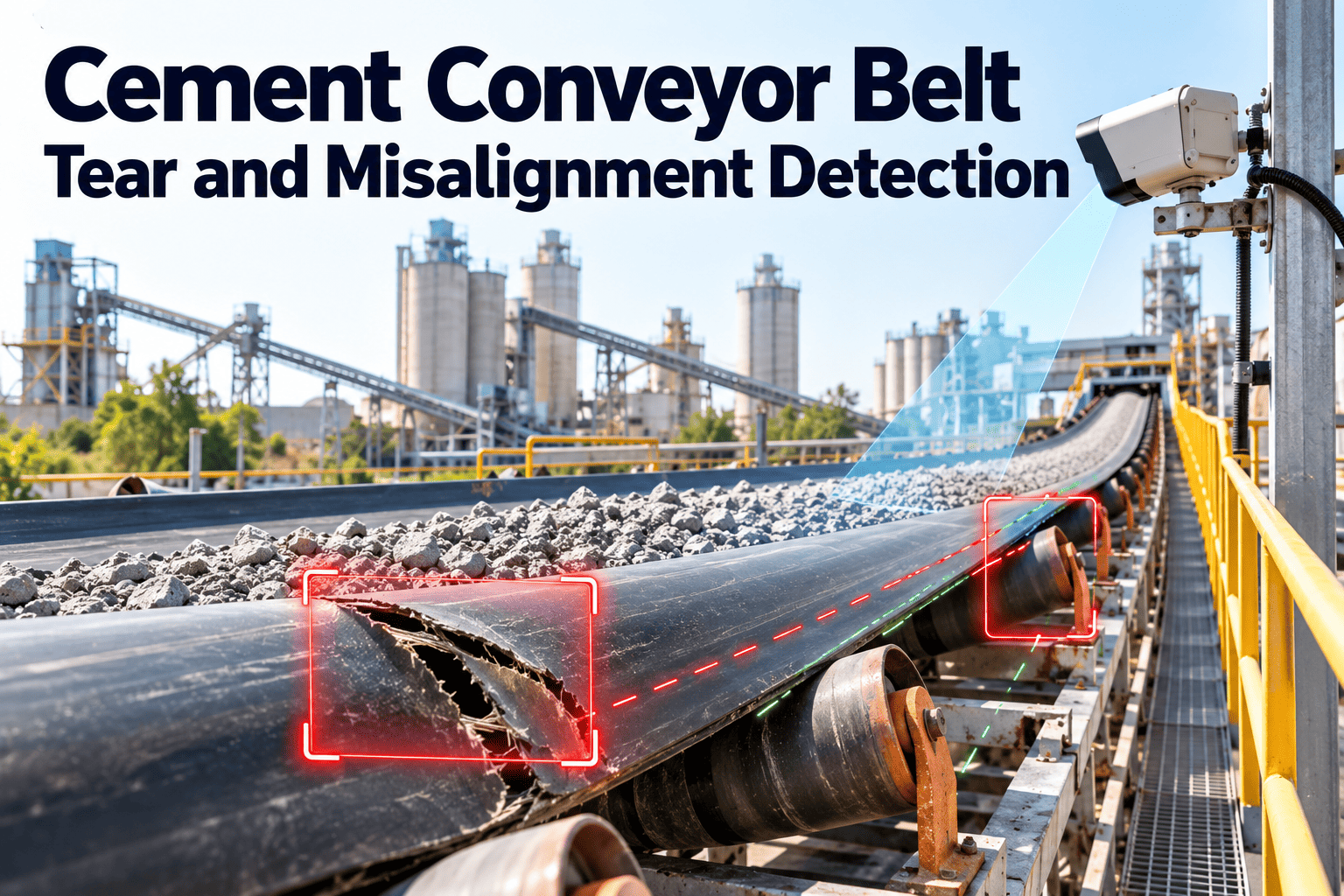
A conveyor belt that drifts even a few centimetres off centre does not stay that small for long. Edge contact against the frame starts wearing the belt cover, material begins spilling at the point of contact, and the misalignment itself gets worse with every rotation because the belt is no longer tracking the way the idlers were set up to guide it. By the time someone notices visible damage on a walkthrough, the fix is a belt repair or replacement instead of a simple training idler adjustment. OxMaint IoT integration catches that drift in its first few centimetres. Sign in to OxMaint to set up belt misalignment alerts on your conveyor circuits.
Root Causes
What Actually Causes A Belt To Drift Off Centre
Uneven Loading At The Chute
Material dropped off-centre onto the belt pushes it sideways every time it passes under that loading point.
Worn Or Displaced Training Idlers
Idlers designed to self-correct minor drift lose effectiveness as their bearings wear or their frames shift out of position.
Structural Frame Misalignment
Gallery structure settling or impact damage can throw the entire idler line out of true alignment over a long conveyor run.
Belt Splice Or Edge Damage
An uneven splice or a damaged edge changes belt tension distribution, causing it to pull toward one side.
The Cascade
How Small Drift Becomes A Costly Failure
Early
Belt edge makes light contact with the frame, invisible unless someone is looking directly at that section during operation.
Developing
Edge wear accelerates, material begins spilling at the contact point, and structural components start absorbing abnormal load.
Advanced
Belt tearing risk rises sharply, idlers and frame suffer premature wear, and spillage becomes a housekeeping and safety issue.
Critical
Belt tears or runs off the structure entirely, halting the conveyor and often requiring emergency splice or belt replacement.
Catch Belt Drift In Its First Few Centimetres
OxMaint IoT integration tracks belt edge position continuously and raises a work order the moment drift crosses your configured threshold, before edge damage or spillage even begins.
The Alert Workflow
From Sensor Reading To Corrective Work Order
1
Position Sensors Track The Belt Edge
Ultrasonic or camera-based sensors positioned along the gallery measure belt edge position against the defined centre line continuously.
2
Drift Beyond Tolerance Triggers An Alert
Once lateral deviation crosses the configured tolerance, typically starting around 15 millimetres, OxMaint raises an alert with the exact belt section and drift measurement.
3
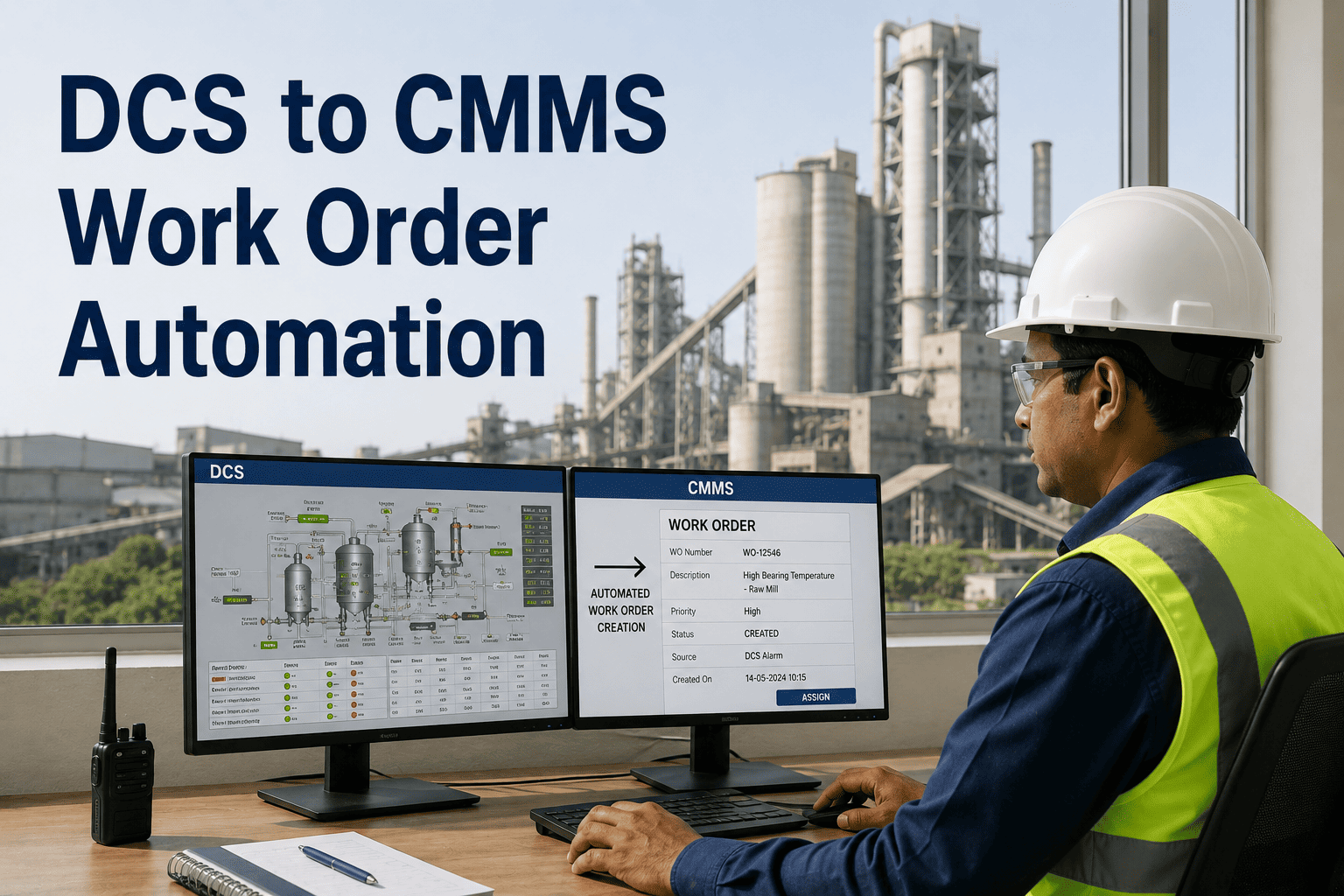
Work Order Generated Automatically
A work order is created for the maintenance team, prioritised by how far the belt has drifted and how quickly it is progressing.
4
Technician Corrects And Confirms
The technician adjusts the training idler or investigates the loading point, then closes the work order once the sensor confirms the belt has returned to centre.
Alert Thresholds
How OxMaint Tiers Belt Misalignment Alerts
| Tier | Lateral Drift | System Response | Recommended Action Window |
|---|---|---|---|
| Normal | Within centre-line tolerance | Logged, no alert | None required |
| Watch | 15 to 30 mm drift | Standard work order created | Within the week |
| Alert | 30 to 60 mm drift | Priority work order, supervisor notified | Within 24 to 48 hours |
| Critical | Over 60 mm or rapid change | Urgent work order, immediate notification | Within current shift |
Why It Matters
The Impact Of Catching Misalignment Early
15mm
is the smallest tracking deviation AI vision and position sensors can reliably detect, well before edge contact begins
31 → 10
conveyor-caused unplanned stops per year at one cement plant after structured belt tracking replaced reactive inspection
12+ hrs
of feed line downtime a single belt tear caused by unresolved mistracking can create in a cement plant
Maintenance Team Experience
What Changed After Misalignment Alerts Went Live
We used to find out a belt was mistracking when someone saw material piling up along one edge during a walkthrough, and by then the belt cover was already showing wear. Now the alert comes in while the drift is still a few centimetres, well before there is any visible damage, and the fix is a five minute idler adjustment instead of a belt repair.
Maintenance Planner
Cement Plant, Clinker Transport Conveyor Circuit
Priority Zones
Where Position Sensors Deliver The Most Value
Loading Zones
The point where material first lands on the belt sees the highest concentration of load-induced drift and benefits most from close monitoring.
Convex And Concave Curves
Belt sections that change direction vertically are structurally more prone to tracking issues than long straight runs.
Long Straight Runs
Even small drift compounds over distance, so long unsupported spans need periodic position checks along their length.
Discharge And Transfer Points
Misalignment just before a discharge point often causes spillage at the next piece of equipment downstream, not just at the belt itself.
Method Comparison
Manual Inspection vs Continuous Position Sensing
| Factor | Manual Walkdown | Continuous Sensor Monitoring |
|---|---|---|
| Detection Point | Usually after visible edge wear appears | Within the first 15 mm of drift |
| Coverage | Whatever sections are walked that day | Every monitored section, continuously |
| Correction Cost | Often a belt repair or replacement | Typically a minor idler adjustment |
| Record Keeping | Informal notes, rarely trended over time | Full drift history per section, searchable |
Left Uncorrected
What Happens If Drift Is Never Addressed
1
Edge Wear Accelerates
Repeated contact with the frame thins the belt cover at the contact point, weakening that section with every pass.
2
Structural Components Wear Prematurely
Idlers and frame sections absorb load they were never designed to carry, shortening their service life significantly.
3
Spillage And Housekeeping Costs Rise
Material escaping at the contact point becomes a recurring cleanup task and a growing safety concern near walkways.
4
Belt Tear Or Runoff
Left long enough, the belt can tear or run completely off the structure, halting the conveyor for an emergency repair.
Common Questions
What Cement Plant Teams Ask About Misalignment Alerts
What kind of sensor does OxMaint use to track belt edge position?
Most plants use either ultrasonic proximity sensors mounted at intervals along the gallery or fixed cameras with AI vision that track belt edge position at sub-centimetre resolution, both feeding continuous readings into OxMaint. Book a demo to review sensor options for your conveyor.
Can the drift tolerance be set differently for different conveyor sections?
Yes. Loading zones, curves, and long straight runs can each have their own tolerance and alert threshold configured, since a drift that is acceptable on one belt section may be significant on another. Sign in to configure section-specific thresholds.
Does the system distinguish between a temporary drift and a genuine misalignment trend?
Yes. OxMaint tracks the drift pattern over time rather than reacting to a single reading, so a brief deviation caused by a load surge does not trigger an unnecessary work order while a sustained or worsening trend does. Sign in to review trend-based alert logic.
How quickly can a plant get misalignment monitoring running on an existing conveyor?
If sensors are already installed and connected to a PLC or SCADA system, integration with OxMaint typically takes hours. If new sensors need to be mounted, most plants have their first monitored belt section live within one to two weeks. Book a demo to scope your specific conveyor setup.
Can misalignment data help justify a structural realignment project instead of repeated idler adjustments?
Yes. If a specific belt section shows a recurring drift pattern despite repeated idler corrections, the history in OxMaint gives reliability engineers documented evidence that the root cause is structural, supporting a case for a proper realignment project. Sign in to review recurring drift history by section.
Give Every Conveyor Belt A Continuous Alignment Watch
Belt drift is cheap to fix when it is caught early and expensive when it is not. OxMaint tracks belt position continuously and turns the first few centimetres of drift into a corrective work order automatically.