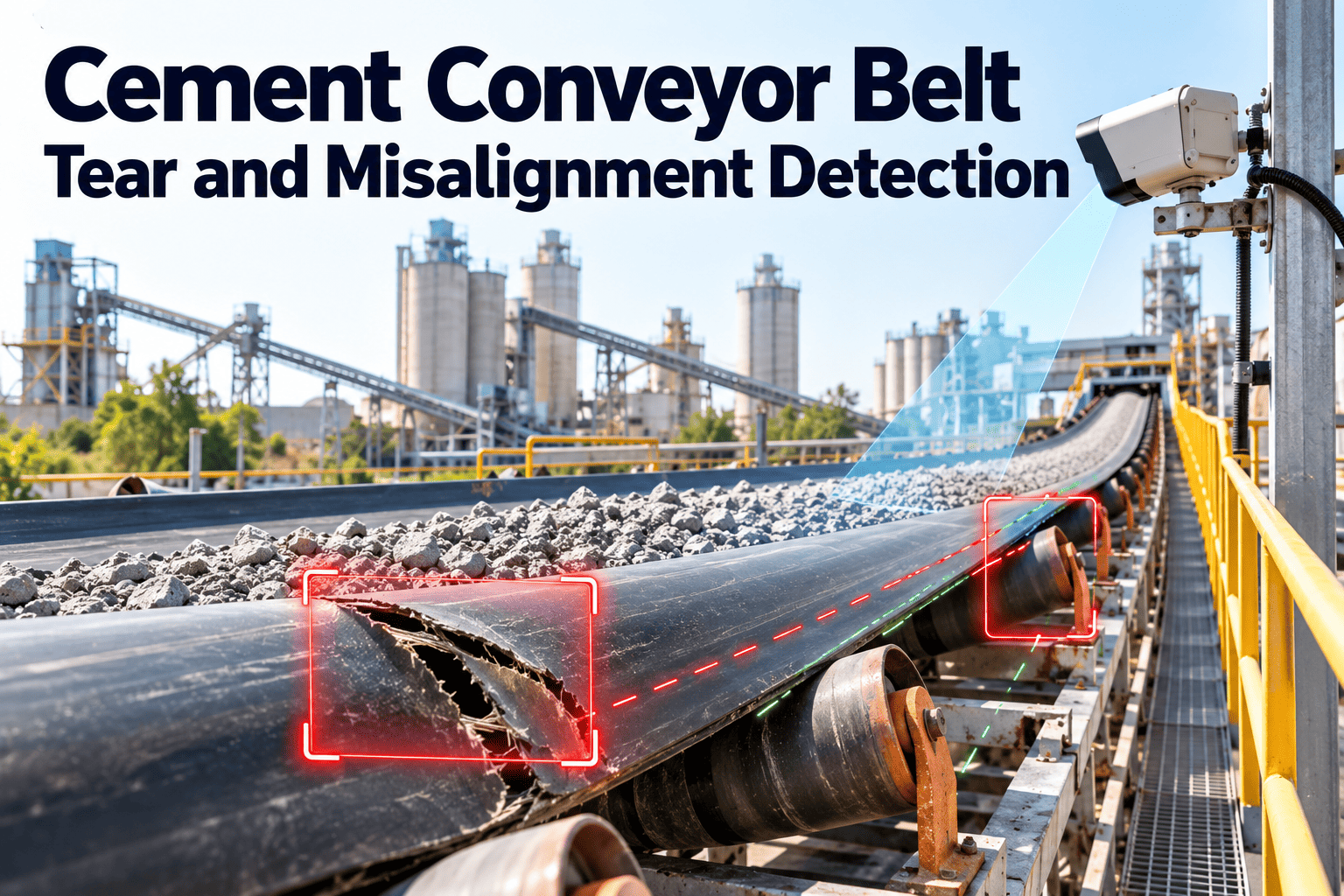
A belt tear that is not detected within the first few meters of propagation can travel the full length of a conveyor run — turning a $15,000 repair into a $180,000 belt replacement. In cement plants, where conveyors run 18–24 hours daily through abrasive, high-temperature material, the question is not whether belt tears will occur, but whether your detection and response system will catch them before the damage becomes catastrophic. Traditional detection relies on walk-down inspections and proximity switches — both too slow and too infrequent to stop a propagating tear. OxMaint AI Vision workflows change the detection-to-action timeline, identifying tear signatures in real time and converting them into structured work orders with complete repair history tracking. Start a free OxMaint trial to configure your first belt tear detection workflow, or book a specialist demo to see AI Vision in action on cement plant conveyors.
Conveyor Belt Tear Detection Workflow
Detect belt tears the moment they form. Trigger work orders automatically. Track every repair from first signal to belt return-to-service — all in OxMaint.
The Five Root Causes of Cement Plant Belt Tears
Belt tears are not random events. Each cause produces a characteristic damage signature — and each has a detectable precursor that, caught in time, prevents the tear entirely. OxMaint stores damage cause data against every repair to build the plant-specific failure cause profile over time.
Metal fragments, rock shards, or foreign objects become trapped between belt and pulley. The object punctures the belt on contact and propagates longitudinally with belt movement. Metal detectors reduce incidence but do not eliminate the risk from non-metallic tramp.
Belt splices — mechanical or vulcanized — are the weakest point in any belt run. Splice separation initiates a tear from the edge or center, often during high-tension startup loads. Splice inspection interval and condition tracking are the primary prevention measures.
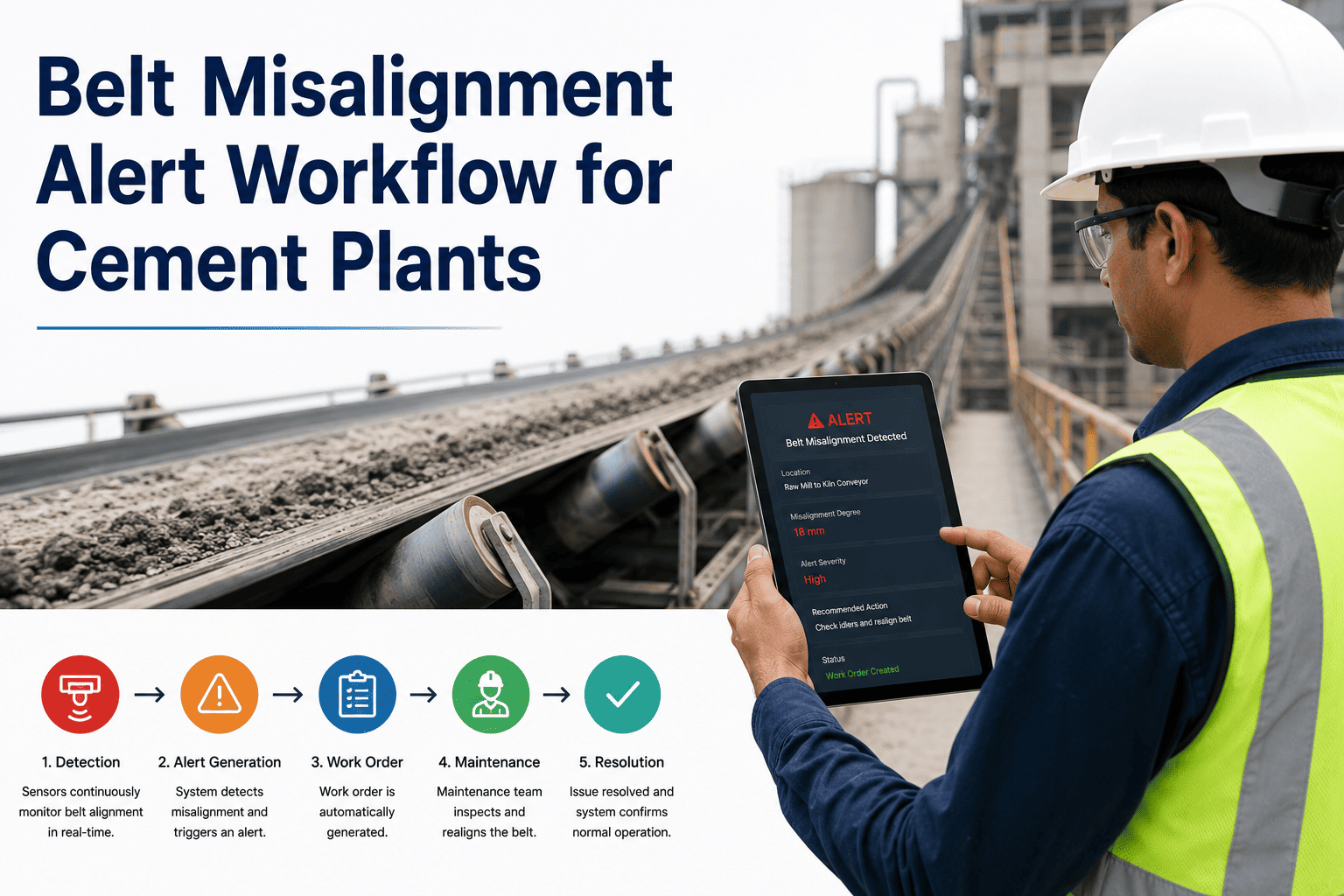
A misaligned belt runs against the conveyor structure, progressively eroding the edge. Edge damage weakens the belt cross-section, creating an initiation point for tears under normal operating tension.
High drop heights at transfer chutes and overloading during surge events concentrate stress at the impact zone. Belt carcass damage accumulates with each overload event — invisible externally until a tear initiates.
Hot clinker or bypass material exceeding belt temperature rating causes cover delamination and carcass embrittlement. Thermal damage zones tear under normal tension loads with no prior visible warning at ambient temperature.
The OxMaint Belt Tear Detection and Response Workflow
Detection is only valuable if it triggers the right response, fast enough to stop damage propagation. OxMaint connects AI Vision signals to structured work orders, repair tracking, and return-to-service verification in a single closed loop.
Cameras mounted at key conveyor zones continuously analyze belt surface. AI models trained on cement plant belt damage patterns identify tears, edge damage, and splice separation with location coordinates and damage extent estimation.
Detection event triggers an immediate work order with damage classification (longitudinal tear, edge damage, splice separation), conveyor ID, location, AI-captured image, and recommended urgency level based on damage extent.
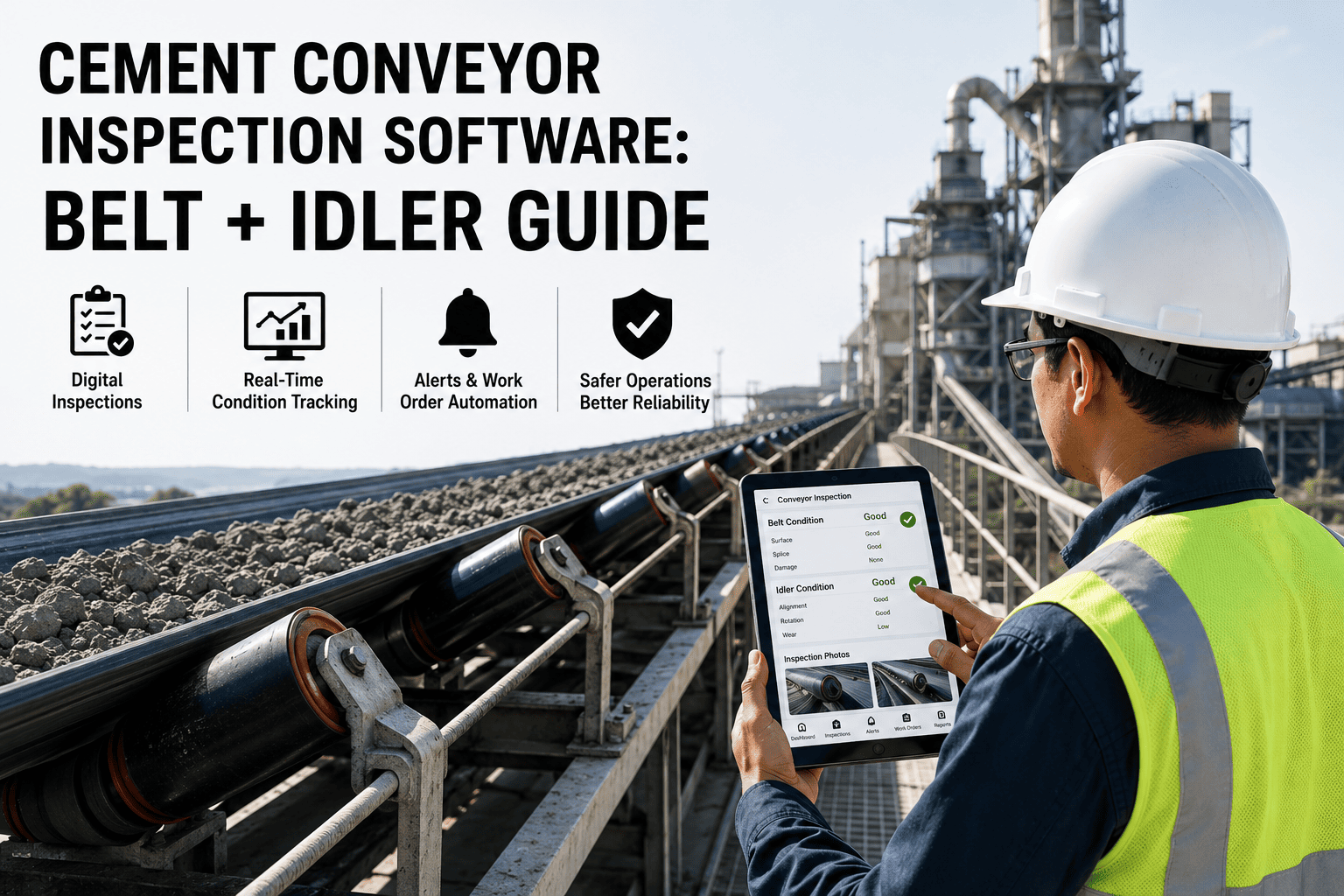
Technicians receive the work order on mobile with full damage detail. Repair actions — clamp, vulcanize, splice — are selected from a standardized task list. Photo documentation is captured at damage site and post-repair, attached to the WO record.
Post-repair verification checklist confirms repair quality before belt restart. All repair data — damage cause, repair type, time to repair, technician — is stored against the belt asset record, building the repair history that informs replacement timing decisions.
OxMaint AI Vision connects real-time belt damage detection to automatic work orders, mobile dispatch, and full repair history — in one CMMS built for cement plant conveyor operations.
What OxMaint Stores for Every Belt Tear Event
Each belt tear event is a data point that, accumulated over time, tells you when the belt is approaching end-of-life and what operational changes would reduce tear frequency. OxMaint captures the full picture at every event.
Frequently Asked Questions
How does OxMaint AI Vision differentiate a belt tear from normal surface wear or shadows?
Can OxMaint track repair history to predict when a belt should be fully replaced?
What if our plant doesn't have AI Vision cameras installed — can OxMaint still manage belt tear workflows?
Can OxMaint automatically escalate a belt tear WO if not actioned within a set timeframe?
How are belt tear events linked to root cause corrective actions in OxMaint?
From First Tear Signal to Closed Repair Record — in One Workflow.
OxMaint connects AI Vision belt tear detection to automatic work orders, mobile technician dispatch, repair history tracking, and belt replacement planning — so your cement plant conveyors run longer, cost less to maintain, and stop surprising your production team.