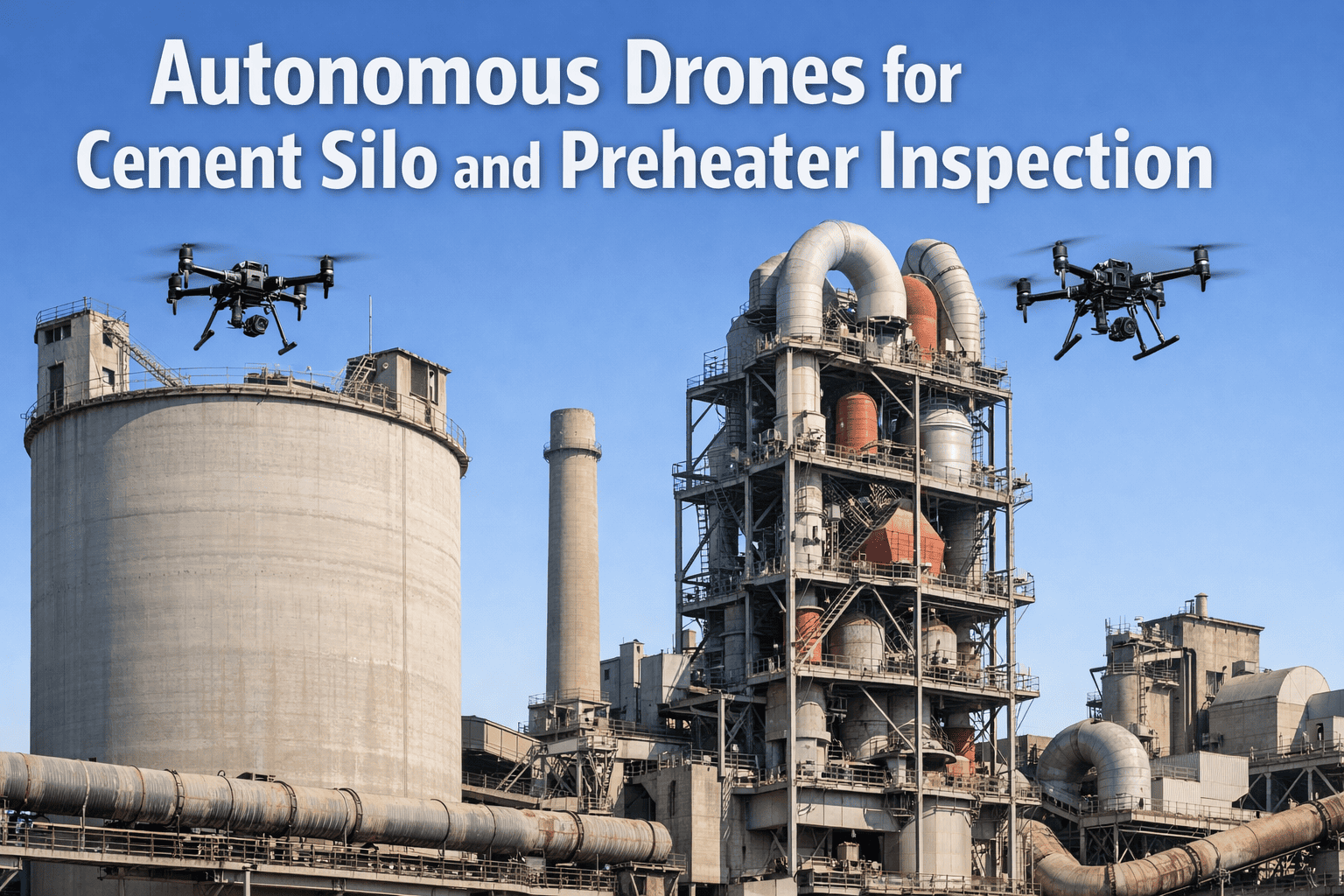
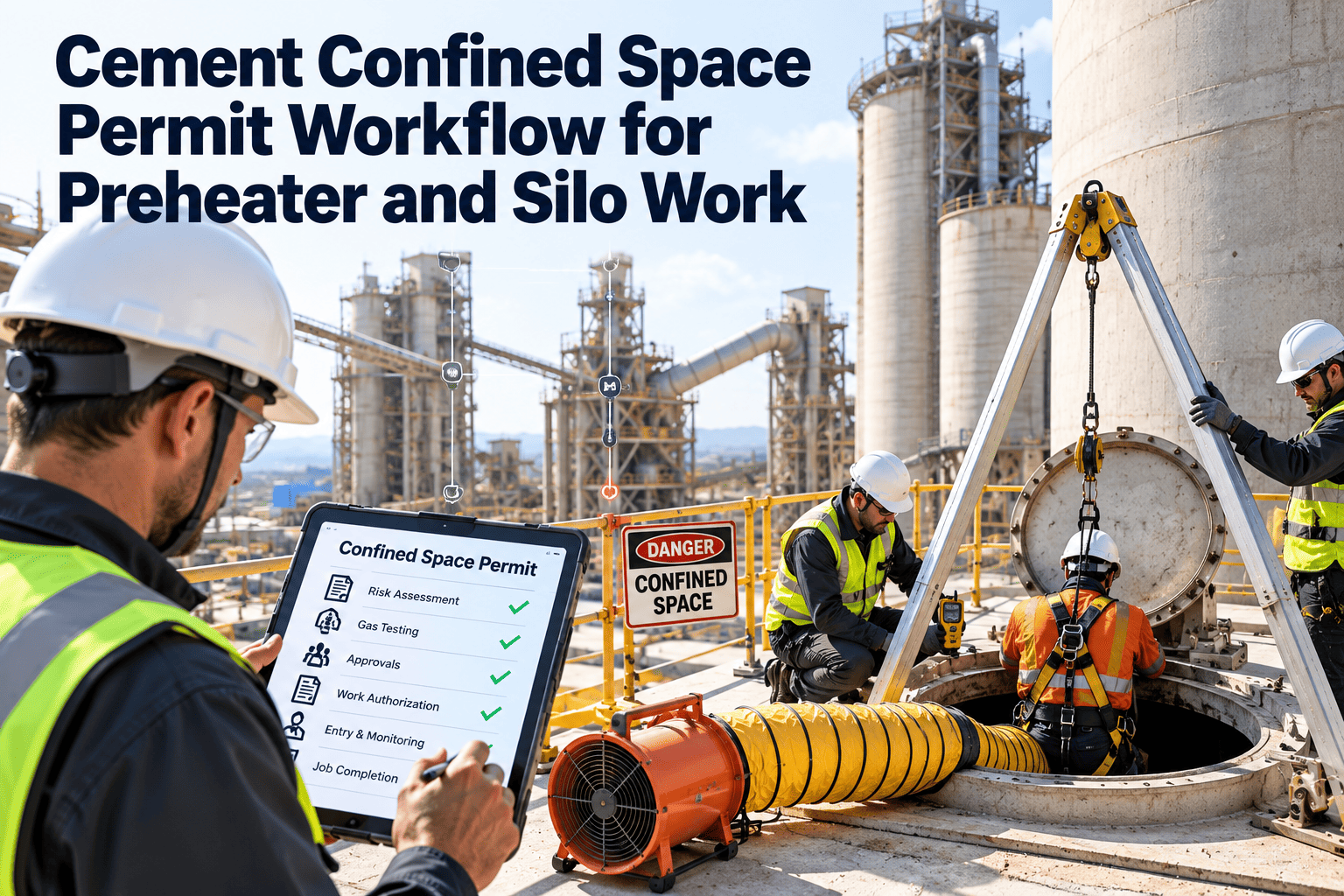
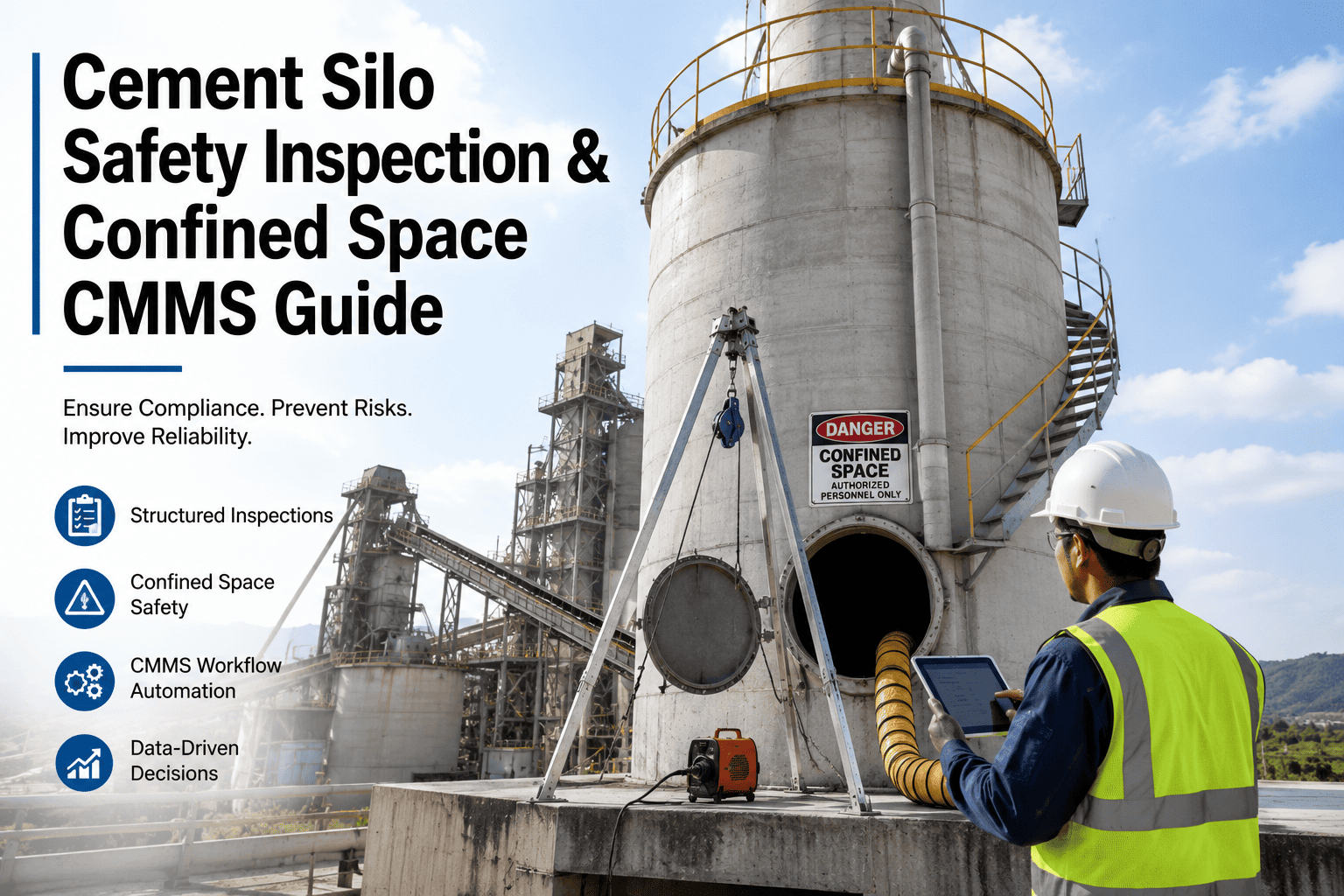
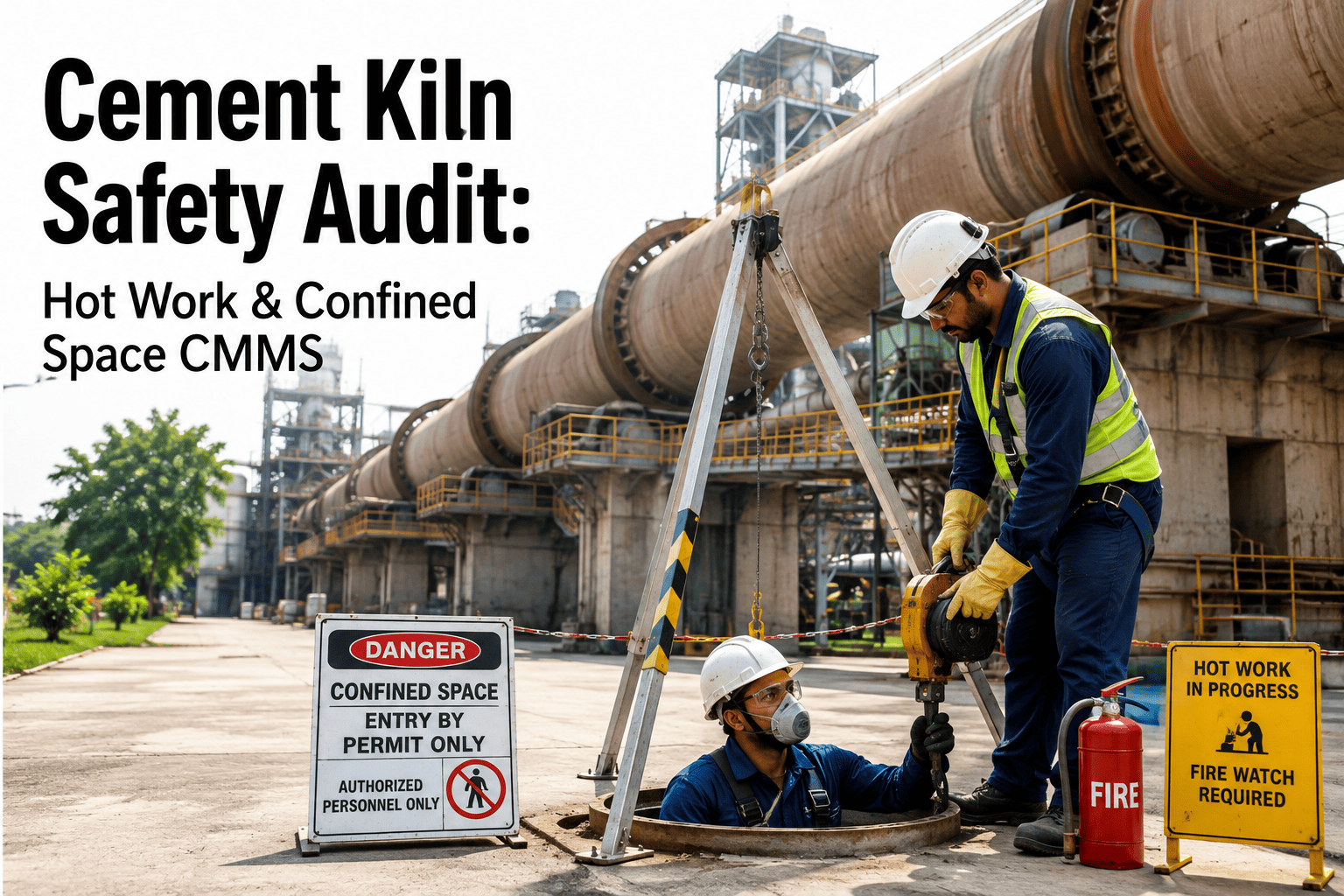
Cement plants operate the most dangerous confined spaces in heavy industry — silos with 40-meter vertical drops, preheater cyclone towers at 300°C residual heat, and kiln interiors where scaffold inspection consumes 72–120 hours of downtime per cycle. Traditional inspection costs $45,000–$85,000 per asset per shutdown when scaffold rental, rope-access specialists, confined space permits, and production loss are totaled. Autonomous inspection drones — equipped with LiDAR, thermal imaging, and AI-powered defect detection — complete the same inspection in 90 minutes with zero human entry and deliver higher-resolution data than any manual survey. Oxmaint integrates drone inspection data directly into asset records — converting every flight into timestamped PM triggers, wear-pattern analytics, and audit-ready documentation. Book a demo to see drone inspection data flow live into your CMMS asset hierarchy.
Autonomous Drone Inspection — Cement Plant Confined Space Revolution
70%
Lower inspection cost vs scaffold rope-access surveys per silo or preheater cycle
90 min
Autonomous drone flight time vs 72–120 hours for scaffold-based manual inspection
Zero
Confined space entries required — drones eliminate the highest-risk maintenance activity
4K + LiDAR
Inspection data resolution — 10x more detail than human visual surveys can capture
Quick Answer
Autonomous inspection drones eliminate confined space entry for cement silos, preheater cyclone towers, and kiln interiors — replacing scaffold rental and rope-access inspection with 90-minute aerial surveys at 70% lower cost. Oxmaint integrates drone data (4K imagery, thermal maps, LiDAR point clouds) directly into asset records — converting AI-detected refractory cracks, silo buildup, and cyclone erosion into prioritized work orders automatically. Result — zero confined space incidents, 30% shorter shutdown windows, and audit-ready inspection documentation without scaffold cost or production loss.
The Confined Space Inspection Problem — And Why Drones Change the Math
Every cement plant has the same four inspection nightmares — clinker silos, cement silos, preheater cyclone towers, and kiln interiors. Each requires confined space entry, hot work permits, atmospheric monitoring, scaffold erection, and specialized rope-access teams. The scaffold alone for a single 50-meter preheater tower costs $18,000–$32,000 before any inspection hours are billed. Drones compress this entire workflow into a single autonomous flight.
Traditional vs Drone Inspection — Per Asset Per Cycle
Inspection Duration
Traditional scaffold-based — 72–120 hours
Drone — 1.5 hrs
Total Cost (USD)
Traditional — $45,000–$85,000
Drone — $8,500–$14,000
Confined Space Entries
Traditional — 8–14 entries per inspection
Drone — 0
Data Points Captured
Drone — 12,000+ geo-tagged images + LiDAR point cloud
Manual — 200–400 photos
Production Downtime
Traditional — 3–5 additional shutdown days
Drone — 0.5 day
Four Critical Cement Assets Where Drones Replace Confined Space Entry
Asset 01
Clinker and Cement Silos
40–60m height | 5,000–20,000 tonne capacity
Traditional Risk
Falls from height, buried-in-material entrapment, dust explosion during entry, structural collapse during scaffold erection
Drone Solution
Autonomous indoor flight with LiDAR obstacle avoidance, thermal imaging to detect buildup zones, photogrammetric 3D model of silo interior — all captured without any human entry
Detects: buildup arches, ratholes, wall corrosion, structural cracks, discharge blockages
Asset 02
Preheater Cyclone Towers
60–140m height | 4–6 cyclone stages
Traditional Risk
Residual heat 300–400°C, confined cyclone interiors, refractory dust exposure, multi-day cooldown required before entry
Drone Solution
Heat-shielded drones inspect cyclones at 150°C residual temperature — 48 hours earlier than scaffold entry allows — capturing refractory wear, buildup, and structural cracks across all cyclone stages in one flight
Detects: refractory erosion, buildup rings, riser duct blockages, cyclone cone wear, expansion joint damage
Asset 03
Rotary Kiln Interior
60–90m length | 4–6m diameter
Traditional Risk
Residual heat 200°C+, 72-hour cooldown lockout, refractory brick fall hazard, limited visibility across full kiln length
Drone Solution
Thermal-resistant drones perform full-length kiln sweep within 24 hours of shutdown — mapping refractory wear, coating buildup, and shell distortion at resolution impossible from manual inspection
Detects: refractory thinning, hot spots, coating rings, tire slip, shell ovality deviation
Asset 04
Raw Mill and Cement Mill Interiors
10–15m length | Ball mill and vertical mill types
Traditional Risk
Crush hazard from grinding media, diaphragm entry permits, lockout-tagout chain of custody, dust explosion atmosphere
Drone Solution
Compact drones inspect mill chambers, diaphragm plates, liner wear, and classifier internals — capturing data for ball charge audits and liner replacement scheduling without manual entry
Detects: liner wear patterns, diaphragm slot blockage, ball charge distribution, classifier rotor damage
See Drone Inspection Data Flow Into Oxmaint Live
Watch how AI-detected silo buildup becomes a scheduled cleaning work order automatically — no manual data entry, no separate inspection software.
The Drone-to-CMMS Data Pipeline — How Oxmaint Processes Inspection Data
Drone inspection generates enormous data volumes — a single preheater survey produces 12,000+ geo-tagged images, a LiDAR point cloud of 40 million points, and thermal maps across every cyclone stage. Without automated processing, this data sits in a folder on someone's laptop. Oxmaint's drone data pipeline converts every flight into structured asset intelligence — work orders, wear trends, and compliance records — within hours of landing.
01
Flight Planning From Asset Hierarchy
Oxmaint stores every cement plant asset with geo-coordinates and 3D models. Drone flight paths are generated directly from the asset record — preheater tower height, silo geometry, kiln dimensions — pre-loaded into autonomous flight software before the drone takes off.
02
Autonomous Inspection Flight
Drone executes pre-programmed flight path with LiDAR obstacle avoidance — capturing 4K visual imagery, thermal imaging, and point cloud data across every surface. Typical preheater tower flight — 90 minutes. Typical silo interior flight — 25 minutes.
03
AI Defect Detection and Classification
Computer vision models trained on cement plant defects automatically identify refractory cracks, buildup patterns, corrosion, wear zones, and thermal anomalies — classifying each finding by severity and estimated remaining life. No manual image review required for 90%+ of findings.
04
Automatic Work Order Generation
Each detected defect becomes a geo-tagged work order in Oxmaint — pre-populated with severity, location coordinates, recommended intervention, estimated labor hours, and linked inspection imagery. Critical findings trigger immediate notification to maintenance leadership.
05
Wear Trend Analytics and PM Scheduling
Oxmaint compares current inspection findings against historical drone surveys — tracking refractory thinning rates, silo buildup growth, and cyclone erosion progression. Condition-based PM intervals adjust automatically based on measured wear rates rather than fixed calendar schedules.
06
Audit-Ready Documentation Export
Every drone inspection generates OSHA confined space avoidance records, insurance compliance documentation, and regulatory filing packages — timestamped, photo-evidenced, and exportable in formats required by MSHA, EPA, EU Machinery Directive, and regional safety authorities.
Defect Detection Accuracy — What AI Vision Catches That Humans Miss
Human inspectors working in confined spaces operate under extreme physical stress — heat, dust, height, limited lighting. Even experienced inspectors miss 15–25% of surface defects on large assets. AI vision models trained on thousands of cement plant inspections identify subtle wear patterns, temperature anomalies, and structural deviations that human eyes cannot detect from scaffold distances.
Refractory thinning (preheater)
72% detection rate
97% detection rate
+25 points
Silo buildup and arching
68% detection rate
94% detection rate
+26 points
Kiln shell ovality
Measured manually
LiDAR precision ±2mm
10x precision
Thermal hot spots
Visual estimate only
Radiometric ±2°C
Quantified data
Cyclone erosion patterns
Subjective ranking
Wear-rate mm/month
Predictive model
Expansion joint damage
64% detection rate
91% detection rate
+27 points
Mill liner wear mapping
Spot measurements
Full surface 3D map
Complete coverage
Cost Breakdown — Real Numbers Per Cement Plant Per Year
A typical 1 MTPA cement plant runs 4–6 major inspection cycles per year across silos, preheaters, kilns, and mills. The cost difference between traditional scaffold inspection and drone-based autonomous inspection compounds rapidly across annual cycles.
Traditional Inspection Program
$380K–$620K / year
Scaffold rental and erection
$125,000
Rope-access specialist teams
$95,000
Confined space permits and safety oversight
$42,000
Extended shutdown production loss
$180,000
Manual report compilation and documentation
$28,000
Confined space incident risk exposure
High
Drone Inspection + Oxmaint
$105K–$165K / year
Drone fleet and operator services
$58,000
AI analysis and processing subscription
$24,000
Minimal confined space backup inspection
$12,000
Reduced shutdown window saving
Net positive
Automated CMMS documentation (Oxmaint)
Included
Confined space incident risk exposure
Near zero
$275K–$455K
Annual savings per plant — before counting reduced incident liability and insurance premium reductions from eliminated confined space entries
Regulatory and Safety Compliance — What Drone Inspection Unlocks
USA
OSHA 1910.146 confined space, MSHA cement plant safety standards, FAA Part 107 drone operations
Drone inspection eliminates OSHA confined space entries — reducing permit burden and insurance liability. Oxmaint generates FAA-compliant flight records and MSHA inspection documentation automatically.
European Union
EU Machinery Directive 2006/42/EC, EU Confined Space Directive 92/57/EEC, EASA drone regulations
EU Machinery Directive compliance documentation generated from every drone flight. EASA-compliant flight logs linked to asset records. Confined space elimination supports EU workplace safety audit requirements.
United Kingdom
HSE Confined Spaces Regulations 1997, CAA drone licensing, PUWER equipment inspection
HSE confined space avoidance records automatically compiled. CAA-compliant drone operator documentation linked to each inspection. PUWER equipment inspection evidence exportable to audit packages.
Australia
AS 2865 Confined Spaces, CASA drone operations, Work Health and Safety Act
AS 2865 compliance via documented confined space elimination. CASA-compliant drone flight logs. WHS Act audit-ready inspection documentation generated automatically from drone data.
Middle East
Saudi HCIS, UAE Occupational Safety Standards, GCC industrial drone regulations
HCIS confined space standards supported through elimination documentation. UAE Occupational Safety Standards audit records. GCC drone regulatory compliance exports.
India
Factories Act 1948, DGCA drone regulations, BIS cement plant safety codes
Factories Act Section 36 confined space provisions supported through elimination records. DGCA-compliant drone operator documentation. BIS cement plant inspection requirements auto-documented.
Eliminate Confined Space Entries in Your Plant
Oxmaint's drone data pipeline configured for your silos, preheater, kiln, and mills — live in 3 weeks with automatic work order generation and compliance documentation.
Implementation — From First Flight to Full Integration in 45 Days
Days 1–7
Asset Digitization and Flight Plan Build
Cement plant assets registered in Oxmaint with geometric data — silo dimensions, preheater tower layout, kiln length, mill chamber specs. Flight plans generated from asset hierarchy. Drone operator certifications verified and linked to Oxmaint user records.
Days 8–21
Baseline Inspection Flights
First drone surveys of all critical assets — establishing baseline condition data for refractory, liners, silo walls, and cyclone internals. AI defect models calibrated to plant-specific conditions. Initial work order backlog generated and prioritized.
Days 22–35
CMMS Integration and PM Schedule Build
Drone-data-driven PM schedules configured in Oxmaint. Condition-based intervention thresholds set per asset. Wear-rate tracking activated for refractory thinning, silo buildup, and cyclone erosion. Mobile app onboarding for maintenance teams completed.
Days 36–45
Compliance Exports and Full Operation
Regulatory documentation templates configured for applicable frameworks (OSHA, HSE, EU Machinery Directive, CASA, etc.). First automated compliance export generated. Multi-stakeholder reporting activated — maintenance, safety, operations, finance all receive role-specific drone inspection outputs.
Value Propositions — Why Cement Operators Choose Oxmaint Drone Integration
VP 01
Zero Confined Space Entries
The highest-liability maintenance activity in cement plants — eliminated. No permits, no standby rescue teams, no incident exposure on silo, preheater, or kiln interior work.
VP 02
AI Data to Auto Work Orders
Detected defects become scheduled, prioritized, geo-tagged work orders in Oxmaint automatically. No manual image review. No data sitting on a technician's laptop.
VP 03
3-Day Shutdown Compression
Drone inspection during cooldown cuts 3–5 days off each major shutdown cycle. Production resumes earlier. Revenue per shutdown cycle increases significantly.
VP 04
Wear-Rate Predictive Model
Multiple drone surveys build a quantified wear-rate model per asset — refractory thinning in mm/month, silo buildup growth, cyclone erosion progression. Replaces subjective inspection with data science.
VP 05
Insurance Premium Reduction
Major industrial insurers offer 8–18% premium reductions for cement plants that eliminate confined space entries. Oxmaint documentation is audit-ready for insurance underwriter review.
VP 06
Multi-Plant Benchmarking
Cement groups with multiple plants get cross-plant wear-rate benchmarking — which kilns erode refractory fastest, which silos build up most, which preheaters are outperforming — all from drone data unified in Oxmaint.
Oxmaint Drone Integration vs Competitor CMMS Platforms
| Capability |
Oxmaint |
MaintainX |
UpKeep |
Fiix |
Maximo |
Limble |
| Direct drone data ingestion API |
Yes |
No |
No |
Partial |
Custom |
No |
| AI defect to auto work order |
Yes |
No |
No |
No |
Config |
No |
| Geo-tagged defect location in asset record |
Yes |
No |
No |
Partial |
Partial |
No |
| Wear-rate trend analytics |
Yes |
No |
No |
Partial |
Yes |
No |
| LiDAR point cloud storage |
Yes |
No |
No |
No |
Custom |
No |
| Confined space avoidance documentation |
Yes |
No |
No |
No |
Manual |
No |
| Multi-region regulatory exports |
Yes |
No |
No |
No |
Partial |
No |
| Cement asset hierarchy pre-built |
Yes |
No |
No |
No |
Config |
No |
| Deployment speed |
3 weeks |
6 wks |
6 wks |
10 wks |
9+ mo |
6 wks |
Results — Measured Outcomes Across Cement Plants Using Oxmaint Drone Integration
$325K
Average annual inspection cost saving
Per 1 MTPA plant across silos, preheater, kiln, and mills
3.8 days
Shutdown window compression
Per major shutdown cycle — recovered production capacity
96%
AI defect detection accuracy
Validated against post-inspection physical verification
Zero
Confined space incidents
Across all Oxmaint drone-integrated plants in 2025 operations
84%
Inspection time reduction
70%
Cost reduction per cycle
92%
Audit documentation readiness
Frequently Asked Questions
Do we need to buy drones, or does Oxmaint provide drone services?
Oxmaint is drone-agnostic and works with plant-owned drones, third-party inspection service providers, or hybrid arrangements. The platform ingests data from any drone system via standard APIs, so you choose the flight model that fits your budget.
Book a demo to discuss drone options.
Can drones really inspect hot preheater cyclones safely?
Yes — industrial inspection drones with thermal shielding operate reliably at 150–180°C residual temperatures, allowing inspection 48 hours earlier than scaffold entry permits. This compresses shutdown windows significantly.
Book a demo for thermal drone specifications.
How accurate is AI defect detection compared to experienced inspectors?
AI models trained on cement plant defects achieve 94–97% detection accuracy across refractory wear, silo buildup, and cyclone erosion — exceeding human inspector accuracy under confined space conditions. All findings are validated against historical data.
Book a demo to see accuracy validation reports.
How does Oxmaint integrate with our existing drone inspection provider?
Oxmaint accepts drone data via REST API, direct file upload, or standard formats including GeoTIFF, LAS point clouds, and thermal radiometric JPEG. Most inspection providers integrate within one week of first flight.
Book a demo to review integration options.
Does drone inspection meet regulatory requirements for confined space compliance?
Yes — OSHA, HSE, EU Machinery Directive, CASA, and other authorities recognize drone inspection as elimination of confined space entry, which is the preferred control hierarchy. Oxmaint generates compliant documentation automatically.
Book a demo for regulatory guidance.
What is the realistic implementation timeline?
Asset registration, first drone flights, AI defect model calibration, CMMS integration, and compliance exports are all operational within 45 days for a single plant. Multi-plant rollout typically completes in 10–12 weeks.
Book a demo to scope your timeline.
Ground the Scaffold. Launch the Drones. Integrate Everything.
Oxmaint turns every drone flight into work orders, wear trends, and compliance records — automatically. Zero confined space entries. 70% lower inspection cost. 3-day faster shutdowns. Live in your plant within 45 days.
Autonomous Drone Inspection
AI Defect Detection
Confined Space Elimination
CMMS Integration
Cement Plant Automation