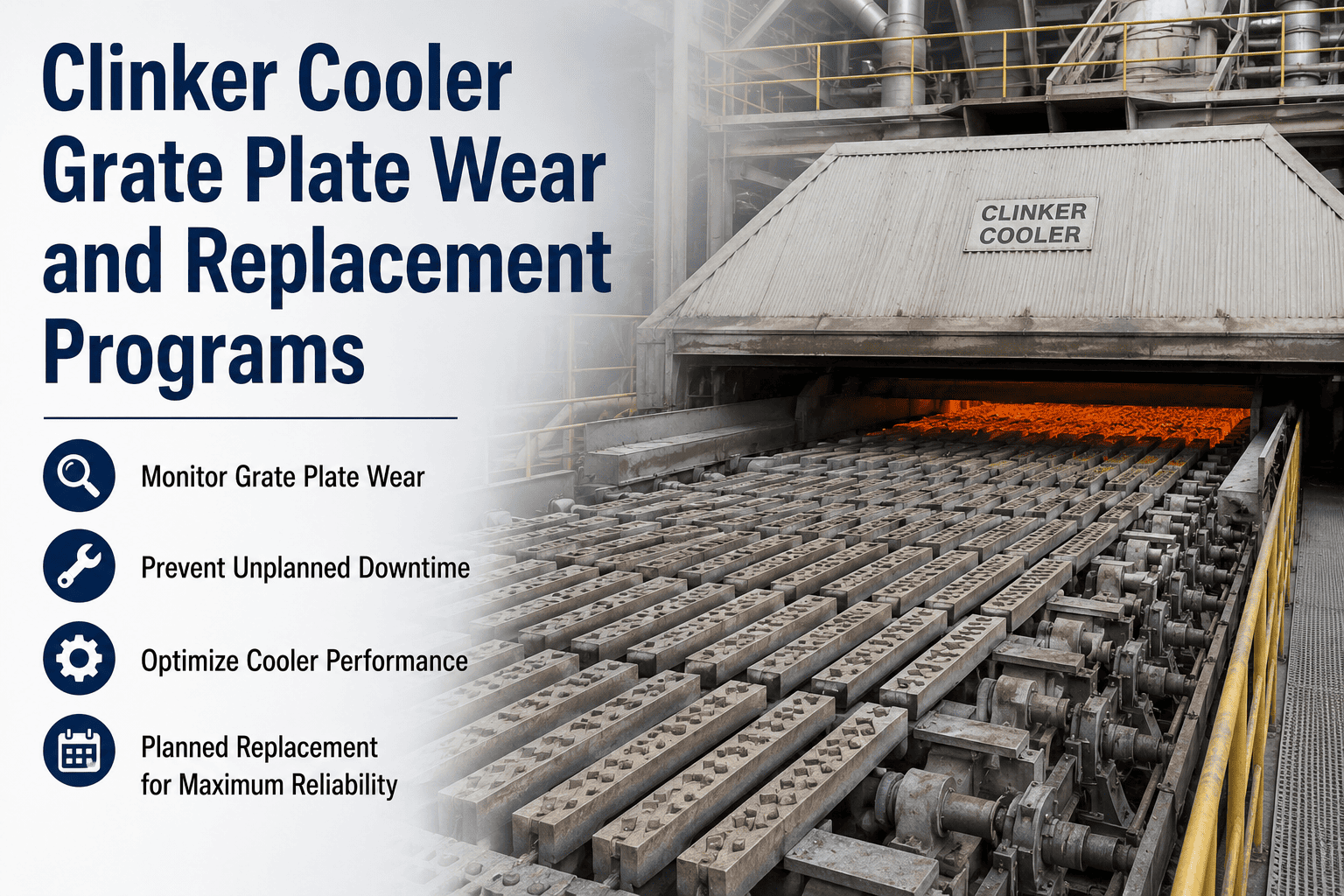
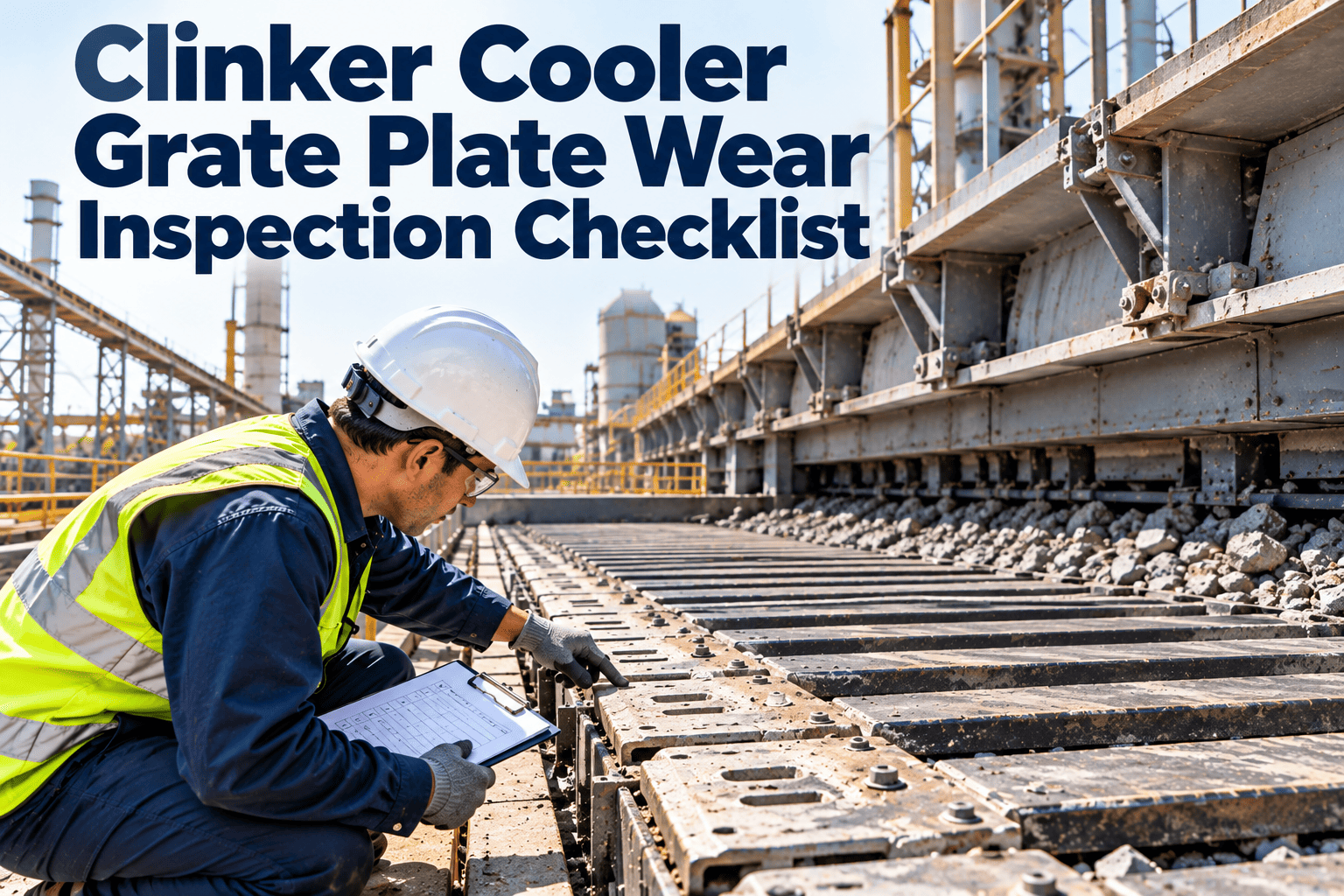
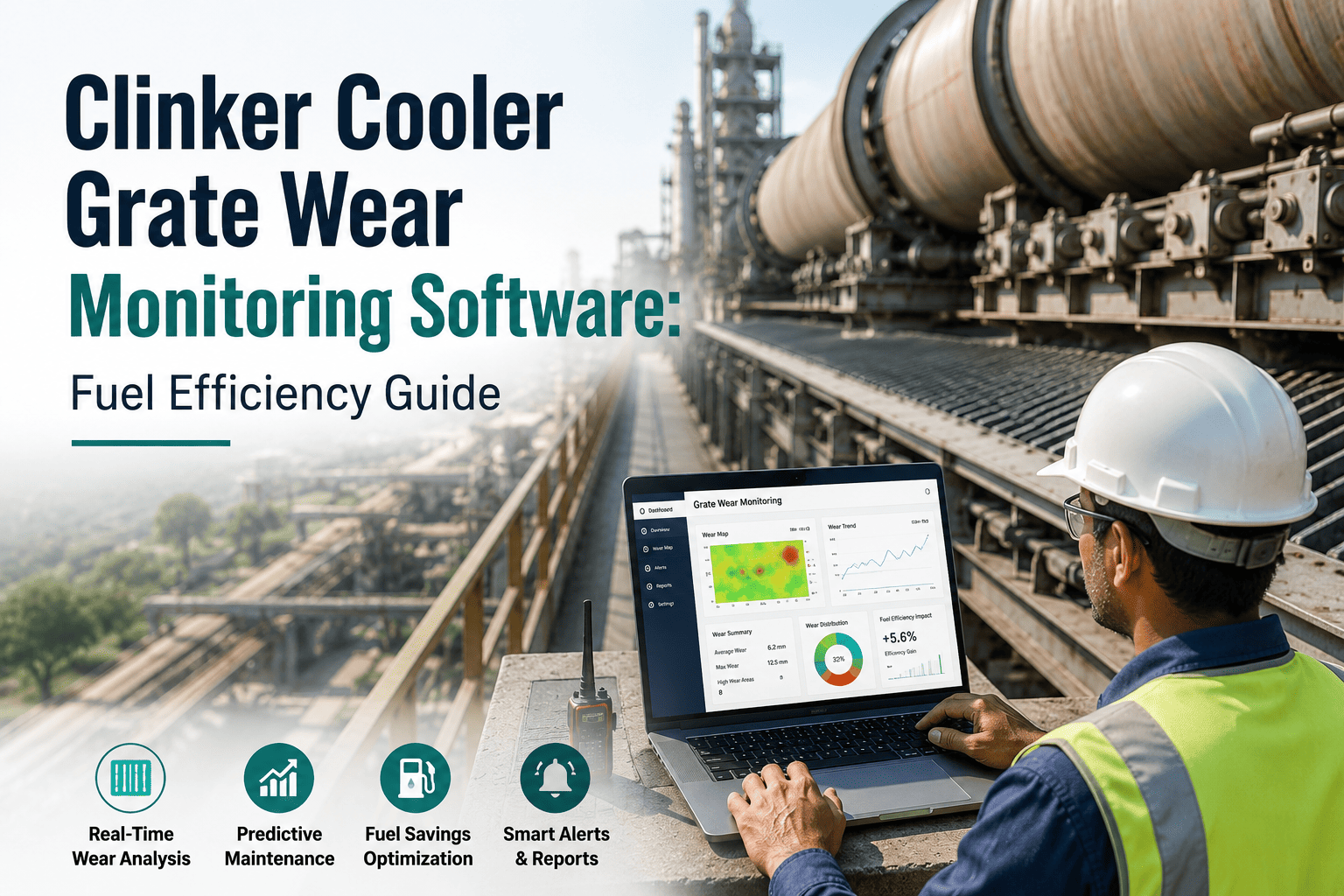
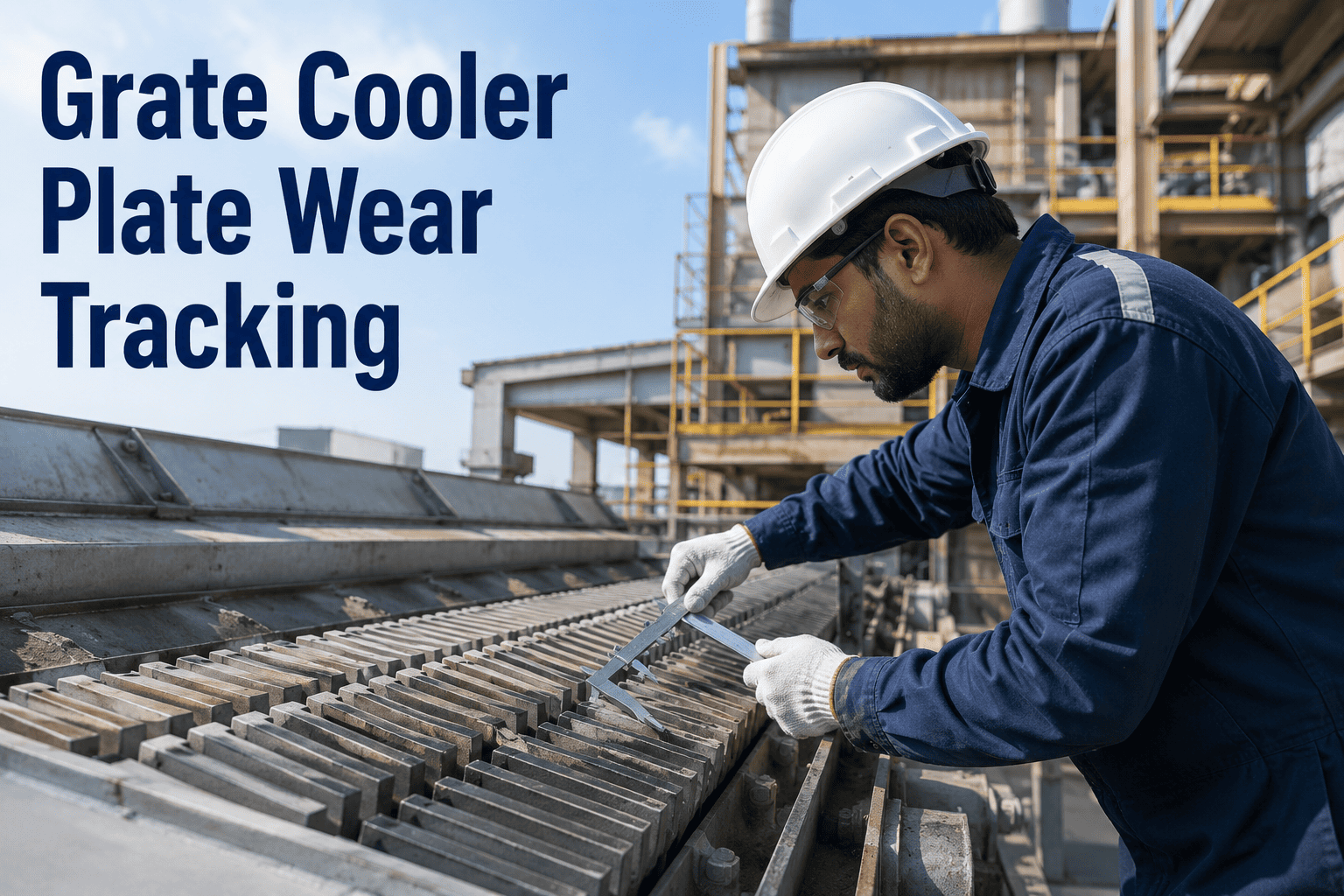
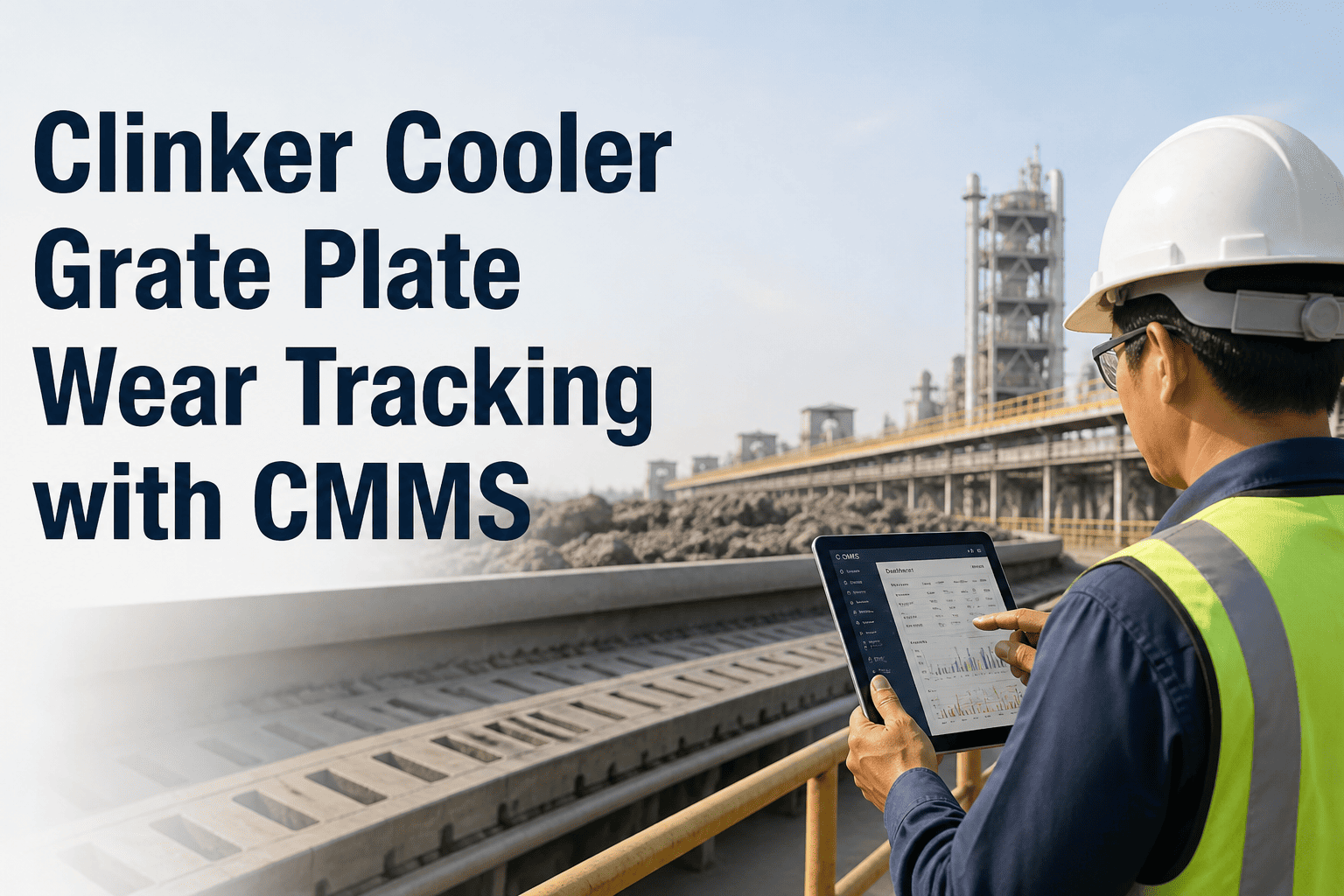
A single unexpected grate plate failure at a cement plant recently caused 72 hours of unplanned downtime worth $540,000 in lost production — and post-incident analysis revealed that worn plates had been completely obscured by clinker buildup during manual visual inspections. Grate cooler plate failures allow red-hot clinker to bypass the cooling zone entirely, creating what the industry calls "red rivers" of poorly cooled material that damage downstream conveyor equipment, reduce secondary air temperature back to the kiln, and raise specific heat consumption by 5–15% per tonne of clinker. The uncomfortable reality is that grate plate wear is entirely predictable — when it is being measured. AI-powered wear models correlating inlet temperature profiles, airflow resistance, under-grate pressure, and cooler drive current can forecast remaining useful life with enough precision to schedule CMMS-triggered replacements months before catastrophic breakthrough. Sign up free on OxMaint to deploy zone-level grate plate condition tracking, RUL projection, and auto-generated replacement work orders that prevent the $500,000 emergency that paper-based inspection programs cannot stop.
Clinker Cooler Reliability
Grate Plate Wear You Can Predict — Replacements You Can Plan
IKN, Polysius, and FLSmidth coolers each have distinct grate plate wear patterns. A wear tracking program built for your cooler design keeps thermal efficiency at 76–86% and your replacement budget controlled.
Thermal Efficiency Loss from Failed Grate Plates
5–15%
Unplanned Downtime Cost — Single Plate Failure Event
$540K
RUL Projection Lead Time with CMMS Tracking
60–120 days
CapEx Approval Rate — Evidence vs Age Estimate
88% vs 47%
Cooler Design Determines Wear Profile — IKN, Polysius, and FLSmidth
Modern clinker cooler grate plates from the three major OEM platforms wear differently based on their airflow geometry, plate interlocking method, and clinker contact surface design. A generic replacement schedule applied across all three designs results in premature replacement in some zones and catastrophic failures in others. Talk to an OxMaint specialist about configuring wear tracking profiles specific to your cooler OEM and grate zone layout.
IKN Pendulum Cooler
Plate Type
Coanda plates with controlled flow geometry
Primary Wear Zone
Front edge of plate — contact with incoming hot clinker
Failure Mode
Edge cracking under thermal cycling; airflow slot erosion
Package Assembly
Plates bolted as packages — inspect mounting bolt torque at every change
Inspection Interval
Wear measurement every planned outage; RUL review quarterly
Polysius Cross-Bar Cooler
Plate Type
Static inlet zone with cross-bar transport system
Primary Wear Zone
Inlet static zone — highest temperature, maximum clinker impact
Failure Mode
Hot air slot plugging; plate surface erosion in inlet section
Package Assembly
Individual plate replacement — inspect aeration slots for plugging
Inspection Interval
Inlet zone inspection every outage; full grate survey every 6 months
FLSmidth SF Cooler
Plate Type
Controlled flow grate with integrated aeration control
Primary Wear Zone
Mid-section rows — zone 2 and zone 3 under highest clinker flow
Failure Mode
Clinker sifting through worn slots; drive pressure increase from drag
Package Assembly
Row-based replacement — track moving row vs fixed row wear rates separately
Inspection Interval
Zone 2–3 measurement every outage; hydraulic drive pressure daily
The CMMS Tracking Framework: From Wear Measurement to Replacement Work Order
A
Zone-Level Baseline Recording
At commissioning or first deployment, OxMaint records original plate thickness, slot geometry, and design specifications per row and zone. This baseline is the reference against which all future measurements are compared.
B
Shutdown Wear Measurement Entry
During every planned outage, technicians enter wear depth measurements per zone into OxMaint mobile. Photo evidence and any slot plugging or cracking observations are attached. Measurements take 15–20 minutes per zone with a standard wear gauge.
C
RUL Calculation and Threshold Alert
OxMaint calculates remaining useful life per zone using wear rate trend from the last three inspection cycles. When any zone projects to reach minimum thickness within the next planned outage window, a replacement work order is auto-generated 60–120 days ahead.
D
Procurement Trigger and Shutdown Planning
The replacement work order automatically triggers a procurement notification with plate quantity, zone specifications, and required delivery date. Shutdown planning teams receive the work package 8–12 weeks before the target outage — enough time to confirm material availability and labor allocation.
Beyond Grate Plates: The Full Clinker Cooler PM Scope
Under-grate pressure distribution determines cooling air delivery to each zone. Rising pressure indicates clinker sifting accumulation below the grate. Trending daily readings in OxMaint reveals zone drift before backpressure triggers fan overcurrent or drive shutdowns.
Each cooling fan serving a grate zone is monitored for bearing vibration, motor current, and airflow delivery. Fan degradation reduces cooling air to the affected zone — accelerating clinker sifting and grate plate heat stress in that section ahead of the next inspection.
Moving grate rows driven by hydraulic systems show pressure increase as clinker sifting accumulates underneath. OxMaint tracks drive operating pressure against design values — rising pressure triggers a cleaning work order before mechanical overload damages the drive system.
WHR boiler surfaces and hot gas ducting downstream of the cooler degrade in direct proportion to clinker cooling efficiency. OxMaint links cooler grate condition data to WHR performance records — giving engineering teams the evidence to justify WHR boiler cleaning cycles based on cooler condition, not just calendar.
Cooler side walls and inlet sections carry refractory lining exposed to the highest clinker temperatures. Shell temperature trending via thermographic scan identifies hot spots developing behind worn brick — scheduled during each planned outage with results entered to OxMaint per zone.
Snowman formations in the cooler inlet zone restrict clinker flow from the kiln and back-radiate heat to the kiln outlet. Temperature profiling at the inlet and kiln nose ring in OxMaint flags early snowman conditions — prompting targeted air cannon response before production impact occurs.
Know Your Grate Plate Remaining Life — Before the Next Shutdown
OxMaint deploys AI-powered grate plate wear tracking, zone-level RUL projection, auto-generated replacement work orders, and procurement triggers for IKN, Polysius, and FLSmidth cooler configurations. Keep your cooler running at 76–86% thermal efficiency — and keep your fuel bill where it belongs.
Frequently Asked Questions
How does OxMaint calculate remaining useful life for grate plates with varying wear rates across zones?
OxMaint calculates RUL per zone using the wear rate average from the last three inspection cycles — accounting for zones that wear faster due to higher inlet temperatures, heavier clinker flow, or reduced cooling air. When a zone's projected wear-to-minimum-thickness date falls within the next planned outage window, the replacement work order is generated automatically.
Sign up free to configure zone thresholds for your cooler layout.
Can OxMaint integrate with thermal imaging and inspection robot data for the clinker cooler?
Yes. OxMaint integrates with thermal camera feeds, ultrasonic inspection robots, and DCS platforms via OPC-UA, MQTT, and REST API. Robot inspection data flows directly into OxMaint asset records — generating plate-by-plate condition scores, triggering replacement work orders, and updating procurement workflows automatically.
Book a demo to review integration options for your site's equipment.
How does grate plate condition data connect to capital budget reporting?
OxMaint's CapEx reporting module aggregates grate plate condition scores, wear trend histories, and projected replacement windows into rolling 5 and 10-year capital forecasts. Engineering and finance teams access live condition evidence — not age-based estimates — when building capital budget submissions. Evidence-backed CapEx requests for cooler overhauls are approved at 88% versus 47% for age-estimate submissions.
What is the minimum inspection data OxMaint needs to begin generating RUL projections?
OxMaint requires two data points — the original specification thickness and at least one wear measurement per zone — to begin tracking. Full RUL projection accuracy improves with three or more measurement cycles. Most plants see useful RUL data within the first two planned outages after deployment, typically 3–6 months after go-live.
Sign up free to start entering your first wear measurements today.
Does OxMaint handle cooler PM for plants running high-alkali or high-sulfur feed that accelerates grate wear?
Yes. Plants with high-alkali or high-sulfur clinker feed typically see 30–40% faster grate wear in inlet zones compared to standard feed chemistry. OxMaint allows zone-specific PM intervals to be shortened independently — so your inlet section runs on an accelerated inspection cycle while mid and discharge zones follow standard intervals. Wear rate trending automatically adjusts RUL projections when chemistry-driven acceleration is detected.
Book a demo to discuss your plant's feed chemistry profile.
No More Surprise Grate Failures. No More $500K Emergency Shutdowns.
From zone-level wear measurement to RUL projection to auto-generated procurement triggers — OxMaint gives clinker cooler maintenance teams the predictive tools that manual inspections and shared spreadsheets simply cannot deliver. Every measurement. Every replacement window. Every shutdown work package. Organized and ready.