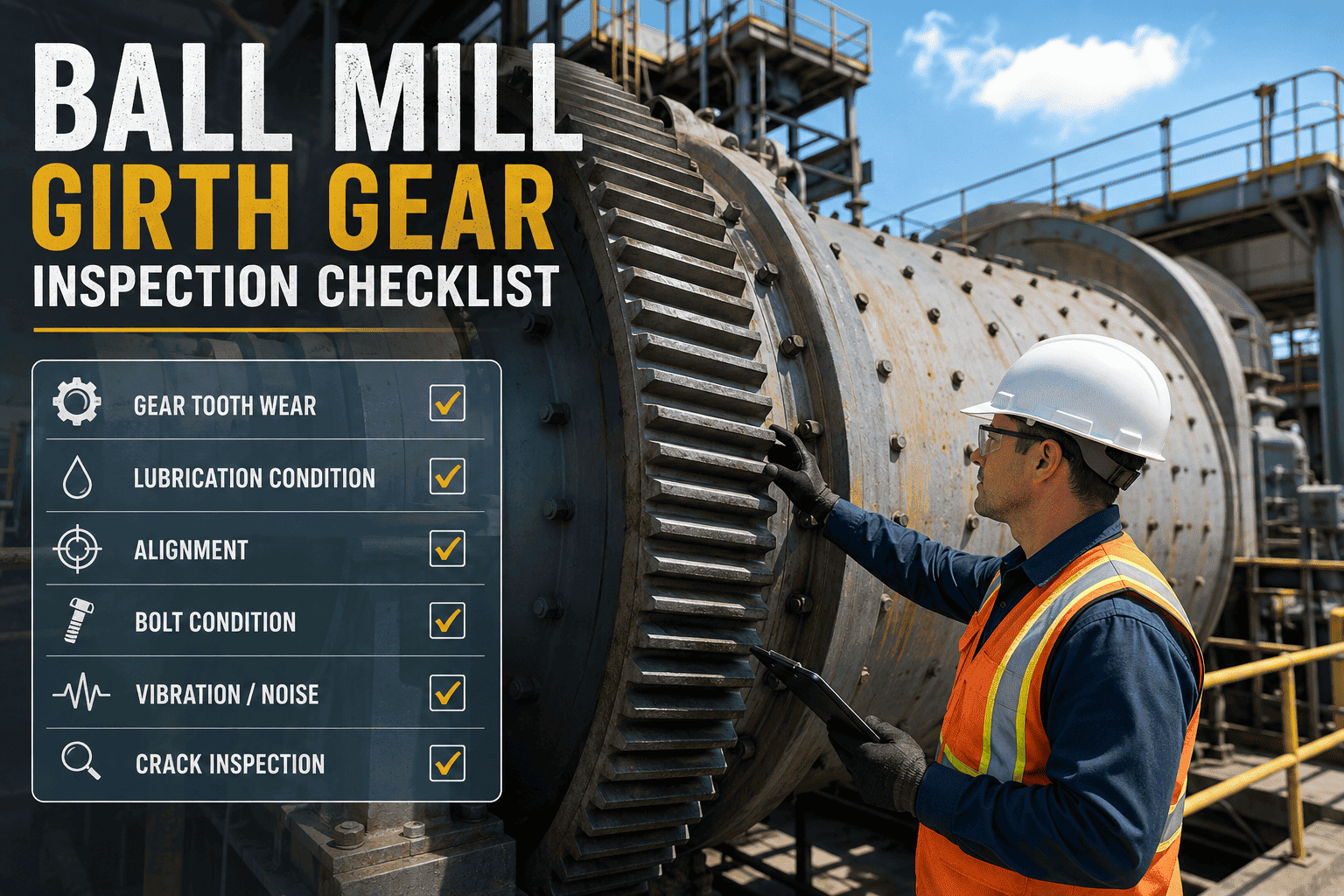
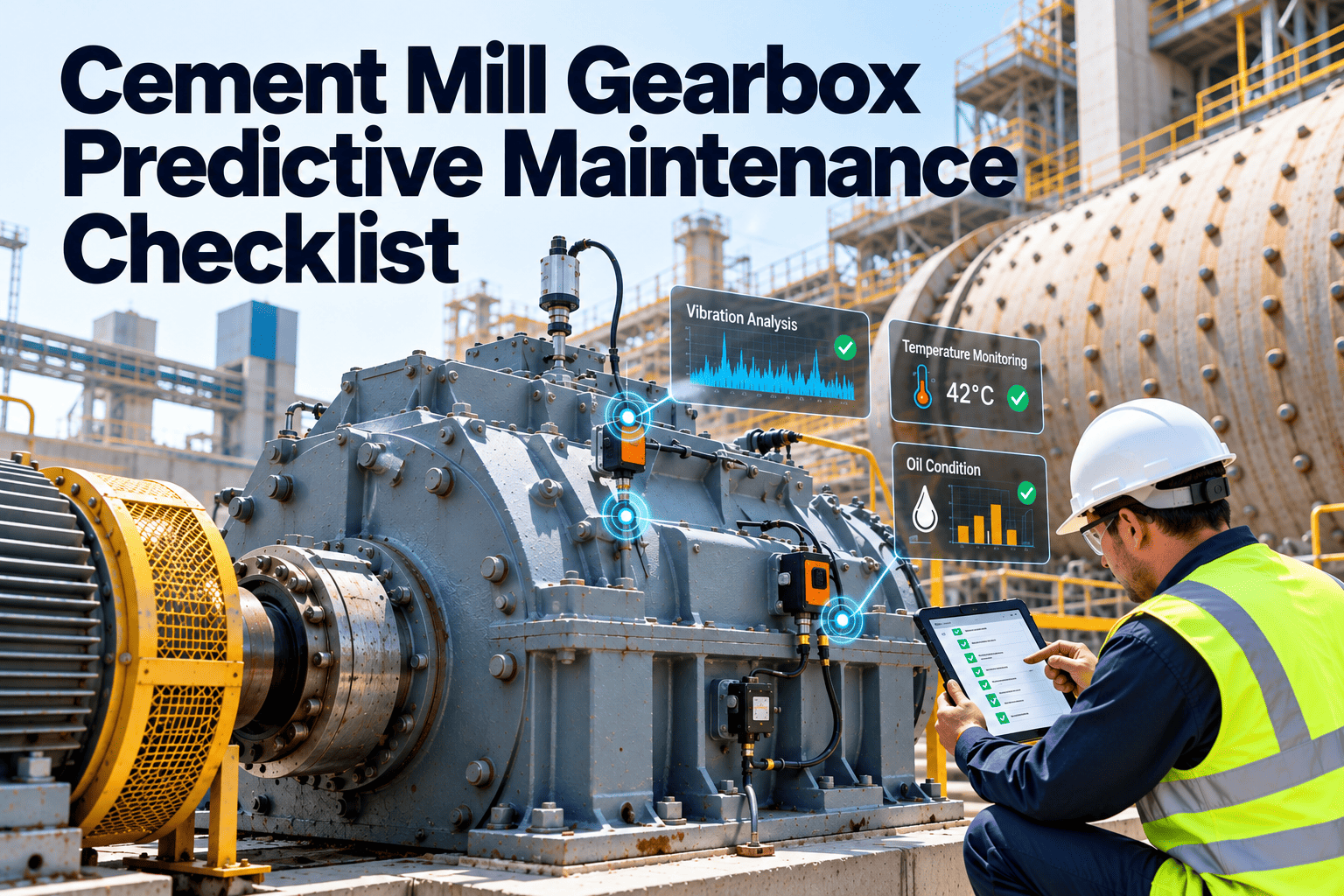
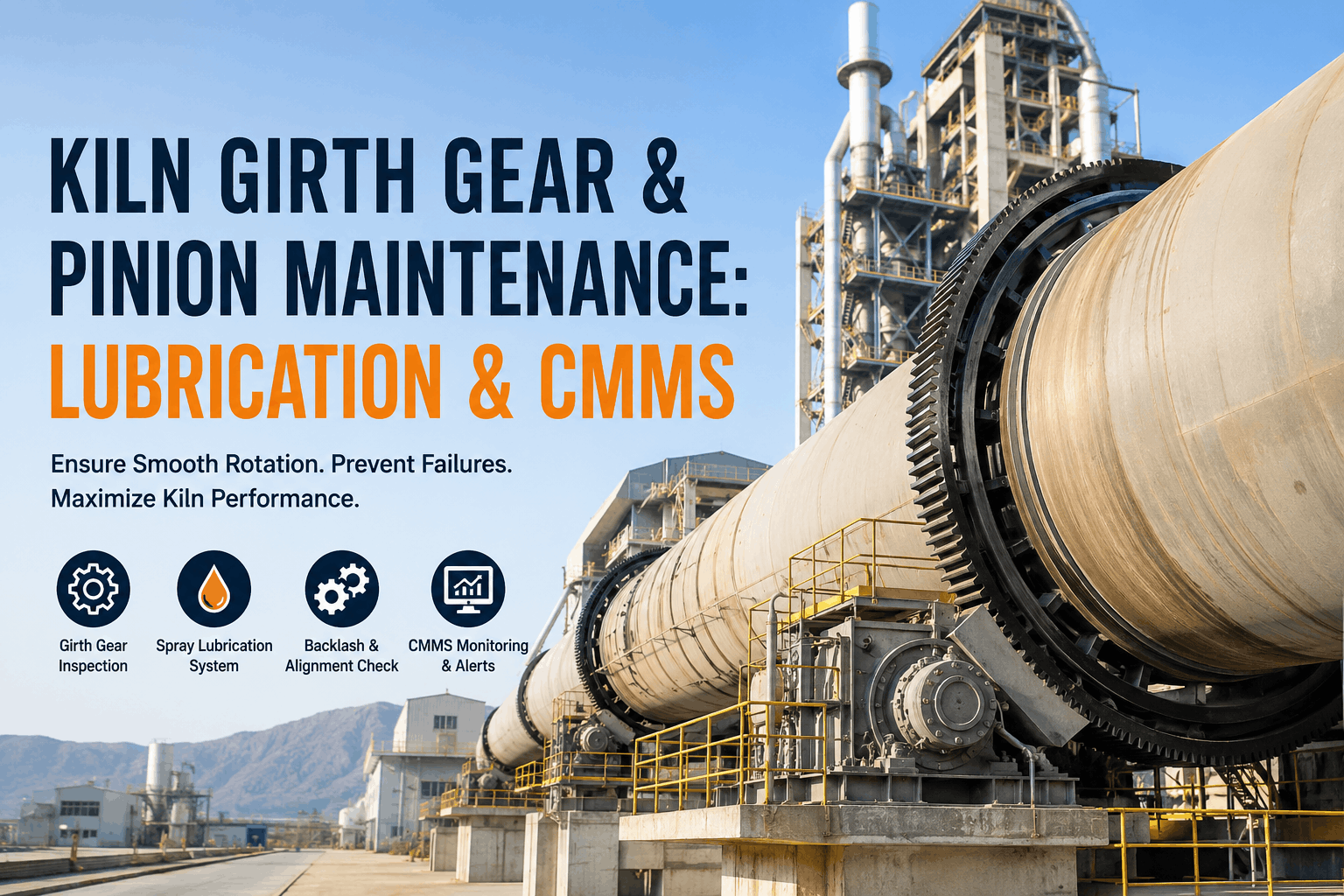
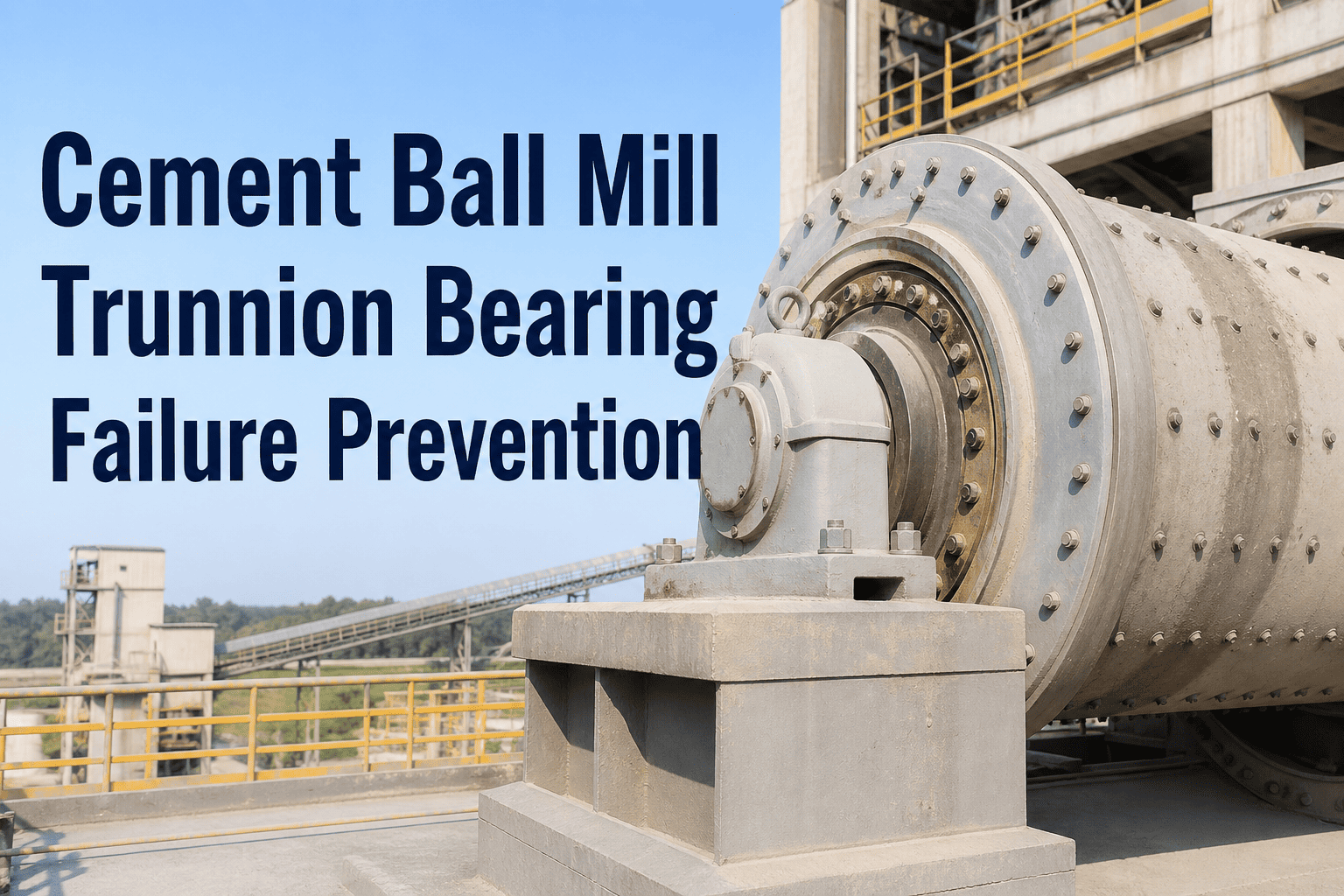
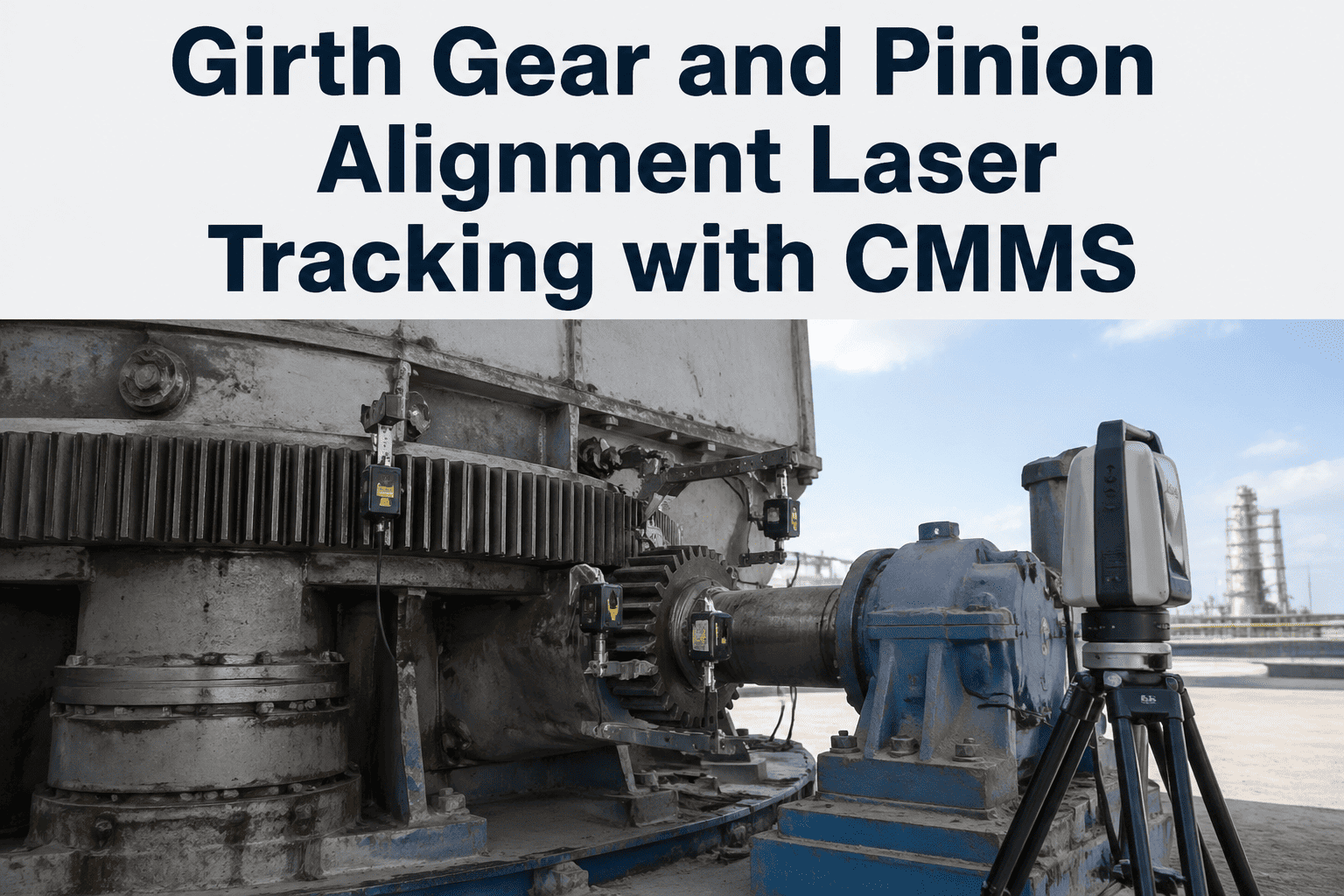
The girth gear is the highest-value single drive component on a ball mill — transmitting full motor torque through a ring gear that can span four to six meters in diameter, meshing with a pinion under loads that generate surface pressures exceeding 500 MPa at the tooth contact zone. Girth gear failure is almost never sudden: pitting, backlash deviation, lubricant film breakdown, and pinion misalignment each leave measurable traces weeks before tooth damage reaches the point of forced shutdown. Yet industry data shows that over 80% of ball mill girth gear replacements occur because deterioration was measured but not trended — or not measured at all between annual shutdowns. A structured digital inspection program with mobile photo evidence, backlash trending, and lubrication confirmation transforms this from a reactive replacement cycle into a condition-based intervention program. OxMaint's mobile CMMS captures every girth gear measurement, spray lubrication confirmation, and tooth condition photo against the mill asset record — building the trend data your reliability team needs to plan gear flips and pinion replacements months ahead of failure, not days. Start your free trial and standardize your ball mill girth gear inspections today.
Cement Mill Maintenance · Inspection Management · OxMaint
Ball Mill Girth Gear Inspection Checklist
A comprehensive mobile-ready checklist for cement plant maintenance teams — covering backlash measurement, tooth contact, spray lubrication coverage, vibration, and corrective action tracking with full photo evidence.
2–4 Weeks
Average forced downtime when girth gear tooth damage reaches replacement threshold
80%
Of ball mill bearing failures are lubrication-related — not fatigue or load-related
15–20 yr
Achievable girth gear service life with consistent spray lubrication and alignment
6–10 yr
Typical premature failure life in plants with deferred lubrication and missed inspections
Structured Inspection Checklist
Ball Mill Girth Gear: Complete Inspection Sequence by Frequency
Girth gear condition degrades at different rates depending on operating load, lubrication quality, and alignment. This checklist is structured by inspection frequency — daily operator checks, weekly mechanical rounds, and monthly detailed assessment — all logged in OxMaint with mandatory photo evidence.
Spray bar lubrication active — confirm spray pattern covers full tooth face width at each spray nozzle
Lubricant film on gear face confirmed — visual check after spray cycle, blue paper test if uncertain
Mill motor current logged — step change above 5% at constant throughput flagged for investigation
Abnormal gear mesh noise checked — unusual knocking or periodic impact sound noted in CMMS
Trunnion bearing temperatures — inlet and outlet, both ends, logged against previous shift baseline
Girth gear guard and enclosure condition — no missing panels, no buildup inside guard restricting spray
Weekly
Mechanical Inspection
Girth gear backlash measured — dial indicator method at minimum 4 positions around gear circumference, variation recorded
Spray lubrication injection interval verified — 30-minute interval confirmed, injection point and volume checked
Pinion bearing vibration measured — radial and axial readings logged, compared against established baseline trend
Tooth contact pattern inspected visually — uniform contact across minimum 80% of face width confirmed
Pinion mounting bolts checked — no loosening or fretting at flange connection
Oil sample from trunnion bearing reservoir collected and sent for particle count analysis if due
Monthly
Detailed Assessment
Full circumference visual inspection — tooth flanks checked for pitting, spalling, scuffing, or corrosion at slow-roll speed
Photo documentation of tooth condition across minimum 10% of gear circumference — uploaded to OxMaint asset record
Girth gear-to-pinion alignment verified — radial run-out within 0.5–1.0mm, tooth contact across 80%+ face width
Gear enclosure seal condition — no air gaps allowing abrasive dust infiltration to gear mesh zone
Backlash trend reviewed in CMMS — rate of change from previous three months assessed against gear module specification
Condition grading updated in OxMaint — gear flip or replacement added to next shutdown scope if threshold reached
Backlash Measurement Guide
Understanding Girth Gear Backlash — Thresholds, Measurement, and Action
Backlash is the gap between mating tooth flanks when the gear is loaded. It is the primary wear indicator for girth gears — growing as tooth flanks wear and indicating the remaining service life of the gear set. The acceptable backlash range is typically 0.5–1.0mm per the gear module specification, with circumferential variation not exceeding the manufacturer's tolerance.
1
Rotate mill to slow-roll position using inching drive. Lock out auxiliary drive.
2
Mount dial indicator on fixed reference bracket, contact tip on gear tooth flank at pitch point.
3
Rock the pinion manually by rotating inching drive forward and back — record total indicator travel.
4
Repeat at 4 positions (0°, 90°, 180°, 270°) around the gear circumference. Log all four values in OxMaint.
Within Spec
0.5–1.0mm (per module)
Log and continue. No action required.
Monitor Closely
1.0–12mm action threshold
Increase inspection frequency to weekly. Begin shutdown scope planning for gear flip.
Immediate Action
Above 12mm (industry action threshold)
Gear flip or replacement to be scheduled at earliest shutdown. OxMaint raises corrective work order automatically.
Backlash growing past 12mm discovered only at inspection — not forecasted.
OxMaint trends your girth gear measurements across every inspection, calculates rate of change between shutdowns, and tells your planning team when the gear flip window opens — not after it closes.
Lubrication Inspection
Spray Lubrication Coverage: The Most Critical Daily Check on Any Ball Mill
Blue Paper Test
Hold a sheet of blue paper against gear teeth immediately after a spray cycle. The lubricant pattern should cover the full tooth face width. Any dry zones indicate blocked nozzles or misaligned spray bars — corrective action required before next operating shift. Photo the result and upload to OxMaint.
Spray Interval Check
The standard injection interval is 30 minutes. Plants running extended intervals to reduce lubricant consumption cut gear service life by up to 40%. OxMaint records each lubrication confirmation task and flags any shift where the check was skipped — giving reliability engineers a direct correlation between lube compliance and bearing temperature trends.
Viscosity Selection
Lubricant viscosity must match gear load and operating temperature. Higher viscosity improves film thickness ratio at heavy loads. Gear oil with a large viscosity-pressure coefficient provides the best boundary lubrication protection during start-up and load transients when the tooth contact pressure is highest.
Enclosure Sealing
Abrasive cement dust entering the gear mesh zone through a poorly sealed enclosure acts as a grinding compound on the tooth flanks. Enclosure seal inspections should be performed monthly and after any maintenance access event. Seal condition is a mandatory field in OxMaint's monthly girth gear inspection form.
Common Questions
Ball Mill Girth Gear Inspection — Maintenance Teams Ask
How do I know if my ball mill girth gear needs to be flipped or replaced?
The primary indicator is backlash exceeding the manufacturer's action threshold — typically 12mm for large cement mill girth gears — combined with visible tooth flank pitting covering more than 30% of the active tooth surface. OxMaint trends both parameters across inspection cycles and generates an alert when the combined condition score reaches the flip or replacement threshold.
Book a demo to see OxMaint's girth gear condition scoring in action.
What is the correct backlash measurement method for a ball mill girth gear?
Mount a dial indicator on a fixed bracket with the contact tip on the tooth flank at the pitch point. Rock the pinion through the inching drive in both directions and record total indicator travel as the backlash value. Measure at four positions (0°, 90°, 180°, 270°) around the gear circumference to capture variation — a high circumferential variation indicates eccentric mounting or localized wear that backlash alone will not reveal.
Start your free trial to log backlash measurements against your mill asset record.
How often should spray lubrication be applied to a ball mill girth gear?
The standard injection interval is 30 minutes during operation. The injection point and volume should be set according to mill load and size. Evidence shows plants extending this interval beyond 45 minutes see measurably higher tooth wear rates — making lubrication interval compliance one of the highest-impact daily checks on any ball mill.
What tooth contact percentage is acceptable for a ball mill girth gear and pinion?
Uniform tooth contact across a minimum of 80% of the gear face width is the industry-standard alignment criterion. Contact below this level concentrates load on one edge, reduces fatigue life by up to 60%, and accelerates lubricant film breakdown at the overloaded zone. Contact pattern is documented visually during monthly inspections with mandatory photo evidence in OxMaint.
Can OxMaint track girth gear inspection history and trend measurements over time?
Yes. OxMaint stores every backlash reading, tooth condition photo, lubrication record, and vibration value against the mill asset record with timestamps. Reliability engineers can view the full measurement trend across multiple inspection cycles, calculate rate-of-change between shutdowns, and export the data for CapEx justification reports.
Start your free trial and configure your ball mill asset hierarchy today.
Ball Mill Inspection · Girth Gear Maintenance · OxMaint CMMS
Every Backlash Reading. Every Lube Check. Every Tooth Photo. One Asset Record.
OxMaint standardizes ball mill girth gear inspections on mobile, trends measurements automatically across campaigns, and raises corrective work orders when thresholds are crossed — so your planning team knows about the gear flip months before the failure window, not after it.