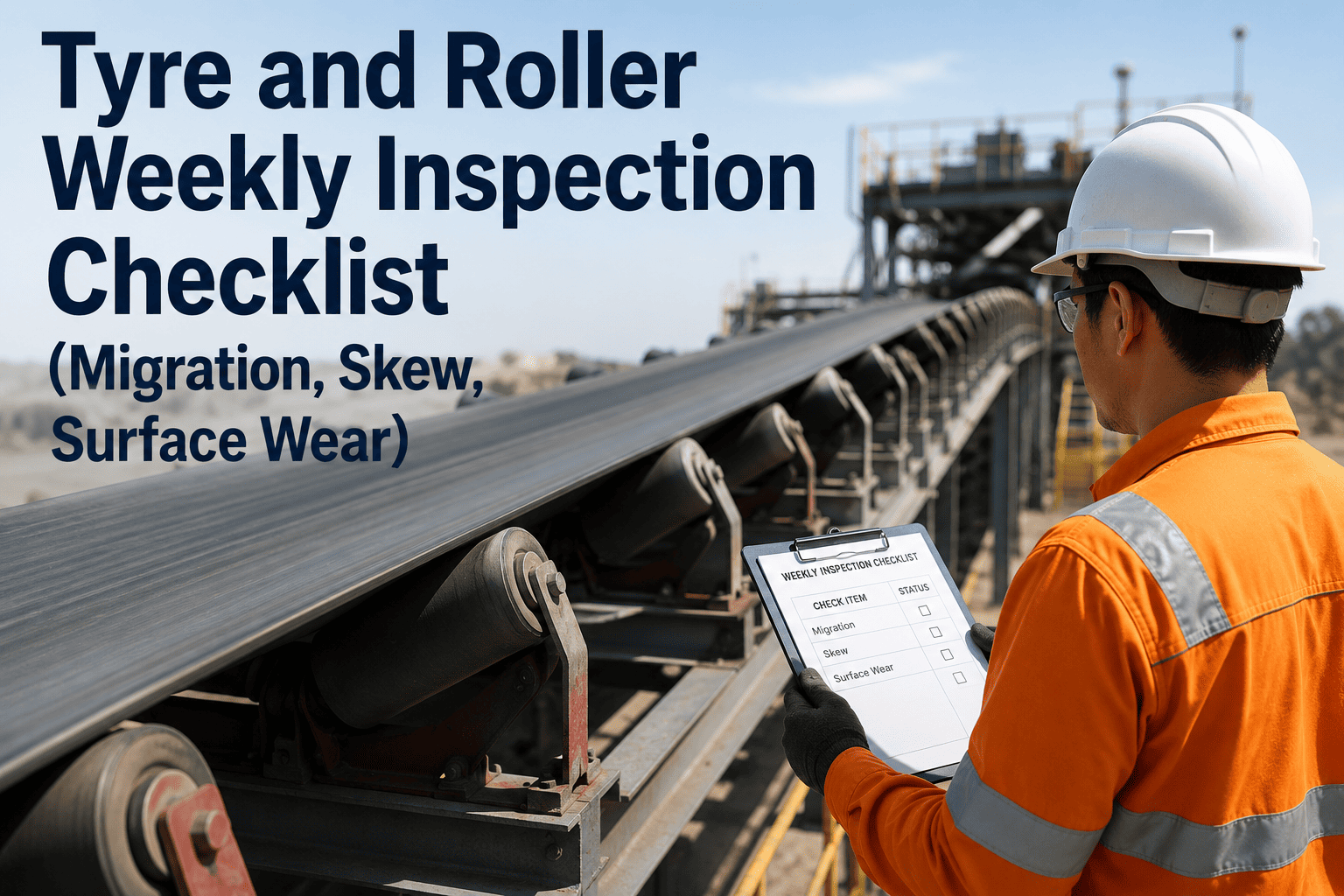
Rotary kiln tyres and support rollers are the most mechanically loaded components in a cement plant — transmitting the full weight of a spinning 2,000-tonne kiln under temperatures exceeding 400°C at the shell surface. Tyre migration beyond 50mm per 24-hour cycle, uneven roller contact, or advancing ovality can accelerate refractory wear, cause shell deformation, and lead to unplanned kiln stops lasting days. Most cement plants measure these parameters correctly but record them inconsistently — in shift logbooks, paper rounds sheets, or not at all — leaving no trend data and no early warning before a critical deviation occurs. A structured digital inspection program tied to a CMMS transforms kiln tyre and roller monitoring from a reactive walk-around into a proactive condition-tracking system with automated alerts, photo evidence, and full asset history. OxMaint's mobile CMMS brings every kiln tyre measurement, roller temperature, and corrective action into a single searchable record — accessible from the field, traceable by shift, and reportable for outage planning. Start your free trial and digitize your kiln inspection rounds in under 30 minutes.
Kiln Maintenance · Inspection Management · OxMaint CMMS
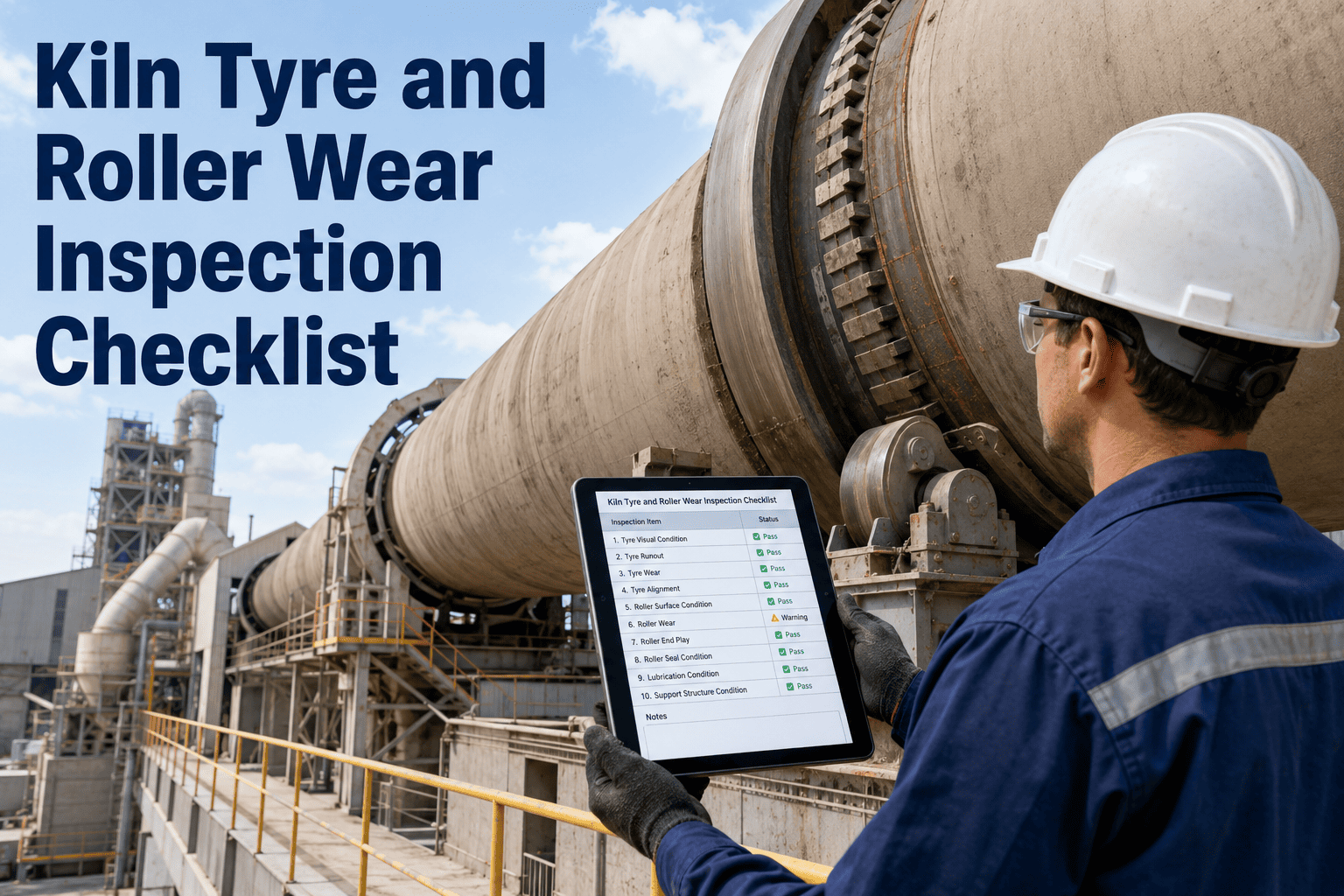
Kiln Tyre & Roller Wear Inspection Checklist
A field-ready digital checklist for cement plant reliability teams — covering tyre migration, roller contact, shell ovality, lubrication, and corrective action tracking across every kiln support station.
50mm
Tyre migration threshold requiring immediate intervention per 24-hour cycle
0.3%
Shell ovality limit — above this, refractory wear and seal damage accelerate
70°C
Trunnion bearing temperature triggering automated work order in OxMaint
60%
Reduction in refractory fatigue life when shell ovality exceeds safe threshold
Field Inspection Checklist
Kiln Tyre & Support Roller: Complete Inspection Sequence
Each inspection station covers the tyre, riding ring, support rollers, thrust rollers, lubrication, and alignment condition. All measurements must be recorded against asset history in OxMaint for trend analysis and outage planning.
Station 1 — Feed End
Station 2 — Mid Kiln
Station 3 — Drive End
Tyre & Riding Ring
Tyre axial migration measured — mark-and-measure method, value logged in mm per 24hr cycle
Tyre contact face inspected — uniform wear pattern confirmed, no single-contact groove or edge loading visible
Tyre fillet pad clearances checked — no pad welding or material loss from contact faces
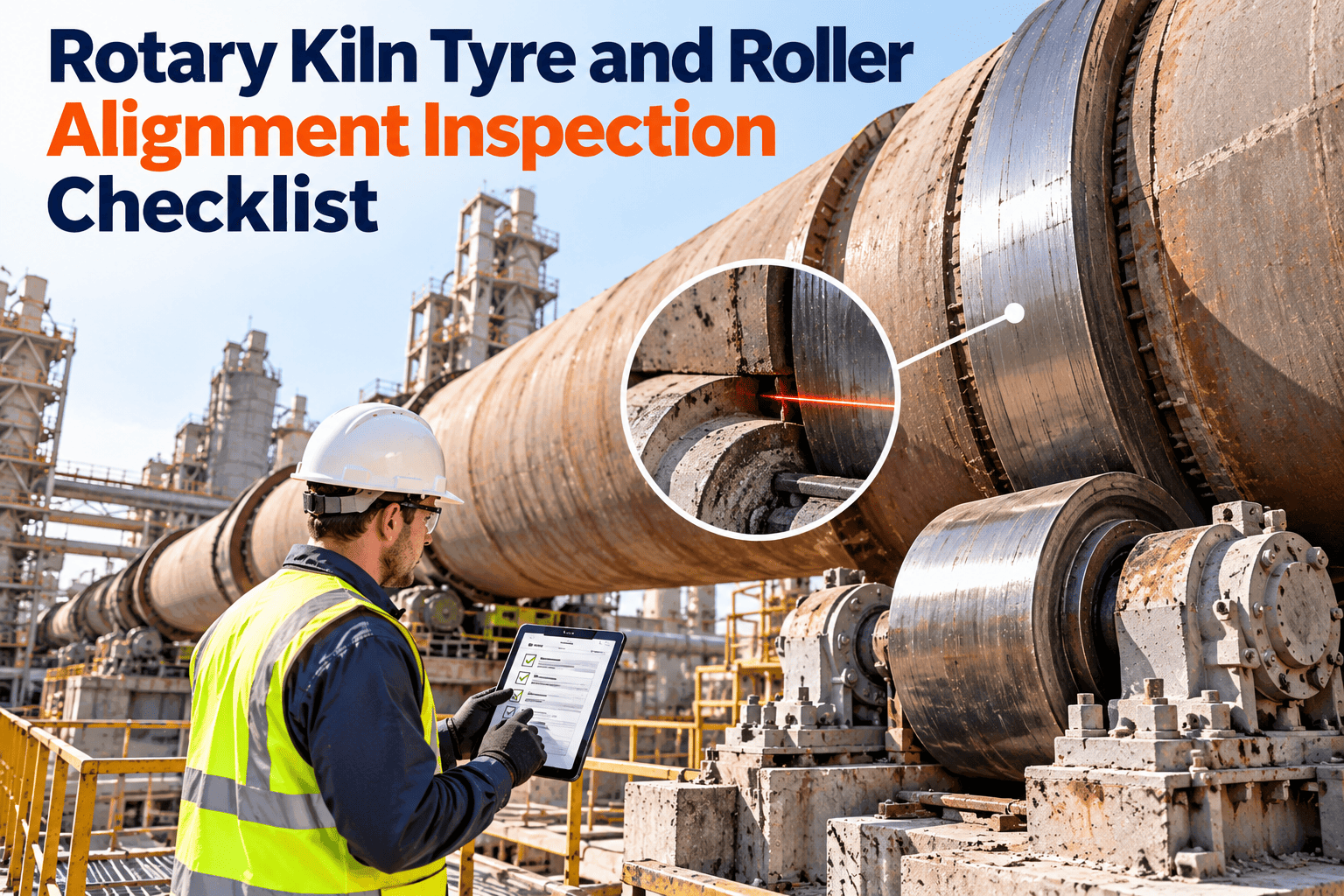
Shell ovality measured at tyre station — cross-diameter reading, value versus 0.3% diameter limit recorded
Tangent plate condition — feeler gauge insertion depth at shell-to-tyre connection not exceeding 100mm at 0.5mm gauge
Graphite block or grease lubrication applied within scheduled interval — consumption rate within normal range for operating temperature
Support & Thrust Rollers
Roller surface contact inspected — full face contact across width confirmed, no banding or pitting
Roller bearing temperatures logged — drive and non-drive end, inlet and outlet, compared against baseline trend
Roller skewing position recorded — thrust direction consistent, no excessive axial load on single roller
Thrust roller clearance from tyre flanges — no excessive gap causing axial offset or tyre skew
Bearing oil level and temperature within operating specification — gearbox breather clear
Vibration reading at roller housing — amplitude and frequency logged, step change above 15% flagged for investigation
Photo Evidence & Action
Photo of tyre contact zone uploaded to OxMaint asset record — timestamped and station-tagged
Measurement sheet completed in CMMS — migration value, ovality reading, roller temps all entered
Any deviation from normal flagged with severity rating — corrective work order auto-raised in OxMaint
Out-of-spec readings escalated to shift supervisor and logged against shutdown planning scope
Inspection sign-off recorded in CMMS — technician name, badge, completion timestamp
Key Measurement Parameters
What to Measure, When to Act, and How OxMaint Tracks It
T
Tyre Migration
Mark-and-measure per revolution
Below 20mm — Acceptable
20–50mm — Monitor & Inspect Retaining Blocks
Above 50mm — Immediate Intervention Required
O
Shell Ovality
Cross-diameter measurement at tyre stations and mid-span
Below 0.2% — Normal operating range
0.2–0.3% — Increased refractory wear monitoring
Above 0.3% — Accelerated refractory and seal damage
R
Roller Bearing Temperature
Contact thermometer or IR gun, all four bearing points per station
Below 60°C — Normal, log and continue
60–70°C — Increase monitoring frequency
Above 70°C — Auto work order triggered in OxMaint
V
Roller Vibration
Radial and axial at both roller housings per station
Stable baseline — Log against 12-month trend
Step increase 10–15% — Investigate root cause
Above 15% step change — Immediate inspection and CMMS flag
Stop losing tyre measurement data to paper logbooks.
OxMaint mobile CMMS captures kiln tyre and roller measurements in the field, trends them automatically, and sends alerts the moment a reading crosses your action threshold — no spreadsheet required.
Failure Modes
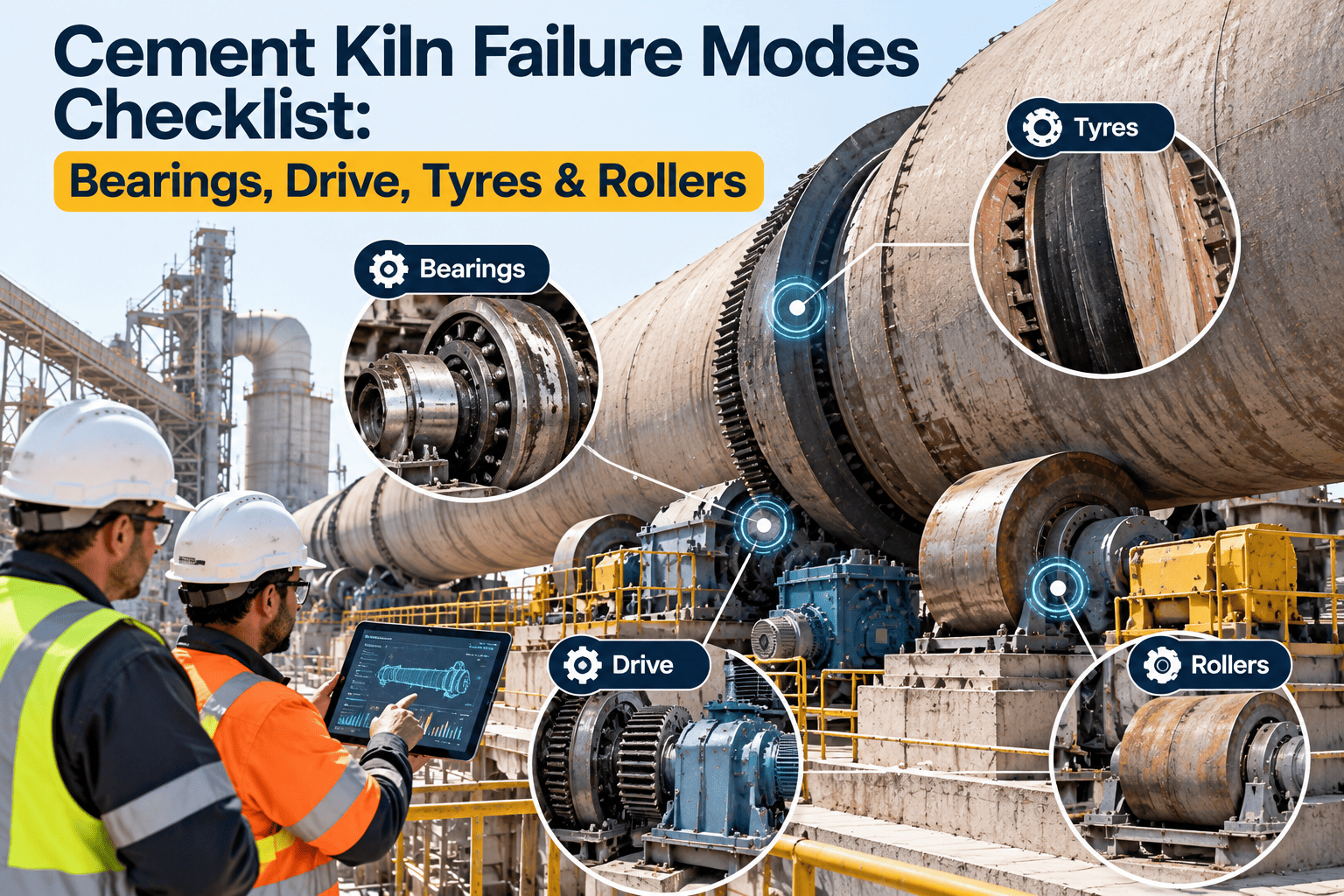
The 5 Tyre & Roller Failure Modes Cement Plants Miss Until It's Too Late
01
Undetected Tyre Creep
Migration measured but not trended across shifts — gradual creep passes 50mm threshold without triggering corrective action until shell deformation has begun.
OxMaint Fix: Automated trend chart per campaign, alert at configurable threshold
02
Edge-Loaded Roller Contact
Partial contact across roller face concentrates load on one edge, accelerating surface wear and misalignment — visible on contact pattern but rarely photographed or recorded.
OxMaint Fix: Photo evidence field in inspection form, contact pattern grading
03
Lubrication Interval Drift
Graphite block or grease application interval extending beyond schedule during busy periods — accelerates tyre-to-tyre seat wear and increases shell stress.
OxMaint Fix: Scheduled lubrication work orders, consumption rate tracking
04
Bearing Temperature Spikes Missed Across Shifts
Temperature readings taken but not compared against prior shifts — a rising trend over 72 hours goes unnoticed until the value reaches a critical level during a shift change gap.
OxMaint Fix: Automatic cross-shift temperature trending, threshold alerts
05
No Outage Scope Feed from Inspection Records
Observations noted on paper but not linked to shutdown planning — correction work arrives at the outage scope late or not at all, extending turnaround duration.
OxMaint Fix: Direct link from inspection flag to outage work order queue
Common Questions
Kiln Tyre & Roller Inspection — What Maintenance Teams Ask
How often should kiln tyre migration be measured in a cement plant?
Tyre migration should be measured every shift on kilns with a known creep history, and at minimum daily on all kilns. The mark-and-measure method per full kiln revolution provides the most accurate reading. OxMaint schedules these measurements automatically and trends values across campaigns so developing creep acceleration is visible before it reaches the 50mm intervention threshold.
Start your free trial to see kiln tyre trending in action.
What causes accelerated wear on kiln support roller surfaces?
Edge loading from misalignment, inadequate lubrication, and incorrect roller skewing are the three main causes. When a roller contacts the tyre across less than 80% of its face width, contact stress concentrates on the loaded edge, accelerating surface fatigue and pitting. Structured inspection checklists with photo evidence fields catch these patterns early — before surface scoring progresses to replaceable wear depths.
Book a demo to see OxMaint's roller condition grading workflow.
What is the acceptable shell ovality limit for a rotary kiln tyre station?
The general industry limit is 0.3% of the shell diameter at the tyre cross-section. Above this level, brick cracking at the tyre section accelerates significantly and seal performance degrades. Ovality should be measured during planned stops using cross-diameter readings at four positions around the shell circumference and trended across multiple shutdown events.
Can OxMaint track kiln tyre inspection history across multiple kilns at one plant?
Yes. OxMaint structures each tyre station as a separate asset node within the kiln hierarchy, with its own inspection history, measurement trend, and corrective work order log. Multi-kiln plants can compare tyre condition scores across all kilns from a single dashboard, making outage scope planning and CapEx justification significantly faster.
Start your free trial and configure your kiln asset hierarchy today.
What information should a kiln tyre inspection record contain for outage planning?
Every inspection record should capture the migration rate, contact pattern grading, ovality reading if measured, bearing temperatures at all four points, lubrication status, and any photo documentation of surface anomalies. In OxMaint, these fields are structured and mandatory — so outage planners receive consistent, comparable data from every shift across the full campaign life, not fragments from different paper formats.
Kiln Tyre Inspection · Roller Wear Tracking · OxMaint CMMS
Every Measurement. Every Shift. Every Kiln. Automatically Trended.
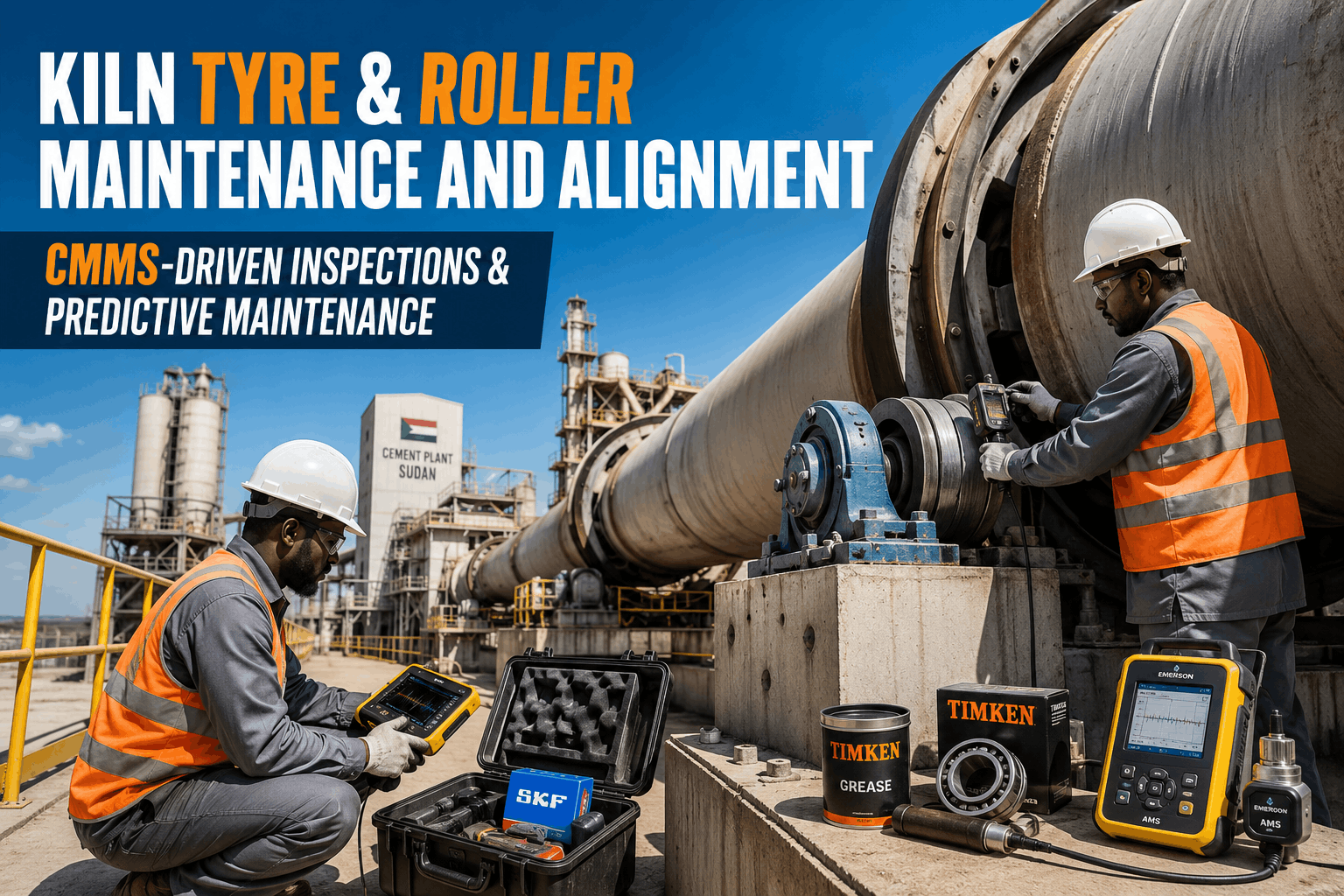
OxMaint digitizes kiln tyre and roller inspections on mobile, trends every measurement automatically, and raises corrective work orders the moment a reading crosses your action threshold — building a full asset history that feeds your next shutdown scope without manual data consolidation.