Ask the maintenance manager of a 3 MTPA cement plant how many assets their team is responsible for and you will typically hear a number between 2,200 and 2,800 — rotating kilns, ball mills, vertical roller mills, girth gears, preheater cyclone towers, clinker coolers, compressors, and hundreds of support systems. Now ask how many of those assets have a documented Remaining Useful Life estimate that feeds a rolling CapEx forecast, and the answer is usually close to zero. The result is what finance teams call a CapEx surprise — a sudden, board-level request for emergency capital that could have been predicted and planned 18 months in advance if asset condition data had been systematically tracked. A cement CMMS with a proper 5-tier asset taxonomy, throughput-based condition tracking, RUL calculations, and CapEx dashboard integration changes this equation fundamentally, giving both maintenance directors and CFOs a single source of truth for capital planning. If your plant is still rebuilding asset lists in spreadsheets before every shutdown scope meeting, Oxmaint's 5-tier asset hierarchy and CapEx forecasting module eliminates that problem within 90 days of deployment.
CMMS GUIDE · ASSET TAXONOMY & CAPEX 2026
Best Cement Plant CMMS for Asset Taxonomy and Capital Forecasting 2026
A 5-tier asset hierarchy, RUL-driven CapEx forecasts, and refurbish-vs-replace analytics are what separate a board-ready capital planning program from an annual guessing exercise. Here is what the best platforms deliver in 2026.
THE REAL COST OF POOR ASSET TAXONOMY
40%
CapEx forecast error rate
Plants using age-based capital planning without condition data miss actual CapEx requirements by 35-45%. The overspend shows up as emergency replacements that were never in the approved budget.
2,400+
Maintainable assets in a typical cement plant
From preheater inlet to packing line, a 2.5-5 MTPA plant has over 2,400 assets that require documented maintenance history for accurate RUL calculation and capital planning.
89%
Improvement in CapEx forecast accuracy
Plants using condition-based RUL data for capital planning achieve 89% improvement in CapEx forecast accuracy versus age-based baseline estimates according to asset lifecycle management data.
5-10 yr
Rolling CapEx forecast window
RUL outputs from a properly configured CMMS asset hierarchy feed a 5-10 year rolling capital renewal forecast — giving finance teams the planning horizon they need for debt structuring and budgeting.
5-TIER ASSET HIERARCHY
How the best cement CMMS structures 2,400+ assets
Tier 1
Portfolio
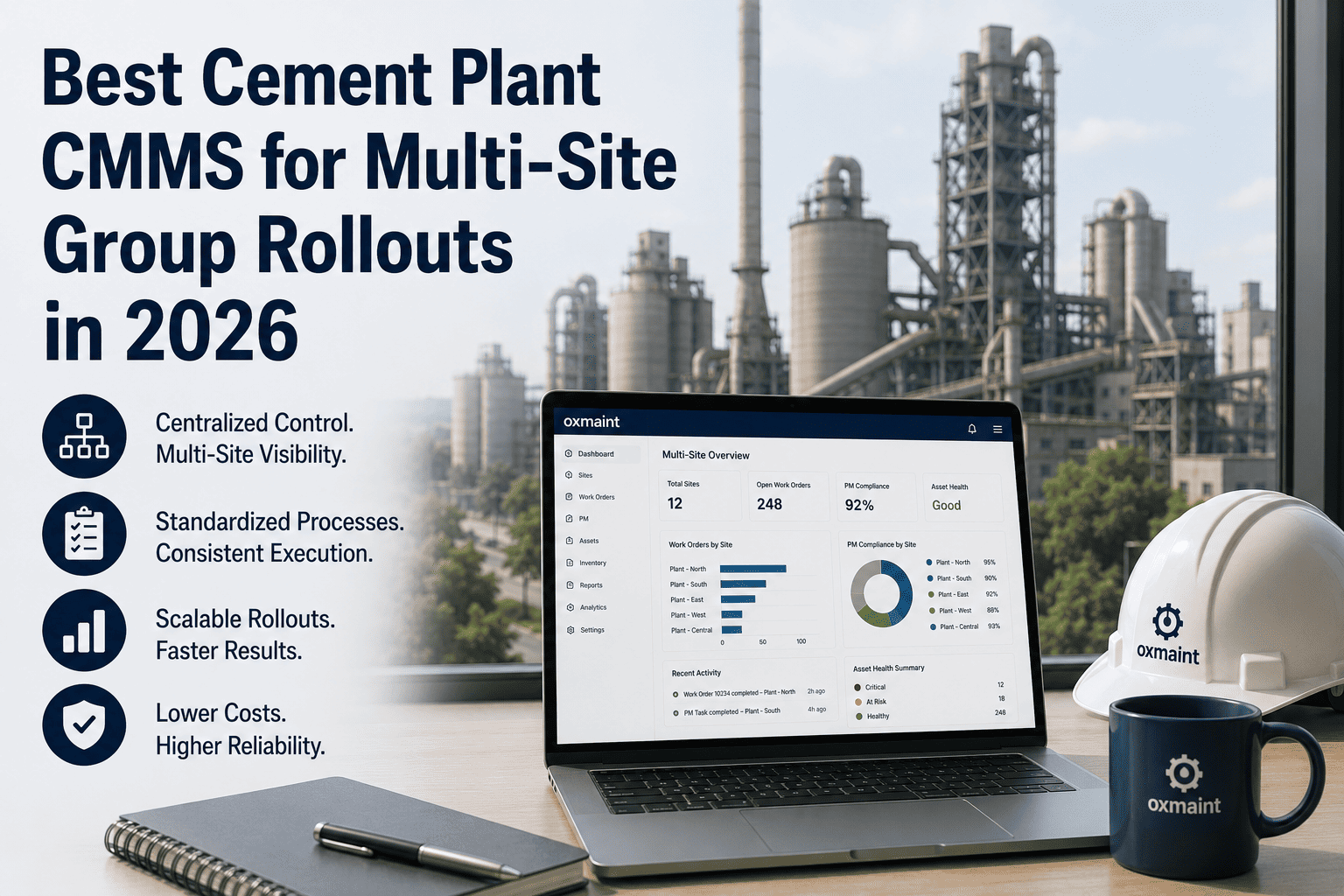
Group-level view across multiple plants — aggregate CapEx forecast, portfolio maintenance spend, and cross-site performance benchmarking in a single dashboard layer.
Tier 2
Plant
Individual plant with its own production capacity, regulatory environment, and maintenance team. Plant-level KPIs: OEE, unplanned downtime, PM compliance rate, total maintenance cost.
Tier 3
System
Functional production systems — Raw Milling, Pyroprocessing, Clinker Cooling, Finish Milling, Packing. System-level availability, throughput, and maintenance cost tracked against production targets.
Tier 4
Equipment
Individual machines: rotary kiln, ball mill, VRM, crusher, compressor. Each with operating parameters, condition score, maintenance history, and RUL calculation. This is where CapEx decisions are made.
Tier 5
Component
Wear parts and critical components: refractory bricks, girth gear segments, mill liners, crusher wear plates, bearing assemblies. Component-level consumption tracking feeds both spare parts and CapEx planning.
ASSET CLASS TRACKING
How CMMS tracks condition for each major cement plant asset class
Rotary Kiln
Service life: 25-35 years
Shell ovality tracked quarterly
Girth gear wear measured at each shutdown
Refractory heat maps from infrared scanner monthly
Tyre migration tracked continuously
CapEx horizon: 30-year total cost of ownership model
Ball Mill
Service life: 20-30 years
Liner thickness logged at each shutdown against wear curves
Main bearing vibration trended continuously
Drive gear backlash measured annually
Asymmetric wear triggers partial liner replacement
CapEx horizon: Liner replacement cycles 3-5 years, major refurb 12-15 years
Vertical Roller Mill
Service life: 20-25 years
Roller and table wear tracked by throughput tonnage
Hydraulic system pressure logged per operating cycle
Separator performance vs. fineness trended
Vibration signature analysis for dam ring condition
CapEx horizon: Wear segment replacement 4-7 years, refurb 15-20 years
Clinker Cooler
Service life: 15-20 years
Grate plate wear tracked by operating hours
Fan performance degradation trended per chamber
Drive chain tension measured monthly
Refractory lining condition scored quarterly
CapEx horizon: Grate replacement 5-8 years, cooler rebuild 12-18 years
Preheater Cyclone Tower
Service life: 30-40 years
Refractory inspection after each major kiln stop
Gas pressure differential across stages monitored
Chlorine bypass system inspection tied to fuel quality
Cyclone cone wear tracked by clinker throughput
CapEx horizon: Refractory relining 5-8 years, structural 25-35 years
Crusher Systems
Service life: 15-25 years
Wear plate and hammer thickness logged by tonnage
Drive motor current trending for overload patterns
Jaw gap measured monthly against product size specification
Bearing temperature and vibration continuously monitored
CapEx horizon: Wear parts 6-18 months, major overhaul 8-12 years
CAPEX FORECASTING
From asset condition to board-ready CapEx forecasts
The financial case for structured asset taxonomy is simple: every CapEx surprise is a planning failure, and planning failures are data failures. When RUL calculations run continuously from live condition data, the 5-year capital renewal forecast updates automatically — and finance teams stop receiving emergency replacement requests that were never in the budget.
1
Condition Data Collection
Vibration, thermal, wear measurements logged at each PM interval or continuously via sensors. Component-level consumption tracked against OEM wear curves.
→
2
RUL Calculation
Remaining Useful Life calculated per asset from condition trends, historical failure patterns, and operating intensity data. Not age-based — condition-based.
→
3
Refurbish vs. Replace Analysis
For each approaching end-of-life asset, CMMS calculates total cost of ownership for continued repair versus replacement — flagging when the crossover point arrives.
→
4
Rolling CapEx Dashboard
5-10 year capital renewal schedule formatted for board review — with per-asset evidence, cost estimates, and production impact if deferred. Finance gets a defensible plan, not a wish list.
See what your plant's 5-year CapEx forecast looks like with real condition data
Oxmaint builds your cement plant asset hierarchy, activates RUL tracking, and generates your first board-ready CapEx forecast within 90 days of deployment — no plant shutdown required.
ERP INTEGRATION
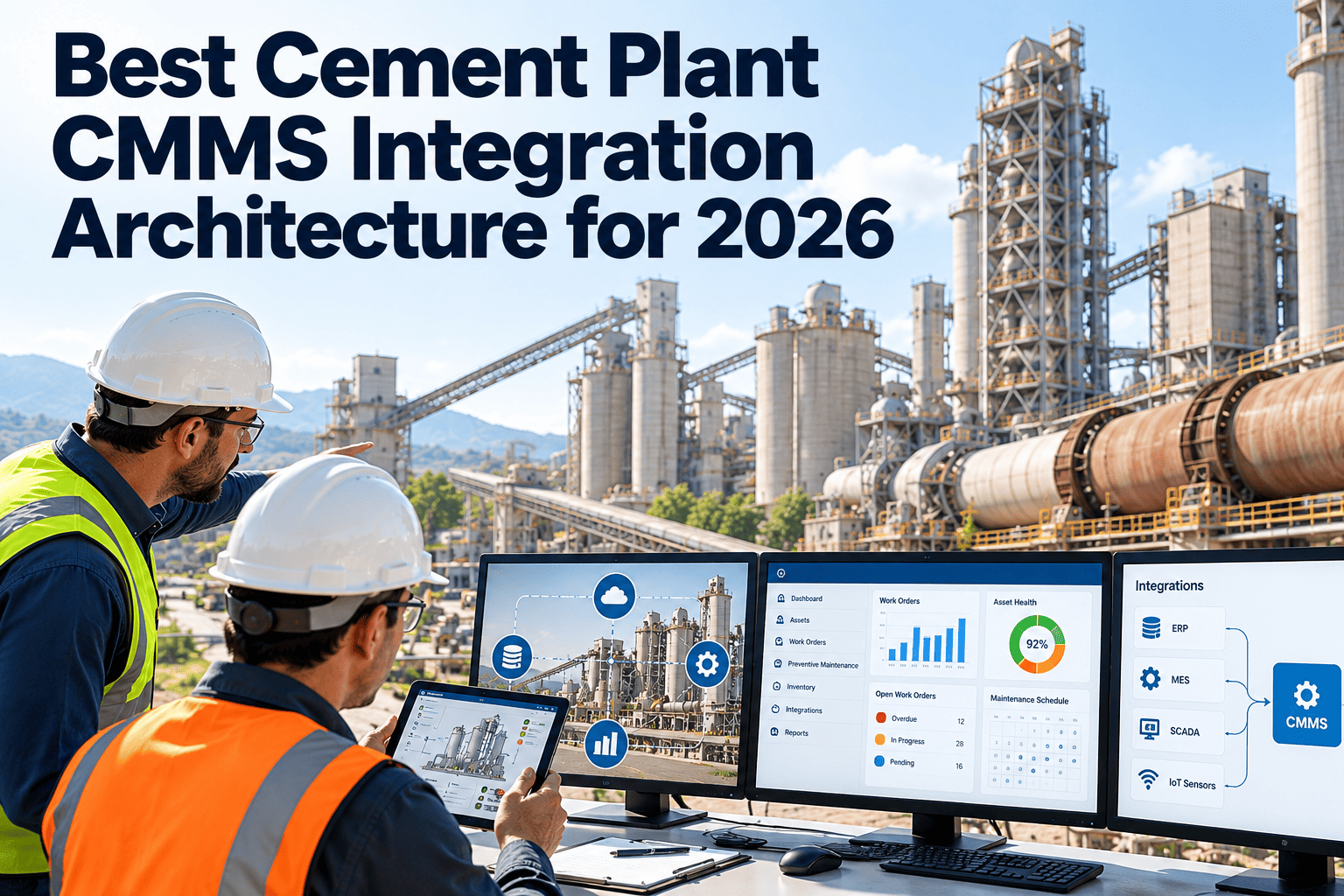
How CMMS asset taxonomy connects to ERP for financial planning
Asset Register Synchronization
CMMS asset hierarchy syncs with ERP asset register — acquisition cost, depreciation schedule, and accumulated maintenance spend combined into total cost of ownership per asset. Finance sees maintenance reality, not just book value.
Work Order Cost Allocation
Every maintenance work order in CMMS posts labor, parts, and contractor costs to the correct ERP cost center automatically. No month-end manual reconciliation between maintenance and financial systems.
CapEx Request Generation
When CMMS RUL calculation indicates an asset is approaching replacement threshold, it generates a pre-populated CapEx request with condition evidence, cost estimate, and production impact — ready for ERP capital project approval workflow.
Spare Parts Inventory Integration
Critical spare parts consumption from CMMS work orders updates ERP inventory levels in real time. Reorder points calibrated to RUL-predicted replacement timelines — not safety stock guesses.
FREQUENTLY ASKED QUESTIONS
What plant managers ask about CMMS asset taxonomy and CapEx forecasting
Stop planning capital with age estimates. Start planning with condition data.
Oxmaint's 5-tier cement plant asset hierarchy, RUL tracking, and board-ready CapEx forecasting dashboard give your finance team the planning visibility they need — and your maintenance team the operational intelligence to prevent the unplanned replacements that destroy budgets.