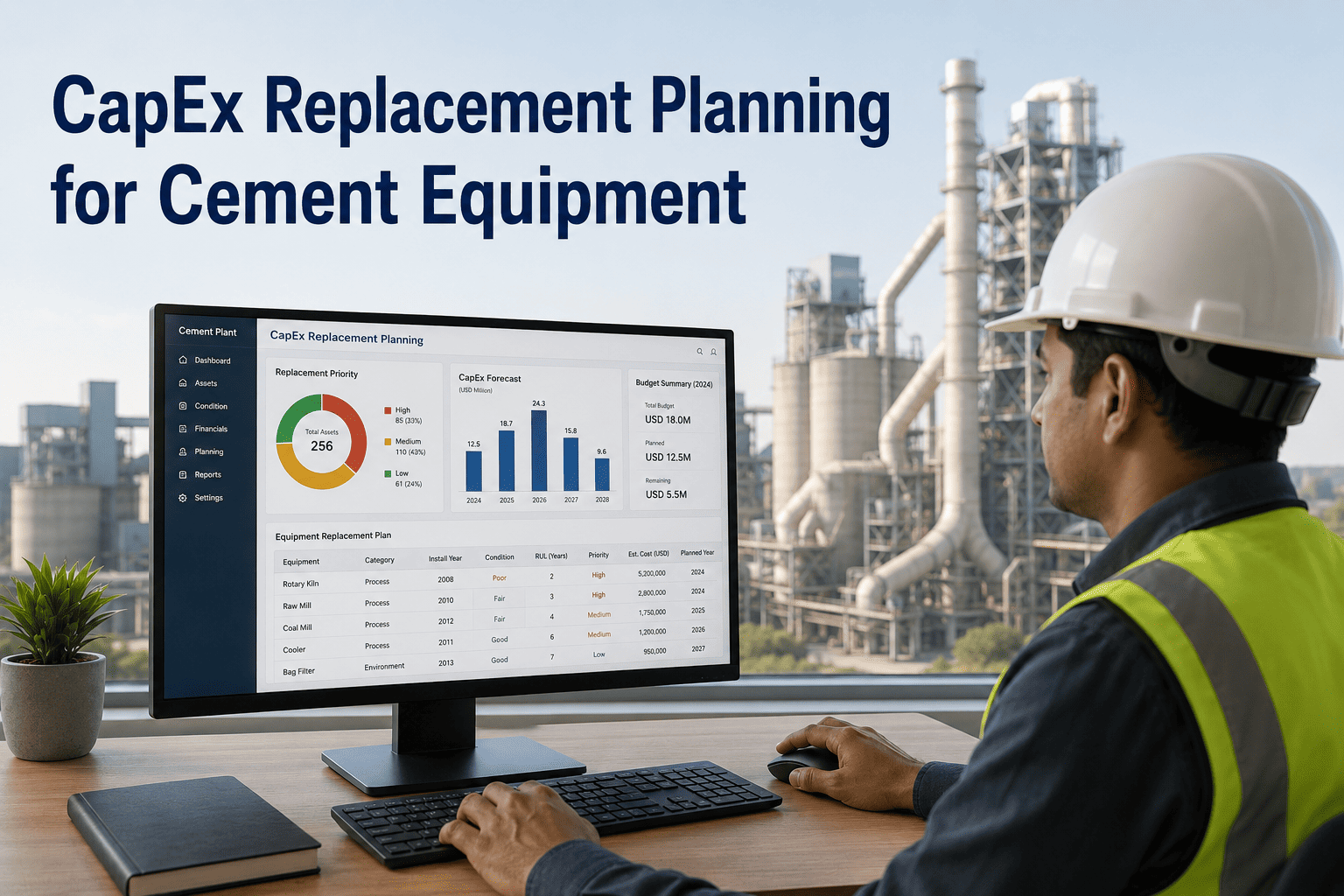
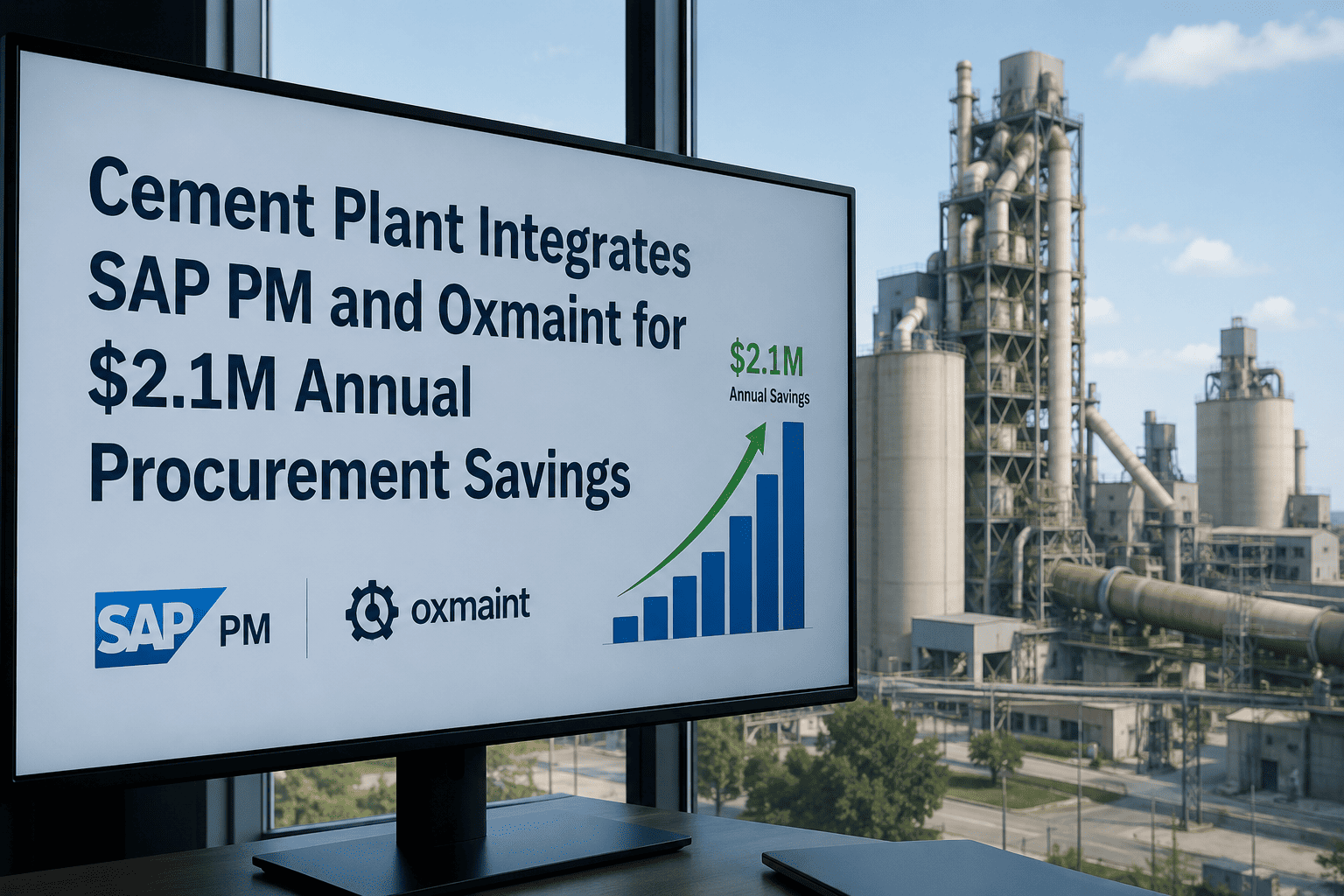
The maintenance manager once requested $6.2 million in component replacements, but without reliable remaining useful life (RUL) data, most requests were cut. After deploying OxMaint's RUL tracking, budget requests were backed by condition data, failure histories, and asset life comparisons, allowing the team to defer unnecessary replacements and save $4.8 million in CapEx in a single year. Sign in to OxMaint to track RUL on critical assets, or book a demo to see how data-driven RUL forecasting supports capital planning.
$4.8M
CapEx avoided in a single budget cycle through RUL-backed deferral defence on four major components
82%
Capital budget approval rate after RUL evidence package presented — versus 60% approval on judgement-based requests
4
Components successfully deferred for 12+ additional months with zero unplanned failure following the deferral decision
$6.2M
Original capital request before RUL analysis — reduced to $3.4M actual spend with no reliability incidents in the deferred period
The Four Components Defended for Deferral — With the Data That Made It Possible
Each of these components had appeared on three consecutive annual capital budgets as replacement requests. RUL analysis provided the condition basis for deferral — and the monitoring schedule that ensured deferral did not become failure.
Capital Request
$1.8M full reline
RUL Estimate at Budget Date
14 months remaining at current shell temperature trend
Data Used
Kiln shell scanner temperature profiles, refractory brick thickness measurements, historical reline frequency for this kiln
Deferral Monitoring Plan
Monthly hot spot scan threshold set at 280°C; automatic work order on breach
Outcome: reline scheduled and completed at month 14 during a planned outage. No hot spot breach during the deferral period. CapEx saved: $1.8M moved to following year's budget cycle.
Capital Request
$640K full charge replacement
RUL Estimate at Budget Date
10 months before mill power draw falls below minimum efficiency threshold
Data Used
Specific power consumption trend (kWh/t), ball sampling diameter measurements, mill noise signature from vibration sensors
Deferral Monitoring Plan
Monthly ball sampling, specific power consumption tracked weekly against efficiency floor
Outcome: top-up charge at month 6 extended full replacement to month 14. Final CapEx: $280K top-up versus $640K full replacement. Net saving: $360K.
Capital Request
$920K full liner replacement
RUL Estimate at Budget Date
11 months before liner thickness falls below minimum safe operating threshold
Data Used
Ultrasonic liner thickness measurements at 12 reference points, wear rate trending from previous two liner campaigns, mill throughput correlation
Deferral Monitoring Plan
Quarterly ultrasonic measurement at all 12 reference points, automatic alert at 80% of minimum thickness
Outcome: replacement scheduled at month 11 as predicted. Liner thickness at replacement was 4mm above minimum — confirming the model accuracy. CapEx timing preserved for budget year 2.
Capital Request
$1.4M complete stage 4 inlet cone replacement
RUL Estimate at Budget Date
12 months before wear-through risk based on current refractory erosion rate
Data Used
Annual cold shutdown wear surveys, kiln feed abrasiveness trend, inlet cone erosion rate compared to OxMaint fleet benchmark for equivalent cyclone geometry
Deferral Monitoring Plan
Bi-annual visual inspection at planned outages with photographic measurement protocol, automatic capital escalation trigger if erosion accelerates
Outcome: replacement executed during the planned annual shutdown at month 12. No unplanned stop attributable to cyclone wear in the deferral period. CapEx of $1.4M moved to planned budget year.
OxMaint · RUL-Backed Capital Defence
Every capital budget conversation is a negotiation between spend and risk. OxMaint gives your maintenance manager the condition data to defend both sides of that negotiation — approving what must be approved and deferring what can be deferred without putting reliability at risk.
How OxMaint Calculates Remaining Useful Life — The Four Data Inputs
RUL is not a guess. It is a calculation built from four data inputs that OxMaint captures continuously from maintenance work orders, condition monitoring readings, and operating data. Each input narrows the estimate range until the capital timing decision is defensible.
01
Condition Measurements
Direct physical measurements of the component in its current state — refractory thickness, liner wear depth, bearing clearance, grinding media diameter. Each measurement is timestamped and attached to the asset record. The trend line from successive measurements is the primary RUL input.
02
Wear Rate History
The rate at which condition degrades per operating hour or production tonne. OxMaint calculates wear rate from successive measurements and compares it to the wear rate from prior component campaigns on the same asset. Accelerating wear rates trigger automatic RUL recalculation and alert escalation.
03
Failure Mode Threshold
The condition measurement value at which the component transitions from degraded-but-functional to failed or unsafe. Thresholds are set per asset from manufacturer specifications, regulatory limits, or plant-specific operating experience. RUL is calculated as the time to reach the threshold at the current wear rate.
04
Fleet Benchmark Comparison
OxMaint's fleet database contains RUL and life-to-failure data from similar component types across the cement plant install base. When a plant's own wear rate history is limited, fleet benchmarks provide a validated reference range. Anomalously short or long life estimates are flagged against the benchmark distribution.
Three-Year Capital Outcomes After RUL Tracking Deployment
Measured across kiln, mill, and preheater assets at the 4.9 MTPA plant for the three budget cycles following OxMaint RUL deployment.
| Capital Metric |
Year 0 (Pre-RUL) |
Year 1 |
Year 2 |
Year 3 |
| Capital Request (Maintenance) |
$6.2M |
$5.1M |
$4.4M |
$3.8M |
| Capital Approved |
$3.7M (60%) |
$4.2M (82%) |
$3.9M (89%) |
$3.4M (89%) |
| Unplanned Failures from Deferred Components |
3 events |
0 events |
0 events |
0 events |
| Components on Capital List 3+ Years |
7 components |
4 components |
1 component |
0 components |
| Emergency CapEx Spend |
$840K |
$210K |
$80K |
$40K |
| CapEx Savings vs Year 0 Trajectory |
Baseline |
$1.6M |
$3.2M |
$4.8M cumulative |
Scroll right to see all columns
Frequently Asked Questions — OxMaint RUL Tracking and Capital Defence
OxMaint · RUL Tracking · Cement Plant Capital Defence
A capital budget built on judgement calls gets cut at 40%. A capital budget built on remaining useful life data gets approved at 82% — and the deferred components do not fail in the interim. That is the difference OxMaint's RUL tracking makes in the first budget cycle.
Condition measurement trending. Wear rate calculation. Fleet benchmark comparison. Capital defence reports. Deferral monitoring with escalation thresholds. All built into OxMaint for cement plants.