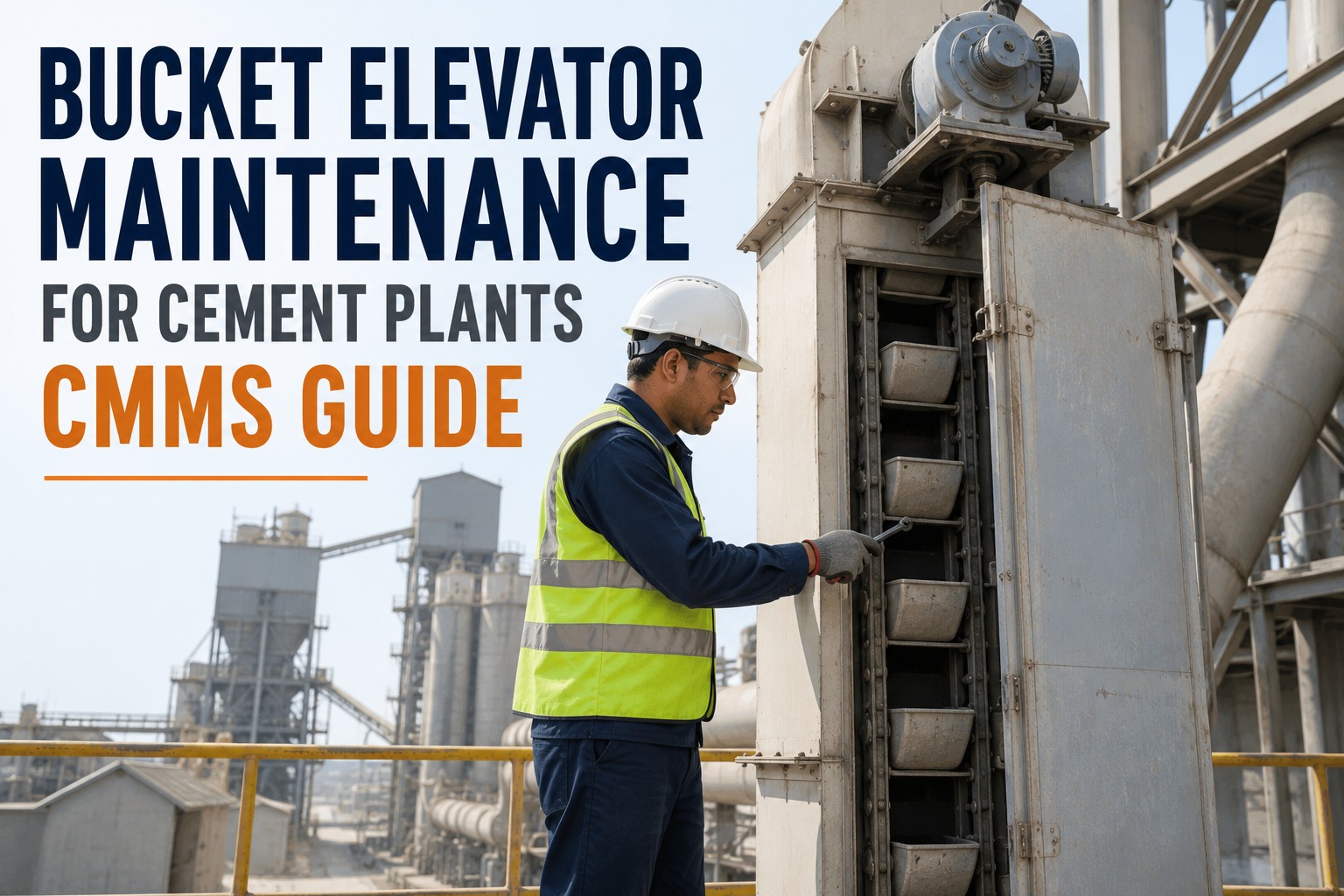
Bucket elevators are the vertical backbone of cement plant material flow — handling everything from raw limestone feed to finished cement dispatch. Unlike horizontal conveyors, a bucket elevator failure happens inside an enclosed casing where early warning signs are invisible to walk-down inspection. A seized head pulley bearing, a fatigue-cracked chain link, or a broken bucket discovered only when production stops is not bad luck — it is the predictable result of managing a complex vertical transport system on paper records and fixed calendar PM. Structured CMMS-backed maintenance changes this equation by tracking every chain inspection, bearing condition, bucket integrity check, and lubrication cycle against the actual asset record, with automatic work orders before wear limits are reached. Start a free OxMaint trial and see how asset-level tracking transforms bucket elevator reliability, or book a 30-minute demo with a cement plant reliability specialist.
Bucket Elevator Maintenance Management Software
Track every chain link, bearing, bucket, and casing inspection in a single CMMS — purpose-built for the vertical transport demands of cement plants.
Every Critical Component — Tracked in One Asset Record
A bucket elevator is not a single asset — it is a system of interdependent components, each with its own wear mechanism, inspection interval, and failure consequence. OxMaint structures each elevator as a parent asset with all sub-components individually tracked.
Bucket Elevator Inspection Intervals for Cement Plants
Cement plant bucket elevators handle abrasive, hot, and dusty material at continuous duty. Calendar-only PM misses the wear reality. The schedule below reflects best practice for cement environments, with OxMaint tracking each interval per asset.
How OxMaint Manages Bucket Elevator Assets
Managing a cement plant's bucket elevator fleet requires more than a checklist — it requires a system that tracks each component's history, triggers work orders at the right moment, and gives supervisors real-time visibility into fleet condition.
Each bucket elevator is registered as a parent asset with individual child records for chain assembly, bearings, buckets, drive, and casing. Inspection findings, failure records, and replacement history attach to the exact sub-component — not just the elevator as a whole.
Chain elongation PM fires on operating hours. Bearing lubrication fires on calendar interval. Backstop inspection fires on both — whichever comes first. OxMaint manages all trigger types simultaneously without manual tracking.
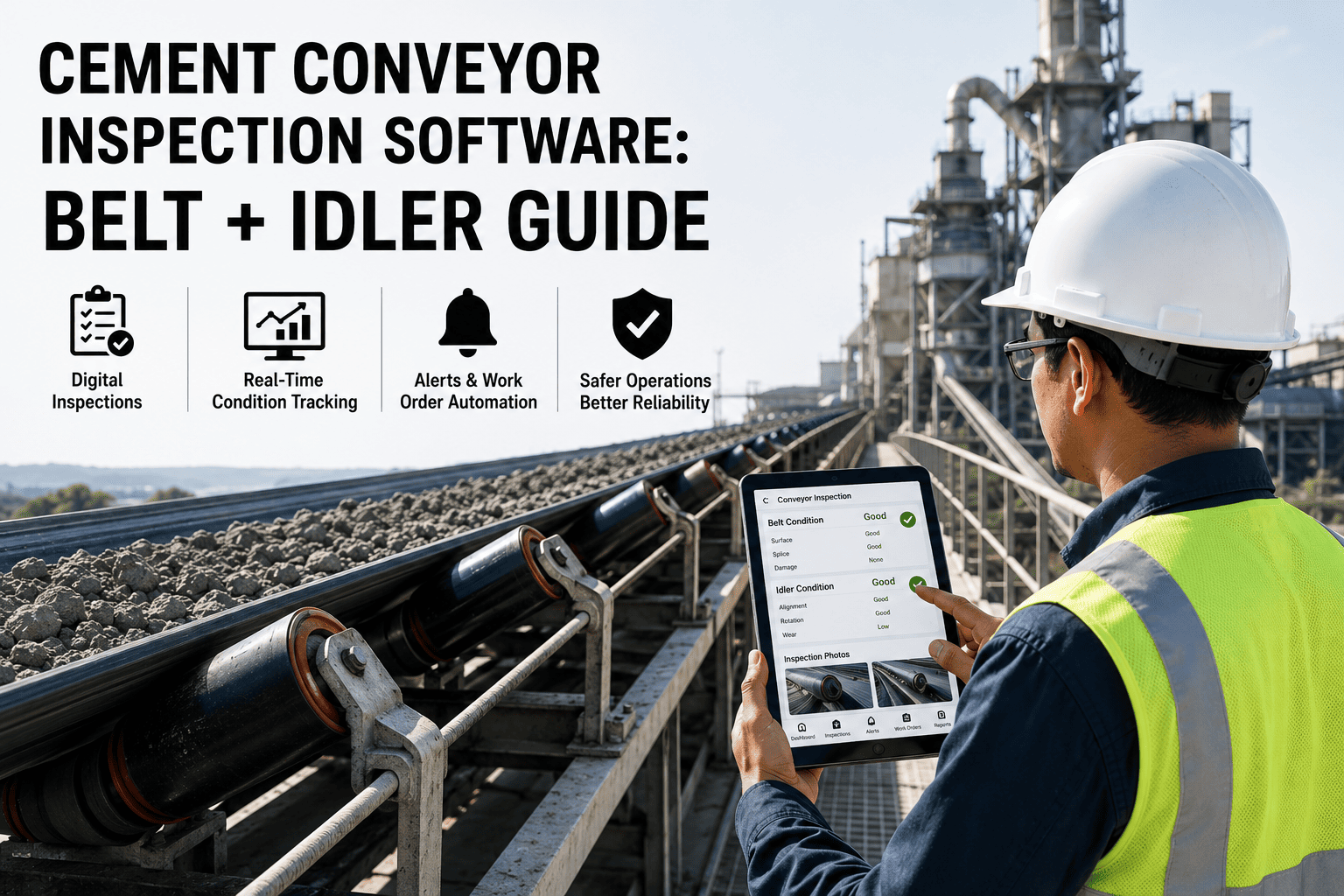
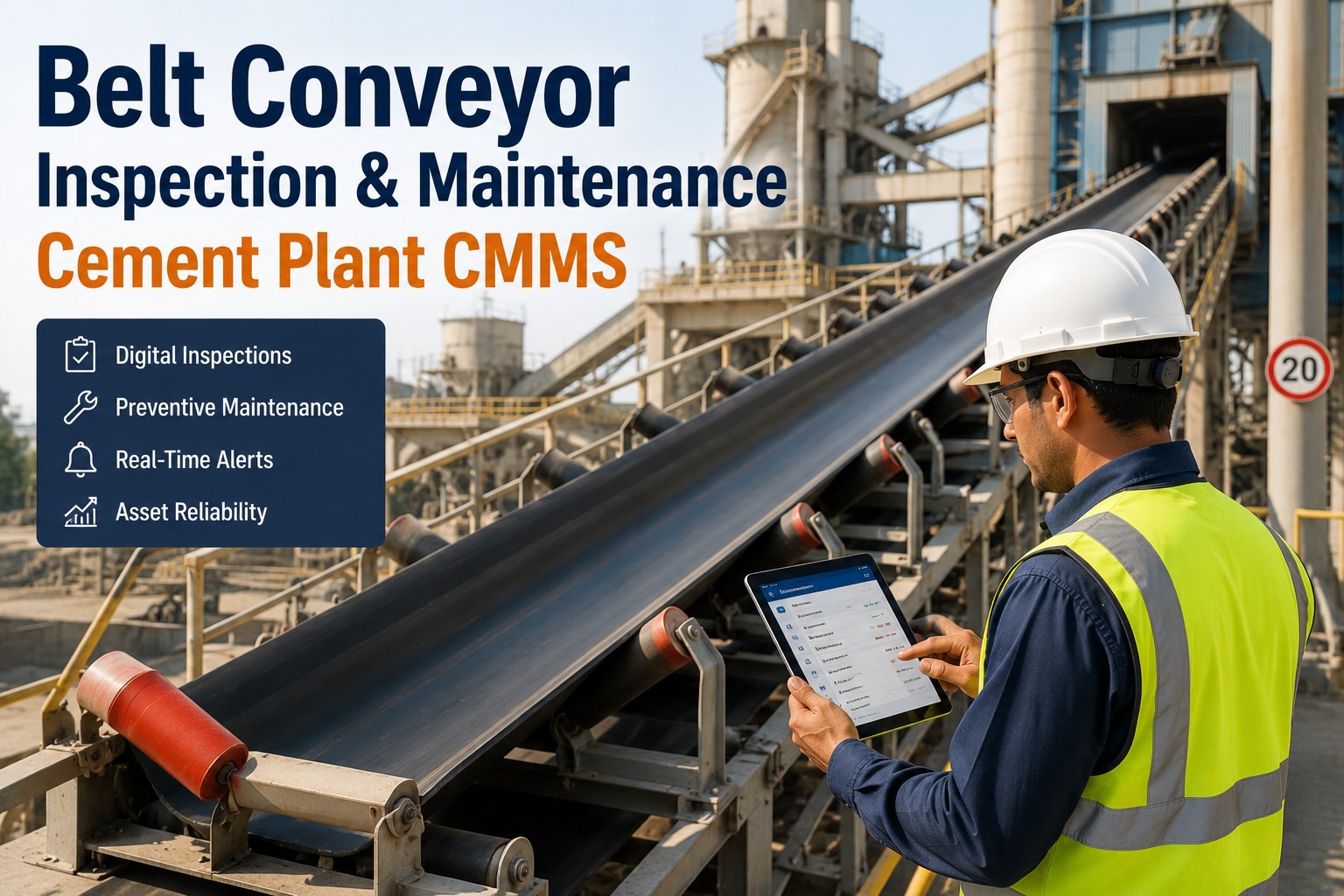
Technicians complete bucket-by-bucket inspection checklists on mobile, recording chain elongation measurements, bearing temperatures, and photo evidence of defects directly against the component record. No paper, no clipboard, no transcription delays.
Each chain measurement is plotted against the OEM elongation limit. OxMaint projects the replacement date based on the current wear rate, allowing chain orders to be placed weeks before the limit is reached — not during an emergency shutdown.
Annual elevator inspection scope is built automatically from accumulated deferred findings, approaching wear limits, and open deficiency records. The outage work package arrives pre-scoped — parts pre-ordered, contractors briefed, sequence planned.
OxMaint tracks every component, every measurement, every work order — and tells you what needs attention before the elevator tells you itself.
Frequently Asked Questions
Can OxMaint track individual bucket condition across a full elevator run?
How does OxMaint handle chain elongation trending over multiple inspection cycles?
Does OxMaint support both chain and belt bucket elevators in the same plant?
Can OxMaint generate a ready-to-use work package for the annual elevator shutdown?
How quickly can a cement plant get its bucket elevator fleet into OxMaint?
Stop Discovering Vertical Transport Failures After the Stoppage. Build the Asset Record That Sees Them Coming.
OxMaint gives cement plant maintenance teams sub-component asset tracking, hours-based PM triggers, mobile inspection workflows, and shutdown campaign management — everything needed to keep bucket elevators running reliably across every production shift.