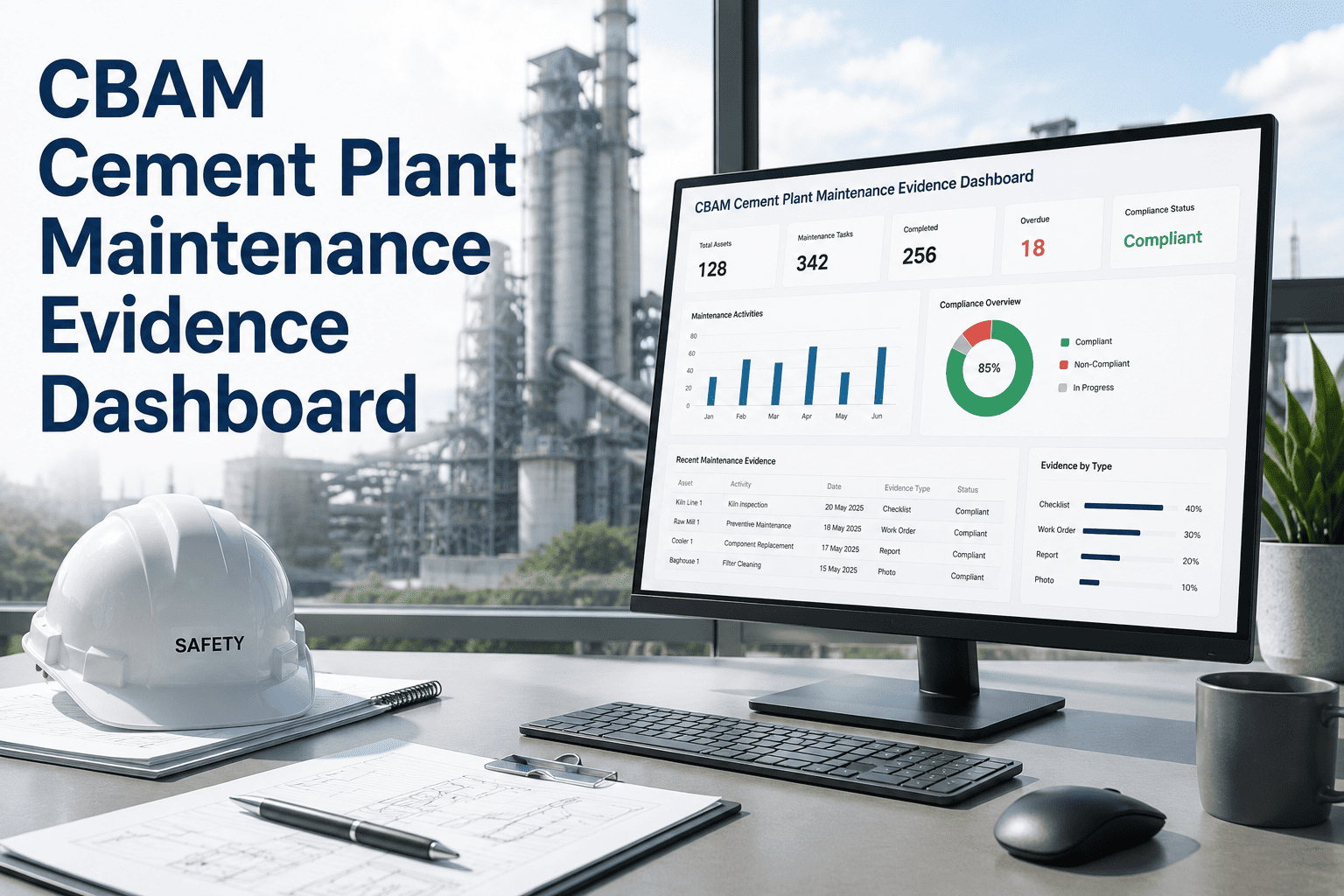
CBAM's definitive phase began on 1 January 2026, and the difference between using verified actual emissions data and falling back to the EU's default values is no longer academic — it now carries a real penalty surcharge of 10% in 2026, rising toward 30% from 2028 onward, on top of whatever the default value itself costs at the prevailing carbon price. For a cement producer exporting clinker or cement into the EU, the specific embedded emissions figure that determines this cost traces directly back to how efficiently the kiln actually ran, and that efficiency is a maintenance outcome long before it becomes a customs declaration. See how OxMaint builds the maintenance evidence trail behind a defensible, verifiable specific embedded emissions figure rather than leaving your exporters stuck with the punitive default.
OxMaint · Compliance Tracking
The Default CBAM Value Is Punitive By Design. Your Maintenance Data Is the Way Out.
Specific embedded emissions, verified at the installation level, almost always beat the Commission's fallback value — but only if the underlying kiln performance data exists and can be defended.
Default vs. Verified
What Choosing Default Values Actually Costs Per Tonne
A modern, well-maintained kiln line can report specific embedded emissions meaningfully below the Commission's published Portland cement default — but only with verified, installation-level data behind the number. The gap between the two compounds directly into certificate cost.
Default Value Path
0.83 tCO₂/t
Typical Portland cement default value published by the Commission
10% penalty surcharge applied in 2026, rising toward 30% by 2028
No installation-level data collection or verification required
≈ $68 per tonne at current carbon price, surcharge included
Verified Actual Data Path
0.80 tCO₂/t
Achievable specific embedded emissions with strong kiln maintenance discipline
No penalty surcharge — verified data is rewarded, not penalised
Requires accredited third-party verification of installation data
≈ $60 per tonne at the same carbon price — meaningful savings at scale
Across a typical 500,000-tonne annual export volume, the gap between these two paths runs into hundreds of thousands of dollars a year — and the gap only grows as the EU ETS free allocation phase-out continues toward 2034.
The financial case for verified data over default values is already real in 2026. It gets stronger every year the phase-out continues.
The Evidence Chain
From Kiln Work Order to CBAM Declaration: The Data Path That Has to Hold Up
A specific embedded emissions figure that an accredited verifier will sign off on cannot be a single number pulled together at declaration time. It has to be traceable, step by step, back to the maintenance and operating data that produced it across the full reporting year.
Step 1
Kiln Maintenance Condition
Burner tuning, refractory condition, and mill liner wear set the actual specific fuel and power consumption the kiln achieves.
Step 2
Metered Fuel & Power Data
Calibrated meters log actual consumption per tonne of clinker, tied to the maintenance condition that produced it.
Step 3
Specific Embedded Emissions Calculation
Direct emissions from fuel combustion and process chemistry, plus indirect emissions from electricity, calculated per the EU's official methodology.
Step 4
Accredited Third-Party Verification
Verifiers trace the SEE figure back to source data — meter calibration records, maintenance logs, and lab test results.
Step 5
Annual CBAM Declaration
Verified data submitted by the EU importer, with the first report for 2026 imports due 30 September 2027.
Risk Map
Maintenance Gaps That Quietly Inflate Your CBAM Exposure
Most cement exporters preparing for CBAM focus on the emissions calculation methodology itself. Fewer look upstream at the maintenance conditions that determine whether the underlying number is good enough to beat the default value in the first place.
High Exposure
Uncalibrated Fuel Flow Metering
Verifiers cannot certify actual data without confidence in measurement accuracy — uncalibrated meters can force a fallback to less favourable default values.
High Exposure
Undocumented Burner Tuning Drift
A kiln running with elevated excess air burns more fuel per tonne of clinker than necessary, directly raising the SEE figure being reported.
Moderate Exposure
Inconsistent Electricity Source Records
Indirect emissions for cement require the correct electricity emission factor for the installation's actual power source — undocumented changes create reporting risk.
Moderate Exposure
Gaps in Unplanned Stop Records
Heat-up cycles after unplanned kiln stops consume disproportionate fuel — unexplained spikes without a documented cause invite verifier scrutiny.
Closing these gaps before your first declaration is due is far less expensive than discovering them during verification.
Frequently Asked Questions
CBAM Maintenance Evidence
When is the first CBAM declaration actually due, and what does that mean for preparation timing?
The first annual CBAM declaration covering goods imported during 2026 is due by 30 September 2027, but the data supporting that declaration has to be collected and structured throughout 2026 itself, not assembled retroactively. Specific embedded emissions calculations rely on a full reporting year of metered fuel and power consumption data, so any gap in maintenance or metering records from early 2026 onward becomes a permanent hole in that year's evidence base. This is why teams generally start building
structured calibration and work order records well before the declaration deadline itself.
What is the practical difference between direct and indirect emissions for a cement CBAM declaration?
Direct emissions cover everything released within the production installation boundary itself — fuel combustion in the kiln, process chemistry from limestone calcination, and any other on-site combustion sources. Indirect emissions, which apply specifically to cement and fertiliser among CBAM sectors, cover the emissions associated with the electricity the installation consumes, calculated using the appropriate emission factor for that electricity's source. Getting the indirect emissions calculation wrong — for example using the wrong grid emission factor or missing a power source change — is a commonly cited error that produces incorrect SEE figures even when the direct emissions data is accurate.
Can a plant use verified actual data for some periods of the year and default values for others?
The use of default values is generally limited to a maximum proportion of total reported emissions for complex goods, meaning a plant cannot simply substitute defaults for any period where its own data collection fell short without consequence. The more reliable approach is treating data collection as a continuous, year-round maintenance discipline — calibrated meters, documented kiln performance, and verified test results collected consistently — rather than something assembled only when a declaration deadline approaches and gaps are discovered too late to fix.
Who actually performs the third-party verification required for CBAM, and what do they need from maintenance records?
Verification under the CBAM definitive phase must be performed by an accredited verifier recognised under EU accreditation frameworks, and this requirement applies specifically to declarants reporting actual installation-level data rather than relying on default values. These verifiers need to trace the specific embedded emissions calculation back to source evidence — metering calibration certificates, fuel consumption logs tied to production volumes, and documentation of any operational events like unplanned stops that could explain anomalies in the data. A maintenance system that already stores this evidence in a structured, exportable format meaningfully shortens what is otherwise a lengthy verification engagement.
Does improving kiln maintenance actually move the needle on CBAM cost, or is the effect too small to matter?
The effect compounds meaningfully over time and volume, even though the per-tonne difference can look small in isolation. A specific embedded emissions improvement of a few hundredths of a tonne of CO₂ per tonne of cement, multiplied across hundreds of thousands of tonnes of annual export volume and combined with avoiding the default value penalty surcharge, produces a real and growing financial difference — one that increases every year as the EU ETS free allocation phase-out pushes the underlying carbon price exposure higher through 2034.
OxMaint · Compliance Tracking
Your Kiln's Maintenance Condition Is Already Writing Your CBAM Number. Make Sure It's Writing a Good One.
Build the calibration, work order, and performance evidence trail your verifier needs — before the 2027 declaration deadline, not during it.