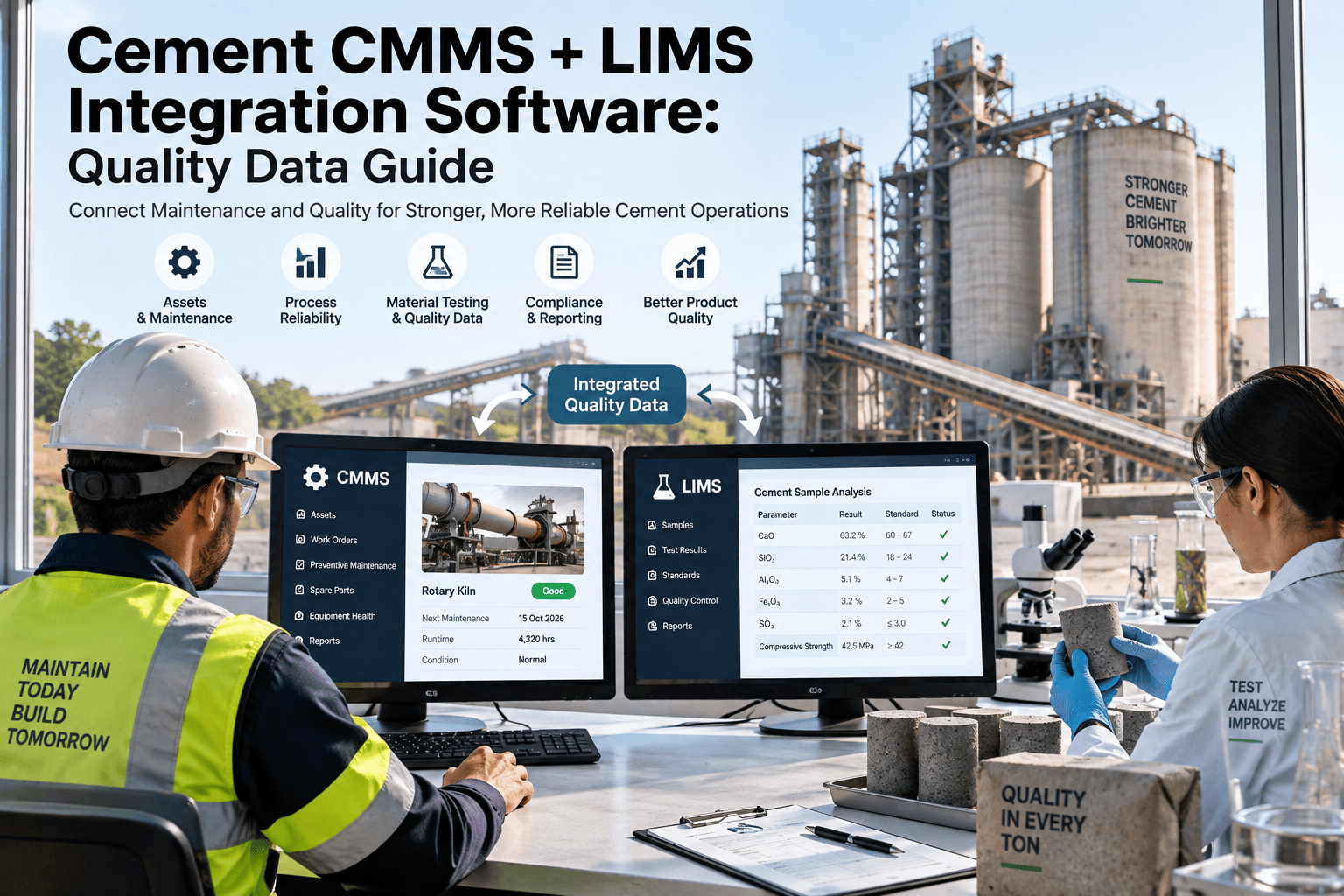
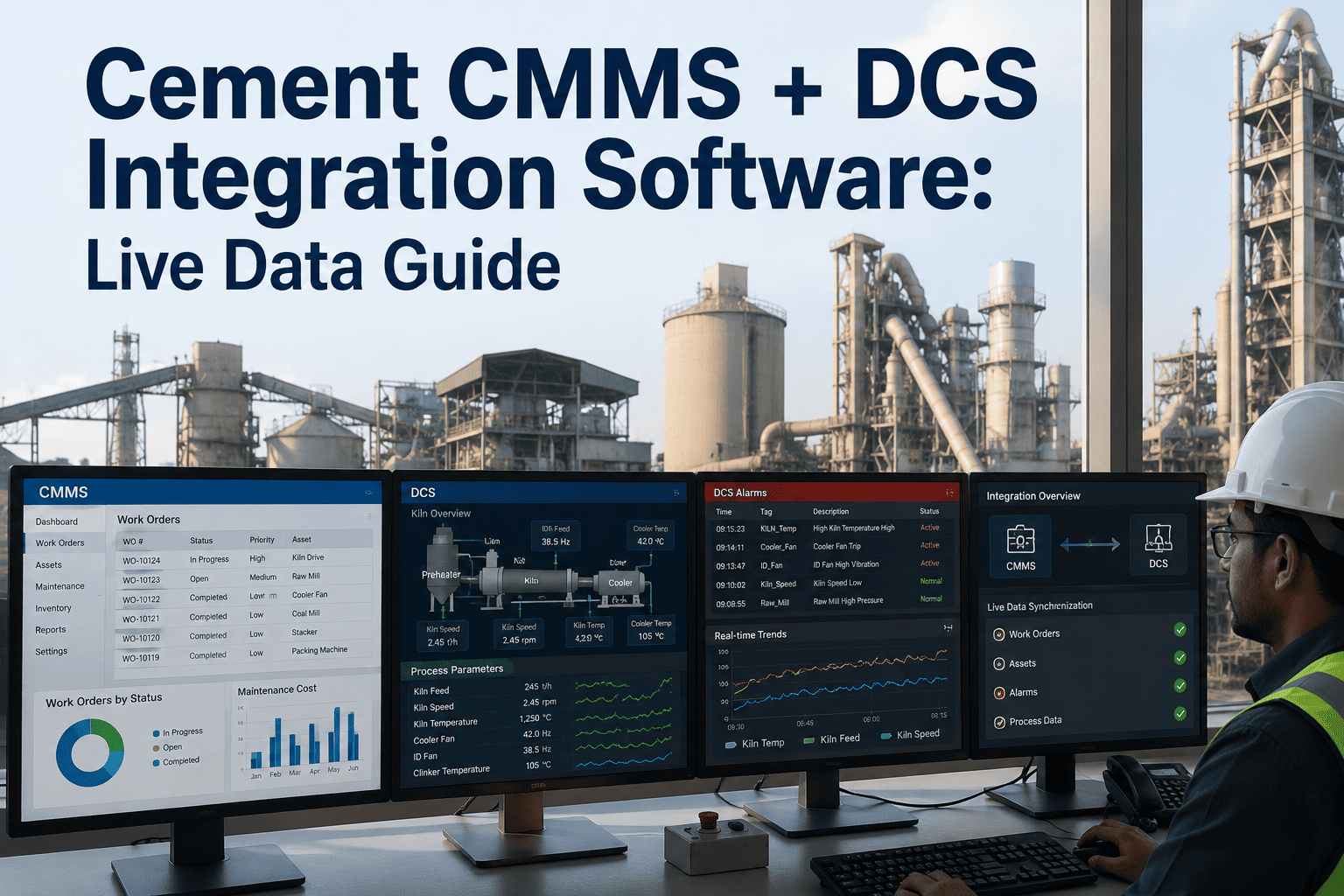
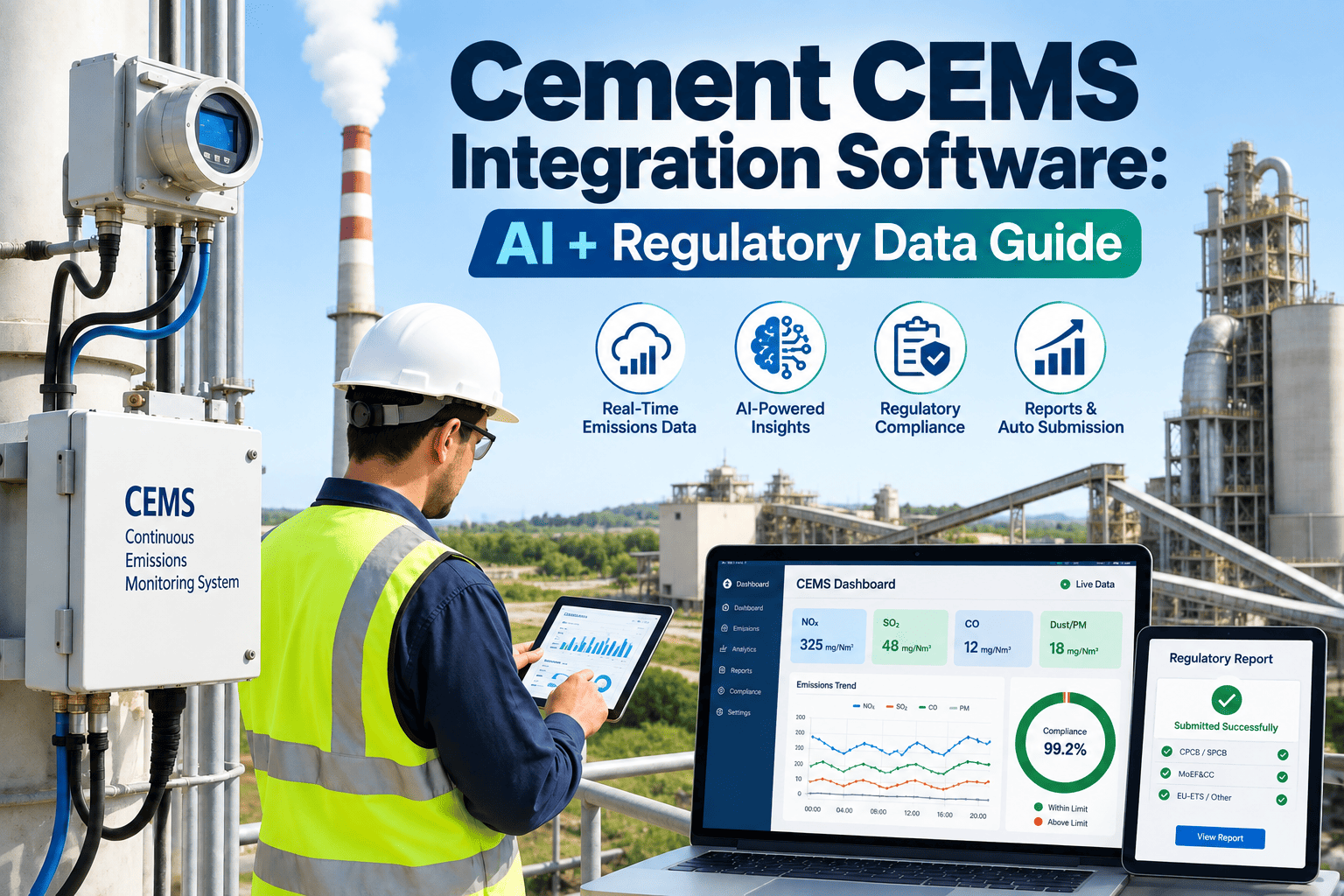
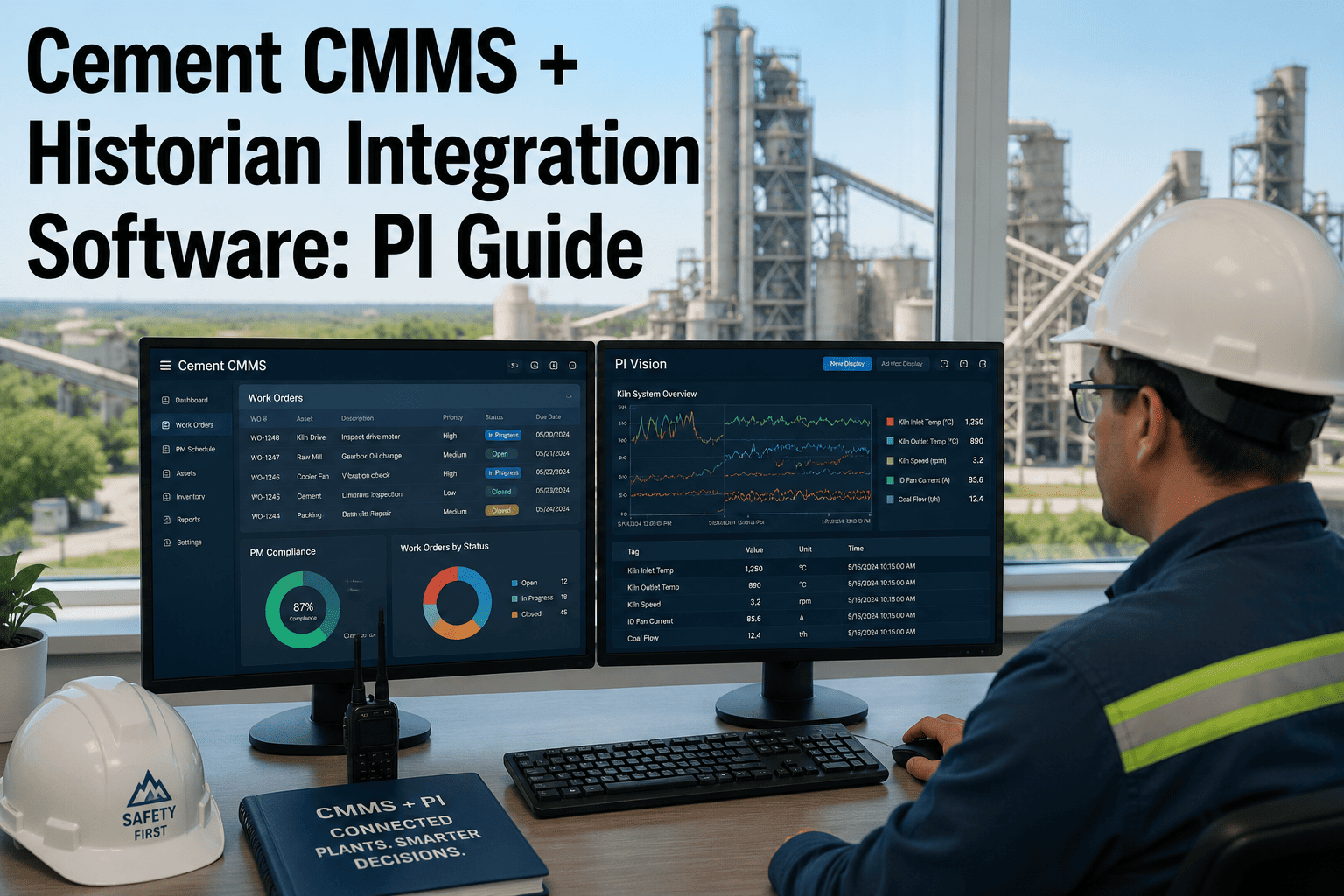
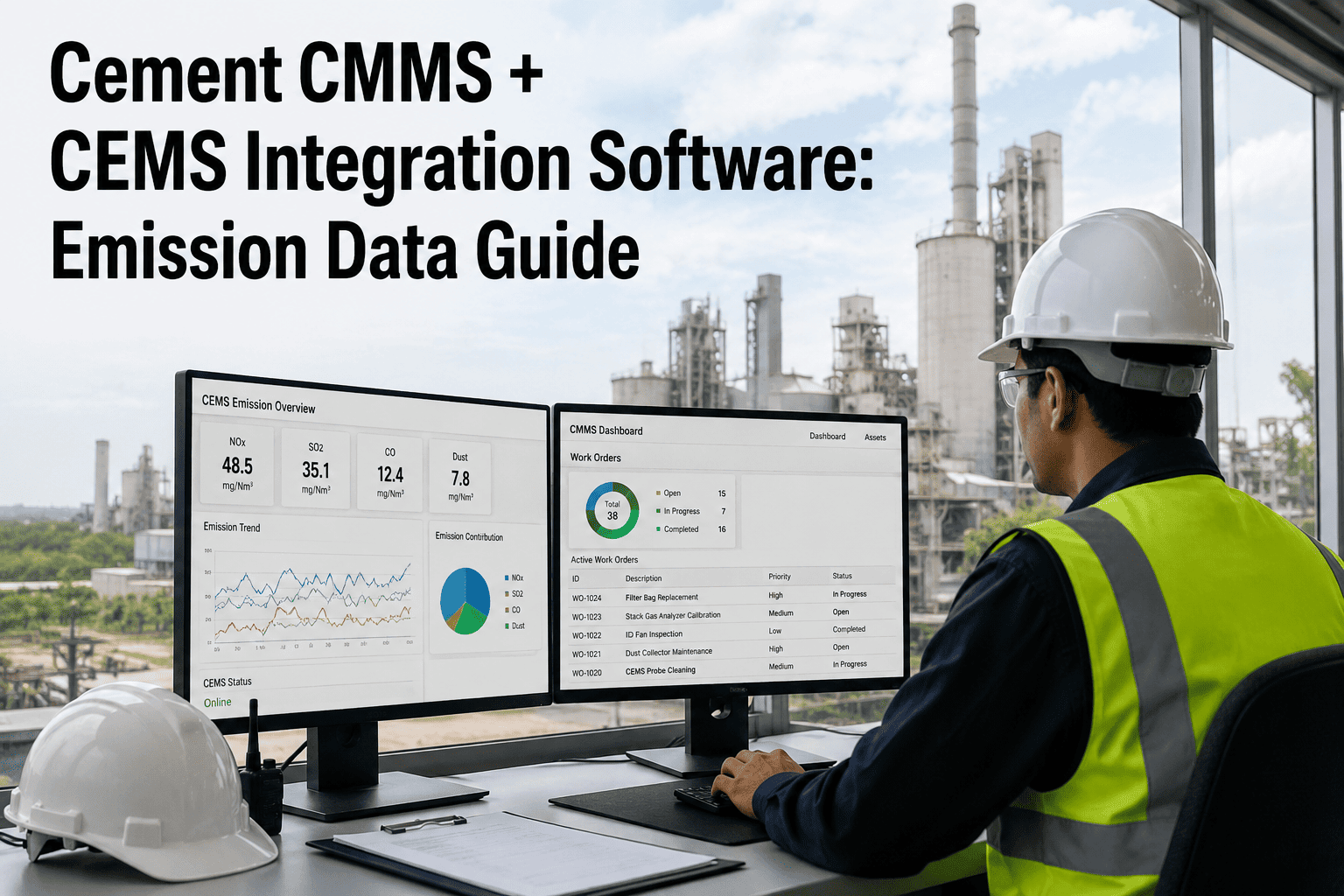
Every cement plant running for more than a decade ends up with the same problem: a DCS from one vendor, a LIMS from another, a CEMS analyzer reporting to a third system, and a maintenance team working from spreadsheets that talk to none of them. Each system holds a piece of the truth about what's happening on the plant floor, and none of them share it automatically. An API gateway is the layer that connects all of it — pulling process alarms from Siemens or ABB, lab results from the LIMS, emissions data from the CEMS, and turning scattered signals into a single operational picture. Here is how that integration layer is actually built, what protocols it runs on, and why plants that skip it keep paying for the same manual data reconciliation year after year.
Integration Architecture · Cement Plant Systems · 2026
Your Plant Already Generates the Data. The Gateway Is What Makes It Talk to Itself.
DCS, LIMS, CEMS, and maintenance records live in separate systems on most cement plant floors — each one accurate, none of them connected by default. An API gateway is the layer that changes that without replacing anything already installed, ripping out existing instrumentation, or forcing a plant-wide system migration project.
The Four-Layer Integration Stack — From Plant Floor to Dashboard
Source Systems
DCS (Siemens SPPA, ABB 800xA, Honeywell Experion, FL Smidth ECS) · LIMS · CEMS analyzers
→
Protocol Layer
OPC-UA, OPC-DA, Modbus TCP, REST API, historian connections (OSIsoft PI, Aspentech IP.21)
→
Gateway Layer
Authentication, rate limiting, request validation, OT network isolation, data normalization
→
CMMS & Reporting
Work orders, compliance documents, dashboards, audit exports
See what your DCS alarms, LIMS results, and CEMS readings look like flowing into one connected CMMS instead of three separate logins.
The Cost of Not Connecting
What Disconnected Systems Actually Cost a Plant
The plant does not lack data. It lacks a way to move that data between the systems that generate it and the people who need to act on it — and the manual workaround is expensive in a way that rarely shows up on a single line item.
1,200-1,500 hrs
spent annually by engineers and EHS staff manually pulling data from SCADA, LIMS, and paper logs into spreadsheets and reports
<60 sec
the time a DCS process alarm can become a structured work order when the gateway is wired in — versus disappearing into a historian log
4-8 wks
typical timeline to connect DCS, LIMS, and CEMS data sources into a working integration layer per plant site
Zero
new sensors, analyzers, or DCS configuration changes required — the gateway works with instrumentation already installed
The Alarm Flood Problem
Why Process Alarms Disappear Before Maintenance Ever Sees Them
A Siemens SPPA, ABB 800xA, or Honeywell Experion DCS generates thousands of process alarms and equipment events every shift. Without an integration layer, almost none of that signal reaches the maintenance team in a form they can act on.
1
Alarm Fires in DCS
A bearing temperature or vibration threshold trips on a mill or fan drive
2
Logged to Historian
Alarm is recorded in the process historian alongside thousands of others that shift
3
Normalized and Dismissed
High alarm rates train operators to normalize alerts — genuine deterioration signals get lost in the noise
4
Discovered at Failure
The equipment fails weeks later; the historian shows the warning was there the whole time
The Connected Path
The Same Alarm, Wired Through an API Gateway
The DCS, the alarm, and the underlying equipment problem do not change. What changes is what happens to the signal in the sixty seconds after it fires.
1
Alarm Fires in DCS
Same bearing temperature or vibration threshold trip, same source system
2
Captured via OPC-UA
Gateway reads the alarm through the DCS's native OPC-UA server — no configuration change to the DCS itself
3
Matched to Asset Context
Gateway attaches the fault code, asset ID, and equipment history already on file in the CMMS
4
Work Order in Under 60 Seconds
Structured work order reaches the maintenance team with context attached — no technician had to notice it first
Stop losing DCS alarms in a historian log. See how OxMaint turns process events into work orders automatically.
Three Systems, One Gateway
What Each Source System Contributes to the Integration Layer
A cement API gateway is not one connection — it is three distinct integrations, each with its own protocol and its own operational payoff.
Process Data
DCS / SCADA
Connects via OPC-UA or REST API to Siemens, ABB, Honeywell, or FL Smidth platforms. Converts process alarms and equipment events into structured, asset-linked work orders in real time.
Quality Data
LIMS
Connects via database link or flat-file import to pull XRF and strength-test results into the same platform kiln operators and quality teams already use, cutting the delay between a lab result and a chemistry correction.
Compliance Data
CEMS / DAHS
Integrates via OPC-UA, REST API, or Modbus alongside the existing data acquisition system — adding calibration scheduling, threshold alerting, and audit document assembly the DAHS alone does not provide.
Gateway Fundamentals
What the Gateway Layer Actually Does — Beyond Just Moving Data
Connecting a system is the easy part. A gateway built for a plant environment has to enforce security and stability at the same time, since a bad connection to a DCS is not a minor inconvenience — it is a production risk.
01
Authentication at the Edge
Every request is verified before it reaches any backend service, so a compromised credential cannot reach plant systems directly.
02
Rate Limiting
Controls how many requests any single integration can make in a given window, protecting the DCS and historian from being overwhelmed by a runaway script or misconfigured client.
03
OT Network Isolation
The control network stays fully isolated from the internet; the gateway reads through the DCS's own OPC-UA server rather than exposing the control layer directly.
04
Data Normalization
Readings arriving in different formats from DCS, LIMS, and CEMS are converted into one consistent data model before they reach a dashboard or a report.
Deployment Reality
What Changes on the Plant Floor — and What Doesn't
Who Uses the Gateway
One Integration Layer, Four Teams Getting Different Value From It
Reliability & Maintenance
Gets DCS alarms converted into work orders automatically, with fault codes and asset history attached instead of buried in a historian log.
Quality Team
Gets LIMS results delivered fast enough to correct raw mix chemistry in the window where the correction is still economical.
EHS & Compliance
Gets CEMS readings, calibration records, and audit documentation assembled from one connected source instead of reconciled by hand across three systems.
Plant IT
Gets a gateway layer that enforces authentication and OT isolation by design, instead of ad-hoc point-to-point connections nobody fully documents.
Legacy Reality
Why Cement Plants Especially Struggle With System Integration
Cement is a capital-intensive, decades-long asset business. A kiln commissioned in the 1990s is often still running, alongside a DCS upgraded twice since, a LIMS purchased for a different plant in the same group, and a CEMS installed to meet a permit condition years after the original construction. None of those purchasing decisions were made with the others in mind — which is exactly why the integration problem shows up here more than almost any other industry.
3-5
separate vendor systems typically running in parallel at a mid-size integrated cement plant — DCS, LIMS, CEMS, CMMS, and often a standalone historian
10-20 yrs
typical operating lifespan of core plant control systems, meaning most integration work has to bridge multiple generations of technology at once
Multi-site
groups often run different DCS vendors at different plants, making a single standardized integration approach even more valuable across a portfolio
No rip-and-replace
the realistic path is connecting what exists, not a multi-year forklift upgrade of every system on the floor
Build vs Buy
Point-to-Point Connections vs. a Purpose-Built Gateway
Plants that have tried to solve this problem internally usually start with a direct connection between two systems — a script that pulls LIMS results into a spreadsheet, or a custom export from the DCS historian. That approach works for exactly one connection, and breaks down the moment a third or fourth system needs to join.
Point-to-Point
Custom Scripts & Exports
Works for a single connection but multiplies maintenance burden with every new system added — each pairing needs its own script, its own failure mode, and its own person who understands it.
Gateway Pattern
Centralized Integration Layer
One authentication model, one rate-limiting policy, and one data normalization layer serve every connected system — adding a new source means one new connector, not a new script from scratch.
Long-Term Cost
Who Maintains It in Five Years
A script written by an engineer who has since left the plant is a documented risk. A gateway platform with vendor support and a defined protocol set is the version that survives staff turnover.
Security Posture
What Plant IT Should Actually Verify Before Approving Any Gateway
Plant IT and OT security teams are right to be cautious about anything that touches the DCS. The right question is not whether to allow an integration — most compliance and reliability gains depend on one — but whether the gateway enforces the same security discipline the control network already requires.
01
No Inbound Connections to OT
The gateway reads data out through the DCS's own OPC-UA server; nothing external initiates a connection into the control network itself.
02
Scoped API Keys
A credential issued for read access to one data source should never carry write access or reach into unrelated systems — scope enforcement happens at the gateway, before a request goes anywhere.
03
Encrypted Transport
Data moving between the plant floor and the CMMS travels over encrypted channels end to end, matching the standard already expected for any cloud-connected plant system.
04
Full Audit Trail
Every request through the gateway is logged — which system, which credential, what data — giving IT the same visibility into the integration layer that they already expect from every other system on the network.
Rollout Path
How Plants Typically Sequence the Integration Work
Trying to connect every system on day one is how integration projects stall. Plants that succeed treat this as a phased rollout, proving value on the highest-impact connection first before expanding the gateway to additional systems.
Phase 1
Connect DCS alarms and CEMS compliance feeds — the sources with the most immediate maintenance and audit payoff, typically live in 4-6 weeks
→
Phase 2
Add LIMS integration for quality reporting, connecting lab results to the same platform kiln operators already use
→
Phase 3
Extend the same gateway pattern to additional plants in the portfolio, reusing the authentication and normalization layer already proven at the first site
Common Questions
What Plant IT and Engineering Teams Ask Before Connecting Systems
Which DCS platforms does the gateway actually support?
Major platforms including Siemens SPPA-T3000, ABB System 800xA, Honeywell Experion, and FL Smidth ECS/ProcessExpert connect via OPC-UA, OPC-DA, or direct historian API — no DCS configuration changes required.
Does the integration layer put the control network at risk?
The control network stays isolated. The gateway reads through the DCS's native OPC-UA server rather than exposing OT infrastructure to the internet directly —
see the architecture in a free trial.
Can this connect to our existing CEMS without new hardware?
Yes — the gateway integrates with existing DAHS and CEMS analyzers via OPC-UA, REST API, or Modbus, adding calibration and compliance workflows on top of data acquisition that already exists.
How long before the integration is actually working?
Most plants see DCS and CEMS connections operational in 4-6 weeks, with LIMS integration for quality reporting typically following in the following phase.
Who should see a live walkthrough of this for our plant?
Plant IT, reliability, and EHS leads get the most from a session that maps the specific DCS and CEMS platforms in use.
Book a demo to walk through your plant's integration path.
OxMaint · Cement API Gateway Software
Connect What You Already Have. Stop Rebuilding Reports by Hand.
OxMaint's integration layer connects your DCS, LIMS, and CEMS into one CMMS — turning process alarms into work orders, lab results into timely corrections, and compliance data into audit-ready records, without replacing a single system already running on your plant floor.