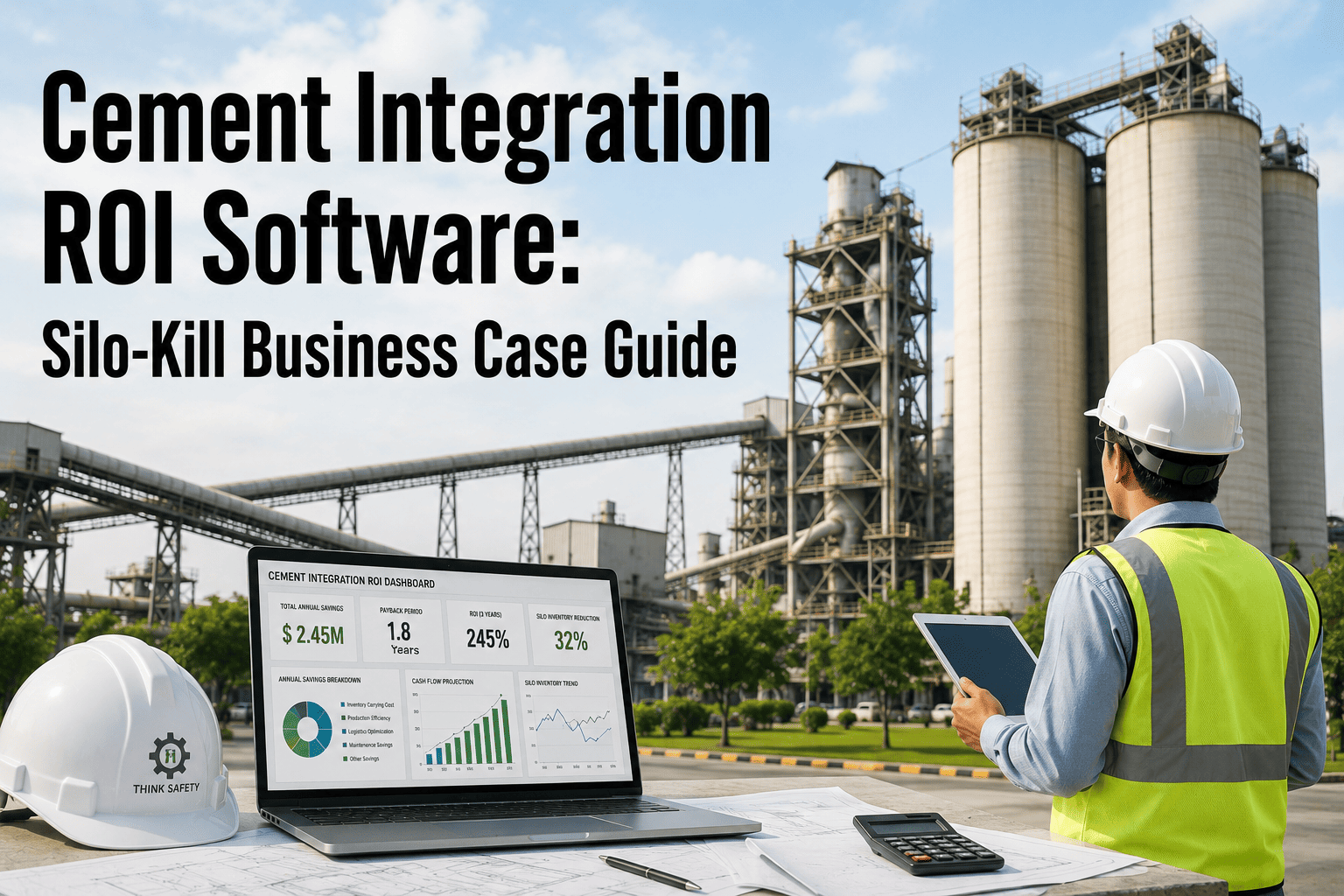
Every plant manager knows their systems are siloed — the hard part is putting a number on what it actually costs. A CFO will not approve integration spend on the word "efficiency" alone; they want the dollar figure behind duplicate data entry, delayed decisions, and repairs that turned emergency because nobody saw the warning sign in time. Without that number, the business case for killing silos sits in a drawer while the same hidden costs repeat every quarter. Sign in to OxMaint to see the ROI dashboard that turns disconnected system costs into the business case finance teams actually approve.
Integration ROI · Business Case Builder
The Silo-Kill Business Case CFOs Actually Sign Off On
Integration projects get delayed for one reason — nobody can prove the savings in hard dollars before spending the budget. OxMaint's ROI model turns disconnected DCS, ERP, and CMMS costs into a line-item business case backed by your own plant's audit data.
2-4x
cost multiple
emergency repair vs planned, from silo delay
6-9
months
typical payback window on integration spend
15-20%
hours saved
on duplicate data entry across systems
Live
ROI tracking
savings measured against baseline, not assumed
Where the Hidden Costs of Silos Actually Live
Nobody budgets a line item called "cost of disconnected systems," which is exactly why it survives year after year. The money is spread thin across five categories, each small enough to ignore individually and large enough, added together, to fund the integration project twice over.
Duplicate Data Entry
The same work order, inspection result, or cost figure typed into two or three systems by different people, each entry a chance for a mismatch that someone else has to catch later.
Delayed Decisions
A developing problem sits in one system's data for days before anyone cross-references it against another, turning a cheap early fix into an expensive late one.
Compliance Rework
Audit season means manually reconciling records across systems that were never designed to agree, consuming weeks of staff time that a connected system would not require.
Emergency Repairs
Warning signs that existed in one system but were never correlated with another turn into unplanned shutdowns, at two to four times the cost of a repair caught early.
Contractor Overtime
Emergency mobilisation and rush shipping rates, paid because a planned repair window was missed by a silo that failed to surface the problem in time.
Put a Dollar Figure on What Your Silos Are Costing
OxMaint's ROI model pulls actual cost and downtime data from your own systems — not industry averages — to build a business case with numbers a CFO can verify against last year's spend.
Building a Business Case That Survives Finance Review
A business case built on assumptions gets challenged line by line. A business case built on the plant's own historical data gets approved. OxMaint follows a five-step process that turns hidden silo costs into a number finance teams can trace back to source records.
1
Baseline Audit
Pull twelve months of work order, downtime, and cost history directly from existing CMMS and ERP records to establish an honest starting point.
2
Cost Mapping
Tag each cost event by root cause — duplicate entry, delayed detection, compliance rework, or emergency escalation — to see where silo costs concentrate.
3
Savings Model
Project the reduction in each cost category once systems are connected, using conservative assumptions validated against comparable plant deployments.
4
Pilot
Run the integration on one asset class or one plant area first, so the projected savings are proven against real results before wider rollout.
5
Scale
Extend the connected model plant-wide with a business case now backed by measured pilot results rather than projections alone.
Manual Business Case vs Automated ROI Dashboard
Building a business case by hand takes weeks and produces a document that is out of date the moment costs shift. An automated ROI dashboard keeps the numbers current, so the business case holds up under scrutiny at any point in the approval process. Sign in to OxMaint to see live ROI tracking built from your plant's own data.
Manual Business Case
OxMaint ROI Dashboard
Time to build first draft
Two to four weeks of manual data pulls
Generated directly from connected system data
Data source
Industry averages and estimates
Your plant's own twelve-month cost history
Traceability
Hard to defend individual line items
Every figure traceable to a source record
Freshness after approval
Static document, stale within months
Live tracking against actual realised savings
Finance team confidence
Frequently challenged on assumptions
Built on verifiable historical spend
Where the Savings Land — Quick Wins Through Long-Term Gains
Not every silo-kill saving shows up on the same timeline. Some costs disappear within the first month, others take a full campaign cycle to materialise. Understanding the timeline is part of building a business case finance will trust.
0-30 Days
Quick Wins
Duplicate data entry eliminated as soon as systems connect. Staff hours previously spent reconciling spreadsheets redirected immediately to higher-value work.
1-3 Months
Near Term
Compliance reporting time drops sharply as audit-ready records generate directly from connected data instead of manual reconciliation ahead of each filing.
3-6 Months
Medium Term
Fewer delayed decisions as cross-system correlation catches developing issues earlier, shifting repairs from reactive to planned before costs escalate.
6-12 Months
Long Term
Emergency repair frequency drops measurably, contractor overtime rates fall, and the full payback on integration spend is realised and tracked against baseline.
Frequently Asked Questions
How do you calculate the ROI of integrating cement plant systems?
OxMaint pulls twelve months of cost and downtime history from existing CMMS and ERP records, tags each cost event by root cause, and projects the reduction once systems are connected.
Sign in to OxMaint to run this against your own plant data.
What is a realistic payback period for a plant integration project?
Most plants see a payback window of six to nine months once duplicate data entry, delayed decisions, and emergency repair frequency are reduced, though this depends on baseline silo costs.
Do we need to replace our existing ERP and CMMS to see these savings?
No. OxMaint connects to existing systems rather than replacing them, so the savings come from integration and correlation, not from a costly system migration.
How do we present this business case to a finance team that is skeptical of software spend?
Lead with the plant's own historical cost data rather than industry benchmarks, since figures a finance team can trace to their own records are far harder to challenge.
Book a demo to see a sample business case built this way.
Can we pilot the integration before committing to a plant-wide rollout?
Yes. Running the integration on one asset class or plant area first lets the projected savings be validated against real results before scaling the business case plant-wide.
The Business Case for Killing Silos Is Already in Your Own Data.
OxMaint turns twelve months of your plant's own cost and downtime history into a business case a CFO can trust — then tracks the savings live once the project is approved.