A cement baghouse depends on a small chain of parts working in sequence: compressed air, diaphragm valves, blow pipes, controllers and filter bags. When one link degrades, differential pressure climbs, fan load rises and stack emissions become harder to hold within permit limits. Most pulse-jet problems start as slow drift rather than sudden failure, which makes them ideal for scheduled inspection and trend tracking. Plants that record every valve, bag and pressure reading in a maintenance management system can find that drift before it becomes a dust event.
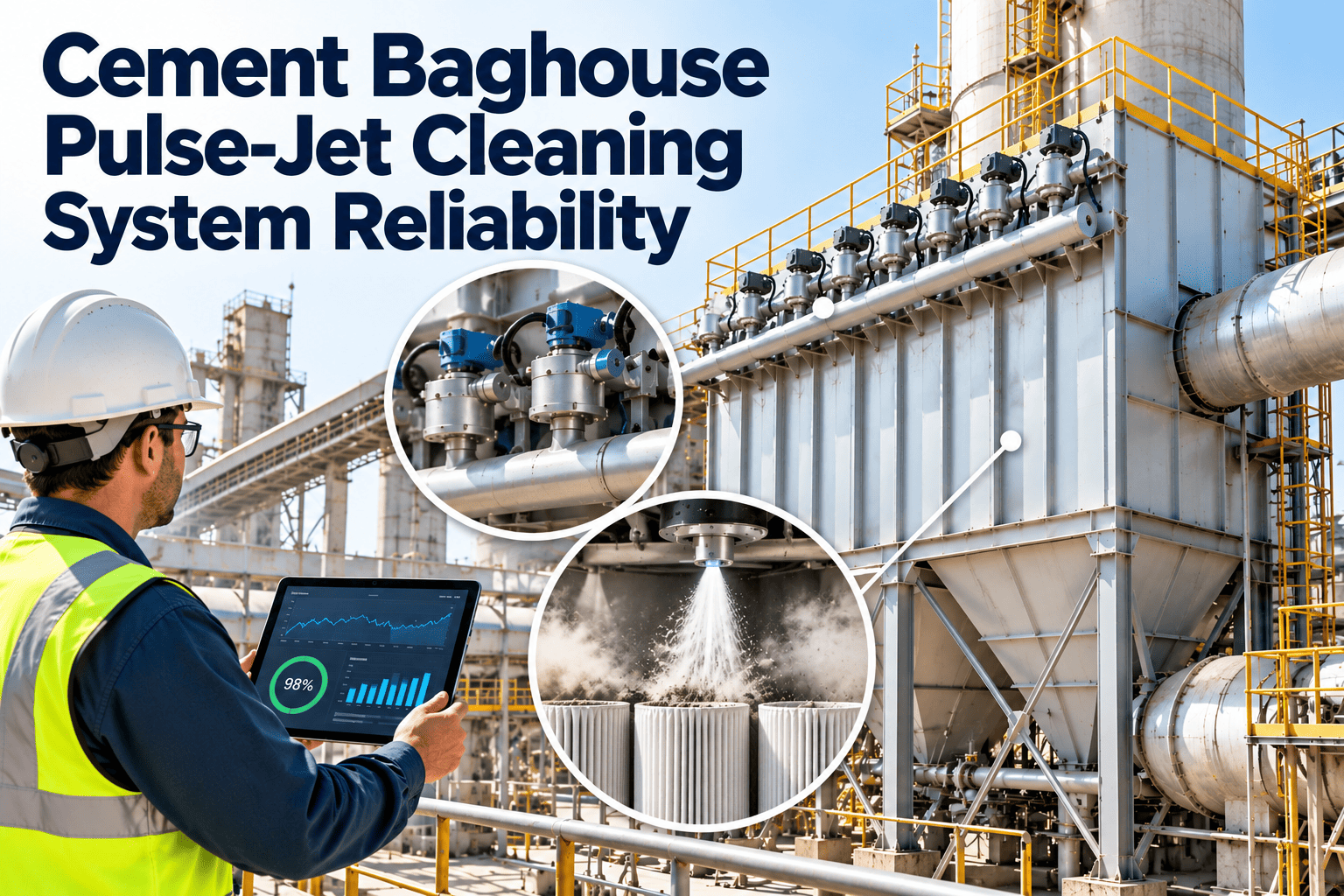
Cement Baghouse Pulse-Jet Cleaning System Reliability
Keep filter bags, diaphragm valves, blow pipes and compressed air performing so dust collection stays stable between planned stops.
Compressed air header
to
Diaphragm valve
to
Blow pipe
to
Filter bag
to
Clean differential pressure
Why pulse-jet baghouses struggle in cement plants
Fine, abrasive dust
Raw meal, kiln dust and cement dust wear bags and cages, especially near inlets and poorly aligned blow pipes.
Moisture and temperature swings
Kiln stops and restarts can push gas below dew point, causing sticky cake that pulses cannot release.
Many small components
Hundreds of valves and bags share one system, so a few weak units quietly overload the rest.
Reading differential pressure as a health signal
Low and flat
Possible bag breakage or leaks, so check the clean-air plenum and stack opacity trend.
Stable within design band
Cleaning is balanced. Keep routine rounds and record trends.
Slowly rising
Check blinded bags, weak pulses, moisture and air pressure before fan load increases.
High and unstable
Investigate valve failures, controller faults, hopper discharge blockage and condensation.
Symptom to cause to check
| Symptom | Common causes | Maintenance check |
|---|---|---|
| Rising differential pressure | Blinded bags, failed diaphragms, low header pressure | Pulse test by row, header pressure log, bag inspection |
| Visible stack dust | Torn bags, loose clamps, damaged cages | Leak location, bag replacement history |
| Valves cycling but poor cleaning | Weak air supply, wet air, misaligned blow pipes | Dryer and drain check, nozzle alignment |
| Dust buildup in hopper | Screw conveyor or rotary valve problems | Discharge device rounds, level sensor test |
| Short bag life | Abrasion, chemical attack, over-cleaning | Wear pattern review, pulse frequency review |
Track every valve, bag and pressure reading in one place
Replace paper rounds with scheduled inspections and clear baghouse history.
A tiered maintenance rhythm
Each shift
- Record differential pressure
- Check compressed air header pressure
- Listen for continuous air leakage
Weekly
- Drain compressed air receivers
- Inspect hopper discharge devices
- Review stack opacity trend
Monthly
- Pulse-test valves by row
- Check controller timing settings
- Inspect access doors and seals
Planned stop
- Inspect bags, cages and tube sheet
- Check blow pipe alignment
- Replace worn diaphragms and bags
Intervals depend on dust load, gas conditions and manufacturer guidance, so set them from your own failure history.
Compressed air quality and supply
Pressure
Low or fluctuating header pressure weakens the pulse, so bags stay loaded and differential pressure climbs even when valves fire correctly.
Moisture and oil
Wet air carries water into valves and onto bags, where it can bind dust into a hard cake that pulses will not release.
Capacity
Compressors shared with other users can starve the baghouse during peak demand, which often shows up as a recurring daily pattern.
Filter media and bag failure patterns
| Pattern found at inspection | Likely reason | Preventive response |
|---|---|---|
| Wear near the bottom of bags | Abrasion from inlet velocity or dust entry direction | Check baffles and inlet design, replace worn bags |
| Wear at the top of bags | Misaligned blow pipes or strong pulse impact | Realign nozzles, inspect venturis and cages |
| Hardened, damp cake | Operation below dew point or wet compressed air | Review heating, insulation and air dryers |
| Holes at cage points | Bent or rough cages, poor installation | Inspect cages and installation practice |
| General stiffening or discoloration | Chemical or thermal exposure | Review media choice with the supplier |
Cleaning control and emissions
Control practices
- Timed cleaning is simple but may over-clean in light load periods.
- Differential-pressure-based cleaning responds to loading but depends on accurate sensors.
- Both approaches need controller settings recorded and reviewed after changes.
Emissions and compliance
- Stack monitoring and opacity records support regulatory reporting.
- Bag failures should be linked to the compartment and date of repair.
- Calibration of pressure sensors and dust monitors should be scheduled.
- Check applicable permit conditions with your environmental team.
Startup, shutdown and spares planning
Startup
- Preheat if required
- Check air supply first
- Watch pressure trend
Shutdown
- Clean bags before stopping
- Empty hoppers
- Record any faults
Critical spares
- Diaphragm kits
- Solenoids and controller cards
- Sets of bags and cages
Review
- Monthly pressure trend
- Failures by compartment
- Bag life per baghouse
Baghouse duty differs across the cement process
| Application | Main challenge | Reliability focus |
|---|---|---|
| Kiln and raw mill stack | Temperature swings, acid dew point, large gas volume | Media choice, insulation, bypass and startup procedures |
| Clinker cooler | Hot, abrasive dust and variable load | Bag temperature protection, inlet wear, cleaning frequency |
| Cement mill and separator | Very fine product, high value dust | Leakage detection, discharge reliability, valve condition |
| Coal and fuel preparation | Combustible dust and explosion risk | Explosion protection, inerting, grounding and strict inspection routines |
| Transfer points and silos | Many small units, intermittent operation | Simple standard routines and clear ownership |
Combustible dust systems must follow your site's explosion protection and permit-to-work rules. Treat the notes here as maintenance planning prompts, not safety design guidance.
Hopper, discharge and dust handling
Rotary valves
Worn vanes and seals let air in, disturb the hopper and reduce cleaning efficiency. Inspect clearances, drive condition and bearing temperature.
Screw conveyors
Buildup, worn flights and failed bearings cause dust to back up into the hopper, which can re-entrain on the bags.
Level and bridging
Level switches, vibrators and hopper heaters keep material flowing. Failures often show first as unexplained pressure rise.
Managing condensation and dew point risk
Where moisture enters
- Cold starts and long idle periods
- Poorly insulated casings and ducts
- Air in-leakage through doors and flanges
- Wet compressed air or failed dryers
- Rain through damaged roofs or inspection doors
What maintenance can check
- Insulation and heat tracing condition
- Door seals, expansion joints and flange gaskets
- Compressed air dryer and drain operation
- Hopper heaters and temperature sensors
- Records of startups and dew point alarms
Finding a failing row in six steps
Step 1
- Confirm the pressure sensor reading
- Compare with recent trend
Step 2
- Check header pressure and air quality
- Note any recurring time pattern
Step 3
- Pulse-test valves row by row
- Listen for weak or missing pulses
Step 4
- Inspect the affected compartment
- Look for blinded or torn bags
Step 5
- Repair and record parts used
- Update the asset history
Step 6
- Confirm pressure and stack readings
- Close the work order
KPIs for a baghouse reliability review
Differential pressure
Average, range and time outside the design band for each baghouse.
Bag life
Operating time per bag set, with the reason for each replacement.
Valve failures
Count by row and by cause, to expose weak units and repeat issues.
Planned work share
Planned versus reactive work orders on filtration assets.
Monitoring trends that help maintenance teams
- Continuous differential pressure logging makes slow drift visible instead of relying on spot readings.
- Compressed air header pressure trends show weak supply before it affects cleaning.
- Bag leak detection and stack opacity data help locate faults to a compartment faster.
- Valve and controller diagnostics, where available, reveal failing solenoids and diaphragms early.
- All of these signals are most useful when they are tied to the asset record and to a work order process.
A 90-day plan for a filtration reliability program
Days 1 to 20
- Register baghouses, compartments, valve groups and fans
- Rank by emissions and process risk
Days 21 to 45
- Create shift, weekly and monthly routines
- Set pressure and air limits
Days 46 to 70
- Log every valve and bag failure by location
- Review repeat patterns
Days 71 to 90
- Adjust intervals and spares
- Plan bag replacement from evidence
Safe access and standard work for baghouse maintenance
Hazards to plan for
- Confined space entry in plenums and hoppers
- Work at height on roofs and walkways
- Stored energy in compressed air and hopper discharge systems
- Fine dust exposure and hot surfaces
- Material engulfment risk in full hoppers
Good practice in work orders
- Attach isolation steps and permit requirements to each job plan
- List protective equipment and entry controls
- Use standard bag change procedures with checklists
- Record who worked in each compartment and what was replaced
- Follow your site's safety rules, which take priority over this guide
Spare parts that deserve a stocking decision
| Item | Why it matters | Stocking approach |
|---|---|---|
| Diaphragm and repair kits | Most common cause of weak or stuck pulses | Hold enough for a full row |
| Solenoid valves and coils | Electrical faults stop cleaning in one row | Hold a small interchangeable set |
| Controller cards and timers | Long lead time and wide impact | Hold one set per controller type |
| Filter bags and cages | Needed for planned and emergency change | Hold per compartment, based on bag life data |
| Rotary valve parts | Hopper discharge failures raise pressure | Hold seals, bearings and vanes |
Who owns what in a baghouse reliability program
Operators
Record pressure readings, report abnormal noise or dust, and carry out simple rounds each shift.
Maintenance
Test valves, replace bags, service air systems and enter findings against the right asset.
Environment and reliability
Review emissions trends, repeat failures and spares levels, then adjust routines and limits.
Alarms and limits worth documenting
High differential pressure
Define a warning and an action level from design data and operating history, and state who responds and how fast.
Low compressed air
Alarm before cleaning quality suffers, and link the alarm to compressor and dryer checks.
High inlet temperature
Protect bags from heat excursions, and record every event with its duration and the action taken.
Records auditors and regulators tend to ask for
- Maintenance history for each baghouse, including bag changes and repairs by compartment.
- Calibration records for pressure sensors, opacity monitors and dust monitors.
- Evidence that scheduled inspections were completed and findings were acted on.
- Records of abnormal events, such as bag failures or high emissions, with cause and corrective action.
- Training and competence records for people carrying out the work.
Questions to settle in a quarterly baghouse review
- Which compartments or rows account for most valve and bag failures, and what do they have in common?
- Has differential pressure trended up since the last bag change, and is the cause mechanical, process or air supply?
- Which planned inspections were deferred, and did any deferral lead to a failure?
- Do spares levels match actual bag life and valve failure history?
- Which procedures or job plans need updating after recent repairs?
Before closing a baghouse work order
- Differential pressure and stack readings checked after the repair, and recorded on the work order.
- Parts replaced, compartment and row identified, and spares stock updated.
- Access covers, seals and guards confirmed refitted, with isolation removed under permit.
How Oxmaint supports baghouse reliability
Common gaps
- Bag replacement dates kept in notebooks
- Valve failures fixed without recording the row
- Pressure readings not compared over time
With a CMMS
- Asset records per baghouse, compartment and valve group
- Preventive maintenance and inspection schedules on mobile
- Work orders, spares inventory and compliance records linked
- Reports showing repeat failures by component
Frequently asked questions
What causes high differential pressure in a baghouse?
Blinded bags, weak pulses, wet air or hopper blockages are common causes. Trend data shows which one is developing.
How often should diaphragm valves be checked?
Pulse-test them regularly and replace diaphragms based on failure history and manufacturer guidance.
Can bag life be extended?
Often yes, by controlling moisture, pulse frequency and blow pipe alignment, and by recording wear patterns.
Is a CMMS useful for dust collectors?
Yes, for scheduling rounds and keeping records. You can book a demo to see a baghouse setup.
Where should we start?
Register one baghouse and its valve groups, then get started with shift and weekly rounds.
Keep your baghouse cleaning on schedule
Give maintenance teams the records and routines that prevent dust problems before they reach the stack.