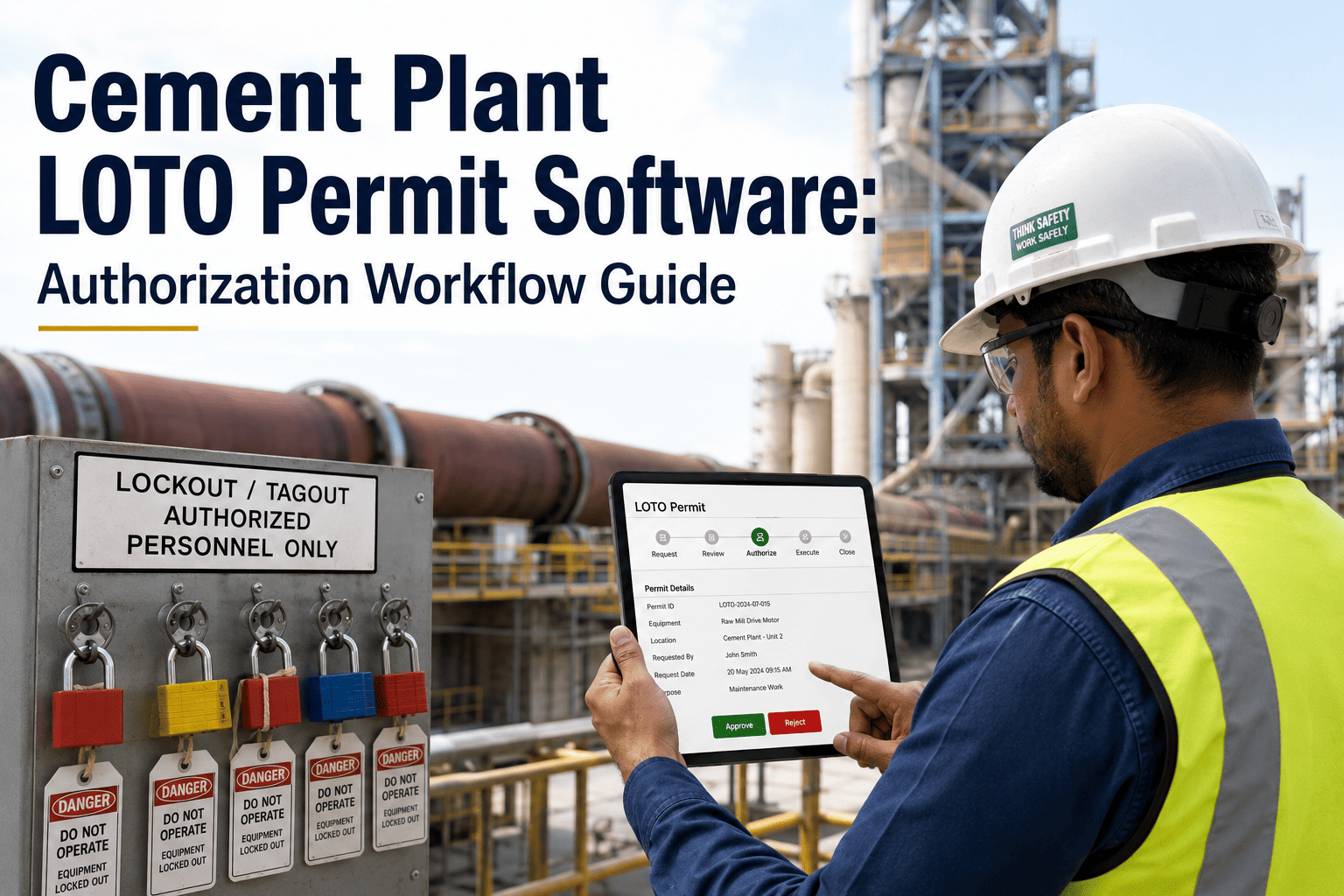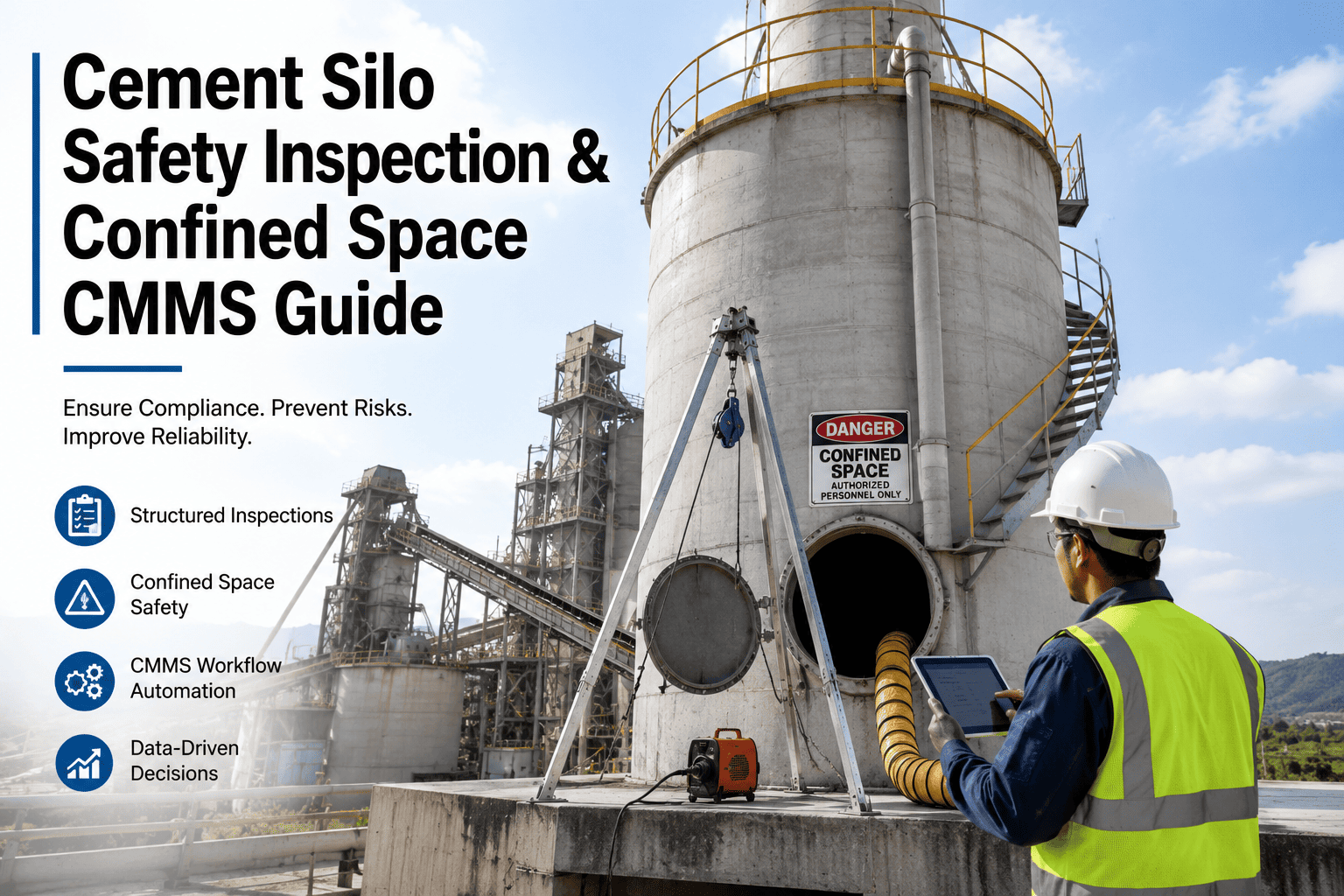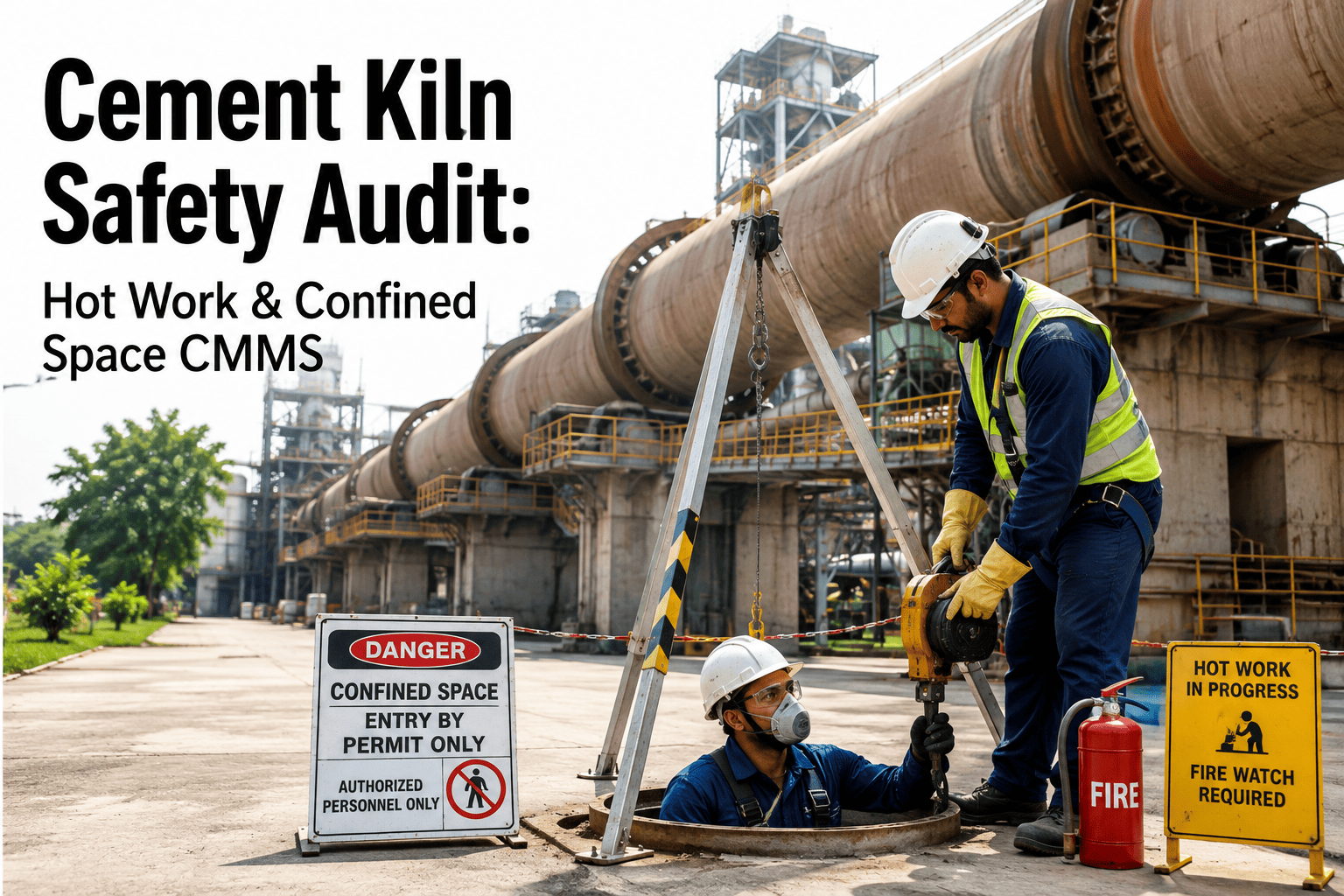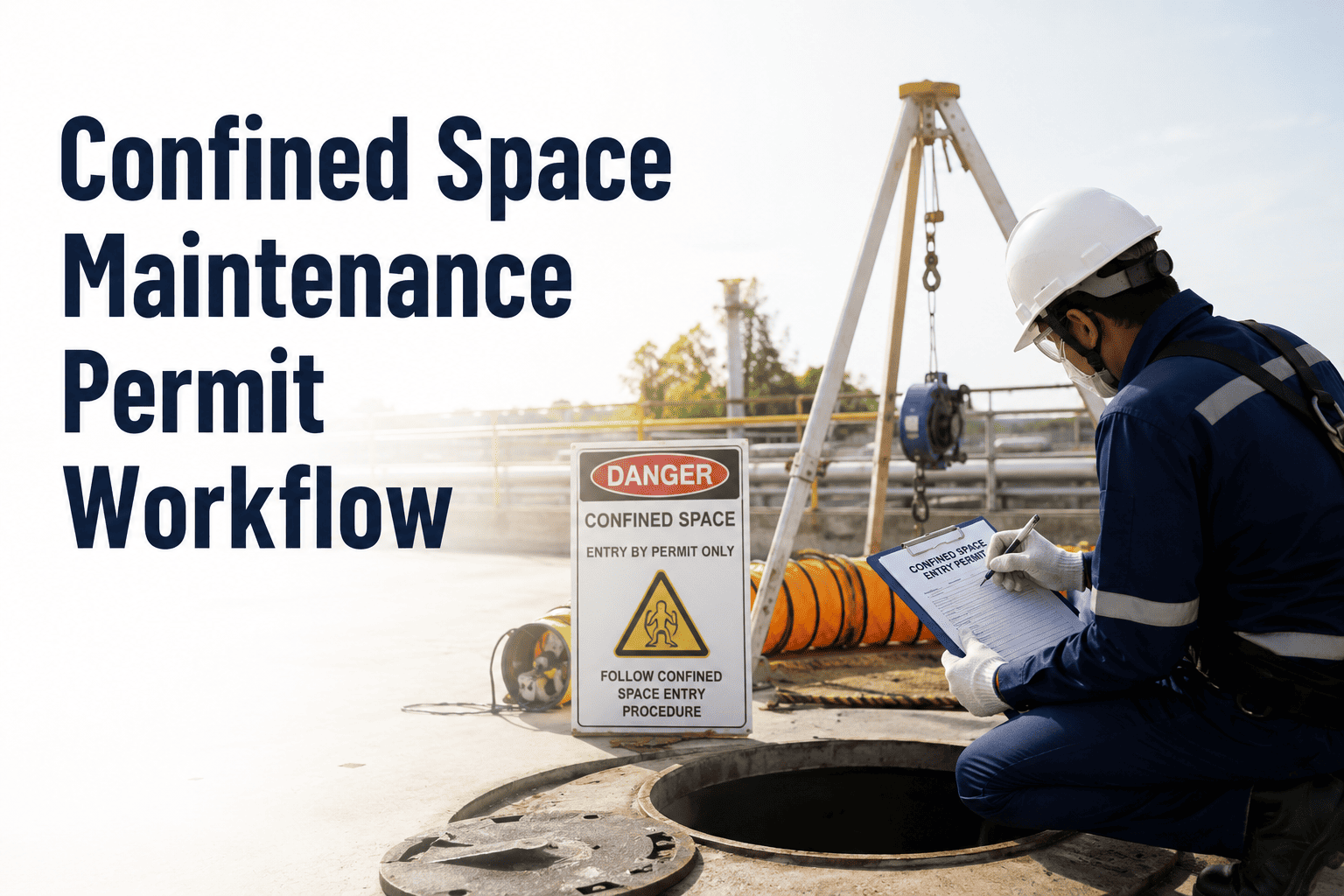
Entry into a preheater cyclone, kiln inlet, silo or filter hopper is one of the highest-risk jobs in a cement plant, and it often goes wrong through small missed steps rather than dramatic failures. A permit workflow works best when every step is visible and can be ticked off in order by the people doing the work. This page turns the process into a working checklist you can adapt to your site procedure, from job planning through isolation, testing, rescue, entry and closure. It also shows how Oxmaint inspection checklists and work orders keep the records organized.
Cement Confined Space Permit Workflow for Preheater and Silo Work
A step-by-step checklist for permit-required entry into preheaters and silos, from planning to closure and follow-up.
How to Use This Checklist
Hazards the Checklist Is Built Around
| Location | Typical hazards | Checklist sections that matter most |
|---|---|---|
| Preheater cyclones and ducts | Residual heat, falling buildup, hot dust, poor ventilation, air cannon discharge | 3, 4, 6, 7 |
| Kiln inlet and riser | Heat, buildup collapse, gas exposure, restricted exit | 3, 4, 6, 7 |
| Clinker silo | Engulfment, hot pockets, dust, collapse of hung-up material | 3, 5, 7, 9 |
| Cement and raw meal silo | Engulfment, dust, rat-holes, aeration air | 3, 5, 6, 7 |
| Filter hoppers | Dust bridging, moving screws, hot residue | 3, 6, 8, 9 |
Permit Checklist, Section by Section
- Space identified exactly. Name the cyclone stage, duct, silo or hopper, using the asset tag from the work order.
- Task described in steps. Write what will be done inside, with tools, duration and number of people.
- Entry confirmed as necessary. Record why the job cannot be done from outside.
- Work order linked. The permit references the maintenance job so findings and costs stay together.
- Planned window agreed with operations. Confirm kiln or mill status, cooldown time and restart limits.
- Contractors briefed and qualified. Check training, equipment and supervision for every outside crew.
- Permit issuer and attendant named. Do not start without named people for each role.
- Remote methods considered. Review cameras, cleaning lances, cannons or external measurements first.
- Hazards listed for this space. Cover heat, buildup collapse, dust, gas, engulfment, moving equipment and falls.
- Hot work needs identified. Add a hot work permit and fire controls if cutting or welding is planned.
- Interaction with other jobs checked. Look for overhead work, adjacent scaffolding and shared isolations.
- Lighting and tools reviewed. Use equipment rated for the conditions and suitable for dust.
- Waste and material removal planned. Decide how debris leaves the space without creating new hazards.
- Process equipment stopped. Kiln feed, fans, screws, valves and feeders that connect to the space are secured.
- Locks and tags applied. Each person or crew attaches their own lock where the procedure requires it.
- Stored energy released. Depressurize air lines, release springs and drain or vent as needed.
- Air cannons isolated. Close supply, bleed pressure and tag the control points.
- Aeration and discharge secured. Silo aeration, slide gates and extraction are locked out.
- Zero energy verified. Attempt a start or test at the local control to prove isolation worked.
- Isolation list attached. Record each point, lock and verifier on the permit.
- Temperature confirmed at the entry point. Measure rather than assume cooldown, and check hot spots near refractory.
- Buildup assessed. Inspect from outside where possible and mark areas likely to fall.
- Cleaning method agreed. Define tools, order of work and exclusion zones below the work.
- Scaffold inspected. Check tags, platforms, edge protection and a clear exit route.
- Ventilation arranged. Provide airflow suitable for the duct layout and dust level.
- Protective equipment fitted. Confirm heat, dust, head, eye and foot protection are in place and fit well.
- Work and rest limits set. Plan rotation of entrants where heat or effort is high.
- Material level known. Record the level and the surface condition from a safe position.
- Bridging and voids assessed. Treat hung-up material as a collapse risk.
- No standing on stored material. Entry onto material needs a specific engineered plan and retrieval support.
- Fall protection inspected. Check harnesses, lines, anchor points and the roof access.
- Retrieval system tested. Confirm it works from the real entry point and with the planned entrant.
- Dust and cleanup plan ready. Plan lighting, ventilation and removal of loose material.
- Emptying method confirmed. Prefer controlled emptying or remote cleaning to manual work.
Put This Checklist on Every Technician Phone
Build mobile checklists in Oxmaint and link each permit to the work order behind it.
- Instruments calibrated. Check calibration date and bump test before use.
- Right hazards tested. Include oxygen, flammable gas and toxic gases that apply to the space or the work.
- Multiple test points used. Sample at different levels and locations inside the space.
- Results recorded. Write value, time, instrument and person on the permit.
- Continuous monitoring set. Use monitors where work or process may change conditions.
- Retest triggers defined. Retest after breaks, disturbance of material or any change in work.
- Rescue plan matches the space. Confirm method, equipment and team for this exact entry.
- Rescue team available. They must be ready for the whole job, not just the start.
- Attendant in position. The attendant stays outside, tracks entrants and never enters to rescue.
- Communication tested. Confirm voice, radio or signal works from inside to outside.
- Entrants briefed. Review hazards, signals, exit route and stop-work rules.
- Emergency numbers displayed. Everyone knows the alarm method and who to call.
- Entry log ready. Record who enters and leaves and at what time.
- Attendant keeps contact. Check in regularly and respond to any missed signal.
- Atmosphere monitored. Watch continuous readings and respond to alarms immediately.
- Work stays inside scope. New tasks require a permit update and a new approval.
- Heat stress watched. Rotate people and allow breaks in hot work areas.
- Neighboring work reviewed. Stop if other jobs create new hazards for the space.
- Shift handover documented. Review isolations, tests and open conditions with the incoming team.
- Headcount confirmed. Compare the entry log with people outside the space.
- Tools and materials removed. Count tools and check for forgotten items.
- Space inspected. Look for debris, open covers or loose parts before closing.
- Guards and covers restored. Refit manways, doors and safety guards.
- Locks removed in order. Follow the procedure for lock removal and notify operations.
- Permit closed and signed. Issuer confirms work is complete and conditions are safe.
- Restart communicated. Operations are told clearly that equipment can be released.
- Findings recorded. Capture wear, lining damage, corrosion and buildup patterns found inside.
- Corrective work raised. Create work orders for defects found, with priority and owner.
- Permit stored with the asset. Make it searchable by space and date.
- Lessons noted. Record near misses, delays and equipment problems.
- Next inspection updated. Adjust inspection and cleaning intervals using what was found.
Roles and Responsibilities During Entry
Training and Competence Checks
- Induction is not enough: entrants, attendants and issuers need role-specific training that matches the spaces on your plant.
- Contractors meet the same standard: check their training records and equipment before they receive a permit.
- Rescue practice is current: rehearse using real access points such as cyclone manways and silo roof hatches.
- Refreshers are scheduled: track expiry dates and repeat training after incidents, procedure changes or long breaks from entry work.
Stop-Work Triggers
- An alarm sounds or a monitor shows an unsafe reading
- Communication with the entrant is lost
- Material moves, falls or shifts unexpectedly
- Heat or dust exceeds what the crew can tolerate
- Isolation is found to be incomplete or has been altered
- The scope of work changes without a permit update
Sign-Off Record
| Role | Confirms | Name and time |
|---|---|---|
| Requester | Job description and need for entry | |
| Operations | Equipment stopped, safe and handed over | |
| Permit issuer | Isolations, tests, rescue and controls verified | |
| Attendant | In position, communication tested, entry log started | |
| Entrant | Briefed, understands hazards, signals and exit | |
| Issuer at closure | People and tools out, equipment restored, permit closed |
Common Misses That Checklists Catch
- Signing before isolation is verified: a tag on a switch is not proof of zero energy.
- Old gas test readings: conditions change as buildup or hot material is disturbed.
- Rescue plan on paper only: a method never tried may not fit a narrow cyclone duct.
- Scope creep inside the space: new tasks start without a permit update.
- Weak shift handover: isolations and open conditions are lost at shift change.
- Incomplete closure: tools, lights or loose parts are left inside and found during restart, so count tools out as carefully as people.
- No follow-up on findings: defects seen inside the space are mentioned verbally and never become work orders.
How Oxmaint Supports the Checklist
Frequently Asked Questions
Organize Safer Preheater and Silo Maintenance
Connect checklists, inspections and work orders so every entry job is planned and documented.