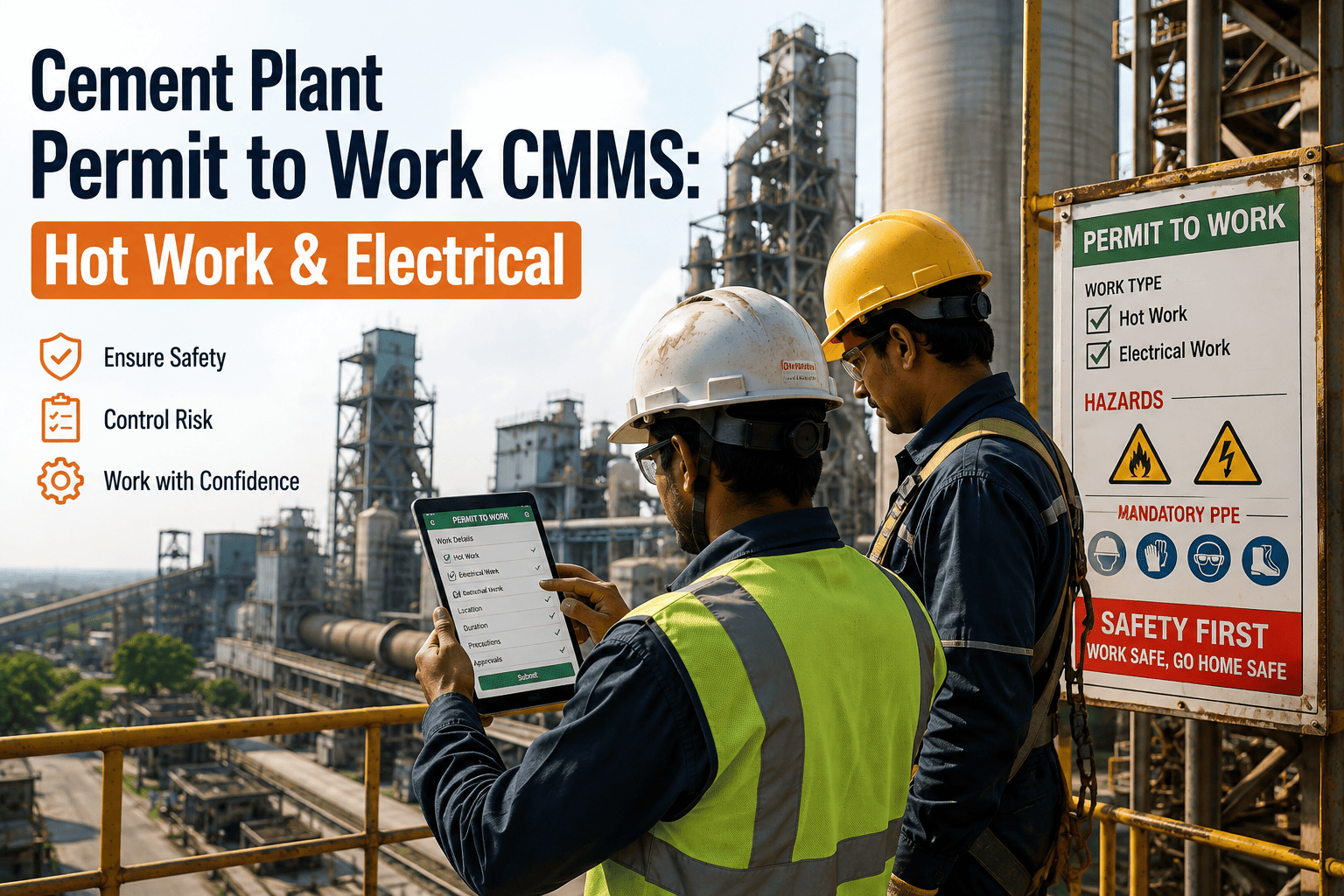
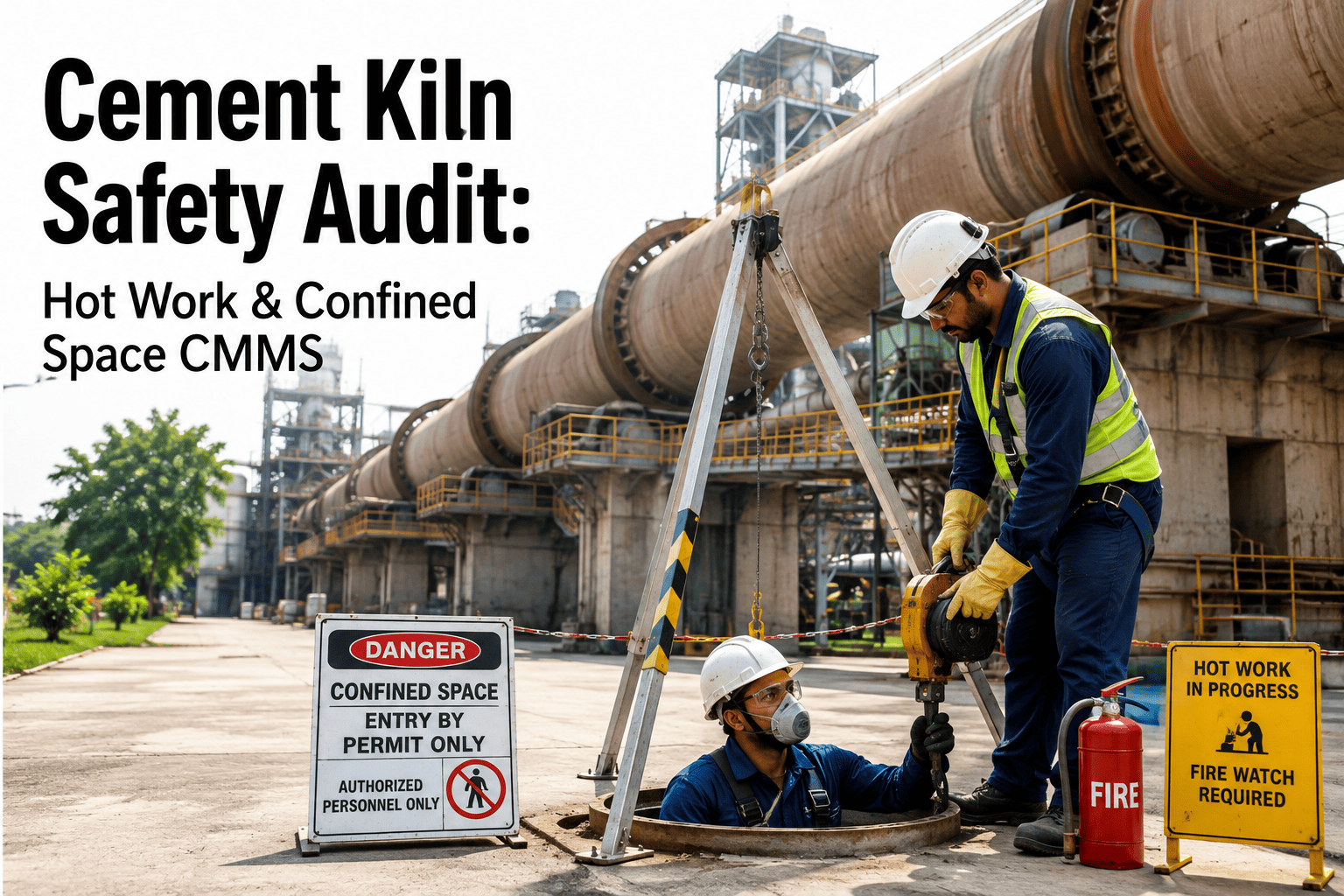
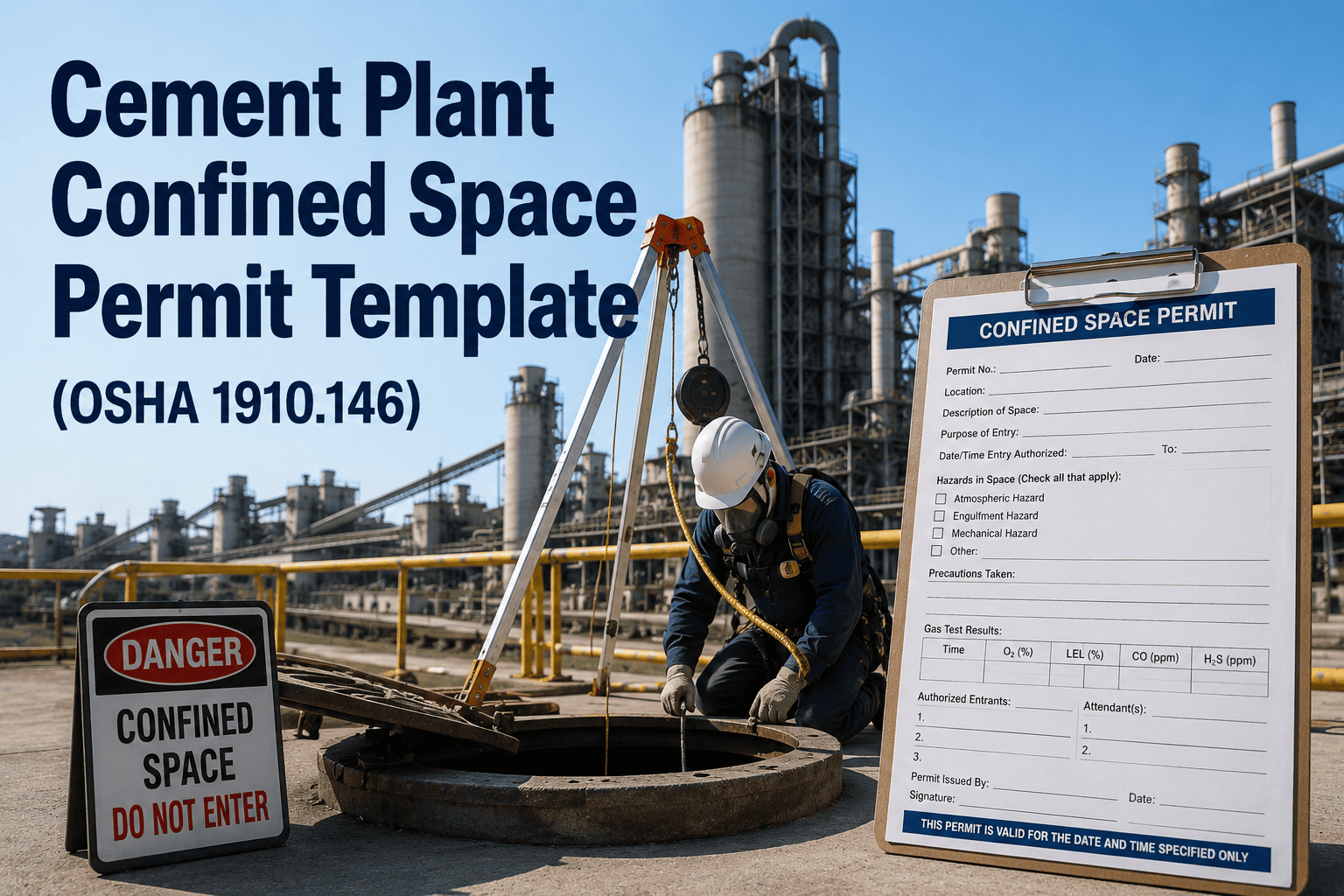
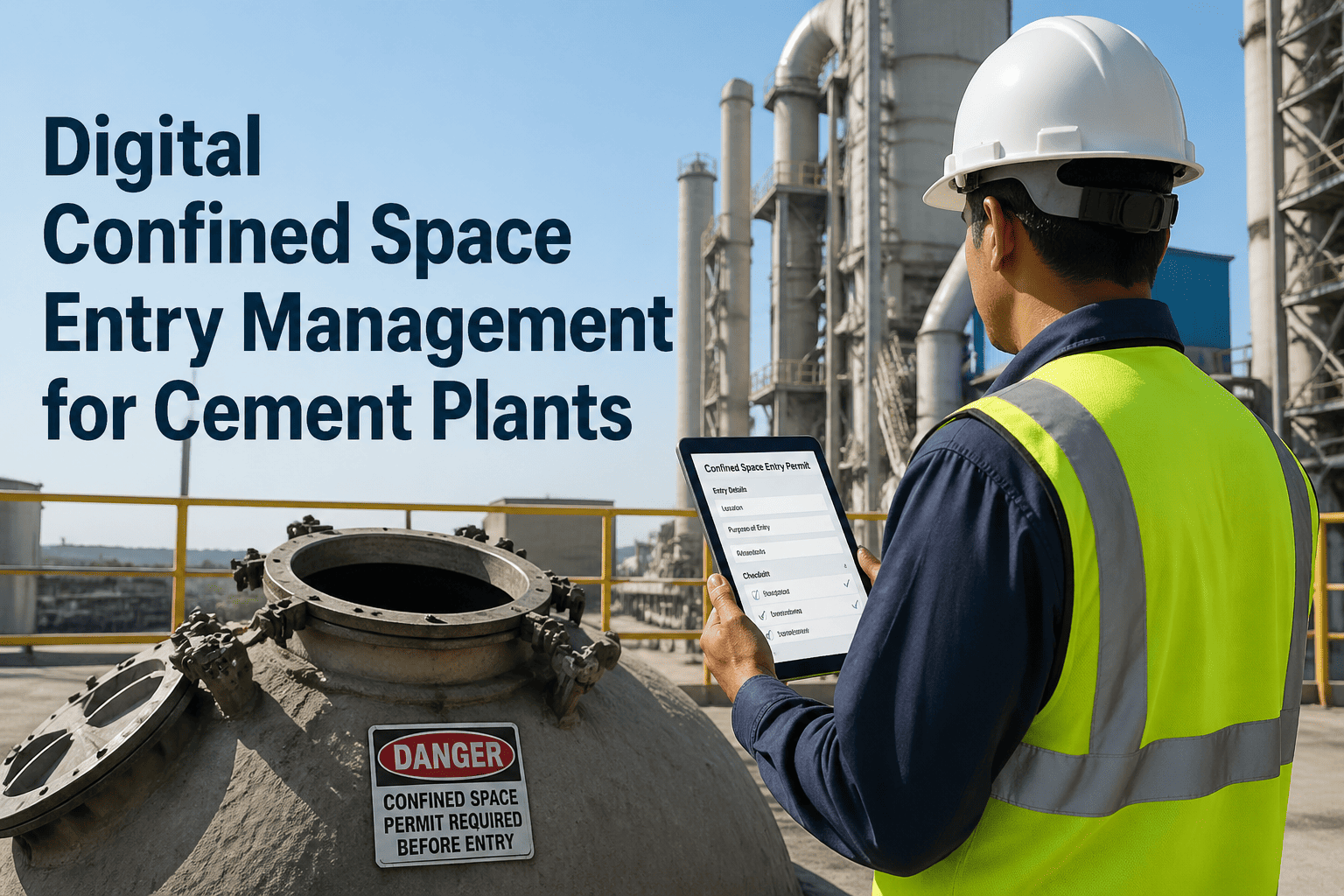
A cement plant without a functioning permit-to-work system is not just an OSHA citation waiting to happen — it is a hot work fire in a coal storage area, a confined space entry without atmospheric testing, or a fall from an unguarded preheater platform that could have been prevented by a signed permit in the technician's pocket. The permit-to-work system is the single administrative control that bridges the gap between knowing a job is hazardous and ensuring every person doing that job has confirmed the controls are in place before starting. This guide covers how to structure, implement, and digitally track a cement plant permit-to-work program covering the three highest-consequence work categories: hot work under NFPA 51B, confined space entry under OSHA 1910.146, and working at height. Start a free Oxmaint trial to see how digital permit-to-work integrates with your CMMS work orders in cement plant operations.
NFPA 51B
Hot Work Standard
1910.146
Confined Space Standard
1926.502
Fall Protection Standard
1910.147
LOTO — Works With PTW
90 sec
Detection to Work Order in Oxmaint
Why Permits Fail in Cement Plants
The Five Ways a Cement Plant Permit System Breaks Down in Practice
A permit system that works on paper and fails in the field is more dangerous than no system at all — it creates false confidence that hazards have been controlled when they have not. In cement plants, permit failures typically follow one of five predictable patterns. Recognizing these patterns is the first step to designing a system that prevents them.
01
The Pre-Signed Permit
Supervisors sign permits in advance for work that will start hours later. By the time the job begins, conditions have changed — atmospheric readings are stale, other work in the area has introduced new hazards, or the isolated equipment was re-energized for a test. Pre-signed permits are invalid and their use is a common OSHA citation.
02
The Permit Left at the Control Room
The permit is completed correctly but remains at the control room desk while the crew works at the asset location — 200 meters and one level away. When conditions change or a new worker arrives, there is no permit at the work site to confirm what controls are in place. Physical permit presence at the job site is an OSHA requirement, not a recommendation.
03
The Never-Closed Permit
Crews complete the job and leave the area. The permit is never formally cancelled. Days later, another crew assumes the permit is still active and re-enters the space without conducting fresh atmospheric testing — because they believe the previous permit covers their entry. Open permit cancellation at job completion is as important as permit issuance at job start.
04
The Contractor Who Doesn't Know the System
External contractors arrive on site with their own company permit templates and no briefing on the cement plant's permit requirements. They issue their own permit, begin hot work near coal dust, and the plant's fire watch system is never activated because the plant's permit was never raised. Contractor permit integration must be explicitly managed — it does not happen automatically.
05
The Simultaneous Conflicting Permits
Hot work is permitted on one level of the preheater tower while confined space entry is permitted in a vessel directly below. Neither permit issuer knows about the other. Welding sparks fall through an opening and enter the confined space where a worker is positioned. Permit coordination across concurrent work in the same area is a program requirement cement plants routinely underestimate.
Hot Work — NFPA 51B
Hot Work in a Cement Plant: What NFPA 51B Requires and Where the Risk is Real
Hot work — any operation that produces flames, sparks, or heat capable of initiating combustion — is a daily occurrence in cement plant maintenance. Welding and cutting on conveyor frames, grinding on mill shells, and torch work on kiln shell plates all generate ignition sources in an environment where coal dust, raw meal powder, and fuel oil are present. NFPA 51B defines the standard for fire prevention in hot work operations.
Before Hot Work Begins
Fire watch designated and confirmed present at the work site
Area inspected within 35 feet of the hot work location for combustibles
Combustibles that cannot be removed covered or shielded with fire-resistant material
Floor openings, wall openings, and cracks within 35 feet sealed to prevent spark travel
Fire suppression equipment confirmed at the work site — extinguisher type matched to fuel present
Hot work permit issued and signed by authorized supervisor — permit at job site, not control room
Cement-Specific Hot Work Hazards
Coal dust accumulated in conveyor enclosures — explosive atmosphere within ATEX-classified zones
Raw meal powder on conveyor belts and transfer chutes — combustion risk during grinding operations
Fuel oil lines near kiln burner areas — fire risk from spark contact on uninsulated sections
Conveyor belt rubber — highly combustible, ignites from welding spatter at distances exceeding 5 meters
Preheater tower dust accumulation — vertical spark travel through open floors creates multi-level fire risk
After Hot Work Completes
Fire watch maintained for minimum 30 minutes after all hot work ceases — NFPA 51B requirement
Area re-inspected by fire watch at 30-minute post-work interval — look for smoldering materials
Hot work permit formally cancelled in the permit system — not abandoned
Fire watch sign-off recorded: time hot work ended, time fire watch ended, and result of post-work inspection
Digital Permit-to-Work Linked to Every CMMS Work Order
Oxmaint connects hot work, confined space, and working-at-height permits directly to work orders. Permits are issued digitally, signed by authorized supervisors, held at the job site on mobile, and cancelled automatically when work orders close. Full audit trail — no paper, no lost permits, no pre-signed forms.
Confined Space — OSHA 1910.146
Confined Space Entry in Cement Plants: Every Vessel, Silo, and Pit Has a Permit Requirement
Cement plants are dense with permit-required confined spaces: raw meal silos, clinker storage domes, cement silos, kiln inlet chambers, cooler compartments, cyclone preheater stages, bucket elevator housings, and underground conveyor tunnels. OSHA 1910.146 defines a permit-required confined space as one that has the potential for a hazardous atmosphere, engulfment, or any other serious safety or health hazard. In cement plants, atmospheric hazards — oxygen deficiency from carbonation reactions, CO buildup from clinker, and dust explosion risk — mean almost every confined space is permit-required.
Working at Height
Working at Height in Cement Plants: Preheater Towers, Kiln Platforms, and Conveyor Gantries
A cement plant's vertical structure — preheater towers rising 100 meters, kiln riding ring access platforms, conveyor gantry walkways spanning 50 meters — makes working at height a daily maintenance reality. OSHA 1926.502 covers fall protection requirements, and a permit-to-work system for working at height formalizes the controls that must be in place before any worker accesses an elevated position.
Zone
Preheater Tower Access
Risk Level: Critical
Multi-level open grating, unsecured openings between cyclone stages, and limited rescue access if a worker falls. Permit must confirm guardrail inspection, harness attachment point certification, and rescue plan with designated rescuer confirmed on site before entry.
Zone
Kiln Riding Ring and Shell Access
Risk Level: Critical
Hot kiln shell surface, unguarded platform edges, and proximity to rotating equipment. No working-at-height permit is valid on kiln shell access without kiln rotation fully locked out, shell temperature below safe entry threshold, and secondary fall arrest system confirmed.
Zone
Conveyor Gantry and Head Station
Risk Level: High
Conveyor gantries often have minimal guardrailing at head and tail stations where maintenance is most frequent. Permit must confirm belt locked out, all guardrails in place or temporary barriers installed, and harness anchor point rated for the worker weight and fall distance.
Zone
Cement Mill and Raw Mill Access Platforms
Risk Level: High
Mill inspection and liner replacement work requires access to platforms above mill shells. Permit confirms mill rotation fully isolated, platform structural integrity assessed (vibration from mill operation can fatigue walkway welds), and no simultaneous grinding operation on adjacent mills.
CMMS-Tracked Permit Records
What a Digital Permit-to-Work System Must Record — and What OSHA Will Ask For
Record Type
Permit Issuance Record
Date and time of issuance, issuing authority name and signature, work description, location, hazards identified, controls confirmed, names of all authorized entrants or workers
Record Type
Atmospheric Test Results (Confined Space)
O₂ percentage, LEL percentage, CO ppm, H₂S ppm — recorded by named tester with calibrated instrument serial number, time of test, and result relative to entry threshold
Record Type
Fire Watch Sign-Off (Hot Work)
Time hot work commenced, time hot work ceased, 30-minute post-work monitoring end time, fire watch attendant name, result of post-work inspection
Record Type
Permit Cancellation Record
Time job completed, time permit cancelled, cancelling authority name — distinguishing between normal completion cancellation and emergency cancellation before job complete
Record Type
Annual Permit Program Review
1910.146 requires review of the overall confined space permit program at least annually, or when conditions that prompted a change in the permit space classification arise. Review must be documented and retained.
Frequently Asked Questions
Cement Plant Permit-to-Work: Common Questions
Can one permit cover multiple work types — for example, hot work and confined space on the same job?
No — each permit type must be issued separately. Hot work and confined space entry cannot be covered by a single combined permit because the hazard controls, responsible persons, and monitoring requirements are different. If hot work is planned inside a confined space, both permits must be issued, with additional requirements for atmospheric monitoring during welding operations within the space.
Book a demo to see how Oxmaint handles multi-permit work orders for complex jobs.
How long is a confined space entry permit valid?
OSHA 1910.146 requires that a permit be valid only for the duration of the authorized entry. If the job extends beyond one shift, a new permit must be issued for the new shift — atmospheric conditions must be re-tested, entrants re-confirmed, and the new issuing authority must sign. A permit issued for day shift cannot be carried into night shift without re-issuance.
Manage shift-by-shift permit re-issuance digitally in Oxmaint — start a free trial.
Do contractors working in our plant need to use our permit system or can they use their own?
OSHA 1910.146 requires the host employer to coordinate with contractors and ensure both parties understand the permit program. In practice, the safest approach is to require all contractors to use the plant's permit system for work within the plant boundary — not their own company forms. This ensures the plant's hazard controls and atmospheric testing requirements are applied consistently, regardless of who is doing the work.
What happens to permit records after a job is complete — how long must they be retained?
Is a digital permit system acceptable under OSHA regulations?
Yes — OSHA accepts digital permit systems provided the core requirements are met: permits are issued before work begins (not pre-signed), signatures are captured from the authorized issuing authority, the permit is accessible at the work site (on a mobile device), and records are retained as required. Digital systems with tamper-evident audit trails and timestamped signatures typically satisfy OSHA requirements more reliably than paper-based systems.
Every Hazardous Job in Your Plant Deserves a Permit That Actually Works
Paper permits get lost, pre-signed, and forgotten at the control room. Oxmaint's digital permit-to-work system issues permits at the work site, enforces sign-off before work begins, and cancels automatically when the linked work order closes. Hot work, confined space, and working at height — all linked to your CMMS, all audit-ready, all in one system.