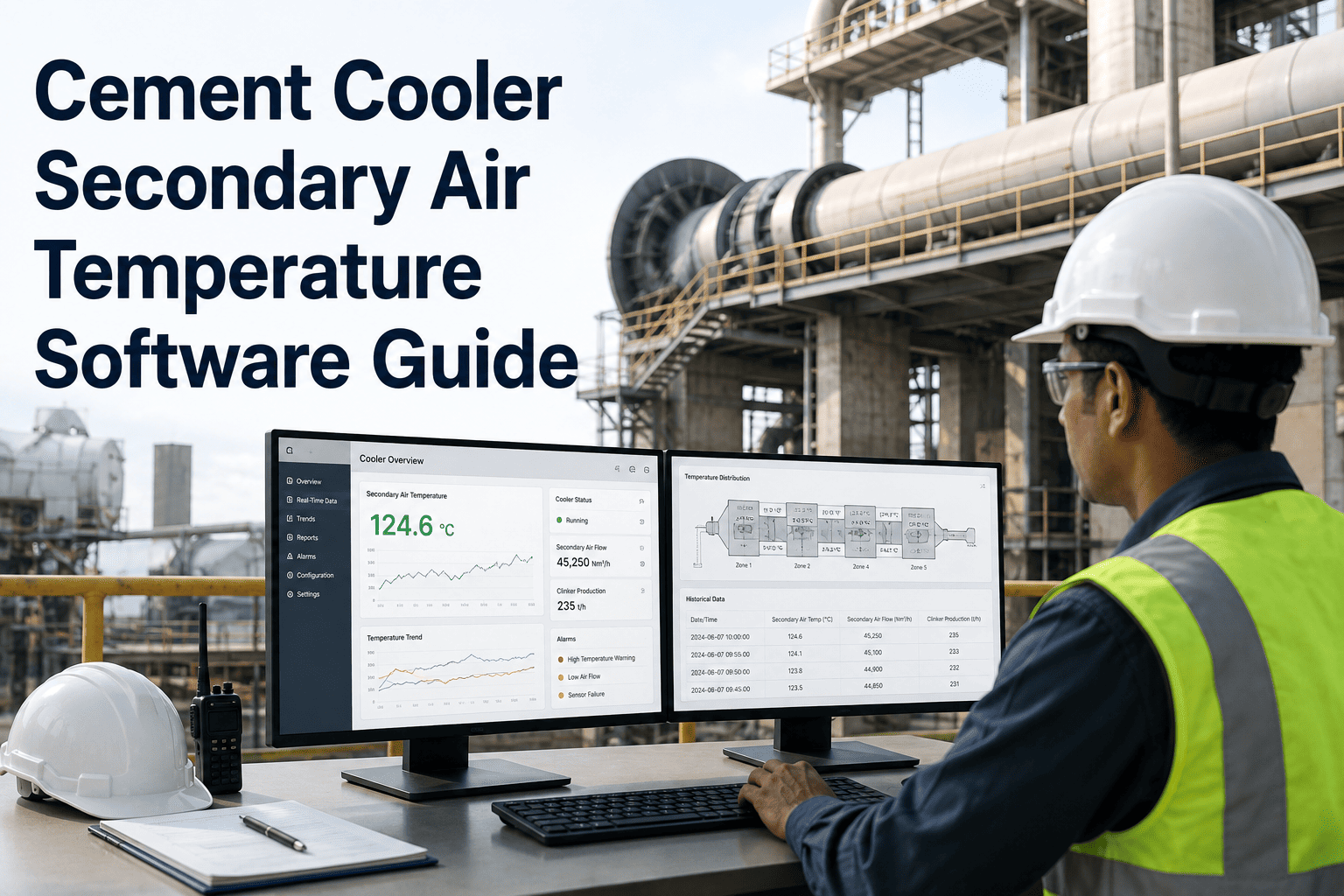
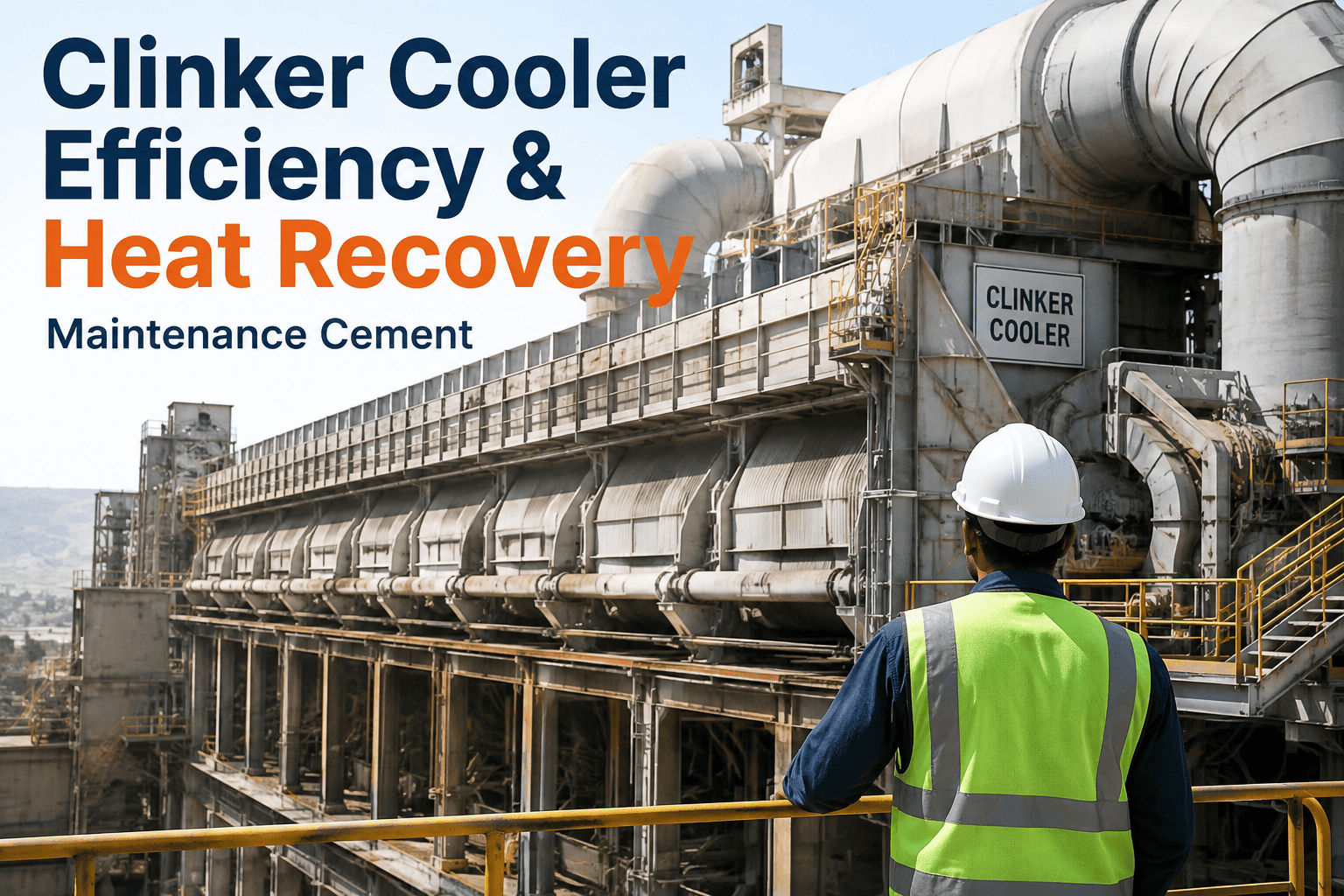
Every rotary kiln burns fuel against a number most plants only check once a shift: secondary air temperature. This is the heat the clinker cooler hands back to the kiln as combustion air, and it is the single largest recovered-energy stream in the entire pyroprocessing system. When it holds near 1,050°C, the burner works less and coal or petcoke consumption stays predictable. When it drifts down 30, 50, or 80 degrees because a grate plate wore through or a bed went uneven, nobody sees it happen — the DCS trend just quietly slopes downward between two manual log entries, and the kiln operator compensates by opening the fuel valve a little more, shift after shift, until it becomes the new normal. Book a free secondary air temperature readiness review with our cement reliability team and see exactly where your cooler is bleeding recoverable heat.
1,050°C
Typical target secondary air temperature at the kiln hood for a well-recovered grate cooler
35-40%
Share of total process heat that is recovered or lost inside the clinker cooler alone
~0.8%
Approximate rise in kiln specific fuel consumption for every 10°C drop in secondary air temperature
76-86%
Thermal efficiency range of modern grate coolers — most plants leave 5-10% of it on the table
Reliability Signal
Secondary air temperature is a lagging indicator of grate plate wear, red river bed instability, and under-grate air distribution problems. By the time an operator notices the trend on a shift log, the cooler has usually been losing recoverable heat for days. A connected monitoring workflow catches the drift while it is still a work order, not a fuel budget line.
Why Secondary Air Temperature Is the Kiln's Most Ignored Fuel Cost Driver
The clinker cooler exists to do two jobs at once: quench hot clinker fast enough to lock in strength-giving alite crystals, and hand that heat straight back to the kiln as secondary air and to the calciner as tertiary air. Every degree of secondary air temperature the cooler fails to deliver is heat the burner has to replace with fresh fuel. That relationship is not abstract — it shows up directly in kilogram-of-coal-per-tonne-of-clinker numbers, and it compounds across every hour the underlying cause goes unaddressed. A grate plate that wears past its coverage threshold, a bed that fluidizes into a red river channel, or an under-grate compartment damper stuck at the wrong opening all produce the same downstream symptom: secondary air temperature quietly sliding lower while the burner works harder to hide it.
Shift-Log Monitoring
Reading taken once or twice per shift
Captures the instantaneous temperature at the moment someone walks the panel
Flags an obviously abnormal reading if the operator happens to compare it to memory
Misses gradual multi-shift drift that stays inside a normal-looking range
No link between the temperature drop and which cooler zone or grate plate caused it
No automatic work order — someone has to remember to raise one
No record correlating temperature loss with fuel cost for budget justification
Connected Cooler Monitoring
Continuous trend, tied into the CMMS
Trends secondary air temperature continuously against clinker output and cooling air flow
Detects gradual drift days before it would appear abnormal on a single reading
Correlates the drop with grate plate coverage, bed depth, and fan damper position
Raises a work order automatically once the trend crosses a defined threshold
Converts every degree lost into an estimated fuel cost for reporting to plant management
Keeps a full history for turnaround planning and reliability review
Five Failure Signatures Behind a Falling Secondary Air Temperature
Secondary air temperature never drops without a physical cause somewhere in the cooler. These are the five conditions that show up most often across grate cooler operations, and the parameters a monitoring program should be watching for each one.
01
Grate Plate and Air Beam Wear
Coverage loss below 85% distorts under-grate air distribution
Worn or missing grate plates let cooling air bypass the clinker bed instead of passing through it, so the air never picks up the heat it should before returning as secondary air. This is the most common and most gradual cause of temperature loss across a campaign.
Track On Every Inspection
Grate plate coverage percentage by cooler zone
Air beam damage or hot-spot indication from thermal scan
02
Red River and Bed Fluidization
Fine clinker channels through the bed still glowing hot
When cooling air volume is too high for the bed depth in a zone, fine material fluidizes and streams through as a visible red channel, reaching the discharge end still hot. That heat leaves with the clinker instead of returning to the kiln, and the same imbalance damages grate plates and side seals.
Track On Every Inspection
Bed depth uniformity across cooler width
Clinker discharge temperature relative to ambient
03
Under-Grate Air Distribution Faults
Compartment dampers stuck or fan output imbalanced
Each cooling air compartment needs its damper set to match the clinker load in that zone. A damper stuck open or closed, or a cooling fan running below rated output, starves or floods a section of the bed, reducing the heat-recovery zone's ability to build hot secondary air.
Track On Every Inspection
Damper position versus setpoint per compartment
Cooling fan static pressure and motor amperage trend
04
Excess Cooling Air Volume
Too much air dilutes and cools the recovered stream
More air is not always better. Beyond the volume the heat-recovery zone can absorb, additional cooling air simply dilutes the hot air stream, lowering secondary air temperature even while total heat recovered stays roughly flat. This is a common outcome of well-meaning manual adjustments made without trend data.
Track On Every Inspection
Total under-grate air volume versus clinker throughput
Excess air ratio at the kiln inlet
05
Cooler Vent and ID Fan Draft Imbalance
Pulls hot air out of the recovery path before it reaches the kiln hood
A cooler vent fan drawing more draft than the process needs pulls hot air out of the recovery zone toward dust collection instead of letting it flow back into the kiln hood as secondary air. This is easy to miss because the fan itself shows no fault — the loss only appears in the temperature trend.
Track On Every Inspection
Cooler vent fan draft versus design setpoint
Kiln hood pressure trend correlated with vent damper position
Stop Finding Out About Fuel Loss at Month-End
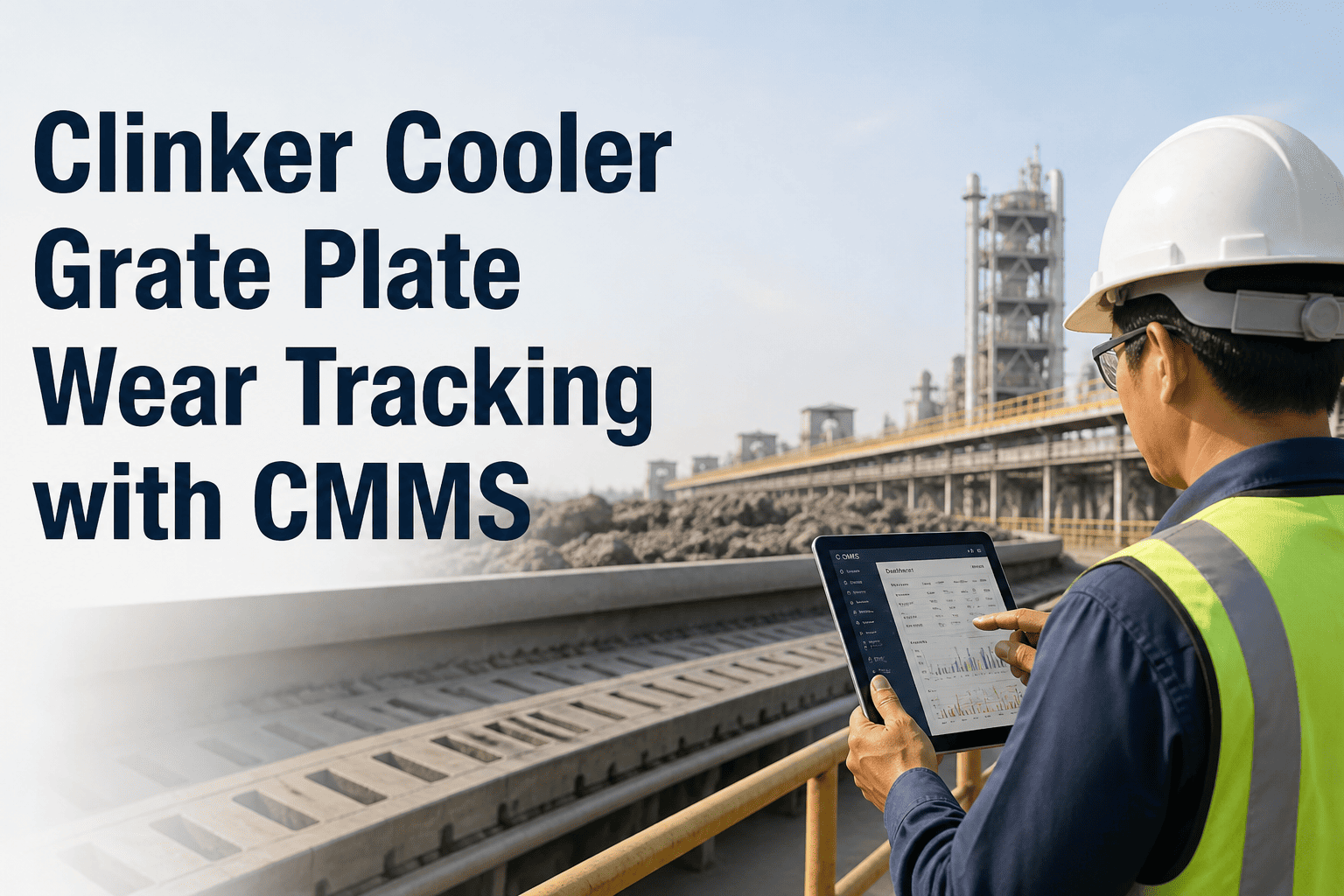
OxMaint links cooler temperature trends to grate plate condition, fan performance, and work order history in one dashboard — so reliability and operations see the same picture, in real time, instead of reconciling it a month later.
From Shift Log to Automated Work Order: How the Software Layer Works
Raw temperature readings only become useful once they are compared against what the cooler should be producing at the current throughput, bed depth, and air flow — and once a deviation automatically becomes an assigned task instead of a note nobody follows up on. That is the job of a connected maintenance platform sitting between the DCS and the maintenance team.
Secondary Air Temperature Monitoring Pipeline
1
Data Capture
Cooler temperature, air flow, and fan data pulled from the DCS or logged manually on mobile at each round
2
Baseline Comparison
Reading compared against expected temperature for current clinker throughput and cooling air volume
3
Deviation Detection
Sustained drift beyond the defined band is flagged, not a single noisy reading that recovers on its own
4
Work Order Trigger
Grate plate inspection, damper check, or fan inspection task auto-created and assigned with priority
5
Verification and Cost Log
Temperature recovery after the fix is logged against estimated fuel cost avoided for the reliability report
Alert Tiers Linked to Fuel Cost Impact
Normal
Secondary air temperature within 15°C of expected value for current throughput.
No action required. Continue routine trend logging.
Watch
Sustained drop of 15-30°C over more than one shift, cause not yet identified.
Notify shift supervisor. Schedule grate and damper check within 24 hours.
Action
Drop exceeds 30°C or red river visual indication reported by operator.
Work order auto-raised. Reliability engineer reviews grate plate coverage data.
Critical
Drop exceeds 50°C or fan/damper fault confirmed alongside falling temperature.
Escalate to maintenance manager. Plan corrective repair at next available stop.
Cooler Zone Reference: What Each Section Should Be Delivering
Grate coolers are built in zones, and each one plays a different role in how much heat eventually comes back as secondary air. Comparing live readings against this reference is the fastest way to isolate which zone is underperforming.
| Cooler Zone |
Primary Function |
Typical Clinker Temp |
Heat Recovered As |
| Recuperation Zone |
Rapid quench, locks alite crystal structure |
1,300-1,450°C in / 700-900°C out |
Secondary air to kiln burner |
| Heat Recovery Zone |
Consumes roughly half of total cooling air volume |
700-900°C in / 350-500°C out |
Tertiary air to calciner |
| Final Cooling Zone |
Brings clinker to handling temperature |
350-500°C in / under 100°C out |
Low-grade air, often exhausted |
Dashboard KPIs Every Cement Plant Should Track
1,050°C
Target Secondary Air Temperature
Baseline reference for a well-recovered grate cooler at normal throughput
0.8%
Fuel Cost Rise per 10°C Drop
Approximate increase in kiln specific fuel consumption for every 10°C the temperature falls
85%
Minimum Grate Plate Coverage
Coverage threshold below which plates should be scheduled for replacement
Under 4 hrs
Mean Time to Work Order
Time from a Watch-tier deviation to an assigned inspection task
80%+
Cooler Thermal Efficiency
Share of clinker sensible heat recovered as secondary and tertiary air
Zero
Unresolved Alert Backlog
Watch and Action tier alerts left unacknowledged past the review window
Frequently Asked Questions
What is a normal secondary air temperature for a cement kiln?
Most modern grate coolers target roughly 1,050°C, with anything above 900°C generally considered acceptable depending on cooler design and clinker throughput. The right number for a specific line depends on cooler type, so it is best tracked as a trend against that line's own baseline rather than a fixed industry figure.
How much fuel does a drop in secondary air temperature actually cost?
As a rough working figure, each 10°C drop raises kiln specific fuel consumption by around 0.8%, and the loss compounds for every hour the underlying cause goes unfixed. Tracking this against real work order data through a platform like
OxMaint turns that estimate into an actual cost figure for your plant.
What usually causes a gradual secondary air temperature decline?
Grate plate wear, uneven bed depth or red river channeling, stuck under-grate dampers, and excess cooling air volume are the most common causes. Most of these develop slowly across a campaign and are easiest to catch through continuous trending rather than periodic manual readings.
Can secondary air temperature be monitored without new hardware?
Existing DCS temperature tags can usually be pulled directly into a maintenance platform without new sensors, and mobile inspection rounds can fill in cooler zones that lack instrumentation.
Book a readiness review to see what your current setup already supports.
How is a temperature deviation turned into a maintenance action?
Once a sustained deviation crosses a defined threshold, the platform auto-generates an inspection or repair work order, assigns it based on the likely cause, and logs the temperature recovery once the fix is complete so the fuel savings are captured against that specific repair.
See Your Cooler's Real Fuel Cost Exposure
OxMaint connects secondary air temperature trends, grate plate condition, fan health, and work order history into one view built for cement reliability and operations teams.