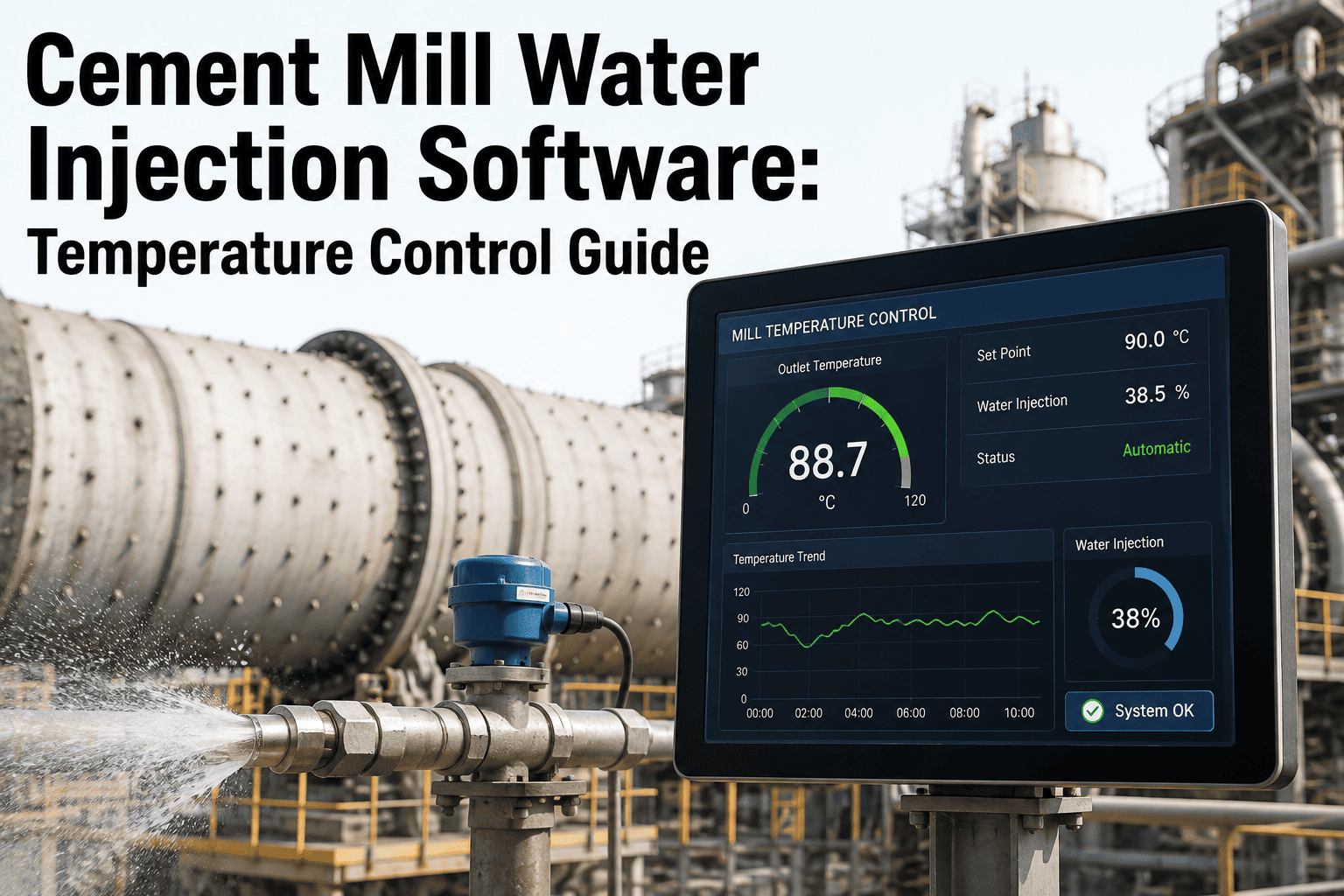
Walk onto any finish mill deck on a hot afternoon and you will hear the same question from the shift supervisor: "Is the outlet temperature climbing again?" Cement grinding generates enormous friction heat, and if that heat is not pulled out of the mill in real time, gypsum begins to dehydrate, cement starts false-setting in the silo, and bag filters run dangerously close to their thermal limit. Water injection systems exist to solve exactly this problem, spraying a fine, controlled mist into the mill shell to cool the material as it grinds. The trouble is that most plants still run these systems as a standalone PLC loop that nobody in maintenance or quality ever looks at until a batch is rejected. A modern cement mill water injection workflow needs to sit inside the same platform that tracks nozzles, sensors, work orders, and trend history, so a rising temperature triggers an action instead of a surprise. That is the gap OxMaint's cement mill water injection software is built to close.
Temperature Control Guide 2026
Cement Mill Water Injection Software for Reliable Temperature Control
Connect injection rate, cement outlet temperature, and false-air ingress to one maintenance record, so operations and reliability finally see the same number.
Cement Outlet Temperature
90°C
110°C
130°C+
Every degree above 110°C accelerates gypsum dehydration and false-set risk.
1,800L
Water typically injected per hour on a mid-size finish mill
115°C
Common upper threshold before dehydrated gypsum begins forming
30%
Reported drop in temperature-related rejects after logging alerts in CMMS
24/7
Continuous nozzle and sensor visibility instead of shift-end paper logs
Why Mill Temperature Discipline Cannot Live in a Silo
A water injection skid is only as good as the maintenance program watching it. Clogged nozzles, drifting thermocouples, and worn control valves all quietly erode cooling capacity long before an alarm fires. When that data lives only in the DCS trend screen, the maintenance team has no way to correlate a slow temperature creep with a nozzle that has not been inspected in six months. Bringing water injection into a unified materials and asset management platform means every degree of drift becomes a maintenance signal, not just an operations headache.
Risk 01
Gypsum Dehydration
Sustained temperatures above the setpoint convert gypsum to hemihydrate, causing false-set complaints from customers weeks after the batch ships.
Risk 02
False-Air Ingress
Worn seals pull cold, unmeasured air into the system, skewing airflow readings and forcing operators to over-inject water to compensate.
Risk 03
Bag Filter Thermal Stress
Repeated excursions above filter bag temperature limits shorten media life and raise the odds of an unplanned filter house shutdown.
Risk 04
Blaine and Fineness Drift
Overcooling to chase a temperature target can slow grinding efficiency, pulling fineness out of specification on the next quality check.
Risk 05
Nozzle Fouling
Mineral buildup narrows spray nozzles gradually, so injection rate readings look normal while actual mist coverage falls.
Risk 06
Energy Waste
Compensating for poor cooling with reduced mill throughput quietly raises the specific energy consumed per ton produced.
Give Every Nozzle and Sensor a Maintenance Record
OxMaint links injection valves, thermocouples, and filter house sensors to preventive maintenance schedules, so drift gets caught during a scheduled inspection instead of during a quality hold.
Core Parameters Every Water Injection Program Should Track
Temperature control is a chain, not a single reading. The table below shows the parameters that matter most, the range most finish mills target, and the maintenance action a connected CMMS can trigger automatically when a value drifts out of range.
| Parameter |
Typical Target |
Risk if Exceeded |
Automated CMMS Action |
| Cement Outlet Temperature |
90°C – 110°C |
False-set complaints, gypsum dehydration |
Trigger inspection work order on injection skid |
| Injection Water Rate |
0.8% – 1.5% of feed |
Overcooling or insufficient cooling |
Flag valve calibration check |
| Nozzle Differential Pressure |
Manufacturer baseline ±10% |
Fouled or worn nozzle tips |
Schedule nozzle cleaning task |
| False-Air Ingress |
Below 5% of total airflow |
Skewed thermal readings, energy loss |
Log seal inspection reminder |
| Bag Filter Inlet Temperature |
Below media rating |
Bag degradation, unplanned shutdown |
Escalate to reliability engineer |
How a Connected Water Injection Workflow Runs
Getting from a standalone control loop to a fully connected temperature program does not require ripping out existing instrumentation. It requires a workflow that turns sensor values into maintenance action automatically, on a repeatable cycle.
1
Capture Live Readings
Outlet temperature, injection rate, and pressure feeds are pulled into OxMaint alongside existing DCS or PLC tags, no rewiring required.
2
Apply Threshold Logic
Each parameter is compared against plant-specific setpoints, and sustained drift beyond tolerance is flagged rather than a single noisy spike.
3
Generate the Work Order
A nozzle inspection, valve calibration, or seal check is created automatically and routed to the right technician with the relevant history attached.
4
Close the Loop with Trend History
Every completed task feeds back into the temperature trend, so quality and reliability teams can see whether the fix actually held.
The Cost of Reacting Late to a Temperature Excursion
Approximate cost multiplier once cement outlet temperature drifts unmanaged
Caught at Sensor
Baseline
Caught at Inspection
4x cost
Caught at Quality Hold
15x cost
Caught After Shipment
50x+ cost
Implementation Best Practices for Water Injection Programs
Plants that get the most out of a connected water injection program tend to follow a similar rollout pattern. They start narrow, prove the workflow on one mill, and expand once the maintenance team trusts the alerts enough to act on them without double-checking the DCS screen first. The list below reflects patterns seen across integrated plants that moved from reactive firefighting to a predictable inspection cadence.
Practice
Baseline Before You Automate
Run two weeks of manual logging to confirm your true temperature range before setting automated thresholds, so early alerts are trusted rather than ignored.
Practice
Tie Alerts to a Named Owner
An alert without a responsible technician becomes noise within a month. Route each threshold breach to a specific role, not a shared inbox.
Practice
Inspect Nozzles on a Calendar, Not a Complaint
Fouling is gradual. A fixed inspection interval catches drift long before differential pressure readings force an emergency stop.
Practice
Review Trend History Monthly
A single alert tells you what happened once. A monthly trend review tells you whether the underlying equipment is degrading.
What Reliability Teams Say After Connecting Water Injection to CMMS
Before this, water injection was the operator's problem and nozzle maintenance was ours, and the two teams almost never talked unless a batch got held. Once temperature drift started generating its own work orders, our nozzle replacement schedule became predictable and outlet temperature excursions dropped by almost a third in two quarters.
Reliability Manager, Integrated Cement Plant
Frequently Asked Questions
What causes cement mill outlet temperature to run high?
Grinding friction, hot clinker feed, and reduced airflow all raise mill temperature. Worn nozzles or a miscalibrated valve reduce cooling capacity even when the water injection rate looks normal on paper.
How much water injection is too much?
Injecting beyond roughly 1.5% of feed weight risks over-wetting the mill charge and can hurt grinding efficiency and Blaine fineness. A connected system helps you find the minimum effective rate rather than guessing.
Can water injection data connect to an existing CMMS?
Yes. Most plants keep their existing DCS or PLC instrumentation and simply route the same tags into a platform like
OxMaint, which converts sustained drift into scheduled maintenance tasks.
Does false-air ingress really affect temperature readings?
Yes, unmeasured cold air entering through worn seals can mask a true temperature rise, leading operators to under-inject water until the problem becomes visible downstream at the filter house.
How fast can a plant get this running?
Most sites go from first sensor connection to live threshold alerts within a few weeks. You can
book a walkthrough to map your existing instrumentation before rollout.
Bring Temperature Discipline to Every Mill on Site
OxMaint turns cement outlet temperature, injection rate, and nozzle health into one connected maintenance record, so reliability, operations, and quality finally work from the same number.