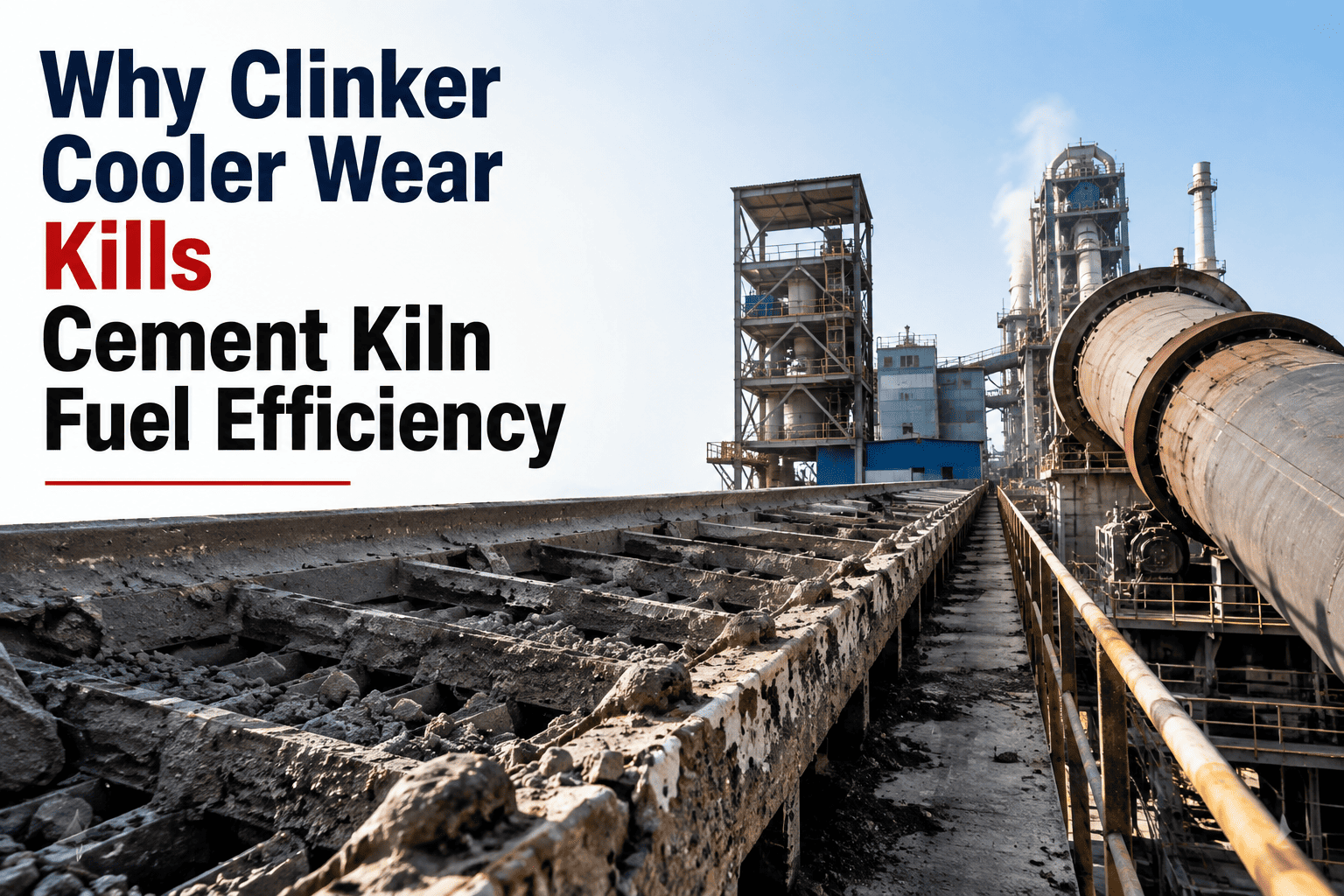
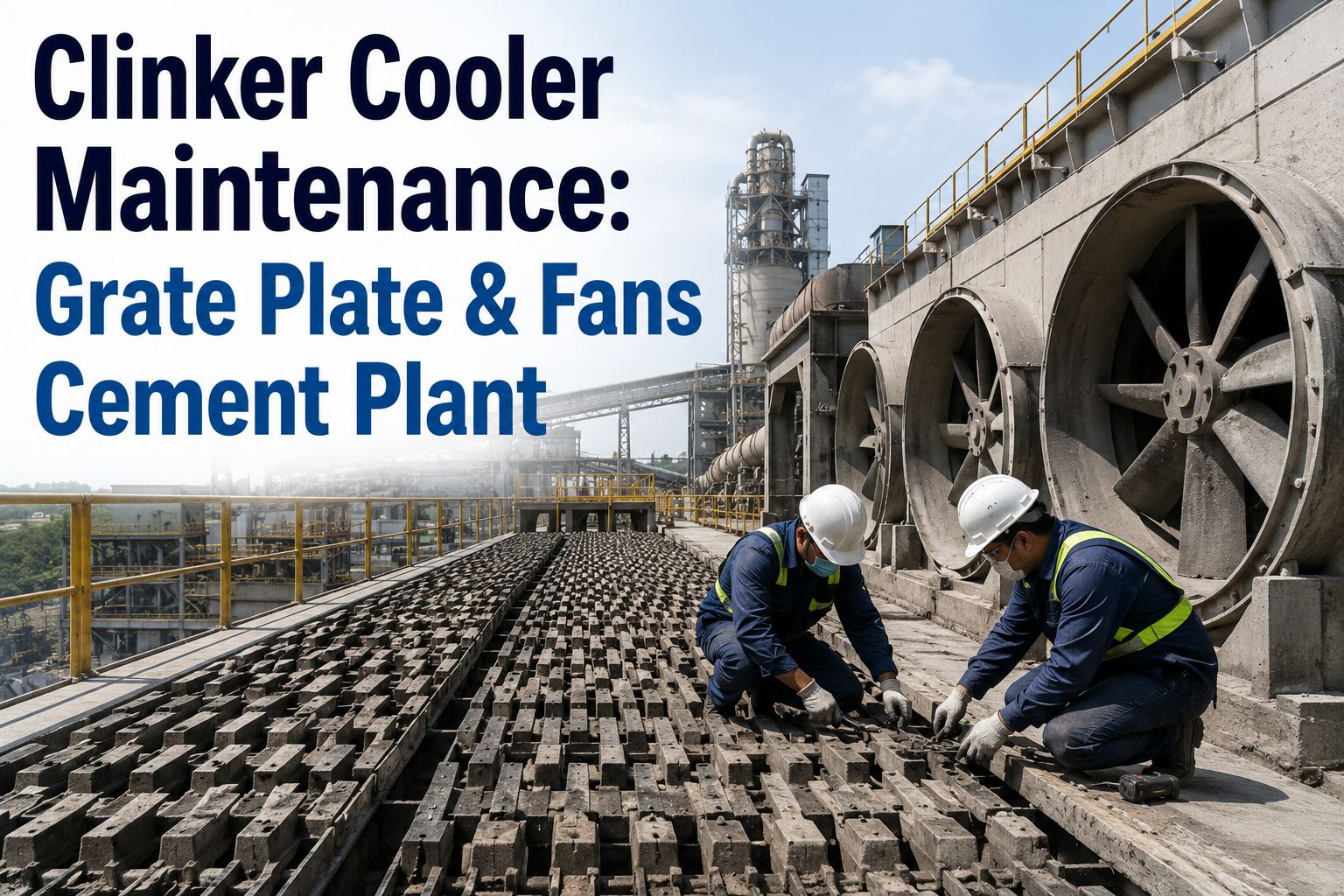
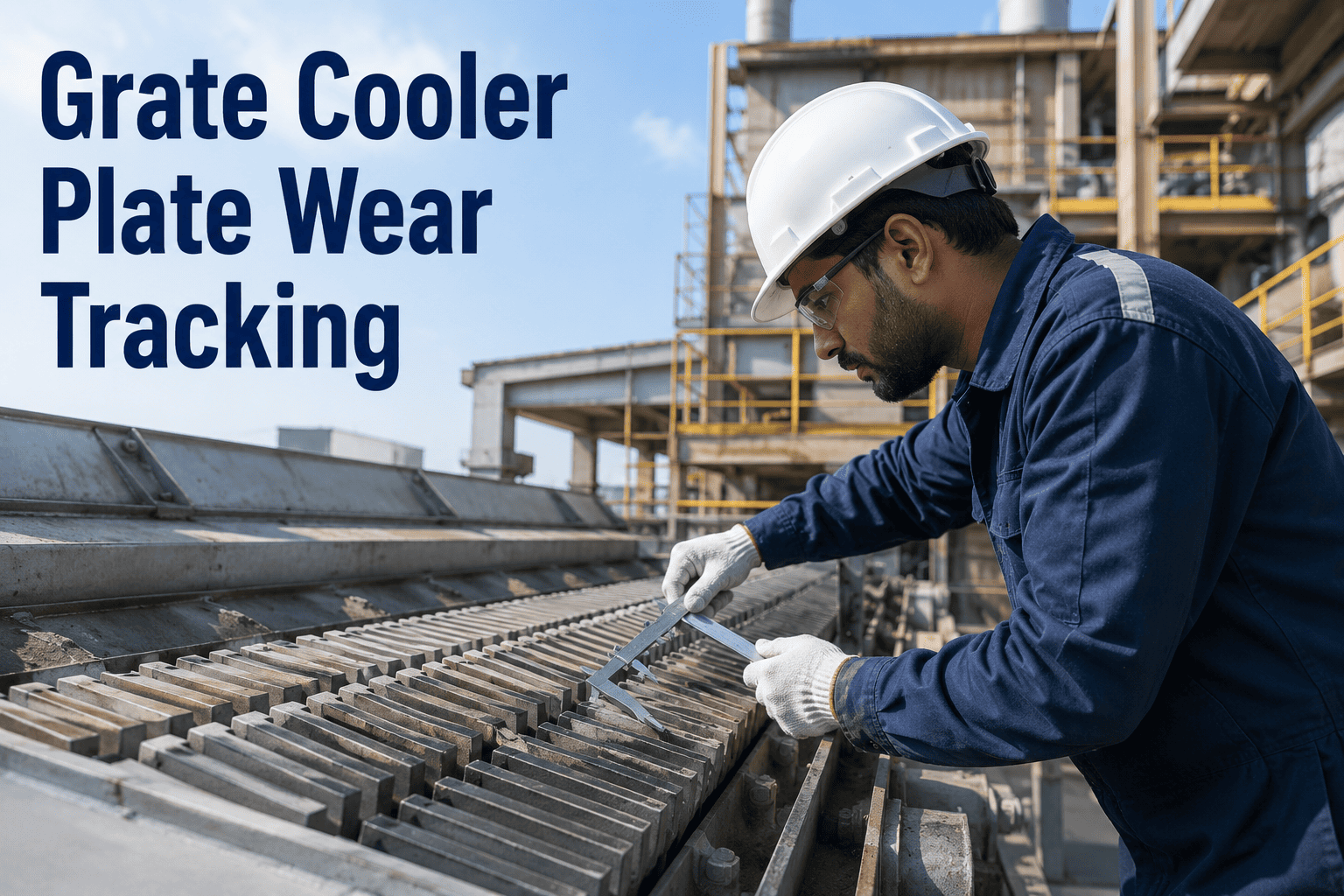
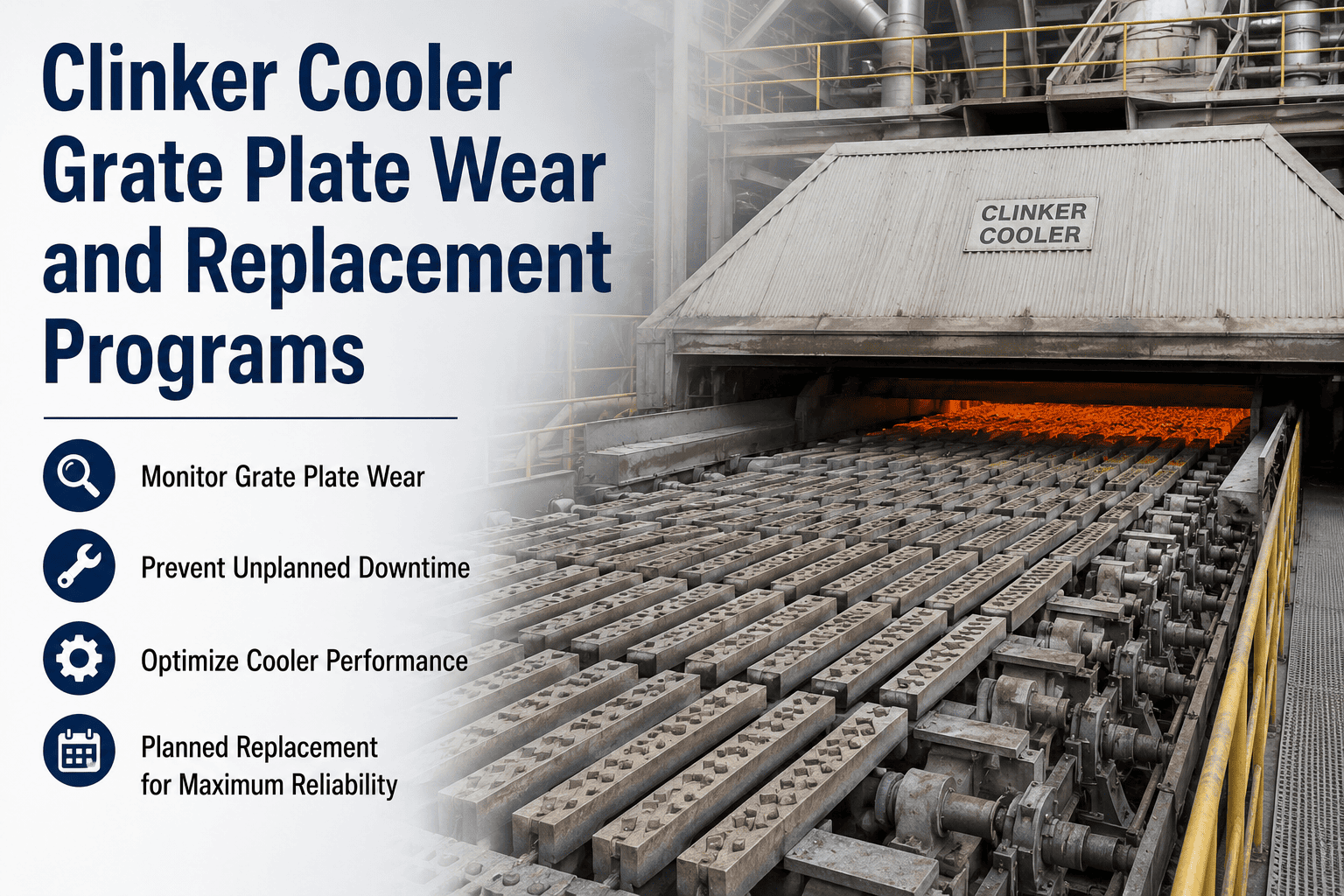
Grate cooler plate failures allow red-hot clinker to bypass the cooling zone entirely — creating "red rivers" of poorly cooled material that damage downstream equipment, reduce secondary air temperature back to the kiln, and raise specific heat consumption by 5–15%. A single unexpected grate plate failure at a US cement plant recently caused 72 hours of unplanned downtime worth $540,000 in lost production, plus emergency repair costs — and post-incident analysis revealed that worn plates had been completely obscured by clinker buildup during manual inspections. The good news is that grate plate wear is entirely predictable: AI-powered wear models correlating inlet temperature profiles, airflow resistance, undergrate pressure, and cooler drive current can forecast grate plate remaining useful life with enough precision to schedule CMMS replacements months before catastrophic breakthrough. This page explains the complete CMMS tracking framework for clinker cooler grate plate wear — from zone-level condition scoring to AI-triggered replacement procurement. Start your free OxMaint trial with a pre-built clinker cooler template, or book a 30-minute demo to see grate plate RUL tracking active in a live cement plant CMMS.
Cement Plant / Clinker Cooler
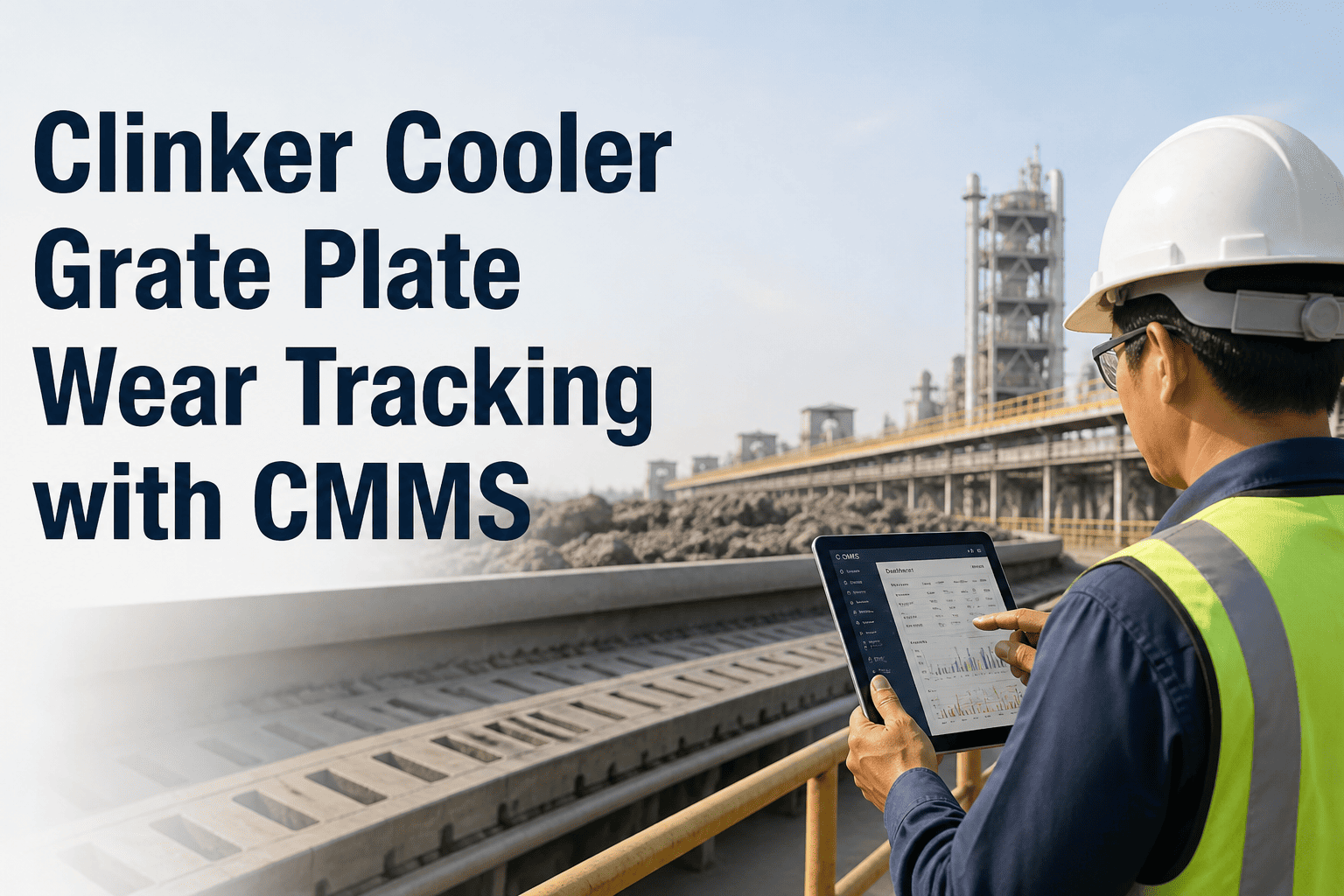
Clinker Cooler Grate Plate Wear Tracking with CMMS
AI wear models that correlate inlet temperature, airflow resistance, and cooler drive current predict grate plate remaining life — scheduling CMMS replacements before catastrophic breakthrough that raises specific heat consumption by 5–15%.
Grate Cooler — Zone Wear Profile
Zone 1 (Hot End)
Critical
Wear severity index: 0% = new, 100% = replacement threshold. Zone 1 experiences 12–24 month service life; Zone 3 typically lasts 36–48 months.
Why Grate Plate Failure Is More Expensive Than It Looks
The clinker cooler is not a passive conveyor — it is the primary heat recovery system for the kiln. Secondary air temperature returning to the kiln burning zone and tertiary air feeding the calciner both depend on cooler thermal efficiency. When grate plates fail, the consequences compound across the entire pyroprocessing chain, not just the cooler itself.
5–15%
Specific Heat Consumption Rise
Grate plate breakthrough reduces secondary air temperature by 30–80°C. The kiln compensates by increasing fuel dosing. Every 1% rise in specific heat consumption costs a 1 MTPA plant approximately $200,000 annually in additional fuel spend.
250–350°C
WHR Feed Temperature Lost
Zone 3 exhaust at 250–350°C feeds waste heat recovery systems generating 25–35 kWh per tonne of clinker. Grate plate failures that disrupt airflow distribution reduce WHR turbine output, turning maintenance failure into an electricity generation loss.
$540K
Single Failure Event Cost
A Texas cement plant experienced 72 hours of unplanned downtime from unexpected grate plate failure — $540,000 in lost production before emergency repair costs. Manual inspection had missed worn plates obscured by clinker buildup. Post-incident: zero cooler failures in 18 months with CMMS wear tracking active.
Hours
Time to Kiln Stop After Cooler Failure
A cooler failure that stops clinker transport forces the kiln to stop within hours. Thermal cycling from an unplanned kiln stop accelerates refractory wear and can compress campaign life by weeks — turning a $50,000 grate plate problem into a $500,000 refractory intervention.
The AI Wear Model — How CMMS Predicts Grate Plate Remaining Life
Traditional grate plate management relies on visual inspection during planned shutdowns — which means wear is only measured when the cooler is cold and accessible, typically once every 6–12 months. AI wear models change this by reading the cooler's operating signals continuously, translating them into a plate-by-plate remaining useful life estimate that updates every shift.
AI Model Outputs — CMMS Actions
RUL
Remaining Useful Life per Zone
Plate-by-plate condition scores with estimated replacement date — updated every shift from live operating data. Multi-campaign data enables pattern analysis across different clinker compositions and cooler loads.
WO
Auto-Generated Replacement Work Orders
When predicted replacement date falls within the lead time window, CMMS auto-generates a replacement work order with specific zone, required plate quantity, and scheduling aligned with the next planned kiln stop.
PO
Procurement Trigger — Months Before Shutdown
Predicted replacement dates trigger purchase orders for replacement plates months before the shutdown date — at planned procurement rates, not emergency procurement rates. Spare parts are staged before the shutdown begins, not sourced during it.
KPI
Cooler Efficiency KPI Tracking
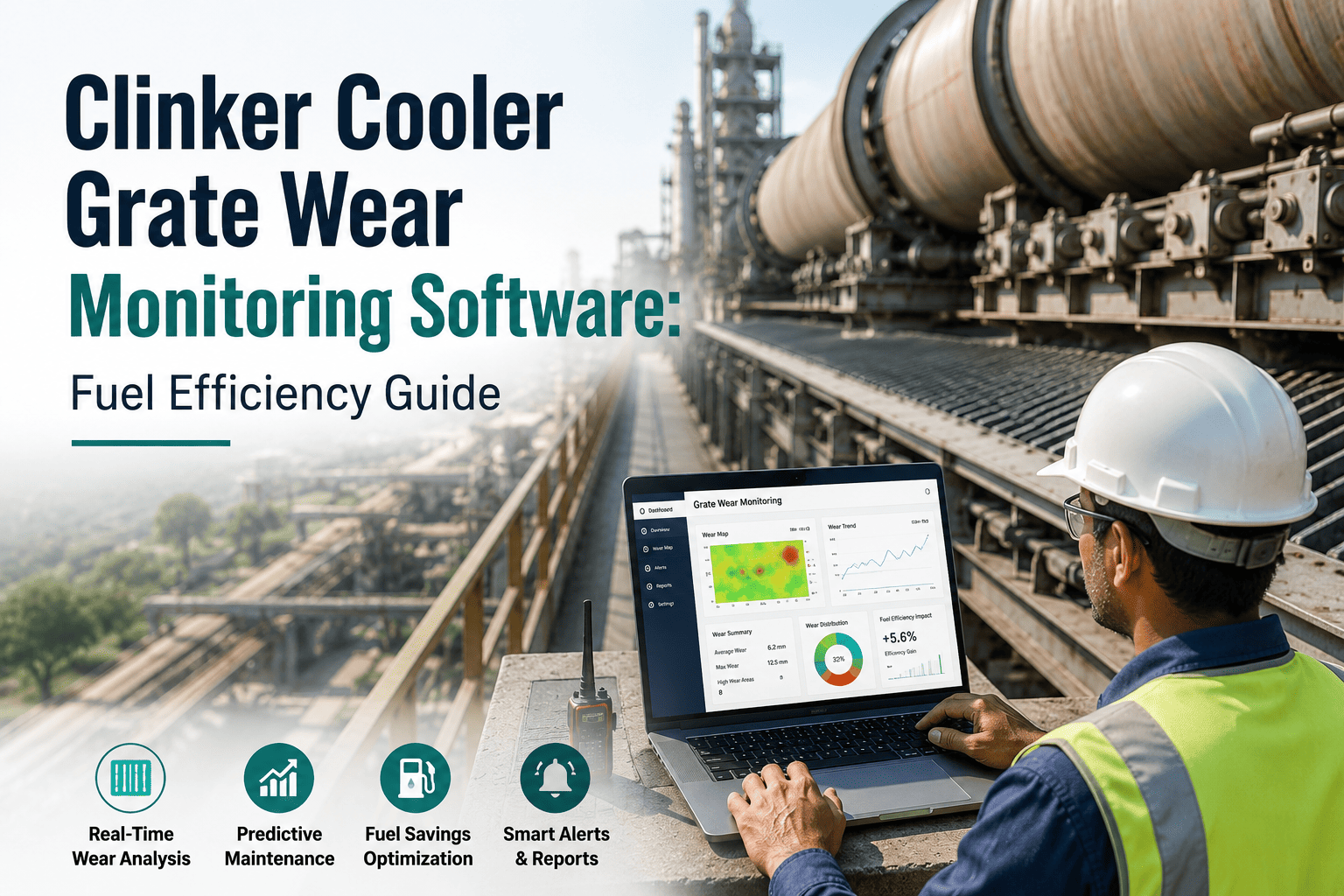
CMMS links grate plate condition data to cooler efficiency KPIs — secondary air temperature, specific heat consumption, WHR output — so plant management sees the financial impact of grate plate degradation in real time, not after the fuel bill arrives.
Start Tracking Grate Plate Wear Before Your Next Shutdown
OxMaint deploys a complete clinker cooler maintenance programme — grate plate zone condition scoring, RUL projection, fan PM scheduling, WHR monitoring, and shutdown work order packages. Pre-built cooler templates are live from day one.
Grate Plate Maintenance Schedule — Zone by Zone
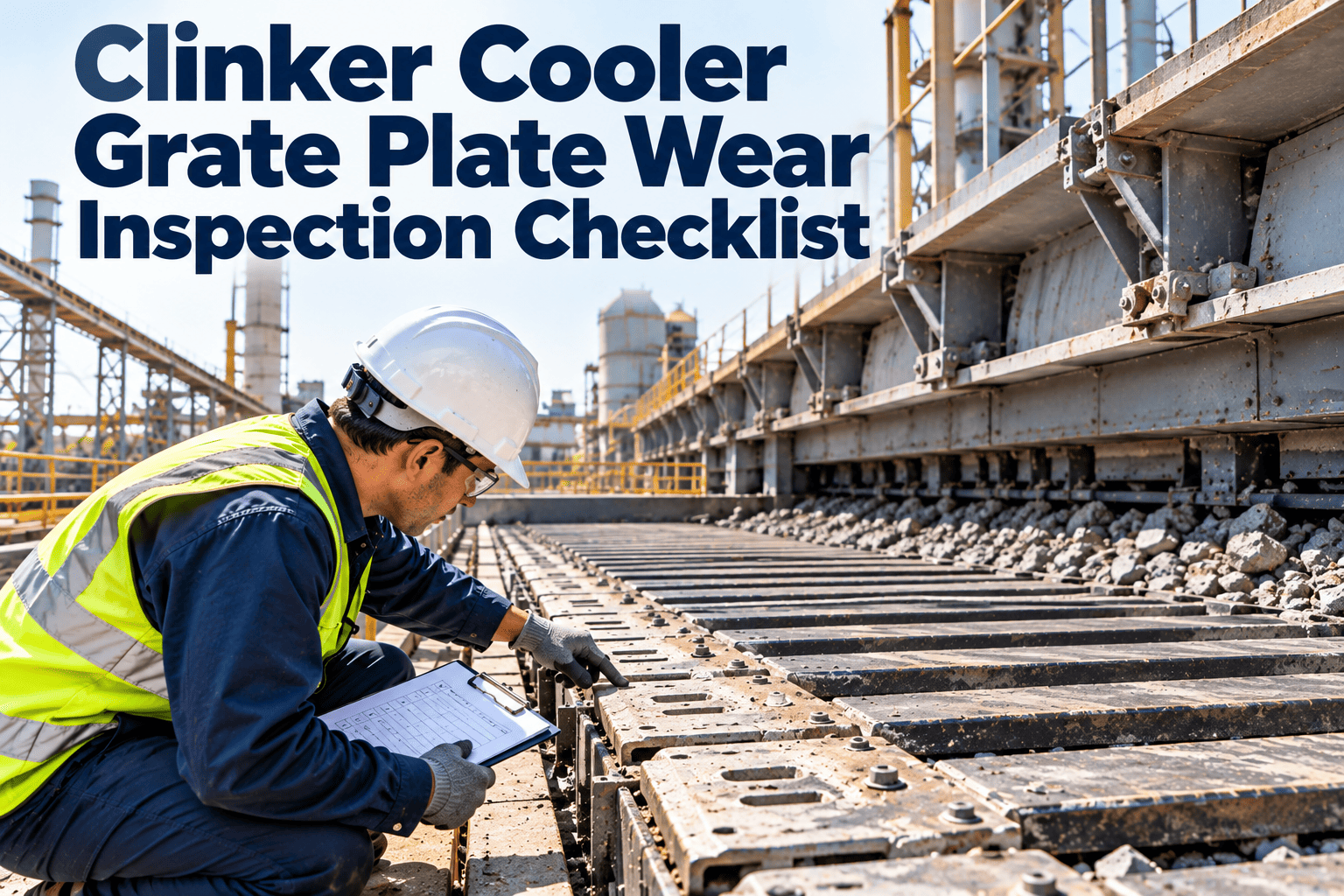
Grate cooler maintenance is not uniform across the cooler length. Zone 1 at the hot end experiences temperatures exceeding 1,000°C and the most abrasive clinker contact — it wears 3–4 times faster than Zone 3 at the cold end. A CMMS that applies the same inspection interval to every zone over-maintains Zone 3 while under-maintaining Zone 1. The correct framework is zone-specific, condition-based scheduling linked to the AI wear model output.
| Cooler Zone / Component |
Condition (Shift) |
Planned Stop Inspection |
Replacement Trigger |
Typical Service Life |
| Zone 1 Grate Plates (Hot End) |
Undergrate pressure and inlet temp profile — every shift |
Thickness measurement and visual at every planned stop |
AI RUL below 90 days or measured thickness below 60% of new |
12–24 months (wear-resistant alloy) |
| Zone 2 Grate Plates (Middle) |
Airflow distribution check, drive current monitoring |
Thickness measurement every second planned stop |
AI RUL below 60 days or visual breakthrough signs |
24–36 months |
| Zone 3 Grate Plates (Cold End) |
Drive current only — lower wear rate |
Visual inspection every third planned stop |
Measured thickness below 50% of new |
36–48 months |
| Undergrate Fan Bearings |
Vibration and temperature — every shift via sensor |
Vibration spectrum analysis at every planned stop |
BPFI/BPFO defect frequency emergence or temp +15°C over baseline |
18–30 months (condition-based) |
| Fan Impeller Blades |
Current signature analysis for erosion signature |
Visual and thickness measurement at each stop |
Blade thickness below 40% of new — earlier if imbalance detected |
12–18 months in hot-end fans |
| Cooler Inlet Refractory |
Thermal imaging from kiln hood camera feed |
Visual inspection and condition scoring by zone at each stop |
Hot spot development above threshold or visible damage |
Campaign-based — linked to kiln refractory schedule |
| Clinker Crusher Hammers |
Drive current trending |
Hammer thickness measurement at each planned stop |
Tonnage-based: typically 400,000–600,000 tonnes processed |
Tonnage-based (not calendar-based) |
| Hydraulic Drive System |
Pressure and flow readings — continuous |
Oil sample sent for analysis, seal visual check |
Oil particle count rising trend or pressure drop below spec |
Oil change quarterly; cylinder service annually |
From Reactive to Predictive — The Before and After at One Cement Plant
The AI case study below is based on documented outcomes at a single-line US cement plant where cross-correlating cooler grate speed, undergrate pressure, and tertiary air temperature identified grate plate damage that manual inspection had missed entirely.
Before — Paper-Based Inspection
Grate plates inspected visually during planned shutdowns — every 6–12 months
Worn plates obscured by clinker buildup — missed entirely during inspection
Specific heat consumption rising 8 kcal/kg above baseline — attributed to process variation, not maintenance
72-hour unplanned shutdown: $540,000 in lost production plus emergency repair
Replacement plates not in stock — emergency procurement at premium cost
Post-repair: same inspection cycle resumes — no structural change
After — CMMS with AI Wear Tracking
Undergrate pressure and inlet temp profiled every shift — AI detects imbalance in week 3 of next campaign
Specific heat consumption deviation of 8 kcal/kg flagged by AI — cross-correlated to Zone 1 pressure signature
CMMS work order Day 28: grate plate inspection at next planned stop, fan damper recalibration, undergrate pressure re-mapping
Replacement plates ordered 3 months before planned stop — at standard procurement cost, staged before shutdown
Planned replacement completed during scheduled 3-day stop — zero unplanned downtime
Zero unplanned cooler failures in the 18 months following deployment
$170K/yr
Annual energy cost saving from correcting the 8 kcal/kg specific heat deviation identified by AI — before a single shutdown event was prevented
Cooler Efficiency KPIs — What CMMS Tracks Automatically
Clinker cooler efficiency is the link between maintenance quality and fuel cost. These five KPIs, tracked automatically in OxMaint against plant-specific baselines, connect grate plate wear data directly to the production economics that plant managers and operations directors care about.
76–86%
Cooler thermal efficiency target range
Most plants leave 5–10% efficiency on the table from worn plates and poor airflow control
1,050°C
Target secondary air temperature
Falling secondary air temp is the clearest process signal of grate plate wear impact on kiln combustion
25–35 kWh/t
WHR electricity output target
Grate plate failures that disrupt Zone 3 airflow directly cut WHR turbine output — tracked per shift in CMMS
<100°C
Target outlet clinker temperature
Hot clinker above 100°C at cooler discharge damages downstream conveyors and degrades cement grindability
6–12 mo
Zone 1 plate inspection frequency
CMMS enforces zone-specific intervals — not a single blanket schedule across all cooler sections
Frequently Asked Questions
How often should clinker cooler grate plates be inspected?
Zone 1 (hot end) plates should be visually inspected and thickness-measured at every planned kiln shutdown — typically every 6–12 months. Zone 1 service life is 12–24 months depending on material grade and cooler design. Zone 2 and 3 plates have lower wear rates and can be inspected less frequently, but CMMS should track each zone separately rather than applying a single plant-wide interval.
What signals does an AI wear model use to predict grate plate remaining life?
The primary inputs are undergrate pressure distribution (zone-level pressure imbalance), inlet temperature thermal profile (from kiln hood cameras), cooler drive current at constant grate speed, secondary and tertiary air temperature trends, and undergrate fan current signature. Correlating these signals against historical wear measurement data produces remaining useful life estimates that update every shift — without waiting for the next manual inspection.
How does a grate plate failure affect specific heat consumption?
Grate plate breakthrough creates red rivers of poorly cooled clinker that bypass the cooling zone. Secondary air temperature returning to the kiln drops by 30–80°C. The kiln compensates by increasing fuel dosing — raising specific heat consumption by 5–15%. At a 1 MTPA plant, each 1% increase in specific heat consumption adds approximately $200,000 in annual fuel cost.
How does CMMS tracking prevent the emergency procurement problem?
AI-predicted replacement dates in the CMMS trigger purchase orders months before the planned shutdown — when standard procurement lead times and pricing apply. Without CMMS tracking, the first sign of plate failure is often an unplanned shutdown where the parts are not in stock and emergency procurement at 2–4× planned cost is the only option.
Can OxMaint integrate with thermal imaging and inspection robot data for the clinker cooler?
Yes. OxMaint integrates with thermal camera feeds, ultrasonic inspection robots, and DCS platforms via OPC-UA, MQTT, and REST API. Robot inspection data flows directly into OxMaint asset records — generating plate-by-plate condition scores, triggering replacement work orders, and updating procurement workflows automatically.
Know Your Grate Plate Remaining Life — Before the Next Shutdown
OxMaint deploys AI-powered grate plate wear tracking, zone-level RUL projection, auto-generated replacement work orders, and procurement triggers — keeping your clinker cooler running at 76–86% thermal efficiency and your kiln fuel bill where it should be.