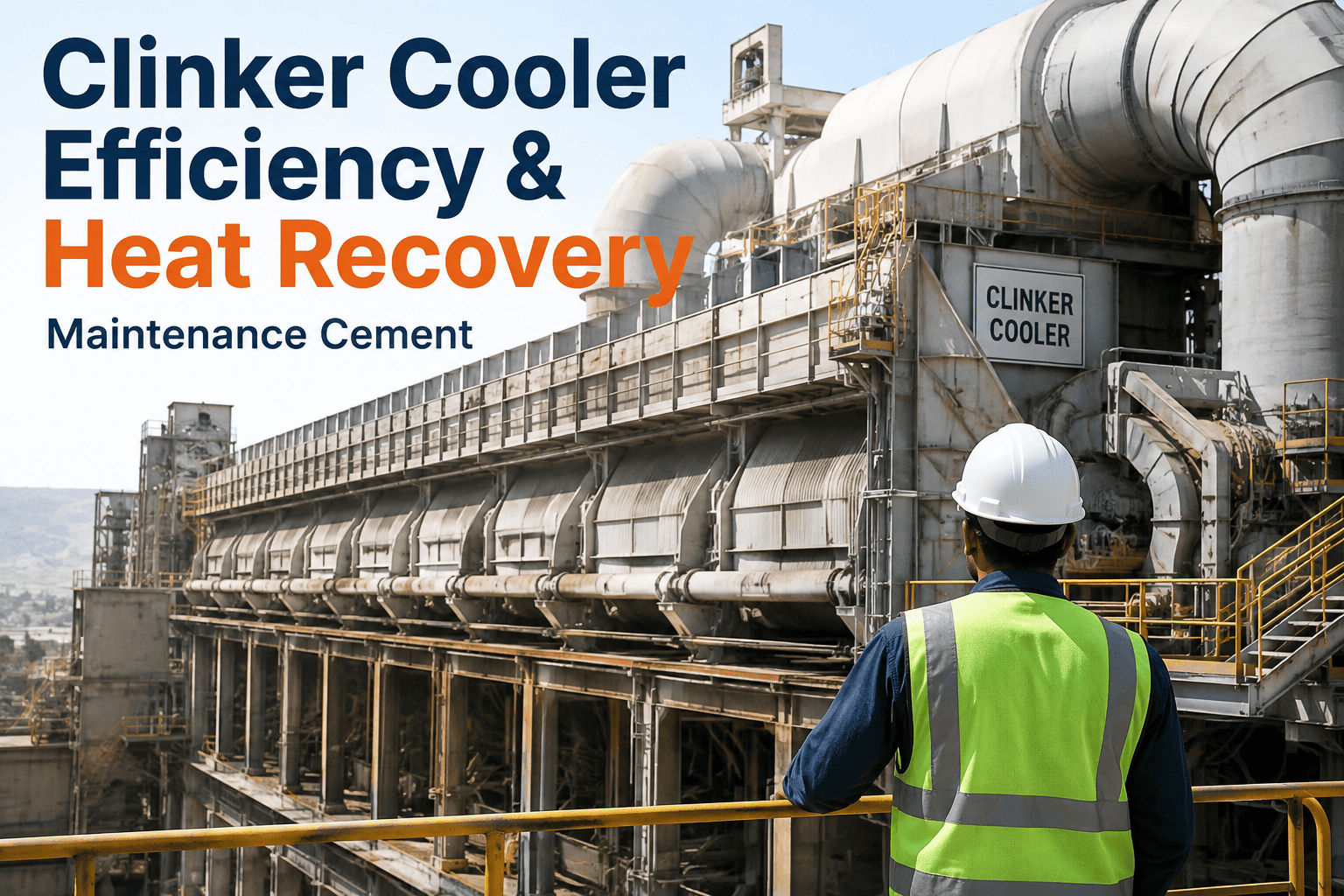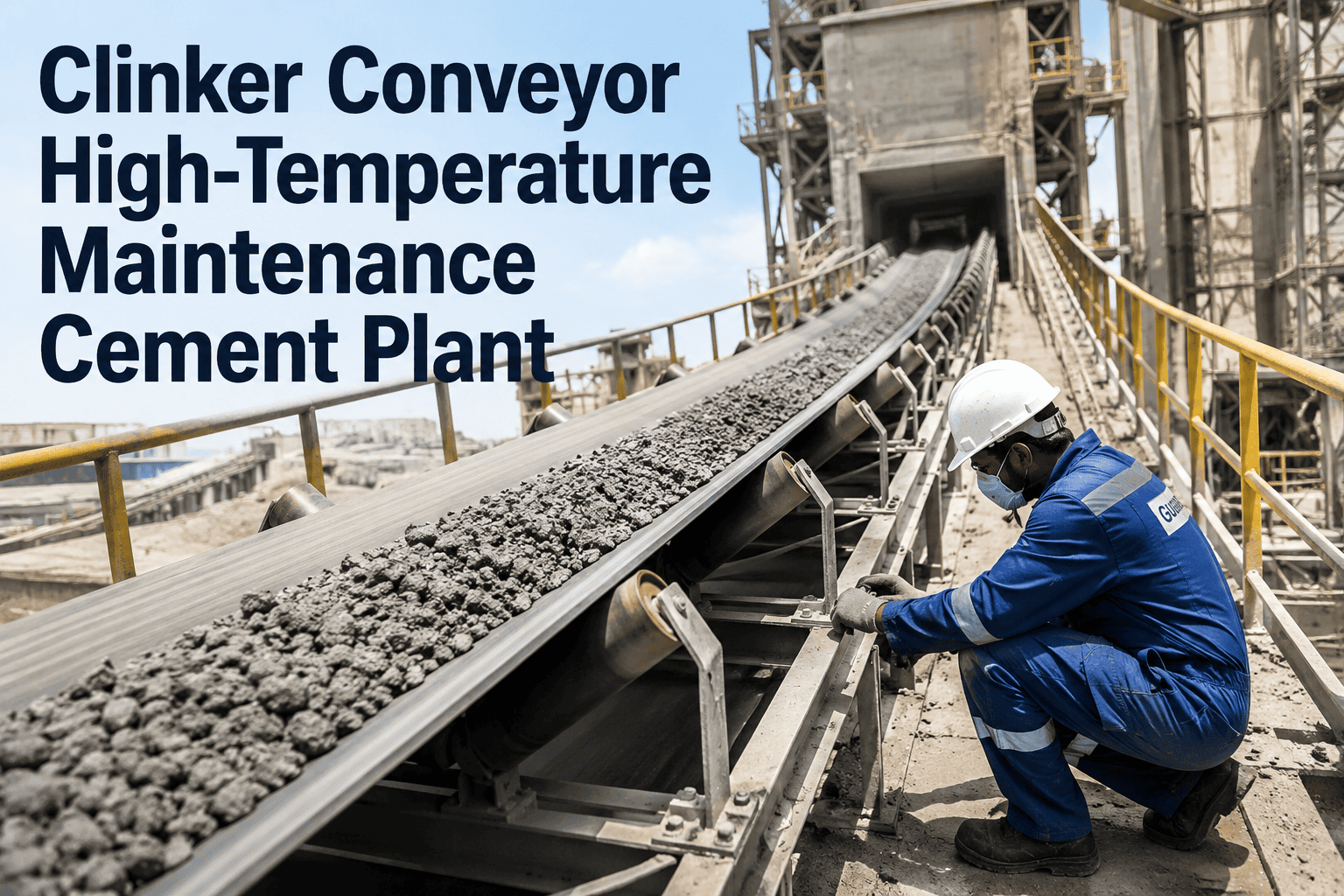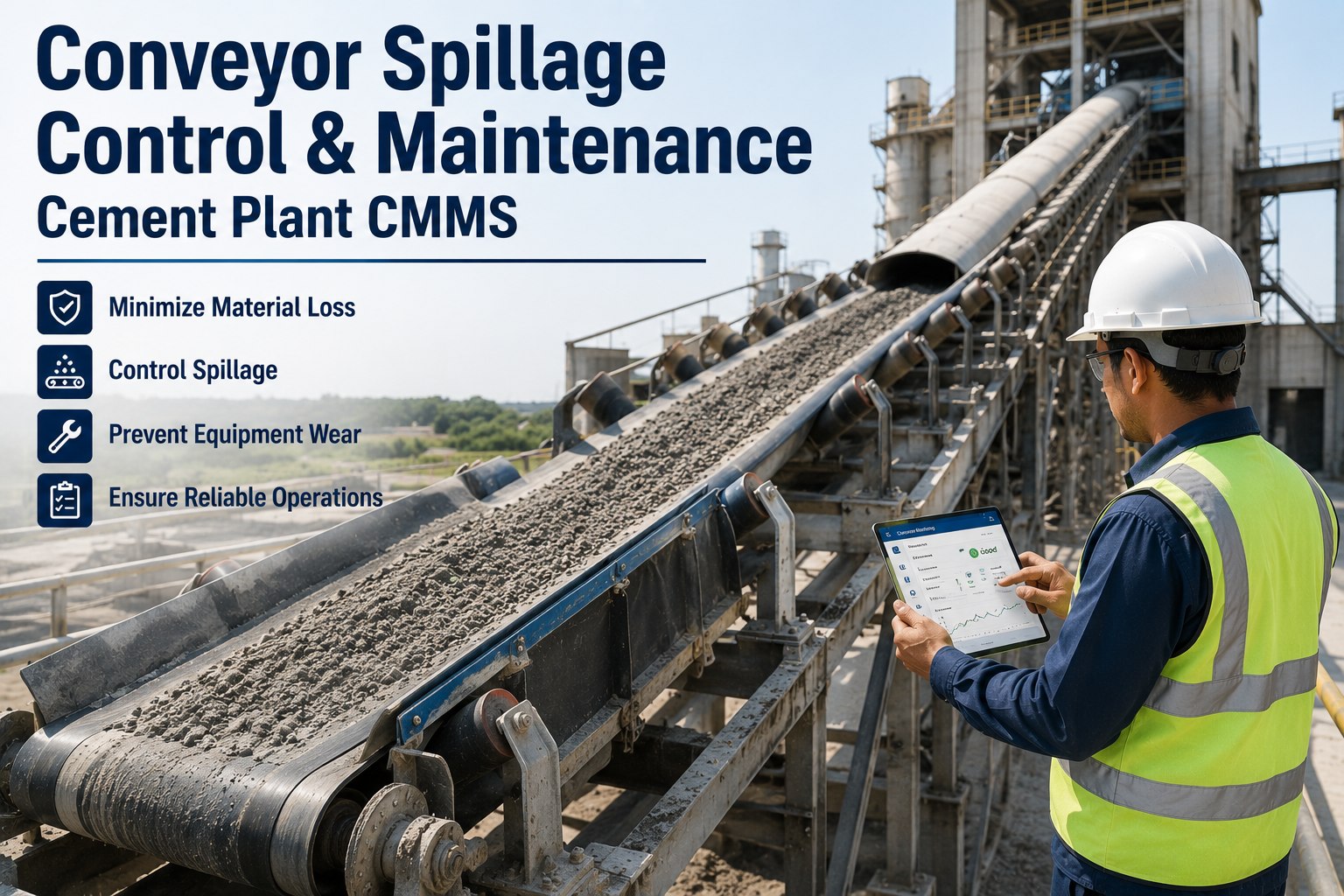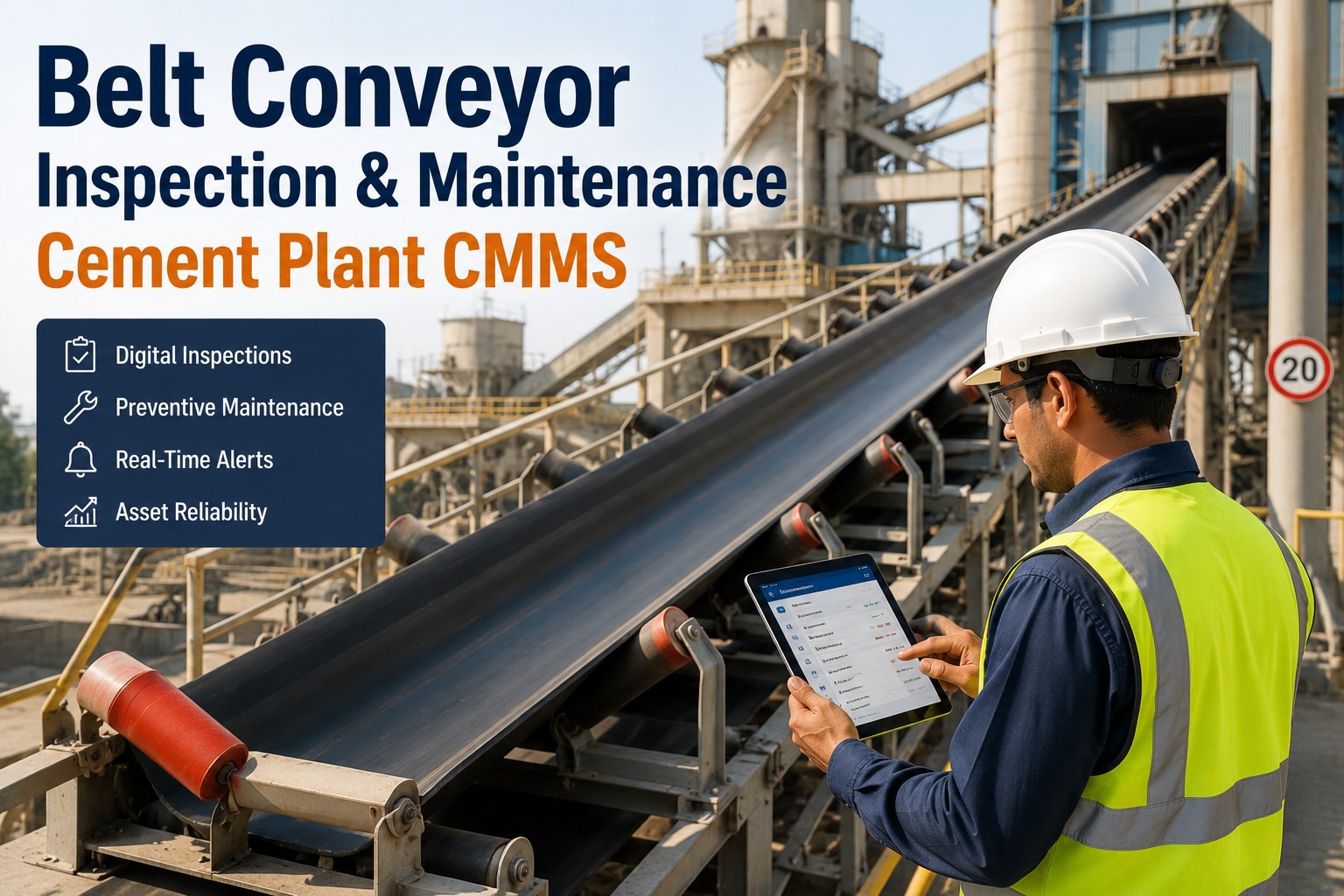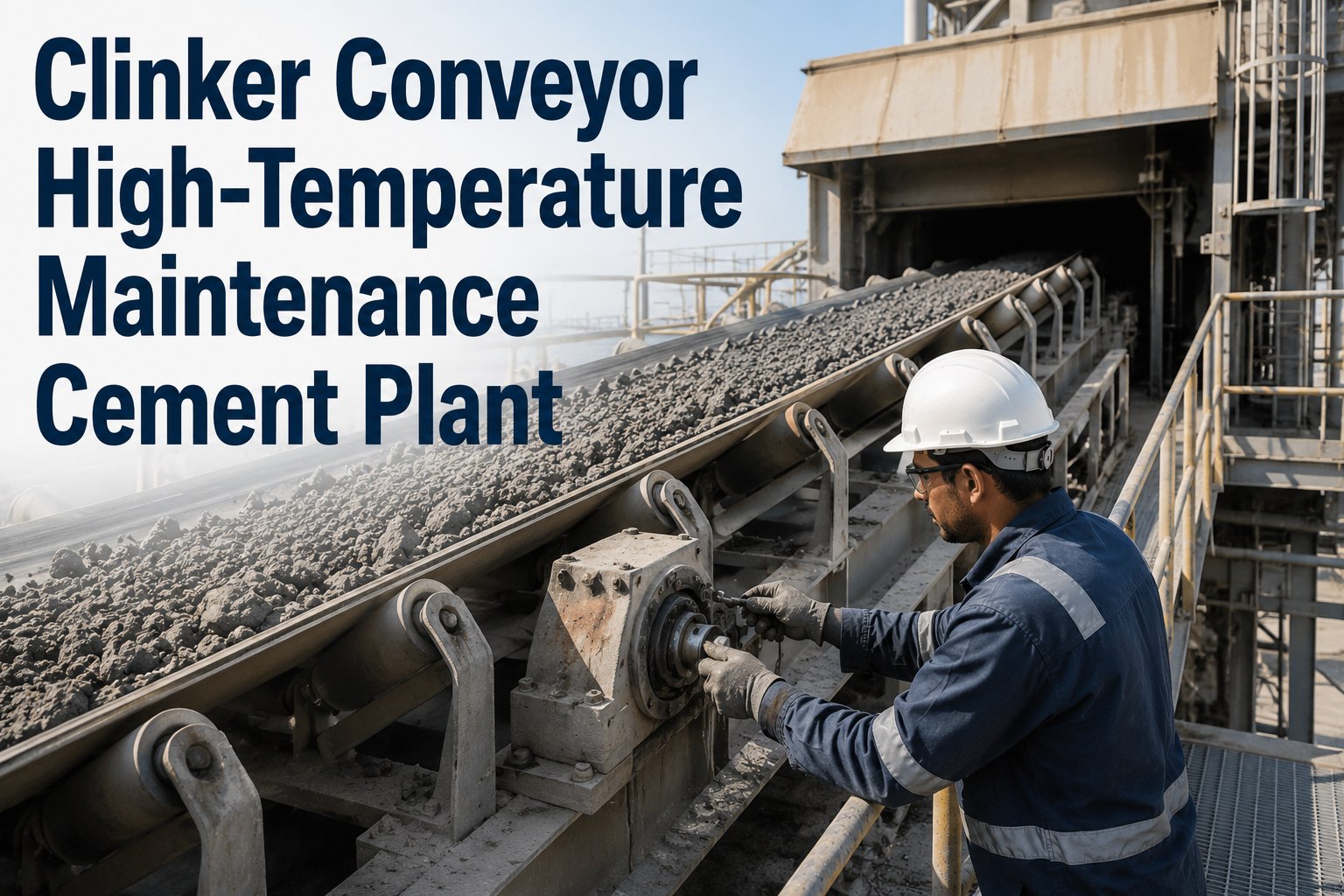
Clinker conveyors run hotter and wear harder than almost any other asset in a cement plant — they routinely carry material at 150 to 300 °C, and a single failed idler or scorched belt can shut down kiln output for an entire shift. This guide walks maintenance and reliability engineers through the high-temperature maintenance practices that actually keep clinker handling reliable: belt selection, deep pan and drag chain PM, spillage control, and the inspection cadence that prevents thermal failures. If you want to turn this checklist into a live, scheduled program, Start Free Trial with Oxmaint and deploy it across your conveyor fleet this week.
Is your clinker conveyor costing you a shutdown every quarter?
At 150–300 °C, clinker conveyors see the highest wear rates in the cement plant. Without a structured high-temperature PM program, belt scorching, idler seizure, and drag chain elongation become scheduled disasters — not surprises.
Why clinker conveyors fail first — and fail fast
A 5,000 TPD kiln pushes roughly 5,000 tonnes of 150–300 °C clinker across belt, deep pan, and drag conveyors every single day. At those temperatures, standard rubber compounds harden and crack, EP carcasses delaminate, and carbon-steel idler bearings lose their grease viscosity — turning a 24-month component into a 6-month consumable.
The cost compounds. A 180-asset cement plant spending $42K per year on emergency clinker conveyor repairs typically sees another $110K in lost kiln throughput during the 8–14 hours of downtime each incident causes. The maintenance program below targets the 90% of failures that are predictable — and preventable.
High-temperature belt and deep pan conveyor PM
Belt spec is the first line of defense. Below 120 °C a standard EP belt survives; above 150 °C you need a heat-resistant EP cover rated to the actual clinker temperature, not the ambient air temperature. The gap between rated and real is where most scorching failures originate.
| Conveyor Type | Operating Range | Belt / Component Spec | PM Interval | Failure Mode Watched |
|---|---|---|---|---|
| Belt conveyor (clinker feed) | 150–220 °C | HR EP belt, cover grade HR-150 to HR-200, 3+3 mm | Weekly inspection | Cover hardening, edge cracking, ply delamination |
| Belt conveyor (hot clinker) | 220–300 °C | HR-200/HR-300 compound, steel cord or Kevlar carcass | 4-day inspection | Scorch marks, splice opening, thermal elongation |
| Deep pan conveyor | 200–280 °C | Hardfaced pan, Cr-Mo pins, heat-treated rollers | 10-day inspection | Pan warping, pin wear, chain pitch elongation |
| Drag chain conveyor | 180–260 °C | Forged chain, Ni-hard flights, sealed bearings | Weekly inspection | Flight wear, chain stretch, sprocket tooth hooking |
| Bucket elevator (clinker) | 150–250 °C | PPS buckets, heat-treated chain, alloy steel sprockets | Weekly inspection | Bucket deformation, chain pin wear, boot buildup |
Where L = belt life in months, T = temperature in °C, S = spillage packing ratio (0–1). A belt rated 24 months at 150 °C running at 220 °C with 0.2 spillage packing survives roughly 9 months — matching field observations from plants without active spillage control.
Where ΔP = measured pitch elongation (mm), P = nominal pitch, M = months in service. Reject chain at 2% elongation on clinker drag conveyors — beyond this, sprocket skipping and catastrophic failure become statistically likely within 30 days.
The high-temperature clinker conveyor PM checklist
Run this four-tier checklist on every clinker conveyor in the plant. Daily and weekly tasks are operator-performed; monthly and quarterly tasks belong to the maintenance crew and should be scheduled and tracked in a CMMS to prevent slippage.
Walk-around & hot-spot scan
- Infrared scan of all idler bearings — flag any reading above 85 °C ambient-corrected
- Inspect belt edges for hardening, cracking, or scorch bands wider than 50 mm
- Check transfer chute for clinker buildup and spillage at skirt seals
- Listen for idler rumble, drag chain slap, and sprocket tooth click
Idler, belt & chain inspection
- Spin each idler by hand — replace any that resist, grind, or show >3 mm shell wear
- Measure belt sag between idlers — target ≤2% of idler spacing
- Gauge drag chain pitch elongation — reject at 2% growth from nominal
- Inspect skirt rubber and chute liners — replace at 50% wear or when gaps exceed 5 mm
Drive, tension & alignment
- Vibration analysis on drive motor, gearbox, and head shaft — trend ISO 10816 velocity
- Verify take-up tension against spec — adjust for thermal elongation at operating temp
- Check belt tracking — centerline deviation must stay within ±25 mm of idler center
- Sample gearbox oil — water content <200 ppm, viscosity within ISO VG grade ±10%
Deep inspection & rebuild planning
- Ultrasonic thickness on pan floors, chute walls, and bucket elevator casing
- NDT crack check on head and tail shafts at keyway and bearing seats
- Record idler inventory rotation — replace lower 10% by wear index proactively
- Update CMMS asset register, failure history, and rebuild forecast for next outage
Clinker spillage and drag chain wear management
Spillage is not a housekeeping issue — it is a reliability killer. Packed clinker under the belt traps heat, abrades the bottom cover, and forces idlers to grind through compacted material instead of rolling freely. A 1 cm spillage layer across a 100 m conveyor adds roughly 18% load on the drive and cuts idler life by 35%.
Engineer the transfer point first
Install engineered skirt seals with dual-layer rubber and a wear liner angled to material flow. Keep skirt length to 3× belt width on the receiving side and ensure the chute cross-section is never less than 2.5× the largest clinker lump. This alone cuts spillage by 60–80% on most lines.
Control drag chain stretch
Forged drag chains on clinker coolers typically elongate 0.5–0.8% per quarter under normal load. Install a permanent chain-pitch gauge at the tail and log readings weekly. Replace chain at 2% elongation — waiting for 3% doubles the risk of sprocket hooking and derailing, which can damage the entire flight assembly.
Manage thermal expansion
A 120 m conveyor at 250 °C grows roughly 145 mm in length. Gravity take-ups must have travel exceeding this expansion or the belt loses tension during startup. Verify take-up counterweight against the belt manufacturer's high-temp tension derate factor — typically 15–25% below ambient spec.
Schedule predictive idler replacement
Track each idler position's infrared temperature trend and vibration signature in the CMMS. Replace idlers whose bearing temperature trend slopes upward more than 2 °C per week — they will seize within 20–30 days. This turns a $48K unplanned outage into a $400 planned swap.
A 180-asset plant: from reactive to predictive in 6 months
Consider a mid-size cement plant running 5 clinker conveyors (2 belt, 2 deep pan, 1 drag chain) with 180 total maintained assets. Before structured PM, the plant logged 14 clinker conveyor failures per year — averaging 11 hours of kiln downtime each at $4,200 per hour in lost production.
Baseline & CMMS setup
Asset register loaded with all 180 conveyor components. Failure history backfilled for 24 months. Baseline OEE on clinker line measured at 71%. Infrared and vibration routes configured in Oxmaint.
Weekly inspection rollout
Daily and weekly checklists deployed to operators via mobile. First pass identified 23 idlers running hot and 3 belt sections with edge cracking — all replaced before failure.
Spillage control retrofit
Engineered skirt seals and wear liners installed on both belt conveyors. Spillage dropped 72% within 2 weeks. Drive motor amperage fell 14%, confirming reduced friction load.
Predictive thresholds live
CMMS auto-generates work orders when idler temperature trend exceeds 2 °C/week or chain elongation reaches 1.5%. Three drag chain sections replaced proactively — zero derailments this quarter.
Results audit
Unplanned clinker conveyor failures down from 14/year to 3. OEE on clinker line up to 84%. Annualized savings: $286K in downtime cost avoided plus $54K in emergency repair reduction. Payback on CMMS + PM program: under 5 months.
"We went from a clinker conveyor failure every three weeks to one every four months. The CMMS gave us the trend data we needed to replace idlers and chain sections before they took the kiln down."
Stop fighting clinker conveyor fires. Start scheduling prevention.
Deploy the full high-temperature PM checklist, predictive thresholds, and CMMS tracking across your conveyor fleet in under a week.
Clinker conveyor high-temperature maintenance — answered
What temperature rating should a clinker conveyor belt have?
Size the belt to the actual clinker temperature at the feed point, not the ambient air. For clinker at 150–220 °C use an HR-150 or HR-200 EP belt; for 220–300 °C specify HR-200 to HR-300 compound with a steel cord or Kevlar carcass. Always derate belt tension 15–25% below ambient spec because heat softens the rubber-to-cord bond.
How often should I inspect idlers on a hot clinker conveyor?
Run a daily infrared walk-around and a weekly hands-on spin test on every idler. In the CMMS, trend each bearing's temperature — if the slope exceeds 2 °C per week, auto-generate a replacement work order. That idler will seize within 20–30 days. Replace the lower 10% of idlers by wear index every quarter to stay ahead.
When should I replace a drag chain on a clinker conveyor?
Measure chain pitch elongation weekly with a fixed gauge at the tail. Reject and replace at 2% growth from nominal — waiting until 3% doubles the risk of sprocket hooking, derailing, and flight damage. Most forged clinker chains run 12–18 months on well-maintained lines; poorly aligned or spillage-packed lines see 6–9 months.
How do I reduce clinker spillage on belt conveyors?
Start with the transfer point: install engineered dual-layer skirt seals, hard-faced wear liners angled to flow, and keep chute cross-section at least 2.5× the largest lump. Maintain skirt length at 3× belt width on the receiving end. This typically cuts spillage 60–80% and reduces drive load by 12–18% — you can Book a Demo to see the Oxmaint inspection template that standardizes this across every transfer point.
Can a CMMS actually prevent clinker conveyor failures?
Yes — when it tracks temperature trends, chain elongation, idler wear index, and vibration velocity per asset, and auto-generates work orders at threshold breach. Plants using Oxmaint on clinker conveyors report 60–80% fewer unplanned failures within 6 months. The key is trending, not just logging — a single temperature reading tells you nothing, but a 2 °C/week slope tells you to replace that idler next Tuesday.
Build your clinker conveyor PM program in Oxmaint today
Load the full checklist, predictive thresholds, and asset register into your plant this week. Join the cement reliability teams running 84%+ OEE on their clinker lines.
Free 14-day trial · No credit card