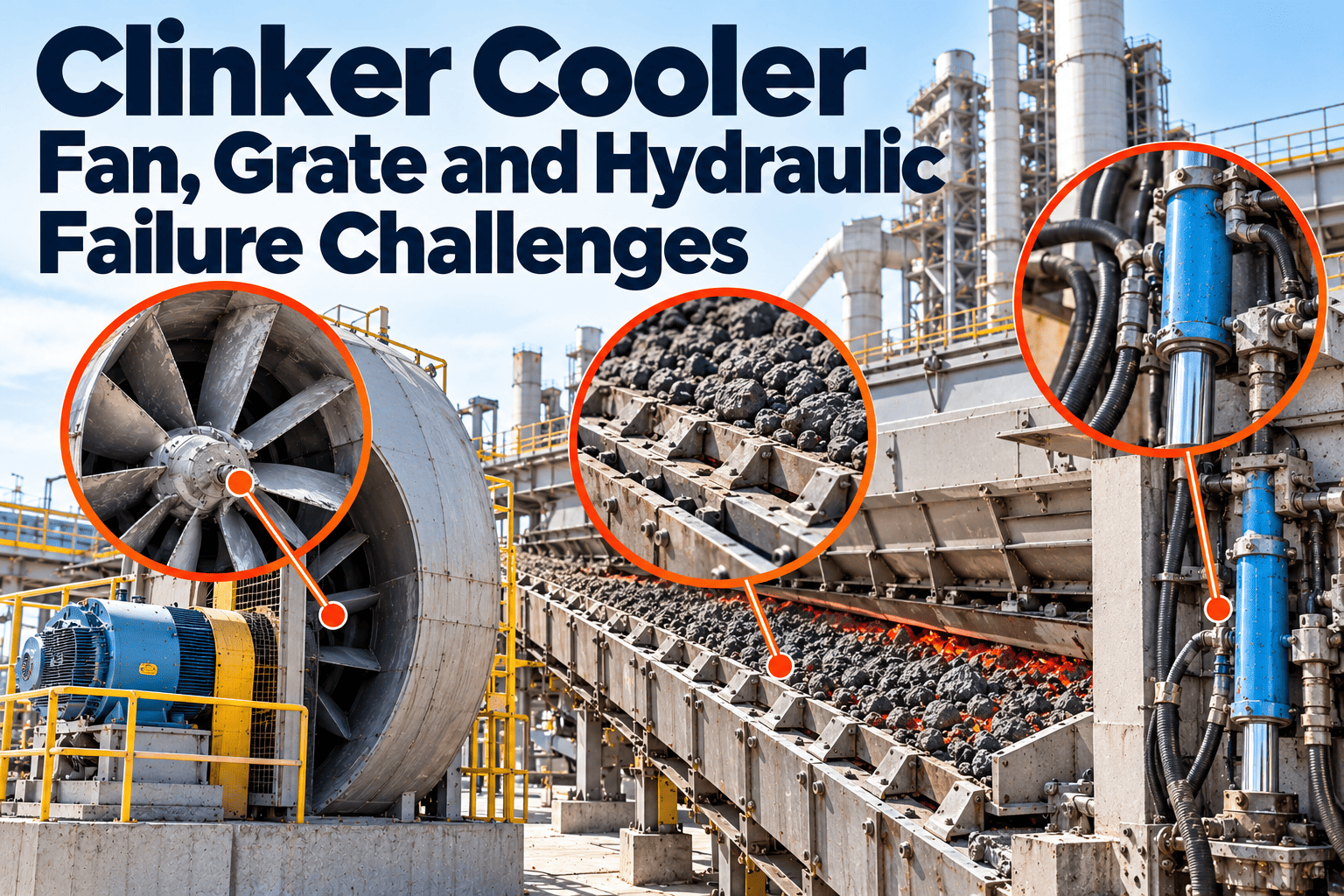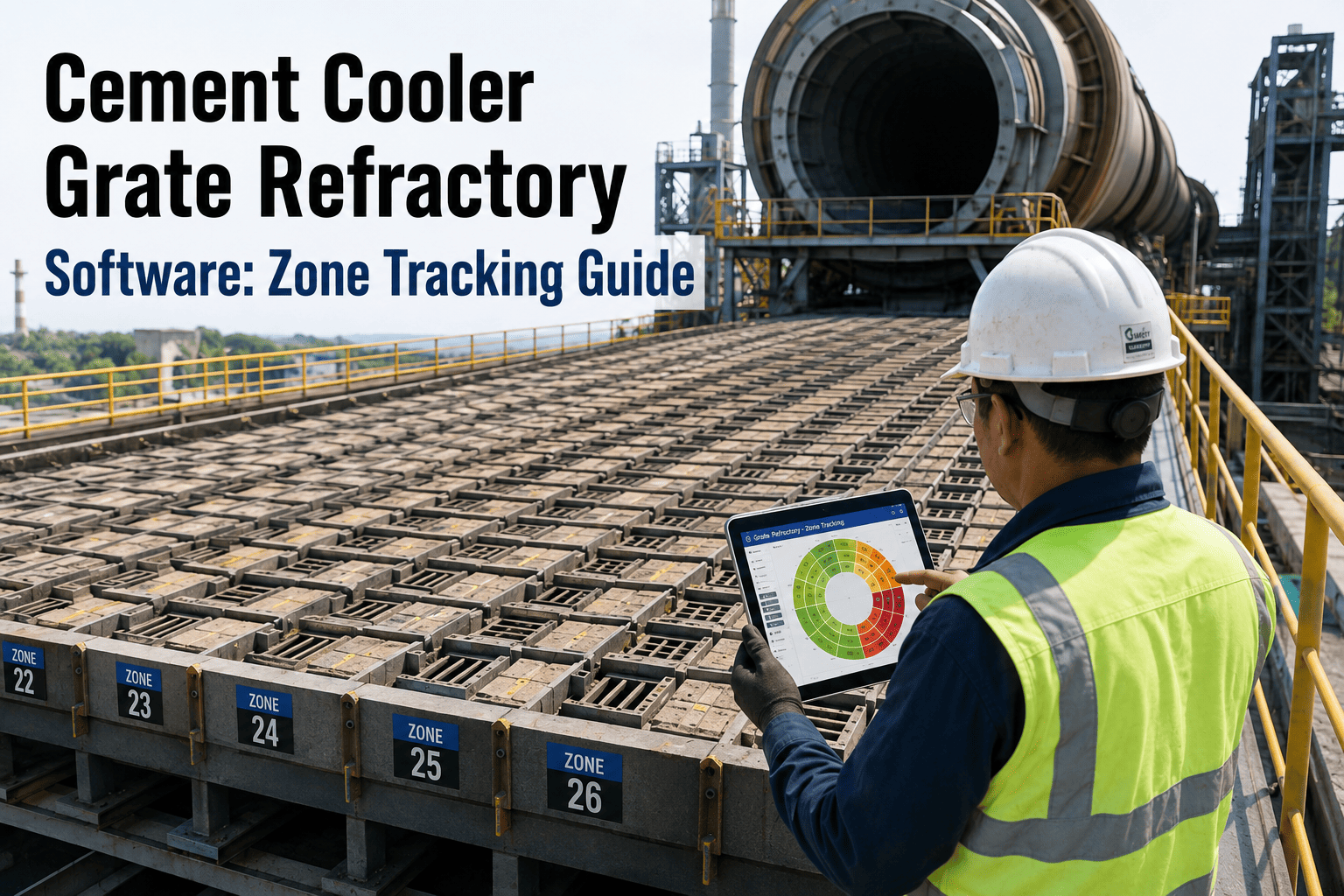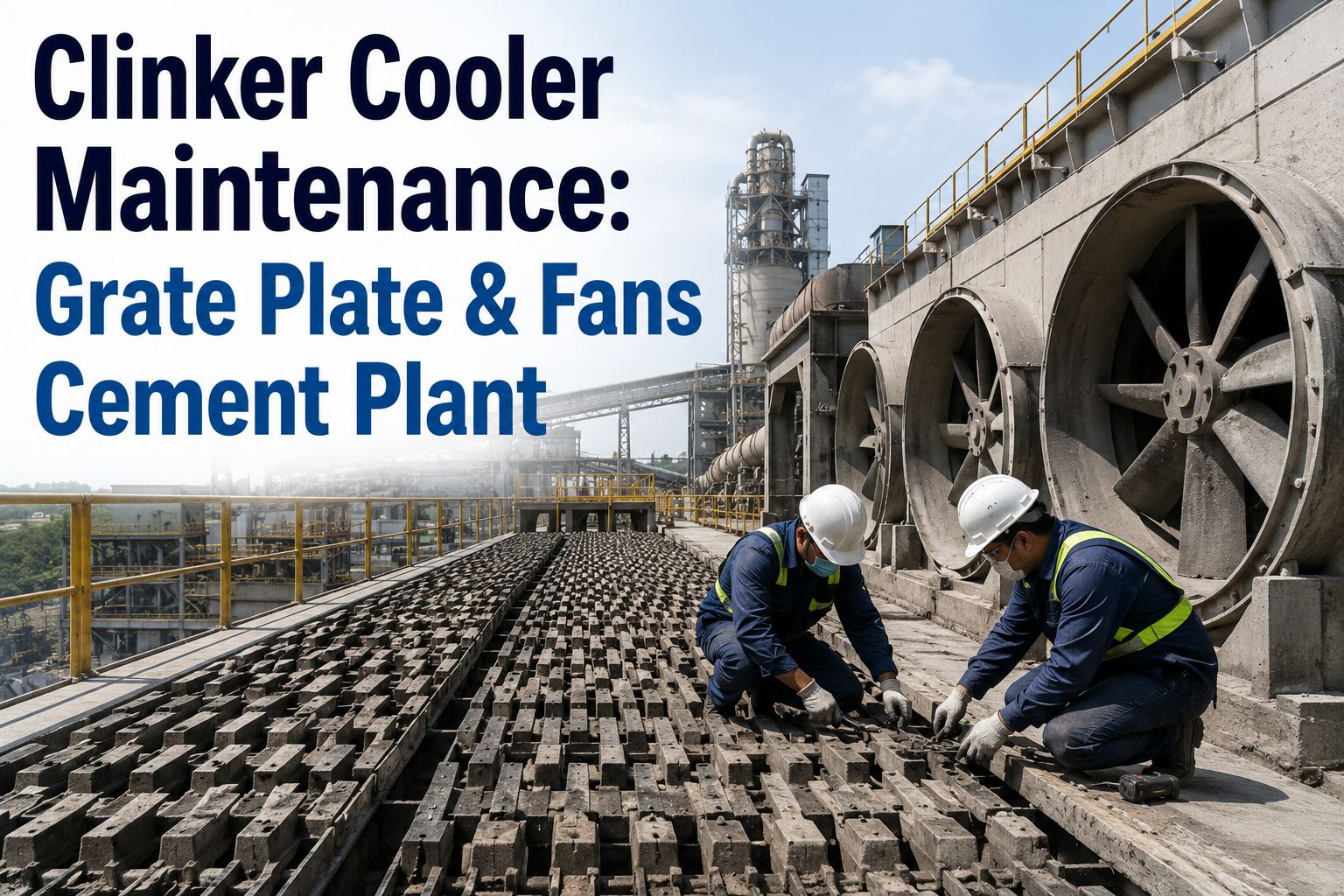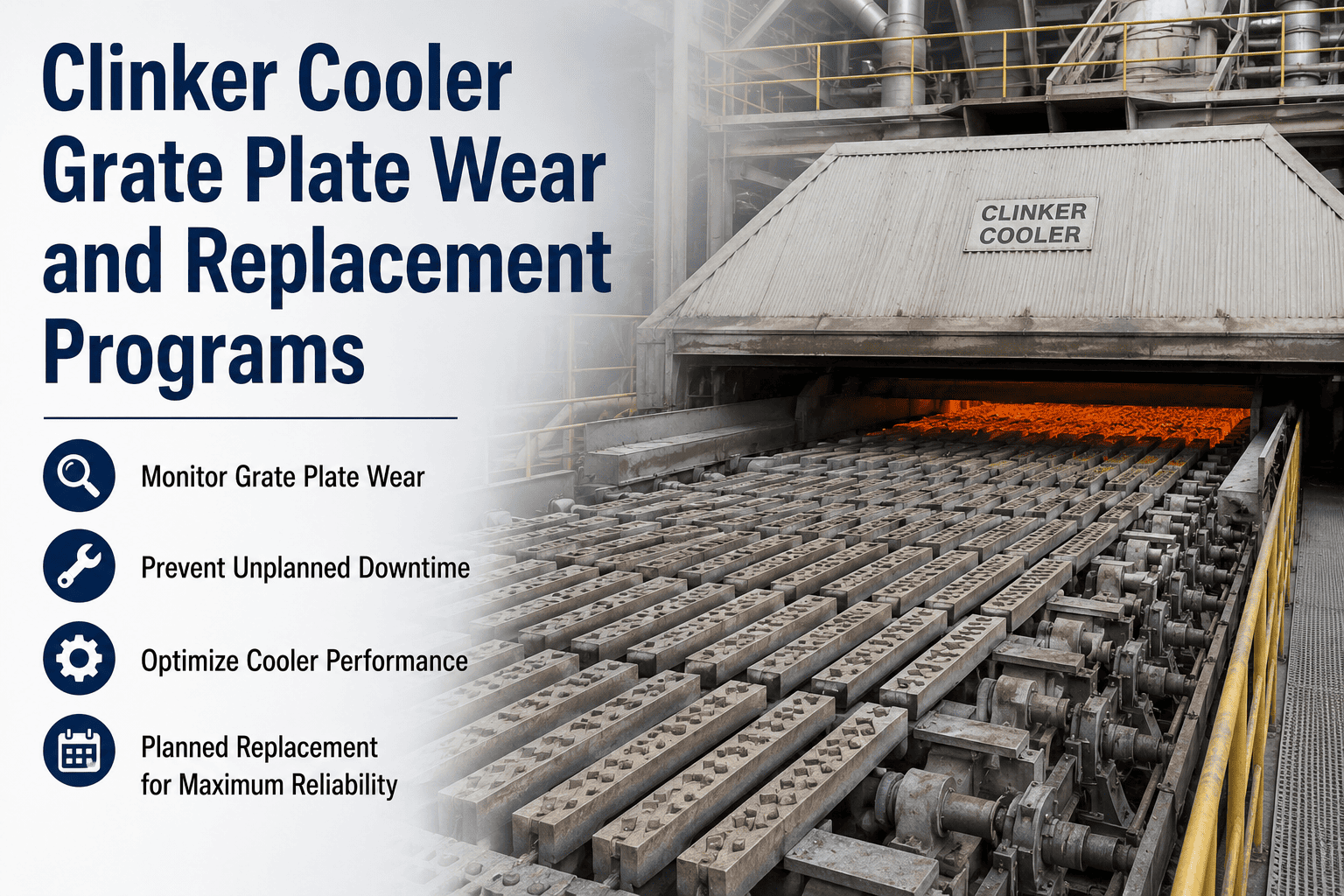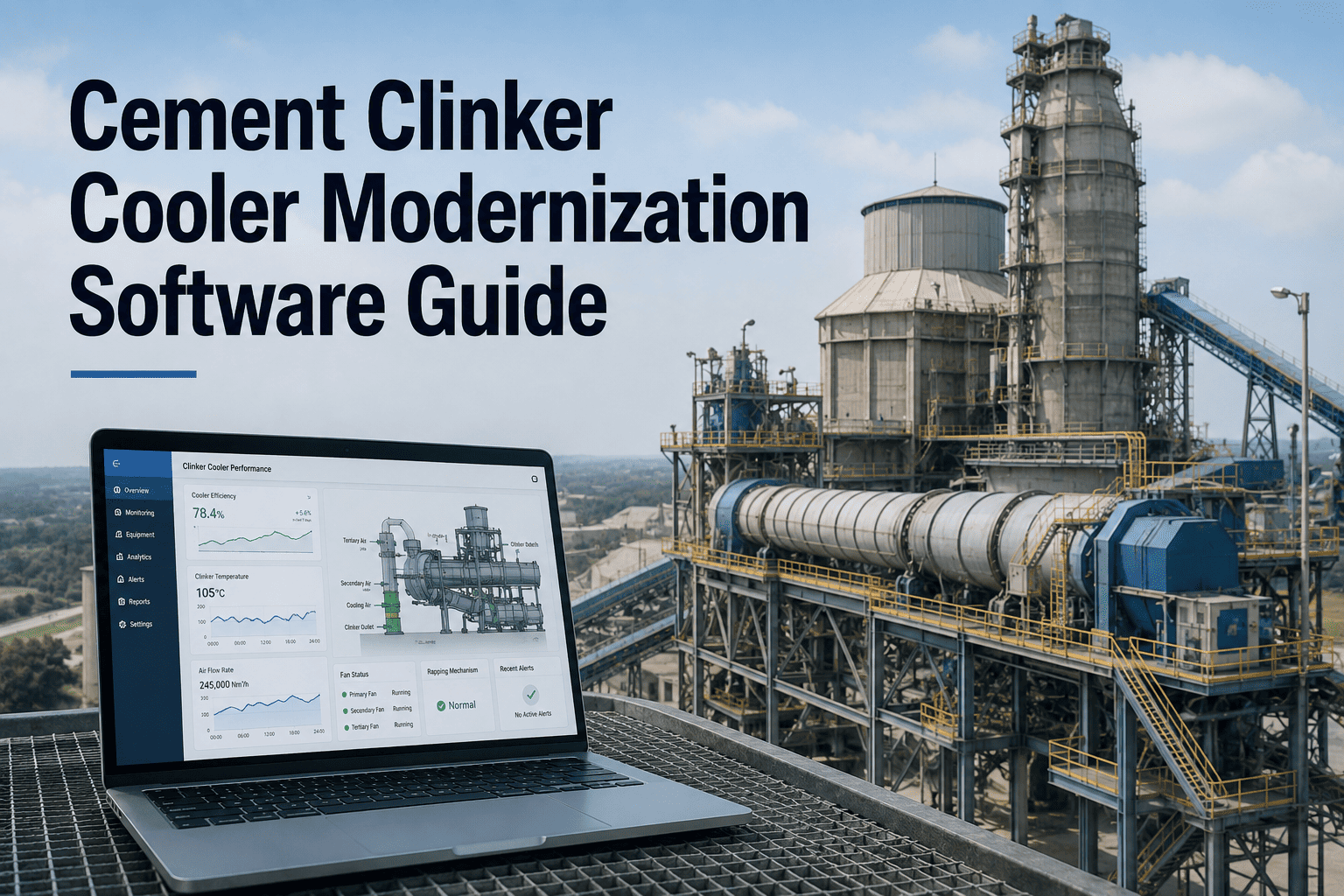
Clinker cooler modernization is one of the highest-return capital projects on a cement kiln line, yet most plants delay it until a forced outage makes the decision for them. A cooler still running its original mechanical drive, worn grate plates, and manual air distribution is not just inefficient — it is quietly capping kiln throughput, inflating specific fuel consumption, and building unplanned downtime risk that a modern grate motion conversion or hydraulic drive upgrade removes almost immediately. This guide breaks down the three real modernization pathways, the failure modes that justify the spend, the phased outage sequence that keeps a shutdown on schedule, and the CMMS structure plants use to run the whole project without losing data in a binder. If your cooler is running past design life, the numbers below will tell you whether it is time to plan the outage. Start Free Trial and build your modernization asset register before the next shutdown window.
CLINKER COOLER MODERNIZATION · CEMENT KILN LINE
Is your grate cooler quietly eating 30% of your plant's energy bill?
Clinker cooling can account for close to a third of total plant energy consumption when the drive, air distribution plates, and casing seals have aged past design intent. A modernized cooler routinely pushes heat recovery efficiency above 70% while cutting specific fuel and electrical consumption from day one of restart.
WHY GRATE COOLERS AGE OUT
Four wear patterns that turn a reliable cooler into a bottleneck
A grate cooler rarely fails all at once. It degrades one subsystem at a time — drive, plates, casing, controls — until the combined losses show up as red clinker, high secondary air temperature swings, and a kiln that cannot chase its own rated capacity. Most plants only notice the combined effect once production is already being held back, long after the individual wear patterns first appeared in the maintenance log. Track these four patterns and a modernization decision becomes a data conversation, not a guess.
Mechanical drive fatigue
Older reciprocating grate drives rely on chains, rollers, and mechanical linkages that wear unevenly across grate rows. Uneven stroke timing creates dead zones in the clinker bed, uneven cooling air distribution, and repeated unplanned stops for drive repair. Bearing wear on the drive shaft compounds the problem, since a slightly bent shaft throws off synchronization between rows and forces operators to run conservative kiln rates just to protect the drive from further damage.
Grate plate and air distribution wear
Grate plates and mechanical flow regulators erode from constant clinker abrasion at high temperature. Worn plates lose their ability to meter cooling air evenly, so red clinker patches and localized hot spots appear even when total fan airflow looks normal. Left unaddressed, uneven aeration also drives up under-grate fan power because operators compensate for the dead zones by running total airflow higher than the cooler actually needs.
Casing and seal air leakage
Cracked casing, degraded compensators, and worn side seals let cooling air bypass the clinker bed entirely. Every cubic meter of leaked air is fan energy paid for and never used to recover heat, which is exactly the loss a modernized casing and seal package eliminates. Leakage also drags down the temperature of air feeding the kiln and any waste heat recovery system, so the losses compound well beyond the cooler itself.
Control system obsolescence
Legacy analog controllers and unsupported PLC platforms cannot run modern grate motion control logic, which adjusts stroke speed automatically from bed height feedback. Without it, operators are still setting grate speed by feel instead of by data, and every controller fault becomes a scramble to find spare cards for a platform the vendor stopped supporting years ago.
MODERNIZATION PATHWAYS
Three ways to modernize a clinker cooler — and how to pick the right one
Not every cooler needs a full replacement. The right pathway depends on how much of the existing casing, hydraulics, and grate bed is still within tolerance. Here is how the three most common modernization scopes compare on cost, downtime, and outcome.
Grate motion conversion
Replaces the mechanical or hydraulic drive with a modern electro-mechanical grate motion system while keeping the existing casing and grate bed. The lowest-disruption option, aimed at plants whose plates and casing are still structurally sound but whose drive is the bottleneck. Because the drive sits outside the cooler housing on most modern designs, it also cuts future maintenance time by keeping technicians out of the hot, dusty under-grate compartment for routine work.
Hydraulic drive upgrade
Swaps aging hydraulic cylinders, proportional valves, and grate motion control logic for a current-generation hydraulic package. Delivers precise, independently controlled stroke speed per grate row without touching the casing or air distribution hardware underneath. A modern grate motion controller converts live bed height readings into stroke speed adjustments automatically, so the cooler self-corrects instead of waiting for an operator to notice drift on a trend screen.
Full grate cooler retrofit
Replaces internals end to end — grate bed, air distribution plates, drive, and often the crusher — inside the retained outer casing footprint. Chosen when plate wear, air leakage, and drive age have all compounded, or when a capacity increase is part of the business case. Keeping the outer casing intact avoids a full structural rebuild while still delivering close to new-cooler performance on heat recovery and clinker throughput.
Not sure which modernization pathway fits your cooler?
Walk through your drive age, plate condition, and casing leakage data with our team and leave with a scoped recommendation, not a sales pitch.
PROJECT SEQUENCE
How a cooler modernization actually runs, phase by phase
A cooler modernization is a fixed-window capital project bolted onto a live kiln schedule. Miss a phase and the outage either overruns or the new equipment starts up with unresolved punch-list items. This is the sequence that keeps both from happening.
Condition assessment and engineering
Thermal survey, static pressure survey, drive vibration and wear inspection, and a casing leakage audit establish the actual condition baseline. Engineering uses this data to size the modernization pathway and lock the scope before ordering long-lead items. This is also the point where structural drawings are pulled and verified against as-built conditions, since decades of prior repairs often drift from the original design documentation.
Procurement and pre-fabrication
Long-lead items — drive units, grate plate castings, hydraulic packages, control cabinets — are ordered and staged months ahead of the outage. Whatever can be pre-assembled off the critical path, such as skid-mounted hydraulic stations, is built before the shutdown starts. Contractor scopes are also finalized here, with crew counts and equipment mobilization scheduled against the confirmed outage window rather than a tentative one.
Shutdown demolition and installation
The kiln comes down, the cooler is isolated, and old internals or drive components are removed on a strict hour-by-hour critical path. New equipment goes in against that same path — every day of slippage here is a day of lost kiln production, not just cooler downtime. Multiple trades typically work the space in parallel, so sequencing and permit-to-work coordination matter as much as the physical installation itself.
Commissioning and controlled restart
Cold alignment checks, hydraulic pressure testing, and grate motion control tuning happen before refractory heat-up begins. Restart is staged in controlled steps so bed height, stroke speed, and air distribution can be verified against design before full load. Any punch-list item found during cold testing gets closed here, before it turns into a hot repair once the cooler is running clinker again.
Performance verification and ramp-up
Over the first 30 to 90 days, secondary and tertiary air temperature, clinker outlet temperature, and specific fuel consumption are trended against the design case to confirm the modernization is delivering the recuperation efficiency it was scoped to deliver.
CMMS CONFIGURATION
How a CMMS keeps a multi-week cooler outage from unraveling
A cooler modernization touches dozens of contractors, hundreds of punch-list items, and a critical path measured in hours. Running it off spreadsheets and a shared drive is how commissioning data gets lost the moment the outage team disbands. Here is the structure that holds it together.
Modernization asset hierarchy
Model the cooler as a parent asset with drive units, grate rows, and hydraulic stations as children so every inspection finding and work order ties to an exact component, not a vague "cooler area" note. That structure carries forward past commissioning into everyday preventive maintenance once the cooler is back in production.
Shutdown work order sequencing
Load the phase-by-phase critical path as linked work orders with dependencies, so a delayed demolition task automatically flags every downstream installation task instead of surfacing on day three of the outage. Project leads can see the true impact of a slip in real time instead of finding out at the next shift handover meeting.
Long-lead spare parts tracking
Track drive units, grate plate castings, and hydraulic components against procurement lead time and outage start date, with automatic alerts when a long-lead item is at risk of missing the shutdown window. It also keeps a running record of which vendor supplied which component for future warranty and spares ordering.
Digitized commissioning checklists
Cold alignment, hydraulic pressure testing, and grate motion tuning steps are logged against each component ID by the technician on site, so nothing gets verbally signed off and forgotten before heat-up. Photos and readings attach directly to the checklist item instead of living in someone's phone camera roll.
Post-restart performance trending
Secondary air temperature, clinker outlet temperature, and specific fuel consumption feed into the same asset record used during commissioning, giving a single trend line from baseline through modernization to ramp-up. That single trend line is what turns the project business case into a verified result instead of an assumption.
Capital project audit trail
Every inspection, contractor sign-off, and punch-list closure is timestamped and exportable, which turns the finance and reliability post-project review from a document hunt into a single downloadable report.
"
Our cooler drive was over 20 years old and we were losing production days every quarter to unplanned drive repairs. We scoped a hydraulic drive upgrade, ran the entire shutdown critical path and commissioning checklist through the CMMS, and came back online three days ahead of the outage plan with full documentation ready for our reliability review.
GENERATION COMPARISON
What modernization actually buys you, generation by generation
Cooler technology has moved through several generations, and each step change shows up directly in recuperation efficiency, air leakage, and maintenance load. This is roughly where a cooler sits depending on age and modernization status.
| Cooler Generation | Heat Recovery Efficiency | Cooling Air Leakage | Maintenance Burden |
|---|---|---|---|
| First-generation reciprocating | 55–62% | High | Very high |
| Second-generation fixed inlet | 62–68% | Moderate | High |
| Third/fourth-generation step type | 68–72% | Low | Moderate |
| Modernized hydraulic or electro-mechanical drive | 70%+ | Very low | Low |
ROI AT A GLANCE
What a modernization is actually worth on a mid-size kiln line
The business case for cooler modernization rarely rests on a single number. It stacks up across fan energy, fuel consumption, clinker quality, and avoided downtime. Here is how those pieces typically add up on a 5,000 to 6,500 TPD line moving from a legacy drive to a modernized cooler.
Fan energy recovered
Eliminating casing leakage and dead-zone over-aeration typically cuts under-grate and cooler vent fan power by 8 to 15 percent, since fans are no longer compensating for air that was bypassing the clinker bed.
Specific fuel consumption
Higher and more stable secondary and tertiary air temperature from an even clinker bed reduces specific heat consumption in the kiln, often by 1 to 3 percent depending on starting condition.
Avoided unplanned downtime
Plants running past drive design life commonly log two to four unplanned cooler-related stops a year. A modernized drive with proper PM removes most of that lost production time entirely.
Clinker quality and grindability
Faster, more even cooling improves clinker crystal structure and grindability, which can trim cement mill power consumption downstream — a benefit that rarely makes it into the initial cooler business case.
FREQUENTLY ASKED
Clinker cooler modernization — straight answers
How do I know if my cooler needs a full retrofit versus a drive upgrade?
Run a condition assessment first. If the casing and grate plates are structurally sound and only the drive is limiting performance, a grate motion conversion or hydraulic drive upgrade is usually enough. Combined plate wear, air leakage, and drive age point toward a full retrofit.
How long does a clinker cooler modernization outage take?
A drive-only conversion typically runs 7 to 14 days, a hydraulic drive upgrade 10 to 18 days, and a full internals retrofit 21 to 35 days depending on capacity and scope. Book a Demo to walk through outage sequencing for your cooler size.
What return does a cooler modernization typically deliver?
Plants commonly see heat recovery efficiency rise from the low 60s into the low 70s percent range, alongside reduced specific fuel consumption and fewer unplanned drive-related stops, which is where most of the payback comes from.
Can existing casing and grate plates be reused in a modernization?
Often yes. Grate motion conversions and hydraulic drive upgrades are designed specifically to retain the existing casing and grate bed. A full retrofit usually keeps the outer casing footprint while replacing the internals inside it.
How does a CMMS help during the modernization project itself, not just after?
It sequences the shutdown critical path as dependent work orders, tracks long-lead spare parts against the outage start date, and digitizes commissioning sign-off, so the project team is working from one live record instead of a shared spreadsheet. Start Free Trial to set up your modernization project structure.
Plan your clinker cooler modernization before the next forced outage plans it for you
Build the asset hierarchy, shutdown sequence, and commissioning checklist library in one platform, ready before crews mobilize.
Free 14-day trial · No credit card