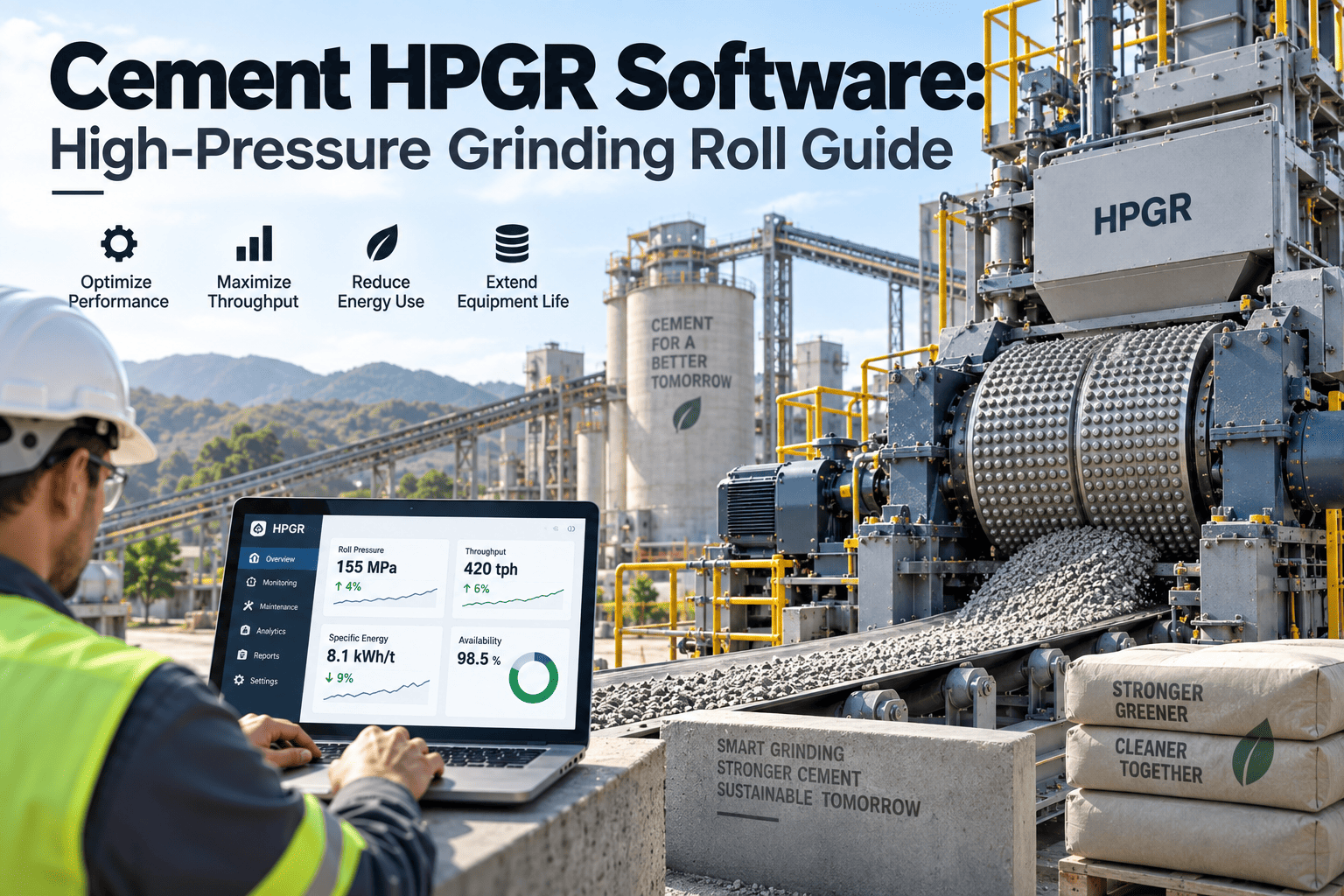
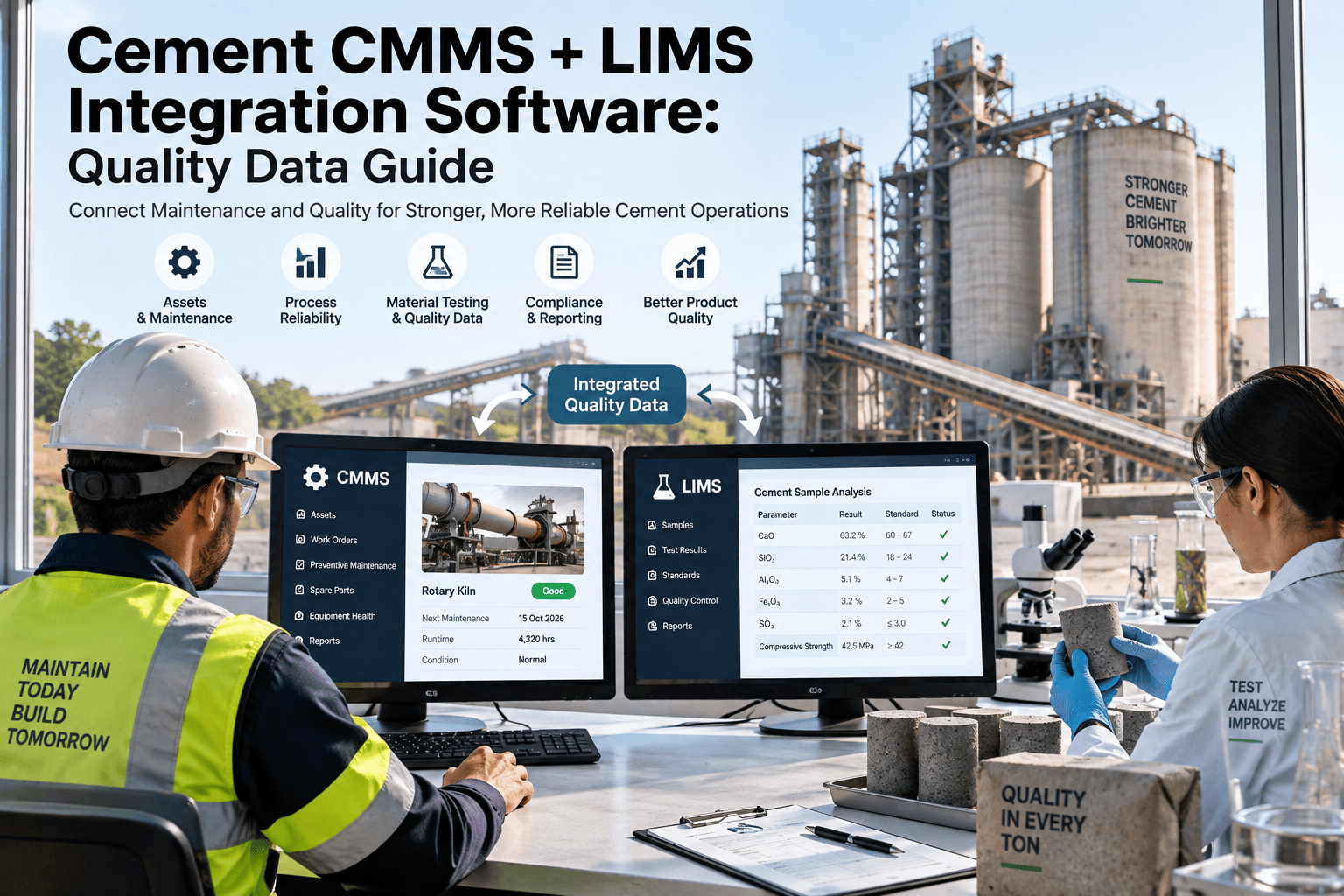
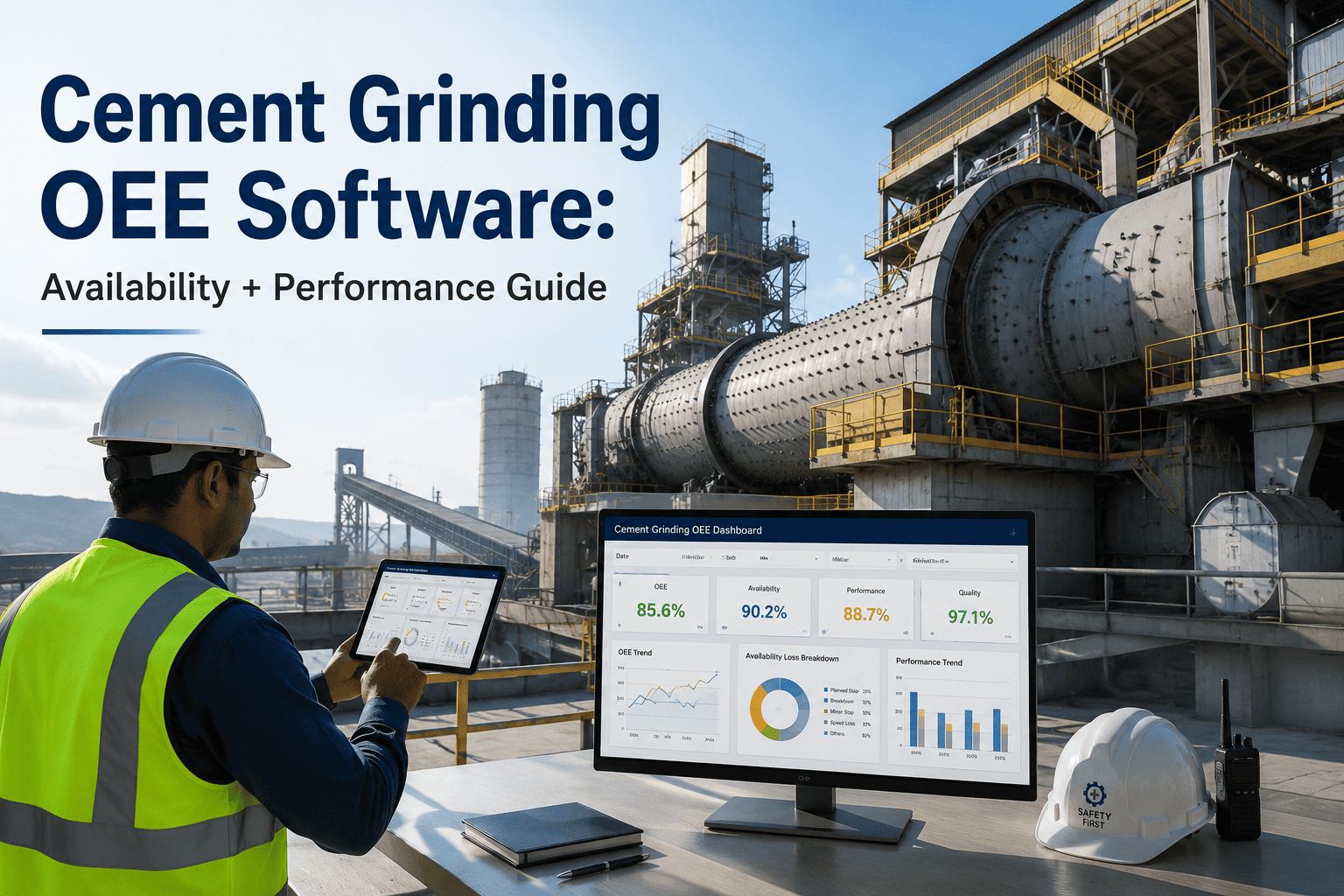
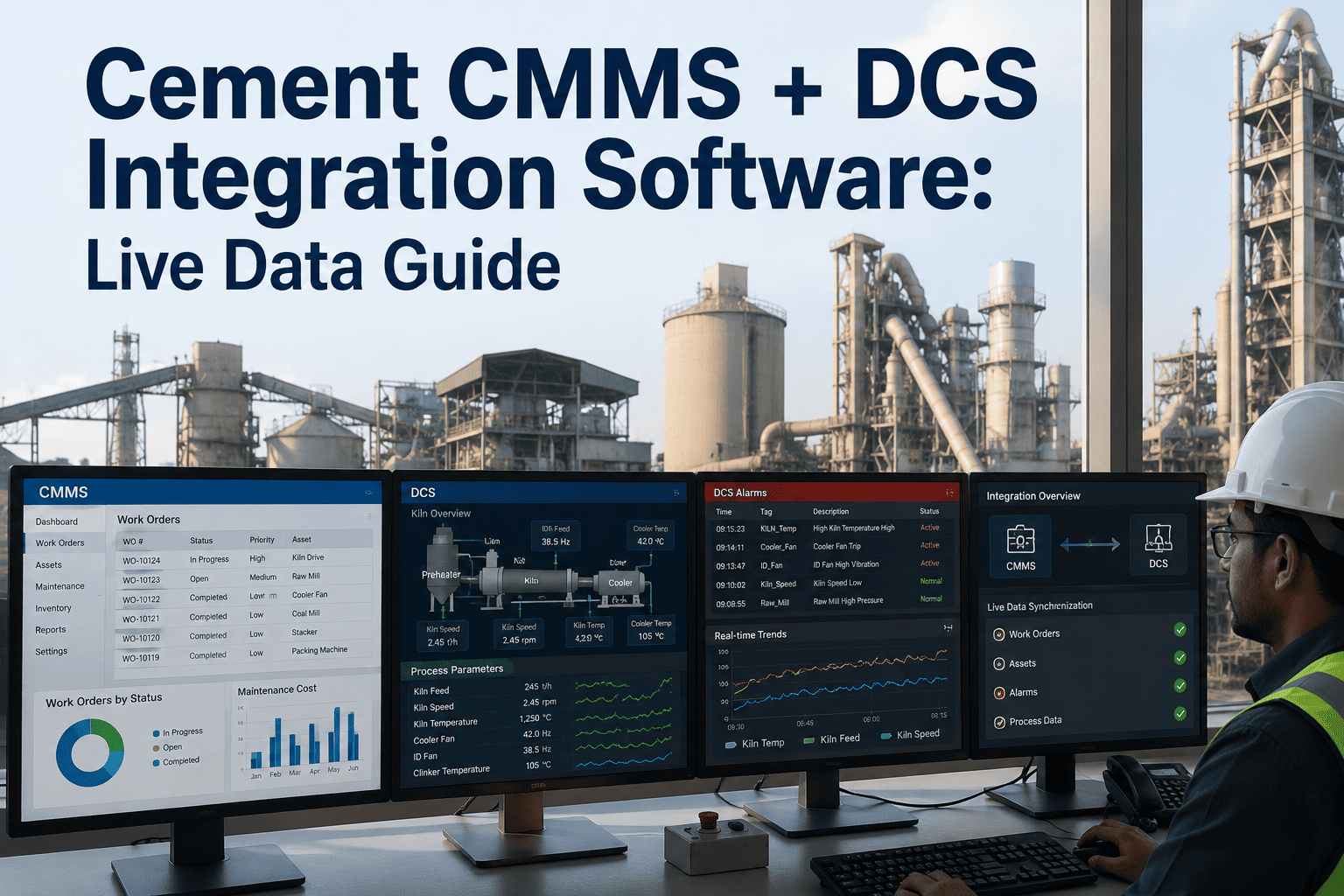
Cement plants running a High Pressure Grinding Roll know the machine only delivers its promised energy savings when the rolls, hydraulics, and gap control stay within design tolerance. The moment a stud liner wears unevenly or a hydraulic accumulator loses pressure, throughput drops, power draw climbs, and the plant quietly slides back toward ball-mill-level energy consumption. Most plants track HPGR health through operator memory, paper log sheets, and reactive repairs after a trip alarm — which is exactly why avoidable stoppages and premature roll wear remain so common across the industry. A purpose-built cement HPGR software layer changes that by turning hydraulic pressure, roll gap, and wear data into scheduled, trackable maintenance work instead of guesswork. This guide explains how HPGR technology works, what actually wears out and why, and how a CMMS built for cement grinding circuits protects the 20-25% energy advantage HPGR is supposed to deliver — with a look at how OxMaint tracks it automatically.
Cement Grinding · HPGR Technology · CMMS Guide 2026
Cement HPGR Software: The Complete High-Pressure Grinding Roll Maintenance Guide
How high-pressure grinding rolls cut clinker grinding energy by 20 to 25 percent over a plain ball mill — and the roll wear, hydraulic pressure, and gap control data your CMMS needs to protect that advantage for years, not months.
50%
Maximum specific energy reduction when HPGR fully replaces a ball mill in clinker grinding
40%
Share of total cement plant electricity consumed by clinker grinding alone
25%
Typical energy reduction from an HPGR pre-grinding retrofit ahead of an existing ball mill
3.5
Typical kWh per tonne consumed by the HPGR unit itself under normal operating pressure
How It Works
What Actually Happens Inside a High Pressure Grinding Roll
An HPGR forces material between two counter-rotating rolls — one fixed in position, one floating on hydraulic cylinders — under pressures typically ranging from 50 to 180 bar depending on material and throughput target. Instead of impact crushing, the material is compressed into a dense cake, generating microfractures throughout every particle. Those microfractures are the entire point: they make the material dramatically easier to grind in the ball mill or separator stage that follows, which is where the bulk of the energy saving actually comes from.
01
Material Feeds Between the Rolls
Pre-crushed clinker, raw meal, or slag enters the gap between the fixed and floating rolls under gravity feed, forming a continuous compacted bed rather than individual particle impacts.
02
Hydraulic Cylinders Apply Grinding Pressure
The floating roll is pushed by hydraulic cylinders backed by nitrogen accumulators, applying a controlled specific pressing force measured in newtons per square millimeter of roll surface.
03
Roll Gap Determines Product Size
The distance between the two rolls, continuously measured by gap sensors, sets the compacted product thickness and directly governs downstream grindability and throughput.
04
Compacted Cake Moves to the Next Stage
Microfractured material discharges to a de-agglomerator and separator, then into the ball mill or Horomill, which now needs far less energy to reach final fineness.
Energy Impact
How Much Energy Does HPGR Actually Save Over a Plain Ball Mill
The energy savings depend heavily on how the HPGR is deployed in the circuit — as a full ball mill replacement, a pre-grinding stage, or part of a combined grinding system. Every configuration below is a documented, achievable range, not a marketing ceiling.
HPGR Pre-Grinding Retrofit (ahead of existing ball mill)
Up to 25% saved
HPGR vs a Modern Vertical Roller Mill
Up to 20% saved
Combi-Grinding System (HPGR + separator + ball mill)
Up to 40% saved
Standalone HPGR Fully Replacing a Ball Mill
Up to 50% saved
Why the savings disappear without maintenance discipline
Every one of these figures assumes the roll surface, hydraulic system, and gap control are running at design condition. A worn stud pattern, a leaking accumulator, or an uncontrolled gap can quietly erase 10 to 15 percentage points of the saving before anyone notices it in the power bill.
Parameters That Matter
The Four Operating Parameters an HPGR CMMS Must Track
HPGR performance is not a fixed number — it drifts continuously with roll wear, feed moisture, and hydraulic condition. A cement plant HPGR platform earns its place on the plant floor by turning these four variables into logged, trend-visible data instead of a number an operator glances at once per shift.
Hydraulic Pressure and Specific Pressing Force
The pressure applied by the floating roll cylinders determines how much microfracturing occurs. Pressure that drifts outside the design band either wastes energy or under-grinds material, and logging it against throughput reveals the trend before it becomes a trip.
Roll Gap Width and Skew
An uneven gap across the roll width — skew — causes one side of the tire to wear faster than the other, permanently changing the roll geometry. Continuous gap logging on both sides catches skew while a shim adjustment can still fix it.
Stud or Tire Wear Profile
The autogenous wear layer that forms on studded rolls is what protects the roll body, but it wears unevenly with feed composition. Scheduled inspection checklists with photo evidence let planners order replacement tyre segments before a spalled section forces an unplanned stop.
Throughput vs Motor Power Draw
Specific energy consumption in kWh per tonne is the single number that tells reliability teams whether the HPGR is still delivering its designed saving, and it should be calculated automatically from live throughput and power data, not reconstructed at month end.
Cement Plant HPGR CMMS
Stop Losing Your Energy Savings to Undetected Roll Wear
OxMaint connects hydraulic pressure sensors, gap transducers, and inspection checklists into one asset record for every HPGR unit on the plant, so wear, drift, and drops in specific energy consumption show up as an alert instead of a surprise at the next audit.
Technology Comparison
HPGR vs Ball Mill vs Vertical Roller Mill — Side by Side
Most modern cement plants do not choose one technology exclusively — they combine HPGR pre-grinding with an existing ball mill, or evaluate it against a VRM conversion. Here is how the three compare on the factors that actually affect a maintenance budget.
| Technology |
Specific Energy |
Primary Wear Component |
Maintenance Focus |
Best Fit |
| High Pressure Grinding Roll |
2.5 to 3.5 kWh/t |
Stud liners and hydraulic seals |
Gap control, hydraulic pressure, tyre wear profile |
Pre-grinding retrofit or new finish-grinding line |
| Ball Mill |
10 to 14 kWh/t |
Grinding media and liners |
Media charge, diaphragm slots, liner lifter bars |
Existing circuits or downstream of HPGR |
| Vertical Roller Mill |
6 to 9 kWh/t |
Grinding rollers and table liners |
Roller and table wear, hydraulic loading system |
New finish-grinding installations |
Where Fleets Lose the Saving
The Failure Modes That Quietly Erase HPGR Energy Savings
HPGR units are mechanically simple compared to a ball mill, which is exactly why small deviations go unnoticed for weeks. These are the four issues that show up most often in cement plant maintenance records.
01
Uneven Stud Wear from Skewed Rolls
When one side of the roll gap runs tighter than the other, that side of the tyre wears faster, the roll surface loses its designed profile, and grinding efficiency drops well before the wear becomes visually obvious on a walkthrough.
CMMS fix: dual-side gap logging with automatic skew alerts and a scheduled shim-adjustment work order.
02
Hydraulic Accumulator Pressure Loss
Nitrogen accumulators lose charge gradually, causing pressure fluctuations that reduce the consistency of the compaction force and directly cut into the microfracturing effect that drives the energy saving.
CMMS fix: preventive nitrogen recharge intervals tied to actual pressure trend data, not a fixed calendar date.
03
Bearing Overheating from Missed Lubrication
Roll bearings running under high radial load depend on strict lubrication intervals, and a missed cycle is one of the fastest routes to an unplanned multi-day HPGR stop.
CMMS fix: automated lubrication work orders with technician sign-off and overdue escalation.
04
Feed Moisture and Fines Bypass
Excess fines or moisture in the feed reduce the compaction bed quality, forcing operators to raise pressure to compensate, which accelerates stud wear without improving product quality.
CMMS fix: linking feed quality readings to HPGR pressure logs so root cause is visible, not guessed.
Renewal-Ready Numbers
What a Well-Maintained HPGR Program Delivers
20-25%
Sustained Grinding Energy Reduction
The realistic, sustained saving plants report from HPGR pre-grinding when hydraulic pressure and gap are actively monitored rather than left to drift.
40%
Of Plant Power Spent on Clinker Grinding
Since grinding is the single largest electrical load in a cement plant, even small efficiency losses here show up directly on the utility bill.
60 sec
To Export a Full HPGR Maintenance History
Complete hydraulic, gap, wear, and work order records for any HPGR asset, exported from OxMaint for an audit or reliability review in under a minute.
Zero
Guesswork on Roll Replacement Timing
Wear-profile trend data replaces the "replace it when it fails" approach with a scheduled, budgeted tyre segment replacement plan.
Common Questions
Cement HPGR Software and Maintenance — Frequently Asked Questions
How much energy does HPGR actually save compared to a ball mill in cement plants?+
A standalone HPGR can cut specific grinding energy by up to 50 percent compared to a conventional ball mill, while a pre-grinding retrofit ahead of an existing ball mill typically delivers 20 to 25 percent in real plant conditions. Combined grinding systems using HPGR, a separator, and a ball mill together can reach up to 40 percent.
Start a free trial to see how your own circuit is trending against that range.
What are the most common maintenance issues with high-pressure grinding rolls?+
The four recurring issues are uneven stud wear from a skewed roll gap, hydraulic accumulator pressure loss, bearing overheating from missed lubrication cycles, and stud liner spalling from feed moisture or fines bypass. Each one is preventable with consistent sensor logging and scheduled inspection.
Which operating parameters should be monitored on an HPGR daily?+
Hydraulic pressure and specific pressing force, roll gap width on both sides of the roll, stud or tyre wear profile, and specific energy consumption in kWh per tonne are the four parameters that determine whether the HPGR is still delivering its designed energy saving.
How does OxMaint CMMS help manage cement plant HPGR maintenance?+
OxMaint logs hydraulic pressure and gap sensor data against every HPGR asset, schedules preventive work for accumulators, bearings, and lubrication, tracks stud wear through photo-based inspection checklists, and generates audit-ready maintenance history in seconds.
Book a demo to see the HPGR asset view.
Can an HPGR be retrofitted onto an existing cement ball mill circuit?+
Yes, an HPGR pre-grinding retrofit ahead of an existing ball mill is one of the most common upgrades in the industry, typically cutting overall circuit energy consumption by roughly 20 to 25 percent at a fraction of the capital cost of a full vertical roller mill conversion.
OxMaint · Cement HPGR CMMS
Protect the Energy Savings Your HPGR Was Built to Deliver
OxMaint gives cement plant maintenance and reliability teams one platform to track hydraulic pressure, roll gap, stud wear, and specific energy consumption for every HPGR, ball mill, and VRM on site — with preventive scheduling and audit-ready reporting built in from day one.