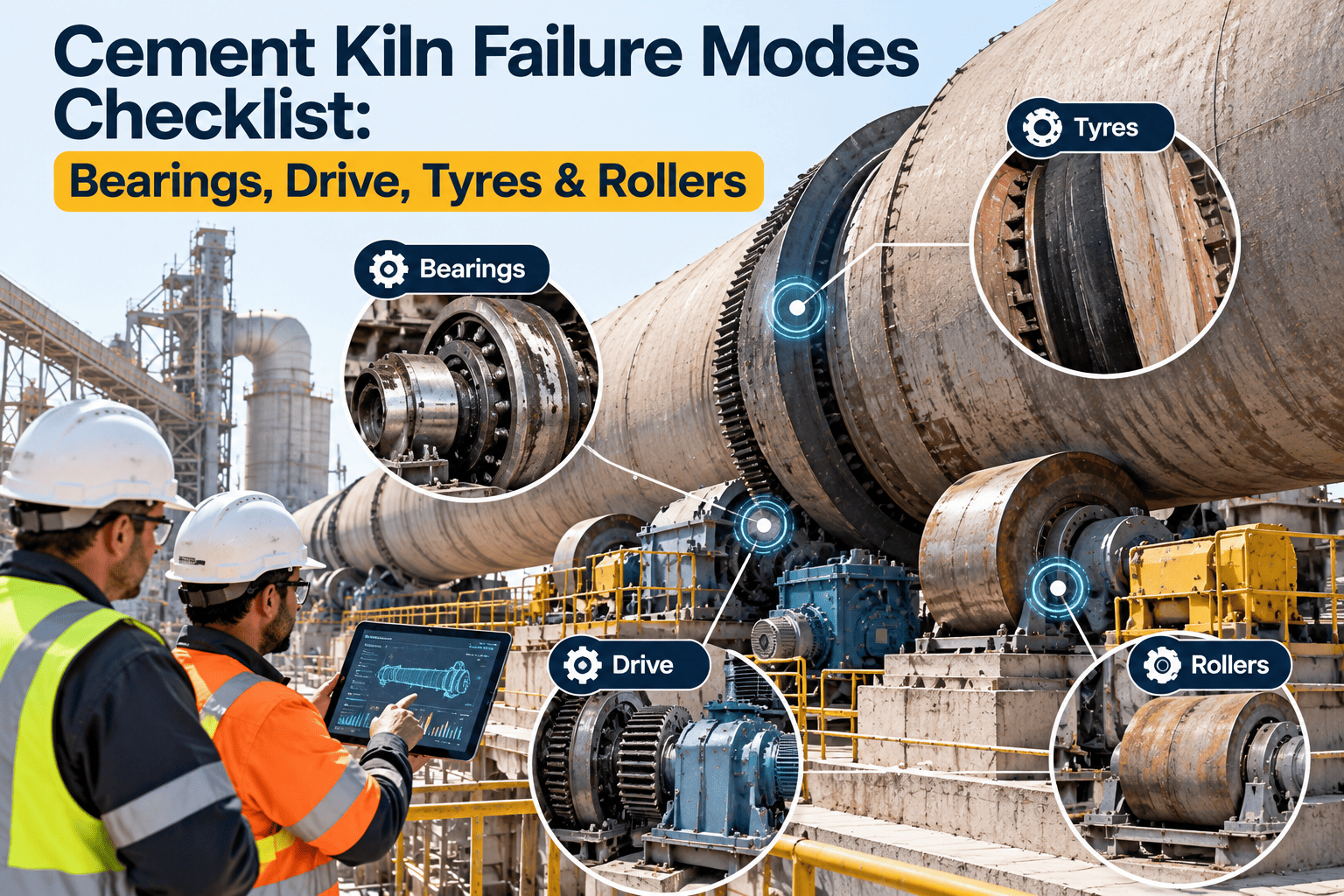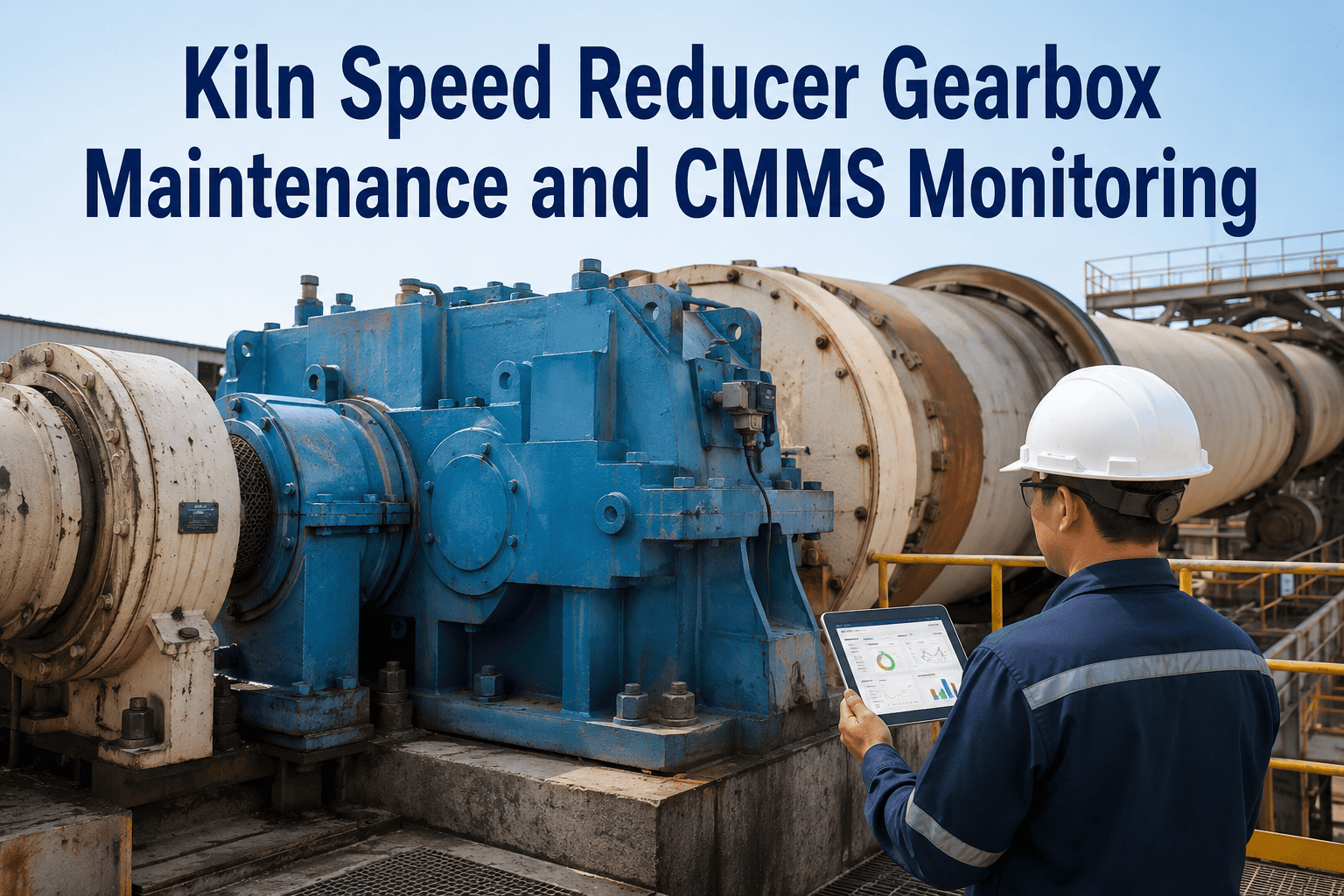
The kiln drive gearbox turns one of the heaviest rotating assets in a cement plant, and it does so around the clock at high torque and slow, steady speed. When it fails, clinker production stops, and a kiln that stops hot brings refractory and shell stress with it. Most gearbox failures announce themselves weeks earlier through vibration, oil condition, and temperature trends. This guide shows how cement teams turn that condition data into planned work, and how Oxmaint maintenance software keeps inspections, alerts, and work orders in one connected record.
Cement Kiln Drive Gearbox Predictive Maintenance Guide
Catch bearing wear, tooth pitting, and lubrication breakdown early enough to plan the repair inside a scheduled stop instead of an unplanned kiln trip.
Why kiln drive gearboxes are hard to protect
A kiln gearbox runs under a load that changes with coating, ring formation, and shell alignment. Slow shaft speeds also make early fault signals weaker than on a typical fan or pump drive.
No spare, long lead time
Large gearboxes are rarely stocked on site, so a failure can mean a long outage. Advance warning is what makes a planned exchange or repair possible.Heat and dust everywhere
Radiant heat from the shell and fine cement dust stress seals, breathers, and oil, and they contaminate lubricant if housekeeping slips.Misalignment moves with temperature
Shell thermal growth and foundation settlement change gear contact over time, so a drive that was aligned at commissioning may not stay that way.Data lives in separate places
Vibration files, oil reports, and operator rounds sit in different systems, so a slow trend across all three is easy to miss.Common gearbox failure modes and what they look like early
Predictive maintenance works when each failure mode is tied to a measurable symptom and a defined response.
| Failure mode | Typical cause | Early signal | First response |
|---|---|---|---|
| Rolling bearing damage | Contamination, poor lubrication, overload, misalignment | Rising envelope or bearing-defect frequencies, iron particles in oil | Confirm with a repeat measurement, shorten the inspection interval |
| Gear tooth pitting | Surface fatigue, overload, oil film breakdown | Gear-mesh harmonics and sidebands grow, ferrous debris increases | Borescope or inspection-cover check, review load and oil |
| Lubricant degradation | Heat, oxidation, water, dust ingress | Viscosity shift, water content, higher acid number, particle count | Filter or change oil, fix the ingress path |
| Overheating | Cooler fouling, low oil level, flow restriction, excess load | Sump or bearing temperature trending upward at the same load | Check cooler, oil level, pump, and load history |
| Looseness or foundation issues | Bolt relaxation, grout damage | Raised low-order vibration harmonics | Torque check, foundation inspection |
| Coupling problems | Wear, misalignment, elastomer damage | Vibration at running-speed multiples, temperature at the coupling | Visual inspection, realignment during a stop |
What the process team sees versus the likely gearbox cause
Condition data that feeds a predictive program
No single measurement is enough. Combine several so that one confirms the other before a costly shutdown is requested.
Vibration
- Accelerometers on the input and output bearings
- Envelope analysis for early bearing defects
- Gear-mesh frequency and sideband tracking
- Assess severity against ISO 20816 guidance and your own baselines
Oil analysis
- Wear metals, particle counts, and cleanliness class
- Viscosity, water content, and acid number
- Sample from the same point in the same way each time
- Trend results by gearbox, not just pass or fail
Temperature and flow
- Bearing and sump temperature
- Oil pressure, flow, and filter differential pressure
- Cooler inlet and outlet temperature
- Compare at similar kiln load, not raw values
Operator rounds
- Leaks at seals and split lines
- Breather condition and oil level
- Unusual noise, smell, or hot spots
- Girth gear and pinion lubrication condition
Bring gearbox condition data into one work plan
Schedule rounds, log readings, and raise work orders from the same record your reliability team already reviews.
From alert to planned repair
A clear routine prevents both ignored alarms and unnecessary shutdown requests.
- DetectA trend crosses an alert level for vibration, oil, or temperature
- VerifyRepeat the reading and check a second indicator
- DiagnoseMatch the pattern to a failure mode and estimate urgency
- PlanRaise a work order, reserve parts, and pick a stop window
- RepairExecute with a checklist and record findings and photos
- ReviewConfirm readings return to baseline and update alert limits
Inspection checklist by interval
Treat these as starting points and set final intervals from the gearbox manufacturer's manual and your site history.
Daily rounds
- Oil level and visible leaks
- Sump and bearing temperature reading
- Lubrication system pressure and filter indicator
- Abnormal noise or vibration by feel
Weekly
- Breather and seal condition
- Cooler cleanliness and flow
- Coupling guard and visible wear
- Review vibration trends for changes
Monthly to quarterly
- Oil sample to the lab from the same port
- Portable vibration route with spectrum capture
- Foundation and anchor bolt check
- Girth gear and pinion lubricant condition
Planned kiln stop
- Inspection-cover tooth contact review
- Backlash and alignment verification
- Coupling element check
- Oil change or filtration based on analysis
Reactive versus predictive gearbox care
Reactive
- Repair after noise, smoke, or a trip
- Oil changed on a fixed calendar only
- Vibration data reviewed occasionally
- Spare gearbox or parts sourced after failure
- Findings lost when shifts change
Predictive
- Trends trigger inspection before damage spreads
- Oil changed based on measured condition
- Data reviewed on a defined cycle with owners
- Parts and stop windows planned in advance
- Every finding stored against the asset
Gearbox reliability KPIs
Route completion
Condition routes done on time ÷ routes scheduledOil sample compliance
Samples taken and reviewed on scheduleUnplanned kiln stops
Stops caused by the main drive per yearAlert-to-action time
Hours from confirmed alert to a work orderPlanned versus emergency work
Share of drive work done on planned ordersConfirmed detections
Alerts that led to a real finding ÷ total alertsHow Oxmaint supports kiln drive maintenance
Oxmaint is maintenance management software. It organizes the work and records around your monitoring tools rather than replacing sensors or analysis specialists.
Preventive schedules
Recurring rounds, oil sampling, and shutdown inspections tied to the gearbox asset.Mobile inspections
Technicians record temperatures, pressures, and photos at the drive and sync them to the asset history.Corrective and condition-based work orders
Raise work when a reading crosses a limit and track it through verification.Asset hierarchy
Link motor, coupling, gearbox, pinion, and girth gear so faults are viewed together.Spare parts inventory
Track seals, bearings, filters, and lubricants so a planned repair is not delayed.Reports and dashboards
Review backlog, compliance, and repeat failures for the reliability meeting.Kiln drive gearbox FAQs
What is the best predictive method for a kiln gearbox?
Combining vibration, oil analysis, and temperature works best because each confirms the others and reduces false alarms.
Can slow kiln speed limit vibration analysis?
The kiln shaft is slow, but the input stages run faster, so most monitoring focuses there and is supported by oil data.
Does a CMMS replace condition monitoring hardware?
No. It schedules, records, and acts on the data. Oxmaint keeps those actions in one history.
How often should gearbox oil be sampled?
It depends on the manufacturer guidance, duty, and past results; many plants sample on a regular monthly or quarterly cycle.
Where should a plant start?
Start with consistent rounds and oil sampling, then add trend reviews. Book a demo to plan the setup.
Plan the next gearbox repair before it plans you
Give your kiln reliability team one place for inspections, condition trends, parts, and work orders.