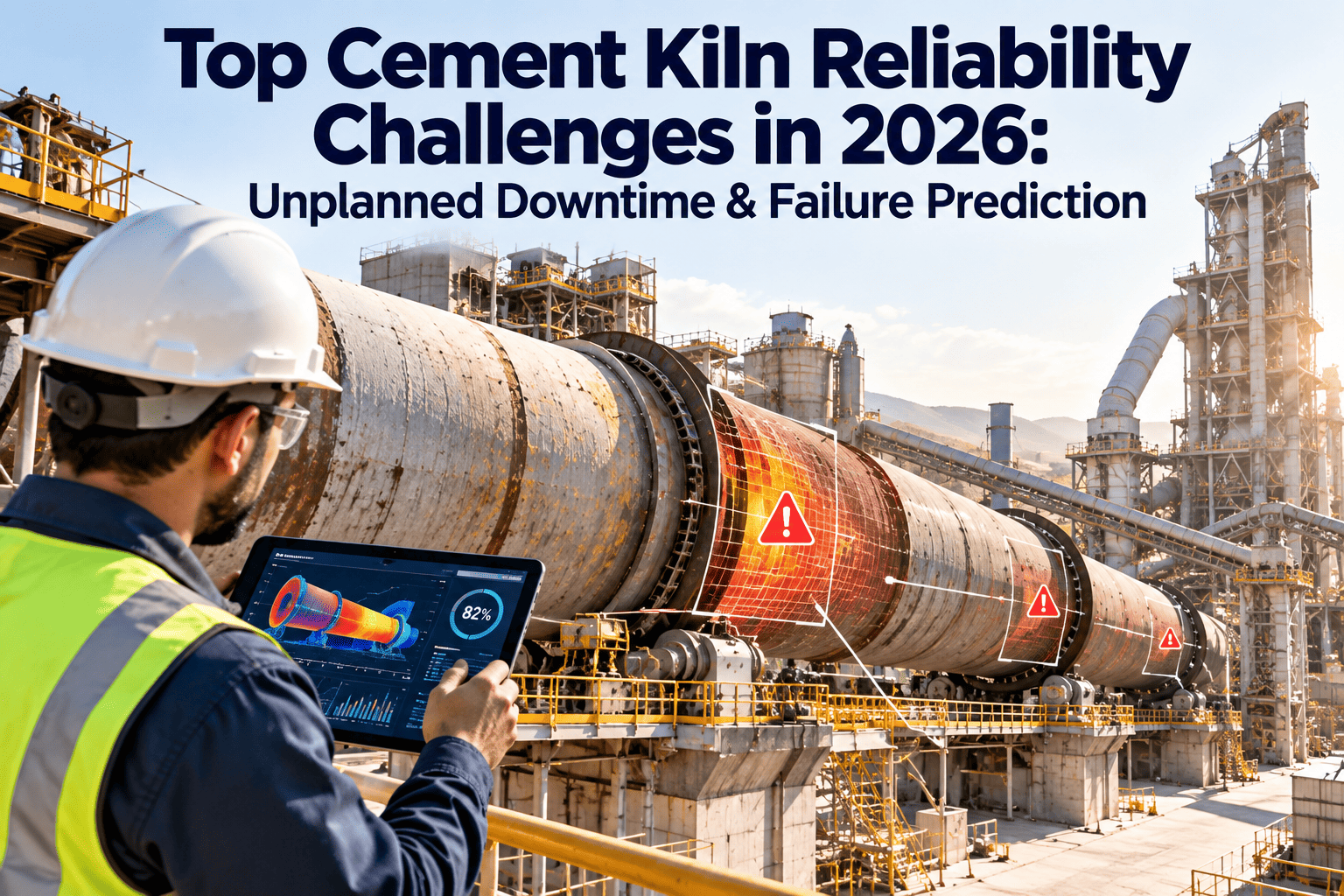
Title: Cement Kiln Failure Modes Checklist: Bearings, Drive, Tyres & Rollers | Slug: cement-kiln-failure-modes-checklist-bearings-drive-tyres-rollers | Meta: Cement Kiln Failure Modes Checklist: Bearings, Drive, Tyres & Rollers. Use structured field checks, condition indicators, maintenance actions, and escalation.
An unplanned kiln stop is the most expensive event in a cement plant: lost clinker output, refractory thermal shock on every restart, and a repair that often takes days. Most major kiln mechanical failures — a seized support roller bearing, a cracked tyre, a worn girth gear — give weeks of warning in temperature trends, creep readings, vibration and oil condition that nobody was assigned to read. Use this checklist to give your kiln reliability engineers, mechanical inspectors and shift supervisors a structured, traceable inspection framework — every check below is logged in your OxMaint CMMS with timestamps, readings and escalation status so nothing depends on memory or a paper binder.
Kiln & Reliability · Mechanical Failure Modes
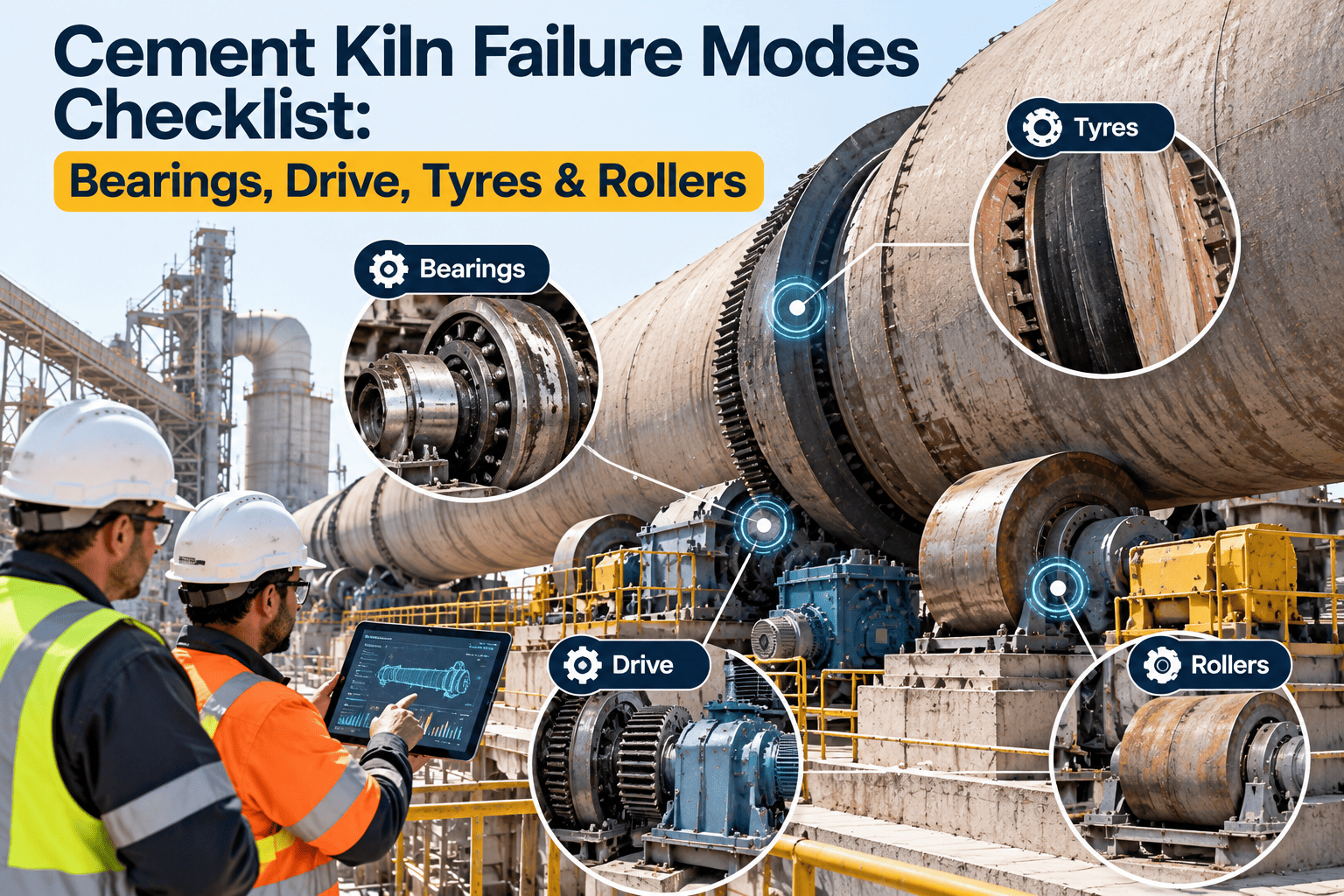
Cement Kiln Failure Modes Checklist: Bearings, Drive, Tyres & Rollers
A condition-based checklist for the critical kiln mechanical failure modes: support roller and thrust assemblies, tyres and creep, bearings and lubrication, girth gear and pinion, main and auxiliary drive, and shell and seals. Each check states what to measure, what a bad reading looks like, and when to escalate.
6Inspection Categories
23Check Points
5Frequency Tiers
P1Reliability Priority
Critical Kiln Mechanical Failure Modes and Their Consequences
Roller Bearing SeizureLube loss or overheating can force an immediate kiln stop and roller change
Tyre Crack / LooseningExcessive creep or fatigue cracking can end in tyre or shell failure
Girth Gear DamageMisalignment and poor lubrication cause pitting and tooth breakage
Drive Train FaultGearbox, coupling or motor faults restrict kiln speed or stop rotation
Thrust / Axial DriftSkewed rollers push the kiln against thrust limits and wear roller faces
Shell & Seal DeteriorationHot spots, ovality and seal leakage raise fuel use and shorten refractory life
DDaily / Shift
WWeekly
MMonthly
QQuarterly
AAnnual
Category 01
Support Rollers & Thrust Assembly
Support rollers carry the full kiln load and set its axial behaviour. Surface damage and incorrect skew rarely stop the kiln immediately, but they steadily overload bearings and tyres, and a cracked roller shaft is a sudden, catastrophic failure.
Roller and tyre contact surfaces inspected — check for pitting, spalling, flaking and axial scoring; contact band should sit centrally and evenly; edge loading or a shifted band signals misalignment that will progress to roller and tyre damageWMechanical Inspector · Roller surface inspection log
Roller skew and kiln axial position trended — compare current skew settings and thrust roller position against the last alignment record; a kiln that keeps drifting up or down means skew is wrong or a roller has changedWReliability Engineer · Skew and axial position trend
Hydraulic thrust roller pressure and cycling checked — record pressure and the kiln's up/down travel pattern; abnormal pressure, prolonged pinning to one limit or erratic cycling needs investigation before wear acceleratesDControl Room / Shift Fitter · Thrust pressure log
Roller shafts and journals examined with NDT — shaft shoulders, fillets and journals tested (MPI/UT) for fretting and cracks at scheduled stops; a growing shaft crack is a latent catastrophic failure and the roller must be replaced, not monitoredANDT Specialist · Shaft crack examination record
Category 02
Tyres (Riding Rings) & Creep
The tyre sits loosely on the shell, so it creeps slightly each revolution. Creep and the tyre-to-shell gap are the best early indicators of overloading, ovality, and fatigue cracking in the tyre or shell.
Tyre creep measured and trended — record relative tyre-to-shell movement per revolution; compare to the OEM design range; rising creep indicates a growing gap, wear of fillers or shell ovalityWMechanical Inspector · Tyre creep measurement log
Tyre-to-shell gap and retaining stops inspected — check filler bars, chocks and stop blocks for wear, loose bolts and cracks; confirm gap readings match the hot and cold values recorded at last surveyMMechanical Inspector · Tyre gap and stop block log
Tyre and adjacent shell checked for cracks — visual and NDT inspection of tyre cross-section, shell welds and shell plate near tyre; any transverse crack or crack growth is an escalate-immediately conditionQNDT Specialist · Tyre and shell crack record
Shell temperature scan reviewed at tyre zones — shell scanner or IR gun used to check for hot spots near tyres; lost refractory in these zones overheats shell and tyre and increases crack riskDProcess / Control Room · Shell scanner review log
Category 03
Bearings & Lubrication
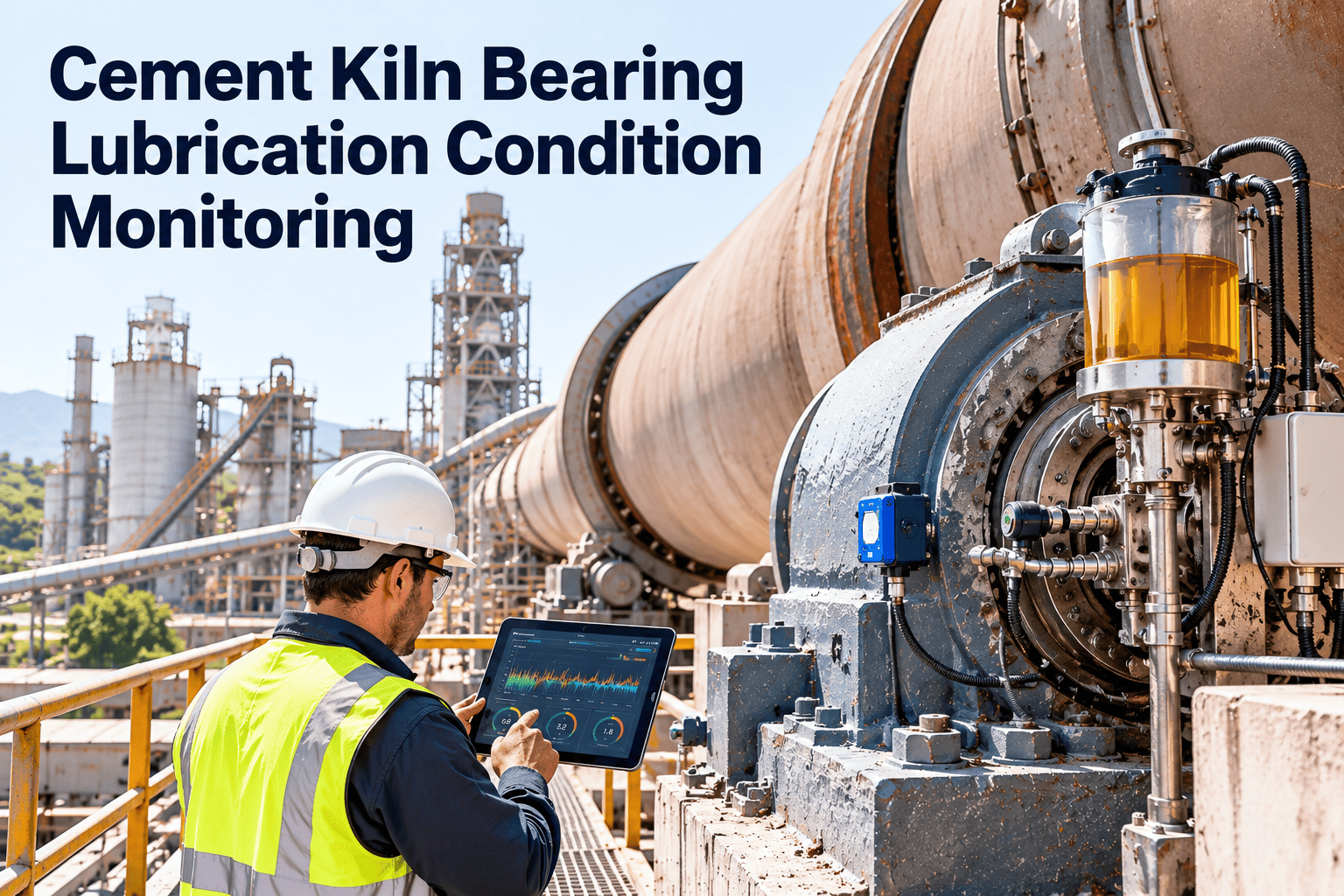
Roller and pinion bearing life depends on clean, cool oil at the right flow. A blocked cooler, contaminated oil or lost film can take a bearing from normal to failed inside a shift once temperature starts rising quickly.
Bearing temperatures checked against alarm and trip set points — record each roller and pinion bearing temperature; investigate any bearing running above its own history or differing from its pair, even when below alarmDControl Room Operator · Bearing temperature log
Lube oil level, flow, filter and cooling water verified — confirm sump level, oil circulation, filter differential pressure, and cooling water flow and temperature; fix a restricted cooler or low flow immediatelyDShift Fitter · Lubrication system check
Oil sample analysed for water, particles and wear metals — sample trended against baseline; water ingress, rising iron or copper, or viscosity change indicates seal failure or bearing wearMLubrication Technician · Oil analysis report
Bearing vibration and sound checked — vibration measured at roller and pinion bearings and compared to the baseline spectrum; new peaks at bearing defect frequencies justify planned bearing inspectionWCondition Monitoring Technician · Vibration route
An unplanned kiln stop costs far more than the failed part. OxMaint timestamps every bearing reading, creep measurement and oil result, trends them against baseline, and raises an escalation work order when a reading drifts — so a developing roller, tyre or gear problem is planned into the next stop, not discovered at a trip.
Category 04
Girth Gear & Drive Pinion
The girth gear transmits full kiln torque through a few teeth at a time. Poor lubrication and misalignment cause pitting, then cracking; replacing a damaged gear is among the longest shutdown jobs in the plant.
Gear and pinion lubrication delivery verified — confirm lubricant spray pattern covers the full face width, nozzles are clear and the lubricant is the specified grade; dry zones are a primary cause of tooth pittingDShift Fitter · Gear lubrication log
Tooth contact pattern and backlash measured — inspect marking pattern across tooth face and measure backlash; deviations from the alignment record indicate pinion misalignment or gear movementQMechanical Inspector · Contact pattern and backlash record
Tooth surfaces examined for pitting, scuffing and cracks — document damage with photographs and track progression between inspections; crack indications require NDT confirmation and engineering reviewMMechanical Inspector · Gear tooth condition log
Girth gear mounting bolts and spring plates checked — verify torque or visual marks, look for cracks around spring plate welds; loosening changes tooth loading and runoutQMechanical Inspector · Gear mounting inspection
Category 05
Main Drive, Gearbox & Auxiliary Drive
Drive faults show first in motor current and gearbox temperature. The auxiliary (barring) drive is the one component nobody tests until the day the kiln trips and must be turned immediately to avoid shell bowing.
Main motor current and load trend reviewed — compare current at a given feed and speed to baseline; a rising trend with unchanged conditions points to mechanical drag, coating changes or bearing problemsDControl Room Operator · Drive load trend
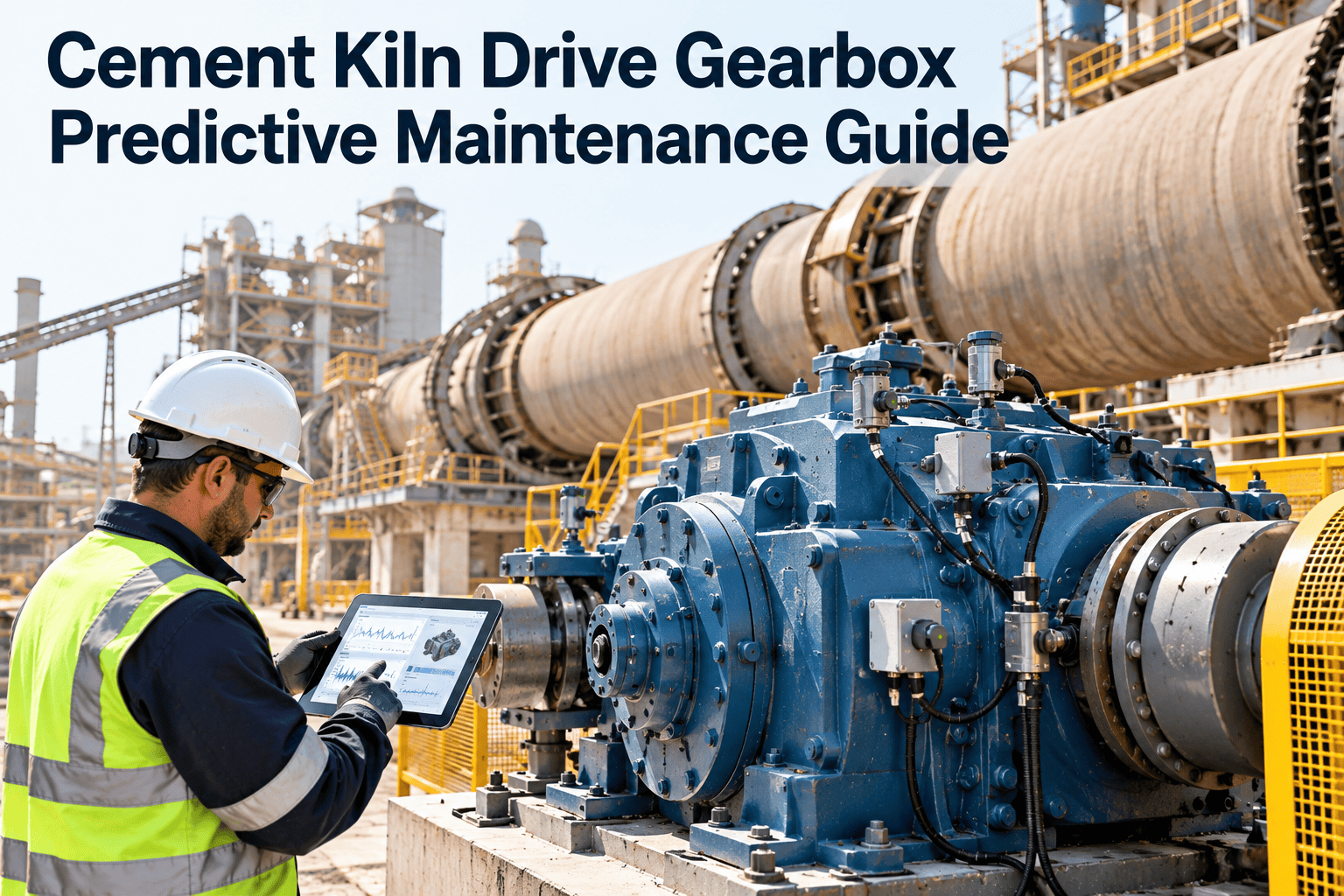
Gearbox oil temperature, level and vibration checked — record gearbox temperature and oil level; vibration trended at input and output; metallic debris on magnetic plugs is an escalate conditionWCondition Monitoring Technician · Gearbox condition log
Coupling condition and alignment verified — inspect couplings for wear, leakage and fastener condition; confirm alignment against the last laser alignment recordQMechanical Inspector · Coupling alignment record
Auxiliary drive tested under load — run the barring drive, confirm engagement, auto-start on main drive trip and power supply readiness (including emergency supply where installed)MMaintenance Supervisor · Auxiliary drive test record
Category 06
Kiln Shell, Seals & Alignment
Shell geometry and seal condition determine how roller loads, refractory life and false-air ingress behave. Alignment drift is slow and invisible without periodic survey data.
Shell ovality and temperature profile reviewed — assess scanner data and ovality measurements; persistent hot spots or increased ovality reduce refractory life and increase tyre loadingDProcess Engineer · Shell condition review
Inlet and outlet seals inspected — check seal wear, leaf or lamella condition and air leakage; poor sealing causes false air, heat loss and dust emissionsWMechanical Inspector · Kiln seal inspection log
Kiln axis alignment survey completed — laser or optical survey of shell centreline and roller positions; compare against baseline and plan corrective alignment at the next major stopAReliability Engineer · Axis alignment survey report
Reliability KPIs
Six Metrics That Show Whether Kiln Mechanical Reliability Is Under Control
| Metric | How to Measure | Target | Frequency |
|---|
| Kiln Mechanical Downtime | Hours stopped for mechanical causes / Scheduled operating hours | Trending down | Monthly |
| Condition Check Completion | Checks completed on time / Checks scheduled | ≥ 95% | Weekly |
| Bearing Temperature Excursions | Readings above alarm or above pair deviation limit | Zero alarms | Daily |
| Tyre Creep Within Limit | Creep readings inside OEM range / Total readings | 100% | Weekly |
| Oil Sample Compliance | Samples within limits / Samples analysed | ≥ 95% | Monthly |
| Defect-to-Work-Order Time | Hours from finding to planned job raised | < 24 hours | Daily |
FAQs
Frequently Asked Questions
What are the most common causes of kiln support roller bearing failure?
The most common causes are lubrication problems (low flow, contamination or water ingress), blocked cooling, and misalignment or skew that overloads the bearing. Most develop over weeks, so bearing temperature trends versus the roller's own history, oil analysis and vibration are better indicators than an alarm set point alone.
What does high tyre creep mean on a rotary kiln?
Creep is the small relative movement between the tyre and the shell each revolution. An increase over time usually means the tyre-to-shell gap has grown through wear of fillers, shell ovality or thermal changes. Because the right range depends on the kiln design, compare readings with the OEM figures and your own trend, and escalate sustained increases to engineering.
How often should the girth gear and pinion be inspected?
Lubrication delivery should be checked every shift, contact pattern and backlash at least quarterly, and tooth surfaces monthly with photographic records. Crack indications or progressing pitting should be assessed with NDT and engineering review rather than left to routine monitoring.
Why test the auxiliary drive regularly?
If the main drive trips on a hot kiln, the kiln must be turned slowly to avoid shell distortion and refractory damage. A barring drive that has not been tested may fail to engage when it is needed most, so scheduled load tests and auto-start verification are essential.
Digitize Kiln Reliability
Every Reading Logged. Every Trend Watched. Every Stop Planned.
OxMaint turns the kiln failure-modes checklist into mobile inspections with bearing, creep and oil readings captured as numeric fields, trend alerts against baselines, and automatic work orders when a condition crosses its escalation level.