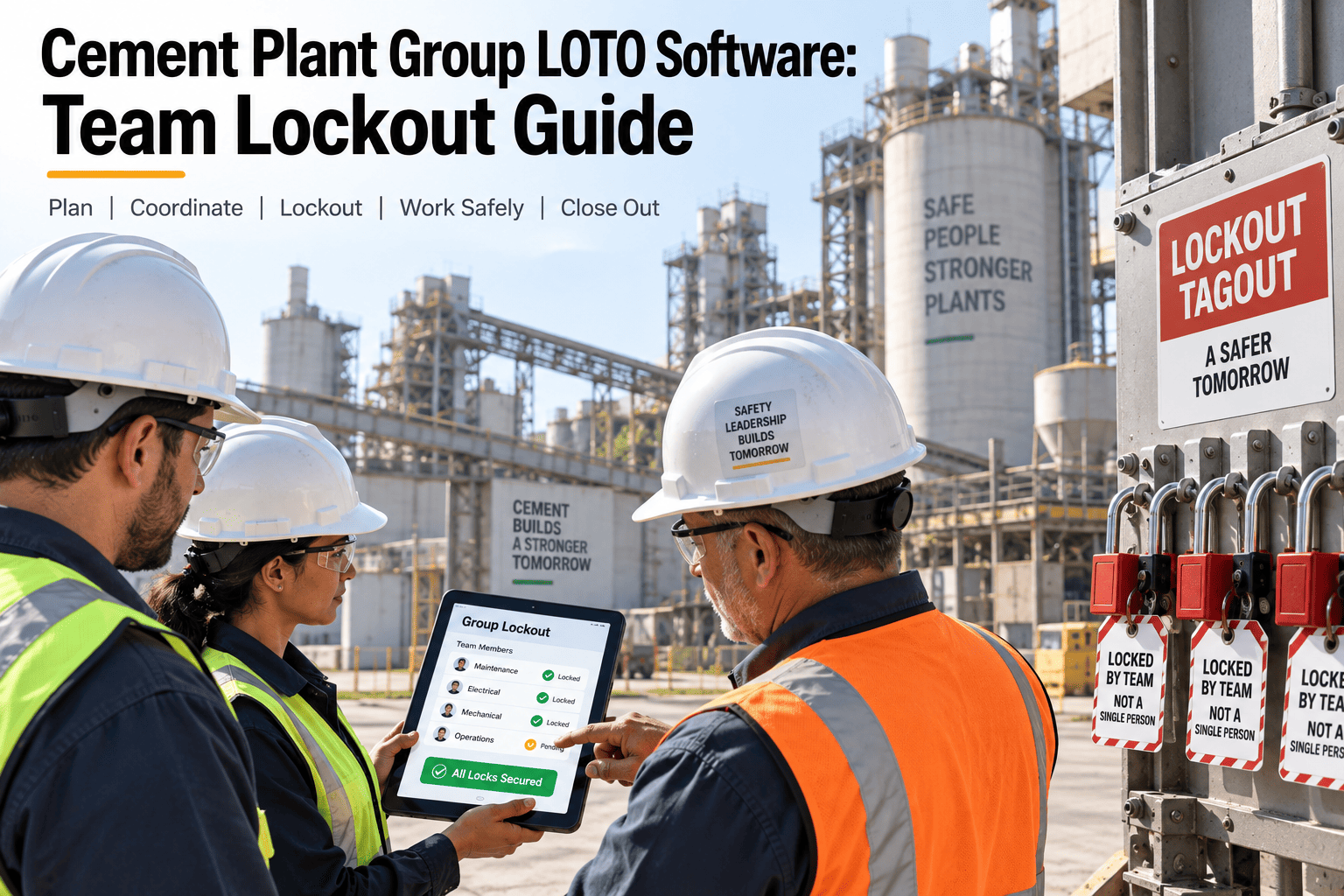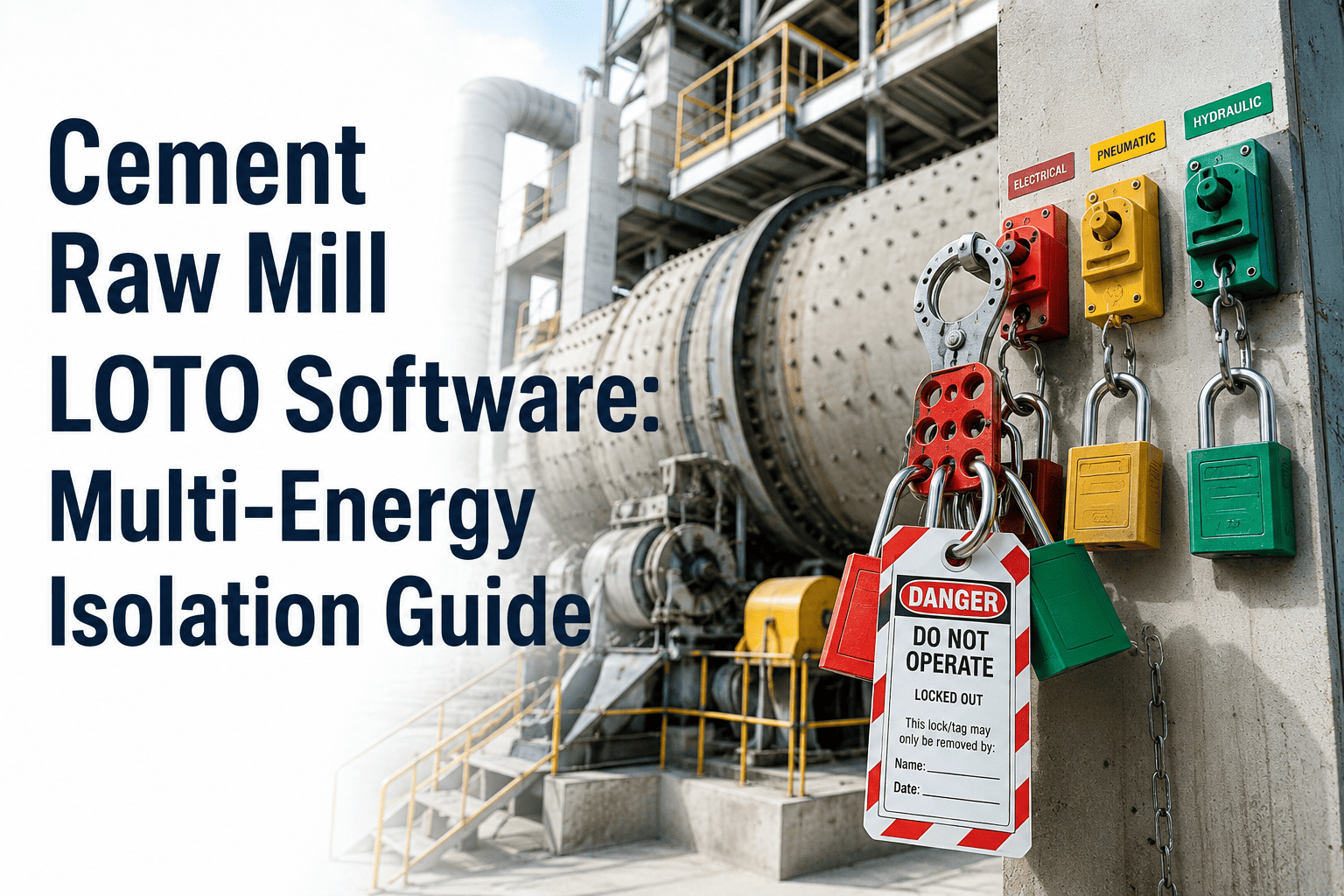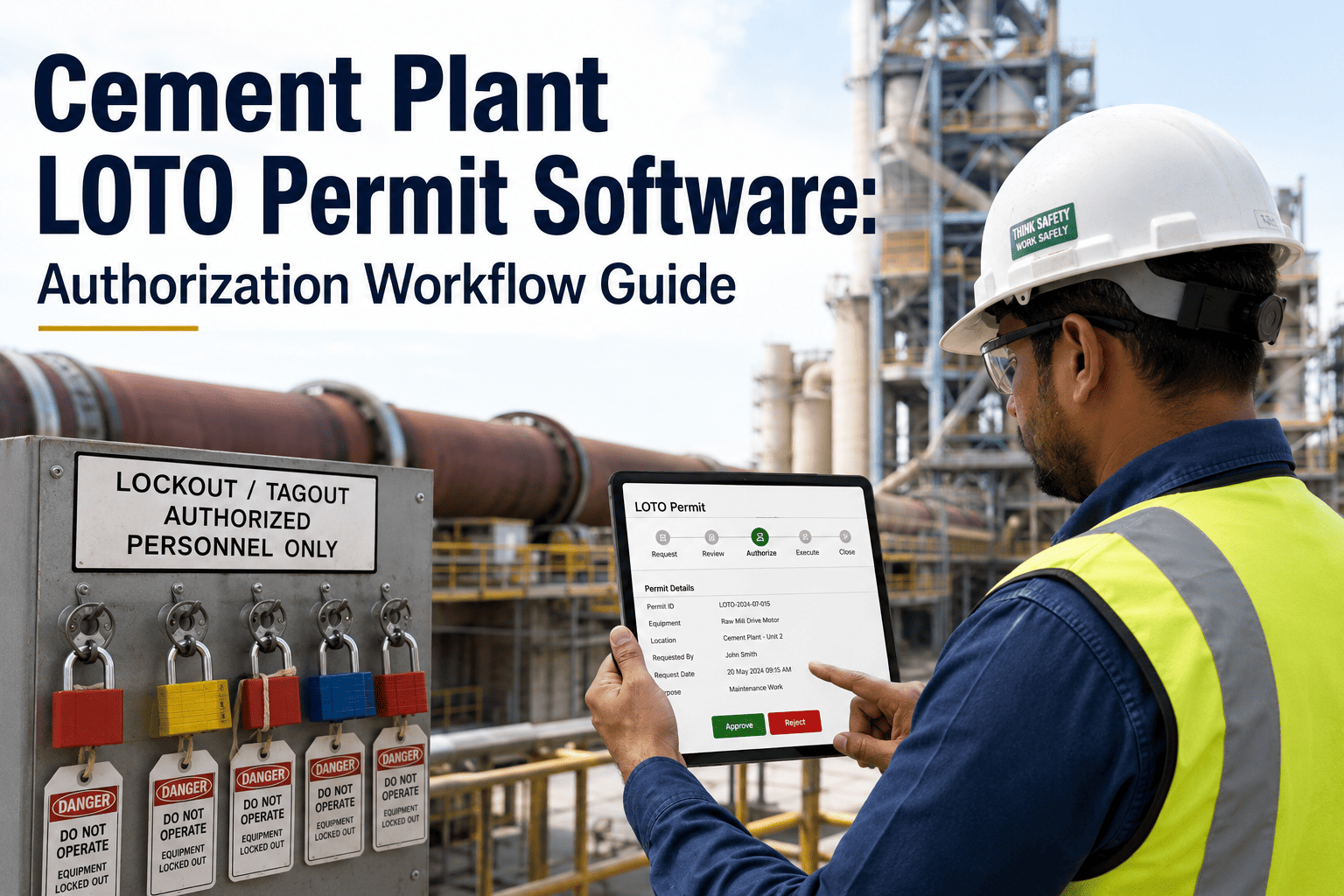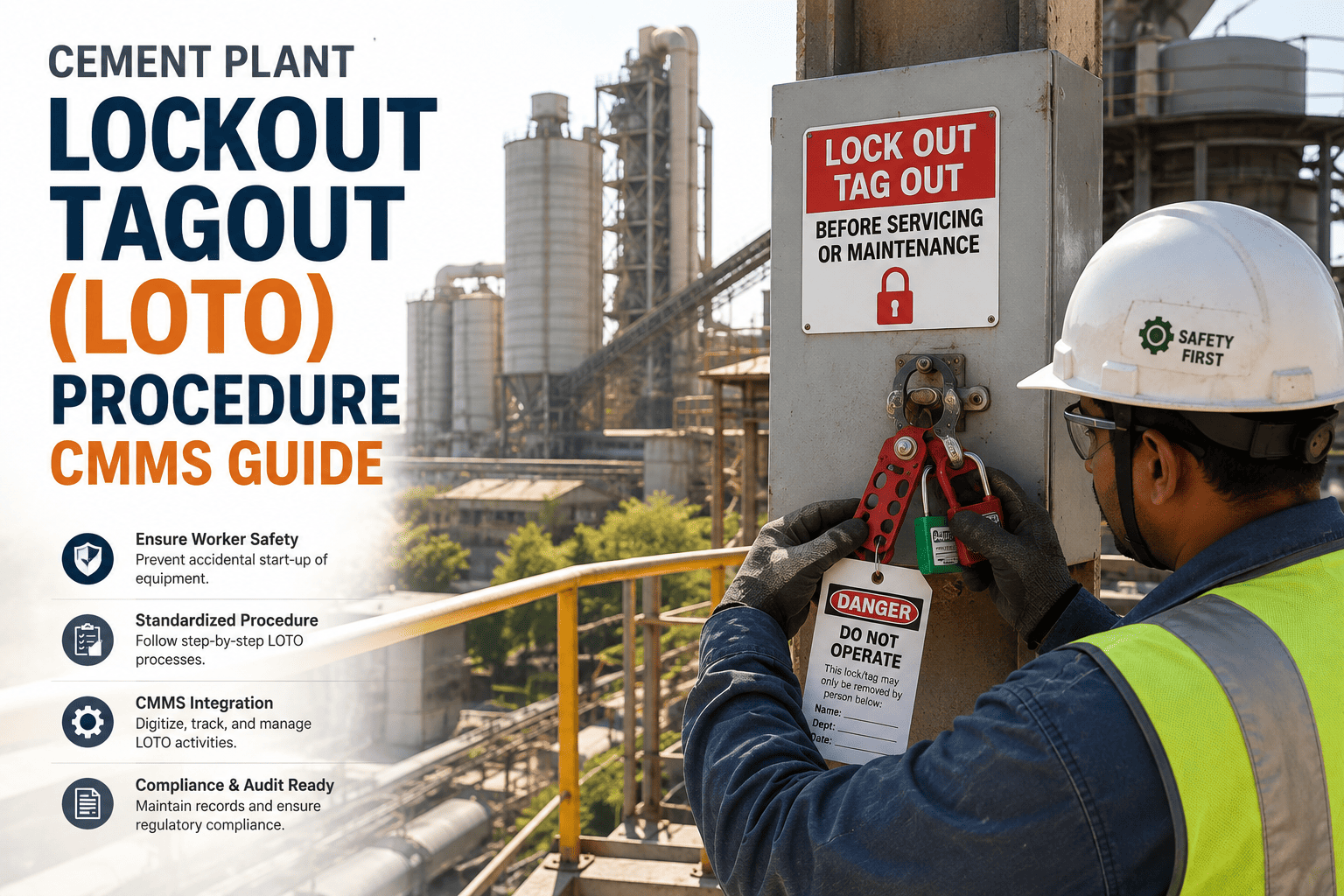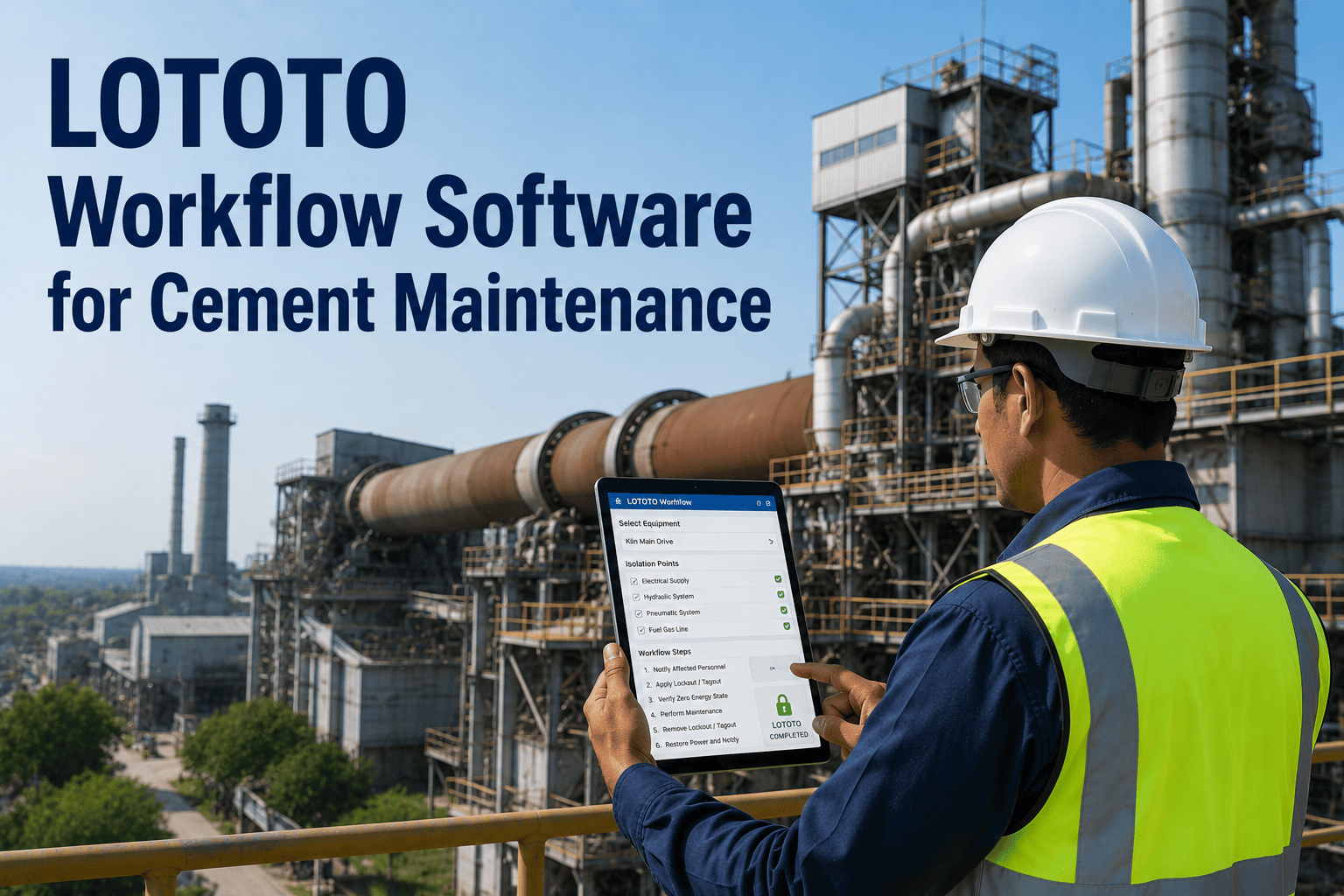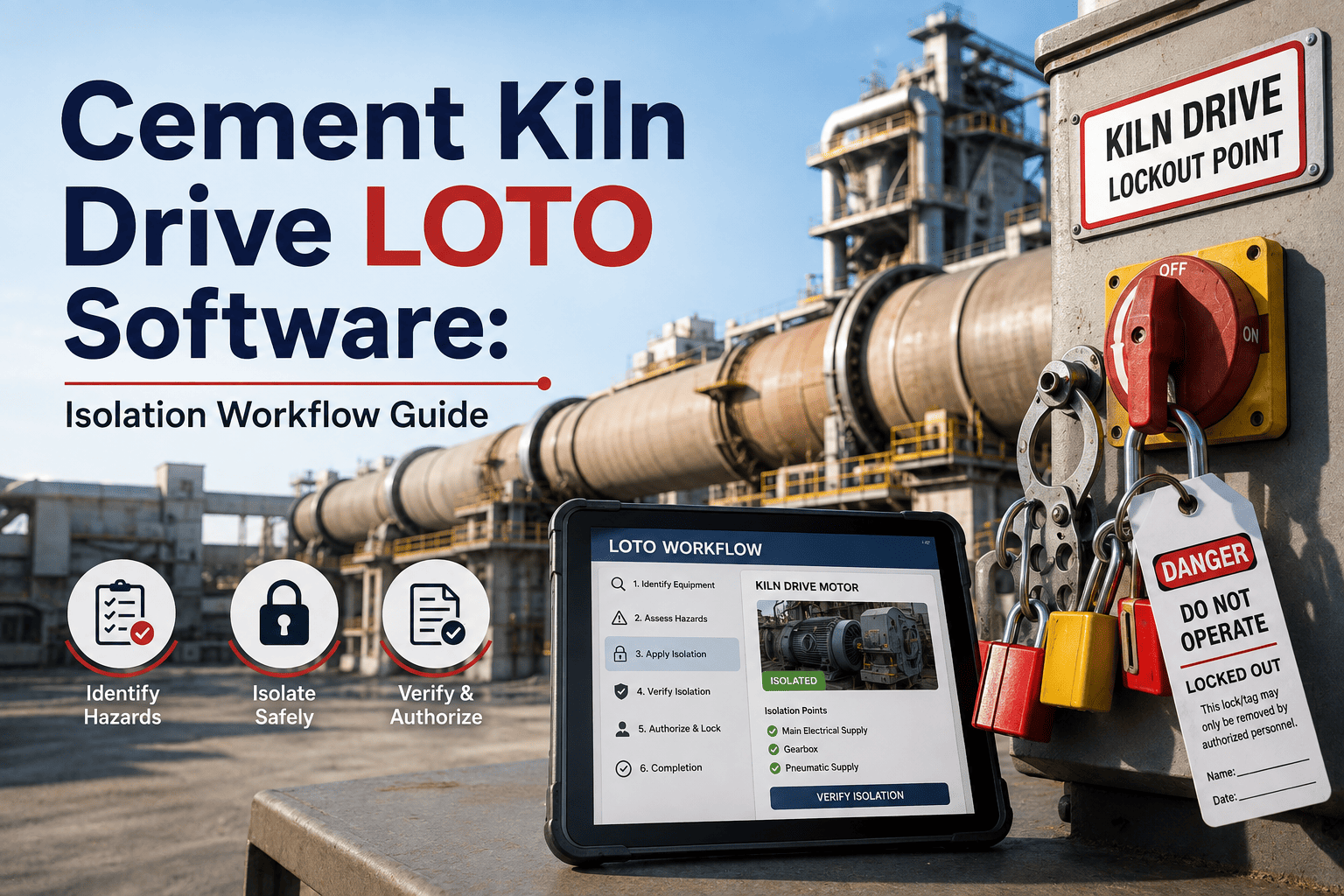
Cement kiln drive isolation is one of the most safety-critical, audit-heavy procedures in heavy manufacturing — a single missed energy source on a 4,000-tpd kiln can mean a fatality, a multi-million-dollar campaign delay, or an OSHA citation under 29 CFR 1910.147. Modern cement plants are moving away from paper LOTO logs and spreadsheet permits toward purpose-built LOTO CMMS software that digitizes isolation plans, auto-generates lockout sequences for main drive, auxiliary drive, and hydraulic power sources, and keeps every shutdown traceable for EHS auditors. OxMaint brings kiln drive lockout, permit-to-work, work-order scheduling, and IoT-based condition monitoring into one cloud dashboard — trusted by integrated cement groups running multi-site portfolios. Start your Start Free Trial or read on for the full isolation workflow.
Kiln Drive LOTO Workflow Guide
Are you still isolating your kiln drives with paper logs and tribal knowledge?
One missed energy source on a kiln main drive, auxiliary creep drive, or hydraulic thrust system can turn a routine shutdown into a recordable incident. OxMaint digitizes the entire isolation sequence — every lock, every tag, every verification step — so your EHS and reliability teams pass every OSHA 1910.147 audit without digging through binders.
into every kiln LOTO template
Why Kiln Drive LOTO Fails
Three energy sources, one missed lock — that's all it takes
A typical rotary kiln drive system carries at least three distinct energy sources that must be isolated before any maintenance work begins. Industry incident data shows that roughly 60% of kiln drive LOTO failures stem from incomplete isolation of the auxiliary or hydraulic circuit, not the main motor.
Main Drive Motor
The primary DCS-controlled motor — typically 500-1,500 kW on a 3,000-5,000 tpd kiln — drives the girth gear through a reducer. Electrical isolation at the MV switchgear and a verified zero-energy check at the motor terminals are both mandatory; bypassing either is a critical LOTO violation.
Auxiliary Creep Drive
Used to rotate the kiln slowly during preheating and emergency stops — most commonly a 15-75 kW hydraulic or electric motor. Teams forget that the aux drive can back-feed the main drive shaft, making it a hidden stored-energy source that must be isolated and locked independently.
Hydraulic Thrust System
The hydraulic roller thrust unit — often running 80-120 bar — counteracts kiln axial movement. Stored hydraulic energy in accumulators can remain pressurized long after the pump is shut off; relief, bleed, and lock verification are each a discrete LOTO step.
The OxMaint Isolation Workflow
A six-step shutdown sequence, digitized end-to-end
OxMaint converts your kiln drive isolation SOP into a mobile-guided workflow. Each step below is a mandatory task in the LOTO module — operators cannot advance to the next step until the previous one is signed off, photo-verified, and time-stamped.
Shutdown Request & Permit Issuance
Maintenance supervisor raises a kiln shutdown work order in OxMaint. The system auto-attaches the plant's permit-to-work template, lists all three energy sources, and routes the permit for EHS sign-off — average permit issue time drops from 45 minutes to under 8.
Energy Source Identification
The mobile app displays the kiln's specific isolation schematic — main drive, aux drive, hydraulic pump — pulled directly from the asset register. Each source must be physically located and confirmed; missed sources block the workflow from proceeding.
Lock & Tag Application
Each isolation point gets a unique lock and tag with a scannable QR code. OxMaint records the lock number, technician ID, GPS location, and timestamp. A photo of the locked disconnect is required and attached to the work order in real time.
Zero-Energy Verification
Before anyone touches the drive, a qualified technician performs a try-start and voltage check. Results are entered directly into the app — if the reading is non-zero, the system flags a violation and notifies the shift manager instantly, halting the workflow.
Work Authorization & Execution
Only after zero-energy confirmation does OxMaint release the work authorization. Mechanics receive a mobile notification, and the work order transitions from "Isolation" to "In Progress" — every action logged for ISO 55000 and OSHA audit trails.
Lock Removal & Re-Energization
Each technician removes their personal lock and scans the QR tag to confirm. When all locks are cleared and verified, the system issues a controlled re-energization sequence — no kiln restart can occur until every lockout record is closed and signed.
Compliance & Audit Readiness
Built to satisfy OSHA 1910.147, MSHA, and ISO 55000 in one audit export
A single kiln shutdown can generate 15-30 individual LOTO records across shifts. OxMaint compiles every lock, tag, verification reading, and signature into a single auditable timeline — exportable as a PDF in under 30 seconds.
| Compliance Requirement | Paper / Spreadsheet LOTO | OxMaint Kiln Drive LOTO |
|---|---|---|
| Energy source documentation per asset | Manual binders, often outdated | Live asset register, auto-updated |
| Lock/tag traceability with timestamp | Sign-in sheet, prone to gaps | QR-coded, GPS + photo verified |
| Zero-energy verification record | Check-box on paper form | Forced numeric entry + photo |
| Audit trail retrieval time | 2-6 hours across filing cabinets | Under 30 seconds, one-click PDF |
| Cross-shift LOTO handover | Verbal or written notes | Digital handover with mandatory sign-off |
| Multi-site LOTO standardization | Each plant maintains own templates | Group-wide template library, centrally controlled |
The Cost of a Missed Isolation
What a single LOTO failure actually costs a cement plant
Consider a mid-sized integrated cement plant running a 4,000-tpd kiln, 330 days per year, with cement selling at roughly $110 per tonne. A single safety incident during kiln drive maintenance triggers a cascade of direct and indirect costs that often exceeds $2.5M before the legal process even concludes.
"
After implementing OxMaint for kiln drive LOTO, our last MSHA audit took 90 minutes instead of two days. Every lock, every verification, every signature was already in the system — the inspector just watched the timeline play back.
— Reliability Manager, 4.2 MTPA integrated cement plant, South India
What You Get
Everything a cement plant needs for kiln drive LOTO — in one platform
OxMaint is not a generic CMMS retrofitted for cement. It ships with kiln-specific LOTO templates, drive-system asset hierarchies, and integrations to the vibration and temperature sensors already monitoring your girth gear and thrust rollers.
Kiln-Specific LOTO Templates
Pre-built isolation plans for main drive, aux creep drive, and hydraulic thrust — covering 12+ kiln configurations from KHD, FLSmidth, and ThyssenKrupp. Customize per plant line in minutes.
Mobile-Guided Isolation
Field technicians follow step-by-step lockout sequences on a ruggedized tablet or phone. QR scan each disconnect, snap a photo, move to the next energy source — no clipboards, no missed steps.
IoT & Vibration Integration
Pull live vibration, temperature, and rpm data from your kiln drive sensors directly into the work order. If a thrust roller bearing shows elevated velocity, OxMaint auto-flags it for the next planned LOTO shutdown.
Multi-Site Group Dashboard
Roll up LOTO compliance, open permits, and isolation deviations across every kiln line in your portfolio. Group reliability directors see a single scorecard — no more chasing plants for monthly spreadsheets.
Ready to digitize your kiln drive isolation?
Join cement plants that cut LOTO deviations by 73% and audit prep time from days to minutes. Deploy OxMaint on your first kiln line in under 14 days.
Frequently Asked Questions
Cement kiln drive LOTO software — what plant teams ask
Can OxMaint handle both main drive and auxiliary drive isolation in the same workflow?
Yes. Every kiln drive LOTO template in OxMaint is pre-configured with separate isolation steps for the main motor, auxiliary creep drive, and hydraulic thrust system. Each source has its own lock point, QR tag, and zero-energy verification step — they run as parallel branches within one work order, so a technician cannot close the LOTO until all three are independently confirmed and signed off.
How long does it take to deploy OxMaint for kiln drive LOTO at a cement plant?
A typical single-kiln plant goes live in 10-14 days. Our team loads your asset hierarchy, configures the kiln-specific LOTO templates, and trains your EHS and maintenance supervisors. Multi-site groups with 5-15 kiln lines generally complete phased rollout in 6-8 weeks. To see a live kiln drive workflow, Book a Demo and we'll walk you through a real shutdown sequence.
Does the software generate audit-ready records for OSHA 1910.147 and MSHA inspections?
Absolutely. Every lock application, tag scan, photo, zero-energy reading, and signature is time-stamped and stored in an immutable audit trail. When an inspector requests documentation, you export a single PDF covering any date range, kiln line, or isolation event in under 30 seconds — plants report cutting audit preparation time by up to 85%.
Can we connect OxMaint to our existing vibration sensors and DCS on the kiln drive?
Yes. OxMaint supports standard industrial protocols including OPC-UA, Modbus TCP, and MQTT, along with REST API connectors for SKF, Bently Nevada, and Pruftechnik condition monitoring systems. Live vibration and temperature data from girth gear pinions and thrust rollers feeds directly into work orders, so LOTO shutdowns can be triggered by actual equipment condition rather than calendar intervals.
What happens if a technician tries to skip a lockout step on the kiln drive?
The workflow is hard-gated — each step must be completed and verified before the next one unlocks. If a technician attempts to bypass a zero-energy check or skip a hydraulic isolation point, the app blocks progression, logs the attempt, and sends an automatic alert to the shift supervisor. This forced-sequence design is why plants using OxMaint report a 73% reduction in LOTO deviations within the first six months. You can Start Free Trial and test the gated workflow on your own kiln templates.
Get Started with OxMaint
Stop isolating kiln drives with paper. Start isolating them with proof.
Deploy OxMaint's kiln drive LOTO software on your first kiln line in under 14 days. Cut LOTO deviations, pass every audit, and give your maintenance team a system that actually protects them.
Free 14-day trial · No credit card