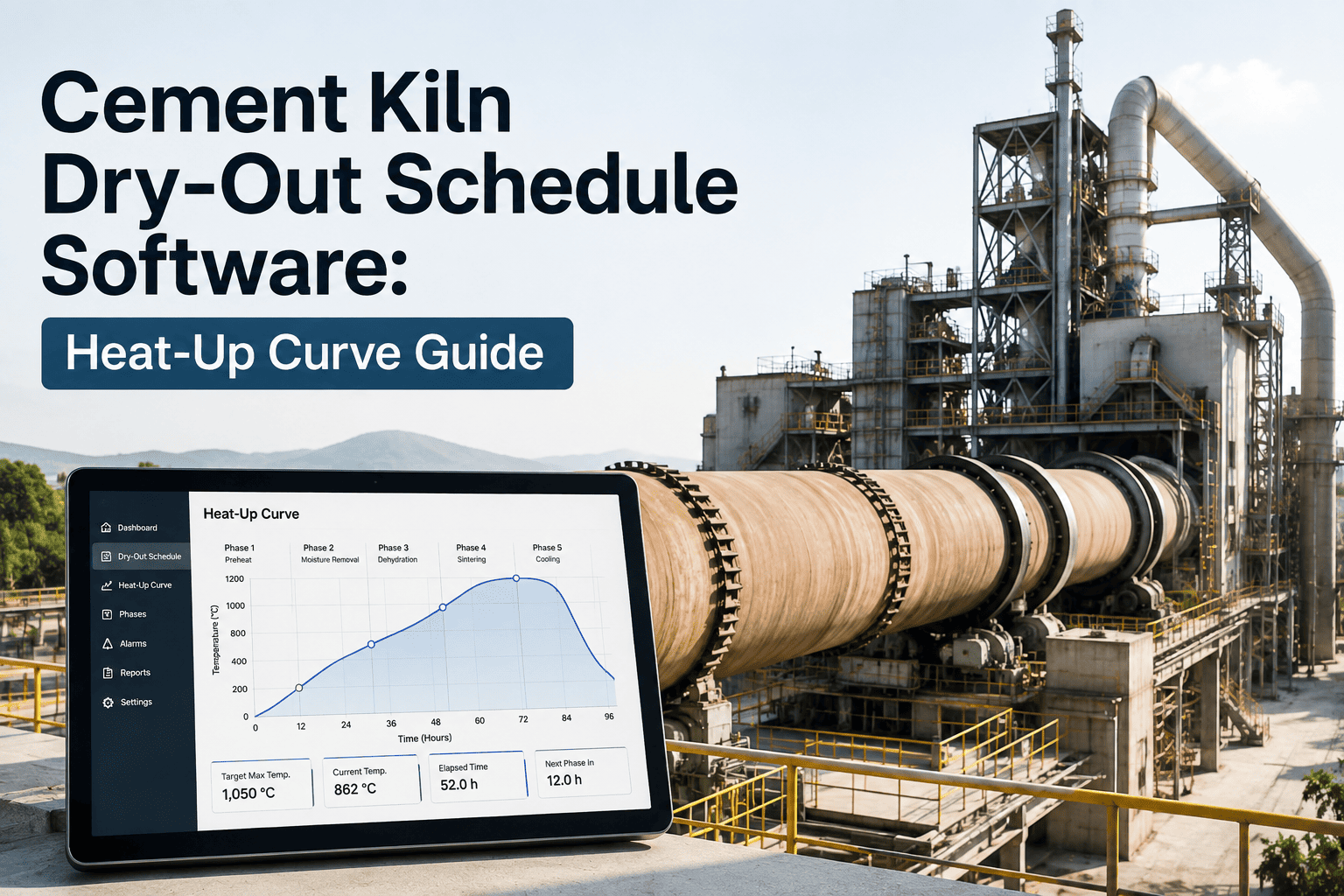
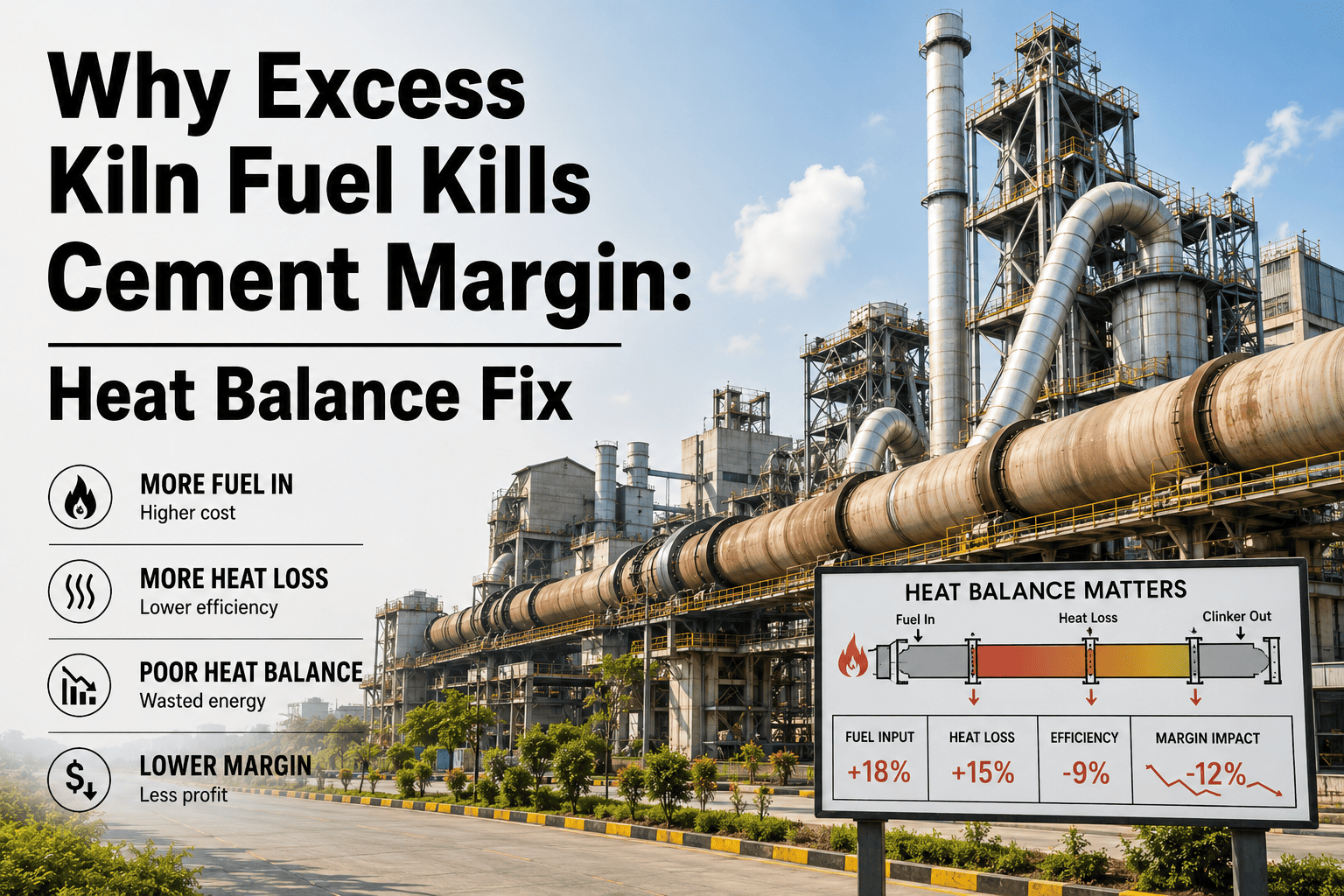
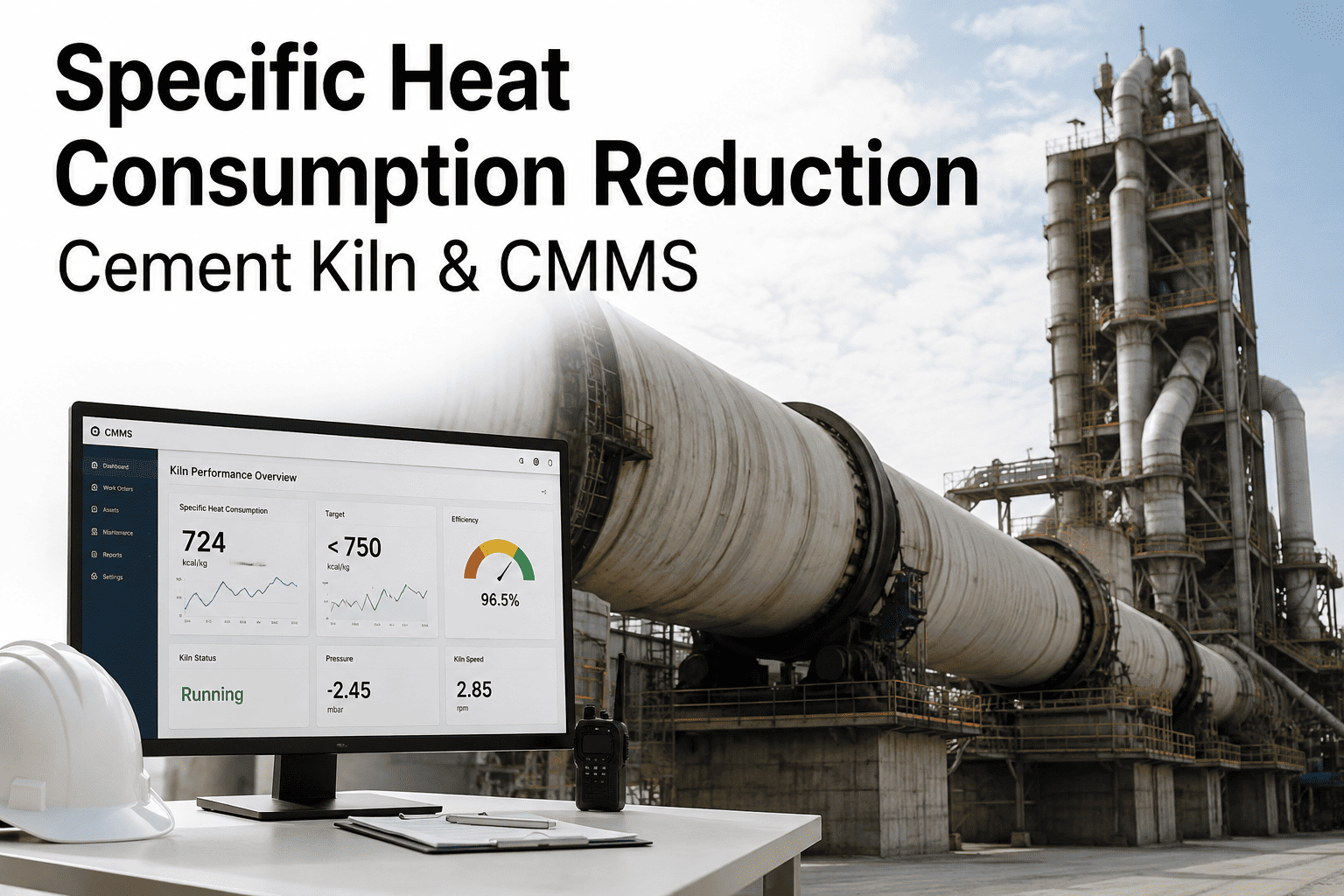
Roughly half the fuel burned in a cement kiln never touches the clinker — it leaves through the stack, radiates off the shell, or exits with the cooler exhaust, and on most plants nobody has measured exactly how much goes where since the last quarterly audit. A kiln heat balance is supposed to answer that question, but when it only runs a few times a year it tells you where the energy went last quarter, not where it is going right now while a coating has fallen away or a seal has started leaking false air. Moving heat balance from a periodic report to a live, continuously trended number lets maintenance and process teams catch losses while they are still small, cheap fixes instead of six-month budget surprises, which is exactly what teams can start doing free with OxMaint's CMMS against their own kiln instrumentation.
Cement Plant Energy Intelligence · Kiln Heat Balance
Cement Kiln Heat Balance, Tracked Live Instead of Twice a Year
Trend exhaust gas temperature, shell scans, and cooler losses every day so heat balance becomes a maintenance signal, not a quarterly report nobody reads until the audit is due.
Why a Quarterly Heat Balance Is Not Enough Anymore
~50%
Fuel That Never Reaches Clinker
A meaningful share of total thermal input leaves through exhaust gas, cooler stack, and shell losses instead of driving the clinkering reaction.
720-950
kcal/kg Clinker, Typical Range
Specific heat consumption across cement kilns varies widely inside this range, driven heavily by kiln design, refractory condition, and false air.
4x / yr
How Often Most Plants Audit
A full structured heat balance is typically run quarterly by process engineering, leaving long gaps where losses can grow unnoticed between audits.
10%
Air Intake From False Air
False air entering through cyclone doors, expansion joints, or seals can account for up to a tenth of total kiln air intake, quietly distorting the whole balance.
Where the Heat Actually Goes
Hot Flue Gas Leaving the Preheater
Usually the single largest loss stream, and it grows fast wherever false air enters along the riser duct.
Cooler Stack Losses
Counterintuitively, more efficient kilns often show higher cooler exit losses as a share of total input.
Kiln Shell Radiation & Convection
Rises sharply wherever refractory has thinned or coating has fallen away — a visible, continuous energy leak.
False Air Infiltration
Not a direct loss line itself, but it dilutes combustion efficiency and inflates every other loss stream above it.
Unaccounted & Measurement Gaps
A structured, continuous heat balance is what shrinks this line — without it, this gap only grows year over year.
Every loss stream above maps to a specific, fixable maintenance condition. OxMaint trends the readings that feed your heat balance daily, so a rising shell temperature or a growing exhaust gas gap turns into a work order before it turns into next quarter's bad audit number.
From Raw Readings to a Maintenance Action, in Four Steps
01
Log the Core Readings Daily
Preheater exit O2 and temperature, shell scan results, secondary air temperature, and clinker outlet temperature get captured as recurring inspection tasks instead of a once-a-quarter data pull.
02
Flag Deviations Automatically
When shell temperature crosses a threshold or exhaust gas temperature climbs against baseline, the system raises it immediately instead of waiting for the next scheduled review.
03
Link the Loss to a Cause
A flagged deviation ties back to a specific maintenance condition — refractory thinning, a leaking seal, cooler fouling — so the fix is assigned, not just observed.
04
Show the Cost Avoided
Every kcal/kg improvement multiplies against daily clinker output and fuel cost, turning the maintenance work order into a documented financial return.
Quarterly Audit vs. Continuous Heat Balance Tracking
| Method |
What It Captures |
Frequency |
Who Can Act On It |
| Quarterly Manual Audit |
Full input and output streams, reconciled by hand |
Every 3 months |
Process engineering, after the fact |
| Instrumentation Alone |
Raw sensor readings with no consolidated balance |
Real-time, unsynthesized |
Control room, reactive only |
| OxMaint Live Tracking |
Trended losses linked directly to maintenance condition |
Continuous |
Maintenance and process teams together |
Frequently Asked Questions
What is the best frequency for a kiln heat balance measurement?
A full structured heat balance is typically run quarterly by process engineering, but the individual components behind it — shell temperature, exhaust gas readings, secondary air temperature — should be trended daily so problems surface between audits, not at them.
Why does kiln shell temperature matter to the heat balance?
Shell temperature above roughly 350°C often signals an imbalance and usually points to refractory thinning or coating loss underneath, making shell radiation one of the fastest-moving loss streams to track.
Logging shell scans in OxMaint keeps this trend visible day to day.
How much does false air really affect fuel consumption?
False air entering through cyclone doors, expansion joints, or seals can represent a meaningful share of total kiln air intake, which dilutes combustion temperature and forces more fuel to be burned to hit the same clinkering temperature.
Can heat balance data justify a maintenance capital request?
Yes — converting a documented kcal/kg gap into an annual fuel cost figure is one of the clearest ways to show that maintenance spend on refractory, seals, or coating management pays for itself.
Do maintenance and process teams need the same heat balance data?
They need the same numbers viewed differently — process teams want the full energy balance, maintenance teams want to know which asset condition is driving a given loss.
Book a demo to see both views built from one shared data set.
Stop Waiting for the Next Audit to Find the Losses
OxMaint trends the readings behind your kiln heat balance every day and ties every loss stream back to a maintenance condition your team can actually fix. Start free today.